

.. Read More
From the show: BEHIND THE CURTAIN: BROADWAY'S LIVING LEGENDS » Podcast
Guests
Featured Shows
About
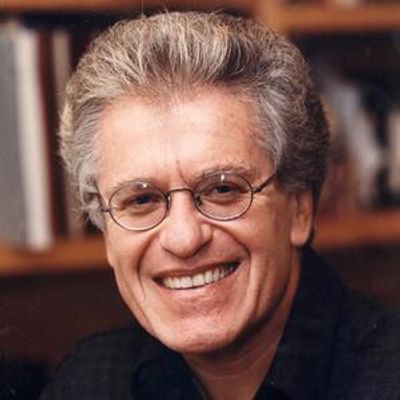
Today's podcast is a master class in the art of direction and your instructor is none other than 4 time Tony Award winner Jerry Zaks, whose onstage credits include Fiddler on the Roof, Grease, Once in a Lifetime, and Tintypes, and most importantly, directing credits that include: The House of Blue Leaves, Anything Goes, Six Degrees of Separation, Guys and Dolls, A Funny Thing Happened On The Way To The Forum, Laughter on the 23rd Floor, Lend Me A Tenor, Smokey Joe's Cafe, Sister Act, Hello, Dolly, and the upcoming Mrs. Doubtfire and The Music Man.
Jerry pulls back the curtain on his career to discuss how a romantic date led to the wonderful world of musical theatre, what are his cardinal rules of directing, and why playing the positive is the greatest note a director can give.
Also, Jerry shines the spotlight on Nathan Lane, Neil Simon, and Zero Mostel! !
Become a sponsor of Behind The Curtain and get early access to interviews, private playlists, and advance knowledge of future guests so you can ask the legends your own questions. Go to: http://bit.ly/2i7nWC4
Transcript
This transcript was automatically generated and might contain errors.
[0:03] Kevin David Thomas: Well, Rob, I'm thankful that we have so many great Behind the Curtain listeners, and that so many of them financially support us so we can continue to capture the stories of Broadway's most legendary performers.
[0:13] Robert W. Schneider: And support my Herve Villages habit.
[0:15] Kevin David Thomas: I'm not gonna do it.
[0:16] Robert W. Schneider: I won't do it.
[0:17] Kevin David Thomas: Want to help us?
[0:18] Robert W. Schneider: I'm just kidding.
[0:19] Kevin David Thomas: Want to help us be even more thankful this November? Head on over to Patreon.com.
[0:27] Robert W. Schneider: That's P-A-T-R-E-O-N.com and search for Behind the Curtain Broadway's Living Legends and set a monthly donation.
[0:34] Kevin David Thomas: Even a dollar a month helps us. We are entirely self-funded. So please help keep us on the air.
[0:39] Robert W. Schneider: I feel like PBS.
[0:40] Kevin David Thomas: Like PBS.
[0:41] Robert W. Schneider: Your contributions help us continue doing what we are doing.
[0:44] Kevin David Thomas: Here is a tote bag. Uh, what are we doing this November, Rob?
[0:47] Robert W. Schneider: Why being thankful that we can interview legends, eating stuffing, and singing Turkey Lurky Time.
[0:52] Kevin David Thomas: Yes, I know it's a Christmas song, but it's about Turkey.
[0:55] Robert W. Schneider: Go lay down, Rob.
[0:56] Kevin David Thomas: We are thankful for all of you, and we'll be even more thankful if you can head over to Patreon.com.
[1:02] Robert W. Schneider: That's P-A-T-R-E-O-N.com.
[1:05] Robert W. Schneider: Hi, I'm Robert W. Schneider.
[1:06] Kevin David Thomas: And I'm Kevin David Thomas.
[1:07] Robert W. Schneider: And this is Behind the Curtain Broadway's Living Legends.
[1:10] Kevin David Thomas: Don't forget to follow us on Twitter at Broadway Curtain.
[1:13] Robert W. Schneider: And make sure to join our Facebook page at Behind the Curtain Broadway's Living Legends.
[1:17] Kevin David Thomas: And follow us on Instagram at Broadway Curtain Podcast Plus.
[1:20] Robert W. Schneider: You can always listen to our podcasts on Broadway World and Stitcher.
[1:23] Kevin David Thomas: Today's guest is one of the most beloved directors working in the American theater today and the definition of a mensch. As an actor, he appeared in productions of Fiddler on the Roof, Grease, Once in a Lifetime, and Tin Types, to name just a few.
[1:36] Robert W. Schneider: As a director, he's collaborated with such dramatists as John Guare, Christopher Durang, Neil Simon, Stephen Sondheim, John Weidman, Ken Ludwig, and Steve Martin. And that's just a few of them.
[1:44] Kevin David Thomas: Right. And you might break his resume down into a couple decades. Let's say the eighties, which included Sister Mary Ignatius Explains It All for You, The House of Blue Leaves, Anything Goes, Lend Me a Tenor.
[1:55] Robert W. Schneider: The nineties had Six Degrees of Separation, Guys and Dolls, that beautiful revival, A Funny Thing Happened on the Way to the Forum, Smokey Joe's Cafe.
[2:03] Kevin David Thomas: And then in the past 20 years, The Man Who Came to Dinner, La Cage aux Folles, Bronx Tale, both of them, Sister Act, Hello Dolly with Bette Midler, and Next Season's The Music Man with Hugh Jackman.
[2:13] Robert W. Schneider: Of course, this is after he works on Mrs. Doubtfire in Seattle. Are you tired yet? When does he sleep?
[2:16] Kevin David Thomas: That's my big question is when does he sleep?
[2:19] Robert W. Schneider: To tell us what it was like to work with such legends as Neil Simon, Stephen Sondheim, Nathan Lane, Lynn Thigpen, Jane Meadows, Meryl Streep, and so many more. Here is the son of legendary New Jersey butcher Cy Zaks, four-time Tony Award-winning director, JERRY ZAKS.
[2:33] JERRY ZAKS: That was great, you guys. I lived it. Oh my god. I feel so old.
[2:40] Kevin David Thomas: Yes, it is. When we had Larry Hochman here, he said, you know, JERRY's dad was the best butcher there ever was.
[2:47] Robert W. Schneider: So tell us about your parents. They had such an interesting life.
[2:50] JERRY ZAKS: They're both Holocaust survivors. You know, my mother spent a year and survived the year in Auschwitz. My father changed his identity, jumped a train to escape from the Nazis, and managed to stay safe for about five years. Was reunited with my mother after the war. They both survived, obviously. And yeah, I was born in Stuttgart in 1946, you know. Um, they had absolutely no interest in show business whatsoever.
[3:16] Kevin David Thomas: Naturally, of course.
[3:18] JERRY ZAKS: No, and Larry Hochman, bless him, I delivered orders to his mother from my father's kosher butcher store. Very small.
[3:26] Robert W. Schneider: The small world indeed. So, okay, so you grew up in New Jersey, right? And then when did you start going to the theater?
[3:31] JERRY ZAKS: I didn't. I didn't go to the theater. I had a secret vice. I would play old rock and roll records in the basement of my home, and I would sing them to myself in the mirror.
[3:44] Kevin David Thomas: Oh.
[3:46] JERRY ZAKS: And I would do, and it was quiet, it was private. I didn't want anyone to know I was doing it. My parents would have thought I was crazy, but I loved it. But I let that go. I tried out for a school play at Patterson East Side. I got so nervous, I choked in the audition and vowed never to have anything to do with the theater again.
[4:03] Kevin David Thomas: Oh my.
[4:04] JERRY ZAKS: And I graduated, and I was off to college. I was lucky enough to get into Dartmouth College.
[4:10] Kevin David Thomas: Oh wow, yeah, up in Hanover, New Hampshire, yeah.
[4:14] JERRY ZAKS: And I went up, you know, I went up there. I was 16. I hadn't even turned 17 yet. I know, right? And all I knew was I was gonna either be a doctor, a lawyer, or an engineer.
[4:24] Kevin David Thomas: The reputable profession.
[4:26] JERRY ZAKS: That's so I thought. Yeah, you know. So I got up there and it was a world I had never spent a night away from home until I went to college. Didn't go to overnight camp. You know, I grew up sort of terrified of everything, you know. And there I was in Hanover, New Hampshire, and I just loved the place. It was so different than the world I had grown up in.
[4:46] Kevin David Thomas: It is very like idyllic college town in a way.
[4:50] JERRY ZAKS: It's perfect, very simple. And it's beautiful, and I began living the life of an undergraduate, which meant trying to get really good grades so that I could get some financial aid or more financial aid, because in those days it was one of the most expensive colleges in the country. It was three thousand dollars a year. That was it. I mean, think about it. Anyway, but it was, and I again I was pre-med, and for my first year, which was between nineteen sixty-three and sixty-four, when I went back to college in sixty-four, sixty-five at winter carnival, I had a blind date, and I took her to the Glee Club concert and a hockey game, and I took her to the show that the Dartmouth players did.
[5:10] JERRY ZAKS: And it was a wonderful town, and it changed my life. I'm not exaggerating, it just changed my life. I fell in love so completely with what I had seen that I had a huge wake-up call and decided to try to do some of it myself. Just seeing this one.
[5:54] Kevin David Thomas: But you had never seen anything on Broadway.
[5:57] JERRY ZAKS: No. No, I don't think so. Um, I don't think so. We lived in, even though we lived in Patterson, New Jersey, which was relatively close to New York. Yeah, my parents didn't really have any interest in going to shows and I didn't listen to cast albums. Like I said, I listened to rock, yeah.
[6:11] Kevin David Thomas: Exactly, which is why Bernstein scores.
[6:15] JERRY ZAKS: And then you just, no, the lights went down and there was such an explosion of light and joy and comedy and storytelling that I was just blown away by. And when I came back the following fall, I was determined to try out because I wanted to act.
[6:28] Kevin David Thomas: Yeah.
[6:28] JERRY ZAKS: And I was determined to try out for as many of the shows as I could. And I started getting parts and I started loving acting. And then came the critical point at the end of junior year, we had to sort of decide what you wanted to do after college. And I took the law boards, I applied to and got into several law schools, and at the same time I applied for a graduate assistantship at Smith College, which was then all women, but it was beginning a new MFA program in acting, and they accepted me.
[7:14] JERRY ZAKS: And it didn't cost my parents anything, which was very important to me. They really couldn't afford to support what I was doing, and so I went to Smith as a very overweight young actor who was very full of himself and thought he was the greatest thing since you know what, and I was quickly put in my place and began to attack the whole idea of being an actor, and by that I meant I mean I lost 40 pounds between my birthday on September and Thanksgiving.
[7:50] Kevin David Thomas: Oh my.
[7:50] JERRY ZAKS: I began taking dance classes. I lost the weight because I was in co-educational dance classes in tights, and it was not pretty, guys. I mean, I saw myself in the mirror and it was like no, and so I attacked that, and it was then after I lost the weight and started taking dance class that I started to play. I would lock myself in the dance studio by myself and play sound LPs, original cast albums over and over again, and I would dance to them.
[8:25] JERRY ZAKS: And one of them was George M and Hello Dolly and Man of La Mancha, and that was it. I mean, there were a couple of others, but I wore them out playing them, and I would just dance like crazy. And it was around that time that a friend and I went to New York and we stood in the back to see Hello Dolly.
[8:45] Kevin David Thomas: Wow, yeah.
[8:46] JERRY ZAKS: And I saw Carol Channing, and the same thing that happened to me when I saw Wonderful Town happened to me all over again. But now it was Broadway, yeah, and it was thrilling.
[8:56] Kevin David Thomas: And you were doing it too at this point.
[8:59] JERRY ZAKS: I was doing it in grad school.
[9:01] Kevin David Thomas: Yeah, that's right.
[9:02] JERRY ZAKS: I was, you know, I was doing that thing that my parents were very distressed about. I was curious about that.
[9:08] Kevin David Thomas: They I almost went into mourning, you know.
[9:10] JERRY ZAKS: It was, no, no, it was just so they really were disappointed.
[9:15] Kevin David Thomas: Well, an Ivy League education to be on Ecte, you know. Please, what are you doing to me anyway?
[9:21] JERRY ZAKS: Yeah, so I saw Dolly. I went back to stand in the same spot two more times. I saw Ginger Rogers and Pearl Bailey and dreamed that this is what I wanted, this is what I wanted to do. But then fast forward 50 years or something, and I did. But there's a lot went on in the meantime. So that was, you know, I finished graduate school in the spring of 69, right?
[9:46] Kevin David Thomas: And then came to New York.
[9:47] JERRY ZAKS: To be an actor.
[9:48] Kevin David Thomas: To be an actor, too.
[9:49] JERRY ZAKS: Oh yeah. Did you come to New York with anybody? Did you and a roommate come to you?
[9:51] JERRY ZAKS: Yeah, we had two roommates from Smith. We split an apartment, it was a total of $75 a month.
[9:59] Kevin David Thomas: Oh, okay.
[9:59] JERRY ZAKS: 25 each, and I was so happy. I was, and what happened was I got my copy of Backstage, I circled the auditions. I was lucky enough to have gotten my equity card at the summer, Dartmouth Summer Repertory Theater was an equity company.
[10:17] Kevin David Thomas: Oh.
[10:17] JERRY ZAKS: And they had an equity core company and many apprentices. And they realized that they were one equity contract short. And for some reason, the artistic director asked me if I wanted to join equity. This is when I was a junior.
[10:32] Kevin David Thomas: Oh, wow.
[10:33] JERRY ZAKS: And I said, sure. So I came armed with an equity card, which meant access to auditions.
[10:39] Kevin David Thomas: Exactly.
[10:39] JERRY ZAKS: So I can remember it as, oh man, you guys, you're bringing me way back. Thank you.
[10:44] Kevin David Thomas: No, I love it. I love it.
[10:45] JERRY ZAKS: No, I went, my first audition I went to was for the Performing Arts Repertory Theater, a children's theater organization that was run by Jay Harnick and Charlie Hull.
[10:57] Kevin David Thomas: Right.
[10:57] JERRY ZAKS: And they went on to become Theater Works USA. And I auditioned my heart out, and I was still staying at my parents' home with one of my roommates. We hadn't even moved into the city yet. And I got a call, and I hung up the phone, and my roommate said, Did you get a call back? And I said, I got it. I got it.
[11:17] JERRY ZAKS: And it was the part of young Tom Edison in the show. Young Tom Edison.
[11:22] Kevin David Thomas: Oh my God.
[11:24] JERRY ZAKS: And so I rehearsed and so began an association with Theater Works that lasted for about two or three years. I did Young Tom Edison, Young Abe Lincoln, Young Tom Jefferson, Young Ben Franklin, the title role master. And but it was an extraordinary preparation and training, you know, and it was so much fun. And that's how my acting began.
[11:50] JERRY ZAKS: And for 10 years, I was very, I think the thing I'm proudest of is that in those 10 years, I never had to take a day job. You know, I was able to survive on various acting contracts and occasional unemployment, and because I was determined not to ask my parents for help. So, you know, I was too afraid to fail, actually.
[12:10] Kevin David Thomas: Yes, of course.
[12:14] JERRY ZAKS: And I loved it. So, you know, and for the next 10 years I acted, you know, in plays off Broadway, on Broadway in commercials, on a soap opera, in a film.
[12:28] Kevin David Thomas: When you would have to sing, was there a go-to song that you always did?
[12:32] JERRY ZAKS: Yeah, there were the, I would do Soon It's Gonna Rain.
[12:35] Kevin David Thomas: Oh.
[12:35] JERRY ZAKS: And I would do It's Not Unusual by Tom Jones, you know.
[12:40] Kevin David Thomas: Oh yeah, no, they were really bad.
[12:41] JERRY ZAKS: And I did them with great gusto, you know.
[12:45] Kevin David Thomas: Oh yes.
[12:45] JERRY ZAKS: And then I started to figure out that I needed to create a little bit of an event in my audition, that is to say, do something unexpected, you know, something unusual, but not stupid, you know. And so I remember auditioning for Neil Simon and Manny Aisenberg and Bobby Moore, I think, for an understudy assignment in, oh what is it? What's the show with, it's not She Loves Me?
[13:16] Kevin David Thomas: Little Me.
[13:16] JERRY ZAKS: Oh Little Me. Oh my gosh. And so one of the parts was of a comic Nazi. And so I stood in front of them in the stage of the Alvin Theater, now the Neil Simon Theater, and I sang, Smile though your heart is aching, smile even though it's breaking, then the clouds in the sky, you'll get by if you smile, and I went on into this operatic, manic, maniacal riff on a crazy Nazi, and then finished it with you find that life a stupid file if you just smile.
[13:50] JERRY ZAKS: So I did a little three-act play.
[13:51] Kevin David Thomas: Oh yeah.
[13:51] JERRY ZAKS: And it was, you know, it involved taking a chance.
[13:55] Kevin David Thomas: Yeah.
[13:55] JERRY ZAKS: So to anyone who's listening and thinking about this, take a chance, plan it, work it, rehearse it, come in with a plan, don't, you know, and be brave.
[14:04] JERRY ZAKS: Oh, be brave, take a chance, because there are so many people out there doing what you know, wanting to do right what you want to do. And so, you know, you've gotta work on it, you know, and you've gotta love what you do. So anyway, that was so that was 10 years of auditioning and acting, and you know, all extraordinary experiences. You know, I got a part in the made-for-TV movie that shot about 20 minutes from my parents' hometown in Poland in a movie called The Wall. So I got to see it was fantastic. I got to see their hometown. I got to see Auschwitz, where my mother had been imprisoned for a year. She was in there for a year to the day. Yeah, one year to the day. In January 18th, 1944, out January 18th, 1945.
And and uh, yeah, and I uh got to be in a TV made for TV movie uh called Attica, based on the Attica riots and got to you know act with Morgan Freeman and uh Lynn, you know, wonderful people. And um, yeah, so I was very busy as an actor, no interest in directing. And so did you were you navigating your way through plays and musicals and doing but choosing to do both? I mean wanting to do everything, you could use it. Wanting to do everything, and I you know, I I had one I had friends who were not friends but casting directors who liked me, you know, who would submit me, and they'd send me to chorus calls for Fiddler, and I couldn't dance well enough, you know, and I you know, and and and and nor could I really sing well enough to be in the vocal ensemble, you know, right?
But I was really persistent, and uh you you know, I um uh uh I you know some of these auditions, you know, Greece, for example, you know, in 1972, uh around 1972, I think the original company of Greece was formed, and I couldn't even get an audition. And I knew this music, remember? I did the basement. Exactly. I love this music, and I thought, damn it, you know, I've only they would see me. But I couldn't get past the open equity call.
[16:14] Kevin David Thomas: Was this a popular show? Did everyone was everyone talking about this show?
[16:17] JERRY ZAKS: About Greece. Yeah. Oh, yeah. I mean, it was like everyone kind of knows that this is gonna be something we want to be in. A hundred percent. Every young person who wanted to be in the theater wanted to be in Greece, you know. Well, it opened, it was a huge, huge smash. And then a year later, by then I had an agent. I got an appointment. I went into the audition and sang uh 16 Candles. 16 Candles, you know, said except I did all the parts. I'd sang all the parts. I, you know, I did the lead and the bass and uh and then did uh uh tree top ball, rock and robin, yes. And and uh uh they and I remember it again as over yesterday on the stage of the Royale, uh they said, Do you know Hound Dog? And I went, sure.
And uh uh uh Phyllis, I can't remember Phyllis's last name was the accompanist, but you'll look it up. And and I nay I laid into Hound Dog because clearly, and then they had me read a scene, and then they gave me an adjustment, and they were at reading me for Kanicki. Yeah, and I just committed to it, and I'll never forget leaving that audition, and they're saying from the darkened theater, thank you, see you again, and the writer's standing up saying, Yeah, real soon. And you know, you walk out of the theater and it's it's like the birds are singing and you want to tap dance down 45th street. So you know, and so I got cast in the National Tour of Greece. It was the best acting job or the most you know lucrative acting job.
And it was $450 a week at the time, I can remember. And but the we th we and I was so thrilled when I got the job, when I got it, you know, that I ran down to the Royale and I stood in the back just to watch it because it was still running on Broadway. And I was watching it thinking, My God, I'm gonna be part of this. Yeah, intermission, the lights go down. I turned to the kid to my left. I say, good show, right? He says, Yeah. I said, I'm gonna be in it. He said, Me too. And it was John Travolta, age uh age 18, age 18. Nah, and we and so it began, and we went into rehearsals and I toured in Greece for 10 months, and then when Timmy Myers left the show, who was the original Kanicki, I was asked to come in and do it on Broadway.
I did it at the Royale for 10 months. And that was your debut, yeah. Yeah, yeah. Yeah, it was uh it was bliss. You know, well, you can imagine, you know. Uh it's like it's like any kid who grows up wanting to play baseball. You want to end up in Yankee Stadium. I'm sorry. And there I was in Yankee Stadium, except it was called the Royale Theater. And it was Greece, it was great, and it was Greece, and it and God, we thought we were the hottest shits in the you know on the planet. Well, we did, you know. But again, it was all consistent with just wanting to act, wanting to act, wanting to work, and that show led to another show. And uh, and all all this time I had been involved with the Ensemble Studio Theater.
[19:15] Kevin David Thomas: Okay, tell us a little bit about it.
[19:17] JERRY ZAKS: Well, my acting teacher who visited us at Smith and directed us at Smith College, my last semester at Smith, uh, directed us in a production of The Crucible. He said, When when you come to New York, if you come to New York, I've got an acting class, please join me. So several of us did. Kurt Dempster. And one day he came in and he said, I got a space on 52nd Street, and we're gonna make it a theater. And so we all that all the acting students and various other colleagues of Kurt's went up to that space on 52nd Street with you know paintbrushes and scrapers and ladders, and we turned it into a theater. And so the reason I tell you this is that I continued to act there, and it was there around 1979 or 78 that I began directing.
And that's at the Ensemble Studio Theater. And again, you know, this only is these careers are made out of a combination of luck, persistence, you know, a talent, I suppose, yeah. But really persistence and passion, you know, and luck. I a friend of mine said, I read this play, I want to do this part, we'll just do it not as a formal production. Uh, do you want to direct it? And I thought, well, uh okay. Never considered directing never, never. And then I uh uh I directed this informal production of the play. It was called The Soft Touch by Neil Cuthbert, and it went this gangbusters, and it was hysterically funny. And uh I stood in the back and listened to the laughter and uh and discovered how much I loved orchestrating the lives between two or more actors on stage, you know, controlling what the audience heard, when they heard it, you know, what not to say, when to say it.
You know, just orchestrating the music of a play, and I began that, and then again, luck. The Ensemble Studio theater has a one-act marathon series that they've done for years now. And back in those days, all the scripts that had been chosen for uh inclusion were stacked in the lobby of the theater, and all members were able to just read them and you know say I'd like to be involved or audition for it or something. And it was there that I read a copy of Christopher Durang's Sister Mary Ignatius Explains It All for You. Now I had acted in a play by Chris called The History of the American Film the preceding year at Hartford. And uh I'm going on too long. Tell me, I'm not sure.
[22:47] Kevin David Thomas: This is exactly what we love.
[22:51] JERRY ZAKS: This is exactly what we love. So I called Chris Durang up and I said, Chris, hi. Listen, sweetie, I just yeah, I I just read your play, uh, Sister Mary Ignatius all uh explains it all for you, and I and I see fantastic. And I know, and I've never can I direct it? Would you let me direct it? You know? And uh I love this play. And he consulted with his agent, who later became my agent, a woman by the name of Helen Merrill, and they said, Okay, and I did it with the great Elizabeth Franz in the leading role. And all of a sudden there was an explosion at the Ensemble Studio Theater over this play. Um, it didn't proceed onto a commercial production because I don't think anyone at the theater in the position of leadership at the time was interested in the broader audience, you know.
But two years later, Andre Bishop at Playwrights Horizons uh said, I want to do this, and will you direct it? And we went on to do it at the West Side Arts, uh, Sister Mary Ignatius, and the curtain raiser was the actor's nightmare. And suddenly I was finding myself transitioning from acting to directing. And the great thing that I discovered was that it really didn't matter what you looked like as a director. You weren't being cast, you know. Really depended on your ideas and your skill and your ability to make the music and the play called. You're working with more personalities. Totally, you know, but I was, you know, it's it's why I came late to the came late to the appreciation of the visual elements of any given production because I was focused on having two actors mean what they say to each other.
You know, that's all. You know, I mean, but and that's a you know exactly, right? It's and and so I've been I've been working on that, trying to get it right ever since. That's that's the long story. Sum up, yeah.
[23:46] Kevin David Thomas: Now, before you transitioned to directing, though, you got to work with Zero Mostel.
[23:51] JERRY ZAKS: It was the best. Uh yes. Uh Jay Harnick, who is one of the founders of Theatre Works, uh, was also a director, and he directed a production of um The Rothschilds first. So I got to do that. I played Nathan, the eldest son, opposite Theodore Bikel. Oh. And then he was doing a production of Fiddler on the Roof, and he asked me to be Mendel, the rabbi's son, and to understudy Mottle, which I did and loved, because it was all the original choreography, all of you know JERRY Robbins stuff. And again, it was I love the show. And then the following year, Zero took it out again. But the fellow playing Mottle was ill. And uh Jay asked me if I would do Mottle opposite Zero. And so for the next six months, I received the greatest acting lessons any young actor could possibly get.
You know, uh, oh golly, I loved him, and he uh he we had a rapport, Zero he liked me. That's a good thing from what we've heard is that it's a really good thing. Because if he doesn't, the contempt was unedited, you know. It was, but no, he liked me, and and but he would give me notes on stage. You know, and yeah, no, I know, I know, but he would, and that son of a gun was always right. So, for example, so for example, um, there was a moment where uh uh Mottle comes in saying Reb Tevye, Reb Tevye, and Tevye is davening. He's praying, he's walking around his and we never rehearsed it. He said, Just follow me, just follow me, just keep saying Reb Tevye, just follow me. I said, Okay. And the first time we really did it fully was in front of an audience.
3,000 people. Oh my god. So I followed him, Reb Tevye, Reb Tevye, Reb Tevye, and the laugh would build because he he heard me, but he didn't really hear me. And he and the audience would love the fact that he didn't quite understand where that noise was coming from. Finally and unexpectedly, he whirled on me and yelled, What is it? And I recoiled backwards, and it got an enormous laugh. And then I inhaled to say my next line, and he said, Don't move, don't move. And that's how JERRY learned to hold for a laugh. He said, Don't move. You know, I mean, and he was right, he was right. I loved working with him. He was a great actor, you know. And he for all the shtick that he did, when he stood there and sang, May the Lord protect and defend you. You believed you were in the home of the man. You were in you believed you were in Tevye's home. And you know, it was a huge, huge privilege to share a stage with him.
[26:32] Kevin David Thomas: Who were some of your comedy idols growing up?
[26:35] JERRY ZAKS: Well, I I went to see um growing up, uh Abbott and Costello, you know, growing, I mean, uh just beyond saw everything that they did. Uh I love Phil Silvers, I love Jackie Gleason, all on television. Yeah, because I would be deposited in front of the TV with my meal, and I would sit there, and I was starved for comedy. I was starved to laugh. I loved laughing. It just made everything in life seem better. Because I was an anxious kid, you know. Uh, and uh you know, everything was better when it was funny. And then another person he got to work with who left us way too soon was Lynn Thigpen.
[27:13] Kevin David Thomas: Oh would you tell us a little bit about working with her?
[27:16] JERRY ZAKS: It was a dream. You know, we were fellow actors in a show called Tin Types, and Tin Types had a five actor cast. Um, myself, Lynn, Trey Wilson, Mary Catherine Wright, and Carolyn Manini. Oh, good job. Yeah, and uh Lynn was tremendously talented and a tremendously open person, and we it was left to us, the five actors, to come up with a lot of the silent routines in the show. And I would go home and I'd work them out in my head, you know. But it always involved saying to an actor, well, I'll do this, and then maybe you could do that, you know. And that's a really not good position to put another actor in, being told what to do by another actor. I forgot. Kind of like the golden rule of what not to do. I know you do not do that.
[28:08] JERRY ZAKS: You do not do that. Unfortunately, I was guilty of that quite a bit as an actor, but here it was called upon. I was called upon to do that. And Lynn couldn't have been a better collaborator. And I'm saying she would sing, uh, nobody. I ain't got nobody. Right? Yes, yes, yes. And that wonderful, rich, uh, alto voice. I just went right to your Kishka's, you know. It was, uh, really something. So I loved her. She was a great one, yeah. Uh, real special one.
[28:39] Kevin David Thomas: And what do you look for out of an actor when they come to audition for you?
[28:42] JERRY ZAKS: Credibility. Credibility. Credibility. I want, you know, an audition is such a delicate pro, you know, process that it begins from the moment the person comes in the door, you know, and I just want a hello. Uh, and, uh, and no, no small talk really. Uh, and then I want them to sing their song if it's a musical.
[29:04] Kevin David Thomas: Yeah.
[29:04] JERRY ZAKS: And I don't want them to sing it to me. Do not ever sing it to me. Put the person you're singing to on the back wall over my head and mean everything you say. Don't ever close your eyes when you're singing, because a lot of people love to close their eyes because their feelings of the minute you close your eyes, you shut off the window to your soul for the person watching you. And so, you know, so I, I first I listen, I listen to the quality of the voice. Some people have thrilling voices, other people do not. Someone with a thrilling voice is, you know, it is, does that. It thrills you, and then I want to work with that person.
[29:44] JERRY ZAKS: Um, I, uh, I want to work, I want to see, I want to give them notes. I want to give them adjustments. I want to see if they finish my sentences or not. I want to try to imagine what life with this person in the rehearsal room would be like, you know. Um, and then if there's scenes to be read, I want to believe that they've got their attention more on the other guy than on them, uh, than on themselves, you know. And there's years of, I could give you many specifics about, you know, how an actor can betray where their attention is. By the way, they deliver a line. I like people who make their points. It's what I'm doing now. I don't know what I'm gonna say next, but I'm gonna make my points until you interrupt me or until I run out of things to say. But I'm gonna make my points.
[30:28] JERRY ZAKS: I, I, the example I use is if you have a speech that says I love you 50 times, I would rather have someone say, I love you, I love you, I love you, I love you, I love you, I love you, I love you, rather than try to find 50 interesting ways to say, I love you. I, I love you. I, I'm not interested in that, you know. It's phony, it's self-involved. And you can take this to the bank. If you can succeed in making the other person more important to you than yourself, you will succeed in making the audience pay attention to you much harder. So that these are some of the things, you know. I'm looking for physical attributes based on the needs of the role, you know. Uh, but sometimes it, you know, it just talent will out, you know, and Guys and Dolls, uh, nicely nicely Johnson was originally played by a heavy actor, Stubby K, heavy fellow, you know. A lot of his lines were, uh, tailored to the fact that he was heavy.
[31:28] Kevin David Thomas: Right.
[31:28] JERRY ZAKS: So when I was auditioning, I was looking for every overweight character, character actor in the city. And they all came in and they were all okay. But Walter Bobby came in and was thrilling. Right. He was thrilling. And Walter and I had done Grease together, so we'd known each other. But there was just no denying that he was the most dynamic of the performers to come in. So he got the part. You know, Nathan Lane, you know, uh, Nathan Detroit is supposed to be Jewish-esque, I suppose, you know. Well, Nathan had nothing to do with being Jewish, Nathan Lane, that is. But he was hysterically funny. He made me laugh. Everything he said made me laugh. I believed, I believed what I look for is the capacity to make things life and death.
[32:16] JERRY ZAKS: And that's something that some actors can do and something that some can't. It's the ones who are capable of making believe as though their lives depended on it that make me pay attention to them. When you were acting, did you follow some, you know, an acting methodology? You are Stanislavski, Meisner, or you just got instinct and off we go.
[32:34] JERRY ZAKS: No, uh, it was, uh, my, my training was, uh, Kurt Dempster was my main acting teacher, and he had studied with Sandy Meisner in the Neighborhood Playhouse. So we did a lot of Meisner exercises, you know. But I can't say that I really was a real student of it. I just tried to mean what I s what I was saying, you know, and try to do it in a way that would make people care, or better yet, laugh, believe it, you know. Well, and the laughter would only come if they believed it, you know.
[33:02] Kevin David Thomas: When I...
[33:09] JERRY ZAKS: Is there a science to comedy? Yeah. Well, uh, there's, it's part science, it's part inspiration and art, certainly, but there's music in comedy. There's rhythm in comedy, you know. Uh, you know, when, like how Zero would, knew to tell you that don't move, don't, you know. There is a tremendous power in making the audience imagine what you're thinking, knowing when not to talk. That's good. You know, uh, it, you, and you want to give the audience an opportunity to imagine what's going on in your head, so that when Dolly is trying to hide Cornelius in the closet from Vandergelder and Vandergelder approaches the co, uh, the closet and they sing, uh, motherhood, and it ends with her saying, and so you see, there couldn't possibly be a man in that closet, and you hear from the closet, uh, choose.
[34:00] JERRY ZAKS: Now, Dolly, it's important Dolly not move. It's important Dolly not move. And again, and, and that you give the audience a chance to imagine what she's thinking. How am I gonna get out of this? Now the audience is starting to laugh already. So that when Dolly inhales as if to speak and goes, and then changes her mind that doesn't say anything, the audience continues to laugh. Then she starts to speak again, she inhales, and she changes her mind, and she just thinks, Oh god, what am I gonna do? What am I gonna say? All to herself. And then finally she says, God bless you. And it's funny, but the pump has been primed rhythmically, you know.
[34:42] Kevin David Thomas: Now, when you're staging that scene, do you lay that out for the actors first, saying, Here's what you're gonna do?
[34:48] JERRY ZAKS: Sometimes, not always. Sometimes I, I wait to see what the actor is going to do at that moment, and then if they're really inspired, they'll do something very funny on their own, or I will if not, I'll say, ooh, ooh, ooh, wait, what happens if don't move you don't move, you know? So I think to the extent that music rhythm is, uh, part of comedy, uh, there is a science to it. But, uh, so much of it hinges on, like I said previously, the actor's ability to behave perform as though their life depended on it.
[35:22] JERRY ZAKS: You know, what do you want? What are you gonna do to get it? Don't show me what you're feeling. Show me what you're doing because of the way you feel. And making that distinction for actors is a lesson I wish I could, you know. Just because you're sad doesn't mean you behave sadly. You know, you're sad because of this. Now what are you gonna do about it? I'm sad because I'm afraid you're gonna leave the room and I need you to stay with me. So I'm not gonna be sad. If I'm sad, then you're gonna just want to get out. No, I'm gonna try to keep you in the room as much as I can based on what the playwright has given me. So it's a lot of playing the positive. Protect the possibility of a happy ending. If I, you know, you've heard the definition of acting truthful imagination in truthful behavior in imaginary circumstances. I would say truthful behavior that's designed to protect the possibility of law as long as possible of a happy ending in imaginary circumstances.
[36:20] JERRY ZAKS: So yes, positive choices. People say positive choice. What does that mean? It means behaving in a way that's consistent with you getting what you want. Yes. Yeah. Getting what you need. You know, that's what makes it interesting to an audience, you know.
[36:35] Kevin David Thomas: Now, what was the show that you think put you on the map as a director where people said, oh, JERRY's not just an actor anymore. He's a, he's a director.
[36:41] JERRY ZAKS: Well, Sister Mary ran for about three or four years off Broadway, you know, and people started, but anyone can do it once. Yeah. Could get lucky. Who knows, you know?
[36:52] Kevin David Thomas: That's true.
[36:52] JERRY ZAKS: But I think, um, I think, and I, I continue to direct off Broadway quite a bit. Um, after Sister Mary, I, I think I directed The Foreigner. I, I directed several of Chris's, Chris Durang's plays Beyond Therapy, Baby with the Bathwater, and the Marriage of Bet and Boo. And the year that I did the Marriage of Bet and Boo at the Public Theater, I had also done the same year, The Foreigner, right across the street at the Astra Place Theater. The Foreigner was one of the funniest plays I've ever done ever by Larry Shu.
[37:25] JERRY ZAKS: Um, and to have both of them running at the same time was made me feel like I sort of was beginning to figure this out a little bit. But, uh, during the run of, uh, Marriage of Bet and Boo, Greg Mosier and John Gware came up to me and said, We're gonna restart the Lincoln Center Theater, which had, um, languished. And, uh, would you like to do the House of Blue Leaves? Now, here's where luck comes into it, you know. I had, I had directed the House of Blue Leaves as a visiting artist at Dartmouth College the summer before. I had fallen in love with the play. I did what I thought was a pretty damn good job of it, you know. But the idea that I was asked to direct this at Lincoln Center, that was sort of a big moment, and the production went really well, you know.
[38:15] JERRY ZAKS: It was, um, it was, it was, we, it, it brought John's play to life. In fact, I just spoke with him this morning, and I love him to pieces, John Gware, you know. And so he says to say hi. Yes. Um, yeah, no, so but I think House of Blue Leaves, you know, it moved, it went, started the new house, it moved up to the Beaumont, and then it was eligible for Tony's, no one at Tony for that.
[38:38] Kevin David Thomas: And so you had a long collaboration with Christopher Durang and John Guerrillo. How early do you like to be involved in the creation of a play? Do you want to see the first draft? Do you like to be surprised?
[38:50] JERRY ZAKS: I never like to be surprised. No surprises for this reason. Never like to be surprised. No, uh, it depends on House of Blue Leaves was written.
[39:02] JERRY ZAKS: I mean, it please, it was written. Uh, several years later, uh, he, uh, he gave me Six Degrees of Separation, and with the exception of moving one scene from here to there or there to here, it was done. I mean, the big challenge on Six Degrees was trying to figure out what the physical vessel would be to contain this play. And there I had the unbelievable help of Tony Walton.
[39:25] Kevin David Thomas: Oh, yeah.
[39:25] JERRY ZAKS: The great, great, great Tony Walton. You know, he and I did, uh, House of Blue Leaves together, we did Anything Goes together, Six Degrees of Separation, and The Front Page, all at Lincoln Center. We did Lend Me a Tenor together on Broadway. He always, he always made me better, you know, and I loved our collaboration. It was Tony who encouraged me to go with a more abstract set rendering for Six Degrees of Separation, because it begins in an apartment, it begins in a house, it begins in a place that you think would have walls.
[40:00] Kevin David Thomas: So literal, yeah.
[40:00] JERRY ZAKS: Indeed, but then he said, but it was Tony who said, but look, on page 28, it goes here, then it goes there, then it goes here. And pretty soon we realized we worked, we kept talking and talking, and we realized that if we had two sofas and just the Kandinski above, we could represent all the locations with a back wall that had a couple of above in limbo spaces where people could appear and disappear.
[40:28] Kevin David Thomas: Hey, podcast listeners, are you looking for a place to rehearse in New York City that is clean, spacious, and most importantly, affordable? Come check out Shetler Studios and Theatres, our wonderful host for these podcasts. Shetler is centrally located on West 54th Street between Broadway and Eighth Avenue, right in the heart of the theater district. Right in the heart, you'll find music, dance, and acting studios complemented by two black box theaters and six presentation venues. The professional facilities, inspired environment, and expert industry staff combined to provide the New York artist with an unparalleled studio experience. Visit their website at Shetler Studios.com. That's S-H-E-T-L-E-R-Studios.com. Shetler Studios and Theaters is our home for recording the legends of Broadway, and we hope that you make it your artistic home too. That's Shetler, S H E T L E R Studios.com. See you here.
[41:24] Kevin David Thomas: Let's talk a little bit about the rehearsal process. So it's the first day, everyone is looking at you. What do you do?
[41:31] JERRY ZAKS: What do I, first of all, I, that's really funny? Because I just did that for the, we're doing, uh, a dance lab for Music Man, and we just, I just did that before I came here. Fresh. They're brand new bunch of people, and I say, Look, aren't we lucky? Right. Aren't we lucky? That was the first thing I said to the cast of Hello Dolly. Aren't we, how lucky are we? And then, of course, everyone sort of cheers and we acknowledge that gift that we've been given. And I say, my rules are real simple, you know. Be nice, be kind, do not even think of directing another actor. Do not even think of commenting on what another actor does.
[42:12] JERRY ZAKS: Do not allow your personal agenda to ever upstage the work. The work is the most important thing. So if you've had a bad day, you know, go outside, scream and rant and act out and then come back in. This the rehearsal room is a special, sacred kind of place, you know. And so treat it that way, treat each other that way. And if you want to protect the possibility of me hearing you, you will not suggest something in front of everyone else. You will not say, I what if I do this here, here, and here? Because now I have to answer that question in front of an audience. I can't really, really give it consideration. So I make I sort of a I lay out what the rules of the game are, you know. It's simply as simply as that, I think.
Do you have a discussion about what the vision of the piece is going to be? I don't usually I usually say the play is about two hours and no, but not to be glib, you know, I know what it's about, you know. I know, and if people want to talk to me about what, but usually what the play is about is not necessarily actable by you. Correct. It's a direct picture. That's right. Very good. And also, you know, the actor knows what's on page 25 on page one. The character does not. Right, yeah. Right. And for the actor to understand that and realize that the task is really a lot simpler than the they don't have to fulfill the entire play in the first couple of pages. That's what it's, you know, that's the part of the process.
So I try to make that clear, and then I try to gently guide them through the process of bringing a scene to life, you know. And depending on the person, it's, you know, or in the play, it's a little bit different from project to project. But the basic idea is to get people to be unself-conscious enough and unafraid enough to really take chances in the rehearsal room without fear of being embarrassed.
[44:20] JERRY ZAKS: As an actor, I was embarrassed three or four times in my life. I can remember it, can remember the moments vividly. And I vowed never, never to do that to actors. And I've tried, I've I've tried to, you know, live like that, you know. Occasionally I'll get a little impatient, but I try not to let it get the better of me, you know. Um, yeah. I'll never forget. I went up one day auditioning for Goward Champion, actually, singing a song for Goward Champion. And I went up in the song and I couldn't remember the lyrics. And it was awful, you know. And the casting director was so embarrassed by me that he made me feel like a schmuck. You know, and I'll never forget it. You know, the Talmud writes about embarrassing someone being close to murder.
It's an awful thing to do. So to this day, when an actor goes up in a song when they're singing for me, I'll immediately say, no, no, it doesn't matter. It doesn't matter. I don't care. I don't care. Start all over again. What it's just, you know, let's just come on, you know.
[45:21] Kevin David Thomas: Do you do a lot of table work?
[45:22] JERRY ZAKS: Yeah, I do enough so that people understand what they mean, what they mean, what they're saying. They uh I like the words as written in the first read-through. I don't like actors who use the script as a point of departure. I'm really not interested in that at all. No, I feel like well, you know, may it comes under the heading of making it my own. You know, well, there's a writer right here. Come on, no, like you know. You think you can do it better? So I make those, you know, I you know, and we do. And I get you know, you can begin to act the scene sitting down around the table when you know what it is you're trying to do. Right, yeah, you know, and then we get up on our feet, and you know, after we've gone through it once or twice, and you know, uh if it's a musical, if it's a musical, I'll devote the first week to uh people learning the music, yeah, learning steps, learning the words, the lyrics, the notes, so that when they're uh standing up on their feet and acting the scenes, they're not thinking about it, you know. You can't be free, and you can't appear to be free and spontaneous if you're trying to remember what it is you have to say.
[46:31] Kevin David Thomas: Do you pre-block?
[46:32] JERRY ZAKS: In my yes, oh yes, at home, absolutely, but I don't let the actors know that. You know, yeah, and I have so much fun. I used to love doing it, and I still do it. I'll sit with my associate, Steve Edland, who isn't valuable, and uh we'll say, Okay, first scene. He enters from what do you think? I think you should come in from here. Uh and at what point in the music? Right here. Okay. Yes, I will create a rough draft that I will have as backup that I will refer to when I don't know what to do, and no one really when people need to be told where to begin and from where to begin. So I will. I'll work out a blocking that tickles me. Wouldn't it, you know. But you like actors that come with their own ideas as well.
[47:14] JERRY ZAKS: Like, yeah. Totally. That's why I say, you know, let's start here. Let's see what happens. And then an actor will do something that is not designed to really get them what they need or want, and I'll point it out to them. And then I will suggest an alternative that might do that. I can remember as though it were yesterday, you know, in the may I tell a quick story. The house is House of Blue Leaves, you know, Swoozy Kurtz, the great Swoozy Kurtz was playing bananas. And in fact, I just we just exchanged birthday greetings. Hi, Swoos. Anyway, um, yes, she was playing bananas. And at the beginning of the play, she's been in she's been confined to her room for six months. She's clinically depressed and in a bad way.
And she she leaves her bedroom to see unbeknownst to them her husband and his mistress cavorting on stage, and then she goes away. And then the mistress goes home, and her she comes into the room, and Artie's about to go to work. He's a zookeeper and he's getting dressed to go to work. And Swoosie, for the first couple of days, was trying to fulfill the clinical state of mind of her character. The fact that she was depressed, that she was out of it, that she was probably medicated, in a way that kept her from actively playing what she needed and what she wanted. And once we were, once I was able, I couldn't figure out why it was not working. It just felt uninteresting. And then I realized she's not actively trying to keep Artie home.
What she wants is for him not to leave her alone. What she wants is for him not to go to work. And the brilliant John Ware has written words for her where she commutes from I love you, I love you, I hate you, I hate you, the way you look. I hate you, but I really love you. And you she does everything. If it's all in service of trying to keep him in the room, then you as audience care. Yes. You go to, you know, laugh, laugh, laugh. Look, laughter. It's the sound of an audience falling in love. Period. It's what it should be. So I try to get the audience laughing as soon as possible so they start falling in love with the characters as soon as possible. So that when the shit hits the fan for the characters, they care.
They care. Yes. It's math, it's music, you know. But there's no no one's written down, right written it all down. All you have is the Bible, the script. And you try, you keep going back to that, trying to figure out why what you're doing is working or isn't working or how it could work better.
[49:49] JERRY ZAKS: Right. I just came up with a great idea for a music man. I wish I could tell you, but I can't. We'll see it. You will. Has there ever been a time that you were working on a production and about halfway through you thought, oh no, this is on the wrong track?
[50:05] JERRY ZAKS: Oh yeah. And what and what do you do? Oh, it was it was really hard, you know. Um, yes, that's happened to me several times, particularly early on, and it usually ends with me having to replace someone. And it's the hardest thing I think that a director has to do. I think, you know, to acknowledge that you've made a mistake and to, you know, momentarily at least some destroy someone's life by saying, You're not gonna do it, I have to replace you. And uh, you know, it happened in one play where oh goodness, I replaced someone who was originally in the actors, I won't say any names obviously, but I replaced someone in the actor's nightmare who was a close friend of mine with someone who came in and gave a knockout audition.
So I had the awful task of telling my friend he wasn't gonna be in the play. Then two weeks into rehearsal, it becomes clear that the fellow who was in the play would laugh, would crack up every time he did something funny. Oh it was it was really shocking. You know, I had run into that previously, and when I said to the actor, is this gonna be a problem for you? It would it went away immediately, you know. But with this person, it it he couldn't control it. And it became clear the other actors were, you know, in in trouble. They just were unhappy. You could see it because it was keeping the life from happening on stage. So, long story short, I replaced that man with my friend who had originally was gonna do so it had a happy ending.
You know, but it happens, you know. It happened recently, it happened years ago. I think it it's it's happened, and you one's inclination is to find all sorts of excuses for why things aren't going well, except the re acknowledging the reason it is because you know that telling that person is gonna involve tremendous stress, both for them and for you.
[52:06] Kevin David Thomas: Neil Simon, working with Neil Simon. Would you tell us a little bit about this collaboration?
[52:13] JERRY ZAKS: Neil Simon, I go, uh God, because I can visualize this letter that he wrote to me that I have framed on my wall that starts with, Sometimes you make me cry, go figure. Oh I love this man. Um, you know, I generally would be uncomfortable with writers sitting in on rehearsals until I had a draft of something to show them. You know, you know. But it was Neil Simon. And and he tried to make me understand that he was not sitting there judging my staging or my work with the actors. He was listening to the play. And sure enough, I was one of those lucky guys or women who w could would have Neil Simon tapped them on the shoulder and say, JERRY, read this. And he would give me a rewrite. And so as I'm reading the rewrite, and it was invariably funny and smart and good, I would be thinking, I am the first person in the world to read a Neil Simon line.
And I'm sorry, for the little Jewish kid from Patterson, New Jersey, it's never grown old, you know. So anyway, it was great. He was a remarkable collaborator and uh a brilliant writer and a brilliant rewriter. And um, you know, I did laughter on the 23rd floor with him and 45 seconds to Broadway. And unfortunately, he became ill during 45 seconds to Broadway and couldn't participate in the way that he wanted to. But uh talk about an ear, talk about, you know, uh genius talent and hearing the music and comedy, really, like you were talking about. Hearing the music and comedy and knowing how to create conflict and be able to justify every character wanting what they wanted, even if it was at the expense or in conflict with, you know, look at the odd couple. I mean, it's brilliant, you know, or any any one of his great plays. So loved working with him.
[54:07] JERRY ZAKS: We had a Lewis on the show. I love Lewis. Well, he is on and off the stage. He's, you know, it's he's got the gift. And and Nathan has the gift, you know, well, the gift of credibility, of commitment, of timing. Timing again, what is timing? Timing is knowing when to talk and when not to talk. Knowing when to, that's what it is, you know. It's like knowing, you know, knowing when you when to start to talk and then change your mind. Or you know, uh yes, and both of them, both of them, both Nathan and Lewis are craftsmen. Yes, you know, with Nathan, I came up with this opening to funny thing happened on the way to the forum, where the premise was that this is a rep company, and they do comedies and tragedies, right?
And alternate nights, right? And tonight, and why is this night different? Manashtano Hawaii, why is this night different, right? This night is different because Sudlis comes out and he sings, tragedy tomorrow, comedy tonight. And I said the curtain goes up and they're doing Medea. They're doing Madea. I mean that that was how Robbie Marshall got the got the gig to choreograph it because when I said to him, you know, should we do a better version of JERRY Robbins comedy tonight, or should we do something different? And he went, Oh, something different, something different. I said, Okay, here it is. This is what we do. And you know, and and that's what we did. He jumped on it, this idea that they mistakenly put on a that was the springboard into the evening. Right.
[55:44] JERRY ZAKS: Well, if I could tell you the joy in analyzing and dissecting with Nathan, you know, the reaction, because what happens is he would go, tragedy tomorrow, comedy tonight, curtain would fly, and there was tragic music. You know, breasts being Charlie. It was really tragedy. And for 10 seconds, and then the curtain came down, and we went right to the vamp. And I can still hear Nathan's line that he has next.
[56:18] JERRY ZAKS: Well, that's the thing. Before he spoke, we wanted to get as many laughs before he spoke. And it involved him freezing so that when the curtain came down, he didn't move. No reaction. No reaction. Now the audience is imagining what's going on. They're imagining what's going on in his mind and they're laughing. Then he starts to talk to us. He goes, and then he looks back at the curtain. He does a take back. Did I really see what I thought I just saw? Second laugh. Then he looks at us and he goes. And he doesn't smile. Now you notice there was no sound. So I would, it was up to me to say, Nathan, that's him laughing like that is wonderful. Vocalize it. We gotta hear it. So he would go, now the entire audience can hear him.
And that back and forth. And it's the same with Louis Statlin, you know. I what's the back and forth? That's why the shirt I wear that says rehearsal is the best part. I mean, that's because it's in that moment, those moments that we really play it. You know, it's sort of like, you know, foreplay in the best in the best way, you know. And so you would plan that you would figure out almost mathematically with Nathan, you guys would sort of try to figure it out and figure out the best way to get the biggest laugh.
[57:32] Kevin David Thomas: The number of laughs.
[57:32] JERRY ZAKS: Yeah. You got three laughs. And you better make sure that the fourth and fifth laugh are bigger than the first one. It has to. Yeah. And that, and as long as that's happening, you can go. Now, someone might call that milking. I see. No, no, no, no. I don't want to ever catch anyone trying to be funny. Yeah. That's the thing. Right. It's a high wire act. And so that's so cool. And Louis, I mean, you know, we've done a million shows. And the late latest is, you know, he was uh Horace Van der Gelder, and he was wonderful, you know, because he's a showman. And I went to see him, I stood to see him three times in Minnie's Boys back when. Yeah. Yeah, because I wanted to be in that show. And I wasn't in that show. And I don't know if you, you know, if you get a I don't know if there are clips of it, but him, his version of Groucho Marx was unbelievable. There's some on YouTube.
[58:28] JERRY ZAKS: There is, yeah, there's some on YouTube. It's phenomenal. Yeah, so you know, these are major leaguers. I like to play with major leagues.
[58:35] Kevin David Thomas: I was gonna say you like being in the major league.
[58:37] JERRY ZAKS: Yeah, totally, totally. So when it comes time to direct Guys and Dolls, and everyone's telling you.
[58:43] Kevin David Thomas: That's right, yes, yes, yes, yes. Go ahead.
[58:45] JERRY ZAKS: So everyone says to you, this is my favorite musical. That's code for Don't screw it up. Now, here's where my lack of literacy regarding Broadway shows comes in handy. I'd never seen Guys and Dolls, you know. So I read and listen to it as though it's a brand new show. You know, and I'm going, oh my god, this is great. Holy crap, you know. Whoa, whoa, this is really good. This is really great. And then you begin the process of trying to do it so that it feels as though it was written yesterday, you know? And you have to pay, you have to listen to the play. That play, that musical was written, not unlike a lot of musicals of that period, in a series of alternating in-one full stage scenes. In one, set up the scene, fly the curtain, full stage, bring shutdown in one scene.
And if you try, I was determined to do it a different way, you know. And Cy Fuhrer, who's one of the original producers of it, said, Don't do it. Don't do it, the show will bite you in the ass. You know, don't do it. And so, you know, uh, yes, the expectations were very high with that show, and it was a very difficult, difficult process because I had to replace one of the actors. And one of the actors I had to replace was a friend, you know, and but I had to do it. And the minute that was done, what hadn't been working, uh, a key romantic relationship in the show, suddenly began to work. And then I could give attention to stuff I had ignored for trying to help make that missing relationship work. But I mean, it's all on you know, it's uh tick the clock is ticking, yeah, and you've got the pressure of people's expectations, all of whom have told you it's their favorite show.
[1:00:44] Kevin David Thomas: So you can tune that out now, right?
[1:00:46] JERRY ZAKS: Yeah. Okay. Yeah. I mean, I you know, uh, yeah, sort of. Well, you're always vulnerable. All right then. I mean, yeah, it does. I I just am lucky enough to love doing what I do just as much now. Yeah, you know, uh being the age I am, and uh as I did then. It's just it's a humbling job. And just when you think you've got it figured out, you know, it hits you, smacks you in the face. It's wild. We we were just you know, celebrating Hal Prince because it is crashing. And this is a man who would would be have a hit, hit, hit, and then all of a sudden in the mid-80s, nothing, and then all of a sudden another hit. So it you're right, it is a bit of a roller coaster, isn't it?
[1:01:26] Kevin David Thomas: Let me tell you.
[1:01:27] JERRY ZAKS: Back in 2000, yes, I loved Hal. And because, well, A, he was immensely talented, but he was the only guy who called me kid in the business. But you know, back in 2000, the Times did a little profile piece on basically what happened to. It really was a what happened to. And it was very, it was written very the tone of it was very kind. But basically, I'd had several shows that didn't work. And I said in 2000, uh, I look, I still think my best work is ahead of me, you know. And I was right, you know. So yeah, it does. It's a heck of a business, you know. It can be humbling and exhilarating and then humbling and then exhilarating. And you just gotta, you just gotta know that you're in it for the long haul, and you're gonna have those ups and downs, you know. And you keep and you just keep rehearsing.
[1:02:14] Kevin David Thomas: Television. You do you like doing television?
[1:02:17] JERRY ZAKS: No, no, I don't. I was no, not at all. I I honestly no, no, I don't. It pays so well. Yeah, and I was lucky enough to do about 20 episodes of Everybody Loves Raymond, where they had the best writers, oh yeah, the best showrunner, Phil Rosenthal, you know, Ray and the other cast mates were fantastic. And uh, but I never really mastered the craft of choreographing the four cameras. And truly, um that's a large part of what the uh director of Episodic does is really get the shot, get the shot, you know. Occasionally I'll I'd stage something that would be genuinely funny that was a surprise in the script, but it was very hard to make a suggestion to an actor and have him say, Well, no, I don't think so, you know, and give reasons why they wouldn't do that. Well, yeah, I mean, I'm just not I'm used to being trusted.
[1:03:14] Kevin David Thomas: Yeah.
[1:03:15] JERRY ZAKS: And I expect it. And I, you know, wasn't everyone, but there was a moment where someone's back went out went out in mid sentence. And it went out and he had to freeze, and he would insist on grabbing the sofa. And I said, I think it's funnier if you don't have if you're just in space. And he had about three reasons why he wanted to do it that way. We did a run through uh for the show runner, you know, for the showrunner, and the showrunner said to him, you know, I don't think you should hold on to the furniture. And he went, No problem, got it. Now that's why he as no, I like I like the authority I have, I like the control that I have. Um I like I like conducting. If the musical director conducts the orchestra, I conduct everything.
Yeah, I do, and I conduct, you know, uh everything from the overture to the you know to what happens that the rate of new ideas is very important to establish at a high rate as soon as possible. Because you have listen to me, I'm bringing up my old my lines that I've said to people you have 12 minutes to 15 minutes of goodwill from the audience. You have a finite amount of time for them to really care and want to find out what happens next. And if you squander that, you're in trouble because you can't get it back.
[1:04:38] Kevin David Thomas: Yeah.
[1:04:39] JERRY ZAKS: So that informs a lot of the beginnings of shows that I do. Openings are very important to me. You know, and so now you got Mrs. Doubtfire coming up, and then you got Music Man next season. Uh, you don't have to talk about details of the music man, but what makes you want to tell this story? What's because it just spreads joy. I, you know, you know, not unlike Dolly, it's a show that makes people feel happy, you know, and grateful for having given up, you know, two two hours, two and a half, whatever, two hours and twenty minutes of their time because it's made them feel better. I can't listen to that soundtrack without becoming happier.
[1:05:22] Kevin David Thomas: Yeah, yeah.
[1:05:23] JERRY ZAKS: You know, and I love the idea. I love the love story, you know, this guy who prides himself on never having gotten his foot caught in the door, you know, never, you know, love them and leave them, man. On to the next scam. And that's and the adrenaline, and all of a sudden, you know, again, why is this night different? Why is this moment different? This moment he discovers something else. And as Meredith Wilson has said, he's a good man who does bad things. That's all. He's a good man who does bad things. He doesn't expect to help out this little kid. He doesn't expect to, you know, to deal with a woman on a you know, equal standing, you know. And so it creates joy. I love shows that are so-called joy machines, you know. I was, you know, just reading an interview with Sasha Baron Cohen, who just has done this incredible series on Netflix called The Spy. Have you seen?
[1:06:17] Kevin David Thomas: Yeah, it's really good.
[1:06:17] JERRY ZAKS: My God almighty. He's damn good. But at the end of this interview, he said, uh I think it was with the Times. I think he said, I love musicals. I love musicals, they're about joy. I love them, they make joy, you know. So I I love uh being responsible for that. I I love doing that. I mean, I remember getting a beautiful letter from Joanna Gleason, who came to Dolly against her will. She was going through a difficult time and had lost someone close to her or something. And you know, uh it was uh it was a wonderful note of gratitude for making this moment in her life better because of what she experienced on the stage. So, you know, that's why we got it. It's strong stuff. Yeah, it's really strong thing.
It is, it's very and we forget, you know. I mean, it we forget what an impact we are capable of having, because we're usually too busy trying to figure out how do we make this moment work, or that's not the right tempo, or you know, uh, you're getting too angry too soon. You want to protect the possibility? Stop, stop, don't be so angry. And yet you forget that there's some 19-year-old or 15-year-old who's going to wonderful town for the first time and seeing joy, and then it's that's right. But I just you know, yeah, the lives are changed. I really believe it. I as I as I as I say to my companies early on, I guarantee you, or just before the first preview or something, there are gonna be kids in that audience who fall in love with theater for the rest of their lives because of what you're doing. Think about that for a second, you know? Now get on and have a good time and make sure you're prepared. Get to work.
[1:07:50] Kevin David Thomas: That's true.
[1:07:51] JERRY ZAKS: No, you know, right. Oh yeah, indeed. This has been an absolute joy. Thank you. And I want I'm gonna add one more story if I can. One of the great things about doing this podcast is Kevin and I've gotten a chance to meet our heroes. Yeah. And when I was 13 years old, my parents taped the House of Blue Leaves off of PBS, and I watched it every single day when I was 13 years old, because I was I was a child actor in LA, but I watched it and I said to my parents, I said, I want to do that. And they said, Oh, you mean acting? And I said, No, that, meaning the direction, um, you are the reason I got into directing.
[1:08:30] Kevin David Thomas: You're gonna you I'm gonna call it.
[1:08:31] JERRY ZAKS: Me too. I didn't know this.
[1:08:32] Kevin David Thomas: After four years and all these episodes, I had no idea.
[1:08:36] JERRY ZAKS: Absolutely. Absolutely. If you go back to my home in LA, like on my bookshelf is that VHS cassette as a reminder. You have we get to meet our heroes doing this, and you have inspired me so much. So I just wanted to say thank you so much for that.
[1:08:52] JERRY ZAKS: You're welcome. You just made my day.
[1:08:54] Kevin David Thomas: You were made my life. So thank you.
[1:08:56] JERRY ZAKS: Thanks.
[1:08:57] Kevin David Thomas: All right. Until next time.
[1:08:58] JERRY ZAKS: Bye everybody.
[1:08:59] Kevin David Thomas: Bye.
[1:08:59] JERRY ZAKS: My pleasure.
[1:09:02] Narrator: Today's episode was recorded at Shetler Studios on 244 West 54th Street. Visit Shetler Studios to book your room today, and you could be as cool as us. That's S-H-E-T-L-E-R-Sudios.com. And a big thanks to our sound editor Daniel Schwartzberg and social media manager Bethany and Selecki. And friends, don't forget, we want more folks to hear these incredible stories, and that's where you guys can come in and help us out.
[1:09:27] Kevin David Thomas: Yes, in order for people to find out about us, we need lots of ratings on iTunes. The more ratings, the more they'll come up and search us. So head on over to iTunes, search for behind the curtain Broadway's Living Legends, click on our logo, click on ratings and reviews, then write a review and leave us five stars and make us feel as special as Eliza Doolittle on Eliza Doolittle Day. Or you can leave us one star and make us feel as bad as Annie did in that weird production in Boston where Annie dreamed about being adopted and then ended the show back in the orphanage. True story, Rob was there.
[1:10:02] JERRY ZAKS: I saw it.
[1:10:03] Kevin David Thomas: So I had on over to iTunes and make us feel even more special than we already do.
© Broadway Podcast Network, All Rights Reserved