

As the decade comes to a close, Time Out critic Adam Feldman joins Rob and Kevin for a stimulating look back at the trends, highlights, milestones, and gossip of the past decade in the world of plays... Read More
From the show: BEHIND THE CURTAIN: BROADWAY'S LIVING LEGENDS » Podcast
Featured Shows
About
As the decade comes to a close, Time Out critic Adam Feldman joins Rob and Kevin for a stimulating look back at the trends, highlights, milestones, and gossip of the past decade in the world of plays.
From War Horse to A Doll's House, Slave Play to The Flick, this decade took audiences on a wild ride that asked them to embrace British playwrights, complete re-examinations of American classics, and the welcoming of new stars to the Rialto.
Become a sponsor of Behind The Curtain and get early access to interviews, private playlists, and advance knowledge of future guests so you can ask the legends your own questions. Go to: http://bit.ly/2i7nWC4
Transcript
This transcript was automatically generated and might contain errors.
[0:00] Kevin David Thomas: Ho ho ho! Merry Christmas! That's what Santa says.
[0:04] Robert W. Schneider: What? You need to eat all those Lapkas? That's what Hanukkah Harry says.
[0:09] Kevin David Thomas: Yes, it's December, and the holiday season is upon us. Oh, what do you want for Hanukkah, Rob?
[0:14] Robert W. Schneider: Well, Kevin, I want more folks to contribute to our Patreon.
[0:17] Kevin David Thomas: What do you want for Christmas, buddy?
[0:18] Robert W. Schneider: I was gonna see the Angel Cast recording, but um I guess I'll say the exact same thing, right?
[0:22] Kevin David Thomas: How dare you? You'll never get it. Maybe someone out there will get us that gift.
[0:26] Robert W. Schneider: How would they do that, Kevin?
[0:27] Kevin David Thomas: Well, our generous holiday elves should head on over to Patreon.com. That's P-A-T-R-E-O-N.com.
[0:34] Kevin David Thomas: And then search for Behind the Curtain Broadway's Living Legends. And then you can set up a monthly donation. Even a dollar a month helps us out.
[0:41] Robert W. Schneider: Your contributions help us continue doing what we are doing. We are self-funded, so we need your help.
[0:47] Kevin David Thomas: Have another PBS tote bag. And for Hanukkah, feel free to contribute eight times a month.
[0:53] Robert W. Schneider: Okay, Rob, now you're pushing it.
[0:54] Kevin David Thomas: Okay, you're right. I get it. I see what you did there. Okay, have a safe, healthy, and happy holidays, and head over to Patreon.com, P-A-T-R-E-O-N, and leave a nice little gift for your two Broadway loving elves.
[1:07] Robert W. Schneider: You liked that line, didn't you? Hi, I'm Robert W. Schneider.
[1:10] Kevin David Thomas: And I'm Kevin David Thomas.
[1:12] Robert W. Schneider: And this is Behind the Curtain Broadway's Living Legends. Don't forget to follow us on Twitter at Broadway Curtain.
[1:17] Kevin David Thomas: And make sure to join our Facebook page at Behind the Curtain Broadway's Living Legends.
[1:21] Robert W. Schneider: And follow us on Instagram at Broadway Curtain Podcast. Plus, you can always listen to all of our episodes, old and new on iTunes, Spotify, Stitcher, Broadway World, The Stage Network, and the Broadway Podcast Network.
[1:31] Kevin David Thomas: We're almost up to 450 episodes, so there's a lot to go through. Not only is it the end of the year, it's also the end of the decade.
[1:38] Robert W. Schneider: That is right. Last week we took a look back on the musicals of the 2010s. And today we are examining the plays of the decade.
[1:45] Kevin David Thomas: And offering his incredible knowledge and sharp sense of humor, it's one of New York's most beloved critics, Time Out's very own Adam Feldman. Adam, how are you today?
[1:54] Adam Feldman: I am great. I'm honored to be on here. It's nice that you think of me when uh when it comes to the end of things.
[2:02] Robert W. Schneider: Adam is our the patron saint of conclusion, Adam Feldman. So, Adam, so you know, everyone has admired your work for such a long time. When did you first become interested in theater?
[2:15] Adam Feldman: Oh gosh. I think like most people, it was when I was a kid. I think most people I well, I think you know, I saw plays when I was a kid in summer camp and in local community theater productions, and I was obsessed with watching what was happening on stage. There was something about it that was so magical for me, even you know, as a kid. And I wanted to do theater, and I did theater in summer camp and in high school, and I bought a lot of cast albums and I got you know and I I've said this before, but I was kind of a weird kid. Well, big surprise. But I was in my particular way this manifested as a kind of an obsessionality and specifically with regard to this musical theater, I collected a lot of cast albums and I was very interested in finding out what other people thought about them.
And I didn't have that many other kids to talk about this with in my little high school. So I went to the public library and I would research reviews of these shows. I would find yeah, I would like I would go to the microfiche in the New York Times and I would look up what Frank Rich said about you know whatever show in nineteen eighty five and this was a way to tap into a larger conversation for me. In retrospect, although I never thought I would become a critic, in retrospect, that did set the groundwork a little bit for me. It's always something that I've valued in others. I've always valued the existence of criticism. I like reading what other people have to say about things. I think it spurs my own ideas and it sharpens my own responses. And I'm very pleased and proud to be able to participate in that conversation now.
[4:02] Robert W. Schneider: That's really fantastic. And did you have any desire at any point to actually you know be on the other side and to be a performing artist or to be you know be behind the scenes in like a director or producer capacity?
[4:13] Adam Feldman: Well sure I mean I loved performing I still love performing and I've I've recently in the past ten years I started performing myself a lot more yes which is fantastic.
[4:22] Kevin David Thomas: Which is really really fantastic.
[4:23] Adam Feldman: Well I don't know if everyone would think so but I certainly I love doing it and I hope other people enjoy it when that when it's on. I've been singing a lot basically again and that's another conversation which I'd be delighted to have another time it's a longer conversation but I stopped singing for a long time I started singing again recently. I love it I do it every week at a place called Club Coming on Monday nights and many other places that have been kind enough to host me. But I so I yes I love I love performing. For various reasons it was not what I chose to do and some of that was practical because among other things I was born in Canada and I moved here on certain visas and so there were practical issues involved.
But also I think if I had really wanted to do it I would have overcome those questions where I would have moved back to Canada and started, you know have done something else of course. It wasn't it wasn't what I I realized, I recognized in myself a ceiling of how far I was gonna go as a performer because I think I can be a very good performer. I don't think I can I'm a limitlessly talented actor. Like there are limits to how well I can inhabit another person. Right, but so I love performing and I do it as often as I can. But I started writing sort of I got in it through a back channel.
[5:52] Robert W. Schneider: Oh, tell us about that.
[5:54] Adam Feldman: Well, I was when I moved to New York in the late 90s, I had a job and I had a day job and I had some time that my job didn't always fill all of my day. And so I spent a lot of time on this internet discussion group, sort of online chat group about theater, the several of them, but especially one that was about musical theater. And I would get into heated arguments with other enthusiasts, and at one point someone was starting up the magazine Show Business Weekly again.
[6:33] Kevin David Thomas: Oh yes. We loved it.
[6:35] Adam Feldman: And someone wrote to me and said, Hey, listen, we this is out of the blue, but we like what you've been writing online, and we were wondering if you would like to review for us. And so I was said, of course certainly of course I would. And so I started doing that, and then thing led to thing. I met Paul Wontoric, the editor of Broadway.com at a party, and we were talking and I mentioned that I was doing these things, and he said I should send him some stuff, and I did, and he liked it. And so I started writing reviews for Broadway.com. This is back when they still had reviews.
[7:04] Kevin David Thomas: Yeah.
[7:04] Adam Feldman: And I quit my job and I really sort of decided to throw myself into this strange life. Luckily a job opened up at Time Out in 2003, and by then I had some clips from Broadway.com and Show Business Weekly, and they liked me and they hired me, and so here I am 16 years later.
[7:28] Robert W. Schneider: I love it. Still at Time Out New York, which I love and I will say, and I'm sure I'm speaking for Kevin as well, you know, any time a new show comes out, the first person we go to check out to see what they thought about it is always you.
[7:40] Kevin David Thomas: Always um seriously. Your writing is so fantastic and you capture so much of what the essence of what the piece is trying to do. So we can't tell you how much we appreciate all that you do. Um how do you think criticism has changed in the past decade from 2010 to where we are now, which is 2019?
[7:56] Adam Feldman: Oh boy, it's changed a lot. Um and I guess the first major way in which it's changed is that there's a lot less of it because there have been major changes, or less of it in a formal way, and let me be clear about that. There have been enormous changes in the way that the media culture is structured. And there was a time, you know, I'm the president of the New York Drama Critics Circle, and when the New York Drama Critics Circle was founded, there were ten daily papers in New York City, and all of them had a devoted theater critic, and that was in addition to magazines, national and otherwise, that also had theater critics. That landscape has changed dramatically. And so there are these old companies have either died or have been forced to make a lot of very important reductions in the coverage that they make.
And certainly when these companies are making decisions about what they can keep and what they can't when they're making these triage decisions, arts coverage and art's editorial coverage is not a priority. And so what we've seen is the disappearance generally of arts coverage and criticism in what remains of these sort of mainstream legacy publications. And those things are not by and large being replaced in professional ways in other publications. Now what you do have to in the meanwhile, is this parallel rise of a kind of crowdsourced criticism, a Yelp type criticism where you have people sharing, you know, just anyone, everyone from the audience sharing their opinions, and you can find those in places like ShowScore.com and places like that.
And certainly in the internet chat rooms, which are slightly diminished from where they were at their height a few years ago, but nonetheless still exist. And generally on social media, people just share what they've seen and what they like, and other people share it and they're influencers. It's a different, but as a professional class, there are fewer critics and they have fewer platforms. Um that yeah, that's been a big change.
[10:10] Robert W. Schneider: I was gonna ask you, what do you think makes an effective critic?
[10:13] Adam Feldman: Well, gosh, I hate to sound basic, but I think it i it's really just about being as smart as you can and writing as well as you can. You know, it comes down to that for me. I mean, and it and a baseline knowledge and passion for the art form that you're covering. Right. I think if you don't love what you're doing, it's gonna show and it's also going to it's gonna limit you in how open you can be to the best stuff that you're seeing because the best stuff that you're seeing will sometimes be a little bit more challenging at first pass. And some and an openness to that, a knowledge that that will be true is very helpful. And you can get some one thing that's great about professional critics is that we see so much.
I mean, this is a double-edged sword because I see too much. I see way more than anyone, any normal civilian will see. No one is going to see hundreds of shows a year. I'm doing that because it's my job, and also because these tickets are provided to me for free. I would never be able to see this much theater if I were paying for it. Absolutely. And most people don't have the time and resources to do it. That's one reason I see all this stuff is because I do want to help direct people toward what I think is the best use of their time and money. And that's on a basic level what my job is. I am a reviewer. I try to I mean I I'm a first pass reviewer. I'm writing about shows a few days after I've seen them.
I'm writing about them in quite short form. And I'm writing what I know sometimes will be a first draft of the historical opinion of these shows, inasmuch as such an opinion will exist. Sometimes I'll look back on shows that I loved at the time and I will barely remember them. And I will look back on shows that I was sort of confused about or mixed about, and I will find that they have stuck with me in very real and indelible ways. So I know that, and I hope everyone factors this in, I know that w I and others in my position will not always be getting it a hundred percent right. Um even for what and I'm and I'm not saying by the way that there is such a thing as an a hundred percent right. There's no one there's no one answer, you know.
Right um one yeah, it is it there is a subjectivity involved. And you distance yourself as much as you make an effort to de-bias yourself, but you're always gonna have your set of experiences that you're bringing to it, and you're gonna bring your set of exposure, I mean things that you've seen before. If you if you see something, like if I see something and I say, Oh, this is familiar to me, and I've seen this so many times. That may that will be true to me, but it won't necessarily be true to a lot of people who see a lot less than I do. You know, sure. So these are different little weird factors that I try in some, I mean, there's no no organized way to do it, but I do try to step back when I can and get some perspective.
[13:30] Kevin David Thomas: Do you ever find yourself thinking to yourself, you know, oh I really maybe did not enjoy this show, but I know that the readers of Time Out would.
[13:38] Adam Feldman: So let me put it through that lens. Or is it is it always, you know, your opinion without the outside factors of the publication coming in? Yes and no. Uh yes. Uh I'm not saying I wouldn't say necessarily the readers of Time Out per se, although maybe to some extent, because I I have an idealized vision of what the readers of Time Out means. Uh and that may or may not be true to everyone who reads the magazine or the website. Um but it is, I think true, and this is why I feel very lucky to have ended up here. Uh time. So it is an engaged audience and it's a curious audience. And I think uh to some extent it is uh although it's a general audience, it's a sort of a more informed subset of the general audience.
And so I write with that in mind. I like to assume that my readers are smart and that they are looking for interesting, cool stuff, and uh and I want to pitch it on that level. But at the same time, yes, there are things that appeal to me more personally, and I try to when it happens to be just something that tickles my what I know to be my personal fancy, I try to separate that out from just writing it, you know, from writing yeah.
[15:04] Robert W. Schneider: No, that's that's so interesting.
[15:05] Adam Feldman: And conversely, more off more often when it's something that just doesn't happen to really be my thing, I try to remain generous to it and understand that that just because I don't like you know, raw cauliflower. It doesn't mean that the raw cauliflower is inedible. It just means it's my taste. Um but we can all agree that raw cauliflower is inedible, so I think we're okay there. Right? It is. It just takes away the carrots and the peppers, and then it's just half a plate of raw broccoli and cauliflower. Just chilling. Just killing.
[15:39] Adam Feldman: So now this this past decade of theater has been so interesting. You know, in the in the beginning of the decade, you know, are are the two plays that win best play or are you know coming in from uh England, and then all of a sudden we get this, you know, wealth of American plays one after the other, like Clybourne Park, Vanya Sonia. So I was I'm curious, how do you feel the decade has transformed itself from the beginning twenty ten to where we are in twenty nineteen?
[16:05] Adam Feldman: Well, we certainly uh still have no shortage of British. That's true. Uh there uh there is an enormous pub line. No, there's no there's an enormous pipeline. Um and uh that can be great because we get a lot of best British stuff and it's kind of uh it's already been vetted for us. Yes. And uh so I I'm not complaining about that because we do end up getting to see a a great deal of of wonderful stuff. I do think sometimes there's a bit of a an Anglophile fetishization of uh English productions, and that can sometimes be frustrating. Um when uh I think there are uh a lot of great American productions in off-Broadway houses that could very easily be imagined on Broadway and don't for some reason I think we're getting a little better at that.
And by we I mean the theater industry. I mean to the extent that I I I'm included in that. But I mean I it's mostly producers and and there are certain practical reasons for why this happens. Obviously, there are relationships that exist and also the existence of a whole successful production somewhere else makes it much easier to transfer to Broadway without worrying about uh the risk as much.
[17:19] Robert W. Schneider: Absolutely.
[17:20] Adam Feldman: You could just pick it up and and put it down. Um that said uh there are specific situations in which uh I find it frustrating. I liked the revival of Angels in America very much a few years ago, but the idea of bringing a cast of British people to do a modern American play in America, uh is is strange to me. And I I I wonder whether anyone in England can imagine a cast of American actors coming and doing a contemporary British play with English accents in my stand. It's unimaginable. And the fact that it is imaginable to us is weird. It reflects to some extent how inured we've become to this uh to the influx of of London theater. And that's not a complaint about that theater per se. I like a great deal of it.
But uh I I wish there were most of my when I look back on the past decade, many of my favorite shows were off-Broadway shows. Some of them are too weird and would never have transferred to Broadway, but many of them are not, and would be would have been imaginable on Broadway. Uh and uh and I wish that more people had gotten to see some of them.
[18:29] Robert W. Schneider: And can you give us a couple of titles just off the top of your head that you feel go into that category?
[18:34] Adam Feldman: Uh off the top of my head. Uh let's see. Uh no.
[18:43] Adam Feldman: Um, no, no, I mean uh like uh or off Broadway productions in the past decade you enjoyed. Off the top of my head, uh some of the plays that I've loved the most in the past few years, just in the past few years. Uh a play called An Octoroon, uh, that was off Broadway twice. Uh a play called Fairview that was off Broadway twice. You know, uh these there is a market for these plays. Now, both of those plays present certain logistical problems, you know, in a in a in a um traditional proscenium Broadway theater, but they it is possible to imagine working around them. Natasha Pierre and the Great Comic of 1812 proposed similar theoretical problems, and I think they did a very good job of making it work in Broadway space.
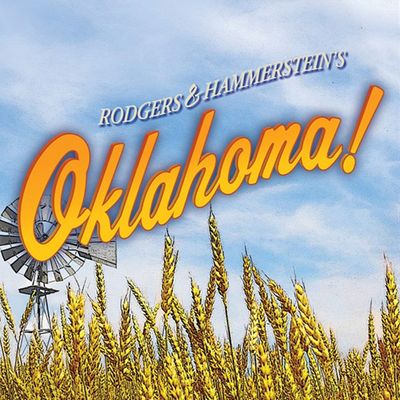
Uh Hand to God was not a show that anyone thought would transfer to Broadway. I thought it did great Broadway. Avenue Q was not a show that people thought would be on Broadway. I think that if people have the will then um then they can have the way. And it would be nice to but you know we are but we are Slave Play is another show that I didn't think was going to transfer has transferred. I'm very glad it has uh Oklahoma is another positive example of that. So I think that we are starting to take some of these risks a bit more and certainly there are producers like Scott Rudin who are taking very ambitious steps in that direction who are bringing new plays by people like Taylor Mac to Broadway on principle because he believes that that's what Broadway can do.
[20:19] Adam Feldman: And not all those plays will be successes but most plays are not successes on Broadway. So it's not unique to to strange plays lord knows. But I think that's been a that's been a good trend recently I think uh we've had a bit more of that and I would love to see more of that.
[20:37] Robert W. Schneider: I think yeah yeah and on the flip side now what trends or ideas did you see sort of dissolve in the past decade um things that we were hung over from the the you know the the early 2000s now starting to dissipate.
[20:52] Adam Feldman: I don't know it I you know when people talk about trends I I usually bristle a little bit because um often that kind of thing is is uh an accident uh yeah by the time something develops as a trend, it's usually over and the the development times of these plays is longer than people imagine, especially musicals. So when what things happen at their own time, they kind of happen accidentally, depending on on, I mean, things that have been in development for a long time suddenly appear, and it looks like they're both doing the same thing, but actually they were developed independently of each other and they don't have anything to do with each other. So uh I'm a little wary about looking at themes that way. I do think that we're seeing the seeing long-term changes that uh are continuing to happen that were true in the 2000s and and have become true in the 2010s. I think we're moving away from the great American songbook style of musical theater writing in various ways.
[21:54] Adam Feldman: Uh, and that's true not just in the in that we have fewer revivals of classic shows, but also in the way that people write new shows. Um moving away from the emphasis on sort of a jazz spine. We're moving away from the emphasis on perfect rhyme, and people's ears are changing, and that's just an evolution of how things happen. Um so even the shows that even shows by by people like Pascal Paul or uh or Lin-Manuel Miranda, people who do have a deep grounding in and love of American musical theater, they don't always observe the same rules as old musicals used to, and um that's fine if they do them well, you know. But that is that's a that's a change. We're we're we're certainly continuing to see the change in what kinds of plays get made on Broadway, uh, with with exceptions.
[22:48] Adam Feldman: Uh they tend to be smaller plays now, uh they tend to be shorter plays, plays with one sort of strange dark modular set and four people, you know, yes, um for obvious reasons those are easier to produce. Uh so it's fewer shows like you can't take it with you, where you have 50 people on stage, you know. Uh and um and and more plays like art. Um and uh and there are also for understandable reasons, there are fewer big personality stars uh who are marketable on their on their personas the way that you used to have.
[23:28] Adam Feldman: Uh you know, actors today have to be more versatile. You can't be Carol Channing and make a career out of playing two people for 50 years. Um and she did great. And God bless Carol Channing. She's amazing. But she was able to do that because you could do that. Um and uh and now you can't. Uh you can't really do that. You can't really do that.
[23:50] Adam Feldman: So you get people who have to be able to sing to these crazy places. Everything that's being written now is written for you know when Patti LuPone was singing that stuff in 1979, it no one else was singing that way. Right. No one expected anyone to go up to a high D. And uh and now everyone expects that. Right. And and and uh it's it's a little bit like figure skating, you know, when you watch it, how they keep on pushing, you know. Now women are supposed to land at quadruple axel or whatever. Oh my god. Um and uh and no one did that 20 years ago. No one. So it's so that those levels keep on rising, the levels of technical requirement keep on rising, and and meanwhile, that the margin that that leaves for for a kind of quirky individual personality shrink a little. That's not anyone's fault.
[24:43] Robert W. Schneider: No, and now you know, a lot of people have been coming to Broadway from Hollywood over the past ten years. Have there any been any like quote unquote movie stars who surprised you with their their stage technique?
[24:57] Adam Feldman: Well, many of them. Um well the other thing is okay. So what we're talking about there is again a change in the way that Broadway plays happen. The the the idea of a long-running Broadway play has kind of died. Yeah. And there are just very, very few of them. And so now the mostly the model is to have a short run with a marketable star, uh, and uh recoup your investment if you can, and maybe make a little top, and then close happy and everyone goes away having having done a nice thing and made a little money. But the idea of running for for five years on a play, uh you know, there's no Life with Fathers anymore, you know, there's no Tobacco Road anymore. Um there isn't even a Torch Song Trilogy or a Gemini. Those kinds of plays don't happen.
[25:45] Adam Feldman: Uh and when they do, they tend to be very big spectacular musical type plays like War Horse or Curious Incident. Even those don't have the kinds of runs that plays used to do. Yeah, yeah. Um but but that's it. So so yes, stage uh sorry, so-called Hollywood stars can often give wonderful performances on stage, but what a lot of people forget is that these Hollywood stars, before they were Hollywood stars, often came out of the theater and have in it, you know.
[26:14] Adam Feldman: So big surprise, Cate Blanchett's wonderful on stage, yeah, because she did a lot of stage work. Big surprise, Hugh Jackman can do I mean Hugh uh Jackman can do musicals because Hugh Jackman started off doing musicals and became a star doing Oklahoma and before he was Wolverine, you know. Um, and so when they come back, uh yes, often often but also people sometimes who don't have experience uh can surprise you in good ways. Uh there's also something, you know, it's it's very theater's a weird thing, and so much of it depends on the charisma of a star, star the star performance. Because uh in some ineffable way it's it's about their ability to command attention on stage. And some stars have that naturally on stage and uh can shape that fascination on stage.
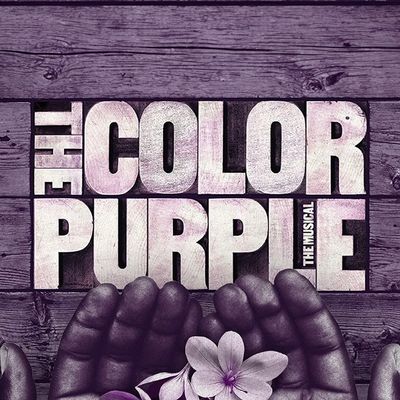
[27:10] Adam Feldman: Uh and some stars implode, some stars who are very good on screen, don't know how to translate that into a live moment in a way that sustains over the course of a long scene. Uh and they don't know how to hold themselves. They don't know how to carry their energy over into an audience. But experience isn't always the thing. An example that I give a lot on this is Fantasia in The Color Purple, which I saw in the original production of Color Purple. When she came in, she had, as far as I know, no acting experience. She had just come off of American Idol. Uh and she was magnificent in Color Purple. I mean, not only did she sing the shit out of it, but she also had what seemed to be a deep connection to the role, a deep understanding of the role.
And also the fact of her stardom made her interesting and gave her confidence, and that everyone in the audience was responding so strongly to her presence there that it pulled the show together in a way that for me it hadn't come together before when LaShawn's was doing it. LaShawn's very, very talented, but the show hadn't seemed as clearly to be about Seely, yeah, with LaShawn's in it as it was with Fantasia because Fantasia's charisma made her the central character.
[28:38] Adam Feldman: That's so interesting. But that's really one of the things about getting to do what I do is the opportunity to see the same production over the course of time or with different actors, and that can be really fascinating what people bring or don't bring. Um, and usually the production is at its very best when it opens or within the first few months of when it opens, for various reasons, but among other things the production is tailored to the talents of its cast, and that's especially true of original shows, and it's especially true of musicals, where there are a lot of changes being made up until the last minute, and often that will be about whether something gets a laugh, yeah. And so if the original performer is not getting that laugh, then it will be gone and it'll be gone forever.
Yeah, you know, and then whoever comes in is ultimately doing a character that was molded around the skill set of the original person, and so you're if you can see the original person, it's best to do that. That said, I've seen lots of times I've seen lots of replacements who have been for me superior to the people who originally played them in that production. Um, even sometimes when the original person is a terrific performer, and often when they won a Tony for that performance, you know, sometimes Tony Awards are another one of those things where it's really year to year, you know.
[30:06] Robert W. Schneider: Right.
[30:08] Kevin David Thomas: Absolutely.
[30:11] Robert W. Schneider: Hey podcast listeners, are you looking for a place to rehearse in New York City that is clean, spacious, and most importantly, affordable? Come check out Shetler Studios and Theatres, our wonderful host for these podcasts. Shetler is centrally located on West 54th Street between Broadway and Eighth Avenue, right in the heart of the theater district. Right in the heart, you'll find music, dance, and acting studios complemented by two black box theaters and six presentation venues. The professional facilities, inspired environment, and expert industry staff combined to provide the New York artist with an unparalleled studio experience. Visit their website at ShetlerStudios.com. That's S H E T L E R Studios.com. Shetler Studios and Theatres is our home for recording the legends of Broadway, and we hope that you make it your artistic home too. That's Shetler, S H E T L E R Studios.com. See you here.
[31:08] Robert W. Schneider: Now, of course, you know, none of these shows would be in theaters without playwrights. So my question for you is over this past decade, who are some of the top playwrights you saw emerge in the 2010s?
[31:19] Adam Feldman: Uh there were a lot of them, and here again, here's where you'll notice that a lot of these ones for me are off-Broadway playwrights. I love it. Uh, but they are when I look back on the 2010s, I think about people like Annie Baker. Uh I think about people like Samuel D. Hunter, who has a play now called The Greater Clements at Lincoln Center, that I think is really beautiful. Uh I think of Jackie Sibley's Drury, who um Fairview, I think of Taylor Mack, I think of Stephen Caram, uh I think of Claire Barron, who wrote um Dance Nation and uh you get older. I think of Amy Herzog, um wrote Mary Jane a couple of years ago, which was just a gorgeous play. Uh and most of these plays, I mean Caram's The Humans did go to Broadway.
Um Taylor Mack had a Broadway play last year. The other of the seven people I just mentioned, five of them have not yet been on Broadway. Um so that speaks to what we were talking about before a little bit, that a lot of the best theater, for me, the most interesting stuff is still happening in these off-Broadway spaces.
[32:36] Adam Feldman: And the problem with that is that by the time you find out it's good, it can be very hard to get tickets.
[32:44] Kevin David Thomas: Right.
[32:45] Adam Feldman: And one beautiful trend of the 2010s that has been really encouraging is the rise of this kind of encore runs. Yes. People bring back a production, an off-Broadway production, for a second run. This happened with Octoroon, this happened with Fairview, it's happening right now with This Is a Room at the Vineyard. It's something that we're seeing more and more, and that is really encouraging because it, again, it can be really frustrating when you want when you get excited about a show and you want to share it with people, and then you go online and you just realize ah too late. People can line up and there's lotteries and things like that, there's cancellation lists, but most people don't have the right time to do that.
And these regional theaters or these off-Broadway theaters have subscribers and they, you know, their seats are filled before it's even, you know, released. And so, you know, these are small theaters, they're two hundred seat theaters in limited runs. So, yeah, I mean, one answer is read the reviews when they come out. Uh read the ones that you trust and really act fast. Uh and another one is find playwrights that you think are consistently delivering work that's worth seeing. I have certainly ones that I am always gonna be interested in seeing. And take the risk and buy their tickets in advance. Because chances are even if it's not their best play, it'll still be worth your time. Take the risk.
[34:19] Kevin David Thomas: That's such fabulous advice. Um Kevin, any playwrights from your end that you really admired in the past decade?
[34:26] Kevin David Thomas: Well, there's uh I'm more on the Broadway side and one of the commercial guys who does not shy away from writing a long show, but Jez Butterworth who gave us The Ferryman and gave us Jerusalem was one of my favorite plays many years ago with Mark Rylance. I love everything that Mark Rylance says and I, of course, love, but I think Jez Butterworth really shocked us. I'm excited for Jeremy Harris to write some more and see what else we got. I think what he's doing to Broadway and Polarizing is a beautiful thing with a great piece of writing as well, and I'm excited to see what he's gonna have next. Um what about you, Rob?
[34:59] Robert W. Schneider: I was gonna give a shout out to Terrell Alvin McCraney, um whose work I just really, really admire, you know, Choir Boy and the Brothers/Sisters plays and Lucas Nath who did um A Doll's House Part Two, which I thought was just a mesmerizing evening in the theater.
[35:14] Adam Feldman: Yes, yes and yes. I'll agree with all of those. What I said before is not to say that we haven't had a lot of plays that I've liked very much on Broadway. Um and certainly both of those Jez Butterworth plays that you mentioned are highlights for me too. I thought that The Humans was great. I thought Hand to God was great. I thought one of my very favorite plays of the past ten years is Good People by David Lindsay-Abaire. Yeah, that was just a terrific play I thought. I thought the best play of this season. Um but you know, we've had a lot of really good revivals also of plays. Normal Heart, uh the revival of the Normal Heart I thought was really memorable. Um there was a, I thought that the Jessica Lange Long Day's Journey Into Night was really, for me, um so there will always be that and there will be performances. Oh my gosh, so you mentioned Mark Rylance. I mean, it's been an amazing trip this decade, so many he's done so many from LaBette all the way on. I mean, he just kept giving us so much every season.
[36:26] Kevin David Thomas: Right, uh it's astonishing.
[36:26] Robert W. Schneider: And Twelfth Night he was marvelous in and when you have people like that and you have, and then on the female side you have Lori Metcalf who's becoming the new Broadway pillar and um who is just, again, just a delight every time she's out, even when the play is not quite deserving, um, you get a lot of wonderful and the level of and Brian Cranston in all the way and you love that Rob, yeah.
[37:01] Adam Feldman: Really great performances.
[37:03] Robert W. Schneider: Um speaking of Hand to God, Stephen Boyer, uh the lead in Hand to God was giving just one of those performances that I will treasure. Uh Viola Davis in Fences.
[37:13] Adam Feldman: Yep.
[37:14] Robert W. Schneider: Nina Arianda in Venus and Fur, if you remember that.
[37:17] Adam Feldman: Oh, I loved her, yeah.
[37:19] Robert W. Schneider: Yeah. Francis McDormand in Good People was as perfect for that part, I think. Uh Christine Nielsen in Vanya and Sonia and Masha and Spike. Hysterical. One of the funniest performances. Um and last year, uh, I mean Elaine May in The Waverly Gallery and Glenda Jackson in Three Tall Women the year before that. Um so well, I mean last season and the season for uh the uh Glenda Jackson in Three Tall Women, that production generally is, I thought, as good as a Broadway production can be.
[37:54] Adam Feldman: Right.
[37:55] Robert W. Schneider: Um remarkable design. Um there have been a lot of directors. Joe Mantello, uh directed that Three Tall Women and he's also, if we talk about like the Mark Rylances and the uh Lori Metcalf's, we also, I mean, we also have directors who keep on delivering.
[38:18] Kevin David Thomas: Yes.
[38:18] Robert W. Schneider: And those are people like Joe Mantello who did The Humans and Blackbird and Three Tall Women, uh and people like Bart Sher who did, you know, not just musicals but also shows like Oslo and Golden Boy and Thomas and uh Marianne Elliott. Oh my god.
[38:35] Adam Feldman: The Angels in America and also Curious Incident and also War Horse. You know, these are, and Company this season, yeah.
[38:42] Kevin David Thomas: Yeah, season fingers crossed.
[38:44] Robert W. Schneider: And Joe Mantello also back as an actor in The Normal Heart, which was great to see.
[38:48] Adam Feldman: Oh, he was so brilliant in that.
[38:50] Robert W. Schneider: Um I saw him in Angels in America in the nineties when I was a wee one. Uh and uh we are, when I was a wee one.
[38:59] Adam Feldman: And uh that was, I remember his Lewis in Angels in America very well. That was really a seminal performance for me. He is such a special artist, such a special artist.
[39:10] Robert W. Schneider: Actually, really quickly I wanted to ask you, Adam, do you remember the first Broadway show you ever saw?
[39:15] Adam Feldman: I I I I don't remember which was which. I remember the first two that I saw, because I remember the trip that it was. And uh I don't remember whether we saw the play first or the musical first, but I saw I saw Torch Song. It's not Torch Song Trilogy. I saw Brighton Beach Memoirs.
[39:30] Kevin David Thomas: Oh!
[39:30] Adam Feldman: And I saw uh Sunday in the Park with George.
[39:34] Kevin David Thomas: Oh my god.
[39:34] Adam Feldman: Well that's kind of a genius trip, isn't it?
[39:36] Kevin David Thomas: Those are good ones, great.
[39:38] Adam Feldman: It was uh Sunday in the Park with George. I saw the uh the original leads were already out of it. I saw uh Robert Westenberg and Marion Plunkett.
[39:46] Kevin David Thomas: That's great.
[39:47] Adam Feldman: Um and Dot. And it was um uh I loved it. I remember loving the first act and being a little confused by the second act.
[39:56] Kevin David Thomas: That's honest.
[39:57] Adam Feldman: Yeah, I think that's the consistent. That's the thing, you know. If you like Sondheim shows, and I do, and the nice thing about that is that slowly starts to change, and you start really digging the big cuts, you know.
[40:14] Kevin David Thomas: I love it.
[40:16] Adam Feldman: I love it.
[40:16] Kevin David Thomas: Hey, Kev, anything for you? Any Broadway productions or directors or performers that you thought were really exemplary this year?
[40:23] Adam Feldman: Uh this decade, I just think this last decade, yeah.
[40:25] Kevin David Thomas: Well, I mean the name of a name, a director that keeps coming up is Anna Shapiro. I feel like she's just been everywhere. And then also Trip Coleman. I think we're gonna see a lot more of his work. I know that, you know, Significant Other, Rob is one of you, you know, we've talked about that.
[40:37] Adam Feldman: I love that part, yeah. Um, but I and I, we, I mean, I can't get through this podcast without bringing up Eva Van Hova because this is the decade that brought us A View from the Bridge where they're barefoot on stage and everyone was like, what the hell is going on? And then he just keeps on giving us more fascinating head-scratching moments in the theater. But as far as productions that I was completely devastated and wiped away with was just a couple years ago, Indecent. Also gave us Katrina Lenk, which was like a revolution. But I was so completely moved by Indecent that it just really to this day still stays with me in some of the visions and the themes that I saw on that.
[41:16] Robert W. Schneider: Yeah.
[41:16] Adam Feldman: Yeah, I agree. Beautiful, beautiful production. The whole Adina Verson, who is in that also is, she's been popping up a lot in little off-Broadway plays. I don't want to, when I say little, I don't mean that dismissively. I mean smaller productions. And she's really gifted. And it's been, yeah, Indecent was magical. But there's another example of a show that began off-Broadway and I think it was very beautiful, transferred very beautifully to Broadway. Um, and there's so much there, always is so much. This is the challenge of keeping up in this city.
[41:54] Kevin David Thomas: Yeah.
[41:58] Adam Feldman: And there are trends, how should I say, there are less salutary trends as well, you know.
[42:08] Kevin David Thomas: I'll take that.
[42:09] Adam Feldman: But you know, I often feel even when, okay, so someone like Evo Van Hova, I'm a little bit on the fence about what he's been doing more recently. Maybe it's just that I'm a little Evoed out having seen so much of his work over the years, and I saw a lot of it off-Broadway, and I am really thrilled that it has moved to this new sphere. I think that it pushes the Overton window, you know, it pushes the envelope of what can be done on Broadway. And I think to some extent things like the Daniel Fish Oklahoma, which I love that's on Broadway right now, reflects a little bit the aftereffects of those two Evo revivals that we had a few years ago. It just meant that people could look at something that was unconventionally directed, unconventional for Broadway, very conventional if you go to BAM on a regular basis.
But was, you know, but is unconventional for Broadway and that it could be successful, that it could move people. I think we're gonna be seeing a bit more of that quote-unquote unconventional director-driven.
[43:24] Kevin David Thomas: Yes.
[43:25] Adam Feldman: Which is exciting, I think.
[43:27] Kevin David Thomas: Yeah, it can really open up a text if it works right.
[43:30] Adam Feldman: I thought that for me, the Evo view of A View from the Bridge worked a lot more effectively than the Evo Crucible. The Evo Crucible just felt a little confused to me and thus confusing. I mean, I don't know if I mean it created the possibility that you could come away from The Crucible thinking that the attitude toward it was like, well, maybe they were witches.
[43:44] Kevin David Thomas: Yeah, right.
[43:44] Adam Feldman: I don't know if that's really what Arthur Miller was going for. But, you know, certainly they were very effectively staged in some ways, they were very striking and they were very memorable some of their key imagery. And I'm very curious to see what he's gonna do with West Side Story. I'm sure people will be up in arms.
[44:18] Kevin David Thomas: Already are, yeah.
[44:19] Adam Feldman: But you know, you can't just do the same thing over and over again. And I love the same thing, don't get me wrong. Like I'm very happy to have a traditional revival. Some of my most pleasurable evenings in the theater. You know, that Mark Rylance's Twelfth Night, which was as traditional as a cat's, was glorious for me. The Patti LuPone Gypsy was a more or less standard revival, and for me, connected in all the right ways. So I don't, I'm not opposed to this. But give things some air. Let them breathe to the new generation.
[44:52] Kevin David Thomas: I love it.
[44:53] Adam Feldman: There was an old Saturday Night Live sketch, this is a digression, but there was an old Saturday Night Live sketch years ago with Phil Hartman and Jenna. This is my favorite sketch of SNL of all time.
[45:01] Kevin David Thomas: I talk about it on the podcast.
[45:02] Adam Feldman: But go ahead.
[45:03] Kevin David Thomas: I just—
[45:18] Adam Feldman: And why, you know, how does it compare to Yul Brynner? And how do you step into Yul Brynner's footsteps and why aren't you bald? And you know, all of these, and finally he breaks down into tears and his wife starts berating the host. And she says basically, "No, my husband is a good man. My husband is a good actor. He's trying his best. If you want Yul Brynner, dig him up." And I think there's something to that, you know? Like you can say all you know, you want Yul Brynner, dig him up. We're not gonna see Yul Brynner again.
[45:56] Kevin David Thomas: Now don't judge me, Adam.
[45:57] Adam Feldman: I actually have that quote and I have it on a t-shirt.
[46:00] Kevin David Thomas: I'm not judging you.
[46:01] Adam Feldman: I print great.
[46:04] Kevin David Thomas: That makes me so—
[46:06] Adam Feldman: But it's true. We need, we need, you have, you need air. You need to reinvent, you need to allow people to explore these shows under a different lens. Otherwise, what's the point of why we're doing it?
[46:16] Kevin David Thomas: Right, and it has to speak to a new audience. And things that were funny to us 50 years ago are not necessarily funny to us.
[46:25] Adam Feldman: And a lot of that I was talking about this recently on another show, so I don't want to go into it, you know, I don't want to bore your audience if they are listening to multiple versions of me talking on podcasts. But it's true sometimes, you know, it just a show connects with a different generation in a new way because it has things embedded in it. If it's a good enough show, it'll have a lot of things going on, and sometimes different colors will come out in different lighting, you know.
[46:51] Kevin David Thomas: No, that's so true.
[46:52] Adam Feldman: And then finally, to wrap up, what do you think were some of the biggest theatrical news stories of the decade?
[47:00] Kevin David Thomas: Oh boy.
[47:01] Adam Feldman: Charging your phone at Hand of God. Well, look, I mean, Hamilton is the big Broadway story of the 2000s. It's the big musical theater story of the past 50 years. There's no, well, at least in the past 50 years, there's been nothing like it. There's been nothing like it in terms of the pop crossover.
[47:22] Kevin David Thomas: Yeah.
[47:24] Adam Feldman: This was a mass culture success in a musical theater piece that has not been known really since the 60s, probably. Not even things like A Chorus Line or Cats. Those were not the most downloaded, you know.
[47:44] Kevin David Thomas: Yes.
[47:45] Adam Feldman: This was a crossover hit with the real general public. And that never happens anymore. So that is very exciting. And also what that represents, one of the larger trends that we've been seeing a lot more of recently, and I think this is nice too, is this trend of racially inclusive casting and of racially blind casting, ethnicity blind casting, gender blind casting, this more idea of making space for different communities. And conversely, bizarrely, because the world is complicated, conversely, sometimes a more specific and limited idea of who and only who can be cast in certain roles.
[48:35] Kevin David Thomas: Right.
[48:35] Adam Feldman: So we've become very, very sensitive to issues of cultural representation. So issues, you know, issues related to anything perceived as a relative of blackface. And that is expanding daily in terms of who can play. You know, can non-gay people can play gay characters, can non-disabled people can play disabled characters. So there's a bit of a contraction on that part of the casting side, and on the other part of the casting side, there's an enormous expansion. So in a production like Oklahoma, you have a woman who uses a wheelchair. You have two actors, three actors of color in the cast and that are being used in very specific ways that bring out what the show is doing. So they, in cases like that, they are using race in very particular ways and then you have other cases where it's just being used invisibly and in the sort of Audra McDonald and in Carousel model where it's just part of the suspension of disbelief.
So I think that the landscape for all of that has been changing very rapidly in interesting ways. We've certainly seen an exhausting influx for me of musicals especially that are based on films, based on successful brand name films and jukebox musicals that are and bio musicals that are based on successful bodies of work. I think that we have seen so many of those that I would be very surprised if we did not see a counter reaction and an exhaustion factor from the Japan audience for that.
[50:14] Kevin David Thomas: Um-hum.
[50:15] Adam Feldman: Because ultimately if you look at the real big successes, the ones that are really defining the past 10 years on Broadway, you're looking at original shows. You're looking at The Book of Mormon, you're looking at Hamilton, you're looking at Dear Evan Hansen, you know, and Come From Away. You know, those are the ones that really connect with people and that's because they come from distinct creative voices and they are telling new stories that are developed to speak to modern audiences, and not just to tap into audiences' nostalgia for what they felt 20 or 30, 50 years ago. And so that's something that I think everyone is bearing in mind. I think that's very exciting because I'm excited to see then what the next decade holds.
[51:06] Robert W. Schneider: Adam, I cannot tell you how much we appreciate you taking time out to talk to us today. You are one of our most beloved critics. We love reading your work, and we thank you so much for all that you've given us over the past few years.
[51:18] Adam Feldman: It's a great pleasure to be here. Thanks.
[51:19] Robert W. Schneider: All right, everybody, till next time. Today's episode was recorded at Shetler Studios on 244 West 54th Street. Visit Shetler Studios to book your room today, and you can be as cool as us. That's S-H-E-T-L-E-R-Studios.com.
[51:36] Robert W. Schneider: And a big thanks to our sound editor Daniel Schwartzberg and social media manager Bethany Anselicki. And friends, don't forget we want more folks to hear these incredible stories, and that's where you guys can come in and help us out.
[51:47] Kevin David Thomas: Yes, in order for people to find out about us, we need lots of ratings on iTunes. The more ratings, the more they'll come up in searches. So head on over to iTunes, search for Behind the Curtain: Broadway's Living Legends, click on our logo, click on ratings and reviews, then write a review and leave us five stars and make us feel as special as Eliza Doolittle on Eliza Doolittle Day.
[52:10] Robert W. Schneider: Or you can leave us one star and make us feel as bad as Annie did in that weird production in Boston where Annie dreamed about being adopted and then ended the show back in the orphanage. True story, Rob was there.
[52:20] Kevin David Thomas: I saw it.
[52:22] Robert W. Schneider: So head on over to iTunes and make us feel even more special than we already do.
© Broadway Podcast Network, All Rights Reserved