

Two of the Behind The Curtain's favorite guests, press agent Joshua Ellis and critic Peter Filichia, join Rob and Kevin to look back on their interactions with some of Broadway's most famous, infamous, and truly bizarre legends of the theatre... Read More
From the show: BEHIND THE CURTAIN: BROADWAY'S LIVING LEGENDS » Podcast
Featured Shows
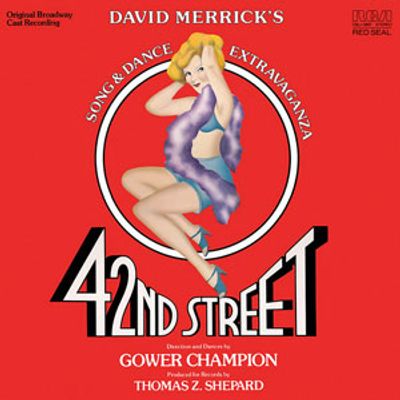
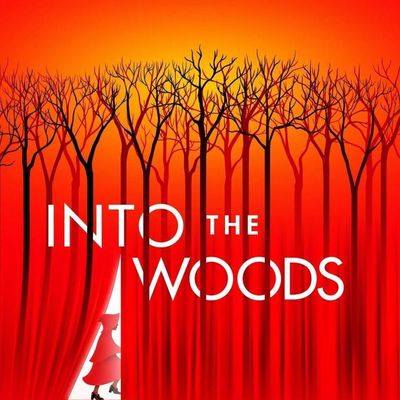
About
Two of the Behind The Curtain's favorite guests, press agent Joshua Ellis and critic Peter Filichia, join Rob and Kevin to look back on their interactions with some of Broadway's most famous, infamous, and truly bizarre legends of the theatre.
Peter and Josh look back on the true world of Sir Laurence Olivier, the terror of a certain Broadway diva, the kindness of Yul Brenner, and the humility of Diana Rigg.
Warning: There are some naughty words in this one so you might want to make sure the kiddies are firmly tucked away before listening.
Become a sponsor of Behind The Curtain and get early access to interviews, private playlists, and advance knowledge of future guests so you can ask the legends your own questions. Go to: http://bit.ly/2i7nWC4
Transcript
This transcript was automatically generated and might contain errors.
[0:00] Robert W. Schneider: Hi, I'm Robert W. Schneider.
[0:01] Kevin David Thomas: And I'm Kevin David Thomas.
[0:02] Robert W. Schneider: And this is Behind the Curtain: Broadway's Living Legends.
[0:05] Kevin David Thomas: Boy, we have a fun day in store for us today because we have two of our favorite guests coming back.
[0:12] Robert W. Schneider: We're having a joint show. We very rarely have these, Kevin, where there's more than one guest, but these two gentlemen are filled with such wonderful stories. We figured how could we not get them in the same place at the same time?
[0:23] Kevin David Thomas: You've seen them before if you took a look at the York a couple of weeks ago. Their wonderful show. Is it I want to make sure I get the title right? Is it from Philly, Boston, and Baltimore?
[0:30] Robert W. Schneider: In Philly, Boston, and Baltimore.
[0:40] Kevin David Thomas: We already have a song. If you haven't guessed, folks, it's Joshua Ellis and Peter Filichia. Gentlemen, how are you today? Welcome back.
[0:47] Joshua Ellis: I'm alive, I'm a tingle, I'm a glow.
[0:52] Robert W. Schneider: If you can guess every allusion to musical theater Peter makes during the course of this conversation, if you get all of them right, we will send you a cookie. He's subtle too. He'll throw you an obscure. You gotta watch out. He'll throw you an obscure lyric every once in a while.
[1:04] Robert W. Schneider: So, gentlemen, first of all, the show that you did at the York was so fantastic and so wonderful, and the two of you have such great chemistry together. I'm hoping that that show will go on, but I'm very excited because today you are giving us a whole new show, a whole new topic of conversation between the two of you. And we're sort of the guinea pigs, but we're the very excited guinea pigs for this.
[1:25] Robert W. Schneider: So both of you have had incredible careers. Josh, what do you what is your line of work for our listeners who might not remember? How would you describe what you did?
[1:32] Joshua Ellis: I was a press agent for all Broadway and Off-Broadway shows for about 30 years. And some of those shows would include Nicholas Nickleby, Into the Woods, 42nd Street, Lena Horne, the Lady and Her Music, Frank Langella in Dracula, Yul Brenner in The King and I, and that's just to name a few.
[1:58] Robert W. Schneider: And Peter, what is your line of if you're listening to this podcast, you know, but just in case someone listens 3,000 years from now.
[2:05] Peter Filichia: For the most part of the last 52 years I've been reviewing theater. Starting in college, my first review ever published in the college newspaper was for the Broadway production of Hair.
[2:17] Robert W. Schneider: Oh my gosh.
[2:19] Peter Filichia: Yeah, so I go way back. And there were years when I wasn't doing it at all. Years when I was a high school teacher, among other things. But for the most part of the last 52 years, that's what I've been doing to make a living.
[2:33] Kevin David Thomas: That's fantastic. Now, how did you two gentlemen first meet one another?
[2:39] Joshua Ellis: I remember, do you, Josh?
[2:41] Peter Filichia: No.
[2:41] Joshua Ellis: So would you tell us, Peter?
[2:43] Peter Filichia: I certainly shall. It was either in late 1987 or early 1988. What had happened was there was going to be a banner put up at the TKTS booth, and it was going to be for Broadway Cares, and a lot of us met down there to celebrate the banner going up. And in fact, there was going to be a party that night at Copacabana. And so this was a big event, and I happened to be standing next to Josh, who's a very gregarious person, and he said, Hi, I'm Joshua Ellis. And I said, Oh, hi, I'm Peter Filichia. And he said, Oh, you wrote that article in Theater Week this week that said, How do you solve a problem like Maria when Mary Martin leaves the show? And I talked about Martha Wright coming in and the things they did with a photograph, which is another story entirely.
So we started talking, and that night at the Copa, I'll never forget Josh came up to me and started singing Happy to Make Your Acquaintance from The Most Happy Fella. And here was the interesting thing. I am telling you, the food at that party was just incredible. Groaning board after groaning board after groaning board of food piled to the ceiling. And yet we didn't eat anything that night because we were so busy talking about all the shows we had seen. I in Boston growing up, he in Philadelphia growing up. And that was the start of our perfect relationship.
[4:18] Robert W. Schneider: That's one point there, folks. That was one point on that. I love that. So now you two have had interactions with so many stars. I mean, as so many people that you know, we have idolized for years upon years upon years. So let me ask you, what was the first time for both of you you both met someone and said, Oh my god, I'm so starstruck, I don't know what to say. My tongue is tied. Let's go in alphabetical order. Mr. Ellis.
[4:45] Joshua Ellis: Okay. Well, there's two kinds of meeting celebrities. There's the meeting celebrities before you're in the business, and then there's meeting celebrities after you're in the business. So you're actually on a professional level with them. My sister and I growing up in Philadelphia would go backstage at virtually every show that we saw. So the early ones were like being with Liza Minnelli and Tammy Grimes and Robert Preston and Sammy Davis. And that was us with autograph books going into dressing rooms. So that was one area. It's the Schubert Theater, and we just, oh, okay, let's say with high spirits, I was fifty, just turned 15, my sister was 11. And we would say, We'd like to see Miss Liza, please.
And they'd say, Well, hold on a moment, please, and wait. And then Miss Liza had like an assistant who came down and brought us up to her dressing room. So there was not much to do about it. I mean, we didn't know and we weren't famous children or attached to anything. We were just kids. And I guess they didn't think we were much of a threat. So we just went up the stairs. And after a while, I mean, there were only like five theaters in New York and in Philadelphia, and we knew backstage really well, because like when Anyone Can Whistle was there, you know, the Forest Theater in Philadelphia was built, and they realized just before the opening that they hadn't built dressing rooms. So when they did Anyone Can Whistle, I remember very specifically going down to the basement, and everyone's dressing rooms were just curtained off.
So it wasn't like a room that we met Angela Lansbury; it was like a curtained off area, and we thought, oh, it's like we were meeting her in a tent, as opposed to like Robert Preston at the Schubert, who was in a really lovely dressing room, which we had been in before because we had seen B. Lily there. I mean, it was the same rooms. So we just went. That was it. Was it it wasn't the big deal was meeting them. The big deal was not just getting backstage. And okay, so you asked me the question, like who was like, okay, the first one I had to deal with professionally, I guess was Laurence Olivier. And the show was Habeas Corpus, and he had come to see the show. This was at the Martin Beck Theater, 1975, I think.
Okay, he comes in and he sits down and I say to him a little spiel that I will then say about 4,000 times in my career, would you like to go backstage after the show and see the artist? Oh yes, he said, that would be lovely, dear boy. And then I said, would it be okay if we take pictures? Oh, fine, fine, no problem at all. And as I'm leaving his seat and going back into the lobby, I realized that Joan Fontaine is there, who he had appeared with in Rebecca. And I thought, oh my God, Habeas Corpus needs every bit of publicity it can possibly get. So I asked Miss Fontaine if she would have any issue with seeing Olivier and going backstage. Oh, darling Larry, that would be perfectly marvelous. So I think to myself, okay, but I better alert Laurence Olivier that she's there just in case, you know, that there's any kind of issue.
And I go back to his seat; he's sitting on an aisle, and I lean over and I say, excuse me, Lord Olivier, but Joan Fontaine is here tonight. Would it be okay if we take pictures of the two of you together? And he beckons me closer to his mouth, and I lean over, and he indicates even more, get closer. And he whispers in my ear, dear boy, she is a cunt. I think, ooh, well, probably that means she doesn't want to take pictures. That would, you know, that would, you know, I mean if he thinks that of her, I mean, and remember, if I'd be shocked by any word like that coming from anybody at that time, but out of Olivier's mouth. So I say, well, we don't have to. It's perfectly okay. Dear boy, dear boy, no problem at all.
I cannot wait to see her. And so we took the pictures. So it was like it wasn't years; it was years later when I learned that that word is actually used far more frequently in England among theater people. Unbelievably frequently. And actually, at certain times, it carries a certain charm with it, you know, that so it wasn't the shocking word that it was to my ears in 1975. It was a term of endearment. If I can find a Hallmark card from 1975 with that on it, that would be fantastic. So these are great judges.
[10:11] Kevin David Thomas: Okay, so now Peter, same question for you. Star struck as a civilian, and then starstruck as a critic and historian.
[10:19] Peter Filichia: Well, I'm going to start by talking about an incident that happened when I was student teaching. Oh yes, and this was in Brighton, Massachusetts, in a very inner city school. And the teacher these kids had was very old, and here I was, 22 years old, and just by being young, they loved me. Well, anyway, the eight weeks ends, and ironically enough, I'm working at a hotel as a desk clerk in the town right next door, Alston, Massachusetts, and three of the girls who were in the class come in to visit me, and I'll never forget them: Aisha, Shakira, and Nadine. And they were there, and we were just talking, and they were so glad to see me again. I was glad to see them because they were lovely, lovely girls.
And in walked Diana Ross and the Supremes to check into the hotel. Well, these girls could not believe their good fortune. I mean, here were the women that they idolized; they had their records. And I am telling you, whatever you hear about Diana Ross, Diana Ross and the Supremes that day remembered only six, seven, eight years earlier when they were these teenage girls. And as a result, they talked to them for about 15 or 20 minutes. They were in no hurry to get to their rooms. Of course, they signed autographs and all that. They asked them what they were going to be when they grew up, all those questions that you would hope people would ask, but indeed they did. And I again, I've heard the stories over the years, so have you.
I'll be a character witness for Diana Ross and the Supremes any time, is how extraordinary they were. So that's my pre-story. In terms of when I was starting out interviewing people, what I remember best was Robert Shaw. He was doing a movie version of The Royal Hunt of the Sun, a play by Peter Shaffer, and now there was a movie version. And I was writing for my college newspaper, and he had been announced to be the leading man for the musical Her First Roman. And I so everybody's asking about the movie; everybody's asking about his film because it's mostly film critics. And I said, You must be very excited about doing Her First Roman, the Broadway musical of Caesar and Cleopatra. And as it turned out, he had just been told the day before that Richard Kiley was interested in the part and they were going to use him instead.
And I'm telling you, he just erupted with bile about the producer and all director and all that kind of business, and I wasn't prepared for it at all, at all, because good lord, oh yeah, I didn't know that a celebrity could let down his guard like that and really come down into brass tacks, but he did, but he did. You know, Josh, when you were mentioning the shows that you worked on earlier, things like Nicholas Nickleby and Into the Woods.
[13:23] Peter Filichia: I didn't hear you say Me Jack, You Jill for some reason. I heard that that title was not in that description. Can you tell us a little bit about that show?
[13:32] Joshua Ellis: Okay, Me Jack, You Jill. I actually went back to IBDB because it is the worst show I ever publicized, and it is not more famous because, to my mind, I did not see Moose Murders, but I can't imagine a show being worse than Me Jack, You Jill at the Golden Theater in 1976. It closed during previews, so that in point of fact, the critics never saw it. So if the critics had seen it, they would have said this is the worst show ever. But how do you know you're working on the worst show ever? Okay, it's a show set on the stage of the Golden Theater. So you're in the Golden Theater, and it's set on the stage of the Golden Theater. And it's about three women who have lunch on the stage of the Golden Theater.
They are the mother, the wife, and the girlfriend of a man who has been killed. And at this luncheon, they are delivered three packages. The mother gets a package with the man's head, the wife gets the heart, and the girlfriend gets his penis. And they're all nicely wrapped up in boxes. The three ladies did Me, the girlfriend was Lisa Kirk, and the wife was Barbara Baxley. It was okay. This is a show where the actors literally spoke to the audience as if they were in a theater, and they would say things like, "This is quite awful. We have to just close the curtain and send the audience home." And people would say, "Right on, Lisa, why didn't you tell us earlier?" So that people were talking back to the actors during the show.
So there was one Wednesday matinee where Barbara Baxley, who I did not know at all well, said, "Can you give me a hug?" I said, "Sure." And I gave her kind of a cursory hug, and she goes, "Oh no, no, no, no, no, no. I need a real hug." And I gave her a real hug, and she whispered in my ear, "There was so much hate coming from the audience that I need to be fortified by a hug before I can even walk on stage." So you know it's bad when you see that. There was the time where a rat goes across the supposed to go across the fly space, and Lisa Kirk happens to have a gun in her wall in her pocketbook, and she takes out the gun and shoots the rat, and the rat's supposed to just drop on stage, but of course at one performance she shoots the gun and nothing happens.
So the bit of business about the rat being in the middle of the stage means absolutely nothing, so they skip that part. But about 15 minutes later, plop, the rat drops on the floor. So, and the producer was Adela Holzer, who was a very rich producer, and she died a few months ago, and she was certifiably crazy. I mean, she spent jail time because she was doing like those Ponzi schemes that got involved with Broadway people.
[17:22] Peter Filichia: With Senator Joe, right? That was like the show she...
[17:24] Joshua Ellis: So Senator Joe. I'm walking home one Friday night along Eighth Avenue, and while the marquee says Kenny Loggins and Celebrate Me Home, which had closed weeks before, the lights were on and there was a crowd of people underneath the marquee. I had no idea what was going on, but I went and joined the crowd, and there was a ticket taker, but I just thought I'd try to walk past him, and he stopped me and said, "Do you have a ticket?" I said, "Do you need one?" as if it were the strangest question in the world. And he said, "Yeah, of course you need one." So I said, "Fine." I went to the box office. I said, "Ticket for Felicia." They pulled out a big water ticket and just handed me one, and that was that.
Now I have no idea what I'm about to see. I mean, no idea. So they hand me a playbill, and the playbill is split diagonally on the cover with two logos. One is for a show called Senator Joe, and the other one is for a show called Return of the Nimrod. And these two shows were going to be done in repertory. And so now at least I know one out of two is what I'm going to be seeing. I don't know which one, but I'm still having this unique experience of going into a theater having no idea really what I'm going to see. Well, it was Senator Joe. And by the time Senator Joe, by the way, refers to Senator Joe McCarthy, the witch hunter guy who caused so much trouble in the 50s and caused a lot of people to lose a lot of time and money because of the blacklist and reputation too, for that matter.
So it was really god-awful, especially when there was the scene that took place in Senator Joe's stomach. So you had these backdrops of this bloody, bloody inside of his stomach. Really lots of blood, drips of blood on the backdrops, covering the stage, both the wings too. I mean, so and out came two performers known in the playbill as Fatty Acids, and they danced around in Joe's stomach. Well, you know, one act of this was plenty. If I had known it was going to be this much of a bomb that it would never even open, just like Me Jack, You Jill, no critics ever went. I probably would have said, but it was Friday night, I was tired and all that. Now I wrote in one of my books that the marquee was not up, and since then several people have emailed me the marquee that was indeed up.
Yes, it was on the other side of the album theater. I guess it was the Neil Simon then. But anyway, if you were coming up from Broadway up 52nd Street, you would have seen the Senator Joe marquee. But I was from Eighth Avenue on 52nd Street, and so they hadn't put one up there. So it was just one out of two that they had up there. That's right. So maybe the other one's gonna be for the Return of the Nimrod. I don't know, which never saw the light of day. But this was again O'Horgan, Tom O'Horgan, who had directed Hair. Just a quick Tom O'Horgan story, because it involves David Merrick and people like David Merrick's stories. David Merrick, for people who don't know, was a great Broadway producer, perhaps the greatest Broadway producer in the twentieth century.
And his shows included Gypsy, 42nd Street, Hello Dolly. Okay. The very last show at the old Helen Hayes Theater was a play called I Won't Dance, directed by Tom O'Horgan. And it is customary in the theater that after the final run-through, you do your photo call. That's always happened. And after the first, the final run-through, I'm sitting in the theater with Martha Swope, the renowned photographer, and Tom O'Horgan wants to give the cast notes. And I think, well, okay, fine. You know, it's only 10 o'clock, and we have till five of midnight. So that's fine. So the note session goes on, and it goes on, and it goes on, and it's 11 o'clock, it's 11:15. It's finally quarter to 12. So I have exactly 10 minutes to do a photo call. And I say to David Merrick, "Mr. Merrick, I can't possibly do a photo call in 10 minutes." And he said, "It's longer than the show's gonna run." And that turned out to be true.
[22:07] Peter Filichia: You know, what I want to ask, Josh, all right, so Oliver Haley wrote I Won't Dance. His first Broadway show, first one, Sleep Whistled, opened on February 26, 1966, and closed on February 26, 1966. His second show, Father's Day, opened on March 16, 1971, and closed on March 16, 1971. I Won't Dance opened on May 10th, 1981, and closed on May 10th, 1981. Three shows, each of which ran one performance. Did he ever discuss anything about that one performance run of each of these shows?
[22:46] Joshua Ellis: No.
[22:47] Peter Filichia: As would not be expected.
[22:50] Joshua Ellis: Okay, okay. Very quick thing about I Won't Dance. It was truly terrible. And Douglas Watt, who was the critic at the New York Daily News, tapped me on the shoulder as he was walking out and said, "Oh, do you owe me?" And I thought, ooh, I've never heard that from a critic. And it was the last day of that season. And there was a show that opened in the afternoon, a show that opened at night, and then the season was over. And then there was another show that opened after the Tony cutoff date. The reason the show opened after the Tony cutoff date was because the producers involved with Lena Horne, The Lady in Her Music, decided, okay, let's just wait till the whole season is over, and then we can open.
There will be less pressure. It will just be a totally different feel for this from the season and the craziness of the last week of the Tony Award season, where every there's a show opening every day or two. So two days after I Won't Dance, I see Doug Watt again, and there I am handing him tickets to Lena Horne, The Lady in Her Music. The critics performance, which I hasten to add, was the best performance of that show she ever gave. Wow. I mean, as great as every other performance was, that critic's performance was the peak. And when he left, he said, "I know two days ago I said, You owe me. I had no idea that I would be returned with a gift of such magnificence."
[24:41] Peter Filichia: Oh, wow. Isn't that sweet?
[24:42] Joshua Ellis: That is very sweet. That's really, really great story.
[24:45] Peter Filichia: Um, Joshua, could you tell us about Diana Rigg, the Diana Rigg story? Because it's a... it's a... well, what had happened was I was going to interview Diana Rigg at Symphony Space at eight o'clock on a Monday night. And I got there at four o'clock in the afternoon because I wanted to see the lay of the land and where everything was and what the stage would be like and all that. And what was amazing to me was how many late middle-aged men were already in line for an eight o'clock show at four o'clock in the afternoon because they grew up with that TV series The Prisoner, and they thought Diana Rigg was the sun and the moon and the most alluring woman in the history of mankind. Don't forget, I haven't seen a James Bond movie in decades, but don't forget Diana Rigg was the only one that James Bond married.
That may no longer be true, as I say, because I don't know James Bond movies anymore. But certainly in the early days of the James Bond movies, she's the only one who landed him. Of course, she did have to die very quickly, but she did marry him, so that's how alluring Diana Rigg was. So anyway, I get backstage and we're going over, she comes in and we're going over this, that, and the other thing about what we should talk about. And I was a little reluctant to bring up Colette. Colette was a musical that Tom Jones and Harvey Schmidt wrote that played Denver and Seattle, and I think that was it. Maybe it went to San Francisco. But anyway, it closed out of town. A tremendous disappointment. And I said, "Do you want me to bring up Colette or would you rather I not?"
And she said, "Oh no, no. No, bring it up. Listen, I mean, truth to tell, that was my fault. I just could never find the character. Just could not do it. I tried so hard, but it just eluded me." So we get out there and I said, "Colette, that musical you did, can you talk about that?"
[26:50] Joshua Ellis: She said, Yeah, you know, Harvey Schmidt and Tom Jones could never find the character. So suddenly it wasn't a case of her not finding the character when she was in front of an audience. Um still with us too, isn't she? I mean, yeah, I love that story. That is that story makes me laugh so much. It's so show busy, really, when you come right down to it. So show busy right at the surface and then the real truth underneath. It's kind of like Laurence Olivier. Uh guys, uh, I'm gonna throw a name at you both. Uh and we can go Josh and then Peter, but I think just saying the name is gonna trigger a little bit uh the name and he was a previous guest, rest in peace. Uh John Simon, uh, who is a you know a polarizing figure, uh a critic, some might say he might say, and and he was for many, many, many years. Uh and of course, we've had in numerous interviews with actors who uh it can be 20, 30, 40 years later, they can still recite the line that John Simon said about them in some derogatory way.
[27:50] Robert W. Schneider: And I I hate to interject, but I think Kevin, you might agree with me. His interview was probably one of the most bizarre interviews for us if not the most bizarre interview we ever had.
[28:01] Kevin David Thomas: What about after?
[28:01] Robert W. Schneider: Well, I'll tell him after. When when he asked for train money, or he asked for somebody to go to lunch with him.
[28:06] Kevin David Thomas: Yeah, and and at lunch, he asked your assistant to pay for lunch.
[28:09] Joshua Ellis: Yeah.
[28:10] Robert W. Schneider: Yes, yes, yes, yes. We had an intern who had to pick him up from the train station and then take him to lunch. Um, and the intern said it was the most bizarre lunch because all he wanted to do was talk about which actresses had the nicest feet on Broadway.
[28:24] Peter Filichia: Wow. And so there you go. Sorry, I I that's a question for Josh and Peter, and I just decided to interject myself.
[28:31] Kevin David Thomas: No, give me some Peter, you go first.
[28:35] Peter Filichia: Well, my experience with John Simon uh was a very different one because um in the early 90s, I was writing a book called Let's Put on a Musical, which was a guide to high school and community theaters telling them the pros and cons of musicals that they might or might not do. And um there I was uh going to see any musical that I was going to put in the book, any production anywhere, just uh so I could see what the difficulties were. And I went in my way to Mary Mount uh on the east side, the college and uh star production of She Loves Me, uh directed by Patricia Hogue Simon, uh who I had heard was John Simon's wife, and she did a wonderful job beyond belief. It was just perfect.
[29:20] Peter Filichia: All right, some weeks later, I'm at a party at a wonderful place that no longer exists, a beautiful little nightclub called Laura Bell. And um, it's a big party, and I see John Simon with a woman um standing there talking, and I think, oh, this must be his wife. I'm going to go over and tell her what a wonderful job she did. So I started walking over, and what hadn't occurred to me was that she immediately moved away, assuming I wanted to speak to him, because she was quote unquote nobody, while he was already rolling his eyes, thinking, oh, here's another fool I'm going to have to stop or saying, Why did you say such and such about so and show when so and so was really wonderful? And I thought, this is great.
I am going to ignore him completely. It's going to be so great since he thinks you know he's the big shot and she's nothing. So I went over to her and said, Are you Patricia Hoke Simon? She said, Yes, surprised that anybody would know or care. I said, Listen, um, I went to see your production of She Loves Me, and I thought it was terrific. Oh, thank you. Oh, aren't you nice? Oh, that um, and I brought up some specifics about where I thought she did wonderful work, and she was so pleased. And I said, I'm doing this book, and I'm wondering if you have any suggestions about what to do uh with She Loves Me. And she gave me one that actually wound up in the book.
[30:47] Peter Filichia: And um, so anyway, from time to time when I went to the theater, I remember vividly at the WPA when um I think it was on 23rd Street. I think it was Songs for a New World, in fact, you know, she came in and he was with her. Hi, she said, and she hugs me. And again, I'm not saying a word to him. It's as if he doesn't exist. And this went on for weeks and weeks and weeks, and finally I couldn't stand it anymore. And I said to him, Finally, hi, I'm Peter Filichia. He said, I know who you are. And um, so there was uh that type of consternation. Well, anyway, the next year I see that she's directing the Grass Harp. The Grass Harp is a particular favorite of mine that um I saw first in Providence, Rhode Island in 1967.
I thought was wonderful. Uh flaws, yeah, but a great score. And I was amazed that she was doing it. And she said, Well, the reason I'm doing it is because I got the idea from your book. And so that was really quite wonderful, too. That she had got the book. Of course, I had sent her a copy. And um so anyway, the thing was every time I ran into John Simon, he was extraordinarily nice to me. And the reason why is because you know that he's a husband. And the wife is saying to him, No, you be nice to that Peter Filichia. He's not like you, you know. He's a nice guy, he writes nice things about people. And husband that he was, he had to cower to that and always be lovely to me. And so I saw a very different side of John Simon than most everybody else did.
And I will still remember getting a Christmas card from them the first year. Um, it was obviously from Pat because she said, John and I love your reviews. And I thought, honey, maybe you do, but he can't possibly, because I always try to say the best things about people. Doesn't always happen, of course, but I always try to say the best things about people. And um, and needless to say, he did not. But until his death, he was always extraordinarily nice to me, or else he'd catch hell from his wife.
[32:44] Joshua Ellis: Well, that's a nice story to hear. That's a nice story.
[32:49] Peter Filichia: Where we're interested with him a lot.
[32:52] Joshua Ellis: Yeah. Two very short John Simon stories. One is that I worked on a play, probably the second worst show that I worked on called Medea and Jason. I don't know if any this one actually did open at the Little Theater on West 44th Street. Um, I'm sure you don't remember it. No one remembers it. It starred the first lady of the Finnish theater, Maria Ajo, sort of like the Finnish Helen Hayes. But anyway, um, it was abominable. And um, during the critics' performance that John Simon attended, I would say he got up maybe 10 minutes into the show, stood up, and as he was walking up the aisle, said really loudly, this is the biggest piece of shit I've ever seen. So I thought, well, okay, that should John something.
[33:50] Joshua Ellis: A sweeter story. Uh Lena Horn won the New York Drama Critics Circle Award as the special event of the season. They could not fit her into any other category, but they couldn't ignore her because they adored her uniformly. I mean, just across the board, rave reviews. And not only did they give her the award figuratively, they wanted to give it to her really. So they invited her to come to the New York Drama Critics Circle Award party in Sartre's on like the third or fourth floor. And that was the afternoon where I had a completely different view of the critics. I've had a view of them before, I had a view of them after. And it literally changed that afternoon at that event, because obviously they're going to take pictures with her getting the award, you know, and that that made total sense.
But what I was surprised at was that every critic to a man, and I think that that time there were probably only two female critics, said, could we possibly have a photograph with Lena Horn? Would that be okay? And I they meant solo picture. They didn't want to be in a group picture with her. They wanted their own picture with her, and so um you could see that they were both uncomfortable asking and greatly desiring of doing it. And I watched these men who I had a kind of a kind of wolfy idea of them at before. And but they all turned into like little schoolboys. And they were like, would it be okay? I mean, could could I follow that one? And she was so charming. She actually interacted with each one of them, literally seducing one after another after another after another.
And eventually, pretty much everyone got their picture. And then it was like John Simon. And it was like, it's so against character to do it. You know that it was like I I really do want the picture. I just don't want to ask. And he's like, if you just say he's in pain from not asking. And I said, Oh, John, would you like a picture with Miss Horn? And he said, Yes. And so I brought him over, and we took a picture with him. And it was just sweet to see that under a difference of the circumstances, he's just like they all turned into jello. You know, they were all sweet and chinky. And after that, it was like, okay, fine, they're I know who they are now. And that was it was a great leveling experience.
[36:44] Robert W. Schneider: I'm thankful that you both gave us a positive.
[36:48] Joshua Ellis: I must say, I mean, just for the record that it's there. Sorry, Rob.
[36:51] Robert W. Schneider: Good.
[36:51] Joshua Ellis: So now I feel like an asshole with my story. Because we settled up like that, great.
[37:00] Kevin David Thomas: Good morning, Mama.
[37:01] Liza: Darling. We've got to help the boys in behind the curtain.
[37:05] Joshua Ellis: Oh, Broadway's living legends.
[37:07] Liza: Oh, it's marvelous. Well, what would they like? Some cream of whiskey.
[37:11] Joshua Ellis: No, Mama, they want some money.
[37:13] Liza: Money? Well, let's send them a great big bag of money.
[37:16] Joshua Ellis: No, all you have to do is go to Patreon.com. You know, it's P-A-T-R-E-O-N.com. And you set up a monthly donation. Money makes the world go around.
[37:26] Liza: Oh, don't I? No.
[37:27] Joshua Ellis: Patreon.com. Do it now.
[37:35] Kevin David Thomas: You know, you've encountered so many celebrities in in both of your careers. If you could go back and have dinner with one of them, uh, living or dead, because you felt like I didn't have enough time with this person, or I've thought of questions I've now wanted to ask this person. Who would you want to go back and spend a dinner with?
[37:53] Peter Filichia: Well, I've always wanted to ask Harold Prince a question. And ironically enough, I was walking home from 59 East 59th one night, and I passed the Paris Theater near the Plaza Hotel, and he was coming out of a movie um with his wife. And I almost asked it. And I know that I would uh have loved to have had the answer, and that is in 1968, when he was directing the London production of Cabaret, the uh leading lady was Judy Dench. A lot of people don't know that, but it was. And uh she was playing Sally Bowles. And Lila Kodrova was playing Fräulein Schneider. Well, that very year, that was February, that very year in November, he was directing Zorba, the musical version of Zorba the Greek. And I've always wondered why he didn't use Lila Kodrova in the role that she had actually originated in the film Zorba the Greek.
She won an Oscar for it. How bad could she have been? And later, when it was revived with Anthony Quinn, she did it and won a Tony. So I've often wondered why he didn't do that. And it makes no sense to me since he obviously was pleased enough to let her stay in the show and he didn't fire her during rehearsals during Cabaret, so he must have been reasonably pleased with her. And it would have been good press, I would think, to have um have her come over and recreate her role uh with songs by Kander and Ebb. And so I've often wondered that. But I will say something else, and that is this isn't quite the answer to the question you asked, but I will say if there were anybody that I could have dinner with in the history of show business, it would definitely be Thornton Wilder, because um when that mind is just so amazing to me.
And I'd also like to ask him if he ever wrote a play set in New Mexico, because he wrote one set in New York, The Matchmaker, New Jersey, The Skin of Our Teeth, and New Hampshire, Our Town. Where's the New Mexico play? That's what I want to know. Get on it, Thornton.
[40:00] Joshua Ellis: And Josh, how about you?
[40:02] Joshua Ellis: Oh, okay. I would like to have dinner with Marlena Dietrich.
[40:06] Peter Filichia: I met her in 1971 before I was in the business. Uh, she and my grandfather both got awards on the same night from the Hebrew University in Israel. And um, because she was Marlena Dietrich, no one was talking to her. And I thought, well, I've seen her show on Broadway. I mean, I have plenty of things I can say. So I walked up to her and said, um, Miss Dietrich, I'm Mr. Demchick's grandson. Oh, you are? She goes, Oh, and uh, what are you studying? I said, Well, I'm a theater major at uh in graduate school. A theater major. Why are you being a theater major? What what what will that allow you to be when you grow up? And I said, Well, uh, I uh uh uh uh I want to be part of the theater, and I'm not sure what aspect of the theater I want to do.
And she said, Why are you not studying something like chemistry? It would be much better for you as a career. Yeah, chemistry. I said, it doesn't really they don't really interest me. And she said, it's a good thing. I'm not your grandmother. I would never let you do those the theater, you're studying the theater, and that was it. And I thought, okay, so many years later, I worked with people who knew her very well, including Yul Brenner, who had a very famous affair with her, and another woman named Jeanette Spagnier, who was a great personality in London in Paris, and lived across the street from Marlena. And they gave me, they filled me in on stuff, and then I would like I'd go, okay. So if I had dinner with her now, I could talk to her about things that I've learned subsequently about her.
Like Jeanette told me about how they went to look for graves, and that Morena was very concerned about where she would be buried. So they went to all the famous graves in Paris to see, you know, where she would she like to be buried at Père Lachaise or the uh you know, so that that was their relationship, and Yul Brenner certainly had his version of stories, but I would kind of like to say to her, you know, Yul Brenner told me quite a bit about you. I'd like to hear your version, but I obviously never got that opportunity. But she would like to ask, wouldn't you like to know? Absolutely. Oh, absolutely. That's I'll tell you one who's still alive who I'd love to have dinner with, and that's Estelle Parsons.
Um, because she was one of the most fascinating interviews I did. And uh what we also talked about uh was how she got started. She was uh on the um today show and she was an announcer and she also had to do commercials. And the way it was, this is the primitive years of TV now. This is in the early 50s, and she said she literally had to look at a clock with a second hand going from twelve to twelve. She had to finish in a minute, and she had to actually give the copy that was given to her right before the commercial and edit as she was speaking to make sure it would be a minute. Well, anyway, she had to leave the show for a little while because she was delivering twins. And when she got back, uh, they said to her, Okay, Estelle, you're going to Monaco because Grace Kelly is getting married, and we want a woman to cover this event.
And she said, I can't go, I have twins. I just gave birth, you know that. No, Estelle, uh, you get somebody to take care of them. We really need a woman on this, and you're ideal for this. You have the personality for it. You've got to go. I'm not going. You are going. I'm not going. You are going. Uh, you're going and you're fired. Fine, I quit. And so she quit. Or was fired. I don't know. Um, I think she said she quit, but that might not have been the case. Anyway, so she decides, okay, um, I can't do this. I probably won't have an easy time getting a job at another network because word will spread that I'm not cooperative. I gotta do something that's New York centric. What can I do that's New York centric?
Well, Broadway. So she auditions, and she auditions for a musical, and she has a feeling that it's going to be a good show because Ethel Merman's gonna be in it, and Ethel Merman shows tend to run, so there's nice security, and she's very glad when she gets the part. And the show is Happy Hunting. And Happy Hunting is about Grace Kelly's wedding in Monaco, and Estelle Parsons plays a reporter who goes over to Monaco to cover the story. Oh, that's great. Isn't it? Okay. One of my favorite performers ever. I mean, I just think she's such an individual, and we can go back to Susan Johnson because she was very similar. But Tammy Grimes, um, she was uh very what that voice, that energy. Um, Josh, do you have did you interact with her at all? Do you have a story about Tammy Grimes?
[45:21] Joshua Ellis: Uh yes, I have a long I have many stories because as you know, Tammy was in the original Broadway cast of 42nd Street. Yes. And that and she was there for quite a while. So uh let me tell you a story about Tammy after she left the show. She was very great pals with people who were still in the show. And it was not uncommon for her to stand in the wings and watch the show. And she would just enjoy watching it the same way, like you might go, okay. Well, I like to go to the museum this afternoon. I'm gonna go to see 42nd Street again. And uh she would hang out backstage, and at one performance, she was standing backstage, and they were doing the finale where all the men came out in tuxedos and sing dames, and they all get into a position, like with her arms outstretched, going, dames, dames, dames, dames.
And at the end of the line was Tammy in a house dress. She was walked from the wings onto the stage, and she won she was part of the curtain call. So the audience saw her in this house dress next to all these men who were like from tall down to short, and and she's she's taking the curtain call like she's in the show. No identification or anything. So uh the stage manager like grabs her and says, Tammy, what are you doing? And said, I just got carried away. So it's like okay, quick another one, okay? She called me up after she had left the show. Josh, Josh, I must see Ole Olay. I said, What's Olayole? How can you not know? Everybody in New York is talking about Ole O lay. I said, Tammy, I truly have no idea.
Can you describe it? Yes, everyone's going to it. It's it's it's big and it it it's it's somewhat it's like a circus. And I said, Do you mean Cirque de Soleil? Ah, yes, that's it. Cirque de Soleil. That's what I want to see. Can you get me tickets? I said, Well, yeah, it's it's in a tent next door to the Metropolitan Opera House. It's an attent. What do you mean it's an attent? I said, that's how they perform it. The circus in the tent. Does the tent have a box office? I said, yes, Tammy. The theater. The tent has the box office. Let me must see it. I must see it. So I got her tickets to Olayola. What an individual. What a lady. It was uh it was one of the first people I interviewed when theater week started, and I was so disappointed because I had been told that the movie of the boys in the band was filmed at Tammy Grimes' apartment.
So I thought, oh, this is great. I'm going to see that apartment. This is so wonderful. And um Josh knows my feelings for Boys in the Band. Um we quote uh lines from it incessantly. Um, and even when I make an allusion to it, I remember one time I said, that sounds murky, and he said, that comes from Boys in the Band. And in fact, it does. And it just out of the blue, he recognized it. I mean, I I don't know how many times Josh saw it. Uh once you twice a phase, several times. He liked it. I mean, he saw it a lot. Anyway, um, I was very disappointed that she had moved and it wasn't the same apartment at all. But anyway, what I had said to her was I will never forget you got the biggest laugh I have ever heard in a theater when you were doing high spirits, and you sang in the song Home Sweet Heaven, the Duke of Prussia.
I call him Freddie, is living by mistake with Mary Baker, Eddie. Now, that may not sound funny to you, but this was the Boston tryout. And Mary Baker Eddie started Christian Science, which has its home base in Boston. There's an enormous church there, not far from the Colonial Theater, where indeed the show played. And that Boston audience went crazy for that line. And she said that was never in the show. Ironically enough, I heard a recording recently, a bootleg recording of the show, and there was the line right then and there. I heard Tammy Grimes sing it. And I'm telling you, I can take you within a quarter inch of the stage of the Colonial, exactly where she sang it. So but that said, the first row seat in an orchestra I ever bought was for the Unsinkable Molly Brown when the touring company came to Boston.
And she was beloved because she came from Brookline, Massachusetts. So everybody loved her. And it was a tremendous performance, as you know it won a Tony. And the best performance I have ever seen in a comedy in the many, many moons that I've been going to the theater, was Tammy Grimes in Private Lives in 1969. I judge every time I see Private Lives, I judge it by that performance, and nobody even comes close. Never. Never. Especially after they have this knockout, drag out fight in the second act. I mean, they're screaming and yelling at each other, and then the two other people, their spouses, come in, and they're embarrassed that they've been fighting. And the way Tammy pulled herself up and said, This is the end, um, was so incredible because you knew it wasn't the end.
You know, there was just these people were gonna fight till the rest of their lives. And I am telling you, for the next few weeks, my wife would say to me in the middle of the night, Will you stop laughing about this is the end, you woke me up. I mean, it was just uh probably five percent of our divorce was uh was a result of my waking her up because I was still so much in love with this is the end with that wonderful Josh.
[51:00] Peter Filichia: You do you know, your imitations of these celebrities are terrific. I mean, you haven't missed yet. Catherine Hepburn, Tammy Grimes, Marlena Dietrich. Um, you've really been you're on the ball. You should be an impressionist.
[51:11] Joshua Ellis: Uh I don't know my own voice, but I know theirs.
[51:17] Peter Filichia: So is there okay? So now that you've dealt with so many stars and so many celebrities, is there a thing that you find, a characteristic that links the good celebrities, the kind celebrities, from the not so kind celebrities? Is it confidence? Is it uh talent? Is it self-security? What what makes you want to go back to either working for a star or interviewing a star?
[51:40] Joshua Ellis: You know, um, I saw I get a few wholesale when it was trying out in Boston, and I was crazy for this Barbara Streisand, which is I thought how you pronounced the name. And I became such a Barbara Streisand fan as a result of that. The first mail order I ever sent in for a ticket, and you have to send away in those, send away in those days was for Funny Girl. And I'm telling you, I would not want to interview her because I would think she'd be mean to me, because she has just done too many interviews. I understand, and by the way, I don't think this is a bad idea. I understand when you interview Barbara Streisand, she brings her tape recorder too. Frankly, I think they all should. I think it's a good idea.
Linda Hart, who was in um uh Hairspray when I was interviewing her. I always end every interview with this question. Always. Okay, let's pretend it's the day the article comes out. Before you start reading, you look to heaven and you say, Oh my god, I hope he put in the part about about what? It's a blank check. You can have whatever you want, but tell me what's really important to you. And Linda Hart said, I'd like to see things I actually said. You know, so she'd been misquoted over the years, and Lord knows people, and I know when I've been interviewed, I've been misquoted too. So I understand why Barbara Streisand brings her own tape recorder to um to various uh sessions. But that said, I'd really be afraid to deal with her because I really think that she'd be mean to me. And I wouldn't want that to happen considering that I idolized her as a kid.
[52:57] Peter Filichia: Yeah. So I wouldn't want that to happen. I was crazy for Ann Margaret when I saw Bye Bye Birdie. I saw it ten times in the first two weeks that it was at the Astro Theater in Boston.
[53:28] Peter Filichia: No, she wasn't, but she was fine for me. Anyway, so the day came when I had to interview her, and I was so glad she was nice and lovely and wonderful and kind and couldn't be better because it would have devastated me if she were to be severe, and she didn't even have remotely the inclination to do that, not remotely.
[53:48] Peter Filichia: So um, so I frankly, at this point, Rob, I forget what the question was, but that's uh I think I think I think you answered it.
[53:56] Robert W. Schneider: I think good scared of Barbara Streisand and you were happy that Ann Margaret was a nice person.
[54:01] Peter Filichia: Right.
[54:02] Robert W. Schneider: That yeah, that counts. And Josh, what about you?
[54:04] Joshua Ellis: Okay, I think the question really is life with whom because there are certain people that are really great with the press but are horrible to deal with otherwise.
[54:17] Joshua Ellis: Uh, and and and the reverse. When people came to see Peter, they were largely on their best behavior. And I know that I have worked with certain stars who people go, she is the nicest person ever. And I think to myself, nice, nice. That person would eat her young thing. I mean, this is she's horrible.
[54:45] Joshua Ellis: But then there are other people who had like Yul Brenner was absolutely terrible with the public. He didn't like to sign autographs. He could be rude to them. If he if people came up to him on the street and say, Aren't you Yul Brenner? And he'd go, No, I'm sure it temple, you fuck. That was not an endearing way to be with the public.
[55:10] Joshua Ellis: He was also horrible to the producers of The King and I. He would order them out of the theater. They came to a rehearsal once that I was at in Chicago at the Airy Crown. And he just pointed his finger and went, Out. And the producers were like standing there in the aisle, going like, he can't be talking to us with a producer.
[55:31] Joshua Ellis: And he just holds his finger out, doesn't say another word, just out with the finger. Not pointing finger, not the middle finger. And um, and eventually they realized look, this rehearsal is not going to continue unless we leave the auditorium. So out they went.
[55:50] Joshua Ellis: But then there was the Yul Brenner with his cast, and he was phenomenal to the cast. So I'll give you one really brief example, but just to summarizes it all. There was a little boy in the show who was the smallest child, and he got a lot of extra little shtick involved because the youngest child has to be turned around during March of the Siamese children.
[56:16] Joshua Ellis: There's a lot of stuff that goes on with it. But if you work on a show that runs for a long time, the little child grew. He was too big for the role of the little child. And at a certain point, they said to him, Well, we want you to still stay in the show, but you will now be an older child, and we will find a smaller child for the youngest child.
[56:40] Joshua Ellis: And the child was his name was Kevin, was devastated. Yul Brenner heard about this and asked his mother, Pat, if she would, who was also in the cast as one of the Royal Siamese dancers, uh, would it be okay if he spoke to Kevin?
[56:56] Joshua Ellis: And little dejected Kevin went into Yul Brenner's dressing room, which for some people was a kind of scary experience. And he he he came out of the dressing room with this huge smile. And his mother said, Well, what did he say?
[57:15] Joshua Ellis: And Kevin said, he told me that I have to be a professional, and that being a professional means being as good as I possibly can, and playing the other child is just as important to be professional. But if I stay in the business and stay dedicated to my craft, one day, maybe I can be the crown prince.
[57:39] Joshua Ellis: And then he said, and if you stay in the business and you're really good, one day maybe you'll play the king. So I think it's a good thing.
[57:51] Peter Filichia: That's a great story.
[57:53] Joshua Ellis: But that's that's the Yul Brenner that I loved. And people go, well, he was so harsh. He could be very harsh, and he could be very unforgiving. But there was he had such sweetness for those whom he loved.
[58:10] Joshua Ellis: And I was grateful to be one of those people whom he loved. And that's why it was a joy. People would, you know, the producers would say to Fred Walker, the associate producer, or to me, will you go in and tell Yul Brenner something? Because they didn't want to have the confrontation with him.
[58:26] Joshua Ellis: It was easier for us to be this like we'll be the, you know, he won't shoot this the messenger. And and that's what we did. But we learned a lot. Fred went on right after that to produce Lena Horne: The Lady and Her Music.
[58:40] Joshua Ellis: And he always says that the lessons we learn from Yul Brenner are the lessons that help us be professionals the rest of our career. And there's a line in the play where right before Hippie King dies, uh he talks to Anna and says the royal prince has been trained for royal government, meaning that she has given him the tools to carry on.
[59:02] Joshua Ellis: And that is exactly what happened with Yul Brenner and me. He gave me the tools to do everything else the rest of my career.
[59:11] Robert W. Schneider: That's fantastic.
[59:12] Kevin David Thomas: That's great.
[59:13] Robert W. Schneider: Gentlemen, this has been an absolute pleasure. Thank you so so much for walking us down memory lane with all of these great individuals.
[59:21] Kevin David Thomas: So I w we wanted to end it by asking you. I mean, Peter, I have to ask, is this the longest that you've not been inside of a theater in your adult life?
[59:29] Peter Filichia: Oh sure. Oh, by far. By far. It's it's astonishing. Um to uh usually I come home every night and uh put uh the name of the show uh when I saw it, where I saw it, what I thought of it in a book.
[59:43] Peter Filichia: And that book hasn't moved, of course, since March twelfth. And so Peter and Josh, I mean you guys are such theater animals. How are you uh surviving in this quarantine? What are you doing to keep yourselves busy?
[59:55] Peter Filichia: How are you keeping yourselves artistically, you know, interested and inclined?
[1:00:00] Joshua Ellis: Well, um Rob, as you well know, uh I'm working on a book with you. So that has taken up some time.
[1:00:07] Joshua Ellis: I have to say that I um I I do wear my mask, but I walk to my girlfriend's apartment every day, which is two miles each way, and I walk as quickly as I can and I've lost twenty I've lost twenty-three pounds.
[1:00:21] Kevin David Thomas: Oh my goodness, Peter, well done.
[1:00:23] Peter Filichia: Yeah.
[1:00:24] Joshua Ellis: So uh so that's that's been uh significant to me as well. But also I'm still writing articles here and there and um writing ten act uh sorry, ten act ten minute plays um for a lot of competitions because I think that's a fun thing to do and it doesn't take all that long.
[1:00:44] Kevin David Thomas: Great and Josh, what about you? Because you also wear another hat, right, Josh?
[1:00:50] Joshua Ellis: Uh I'm uh an interspiritual minister and I'm my as it were my field of uh work is disaster chaplaincy.
[1:01:02] Joshua Ellis: So uh a disaster chaplain during a disaster is a very busy math. But it I I also need to have rest periods from that. You know, they talk about self-care all the time when you're doing disaster work.
[1:01:17] Joshua Ellis: So uh it's podcasts like this to get me through. It's uh uh when a when a Thursday group that I'm part of that now meets via Zoom. It includes Peter Peter, so that's fabulous.
[1:01:33] Joshua Ellis: Uh I meet weekly with uh Gretchen Cryer, who's the director of my show, call my publicist, the story education of a Broadway press agent. So that we we we stay in touch and we are all blessed to have original cast albums.
[1:01:51] Peter Filichia: Yes.
[1:01:51] Joshua Ellis: So I may there, yes, I can't go to the theater, but that doesn't stop me from listening to I must have I must my collection must be thousands now.
[1:02:02] Peter Filichia: Oh yeah.
[1:02:03] Joshua Ellis: And you know, and I try to like match it to my mood. Like, what what do I want to hear at this particular moment?
[1:02:11] Joshua Ellis: And I I go, I mean, I do like a scan and go like, oh no, I don't want to start with the A's today. Let me start with the F's. You know, and you go, Yes, boy, that is the perfect song for today.
[1:02:24] Joshua Ellis: So uh musicals may not be performing 15 blocks south of where I live, but they are alive and well on West 60th Street, let me tell you.
[1:02:35] Joshua Ellis: I love ironically enough. Um, yesterday I uh I always listened to uh uh a CD while I walk to my girlfriends and back, and I just arbitrarily chose Nick and Nora as one.
[1:02:48] Joshua Ellis: And then I saw that I had a demo of You Never Know, not the Cole Porter show, but Charles Strauss wrote a musical that was done in Providence, and I didn't even know I had it, and I thought, oh, this is great.
[1:02:58] Joshua Ellis: And ironically, the day before, uh my girlfriend was mentioning the musical Applause, and I mentioned that I had the video of it, and uh, we watched that yesterday.
[1:03:07] Joshua Ellis: And the thing is, all three are by Charles Strauss, who has a birthday coming up. So we were celebrating his birthday in advance.
[1:03:13] Kevin David Thomas: I love that.
[1:03:13] Joshua Ellis: Oh, I love that.
[1:03:14] Kevin David Thomas: That's great.
[1:03:15] Robert W. Schneider: This is this is fantastic.
[1:03:16] Kevin David Thomas: Fantastic.
[1:03:17] Robert W. Schneider: I'm so happy that you guys joined us today. This was great.
[1:03:20] Kevin David Thomas: I hope that once this is over, you put another show on the road, gentlemen.
[1:03:23] Robert W. Schneider: And and and this is the idea because it's it's so fascinating. I know we could go on for hours and hours, but I want to say what the follow-up to our show will be.
[1:03:31] Kevin David Thomas: We did in Philly, Boston, and Baltimore about shows that we saw when we were growing up and how we looked at them.
[1:03:38] Robert W. Schneider: And then the next version that we're going to do is going to be about shows that we worked on and what was it like being out of town with them?
[1:03:47] Peter Filichia: Because we were blight little kids. And if there were problems on the show, those problems ended as soon as the curtain came down or as soon as we left the stage score.
[1:03:59] Joshua Ellis: But uh, how about the fact that when you're working on a show and the spit hits the fan, and you have to go backstage and deal with the problem, like the baker's wife and Meadowlark and things like that.
[1:04:17] Kevin David Thomas: Well, you you will have two very happy people sitting in the front row. That'll be Kevin and I.
[1:04:21] Robert W. Schneider: Please.
[1:04:22] Kevin David Thomas: Yeah, that guys, thank you. You are so both wonderful.
[1:04:26] Peter Filichia: Yes, indeed.
[1:04:27] Joshua Ellis: Rob and Kevin, I mean, you make us feel like it's alive now. I don't it's not like we're not waiting for something to happen.
[1:04:36] Joshua Ellis: What's happening is right here and right now. So I hope you acknowledge that yourself that that yourself that you are keeping it alive in a way that aren't we lucky to live in an age when we can do that.
[1:04:51] Peter Filichia: That's right.
[1:04:52] Joshua Ellis: Yes, that is very true. It's truly out of great gratitude that not only were we asked to participate, but we're also able to listen to your other podcasts.
[1:05:02] Joshua Ellis: They're gifts. Each one is a gift.
[1:05:05] Robert W. Schneider: Oh, geez.
[1:05:05] Joshua Ellis: Thank you, Josh.
[1:05:06] Robert W. Schneider: Thank you.
[1:05:07] Joshua Ellis: That just made our day.
[1:05:10] Robert W. Schneider: That made our day.
[1:05:11] Joshua Ellis: I'm gonna go listen to Make Someone Happy now from Do Re Mi.
[1:05:14] Joshua Ellis: That's the song I'm gonna pull out now, Josh.
[1:05:16] Kevin David Thomas: The perfect song.
[1:05:17] Joshua Ellis: Yes.
[1:05:18] Kevin David Thomas: The Kwamina.
[1:05:19] Joshua Ellis: Yes.
[1:05:22] Kevin David Thomas: Yes, gentlemen, thank you so much.
[1:05:24] Joshua Ellis: Wonderful.
[1:05:25] Kevin David Thomas: Take care. Please stay safe. Please stay healthy.
[1:05:27] Joshua Ellis: Bye everybody.
[1:05:27] Peter Filichia: Bye, listeners.
[1:05:28] Joshua Ellis: Bye.
[1:05:33] Robert W. Schneider: Thank you for listening to today's episode. And a big thanks to the punchy players, Jeff Marquis, who is bringing back Lucy, Betty, Judy, and more to a shill for us.
[1:05:35] Robert W. Schneider: And a big thanks to our sound editor, Daniel Schwartzberg, and social media manager Bethany and Select. And don't forget, we want more folks to hear these incredible stories, and that's where you come in.
[1:05:53] Robert W. Schneider: In order for people to find out about us, we need lots of ratings on iTunes. So head on over to iTunes, search for Behind the Curtain, Broadway's Living Legends, click on our logo, click on ratings and reviews, then write a review and leave us five stars and make us feel as special as Eliza Doolittle on Eliza Doolittle Day.
[1:06:12] Kevin David Thomas: Or you can leave us just one star and you can make us feel as bad as Annie did in that really weird production in Boston where Annie dreamt that she was being adopted, but then she ended up back where in the orphanage, right?
[1:06:23] Robert W. Schneider: Back where she started.
[1:06:24] Kevin David Thomas: Yeah.
[1:06:25] Robert W. Schneider: True story. Rob saw it.
[1:06:26] Kevin David Thomas: Yes, and I was bad.
[1:06:28] Robert W. Schneider: It was bizarre.
[1:06:29] Kevin David Thomas: I was there.
[1:06:31] Robert W. Schneider: Oh god.
© Broadway Podcast Network, All Rights Reserved