

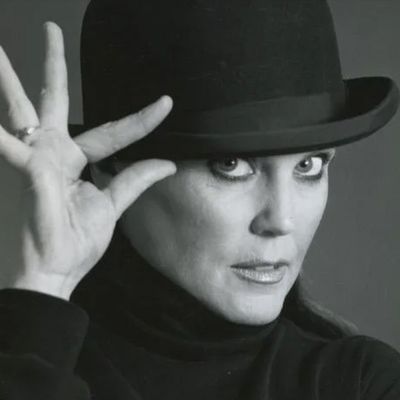
A rebroadcast of our 2020 interview with Ann Reinking. Become a sponsor of Behind The Curtain and get early access to interviews, private playlists, and advanced knowledge of future guests so you can ask the legends your own questions. Go to: http://bit.ly/2i7nWC4... Read More
From the show: BEHIND THE CURTAIN: BROADWAY'S LIVING LEGENDS » Podcast
Guests
Featured Shows

About
A rebroadcast of our 2020 interview with Ann Reinking
Become a sponsor of Behind The Curtain and get early access to interviews, private playlists, and advanced knowledge of future guests so you can ask the legends your own questions. Go to: http://bit.ly/2i7nWC4
Transcript
This transcript was automatically generated and might contain errors.
[0:00] Robert W. Schneider: Hi, I'm Rob Schneider. And I'm Kevin David Thomas. And this is BEHIND THE CURTAIN, BROADWAY'S LIVING LEGENDS. Don't forget to follow us on Twitter at Broadway Curtain, and make sure to join our Facebook page of BEHIND THE CURTAIN, BROADWAY'S LIVING LEGENDS. And follow us on Instagram at Broadway Curtain Podcast. Plus, you can always listen to all of our episodes, old and new, on the Broadway Podcast Network, iTunes, and Spotify. She has been praised, and rightfully so, as one of the musical theater's most iconic dancers. Her work on and off the stage, as well as the big screen, has inspired countless artists from all across the world to emulate her style, technique, and most importantly, passion for the craft.
Her on-stage credits include FIDDLER ON THE ROOF, CABARET, COCO, PIPPIN', OVER HERE, GOOD TIME CHARLIE, A CHORUS LINE, CHICAGO, that's both the original and the revival, and DANCIN'. On-screen audiences have seen her in things like ALL THAT JAZZ and ANNIE. And off-screen, she has become one of the most recognized advocates of the Martin Foundation, and she holds an honorary doctorate from Florida State University. I have never felt more intimidated in my life. So, to tell us what it was like to work with such legends as John Kander, Fred Ebb, Bob Fosse, Michael Bennett, Katherine Hepburn, Patty and Maxine Andrews, and so many more, please welcome the Tony Award-winning Ann Reinking, and welcome to the program.
[1:21] Ann Reinking: Thank you. Thank you very much.
[1:25] Robert W. Schneider: We are. When do you sleep? My God.
[1:29] Ann Reinking: I'm tired, but I'm very flattered for the intro, but I, too, am exhausted now.
[1:38] Robert W. Schneider: I have to, we go in a little bit of a non-linear fashion, so I'm just going to ask you some, because I'm so curious, what is it like to do a musical with Katherine Hepburn?
[1:47] Ann Reinking: Oh, extraordinary. First of all, she's very, very hands-on. I think her reputation is actually quite true. She wants to know everything that's happening, why it's happening, so that she can assimilate it for her own performance. I think she was great to work with, professionally especially. She was very professional, very hardworking, and even at that stage in her life, 60-something, she was still incredibly beautiful and dynamic. I think one time she said, because she'd sit down with everybody and chit-chat, so one time she said, you know, I'm definitely not French, and I don't even look really like Coco Chanel, but I want to find a way to get her spirit into my body. She was very open and candid about that, so that she said, you know, when I walk through a room, I'm Katherine Hepburn first, and then I'm whatever character I portray.
But she was very aware that her persona and her image always was front and center, because she's a huge star, and her dilemma, or her challenge, I should say, not dilemma, was to be able to embrace someone else's spirit into the fact that it's Coco Chanel and Katherine Hepburn. How do you put those two together and not abuse either one, or neglect either one? That I thought was a very interesting conundrum, because I didn't really think about that. I just thought you would blend in. I was young then, I was 19, so I thought you would just sort of blend in, and that it was, if you're a great actress, you're a great actress. But everybody, that's where I really understood on every level of theater, that everybody has a challenge.
Nobody has a free ride. Everybody has, it doesn't matter, you can go, you can do brilliantly in one show, and then there's another show that is tougher on your abilities. And how do you get from A to Z, starting literally from ground zero? So there aren't any real breaks in this business. You make your own breaks. You need some luck, but you have to have the talent to back up the luck. Everybody needs luck and good fortune. So I saw that she definitely thought this was a wonderful role to do. She wanted to be on Broadway. She loves musicals, loves them. And the challenge was, is how do I make people believe that I'm a French woman that designs clothes in a revolutionary way? Because she put women in pants, she took the corset away, she little black dress, costume jewelry, so anybody could look elegant.
The suit that transformed into all business, but still feminine. I mean, these are amazing challenges that she did, that at the time, nobody was without a corset. If you told somebody in 1918, that by the time it was 1920 something, you'd be wearing a dress up to the knees, no undergarments at all, except a teddy, and it would be a backless dress. So that's the gist of it. And I think she realized that she herself was a grand dame in that revolution to where she did wear one of the first to wear slacks. She was a revolutionary. She was a feminist before feminists were feminists. And so I think she saw that the rebel in Coco Chanel was the rebel in Katherine Hepburn, and that's how they went.
And when I watched her solve that, it's simple when you answer the question, but the answer can sometimes take a long time to answer, and the simpler it is, the harder it is to see it. That's my, you know what I mean? It's so simple that you need a genius to fix it.
[6:20] Robert W. Schneider: Now, you had mentioned earlier her work ethic. Where do you think you get your work ethic from?
[6:25] Ann Reinking: From people like her, obviously from my teachers and my own family, because I've been a hard worker, and then some that is, you know, innate. And luckily, I love what I do, even the downside that, you know, I'm energized anyway, and I want to, you know, just going in, I have energy, and I want to honor our craft because it's unique. And also, when I teach, I tell students, I said, you have to love this as much as a mother loves her child, as much as, and be dedicated. You know, if you're a doctor, a nurse, you are going to lose some patients, but you want to know that you've done everything you can to save that patient, and that's how I feel about theater. You know, you're not going to have everything be a hit, but you want to be able to go to bed at night knowing that you did everything, everything was in your power. And it was, getting back to Katherine Hepburn, that was evident the moment she walked in the room.
[7:26] Kevin David Thomas: Yeah. She had that kind of respect for her craft and for people. She really was a cool person to meet. Sometimes you meet someone who's in theater and you realize that you get the best of them for the price of the ticket.
[7:39] Ann Reinking: Yes, totally, totally. So when somebody, Julie Andrews is the same person, you are not disappointed, you are inspired by that person, and they just walk in with a good work ethic. So just by osmosis, you know, my work ethic was better just because I was next to them. You can feel them. Same thing with Chita and Gwen. I mean, one time I was standing next to Chita, we were doing Nowadays for a Benefit, and I said, you know, there's so much energy coming off of you, I think I'm going to knock, I feel like you're going to knock me over. So I had to kind of, you know, buck up to that energy that without even starting to sing, you know, or dance. Contagious. Huge, huge energy coming off of her. And you know, those people are really great friends in every sense of the word, because you do come up to them in their energy.
And you want to honor that. And it's a great teaching to be able to go to master classes one way or the other, to where a star is in that room. Because they all have the same thing. They have a big bunch of energy coming in before they even get across the threshold. And that energy is so important to feel as a student. And I've been lucky and the people who have taught me, they've been great people.
[9:02] Kevin David Thomas: Who was your first dance teacher that you felt had a real big impact on you?
[9:07] Ann Reinking: Definitely the first three, Mary and Alara Ladre. Alara, her maiden name is Obedena, and they were with the original Diego La Fala Rusta Monte Carlo. She went to school with Balanchine at the Mariinsky. Oh, wow. She also went through the revolution, and she escaped. So this is huge. So these people valued life.
[9:34] Ann Reinking: And the arts. And the arts, yes. And one time, I wanted to take a trip down the Amalfi Coast, because they described it so beautifully. And I also wanted to go to Monaco, because I wanted to see where they lived and where they performed. Because one of the things they said is, not only were we not as afraid anymore, but we weren't hungry anymore. And as a child, I had just never experienced anybody who actually had that much deprivation in their life.
[10:09] Kevin David Thomas: Were they in Seattle that you met them? Is that where you grew up?
[10:13] Ann Reinking: I mean, they had somehow come over to our country and then gone there. I decided Seattle was the place to be, just like Robert Jeffrey. Who knew? How lucky.
[10:24] Kevin David Thomas: And lucky for you that you had such wonderful...
[10:30] Ann Reinking: Teachers are so important in affecting our lives. They're crucial. And then they had a marvelous student who was a generation or so ahead of me. And her name was Gwen Barker. And she, between those three and the scholarships that I had with San Francisco Ballet and also with Jeffrey, those were the things that made me able to... I'd just turned 18 and I went to New York, didn't know anybody, and started from scratch. But it was that beginning in my life, plus my parents and my family, that really gave me the courage and the self-belief that I could do this. And I just wanted to. I was so in love with it.
[11:14] Kevin David Thomas: Clearly, you have to. It sounds like they were very supportive, your parents, of this journey of you going into the arts.
[11:18] Ann Reinking: Yeah, my parents were very supportive in the best sense of the word, and I didn't realize it at the time. But I had to earn everything on my own. And I had to go to work. They didn't give me any money. So I went to New York with a round-trip ticket that was... I had to be able to get back just in case. And $500. And as I like to say, my allowance was 50 cents. So I thought I was rich. And of course, I was not. But still, that's nice that you had that little bit to keep...
[11:52] Kevin David Thomas: How did you know what to... Some people... There weren't a lot of musical theater schools in those days, but how did you know what to do? How did you know auditioning? And the other follow-up is, did you go wanting to be a ballerina or did you go wanting to be in the showbiz, the musical comedy?
[12:09] Ann Reinking: I was really fortunate that I did get the scholarship with Robert Joffrey for many reasons. But the main one amongst many was when all the classes were done and we were back at the dormitories. And after dinner, we'd all get together outside. It was a summer intensive. And everybody started dancing. So when it was my turn, I just got up and sang. And I'm like a little doll here, anything. And I had a lot of personality and I liked to have fun learning. And so Mr. Joffrey said, look, I don't want you to take this in the wrong way. If you want to be a ballet dancer, you can be. You'd have to work hard, but you have to work harder than anything. So I'm not telling you this to discourage you, but knowing your personality and having heard you belt out a song or two and that you are a very good dancer, he said, I think you'd be happier on Broadway.
And I was thrilled that he said that because I had, no pun intended, one foot in amateur musicals and plays and another foot in classical ballet and in those amateur performances. And so when I got my $500 that was ready to go that I had earned, I knew I was directed thanks to Mr. Joffrey. I said, okay, I'm going to go into Broadway.
[13:45] Ann Reinking: And then after that, I went into Fiddler on the Roof, which was a touring company. And then the last two months of Cabaret, because it was the Hal Prince office.
[13:58] Kevin David Thomas: Right. And these were just, these were just, did you go to random open auditions that you just knew?
[14:02] Ann Reinking: Yes, Fiddler. It was 500 people. I think what was helpful was I was strong in ballet and a lot of the auditions.
[14:19] Ann Reinking: I remember the first audition material was ballet. Tommy Abbott was a person who, he was in West Side Story. He was a very big deal at the office and a very beautiful dancer. And so the auditions were ballet. So I had that strength behind me. And so some of us got to stay and see if we could do the two. They didn't have to take anybody from an open call, but they did take me.
[14:46] Robert W. Schneider: I was just going to ask what your normal sort of go-to, we love asking our guests this, what was your go-to audition song? Did you have your uptune that you always sang or your ballad?
[14:55] Ann Reinking: Yeah, I didn't know I was going to sing. So I told Milton Green, the musical director, I said, I don't have any music. But if you could do "Summertime" in an alto key, I'd sing it. And they could. Sandy Campbell plays the piano. She was great. And so I sang the first verse. And I'm just performing the heck out of it. I'm going to the second balcony, the fifth balcony. I'm really going for it. And then the director, the music director said, thank you, you know, after 16 bars, because I didn't know that either. And so I thought it was a mistake. I said, oh, no, no, no, there's more. You know, like an innocent child. And he goes, oh, okay. And I sang the second verse. Not only did I finish the first, but I thought the second verse was beautiful, you know?
[16:03] Robert W. Schneider: Even better. Even better.
[16:07] Ann Reinking: I think I got the job because I reserved myself to them, and I was obviously innocent to this whole process.
[16:11] Robert W. Schneider: I love that. I love that. What do you think has been the most challenging project you've ever had to deal with, whether onstage or offstage, but one that really tested your creativity and skill set?
[16:23] Ann Reinking: There was a show called Wild and Wonderful that I did that did not succeed. Yeah, it did not succeed. We had one night, and that was it. I didn't have much money. It did not work.
[16:39] Robert W. Schneider: Did you know that even at that age? Could you tell that it didn't work?
[16:43] Ann Reinking: I had a feeling it wouldn't. But like I said, everything is a living entity, and you must take it to the best of your ability. But it was a failure. And failure is hard to deal with. But ironically, the paradox is success is actually harder. It's just the strangest thing.
[17:07] Robert W. Schneider: Why?
[17:11] Ann Reinking: Well, if it's a big success, everybody wants you. And you don't know who is genuine, who's not genuine, who's going to not like you anymore because you succeeded and they didn't. So you can lose friends, you can lose family members, love if you succeed. There's a lot of turmoil with success. And you can't really, except for your strength, you can't really complain to anybody about it or talk about it because you sound like you're ungrateful. The phrase is, holding a tiger by the tail is exactly what it is. And then when I realized I couldn't control it, so I just said, let it be. You know, what is, is. And do the serenity prayer and try and stay strong as a person. And what I can do, I will do.
What I can't, I'll just hope for the best. And this is the hard part, is the wisdom to know the difference. That is a big struggle throughout my life, you know, because I just want to fix everything. There's a whole lot of mother in me, which I think is very good for show business, but it can make me a little neurotic. It's hard. That's a hard balance.
[18:39] Robert W. Schneider: Yeah, it's a hard balance.
[18:43] Ann Reinking: Yeah. So you have to be aware of it to begin with and then practice, practice, you know. Tell us a little bit about working with Michael Bennett and a little bit about what you learned about yourself working through him.
[18:51] Ann Reinking: Oh, I loved working with Michael Bennett. He was at one point a very cloaked person and that's why Bob Avian was a, and I mean this in the best sense of the world, he was private. And I couldn't really read his mind or tell what he was thinking, but Bob Avian was his associate and he was excellent. They were an excellent team because Bob was very friendly and open. He was easy to talk to and Michael was so concentrated, you know, and cocoa, but I knew he was so talented and he actually did do a lot of the directing because the director, Michael, I think his name's Benthal, became very ill and so Michael started taking over some of the directing and I could tell right off the bat, you know, he was that good that this man's big talent.
So I just wanted to do the best I could. But I didn't really get to know Michael that much during that time. I got to know him when I did Cassie. He took me out to dinner. He was very friendly, very nice. I was at ease. I spoke to him as if he was, you know, my friend and he was just gracious and nice and he was very supportive. I fell down once and I thought I was gonna get fired and he said, no, it's live theater, this happens. You know, he was very, very sweet, very nice. Bob Avian was a great human being and I enjoyed knowing them a lot.
[20:39] Ann Reinking: And he, for me, a lot of people seem unapproachable when you're real young and then you find out later that they're really quite approachable. Like I said, nobody gets an easy ride. Nobody gets a free ride. I realized early on that my duty or the thing I had to do the most was create trust and try and keep that man or that woman from not being so nervous that they can't push through something. Because they're doing it on the spot, you know, so you gotta create trust, show them that you're not judging that you're gonna, you know, do the best you can for them and for the show. And I think a lot of kids miss that part of the element that if someone just isn't brilliant right off the bat, you kind of close off or close down on them.
You must never do that. You must be a person hating tooth and nail that creator. And I've seen choreographers who don't have as great a technique as someone else but they're gonna change the choreographer because they trust that person. The choreography because they trust that person. And that person's gonna do their homework and come back better the next day. And that person's supportive. Not everybody gets the same show. We all get a glass when we're born no matter how much money we're born into or not born into. The glass is half empty or half full. And everybody has that. And it's how you handle how you parlay that notion. And also to say an answer that a child said once she said, well why don't you just fill it up?
You know, she was talking about half empty, half full. And that was a good question. It's a very good question. So you can fill your glass up or you can drink it down and ruin yourself. But everybody starts off with half empty and half full.
[22:43] Ann Reinking: Pippin! How does Pippin come into your orbit? I had followed Bob's career forever. For some reason I was, you know, I liked the work he did. I would watch Gwen Verdon on Ed Sullivan or, you know, Dinah Shore shows. And these numbers and her dancing and her ability was unique. I'd never seen anything like that before and I felt it was elegant along with being sensual and witty. There was an elegance to it that I really enjoyed. So here came this opportunity called Pippin. And I am a member of Equity so I'm going to an Equity call this time. Which is a big difference. It helps.
[23:31] Ann Reinking: And we just started working once we got past the T for Two audition which had a lot of ballet in it and syncopation. He started, if you watch All That Jazz, it's a combination to On Broadway. You see the neon? Yeah. But now it's T for Two. Because he took from the vodka world so much. Of course. That's where he came from. His education was that. So anyway, once you got past that then we got into a Pippin combination tour. And there was this and I had never done isolations. I'd done a little. Not a lot. I wanted to. But if I was going to class it was always a ballet class. And I was afraid to go to a jazz class because it was just so different. So it was my problem, not anybody else's. But this combination was so beautiful I had to make it work.
And I just kept, even if my number wasn't up to do it on stage, I was always off doing it behind. So that I could get it. And then there was this other part where there was an improvisation but the guidance was if you have a balloon and then while you're doing these isolations you're going to catch the balloon and watch it go and catch it again with the other hand you could put it around you, put it on your head and then let it roll off you and you catch it. Those were the hints. And so I did all that.
[25:19] Ann Reinking: And then Bob started coming up on stage and working with all of us. And he said, why don't you try this move? Because it says the same thing but I think it's going to be better on you this one. So I did. And we started, all of a sudden all of us were working. We weren't auditioning anymore. We were working. And it was, I said after it was all over I said, gee even if I don't get this this is the best day I've ever had. He came back three times. He was really taking his time to discern who he wanted because it was a small group. And he really wanted people who trusted him first and foremost. And then even if they can't get the style right then and there can they get the style in rehearsal? And by the time those three days were up he was like a friend.
A great guy. And he danced beautifully. And so I got the job. And I told my father, I said we're working 12 hour days. You know when you do 10 out of 12? And I said, you know, it doesn't bother me. I don't even get tired. It's so inspiring, this work. And we were the other star. There were the stars of Pippin and then there was the ensemble and they were the star too. And it's the same combination in Chicago. Five principals and then the ensemble. They're the six star. So he dealt with the ensemble as he did many, many times. So did Michael Bennett. I think people come from dance like Jerome Robbins, Agnes DeMille, Michael, Tommy Tune, Bob. And they revere dancing so much so that the ensemble becomes an important entity.
[27:24] Ann Reinking: An extension of that almost. And it helps. It helps. So I was also fortunate to sort of live through the dance boom, so to speak. You know, where the triple threat was required. But you know, it was the strongest suit. And it was with Michael and Tommy and Bob. You know, I even worked a little bit with Agnes DeMille. I was recreating another good day. What was that? It was for American Dance Machine. You remember? Oh, so great. All of the Painter Wagon. So I had learned it from somebody who had already worked with Agnes and then Agnes came for the taping of it.
[28:24] Ann Reinking: And her images, her ability to speak. She was a brilliant writer. She's the best person to read if you want to read about dance. She's one of the best, you know, that she can make in a verbal quest, she can make dance come alive and you could see it. And the things that she imparted were so true, like, you know, you're basically, even though you're in the West and you're not a woman of good repute, you're still innocent. You're still exceptionally young. Most people died at a certain age, at a young age. These miners that came to, 49ers as she said, that came to the West. And so that you have to see it as somebody who's being bombarded with no rules, especially for women, but still innocent.
You're not that old. And it just all of a sudden made that dance come alive. It went beyond romantic. It had layers. And Tommy Tune works that way, Bob works that way, Michael, any of the great dancers that choreograph, they all work the same way. The steps are your verbiage and they're important. And I'm not saying anything against, you know, if you're just doing, you know, dance for dance sake, I think that's great too. But in musical theater, you have to tell a story. So they are words and these steps. So I really loved what I was doing, but I loved it more after these people, you know, after I worked with these people, it just only increased my adoration, not only for them, but also my respect for dance.
And that was pretty high up anyway, when I went to the stratosphere. Yeah. So, you know, even when they got cranky, I said, what can I do to help? You know, they have to do 16 numbers in like six weeks. I mean, you know, it's a lot, so much dance.
[30:40] Ann Reinking: Oh my God. Would you be able to talk a little bit about how the Manson Trio came about in Pippin? We're learning glory and that's where the Manson Trio is. We're learning glory and it's a very good song. And then Bob wanted, okay, now I want a vaudeville moment here. And he was working with the dance director and with Stephen Schwartz. And I watched these three people take this number that was lovely. I mean, good, very good, but only a couple of pages and turn it into an opus almost of great variety. And Bob, this is a fun piece of information. The Charles Manson Trio was created on Come On Baby, Let the Good Times Roll with Harry Nilsson singing it. Oh, wow. Yeah. So he had had that almost created by the time we went to rehearsal.
And a lot of the Charles Manson was also in the audition steps. So a lot of that isolation, a lot of stuff pumping underneath, but you're showing nothing. It just has to go through your eyes to where the audience has to say, something's not right here. You know, get an itch on the back of their neck and it's loaded, but it's so pure at the same time. It's a real paradox. And so when he did that, I was stunned. Now it's not that unusual. I just never had seen it be done in front of me. Like if you watch a lot of MGM Fred Astaire, do you see those big, long, elongated numbers where they're dancing? They switch gears all the time. It's the same melody, but it's the melody gone Charleston or the melody gone step, you know, that kind of thing.
Rearranged. Rearranged. Yes. And so the arrangements are key. And he was good at that, Bob. He was. And so was Agnes. She could read music. A lot of these people were musicians on their own. That was so cool.
[33:00] Ann Reinking: And then when he said, when he gave the imagery of this really cool trio, he said, behind you are going to be these desks. Then they're beautiful and they're all in slow motion. And you're dancing in front of them like nothing's wrong. Like you're the sort of the propaganda of war, that war is kind of cool. And at what price glory, but glory. And you didn't see those people, you know, die or they, you know. So the juxtaposition of those two images of these, you know, doffing their hat and nab a cane. And it's kind of classic vaudeville, but at half tempo, you know, but you have the energy. Gwen used to say, the energy never stops. Even if you do, it's like a sewing machine inside your body that goes up and down, up and down, up and down.
Everything on your face is placid. But if you have that energy in sight, it comes out through the eyes. And the tension in the room is palpable. And so learning it like that, and also until the dance arranger made it, you know, made it like, come on baby, let the good times roll. When we danced it, come on baby, let the good times roll. It was eerie. It was eerie. And it was very, I would say anti-war, but it was actually anti-glamour because we glamorize everything. We glamorize, well, Chicago's the same thing. We glamorize killers. They're on TV more than our teachers, more than our parents, more than anybody who can give you some good advice. The bad boy and the bad girl get more attention than anybody.
And, you know, we should question that perhaps. You know, glamor can kill just probably as many people as war. So, you know, so you're dealing with big ideas, but you're not supposed to show the ideas. You're just supposed to feel them. So it's your education. So that was absolutely cool. I could not wait to get to work. You know, when I did 10 out of 12, I really didn't want to take two hours off to eat lunch and dinner. You know, I wanted to continue to dance. It was so neat.
[35:31] Ann Reinking: And Bob, you know, once I got to know Michael during a chorus line, I was so grateful I had that second opportunity because I really liked Michael. But in the beginning, he was this mystery to me, you know, and then I realized this is a nice guy under a lot of pressure. You know, at that point, he's got the world's greatest show in his hands and everybody wants a piece of him and he stayed nice. Chita Rivera said that once. Oh, it looks like three nice women are going to turn mean. And I just started laughing. Poor words were said. You don't want to turn mean. You want to stay nice.
[36:11] Ann Reinking: Good morning, Mama. Liza, darling, we've got to help the boys behind the curtain of Broadway's living legends. Oh, it's marvelous. Well, what would they like? Some cream of wheat? No, mama. They want some money. Money. Well, let's send them a great big bag of money. No, all you have to do is go to Patreon.com, you know, it's P-A-T-R-E-O-N.com, and you set up a monthly donation. Money makes the world go round, mama. Oh, don't I know? Patreon.com. Do it now.
[36:52] Ann Reinking: And when you were doing shows at night, during the day, were you taking acting classes, singing classes? How were you keeping your instrument active?
[37:02] Ann Reinking: Yeah, I also went to auditions, you know, like for commercials, because I'm very bad at auditioning, and I have a real fear of them. So I said, you know, can you send me up for every commercial known to mankind so I can do at least two auditions a day, cold readings? You know, I went to try. I wanted to get the job, but I had to practice auditioning. So I did that. I went, of course, to ballet class, because I'm too chicken to go to jazz class, but I stayed in shape that way. You know what I mean? And I went, I had a lovely voice teacher, who was like everybody's grandmother, and she really could teach. And she got it so that I could do a whole show and not get laryngitis, you know, and, you know, gave me a technique.
So she said, you sing on key, you've got, you have support, you're loud, you know, it's a nice way of saying that, but hear you, that's key, because nothing's good if they can't hear you. One of my best directions was from Gene Sachs, it's not funny if they can't hear you. You know, and I said, well, there's a truth, you know, because I was kind of, you know, I don't know, I was giving it enough force. This was when I was learning with Tommy, and I said, no truer words were said. If they can't hear you, nothing's nothing. You know, that's the first requirement, you know. Not even a chance. Not even a chance. There's no chance for a laugh.
[38:36] Ann Reinking: And she was like that. She just said, look, we're going to do a lot of practical things. We're going to get you so you can support yourself, and we're trying to make the sound sweeter. He said, you've got a croaky voice, so we're going to work with that. That's who you are. But she said, I'm going to have you sing some opera, because I want you to be able to get to continue your sound, but to have it stay healthy. And she really understood my predicament, and really, really helped me. So I would take two or three voice lessons. I didn't take as many dance classes as I could have, because I suffered from fatigue from time to time, really serious fatigue. And I found out later, after I retired, I started having real trouble breathing, and I had real trouble with anxiety, inappropriate anxiety, and a backache that would not go away. And so finally, someone said, I think you should see a cardiologist. It turns out I had a hole in my heart from the day I was born.
[39:48] Ann Reinking: What? Yeah, I know. And by the time I stopped dancing, and it was really giving me serious trouble, it was pretty large. And I had a trans ischemic event, stroke-like event. I just was going downhill, but they could fix it, which was great. And I feel a lot better. But at certain points, I said, now I know why I was so tired all of the time.
[40:19] Ann Reinking: Oh, yeah. Yeah, and being on stage, and my legs would feel like lead. And, you know, dancers just push through it.
[40:27] Ann Reinking: Oh, yes, of course. And so I've explained a lot. Fortunately, it didn't chill me. But it's just, what's the one thing a girl with a hole in her heart shouldn't do? Dance real hard on Broadway. We're laughing, but I mean, that's what dancers do. Do you want a career? Yes. That's what you do. And it probably would have been better that I didn't know, because I'd have been cautious, and I would have been talking about something different, you know. But I love my life. Very happy for it. And just was lucky that they caught it in time.
[41:04] Ann Reinking: Yeah.
[41:04] Ann Reinking: But it explained a lot. Because a lot of people said, you don't go to class. And I said, not when I'm performing. When I'm not performing, I go all the time.
[41:14] Ann Reinking: Yeah, of course. But because I could only take a couple of hours. You know, matinee days were tough on me. Really tough. And so I would just either stay in or go home and eat and come back. I didn't do, go out all the time. You know, like a lot of my friends went out. I went from time to time, but I mostly stayed in because I was exhausted.
[41:37] Ann Reinking: Yeah, of course. And now it makes sense. I just thought everybody felt like that. They were covering up. Me. Oh, I'm fine. I just met everybody.
[41:48] Ann Reinking: Oh, my gosh. Now, can we talk a little bit about Over Here, which was a big, big moment for you in your career?
[41:56] Ann Reinking: It was huge, yeah. Tell us about that, Pat Birch, the Andrews sisters.
[42:00] Ann Reinking: Well, first of all, not to take anything away from Bob, because Bob and all these great director, choreographers that I worked with didn't highlight the ensemble so much, I still would be lost. But Pat Birch came to see Pippin, and I got a call from her. And when I went in, you know, this is when you still were on, you would walk on stage and they were in the audience, just like the show of Chorus Line. Now everybody goes to the studio. But
[42:36] Ann Reinking: I'm so excited to be here. I'm so excited to be here. I walked on stage, and this woman stands up and points to me and says, that's her! And she got me that job. She did. I talk about going in three times again. She's the one who supported me, and then she did this amazing jitterbug for John Menino and myself, and she really believed in me. So I thank everybody I worked with, and of course to Bob, because he was a huge part of my entire career. But I have to let people know that Pat Birch gave me my first principal part. Okay. Yeah. And Bob didn't hire me back until I got nominated for Good Time Charlie. Finally, he asked me back, you know. You see? Had to get that Tony nod. So can we talk a little bit about Good Time Charlie?
Oh, yeah. Oh, before we do, I wanna say that when I knew who the Andrews Sisters were, because my dad loved them. Oh, yeah. Please. Loved them. And I heard all their albums, 'cause he played them. You know, 78s. That's how old I am. Yeah. You know, 78 records. Not 78. 78 records, guys. No, I'm just 70 now, but let's talk in eight years. So I did not know that they were like rock stars in their day. Yeah. Because also the war, they represented hope. They were everywhere. They were huge stars and I had no idea. People were running down the aisles and throwing flowers on stage at screaming like at a rock concert. They all these people that look like my parents. They were just gone. All crazy. All crazy.
And I this is like 30 years after the war, you figure. 30 years, you know. Yeah. Yeah. Yeah. 30 plus years. Yeah. Because the war ended. Uh that would be 80. 44. Yeah. Yeah. 44. That's it. So, um yeah, it was amazing and I really, you know, I like them and I was glad I knew who they were but when I found out exactly who they were, I was really impressed and and once again, they turned out to be people. You know, I you know, I asked Maxine, I said, can you I everybody asked this of you and you can say no. I'm doing the disclaimer. I said but my dad is a major crush on you and I know who you are because of my dad. Do you mind coming out to dinner after the show? She goes, oh sure. And she's like a regular gal.
You know, and and my dad was it was a probably the best moment other than having children and getting married in his life, you know, and she too was just, she was remarkable. They both were. Classy. Yeah. Classy. Yeah. So, there's a good time, Charlie. Uh that was Peter Hunt who fought for me and uh wanted me and the director uh Brown. I can't remember his first name now. Uh Max Brown. That's it. Thank you. Smart. It's the internet but thank you. It's magical devices. You know, um they were on my side and uh not that others weren't. It's just that they were convinced they were the first to be convinced that that this would be a good person to have to play Joan of Arc and uh and I was dying to um so I kept going once again.
I had to by the time I got they got through auditioning me. I was over and over and over. Uh I I had earned it. So, and I probably knew about half the show. And uh and that was really wonderful because it was great to work with Joel. I adored Peter Hunt. Um he was a such a supportive um a director and he also was a good actor and a great lighting designer. So, he he had an immense amount of work under his belt and he had a cockeyed sense of humor which I adored and it was very evident with Peter Stone's book uh 1776. So, he was a director for that. So, those sensibilities II loved. Uh so, just a little quirky. So, it was a lot of fun to to be a saint. Uh the two things that every actor wants to do is be a saint or a sinner.
So, I went right from uh Joan of Arc. I I did Kathy's. Once again, you know, uh more of a saint than anything. Yes. I did proxy. So, I literally went from saint to sinner. So, uh that that was a very nurturing uh three or four years to go from over here to Charlie get a nomination which was remarkable for me because it it proves that I was uh you know, I wasn't a fluke that I you could hire. Yes, of course. Very old kind of thing. Yeah. Uh to that to uh Cassie and we went in uh 2 months right after it opened because uh New York, most of the New York show went to LA. So, I just go in LA. So, talk about somebody with a large amount of energy. Um uh Donna came in to teach some of the Cassie dance and she did the first two steps in this big huge.
Yeah. And my knees buckled. I thought, oh my god. I almost fainted. There was so much energy that came off of her and that woman is strong. I mean, strong and uh and stay feminine to be that strong and so, you know, very feminine and and uh um oh she was amazing. So, um so I had that experience working with Michael again then going into uh um uh Chicago where not only was I being directed and redirected with Bob and re choreographed some of it but when was there teaching a lot of it to me along with Catherine Doby. That's not that unusual in the in the in the dance world. The ballerina always teaches the next generation. Oh, that's worth saying. Yeah, definitely. Yeah. Yeah. Cuz it's a hands-on.
Uh it's a visual art and yeah, you can learn the steps from a interpretation but it's the heart, the imparting the images, uh the demonstration of it. Uh when Gwen was teaching especially Sweet Charity to me, it was like having Galina Yulanova teach you Giselle. Oh. One of the greatest Giselles in the world, you know, and this was one of the greatest dancers in the world and her her uh that part of Sweet Charity is like the Swan Lake of Broadway. It really tests your mettle. Yes. And uh it's uh it was great. Uh the the education from from uh Pippin, well, from all from day one, day one, the education was stunning and I'm assuming that carried on through the creation of dancing. Is that correct?
Yup. Yup. Uh I was doing pre-production with Bob and Chris Chadman who's another person that Bob started uh recommended as a choreographer and Bob really jump started his career uh that way by just by recommending Chris and uh but it was like just it was Captain Doby, Chris, uh myself, uh you know, Benedict and Bob and and Gwen was back and forth and um and uh uh the music director uh Gordon Harrell and talk about watching something being created from day one. It was the same for Chicago cuz I was with Bob while he was making Chicago with Fred and John, Fred Ebb and John Jander and talk about three brilliant human beings and I got, I was uh privy to that, you know, um all the fun and you speak a little bit about some of those and maybe a little bit like what some, could you speak a little bit about like some of the fun, some of the work, some of the, you know, just yeah, yeah, yeah.
Um we'll never be able to be in a room with Kendra and Ebb together, let alone with Kendra and Ebb and Fossey, you know, and like and we don't need to see it on TV. I'd like to see, I'd like to hear about what it really is like, you know? Yeah, yeah. Well, they work really hard. First and foremost, everybody works hard but they like it and uh I love the day that I found out that they uh here's the countess of the clink, the mistress of murderers row um that they decided to do this number all about reciprocity that she's the wheeler dealer and she's and they were at that time, she was a Sophie Tucker like character and uh so the the defining of each character and because it was originally called a musical vaudeville.
Uh what kind of vaudevillian are they and what do they do? Um uh the other one was uh well, all that jazz. He loved all that jazz and he said, you've got to get them right off the bat and make the glamour so wonderful and so much fun and so entertaining and so talented that by the time you get to razzle dazzle, you can tell them all, you can do the moral of the story and and say, you know, this really isn't a good thing to do to glamorize this kind of stuff and uh and wheel and deal in in the downsides of life but you like all of them. So, every like um uh oh, you have to look this up for me. It's the uh the vaudevillian who uh made popular the song. I ain't got nobody because that's who it was.
That's it. Yeah. You're just so smart. Can you stay with me? You know it. Well, I thought that was fascinating. Okay, he's Burt Williams. You know what I mean? They were. Yeah. So, you're getting educated along the way when they thought that uh ladies and gentlemen, uh the keeper of the keys, the compass of the clink, the mistress of murderers road matron mama Morton. They were so proud of themselves doing that whole uh you know, um uh all that alliteration. They they loved it, you know, and they were laughing having fun. All of them lost about 40 years and turned fourteen. Very talented fourteen-year-olds but young. They just they just got young right off the bat. Right. And they're having such a good time.
What was unfortunate was when Bob had the heart attack and had to have an operation. It changed him for a while. He was terrorized and as you know, men can't show their vulnerability. So, he he he had a hard time but in spite of that, everybody continued to support him. He he made a great show. The three of them made a absolutely perfect show. I don't think they knew how good it was. I honestly don't think I did. I thought it was one of the best things I've ever seen. Mm hmm. Uh you know, right up there with, you know, my fair lady, you know, these perfect shows and uh I don't think they did. So, I was so glad that we did the um uh what is it? The encore series. Yeah. I was going to ask you, what was it like to revisit it 20 years later?
Fabulous. It was so wonderful. Once um Walter Bobby said, it I said, it has to be done in the style of Bob Fosse. He was one of the authors and it's so dance oriented. We've got to have all the concepts of saying we're not going to reinvent the wheel. It's gotta be done in the style of Bob Fosse and you have to give him credit. So, he said, fine, you know, cuz he said, there's just as much verbiage and all the stuff that there are in the lyrics and the words. So, um once that was okay by everybody, it fell into place. All the people who are right to be in the show were all free and and then they were free again 3 months later when we went on Broadway and that doesn't normally happen. Did you know?
I mean, did you know going into it like this is gonna spark something again or were you just you? Yeah. Oh, I wasn't sure that it was gonna do what it did. I knew it's gonna be good uh especially when I saw uh the set, you know, it's this giant jury box and it's black and that's good and it's got a gold trim and that's good and it's all uh lights as part of the, you know, part of the look of it. It was elegant to look at it. We're all gonna wear, you know, present day clothes but always in black so you can whatever you want. We're floating it. Once I saw that set and that concept and then they were gonna make Bob equal in this uh uh show, I said, we're we're good. We're good. I didn't, I had no idea that it was, I thought it'd last a couple of years.
I had no idea it was going to be what it is. I'm very happy about it. I really wish that Bob could have seen that. Um well, let's hope he's up in heaven as I say all the time. Um and seeing that she really was, he didn't give himself a lot of credit. One time he's, he gave himself, he said, okay, I, I, I guess I'm a master craftsman and that's the most compliments, complimentary vision he had of himself. Sure. Yeah. Um he didn't realize that he was as good as
[57:25] Ann Reinking: I don't want to say who it was because this person would have made a hit as well. And we would have gone on. But she couldn't get out of an engagement and they said they were going to sue her if she did. And so she couldn't. And we tried to rearrange the actual dates that it would be on so we would do it on the day of the show. And so we had to rearrange the dates. And they couldn't do that because other people were scheduled to go into city center. So everybody started looking at me and I said no. I'm 20 pounds overweight, you know. I knew the show. And I said I'm 20 pounds overweight. I haven't been in front of anybody in a long time. And I said, you know, you can bowl your way through four shows. And I went, I can. I can't say it beyond four shows.
[58:31] Ann Reinking: This was on a Friday. And what is it? It was Friday before we actually started on Monday for those ten days before you go on stage. So that was when you decided to take on the part? I decided to take on the part. I said, okay, I'll do it. That was on a Friday. Because we really wanted this other person. I guess so. Damn. I thought I was filling in being a good girl. Well, yeah. I know I was good in the role. I'm not putting myself down in an off way. I'm not putting myself down in an off way. I'm not putting myself down in an off way. We were great together. We did free charity and we had also done our own version of Chicago with Julia Prowse. So we had worked together at least three times. And loved every minute of it. We get along. And we're good. So I didn't think it was like trying to show somebody that you're a good dancer. And then it just mushroomed into this. But I did lose 20 pounds before we opened in September.
[59:56] Ann Reinking: I believe that. I know the old dancer instincts took over. Gained it all back. It's eight shows a week. It's eight shows a week now. A Tony award. A Tony award for this. It was great. When I said I really meant that I had to thank Bob for giving me the opportunity to be a part of this. And I said, you know, I don't know how many times, which is what I actually said. And it was his Tony, but I know he would have been very proud of me. You know, sometimes you know that even you can't take it away from yourself. You know that you did a good job. A lot of us are worst critics, but it's really strong that you were there. You did the work, too. I mean, you were there. You did all the work, too. I was there. I was lucky, and I was happy. Because right after that, Gwen had asked me to do Fosse.
[1:00:58] Ann Reinking: Yeah. And I was ready to do it. You know, I had enough work under my belt of Bob's work and of, you know, directing and choreographing. And she was the reason why Chicago was a hit, and she also put together Strings Together and Mabel. And so did Gwen. She got me the job. And she was the reason why Chicago was a hit is because she allowed us to do this show. Because she was one of the owners. And she was the reason why Chicago was a hit is because she allowed us to do this show is because she allowed us to do this affirmation. And because I know I'm his champion, but Gwen is his champion, champion, champion. And she really believed in him, and she was right. And she's the one who started the lab for Bob's work.
[1:02:01] Ann Reinking: And she brought people in who Bob had choreographed for, so I went in a few times. And I went to the dance center. And I went to the dance center, and it was beautiful. It's a laboratory experience at Broadway dance center. And, you know, just recreating all these numbers. And I saw numbers that I had never seen before like Cool Hand Luke, which I thought was just the most fragile and the most beautiful, tender, beautiful, elegant piece of work I had ever seen. And I thought, you know, that five minutes, you'd never see it. Because it was the TV. But she taught all those TV things, along with dances that nobody knows other than Gwen, like from Herbie's Fitch, from Redhead, that kind of stuff. So just wonderful, wonderful wealth. She had a, what is it, photographic memory.
[1:03:59] Ann Reinking: She could remember everything. She could remember the actual numbers, like 5, 6, 7, 8. The numbers that you danced to. But, you know, she just had it. And she took care of all of Bob's shows. So she had been my employer, along with Bob, for about 15 years, and then longer, because she said, okay, to being able to do Chicago as well as Fosse. So she was one of the best bosses probably I ever had. So she was a good human being. It's astounding how good she is.
[1:04:10] Ann Reinking: Yeah. Well, the numbers were beautifully reconstructed, but it was a really young group of people. And both Gwen and I, we were very young. We were in our early 20s, and we were working with Bob, and I said to him, I agreed, we've got to get some older people in this company, we need character. And also people who, because we still could get people who had already worked with Bob and loved him and was devoted to his work. So once we got that in, and the casting was done, we were able to do it. And we did it for three hours and 15 minutes. I produced, I made the, I didn't make them, fortunately, they decided to do the three hours and 15 minutes, and then we'll see what floats up. But what it did do is that I had the light plots, the costumes, the set, and the orchestrations for all those numbers that we didn't do so that it could become modular.
[1:04:39] Ann Reinking: It's really refreshing to hear so many memories. You never hear a bad word, you never, ever, ever hear a bad anecdote about Gwen Burton, you just hear, you see a sparkle in the eyes of every person we talk to, you know, and let alone people that really knew her well. When you guys were putting the Fosse dances together, at what point did we say, okay, this is going to be a real, let alone be a big old hit, but at what point did we say, we've got a show here, we're going to put this together and make this a new sort of like dance in 2.0, literally, for the year 2000?
[1:05:21] Ann Reinking: And so that's what we did. I did not know that, oh, wow, so you could sort of mix and match as necessary. The Fosse's are great people to work with, let me put it that way. And I enjoyed working with Nicole tremendously, because she was in on some of the things, because Bob had done this brilliant piece of, this brilliant ballet to a jazz version of the Firebird, the Firebird, on point. And I wanted to do ensemble work. Because the Fosse was an ensemble piece. Everybody got their moment of the sun, some more than others. But it was ensembles, so you needed someone who had that mentality and also had enough talent to do solo, to be a star. So there you have it.
[1:06:15] Ann Reinking: And our last question for you is, you know, what do you know now about yourself as a performer, as a director, that you wish you had known when you first started out? Yeah, yeah. I've been asked to write letters to my younger self, you know. A woman in Australia, a beautiful spirit, she out of the blue asked if I would write a letter to my younger self, and I was this age now, 70, maybe 69, but, you know. Because when I did it the first time, I was in my 40s, and that's a different answer, when you're in your 40s. It's fine, you know, but it was basically when I said in my 40s, don't worry about your future. You won't be lonely, you will be fine. Just trust you'll be all right, that things will work out.
[1:07:04] Ann Reinking: When I was in my late 60s and 70s, it was even more. And it was, listen to that voice. It is the smart one. And if you hear it even slightly, your conscience, don't do it. If it's saying no, say no, if it's saying yes, go ahead. Don't take the kind of, it's not to say don't risk take, but if you hear that voice, pay attention to it. That's the one that got to me the most, because I think every performer has this classic moment, you know, when you hear that voice, it's like, you know, I'm listening to you, but I'm not listening to you. And it's a good notion that you've been fooling them, you know. Or you've been lucky for 40 years, which obviously, nobody's lucky for 40 years, but you get in this mentality of thinking that they're going to find me out or she's better than me anyway.
[1:08:03] Ann Reinking: Finally, I realized that I could appreciate myself without being a jerk about it. And I realized that I could appreciate myself without being a jerk about it. And that's something that Fred taught me. You know, I would go shopping, and we were doing the visit, and he was still alive. And I would shop it. We were in Chicago, and I had this watch, and then another watch. And I said, which watch do you like the most? And he picked that one, and I said, me too, I like that one. And he said, me too, I shouldn't almost trust my first instincts. And he goes like this, he pointed at me, and he said, see? And then he was very nice to me, and he said, Anne, you have to understand, it's not like your second instinct was bad, but your first instinct is the best.
[1:08:52] Ann Reinking: The second one was good, but the first one's better. That is valuable. And working with someone like Fred or Gwen and all these people that we've been talking about, they are nurturing people, and they allow you to eventually believe in yourself, without being, you know, stupid about it. And that's a great gift. And your time with us today has been such a special gift for us. I can't tell you how much we appreciate it. And a big thanks to Michael Kubala, our previous guest, who put us in contact. And this was so wonderful and so special. I hope you stay safe and healthy out there, and have a great time for the rest of the week.
[1:09:36] Ann Reinking: Thank you, I hope you do, too, and thanks so much. Thank you for listening to today's episode, and a big thanks to the Punchy Players, Jeff Marquis, who is bringing back Lucy, Betty, Judy, and Morta Schill for us. And a big thanks to our sound editor, Daniel Schwartzberg, and social media manager, Bethany Ann Selecki. And don't forget, we want more folks to hear these incredible stories, and that's where you come in. In order for people to find out about us, we need lots of ratings on iTunes. So head on over to iTunes, search for Behind the Curtain, Broadway's Living Legends, click on our logo, click on ratings and reviews, then write a review and leave us five stars.
[1:10:13] Ann Reinking: And make us feel as special as Eliza Doolittle on Eliza Doolittle Day. Or you can leave us just one star, and you can make us feel as baddy, baddy, bad as Annie did in that really weird production in Boston where Annie was like, I'm so sorry, I'm so sorry. Or you can leave us just one star, and you can make us feel as baddy, baddy, bad as Annie did in that really weird production in Boston where Annie dreamt that she was being adopted, but then she ended up back in the orphanage, right back where she started. Yeah, true story. Rob saw it. Yes, and it was baddy. It was bizarre. I was there.
[1:10:44] Ann Reinking: I was. Oh, God. So head on over to iTunes and make us feel even more special than we already did.
© Broadway Podcast Network, All Rights Reserved