

The “Crown Prince of New York Cabaret” is what Steve Ross was dubbed many years ago. He hasn’t lost his title. In fact, the only change today would be dropping “New York.” In the past decade alone Steve has performed around the country and around the world in every kind of venue – from Rio de Janeiro to Sydney, from Carnegie Hall to Lincoln Center and from cabarets to theaters... Read More
From the show: BEHIND THE CURTAIN: BROADWAY'S LIVING LEGENDS » Podcast
Guests

Featured Shows
About
The “Crown Prince of New York Cabaret” is what Steve Ross was dubbed many years ago. He hasn’t lost his title. In fact, the only change today would be dropping “New York.” In the past decade alone Steve has performed around the country and around the world in every kind of venue – from Rio de Janeiro to Sydney, from Carnegie Hall to Lincoln Center and from cabarets to theaters.
An articulate man with a keen knowledge of the Great American Songbook’s music and history, Steve has hosted radio series and outdoor concerts.
This week Steve talks to Rob and Kevin about Porter, Gershwin, Berlin, and so many more!
Transcript
This transcript was automatically generated and might contain errors.
[0:00] Robert W. Schneider: Hi, I'm Robert W. Schneider.
[0:01] Kevin David Thomas: And I'm Kevin David Thomas.
[0:03] Robert W. Schneider: And this is Behind the Curtain: Broadway's Living Legends.
[0:06] Kevin David Thomas: Don't forget to follow us on Instagram at Broadway Curtain Podcast.
[0:09] Robert W. Schneider: Plus, you can always listen to all of our episodes, old and new, on the Broadway Podcast Network, iTunes, and Spotify.
[0:16] Robert W. Schneider: You would be hard-pressed to find an artist who is more closely identified with the sophisticated world of cabaret than today's guest.
[0:23] Robert W. Schneider: For decades upon decades, he has brought fresh life to the evergreen works of Noel Coward, Cole Porter, George Gershwin, and Irving Berlin.
[0:30] Robert W. Schneider: Audiences in Manhattan, London, Brazil, Paris, Vienna, just to name a few, have been transported back to a time when music was melodic, lyrics were poetic, and optimism was the foundation of the times, all because of today's guest.
[0:44] Robert W. Schneider: And we love him for that.
[0:46] Robert W. Schneider: To tell us what it was like to work with such legends as Ted Hook, KT Sullivan, Franklin Gella, Allison Janney, and so many others, here is the Crown Prince of Cabaret, Steve Ross.
[0:56] Robert W. Schneider: Steve, I'm so happy you're with us today.
[0:58] Steve Ross: I'm very happy to be here.
[1:00] Robert W. Schneider: Steve, can you take us back to the first time you sat down at a piano in front of an audience, regardless of age, and what that experience was like?
[1:10] Steve Ross: That would be my first music teacher. I reckon I was seven or eight, and she had a little recital for the members of her class, I suppose. I was extremely nervous. I was nervous for, I would venture to say, the first 25 years of my career. Just paralyzed with her. But that was it. Even today, if I'm at the end of a program, the shadow of those nerves still comes. You know, I don't really care so much anymore because most of the time I know I do the songs that I know, but I remember being very, very nerve-wracking for me. That would probably be about seven or eight years old, and I would be in a little recital with Mrs. Mahoney, who could forget. Yes, Mrs. Mahoney. There we go. Thank you, Mr. Mahoney. Maybe you had a Mrs. Mahoney, I don't know. I had a Mrs. Benjamin, of course. But those first teachers were epic.
[2:03] Kevin David Thomas: Yeah.
[2:04] Steve Ross: They taught us everything we know, really, when it comes to music theory and the basics.
[2:08] Kevin David Thomas: Yeah, then yes, that's right.
[2:10] Steve Ross: So that was what that was. Well, but anyway, my mother played the piano by ear. She played in college; she played songs. And I always use this as an interesting thing about the brain, meaning that when I would go in to talk to her, my shrink said, well, that wasn't very nice that she didn't stop playing, but I was okay. I learned a big lesson. She would continue to play and talk. And it was very interesting because if she had been like many people, I can't look at the music. I have to stop and talk. So that served me in very good stead, working at piano bars. Because you're supposed to be able to talk and play and talk about it. So I then I didn't know that you didn't play by ear. I so I don't it was always interesting.
I wonder if I had been had a different mother or a different person, I would maybe have directed Duralt in a different way. If somebody really wants to have a conversation and I have to keep the music going, I have one go-to piece that goes into total automatic pilot. The name of that piece is "Blue Moon." Oh, whenever they're talking, no, but I'm gonna see you at five o'clock. So I go "Blue Moon," and I can play it as if it's not me playing.
[3:24] Kevin David Thomas: Oh wow.
[3:25] Steve Ross: What were some of your mom's favorite songs?
[3:29] Steve Ross: I remember two things that she played: "Melancholy Baby," you laugh, and "My Man."
[3:36] Kevin David Thomas: Oh, wow.
[3:37] Steve Ross: Those are the two things that I remembered. It was ballads with a lot of sweeping arpeggios and everything. I never heard her play an uptune. She always, as you might imagine. I mean, if you'd like to play, you might play an uptune for fun. But most of the time, I think you want to express yourself. It would be those powerful love emotions. So that's right. I remember her playing that over and over again. And growing up in New Rochelle, did you come into the city a lot? Do you have memories of shows?
[4:05] Steve Ross: Yeah, we did. After we—I lived in Utah for a while. As they say in "Dames at Sea," you too, yes, Utah. The brilliant line. And we came back. My father was not in the best of health, so bless his heart. My mother's father took seven people in for two years and lived in his nervous shell. But I had an auntie name. In former days, you had a bunch of kids, and one of them, if you were lucky, became either a priest or a nun, and one of them, generally a woman, stayed home to take care of the parents when they were older. And that was the lot, for better or for worse, of my aunt. But I came along, and of anybody that I was this—I love music and I loved this, and she taught me how to dance, and so I was her favorite, and we drove into town to see musicals. So that was my beginning when I was sophomore junior year in school because of her.
[5:04] Kevin David Thomas: And were you studying, you know, as you studied piano, and you probably found popular music, but were you studying classically as well? I mean, were you really doing the technical stuff?
[5:11] Steve Ross: Yeah, but I was supposed to be playing classical music. I remember one of my teachers gave me the first—I mean, I've been playing by ear and all that, but she gave me "White Christmas." Oh, I had to play for—I had to look at all the notes and play all of the notes in the arrangement, and that I didn't like that much. My person would be better. But I studied classical music for a while. I'm not a patient person; I'm not a person that's getting dedicated to details. So if it was not for me, and I was in Catholic University, and by then it was in the early, like '59, '60, and I went to the teacher, and I realized that I didn't have the discipline to do that.
[6:01] Kevin David Thomas: Were you going to study music? I mean, is that what your focus was?
[6:05] Steve Ross: I went to the army when I came out of the army in 1963, and I thought, well, I better do this, finish this high school thing, this college thing. So I went over to Catholic University, and I studied for a while with this teacher there, who was a well-known piano teacher there, but my heart wasn't in it. And in one of the—I already had my own apartment. I was already working in a ragtime piano bar. This is 1960, I guess it would have been 1960, because I got drafted in 1961. So it was right over in there that I had gone back. Oh, before that, I was in—what's that other thing I was in? Oh yes, the Catholic Church. Oh, I was studying to be a priest at one time.
[6:50] Kevin David Thomas: That's right, you went to seminary for a little bit.
[6:52] Steve Ross: That's right. Right. Playing the organ, you know, using the thing. Anyway, so I came back and they said, well, let's go to high—let's go to that. And one of the few decisive moments was—and I'm not a very audacious person, but I was sitting in—and I always hated science and physics and all that, and in the Jesuit education, one had a choice, even when you were a freshman. You could either go with languages, French, or you could go to biology. And needless to say, I chose the former. So when I got back to Catholic University, they said, oh, well, you have to take some kind of science course. And I said, oh, really? So they re—I remember everybody knew each other because they'd been—this was a sophomore year; everybody knew each other and they were chatting away, and I think it was biology or chemistry, and I didn't know what I did; I hated it, I didn't know what to do, and I realized at the end of that class, I didn't want to be in college anymore.
So, in the first of some decisive moves of my life, you know, sometimes there's a thing when you seem compelled to do that. I walked out of the school, went to my little Volkswagen, and never looked back. And I went to my job, and I went to my apartment, and that was all she wrote, as they say.
[8:16] Kevin David Thomas: What was your sort of plan? I mean, did you say, all right, I'm gonna—I'm gonna—
[8:17] Steve Ross: I didn't have a plan; I just wanted to get by and have fun.
[8:22] Kevin David Thomas: So, Steve, let me ask you, how—what was your mother's reaction to I'm leaving this college world behind and I'm gonna go play piano?
[8:31] Steve Ross: They, to their credit, did not chastise me. They had already paid for a semester of it, so they were happy about that, I'm sure. But they were cool about it. They were—I mean, they were kind of behind me all the time. I wasn't having to fight them, and I think my mother really loved the fact that I was doing what she wanted to do. Fortunately, she wasn't allowed to go to music school. One time, she was with a friend of mine in the Algonquin once. And she—she wasn't given to these kinds of things. But after one of my numbers, she said to him, my friend, you know, I could have done that. And my mother took me to the lessons, and my aunt taught me how to do it. So I had wonderful people of that generation promoting me. So I've been playing the piano for 77 years.
[9:24] Kevin David Thomas: Oh gosh.
[9:25] Steve Ross: Oh my gosh.
[9:26] Kevin David Thomas: Like a lot of years.
[9:27] Steve Ross: It is. I can't believe it.
[9:31] Kevin David Thomas: It's wild, isn't it? I mean, what an amazing blessing and a gift it has been to me to be able to share that with people.
[9:38] Kevin David Thomas: Yes.
[9:39] Steve Ross: Steve, what do you know about musicianship now, your musicianship now that you wished you knew when you first started out?
[9:46] Steve Ross: Musicianship. It's a bit of a collective thing. I was at a party last night at a country party or something, and somebody—a classical musician played. And then my friend happens to have a fantastic Steinway. And of course, like the great traditions of George Gershwin and Peter Howard, we can't not play a piano if we see it.
[10:09] Kevin David Thomas: Totally.
[10:10] Steve Ross: I can't not go on, at least play a chord. And the crowd was milling around, and I had this wonderful experience. I was trying to tell him that when I told him about the project. I sat down and started to play "My Romance." And it was so beautiful. The song was so beautiful. And if my fingers—when they always say caress the keys, I was playing lightly. I was part of the sound cloud that was in the room of people chatting and little clicking of the glasses, and I felt very much a part of some kind of tapestry. And I also, because I'm sure Kevin, you know, if the piano was good, you do play differently.
[10:55] Kevin David Thomas: That's right.
[10:55] Steve Ross: It summons different musical ideas. And that would play on a bad piano. It just does. So I was playing these things and adding these chords quietly. I didn't necessarily want anybody to hear. That was interesting because I'm a bit of a ham. But I played very quiet ballads. I thought, and it just took me away. And I don't know whether I would have thought about that all those years back.
[11:20] Kevin David Thomas: I see.
[11:21] Steve Ross: Kind of a channeling of a gift in a way.
[11:24] Kevin David Thomas: Right.
[11:25] Steve Ross: Right. Steve, let's imagine that you only get to play one song on the piano for the rest of your life. It can be a Steinway; it can be whatever piano you want. But one song for the rest of your life, what song would that be?
[11:36] Steve Ross: "In the Still of the Night."
[11:38] Kevin David Thomas: How come?
[11:39] Steve Ross: "In the Still of the Night." I answer that to be my favorite song. Cole Porter and I have much in common, and he's my—I labeled him as my favorite composer, but that's not doing justice to the other.
[11:52] Kevin David Thomas: No, no, no.
[11:53] Steve Ross: But that's—we all have something we gravitate towards.
[11:55] Kevin David Thomas: Yeah.
[11:55] Steve Ross: When did he first sort of, you know, appear in your life? I mean, was he someone that as a teenager?
[12:00] Steve Ross: My mother played—that's the other song she played. The very first—it was "Night and Day." Oh yes. When she was playing after she played this "Melancholy Baby" and "My Man," she played "Night and Day."
[12:11] Kevin David Thomas: Steve, you know, when people talk about Cole Porter now, I mean, I think what he gets praised for so often is his brilliant lyrical writing. But people, I think, forget to talk about his brilliance as a composer. Can you talk a little bit about his compositions and what you enjoy about those, especially "In the Still of the Night"? Because to me, it's the greatest, one of the great marriages of a line of poetry, a lyric, and music in the bridge of that song.
[12:42] Steve Ross: And it's a question that every lover has always asked everyone. Who you love me? As I love you? Are you my life to be my dream come true? And the keyword or then it this incredible falling out, extended, extended, extended until to nothing. That's why I think it's a genius song. It captures so much of me, of any romantic person, but very much of him. He wrote so many songs about the night because he led a covered life. The night covered so much over "In the Still of the Night," looking out. I think it's—I have played that song for 75 years. I never get tired of it. I never get tired of playing these great songs.
[13:27] Kevin David Thomas: Steve, who's a composer that you feel should be included when we talk about the Great American Songbook, but doesn't get the credit that they deserve? I mean, I think when we talk about the Great American Songbook, we talk Berlin, we talk Porter, we talk Rogers and Hart. Whose name should be in that list we don't talk about?
[13:44] Steve Ross: Well, you're not necessarily talking about Herman Hupfeld, who had one song. I mean, there—that's the one song people whose songs were "As Time Goes By."
[13:55] Kevin David Thomas: What was his name?
[13:56] Steve Ross: Herman Hupfeld.
[13:58] Kevin David Thomas: Okay, and what was his song?
[14:00] Steve Ross: "As Time Goes By."
[14:01] Kevin David Thomas: Oh my gosh, okay.
[14:03] Steve Ross: He was the Margaret Mitchell of the songwriter.
[14:08] Kevin David Thomas: I love that.
[14:10] Steve Ross: But he doesn't have a body of work.
[14:12] Kevin David Thomas: Yeah.
[14:13] Steve Ross: Isn't to say that there aren't great songs. I was playing the other night the song that everybody thinks Cole Porter wrote but didn't. "You Go to My Head."
[14:21] Steve Ross: Because it has references to Champagne and people associated. And that's Coots and Gillespie. Now they wrote a couple of other songs, but they wrote that wonderful song. So in answer to your question, let's look at maybe a composer that had a body of work that is lesser known. I would venture to say Kurt Weill. He wanted I wanted, he wanted to be American. He wanted his name pronounced Weill and not Kyle when he came here. And he embraced Broadway, bringing his own specific genius to the sound. That was one of the first new sounds that I think that came around when he came in the early 40s. Because we hadn't heard that those haunting he gave he gave Great Haunting, Great Haunting. And Great Harmony, the complex, you know, chord progressions and everything.
Very complex. Yeah. Which of course was his classical training in Berlin. Of course. Yeah. Somehow, um, somehow it it just how do I put this? It it just fell under being too complex. Uh people bought it, The Lady in the Dark. It was a more sophisticated, it was a great sophisticated thing. But then he would uh do a song like My Ship. Right. And uh these are these are tricky, but that why why shouldn't they be included in the songbook as well? You know, there are there are a couple of people that you don't Bernstein, of course. There are a couple of people, I'm not a good sight writer as I probably you are, Kevin. I'm I'm not so great as I used to be, but there are a couple of people you you you can't read fake books with.
Right. That's hard. They are Larry Bernstein and Kurt Weill. You you you can you don't see chord symbols and a line and pick it up. You have to see and Sondheim, the three of them. They wrote the whole thing. The notes. You have to at least at the first pass of the song, which I always like to do when I learn a song, you look at all of what he and you try to see exactly what he wrote. Oh, that's the passage on the left. Oh, there's the F shot there. So you go through that, at least so you have the template in your mind, and then um I, you know, one changes that with uh with trepidation because one what you think that these theater composers, especially, may have labored long and hard on that.
Cole Porter was famous for a holy, and sometimes song just appeared, but maybe he said, Do I want to say or nevertheless here? He and Alan J. Lerner, another one who should be in the song book. Ana J. Lerner famously labored over a word, yeah, conjunction. You know the story, of course, it's hard to believe, but I talked to Mrs. Burton Lane, a lovely lady who just passed away a little while ago. Yeah, and I asked her, is it true that Burton had written the music for Ana Cleoday, and Lane just could not come up with any lyric that he liked. And it was said, I said she said it's true. How could how could he have written 80, 88 zero versions of this piece? And they and Burton Lane is quoted in his memoirs or something like that.
We had all just given up on it, and we didn't know what to do. Oh, it's not right, Alan. Go back. So he went back. And one day he came in and played it, and they both knew it's perfect. It's an extraordinary how that created. And when you think of the artlessness of that lyric, it is not hyphalutant, it is not affected. But does it ever say a lot? Does it ever say a lot? That was his genius. I'm a great fan of Alan J. Lerner's writing. And so he should be in it, certainly, because the songbook would have to include theater composers. Is that what wouldn't you say? Oh, yeah. Oh, absolutely. Do you think the Great American songbook is still evolving, or is that book done, published, and we've moved on?
Um, I think I think it is. Yeah, in his own way. Uh Sondheim changed everything. We know that. And he certainly was in the forefront of all of that. Uh, so that certainly would be part of songbook, you know, 808 instead of 101. Uh, and then there were all those years that people uh went down the path that he had with more phonetics and more uh key changes and all of that, which all started, I think, with someone like Kurt Weill going into Bernstein, who was young in the in the early 40s, and then I would venture to say the next person in that particular rather complex part of the songbook. That would be would be Sondheim who changed everything forever. Uh, but the other songs, when you go to a musical, it's it's generally not in the Sondheim, not in the complicated way, except sometimes when Jason Robert Brown, for example, right, so he he is able to be complex and yet be simple at the same.
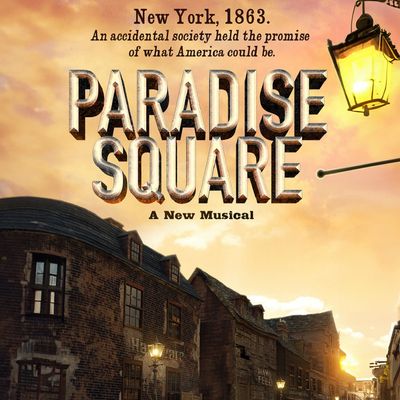
But clever man that he is. I saw Mr. Saturday Night the other night, or whatever that song is, and he wrote this very traditional songs. Traditional two-four songs with so that's because he probably that's what they needed, and that's what he wrote. Now, as far as new songs, interestingly enough, I saw was very lucky. I think it's an absolutely fantastic production or creation is Paradise Square. I I can't remember when I was more excited by that by a musical in year years. Oh, I'm so happy. It is based on the music of Stephen Foster. But it's modernized, and it's so clever because it's kind of modernized, although it the uh the time is the mid-19th century, and he's a character in the show, as a matter of fact.
Oh not at not identified in the beginning. And they said, Oh, I never told you my name. I'm my name is Stephen Foster. But uh they've taken some of his ballads with some of the changes, and uh and made and modernized them and turned them into modern show tunes. They've done something very clever with that music, and that hasn't necessarily been mentioned too much in the reviews. I do hope that show has a life because it has uh they throw the word incredible around, but I'm here to tell you the dancing and the singing and everything else merits that adjective.
[20:46] Steve Ross: Oh, that's fantastic to make sure to see it. Steve, tell us a little bit about what it was like to work at Ted Hooks.
[20:53] Steve Ross: Oh, that was great. Uh a great chapter in my life.
[20:56] Robert W. Schneider: And what was Ted Hooks for our listeners who might not be aware?
[20:59] Steve Ross: Tedbrook was a dancer, Hollywood guy. He wasn't on Broadway, he danced in um Vegas Club Acts, maybe in the early in the 18th and late the 1990s. Um so he was a young, sprightly dancer that loved showbiz and all of that. But he came to New York and he ended up being Tulula Bankhead's personal assistant.
[21:21] Robert W. Schneider: Oh well, that's a show.
[21:23] Steve Ross: That's a book right there. The gentle readers who don't know who Tulu the Bankhead was, look her up. But he's a larger than life character. And so he was very much showbusy. But then he had the idea to open this club on West 44th Street in the middle of the Broadway Theater land. And he called it Backstage. It was very cleverly titled because it was where you went after the show. This is goal, it actually ran from about maybe in the early 70s to sort of the end of that decade. He had another club after that called On Stage, which couldn't really make it. But they were marvelous, so because a lot of shows were on. Dracula with Franklin Jella was next door. But it became a place where all the aspirants, all the people who say, "Boy, I can't wait to throw off that graduating robe and get my ticket on the Greyhound bus and come to New York."
And I talked to people who did that. They said they finished their high school or wherever they wanted, and they, as ever, New York, being the lodestar of wherever you go, anything in the music world, they came here. And it was a wonderful place because you could see stars. And if you went there, you were always introduced in New York knowledge. But also they weren't, uh, the civilians could see them, and it was discouraged that they go over and bother them. And that was the difference. They felt comfortable there. And he was a very clever guy because he had a place that was a restaurant, very busy bar, and a piano bar, and they coexisted. So you could be in the restaurant, it was a spacious enough place and be having your meal, or you could be at the bar talking, talking, talking, or you could be at this big piano bar.
Well, I originally had Peter Howard, the wonderful dance meet, was the first guy. Yeah. Um, and I used to sit in, because one does if you like it. Then Peter had to leave, so he offered me the job and I was there for three or four years. It's a great time for me. It was a very, uh, very jazzy little bit over the top kind of place.
[23:30] Kevin David Thomas: Now, Steve, let me ask you this. Do you remember a time that you were performing there and you thought, "Oh my god, look who just walked into the door"?
[23:37] Steve Ross: That happened a lot. Yeah. When were you the most starstruck? Liza was one of the people that mostly came in a lot, and I have memories of that where she got up and said everybody got it was part of the deal because Ted they went in and they had a little afterglow after their show, and one night she got up, and Cheetah Rivera and Lisa Mordenti were her backup singers. And of course, the other story I'm gonna have told a million times. Ginger Rogers was in town for the 50th anniversary of Girl Crazy. It better been from the early 30s. Anyway, she was in that, if you know. And anyway, she was very Marcelled and blonde and all of that. And so she got up to sing. And I, uh, I said, "Miss Miss Rogers, what is the key you'd like to sing this in?"
And I distinctly remember, she had this lovely lacquered polished nail, and she put it down on a B flat. She said, "I don't know my key, honey, but that's my top note. You figure it out." I had to figure it out. I quickly figured it out was B flat, but so many people came in, and um in the back, that was the year in the back of this restaurant. That was the year they were plotting and planning Sweeney Todd. So that was in the works, and people would be coming there. And chorus people would come and everybody, a lot of people. I don't remember as much as I should about. This is a magical place.
[25:09] Kevin David Thomas: No, it sounds like a fun time.
[25:12] Steve Ross: I was just starting to sing.
[25:15] Kevin David Thomas: You know, I just gonna ask you that.
[25:18] Steve Ross: That's wild. Yeah. Singing came later. I hadn't, I didn't want to be singing. I didn't know. But when I moved here in it when I was 30, and I went to this saloon, and uh which I had sat in on a couple of times, they said, "Well, you sing, don't you?" He hadn't heard me sing. He said, "You sing, do we want a guy who can sing and play the piano?" And I, of course, said, "Yes, I do." I only had sung two songs. I mean, I worked all throughout my 20s just as a piano player, playing and playing a club for dancing and all that. And I did not, I was not at all confident about singing. But then when I realized that it either that or go to the temp job I had signed up for the next day, I oh wow, of course, of course I sing, and I never that was I never had to work after that for the rest of my life.
[26:11] Kevin David Thomas: But don't tell the public that.
[26:13] Steve Ross: We won't, we won't. So wait, you so you were doing temp jobs during the day and then playing piano at night?
[26:19] Steve Ross: Here's how it happened. Came to town in 1968 in the fall, giving myself two or three hundred dollars. Then I said, "Be uh, if I go below that, then I have to get a job." So I have my little room on West 76th Street for $50 a week or something. And finally the moment had come. So I looked in the WANAD and there was a temp agency called Oath and Tempest. That was all movie. So I thought, "Hmm, what can I do? What can I do?" Oh sh file clerk. I can do that. I had done that in the army and all that. So I signed up for it, and it was supposed to start on Monday. And uh I went to this place in those days where they would often feed people. So I mean we thought we had very tired lasagna and wilted lettuce was the fair.
But I went by there, and the guy, mafia mafioso guy in those days. A lot of those bars were indeed mafioso. And of course his name was Vinny. What else would it be? Incidentally. But the guy's leaving. "You want a job?" "Yeah, well yeah, yeah, sure." "You sing, don't you?" "Yeah, sure." So the next night I kind of tried to sing through something, but I was I never was able never had to work since then.
[27:35] Steve Ross: Hello, this is Betty Davis. Not the young one, the old one. I've been on matches.com looking for a gentleman who might like to date an actress who loves to smoke, and who had a black and white career. And I thought, why am I wasting my money on this when I could merely donate it to those boys at Behind the Curtain? Go to Patreon.com and give all you can. God knows they need it. And do it before you're a hundred and twenty-two years old. That's Patreon.
[28:22] Steve Ross: And so once you started singing, uh, did that sort of open up more opportunities for you? Did you say, "Oh, all right, let's I'm gonna turn this into you know, uh headlining. I want to I want to be in charge of my own shows"? No, it was actually I backed into that. I didn't walk into it fade ahead of time. Uh, it just kind of happened because I knew they had to get the job.
[28:41] Steve Ross: Then after that I went to this other bar, and I had to sing more because the first one I worked was I was alternating with the giving guy, but then this one sing more, and I was nervous about it because this was a piano ball, they were sitting two feet in front of me, and I could play it for anything, but to sing myself, and I remember once I was coaching at the time, coaching song, coaching songs, and I was doing what the singer is supposed to do. The music was in front of me, this guy was standing next to me, and I said, Here, let me show you how this song goes. And so I was selling the song, I forget what the song was, anything. So I really made sense of all of those lyrics because I wanted him to understand them, and I played the melody very carefully.
And I said, Do you like that song? He said, Yeah, I said, but you should sing it. I thought, no, no. I don't I don't sing love songs. I didn't think anyone would ever be interested in my romantic thoughts or fantasies. But I sang the song that night, and I won't not overdramatize it, but and people didn't have for their checks, and they kind of listened to it. And I kind of got into the fact that this could be very powerful. I had been used to expressing myself in the keyboard, but especially yourself in songs. Really? They want to hear it. Very powerful for me because I was basically, despite playing the piano and everything, I wasn't particularly audacious. And as a matter of fact, I won't say that I hushed silence fell on the room, but I will say that people paid attention.
And of course, that is the greatest compliment that anybody can do for anything. Yes. They paid attention. And I got vaguely the idea, because I've been in the audience all this time, although people were getting what I got from singers all those years. And I said to myself, you mean I could join the ranks of the people who sing? And it was just a big revelation to me. And never looked back. I can't imagine not doing it, but change. And you were you came to New York at a time, you know, Rob and I on the show have often lamented the fact that we don't have more night club spots where where you have singers, you know, after a show going to you know, like 54 below now, but there's not a lot of places.
Can you just you came to New York at a time where it seemed like everyone had an act a little bit? Every, you know, you know, in the 70s is when Barbara Cook came back, and that was a big momentous idea. So were you playing for people? Were you were you starting to get into that world a little bit more than just playing at, you know, at your cabaret place, Ted Hooks? Those jobs on those days were steadies, which are not steadies now. You can't get a job for five nights a week for four years. But I was walking with a friend of mine on West 13th Street, and I said, Hey, that's where Reno Sweeney was. Do you know what I'm talking about? Yes, we love hearing about Reno Sweeney's. Please tell us.
I want to know that I will so I we stopped and I walked in, and I thought this was this is what the stage was, and this is what the mic was. And that was an extraordinary place. It was the first retro chic bar where you can call and they had big people playing there, the barbecue played there, and that was the first time that a nightclub had kind of reappeared. I there were little bars, but this was a nightclub. They had an MC and he brought the people on, and by Marcovici was there. A lot of the singers from Broadway did tried out their and that that was the fancy version. Shortly after that, we had brothers and sisters on West 46th Street. Yeah, so that was the although that was also Broadway people trying to.
I saw Helen Gallagher Nightclub out there. So which isn't just the people below has kind of the same ethos, meaning that they're supposed to be the place where the Broadway singers go to do their act. Isn't that what their brief is kind? But this was formal. I mean, you could see it for 10 bucks, you can sit at the bar and hear these people. So there's always been, I think, a place where they want to do, they want to feel what I felt, which is what Cambri is all about, meaning that of course, if you're Patty Lapone and you're singing Evita, there's a lot of Patty and there's a lot of Evita. But if you want, if the Cavery world, if you want to reveal and have the power of yourself, and not necessarily be another person, a lot of, I think I some, maybe not so many more.
I think it was Judy Denture. Somebody said, Oh no, no, I would never want to do an act as myself. Oh no, I want to be in the character. And but in the in the course of doing that, one could be, of course, very moved by that, and a lot of songs are character songs. But if you just want to sing a song that moves you and that moves the house, I guess it was a little scary at the beginning because you have to how do I say um get rid of doubts? Right, you have to have so much confidence to say my version. Me, who I am is going to be enough. Who would that who would want to listen to that? So you have to get rid of all of those voices and just do it. And double take the hindmost, as it were.
[34:17] Steve Ross: Steve, this feels like a perfect time to ask you, and I know that you teach master classes all across the world on this subject, but let's imagine someone is listening to this podcast and they want to create their own cabaret show. What are some tips and advice that you can pass on to them about how to make the show successful? There's a really nice and talented singer in London called Gary Williams, and he wrote a book called How to Sing Cabaret, or a couple of people, David Sabella has a chapters in his book about that. I would probably do it the way I did. I fortunately have had good people working with me in the beginning. I mean, when I was playing it backstage, I never I never particularly played an arrangement for a director or for a friend.
He said, Does this work? Does this I just played a bunch of songs and sang Bobby Short, my model, my great model of all time, in case the listeners don't know, he was a very sophisticated performer, singer, pianist, very specific style from the 50s on into the into the 90s, I guess. Well, after that he'd lived into the yeah, he anyway, he was he was my model because I said no one could ever be quite as sophisticated and charming as he. I think you have to go with songs you love, rather than and then think, and I and you know the advice is let's not necessarily think where it's going to end, or I mean, if you unless you you have to do something that will bring in money for you, and then you can't, and you have to play it to the audience.
But why don't you just make a bunch of songs that you really like doing, and then we can work from there. That's one way I do it. And that I had a marvelous have, I haven't worked together for a long time, young English guy, and I was performing in England, and we went down to some place, and he very in his own bold way, he changed my life. He said, you don't seem to be enjoying yourself much more these days. This was there was a great club in England called Pizza on the Park, which up until about 10 years ago was the place we all played. And I had done that, and I was getting sloppy. I wasn't, I guess I wasn't enjoying it. And he said, I can help you. And I knew the way you know stuff, and I I said I knew I needed someone to bring me back and to make sense of what I was doing and to question me.
I don't understand that word, why are you're using that? So things that a director would do, and that began to be a most fruitful relationship. We did five or six shows that way. And it was really a collaborative effort because he was a musician, and he said, Let's try here. Oh, bring that bring that chord over in here. And so it was a lot of fun really co-creating those shows. I did Adam Gielona with him, I did Candra and Ed with him, and a couple of other things. So if you're looking for a tribute show, I see we see them all the time. And somebody was doing a Sarah Vaughn show. I mean, I guess that's easy to do. It's another kind of challenge because you want to be yourself, and yet you want you can't make people forget who what Frank Sonopra sounded like, but right.
It's a different kind of challenge. These days I've done so many tribute shows that I kind of like these last few shows singing songs that I haven't sung for a while. And I bring a bunch of friends in. I have one guy who specifically is very good for helping me organize the shows, and give them some kind of a thing. The other God or goddess, as it turns, when I came, I was so lucky because I came into when Mabel Mercer and Oh, it's time to definitely talk about her. And I have I couldn't have imagined better models for what I had to do.
[38:19] Steve Ross: Could you give us just a little for those of us who may not be as familiar with the work of Mabel Mercer? Could you just give us a little history and your experience? Well, I will tell you the one story that I always tell. I was in this, it was in the mid 60s. I had friends in New York, went back and forth and all that, saw shows. And I was in Washington, but I talked a weekend because I never say I was very au fa with New York City and the shows. So I had this one friend who was a year older than I was, and I thought he was the apex of sophistication. So I would come up and he said, and we have to go and see Mabel Mercedes. Who is that? He said, Well, it's it's just it's unlike anyone you know, she's not like Dinah Shore, she's not like Doris Day, she's a different kind of singer.
I said, Okay, and we went with a couple of friends, and it was the days of those little small watts. This was on 56th Street, and it was a place called that had two floors called Upstairs at the Downstairs and Downstairs at the Upstairs. These little review spots were quite popular, they were kind of left over from the 50s, not jazz spots, they were more often they had French names, Lantrigue, Mystique. So there we go. And we sat down there, and out comes, well, she was in her middle age, a rather dignified woman, and he had a little shawl on, and instead of standing in front of the microphone, she sat down in a chair. So far, so good. I had just been recovering from some ill-starred love affair, as one does when you're in your twenties.
And she sat down and my eyes began to water after one phrase. She said, Try to remember. Try to remember. And she moved me. How did she make me want to cry? No one ever had, I'd never experienced that at a movie. You'd cut a movie, maybe reading a sad book. But I that was so powerful. And she often would say, Oh, I it's just I'm just singing the song. She wouldn't say, Well, I go into she didn't have a method, she just was a superb artist, and she used every moment of her life until she sat down that day. And I realized the power of singing that kind of reflective looking back song. And actually, those songs are a big part of the American songbook. Everybody has a little bit of a past to look at.
I got to know her a little bit, and we and I visited her once upstate, but she was an extraordinary woman. You can get a little bit of it from the videos that are available, but I fear that most of it, if you didn't catch what she was doing, it would just sound like kind of a maybe an affected voice. Right. Which is unfortunate that people didn't have the pleasure or of seeing that in person. But some people are better in person. I mean, some people are fantastic voices can convey it all on a through a recording. And I said the two great ones, or three or four great ones, the Strisand, for example, once, whatever that emotion, it comes through her voice, and and Frank Sonanton, of course, the greatest of all.
But Mabel was very much of maybe an acquired taste, but if you went there and you were moved, I can tell you you wanted to have that happen again. That you wanted to go and be moved. Maybe in your rest of your days, maybe you didn't have a partner, maybe you just were dreaming about romance. But when you went there and she sang that way, tears came to your eyes. Very potent thing to do to someone.
[42:08] Steve Ross: I think we'd be remiss if we didn't ask you about what was it like to reopen the oak room. Yes. Yeah, we had there was a man who really one of the most important people in my life was a cabaret impresario named Donald Smith who loved cabaret, and it was he, as I brought back Mabel Mercer when she was kind of not known so much anymore. And he was a great fan of these mainly these ladies who could use their experience and their musicality, and he presented represented them a lot of them. And he's he's the one that started something called the Cabaret Convention 25 years ago. Yes, he came to me. He said, I've got this idea to have people from England and just all over and doing these doing songs. And the first one was five hours long, and but it went on and on, it still goes on in its opportunity to to sing, and of course it it was great.
[43:08] Steve Ross: And he loved the Algonquin because it represented the class of the 30s and the 20s, which he came to New York in the 50s looking for. So he thought I might be the one to reopen the place in 1981. It had been closed for many, many years, and it worked out wonderfully well. I was there off and on for about eight or nine years. I loved the place; it was probably my favorite place to have worked because it's not now, it's just totally gone. But you went in, and all of a sudden the energy of the 20s was there in the great way that it looked, and the slightly eccentric aspects of it. And when you went into that room, I'm not saying there were ghosts there, or not saying there was particular energy there that I could clock, but in my mind, it made me feel great.
And so when I knew that people like Porter and Gertrude had been in that very room, that was a little bit of a help for me to join in the mood of that, the energy, if you will, of that place. That was a wonderful, wonderful place for me to work.
[44:14] Robert W. Schneider: How many shows did you do at night there?
[44:16] Steve Ross: We didn't have shows. We were there and did sets.
[44:21] Robert W. Schneider: Ah, okay.
[44:22] Steve Ross: But Bobby was the first one to do shows. When I came to town, I went to see him. He was working at some place or another. But then he went to Cafe Carlyle. I think he started off working Monday through Saturday, sets from nine to one or something like that. But he was the first one, and I remember being shocked. Number one, he gave himself two nights off. He worked Tuesday through Saturday, and for the first time in the cabaret world, he had show times. So you came for the early show or the late show. No one. Oh, so that kind of was already edging toward a theatrical experience rather than just, but when I first loved the Algonquin, I arrived at nine and I played till one, and I played half an hour, and then I played a little bit less or more, and whoever came in, it was kind of a rather glamorous, not a piano bar because of the piano bar, but it was just sets.
We did sets and somebody, oh, I think I'll change that. That's all different now because it kind of blended into theatricality where you know exactly what the sets and where the lighting is and all of that, which is not a bad thing. The merging of the theater and cabaret is fine. It enhances the experience of it, but that was great for me because it really confirmed me as this thing that I am, which is the...
[45:52] Kevin David Thomas: And how have you seen, you know, cabaret? I don't want to use the word change, but let's say evolve over the last, let's say, 45 years or so. I mean, since you played the Algonquin rooms even before, how have you seen the sort of the art form change and audiences change? How or have they?
[46:08] Steve Ross: I will address the latter first. I don't think they've changed the audiences. I mean, they are certainly older for reasons that we all know. I mean, that isn't the music that people seek, right? Who are younger people, they're just not interested in it, and I don't say that in any, I say that with a little bit of wistfulness. My nephew is a wonderful musician, and he happens to love music and he knows all about jazz, blues, but what he doesn't know is about cabaret. It seems to be some kind of rarefied topic, and it's only not they only know it from the movie. They know that, oh well, I know that word, that was that movie that she was in. And I wonder, are people? I offer this just as a rhetorical question, are people afraid or ill at ease about the vulnerability in their own worlds?
I always felt in those early days that I hadn't paid my money, it wasn't worth it unless I had tears that come to my eyes at one point. I wanted that; I wanted, I didn't have that in my everyday life. I wanted to go a place where genuine deep feelings would come out. Not that I was bawling on the tablecloth, but I don't think that people are that makes maybe they're afraid of it. Maybe, I don't know, you're good, Kevin. And what I mean, when you go to hear like an Adele or something like that, does she sing love songs that are?
[47:47] Kevin David Thomas: I think so, yeah.
[47:48] Steve Ross: And I think it definitely, I mean, you should definitely, she's hugely popular, and so she's very much so. So my nephew might know about her and might have loved her, you know.
[48:01] Kevin David Thomas: Oh, yeah.
[48:01] Steve Ross: Yeah, I think the styles have changed, but I think the sentiment, I think people still want to be moved, but I wish that we could bridge the gap somehow and make sure that the younger generation appreciates these songs the way that we all do as well. I will say this that the Cabaret Convention of which I spoke still goes on. KT Sullivan now runs the foundation, which was named after this wonderful singer named Mabel Mercer, and a very enthusiastic couple, the E Laos, as a matter of fact, he was a pianist in his youth, have a contest which is now going on where they go to all of the performing arts high schools in Manhattan, four or five of them out there, and the word gets out do you want to win this prize and have a seat on this convention?
And I watched it this year. They only had one live night; the others were of course virtual, and that was fine. And the four finalists from the competition, of which there were a couple of hundred people tried out for it, because the reward was a nice piece of cash and an opportunity to perform, and I was blown away by their talent. It was extraordinary. And one, there was a guy that sang probably the most moving version of "When I Fall in Love" I've ever heard. And when you think about it, if he's never been in love, that's what that song would be. Yeah. Maybe he's heard about it; he's 18. And maybe so when I fall in love, for instance, for the first time, how wonderful it would be. And I was so moved by that.
And he sang it perfectly. You had to give no thing, oh well, he's elighting it, he's doing some modern thing. He just sang it straight from his heart. I guess the only place that you would find younger people who would be up for that is in a theater school.
[49:58] Kevin David Thomas: Right.
[49:58] Steve Ross: Because theaters have plays that move people and then make people laugh, which is not far away from what a cabaret actually does. So if someone is new, let's say you've got a young artist in their early 20s and they want to get into the cabaret. It feels kind of like a club a little bit. I'm not gonna lie. There is a little bit of that. I won't say, but it is unfortunately, it's also expensive because you have to pay for your musicians and figure it all out, and then we have places in town here that are wonderful proving grounds for cabaret acts, like Don't Tell Mom, classically, and two or three different venues, and they're small, and you can kind of get the feeling of it. And Sidney Meyer is marvelous, and he's been behind so many people who've started out in this business.
But were it not for him and for that place, I guess the places seem to be opening. For kind of, I mean, there's a new place in Chelsea, there's a new place here. So New York continues to have cabaret spaces, new ones that are filled with people. But again, that's New York City. But that's why people come here because they can find a place for them to do their acts. The Green Room 142 is very nice. But they have people of my bad, as they say, that whom whose names I do not know. I'm sure were I to go there, I'd have a great time. So people are singing, but I will say this. I will say this. They're singing songs that are fine, yes. But I yearn for one standard. They don't sing the standards. They don't sing the standards as we know them from the song.
I would love a Jerome Kern. I would love a Rogers, and they sing a lot of songs by their contemporary composers and maybe their friends or have written these tunes. They're okay. And they let the performer be shown in a way, but there are just so many great songs that would be challenging for them and moving for the audience. But they just maybe they think that sadly that that ship has sailed and that no one's going to come unless they sing songs by someone that the audience might know. And that's the challenge because you want to bring people just as your friends when you're starting out. You want to bring people in. So you're not going to go to, you're not going to leave your comfort zone of current songs, perhaps that they might know or that Adele has sung or something.
And you're not going to go back to the songs that were my comfort zone in the times gone by. And so isn't it funny? I mean, I'm in my little zone over there looking at them out of my zone, and then they're in their zone looking at me. So it's a tricky thing to do, but you have to want to do it like anything. You have to wake up in the morning and say, God damn it, I'm going to be an actress no matter what it takes. And you give a lot of your time to it. Sometimes it doesn't work out, but you have tried to do it. I remember Bobby Short was asked once in an interview a similar question to what you've just said to me. He said, oh, oh, I wouldn't don't even try it. He was even encouraging. Fortunately, I didn't listen to him because it's a hard, it's a hard gig.
[53:13] Kevin David Thomas: Yeah.
[53:13] Steve Ross: You know, it's a hard gig. It's very rewarding if it works out, but what can I say? I don't really have an answer for that except do it. Because it'll be wonderful for you to do your, for you to look back and say, yes, I told people what I felt.
[53:28] Kevin David Thomas: Yeah, yeah.
[53:29] Steve Ross: You shared and you made people feel and think and appreciate art in a whole new way. So I think that's really commendable. But remember what they felt, not necessarily what you sang.
[53:40] Kevin David Thomas: Yeah, yeah, that's true.
[53:43] Robert W. Schneider: Um, and you have some gigs coming up. I mean, I saw that you're gonna be singing with our good friend Leroy Reims on June 12th, I believe.
[53:51] Steve Ross: I said for Lemo's crippling shyness, he'd have a mustache. Well, you just can't ever get him to talk; you just can't get him to tell any stories, you know. It's just really sad and wavy. Thank God for him. He is just out there; he doesn't care. He tells it, and he can say the most scabrous things, but he has this great likability.
[54:13] Kevin David Thomas: You're so right.
[54:15] Steve Ross: That's why we love him. And he's done everything. I don't think he's gonna play, but he's done Broadway musicals, and he's a wonderful cabaret, which he continues to do very successfully. Yes, I'm going to be joining millions who will be, but I can't tell a story about it because he tells all the best stories anyway. And I'm also to add possibly to anything that he might do. Yeah, that's coming up, and I'm very happy to be going out to the West Coast. I had several times in Los Angeles years ago, but I have so many friends who have moved to that area. But this is in Palm Springs, and there's a nightclub up there, so I'm going to go out there. And I love to travel, and I love to, you know, I love to take the gospel around when I can.
I love Birdland. I think it's a very classy place, and I think the guy that runs it, Johnny Valenti, is really a genius in the business world. Some he's kept that whole classic beautiful club going throughout the whole business, and he's always coming up with new things. And it has a feel of an old nightclub. That's what's scary. And we don't have a cigarette girl going around, but it has a classic feel to the place.
[55:23] Robert W. Schneider: Steve, it has been such an honor to get to talk to you. This is just absolutely incredible. And Kevin and I have both been fans of yours for such a long time.
[55:32] Steve Ross: Thank you. It's been great being with you, fellas. And I now have my homework because I have to go back and set aside three or four days to listen to all your other interviews.
[55:44] Robert W. Schneider: Oh, wow.
[55:48] Steve Ross: I can do a couple of no sleep nights. I just go through the whole...
[55:52] Robert W. Schneider: Great, great.
[55:52] Steve Ross: Steve, this was an absolute pleasure. I cannot wait to see you in person again.
[55:56] Steve Ross: Okay, my dear. Take care.
[55:57] Robert W. Schneider: Thank you.
[56:03] Robert W. Schneider: Thank you for listening to today's episode. And a big thanks to the punchy players, Jeff Marquis, who is bringing back Lucy, Betty, Judy, and more to shill for us. And a big thanks to our sound editor, Daniel Schwartzberg, and social media manager Bethany Ann Selecki. And don't forget, we want more folks to hear these incredible stories, and that's where you come in. In order for people to find out about us, we need lots of ratings on iTunes. So head on over to iTunes, search for Behind the Curtain, Broadway's Living Legends, click on our logo, click on ratings and reviews, then write a review and leave us five stars and make us feel as special as Eliza Doolittle on Eliza Doolittle Day. Or you can leave us just one star and you can make us feel as bady, baddie, bad as Annie did in that really weird production in Boston where Annie dreamt that she was being adopted, but then she ended up back in the orphanage, right? Back where she started.
[56:54] Kevin David Thomas: Yeah, true story, Rob saw it.
[56:56] Robert W. Schneider: Yes, and it was badly.
[56:58] Kevin David Thomas: It was bizarre.
[56:59] Robert W. Schneider: I was there.
[57:01] Kevin David Thomas: I was.
[57:02] Robert W. Schneider: Oh god. So head on over to iTunes and make us feel even more special than we already do.
© Broadway Podcast Network, All Rights Reserved