

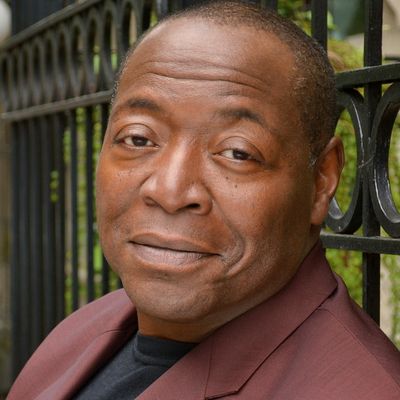
It "Don't Take Too Much" to be excited that Tony Award winner Chuck Cooper swings by Shetler Studios to talk to Rob and Kevin about his forty plus year career onstage in shows like The Life, Passion, and Caroline, or Change... Read More
From the show: BEHIND THE CURTAIN: BROADWAY'S LIVING LEGENDS » Podcast
Guests
About
It "Don't Take Too Much" to be excited that Tony Award winner Chuck Cooper swings by Shetler Studios to talk to Rob and Kevin about his forty plus year career onstage in shows like The Life, Passion, and Caroline, or Change. Chuck pulls back the curtain on his career, including how he survived Getting Away With Murder, what was so magical about Cy Coleman's hands, and why he was the most musical washer machine you ever saw ! Also, Chuck shines the spotlight on Stephen Sondheim, Lilias White, and George C Wolfe! Become a sponsor of Behind The Curtain and get early access to interviews, private playlists, and advance knowledge of future guests so you can ask the legends your own questions. Go to patreon.com and search Behind The Curtain: http://bit.ly/2i7nWC4
Transcript
This transcript was automatically generated and might contain errors.
[0:00] Kevin David Thomas: Guess what?
[0:01] Robert W. Schneider: What, Rob?
[0:02] Kevin David Thomas: We now have over 50 iTunes reviews.
[0:06] Robert W. Schneider: Huzzah!
[0:08] Kevin David Thomas: Indeed!
[0:09] Robert W. Schneider: We are climbing those iTunes rating charts.
[0:12] Kevin David Thomas: That's amazing.
[0:13] Robert W. Schneider: How do we climb even higher?
[0:15] Kevin David Thomas: Can you take me enough?
[0:19] Robert W. Schneider: Little Rock of Ages for you.
[0:20] Kevin David Thomas: Do you know I like that you took it up so high too? You didn't leave it.
[0:23] Robert W. Schneider: You like went right to the tenor place.
[0:25] Kevin David Thomas: I was gonna do climbing.
[0:26] Robert W. Schneider: No Robert Goulet.
[0:27] Kevin David Thomas: No.
[0:28] Robert W. Schneider: Can you take me?
[0:30] Kevin David Thomas: Hey and F.
[0:32] Robert W. Schneider: Thanks for coming out tonight.
[0:37] Kevin David Thomas: Thank you.
[0:38] Robert W. Schneider: And a little Sergio Frankie.
[0:39] Kevin David Thomas: Yeah, a little Sergio.
[0:40] Robert W. Schneider: It's never over.
[0:42] Kevin David Thomas: Much like the 24 hour buffet down in the lobby of the Dunes Casino.
[0:48] Robert W. Schneider: Me and Sid the Caesar.
[0:52] Kevin David Thomas: Tonight's only at Dimirage.
[0:55] Robert W. Schneider: Sorry, sorry, sorry.
[0:56] Kevin David Thomas: Well, lovely listeners, this is where you come in.
[0:59] Robert W. Schneider: This is how we're gonna climb those iTunes rating charts.
[1:01] Kevin David Thomas: That's right. Lovely listeners, if you love us, would you go to iTunes?
[1:05] Robert W. Schneider: Click on the iTunes store. Search for Behind the Curtain: Broadway's Living Legends.
[1:10] Kevin David Thomas: Then click on ratings and reviews. Under the customer reviews, click write a review.
[1:15] Robert W. Schneider: Then let us know what you think from one to five stars.
[1:18] Kevin David Thomas: That's right. And you can leave comments too, like Kevin David Thomas is a god.
[1:23] Robert W. Schneider: Or Rob, who the hell is Hervey Village?
[1:27] Kevin David Thomas: Who who who is Herve Vol?
[1:33] Robert W. Schneider: I fell for a scene.
[1:34] Kevin David Thomas: You felt the man that's never done one musical in his entire life, and he gets mentioned more than Steven's.
[1:40] Robert W. Schneider: Right, but I love him from James the Bond.
[1:41] Kevin David Thomas: Okay, anyway.
[1:42] Robert W. Schneider: Oh, guys, help us out. Please.
[1:44] Kevin David Thomas: Thanks, everyone. And I'm Kevin David Thomas.
[1:46] Robert W. Schneider: And this is Behind the Curtain: Broadway's Living Legends.
[1:50] Kevin David Thomas: Don't forget to follow us on Twitter at Broadway Curtain.
[1:53] Robert W. Schneider: And make sure to join our Facebook page at Behind the Curtain: Broadway's Living Legends.
[1:57] Kevin David Thomas: And go ahead and follow us on Instagram at Broadway Curtain Podcast.
[2:00] Robert W. Schneider: Plus, you can always listen to our podcasts on Broadway World and Stitcher.
[2:05] Kevin David Thomas: Today's guest is one of the most respected actors working in the industry. His career has included plays, musicals, film, and television.
[2:13] Robert W. Schneider: He is as comfortable bringing life to the words of Shakespeare and Chekhov as he is with the words of Neil Simon or August Wilson.
[2:20] Kevin David Thomas: Most of our listeners would recognize his powerful voice from the original cast recordings of Caroline, or Change, which, yes, listeners, you know, is one of my all-time favorite shows.
[2:30] Robert W. Schneider: And yes, I am excited that he's here right now. And The Life, for which he won a Tony Award.
[2:35] Kevin David Thomas: To tell us what it was like to work with Cy Coleman's, Janine Tesori, George C. Wolfe, and what it's like to be the head of the COOPER Acting Dynasty.
[2:43] Robert W. Schneider: Here is CHUCK COOPER.
[2:46] CHUCK COOPER: Wow. Welcome.
[2:47] Robert W. Schneider: That is an intro, yeah.
[2:50] CHUCK COOPER: Yeah, we're excited.
[2:51] Kevin David Thomas: It is a life though, Charlie.
[2:53] CHUCK COOPER: Wow, my goodness.
[2:55] Kevin David Thomas: Yeah, it is. It is unfurled far faster than I would ever have imagined.
[3:00] CHUCK COOPER: But yeah, here we are. Um, it looks like I might have a career.
[3:05] Kevin David Thomas: I think so. I think you've done pretty well.
[3:08] CHUCK COOPER: I'm thinking. I think it's starting to sink in.
[3:14] Kevin David Thomas: Does it ever really, I mean, do you ever look back and say, oh my gosh, like this is I did it, you know, or I'm doing it, or mostly what happens is I just live in this wash of gratefulness that I am here.
[3:27] CHUCK COOPER: And all of the wonderful things that I'm living right this second. You know, like this interview. I mean, this is like, this is wild.
[3:36] Kevin David Thomas: We have wanted you for the longest time.
[3:39] CHUCK COOPER: When we first we did, we started the podcast about a year ago, and you were one of the first names on the list.
[3:43] Kevin David Thomas: We made a lot of people we wanted to give me the big head.
[3:50] CHUCK COOPER: So originally from Cleveland, Ohio.
[3:52] Kevin David Thomas: Cleveland.
[3:53] CHUCK COOPER: That's where I went to college, yeah.
[3:54] Kevin David Thomas: Where'd you go to college?
[3:55] CHUCK COOPER: Baldwin-Wallace.
[3:56] Kevin David Thomas: Baldwin.
[3:57] CHUCK COOPER: Yeah, on the West Side.
[3:58] Kevin David Thomas: Where you uh on the East Side.
[4:01] CHUCK COOPER: Cleveland is very segregated.
[4:02] Kevin David Thomas: There is black people on the East Side.
[4:04] CHUCK COOPER: Yeah.
[4:04] Kevin David Thomas: And white people on the West Side.
[4:05] CHUCK COOPER: Yeah.
[4:06] Kevin David Thomas: So I didn't even you didn't even have to tell me what side you was on.
[4:11] CHUCK COOPER: Lakewood, yeah.
[4:12] Kevin David Thomas: Right?
[4:12] CHUCK COOPER: Yeah. It's like that there. You know, it's weird.
[4:15] Kevin David Thomas: But yeah, so me, Eastside, John Adams High School, then went to Heights High School in Cleveland Heights.
[4:22] CHUCK COOPER: Yeah.
[4:22] Kevin David Thomas: Nice. And did you do you find an interest in theater even then in high school?
[4:27] CHUCK COOPER: I tell people that I kind of grew up in the theater because my father was an actor at Caramu House in Cleveland, Ohio.
[4:35] Kevin David Thomas: Major theater.
[4:36] CHUCK COOPER: It's called Caramu.
[4:38] Kevin David Thomas: Caramu.
[4:38] CHUCK COOPER: Caramu House. Yeah. It is one of the oldest community theaters in the country.
[4:45] Kevin David Thomas: Yeah.
[4:46] CHUCK COOPER: And it is part of a settlement house, which was the first integrated settlement house in the country.
[4:52] Kevin David Thomas: Wow.
[4:53] CHUCK COOPER: And it has quite a history and legacy about it. My father acted there in productions in their community theater pieces.
[5:04] Kevin David Thomas: And so I went, the settlement house has a nursery school and I went to nursery school there.
[5:10] CHUCK COOPER: Oh my gosh. My godmother was a nursery school teacher and my father, yes, I got in for free or whatever.
[5:15] Kevin David Thomas: And um, yeah. So I went to school. I went to nursery school in the theater.
[5:20] CHUCK COOPER: And he's a singer. I mean, he sang with the Robert Shaw Chorale, right?
[5:23] Kevin David Thomas: Boy, you did your homework.
[5:24] CHUCK COOPER: Well, I know, I just, you know, I see things and I take note.
[5:26] Kevin David Thomas: Well, because that's kind of epic. I mean, the Robert Shaw Chorale is like a major singing group.
[5:31] CHUCK COOPER: Major, classic too, like classical music too.
[5:35] CHUCK COOPER: I, my treasured music are the choral pieces that he sang with that chorale. I had that in my library.
[5:43] Kevin David Thomas: Oh, yeah.
[5:43] CHUCK COOPER: Yeah. So yeah, my father sang with Robert Shaw, went down to sing with Pablo Casals and Festival Casals. Um, yeah, he had a gorgeous, all the guys, no, it was mostly guy, his brothers, you know, only had uncles.
[5:58] Kevin David Thomas: Yeah.
[5:59] CHUCK COOPER: But um, except for my Aunt Rosie. I forgot your Aunt Rosie. I'm sorry.
[6:03] CHUCK COOPER: Um, they all sang. Everybody in our family sang. And when you go to a family reunion, you gotta bring it.
[6:10] Kevin David Thomas: Yeah.
[6:11] CHUCK COOPER: Yeah, I see that you when you go to family reunions, it's a big sing along, is that right?
[6:14] CHUCK COOPER: Yeah, yeah, yeah. I'd love to sing on that. Back in the day, you know. We haven't had one in a long time, too long. But when I was coming up, we had them all the time.
[6:21] Kevin David Thomas: And what's your favorite type of music to listen to back then, when you were growing up?
[6:24] CHUCK COOPER: Back then when I was growing up, famous singers. You know, it was all the Motown.
[6:30] Kevin David Thomas: Okay, so that was like, you know, a cornucopia of wonderfulness.
[6:36] CHUCK COOPER: Yeah. But then I also got, I got Sarah Vaughan, I got, you know, Ella, I got Tony Bennett and Mel Tormé and of course Sammy.
[6:48] Kevin David Thomas: Sammy Davis Jr.
[6:50] CHUCK COOPER: Oh yeah, the great Sammy Davis Jr.
[6:52] Kevin David Thomas: The great. All just a moment of silence.
[6:56] CHUCK COOPER: That's for Sammy.
[6:57] Kevin David Thomas: I like that.
[6:58] CHUCK COOPER: One of the best, one of the best to see live, and left us far too young.
[7:02] Kevin David Thomas: Oh my god. Far too young.
[7:03] CHUCK COOPER: Quadruple Lemony threat. I mean, there's nothing he couldn't do.
[7:07] Kevin David Thomas: Yeah, oh truly, and dedicated. We talked to Charles Strouse about him and when he did Golden Boy, he stayed with it for years.
[7:13] CHUCK COOPER: I mean, he did it in the United States, did it in London.
[7:15] Kevin David Thomas: Yeah, yeah, yeah.
[7:16] CHUCK COOPER: That's dedication. Yeah, look on YouTube and hear any of his renditions of anything. Old Man River, uh I gotta be me, anything.
[7:25] Kevin David Thomas: Nobody styles a song like him.
[7:27] CHUCK COOPER: Nobody's perfection.
[7:28] Kevin David Thomas: Yeah, yeah, really perfection.
[7:30] CHUCK COOPER: Um, were you doing shows when you were in high school?
[7:32] CHUCK COOPER: I didn't do them in high school, although I worked at Kane Park.
[7:36] Kevin David Thomas: I did too.
[7:36] CHUCK COOPER: You get out of here!
[7:37] Kevin David Thomas: Shut up. Stop it immediately.
[7:40] CHUCK COOPER: I did, I did, I was Tony in West Side Story.
[7:44] Kevin David Thomas: What's Kane Park?
[7:45] CHUCK COOPER: Kane Park is this big outdoor thing.
[7:47] Kevin David Thomas: Yeah, big Cleveland Heights.
[7:48] CHUCK COOPER: Yeah, amphitheater, it's huge. Like one of those outdoor places that really's like a cover.
[7:54] Kevin David Thomas: Well, I don't know if there's a cover then, and yeah, they've got that big stage.
[7:58] CHUCK COOPER: Well, you played Tony. I squeegee the deck when it was wet.
[8:03] Kevin David Thomas: Oh my god, that's crazy.
[8:05] CHUCK COOPER: Right. That's why. Okay, so you worked at Kane Park.
[8:09] CHUCK COOPER: Worked at Kane Park and was around all the theater shows and whatnot. And I had friends who were in theater. I just never thought of doing it.
[8:15] CHUCK COOPER: You know, people did it. I just, and I would watch, and I just kind of passively dody dotey doed through much of my life.
[8:24] Kevin David Thomas: Not according to your resume, but yes.
[8:27] CHUCK COOPER: But um, I just kind of like, you know, was watched them, and then I went to college, and I was like, you know, I knew I had to do something fun.
[8:36] Kevin David Thomas: Okay.
[8:37] CHUCK COOPER: I was real clear about that, cause my father, hey, he did his job.
[8:43] Kevin David Thomas: Really hated it.
[8:44] CHUCK COOPER: What was his job?
[8:45] CHUCK COOPER: He worked for United Airlines. He was a Sky Cap reporter, carrying bags of service.
[8:50] Kevin David Thomas: Yeah.
[8:51] CHUCK COOPER: And Lord have mercy, he hated them fucking Peckerwoods.
[8:54] Kevin David Thomas: Yeah.
[8:54] CHUCK COOPER: Okay, because they dogged him bad.
[8:56] Kevin David Thomas: Yeah.
[8:57] CHUCK COOPER: My father got dog bagged anyway. Well, he was a black man in America.
[9:00] Kevin David Thomas: So you know.
[9:01] CHUCK COOPER: In a certain time period.
[9:02] Kevin David Thomas: In a certain time period, too.
[9:03] CHUCK COOPER: Right, right. So he, you know, but the fringe benefit of that job though, which was amazing, is I got to see, I got to travel because I got passes.
[9:11] Kevin David Thomas: Yeah.
[9:11] CHUCK COOPER: And he got to travel too. Saw a lot of shit.
[9:14] Kevin David Thomas: Yeah, yeah.
[9:15] CHUCK COOPER: Traveling is the best education I think there is.
[9:17] Kevin David Thomas: It's the best.
[9:18] CHUCK COOPER: But so I went away to college.
[9:20] CHUCK COOPER: Which was Ohio University. And knew I had to have fun because my father hated his job.
[9:27] Kevin David Thomas: And uh get to freshman orientation. And I'm like, I think I'll be a disc jockey.
[9:35] CHUCK COOPER: Yeah.
[9:37] CHUCK COOPER: Because you could play records all day.
[9:39] Kevin David Thomas: Yeah.
[9:39] CHUCK COOPER: And then that would be fun. Right?
[9:44] Kevin David Thomas: Yeah.
[9:45] CHUCK COOPER: So uh, but I get to freshman orientation and have a little questionnaire, you know, what are your interests?
[9:50] CHUCK COOPER: Oh, I sang in the choir in high school and la la la. And my advisor just happened to be Stan, uh, I think his last name is Lee, who was the lighting designer in the school of theater.
[10:02] Kevin David Thomas: Little did I know that as many students as they steer towards their department, they get funded for.
[10:08] CHUCK COOPER: But nonetheless, he gently steered me to the theater department.
[10:14] CHUCK COOPER: He's like kicked me into the theater department, where I was like the freshman track was like, you know, movement 101, voice 101. I'm like, this is cool. I can do this.
[10:25] CHUCK COOPER: This is easy. I don't have to read anything.
[10:29] Kevin David Thomas: He's like, really? No, it's terrible.
[10:31] CHUCK COOPER: Um, but it was easy, it was fun. Yeah, so I wanted.
[10:34] CHUCK COOPER: Yeah, and so I got into the theater track and I didn't suck.
[10:39] CHUCK COOPER: Yeah, I kept not sucking.
[10:42] CHUCK COOPER: Yeah, and so um, auditioned. They called me brash.
[10:46] CHUCK COOPER: Because, you know, the good thing was I didn't know what a good program it was. I had no fucking clue.
[10:52] CHUCK COOPER: I was just doty-doeing doty. Yeah.
[10:54] CHUCK COOPER: Yeah. And I doty dody doughed into that and got in, and they trained me.
[11:01] CHUCK COOPER: Or they gave me the soil from which my training and experience would grow.
[11:09] Kevin David Thomas: Yeah.
[11:10] CHUCK COOPER: And um, so I'm very grateful for that. And then I moved to New York.
[11:14] CHUCK COOPER: I had a whole slew of classmates that had gone before me. And uh, this is deep.
[11:21] CHUCK COOPER: I got my equity card the first month I was here.
[11:27] Kevin David Thomas: Huh. Wow.
[11:28] CHUCK COOPER: I got a job like the first week I was here.
[11:33] Kevin David Thomas: What year was that?
[11:34] CHUCK COOPER: What'd you say? That was the bicentennial year, 76.
[11:37] Kevin David Thomas: Yeah, okay.
[11:38] CHUCK COOPER: Now the first job I got was like a narrator. This is like a puppet show.
[11:41] CHUCK COOPER: I had a friend who I was friends with um all the ladies in the dance department.
[11:44] Kevin David Thomas: Nice.
[11:45] CHUCK COOPER: Um, and um back in school, and when I got here, a friend, dancer friend, needed this narrator for this puppet show.
[11:53] CHUCK COOPER: Non-equity. It was a gig, but it was a gig, right?
[11:55] Kevin David Thomas: So I was doing that, and then another friend who had gotten into the, at that point it was called uh part, performing arts repertory theater, but it is now Theater Works USA.
[12:09] CHUCK COOPER: Oh, of course.
[12:09] Kevin David Thomas: Oh yeah, Theater Works.
[12:10] CHUCK COOPER: Right. Charlie Hull, Jay Harnick.
[12:13] CHUCK COOPER: Uh so another upperclassman got me an audition for a park show. This is like maybe three weeks in getting here.
[12:22] CHUCK COOPER: I get the job, I go out on tour and an equity children's theater show. Yeah, bam, slam.
[12:27] Kevin David Thomas: Slam bam, thank you man.
[12:29] CHUCK COOPER: Pow. Yeah. I was like, all this shit is easy.
[12:33] Kevin David Thomas: No.
[12:39] CHUCK COOPER: Yeah, well, yeah.
[12:41] Kevin David Thomas: It'll smack in heads soon enough, though.
[12:42] CHUCK COOPER: That will not last long at all.
[12:45] Kevin David Thomas: Did you have an agent when you first when I first got here I did not?
[12:50] CHUCK COOPER: I don't remember when I got my agent.
[12:54] CHUCK COOPER: Because I've only been with one agent.
[12:58] Kevin David Thomas: Wow. You are a lucky man, CHUCK COOPER.
[13:02] CHUCK COOPER: Wow. That freaks people out.
[13:05] CHUCK COOPER: My agent now, the name it has morphed slightly. As you know, businesses morphed.
[13:11] CHUCK COOPER: It started out and he just passed recently. It started out as Monty Silver.
[13:18] Kevin David Thomas: Wow.
[13:18] CHUCK COOPER: Monty Silver was my first agent.
[13:21] Kevin David Thomas: How is the audition process changed from when you first started to now?
[13:26] CHUCK COOPER: I have finally arrived at the place I early on learned that I must seek to arrive at.
[13:48] CHUCK COOPER: Wow. And really not give a fuck. Like you do your work, but then when you get in that room, you're like, hey, take it or leave it.
[13:56] CHUCK COOPER: You know, I'm gonna do the best I can.
[13:58] Kevin David Thomas: Right, right.
[13:58] CHUCK COOPER: And take it or leave it, even has that that has like a little fever on it. It's not even that.
[14:03] CHUCK COOPER: It's like, this is my gift, and this is what I have, this is what I do. And um sometimes we meet and sometimes we don't.
[14:12] Kevin David Thomas: Yeah.
[14:12] CHUCK COOPER: And that's cool. And um just to let it be, and mostly and to have fun.
[14:19] Kevin David Thomas: Yeah.
[14:20] CHUCK COOPER: Which is why I started.
[14:22] Kevin David Thomas: Yeah, exactly.
[14:25] CHUCK COOPER: And when I do that, when I don't give a fuck, and when I'm just having fun and playing, I do really well.
[14:32] Kevin David Thomas: Yeah.
[14:34] CHUCK COOPER: And the moment I start thinking about shit, it goes right down the toilet.
[14:37] Kevin David Thomas: That's great advice.
[14:38] CHUCK COOPER: That's young performers, too.
[14:40] Kevin David Thomas: How long do you think it took you to learn that lesson?
[14:43] CHUCK COOPER: 75 years.
[14:48] CHUCK COOPER: Okay. After I've heard all day. I love that. I love that. Um so let's talk about when you when you were starting out, and I think you had already covered this, but you were open to all sorts of different types of storytelling.
[15:02] CHUCK COOPER: Yeah, yeah. Yeah, because I I, you know, I knew that I the more hatch you were, the better. The uh I was curious about different things, and you know, luckily different things came to me. Um and I I guess I had some range to handle it. And where I didn't, I I vigorously went about learning. Um I remember um I did uh my think about this wasn't my first Shakespeare. I'd done a Shakespeare, I had done Caliban and the Tempest at the Alliance, I think, before I got this gig, and I got uh Talisophidius and Corey Olainus, directed by John Hirsch. Oh and um I I don't know that I thought I could not have because I didn't have enough experience, professional experience in the classics, to think that I had you know I knew what I was doing. Um so I was there very much uh trying to be present and and give what I had. Dakin Matthews was in the company.
[16:17] CHUCK COOPER: Wow. Um Byron Jennings was Coriolanus. Okay. So there's some learn a little there, I suppose. Okay. This was my master class in how to do Shakespeare. John Hirsch. Byron Jennings, Jacob Matthews. So I just sat there like a sponge and just listened. And uh I can remember sessions with John where we would go through my text word by word, and I never had so much fun in my life. I to really he taught me how to mine the text, how to how to scrub it, how to excoriate it, how to mold and uh need it, and uh it has held me in good stead for the breadth of the work that I would have done, I would say, because uh there are there are inherent musical um uh um tools uh hidden in there, and there are um tools to explicate and understand the drama and and just uh grow more sensitive to the human condition and I don't know, I'm going on.
[17:51] Kevin David Thomas: No, it's no that's great. It's true. That's that's good. That will affect you. One of the things that young students who are about to join this profession worry about is is this word type. Um what do you feel about type? Do you like to be type? Do you feel like you own your type? Is it something that's now that is something I believe outside uh of my uh journey through it that has changed greatly that I may not be completely up on because the uh what they are asking of these young people now is completely different than what I what was asked of me as a young person coming up.
[18:31] CHUCK COOPER: Um you know, just your social but my daughter told me that um the other day they wanted to know how many likes she had.
[18:39] Kevin David Thomas: Wait, wait, wait, wait, wait, wait, wait.
[18:42] CHUCK COOPER: In an audition?
[18:43] Kevin David Thomas: Yes.
[18:44] CHUCK COOPER: Yes. No, we're talking about Lily, who is had a who is a very successful Spring Awakening Alpha Bush. I mean, this this was like a little while back. But it was after Spring Awakening. Well, she it was like they asked her how many how many little that's I can't even I don't know what what to tell you.
[19:03] Kevin David Thomas: Yeah.
[19:03] CHUCK COOPER: I c I don't know. I don't have I got eleven, I got eleven to twelve likes. Yeah I don't she's she's plowing through it.
[19:13] Kevin David Thomas: Oh, yeah.
[19:13] CHUCK COOPER: But but I d I you know that's when I gotta I gotta say, I don't know, babe. You know, I can help her in other places, but yeah, right, you know. Um what was the um when you're so you're in New York City and you're you're plugging away, you come back for your theater works tour. When uh your part tour. Um when what was the first job you had where you were like hey, it's gonna work out like I'm you know, or at least I'm I'm glad I'm doing this, or right direction.
[19:36] CHUCK COOPER: The next level. You know, like yeah, exactly. Like where it's like, hey, I'm really paying, I'm getting good food. Wow, well, uh that might have been um I got an industrial. Which were very we've talked to a lot of people, they were very popular. Oh, yeah. Yeah, yeah, yeah. Uh, and you could really make a good look. It was nice. It was like it was as nice as Broadway. Uh huh. Or I hadn't done Bromber yet, so I can't really speak definitively on this, but it was really good. Because it was all Broadway people doing industrials.
[20:05] Kevin David Thomas: Yes, yeah.
[20:06] CHUCK COOPER: What was the industrial? It was for Exxon.
[20:09] Kevin David Thomas: Exxon's a winner, Exxon's the best.
[20:11] CHUCK COOPER: Exxon is better than all the rest of the Marcot. Oh, that's date. It's great. That I can't remember like people who helped me in the business, but I remember that shit.
[20:32] Kevin David Thomas: Oh man.
[20:33] CHUCK COOPER: What that rhyme. Okay, all right, good. Yeah. Good old oil. Yeah, so you know, you're making like I don't have a comma in my paycheck yet. That didn't happen for a while. But it was nice. Yeah. You know, it was like, you know, back then, 700 bucks a uh a week was, you know, what's a lot of fun. Yeah. Okay. Right? Right. So like, um, I'm doing this industrial for Exxon, and we're traveling first class everywhere. They are flying us, first class. We are staying in nice hotels with the per diem that you know, $15 a day. You could just spin your per diem and keep the money you make. And that was really special.
[21:24] CHUCK COOPER: Then I made a pro the same thing kind of in uh my first national tour, which was uh UB. Oh again, production contract on the road, per diem, young, single. I just got married at uh at uh UB when I went on the road. Yeah. So I'd I've been on the road and other stuff. Tapped in but that came that came later. Tapping Kids later. Uh probably was like regional theaters or stuff, but I'd been on the road. Children's theater did a lot of that. Okay. But um, but those are the first that's you know, the that industrial the production contract where I was like, I thought it was nice. Yeah. And you know, children were coming, so that balance of it it soon evaporated that that sense of opulence.
[22:17] Kevin David Thomas: Well, yeah, work becomes a a necessity in order to make your life happen. And you made your Broadway debut in uh Amen Corner.
[22:26] CHUCK COOPER: Amen Corner. Yeah, based on the James Baldwin play.
[22:30] Kevin David Thomas: That's right. I gotta go see this movie.
[22:33] CHUCK COOPER: Um I'm not your negro. Have you seen it yet?
[22:35] Kevin David Thomas: Uh my family members have. Uh my wife's family has.
[22:38] CHUCK COOPER: Yeah, we went to see it uh well. We tried to go see it, I don't know, it was a week a half ago, my brother, my son and I, and um it was sold out. But I gotta get back. Which is great. I mean, let's get that. That's a good thing there. I wish it was showing more places.
[22:50] Kevin David Thomas: I do, I do too.
[22:52] CHUCK COOPER: I'm sure it will. Yeah. Yeah. Yeah. Did you like life on the road? Did you like the road is long.
[23:16] Kevin David Thomas: That would be crazy.
[23:18] CHUCK COOPER: Okay, I'll try to do that. But it's it's tough. It's something out there, man. You know, what you know, when I was young and crazy, and even when I was, you know. The road is crazy.
[23:31] Kevin David Thomas: Too crazy.
[23:32] CHUCK COOPER: It is. It's too damn crazy. Okay. Uh can go out there and keep your shit together. All of your shit.
[23:43] Kevin David Thomas: Mm-hmm.
[23:44] CHUCK COOPER: And I um so I will say that about the road. Yeah. Um, but uh see a lot. Travel a lot, and that's good. I'm good. Yeah. So let's go back to the back. Nothing's all one thing. That Broadway debut.
[24:00] Kevin David Thomas: Yes.
[24:01] CHUCK COOPER: With Ruth Brown, right?
[24:03] Kevin David Thomas: The Ruth Brown.
[24:03] CHUCK COOPER: Yeah. Tell us about what it's like to work with the Ruth Brown.
[24:08] CHUCK COOPER: She was just oh, Ruth. She was like uh somehow, you know how she's like uh like um dense. She was like, you know how they say uh uh like a smallest particle of like a black hole is like so dense that it's like really, really heavy. Ruth was like that, only it it was it was light. It was it was she was dense with light. And so when she would sing, it would be this illuminating thing where where a note would just like just expand expand expand and keep expanding every time it came out of her mouth she was just I used to just watch her and see where she sang from because people say your the the center or the place from which you sing can be a little a slightly different in in every person and uh as I watched her sing you could say that it was like so deep so such a familiar deep hurtful loving wonderful place of just great character and great uh dignity and great um there was suffering but there was love and uh she was so special I'll never forget forget her post some clips for our younger listeners something special wow very very special.
[24:42] CHUCK COOPER: Yeah uh doing your first Broadway show uh dated by working with this is what they call the higher level again you know I so much of my life I went through duty dotey dough that I I got in the show um and I was like okay well this is Broadway let's see what this is yeah and uh I'm up there with Reddy Hughes and Roger Robinson and Keith, the late Keith Amos. He died shortly after that show. And um Helena Joyce Wright, Helena, and uh so uh Jeff and my big brother Jeffrey Thompson was like my understudy, which was like so weird. And uh oh man, that company was a great company.
[26:39] Kevin David Thomas: It was uh full of what are you like out of a director? What what to you as a successful actor-director collaboration or relationship?
[26:48] CHUCK COOPER: Where I feel safe in the room so I can play uh and a person who oh uh I I I feel safe with a person who can succinctly speak on the concept of uh either the given situation or the artistic uh goal or um some aspect that falls within their purview to speak on um with clarity and uh eloquence, hopefully, and maybe even a little inspiration.
[27:37] Kevin David Thomas: Um can you think of any directors specifically where you felt that was all achieved?
[27:42] CHUCK COOPER: Ruben Santiago Hudson. Um who directed you in who directed me many times, uh and Jitny Down at Two Rivers, oh yeah, uh Two Trains Running, Pianolus, yeah. Valerie Curtis Newton is definitely uh one. Uh Donnie Scardino. Uh yeah. Uh who else? Uh Michael Blake Moore. Um That's a great list though.
[28:22] Kevin David Thomas: Yeah. I mean you've you've worked with some of the best and they've been lucky enough to work with you, so that's a good relationship.
[28:27] CHUCK COOPER: Mm-hmm.
[28:28] Kevin David Thomas: Let's talk a little bit about the art of being an understudy.
[28:31] CHUCK COOPER: Ah.
[28:32] Kevin David Thomas: Because it is an art.
[28:33] CHUCK COOPER: I know a little something about that.
[28:34] Kevin David Thomas: I was gonna I know a little bit about that, okay? Cause, you know, I've done a bunch of shows, but a lot of those were covers. There was a couple of yeah, there's a I I'm just gonna say a couple shows named uh Rumors.
[28:45] CHUCK COOPER: Right.
[28:46] Kevin David Thomas: Um Getting Away with Murder, the Sontime play. Great stories there.
[28:49] CHUCK COOPER: Oh I want to hear about that.
[28:50] CHUCK COOPER: Oh yeah, the passion. Uh right. Someone watch over me. Right. Yeah. And you eventually took over and someone will watch over me, yeah.
[28:58] CHUCK COOPER: Yeah. Um, yeah, what's how how do you navigate that? That is the toughest job in show business.
[29:03] Kevin David Thomas: I think so.
[29:04] CHUCK COOPER: And it's also the greatest training ground. Cause um the great thing about covering is you can steal the good shit and you can lead the other shit.
[29:32] CHUCK COOPER: And uh you get the it's the trial by fire that that you're on in however long bring it. That thing to be in the the is a great trainer, you know. I'm sure it's how they get soldiers to be able to go in the war over and over again, you know. Once you get through it, once you face the bullets, once you do it, you can do it. Let's talk about the first understudy job you had on Broadway, which was which was Rumors. Which is Rumors, right? Which is uh a funny, it's not in every high school in America, I think. Oh wow. Yeah, well, of course. It's a great parse. And talk about that original cast. Who did you get to work? Okay. Okay. All right. She's so sweet. It's so amazing. The scene, there's a scene.
I don't know if it's in the play. It probably has to be in the play, because she invented it. Where she wants she's so freaked out that you know, the the farce is just going way out of control. And she turns and all of a sudden she has two cigarettes. She's a cigarette in one hand, a cigarette, lit two lit cigarettes, one in one hand, one in the other hand, and she's like trying to smoke these two cigarettes. Oh my god. It's gotta be in there. Anyway, uh, yeah, Christine Baranski and Ron and Jessica and Oh my god. Now this play. I don't know. Your high school didn't do it? No, my high school didn't do plays. Oh, really? Just in musicals? It's like Ron Lehman and Jessica Walters, Andre Gregory, Joyce Van Patton, Dick Latessa.
Is it Neil Simon's? Yeah. Oh, yeah. It's like everybody and their mother. Yeah. The great comics. Yeah. It's very, very funny. Um, so I was understudying Charlie Brown. The great Charlie Brown. The great Charlie Brown. Who, like the MP in House of Blue Leaves, comes in at the end of the play to wrap things up. Okay. Uh which like only Charlie Brown can do. And uh so I covered his track, and I got to go on. Not much, but I did get to go on. I want to say maybe twice. Maybe twice. But I remember the stars there's several times that stars have been kind of funny when an understudy goes on. This was kind of one of those times. Oh because I'm, you know, I've done my understudy rehearsal and I'm on my little game, and it's you know, Charlie's out.
I'm on. Uh I get there and uh my stage manager says, Ron wants to see you in his dressing room. I think we were at the the Broadhurst. Yeah. I think and his dressing room was downstairs. So we had to go downstairs to Ron's dressing room. A realm I had hitherto never ventured. Right. And so I go to Ron's dressing room and he's sitting there, he's doing his thing or whatever, and he just he leans over me and he like gives me this long look and he just says, just give me the eyes. Yes, Mr. Lieberg. Just give me the eyes. Just give me the eyes. Good pep talk. Thank you so much. I I needed that before I go on Broadway for the first time. That wasn't enough. Oh my goodness. Right. So you know, uh, when I went on for I was um doing, I was covering James McDaniel and Someone Who Watch Over Me.
And I went on. And Stephen Ray was then super large. You know, that was the year he was nominated for a Tony and an Oscar in the same year. Oh wow. Uh he was nominated for Crying Game and Um Someone Who Watch Over Me. And so I had my put in rehearsal with him on stage. Because it was only three-person play. And um and he was he like kind of redirected me from what my stage manager and and you know these are these were small things, but they they were there were line readings, they were, you know, there was this thing that the way he wanted it wanted it to come from me. And I just remember thinking, wow, okay. And that's fine. But I want to remember this, because this I'm feeling is not exactly how I would like to be talking to someone who is coming into a show and into a play.
Yeah. To work with him. And so um I I I listened and and jumped through the hoops and did whatever it was. And it was and as I I say, it was no deep thing. It w it was just a negation of what I thought I was bringing. Right. Um and so you know, that's just two of the odd times. Other, you know, other times it's been fun. You know, I was I I did I cover five tracks in um Passion. I was a swinger. I I swung. Yeah. Now that that's truly the hardest gig. Back in the day, you could just call in. Right. You didn't even have to show up at the theater. Nice. You just call it 7 30. Is anybody out? Nope. Okay, see ya. Bye. Uh but uh then it got you know worse than that. So I'm I'm swinging, and you had to show up because anybody can be out.
I'm covering five, at least five tracks, I'm sure. I went on for four of the five. The soldiers. Yeah, yeah. In Passion. And so I'm covering like two tenor tracks and three baritone tracks. You gotta learn, you gotta learn those, the voices. And this is Sondheim. This is like not the easiest thing. This is Sondheim. It's all beautiful. It's beautiful. But you know. So I'd learn that, and then I had to learn their you know, their track, you know, what bed they moved, what chair they moved, what you know. So I had a uh like a book for each one, and la la la. I mean, I mean that was like really helps you break things down. You when you know, if you break it down and you and you're having a trouble with it, that means you need to break it down some more.
And if you're having trouble with it, you break it down some more until you get it. Wow. It's terrifying. I would be terrified. It is one of the hardest jobs on Broadway. Well, you understudy too, right? I've only understudied, I've never swung, but like it's understanding I relate to the side. Oh, yeah, but the swing. Oh, but you never swung, yeah, yeah. Never. I mean, it's it's so hard. I mean, like it's especially a new show where they might be changing stuff and rehearsals. And you're like, okay, now you're not moving stage left, you're moving stage right. Okay. Yeah. Yeah. And nowadays with all the pneumatics, you know, you don't get a whole hell of a lot of rehearsal. You know, maybe you put in, maybe, with the elements, the lights, the costumes, and the set pieces flinging by, you know, in Passion.
They had these huge fucking panels that would go, you know, on these, you know, winches from control down the basement on computer, you know, these huge paddles. Are you in the wrong place? You get clocked. Okay. I mean, I mean, we you know you've all heard stories of you know the folks who've had injuries. You know. Now let's talk about uh a show that fascinates us, which is Getting Away with Murder. Which didn't. Which didn't everyone was very excited at the time. It's the first time George Burns. A murder mystery, that's what Sondheim loves. Right. Wow. And uh didn't it go so what happened? Uh well, I like to dog this one. They dogged me. Yeah. Yeah, they dogged me. Um but uh you know, maybe they didn't, you know.
That that's that's like uh that's easy for me to say. You you soon as you think you can expect something, as soon as you think something's yours, um you can be corrected on that. The universe will correct your ass. Go, no, that was not for you. And so um I'm doing the show. We're you know, uh I cannot l forget this name on the director's list. Jack O'Brien. Oh, yeah. Um we had a great time out at the Oak Globe. And um it was wonderful. Uh, you know, I thought, you know, it was fun. So we were gonna transfer. Oh boy, we're gonna transfer. This might have been the first time that I had done an out of town on a show. Maybe, I don't know. Anyway, uh I'm expecting, you know, we're back in the city.
We did our run. I'm expecting, you know, I should be hearing my my people should be hearing from their people um at any time. And it never happened. And then I see the marquee goes up. They didn't have the names of the actors at this. The marquee went up. And I thought, what is up? So I called my agent, they make a call, they're making a change. They're going with Frankie Faison for my part. Because uh our producer, Roger Berlin. Um this phrase was coined, and I'll never forget it. They wanted to up the marquee ante by getting stars. They replaced Becky Baker with Christy Ebersall, and they replaced me with Frankie Faison. The rest of the company were apparently big enough stars. Um Terry Mann and John Rubin's time.
Well, John Whoop's time. I'll give you a great story about that later. Um uh so yeah, so I get the call, and um I'm not in it. And I just went, wow, that's deep. Had to be with that for a minute. And then uh at this point, I've got how many kids? Uh let me see. Eddie went, so it's this Eddie and Alex. Not sure Lily was born yet. Might have been just Eddie and Alex. I got two kids. Yeah. And I'm like, well, okay, let me see if I can cover. So I call my or call my people to call their people. And he says, you know, CHUCK would like to cover. I know the part. I created it. Uh and um, and they say, okay, fine. And so I uh that was a piece of eating crow that um still sticks a bit. But you know, when I think about you know, it's all perspective.
It's all perspective. Cause, you know, I'm getting paid to play Let's Pretend. And my father certainly uh had many things happen on his job that were far worse than that. So perspective. Um so I understudy, and uh gosh, what happened? Look, the first thing happened was they moved the set from San Diego to New York. Someone didn't measure something. The set is six to eight feet too big for the theater that we go into. So and now you're now you're like can watch everything happening because you're the understudy, so they're like observing the shenanigans. Totally, totally, totally, which is kind of the best thing, you know. Um, right. Sets too big. So to solve this problem, the the set, there's a the portion of the set that is too big, is like an elevator.
And scenes happen in the elevator that people could have could see in San Diego, but no longer can see because the fucking elevators in the wings. So they install cameras on the set in the elevator set scene and put TV screens on the proscenium. And don't you know they had folks coming up in there playing Broadway places to watch TV. Uh uh. Yeah, they did. What? You don't know the place. Yes. Yes. That was the solution. Oh my goodness. Yeah, yeah, yeah. Yeah. True story. If I'm lying I'm flying. Yeah, man. Uh so they had the TV monitors, and people watched the elevator scenes on TV. And if that wasn't bad enough, so uh and then one night this was hilarious. I was up in my dressing room. I did not, I did not witness this.
I only heard this over the squawk box. And and and witnessed the the the fallout afterwards. But at the end of the first act, John Rubinstein, who plays the doctor, the shrink. Or they're all the seven deadly sins. And he's the shrink. And he um, you know, and uh over the course of the first act, he just gets tired of these whiny crazy people. And in a fantasy, at the end of the first act, he's supposed to take out unbeknownst to the audience that it's a fan fantasy, takes out uh a revolver and uh shoots them all. They're all on stage, and he just shoots them all. Well, one night, dude, the revolver didn't work. So John Rubinstein ran around the stage strangling everybody for it.
[44:24] CHUCK COOPER: They waited for it, you know. They were some some would feign running from him, you know. By the time he got to Candace Chappelle, she just fainted dead away. He strangled them. That's genius. It's taking forever, too. Oh my god, we're on the squad box. We're listening to the show, like that's not the show. Wait a minute. Whoa, whoa, what happened? Whoa, what you know that moment when like you know something changes on the show, and it's like it's like the record stop. Yeah, yeah. It's like, you know, something's wrong with the world. Yeah, it feels that way. That's hysterical. Yeah, and this show doesn't run very long though, so in and out, right? Yeah, was that in and out, right? Oh no, man, it was not a hit like oh five minutes.
I mean, it was slam bam, thank you, man. Now we think this is very cool on your resume. So you do uh understudy cover, understudy cover, then featured an Atoni Award. How about that? Like, bam. I mean, you had been working, I'm I'm fascinated by this as well because The Life didn't just start in 97, it started in 1990 off Broadway. Yeah. Right? Yeah, so like that's quite a gestation period for a piece. No kidding that you so you auditioned for it and then you you had been working on it? Is there a auditioned for it? I mean before all when we did it at the Westbeth. What year was that? 90. I think it was like ten years or almost ten years. Well, it was ninety ninety six, ninety seven, so seven years?
Yeah, yeah. It might I I'm I'm thinking it's a little bit longer than that, but yeah, sure. I'm gonna check that shit out. Whatever. Um, so ninety, we audition. Oh my god. It's a beautiful sunny day. Uh we get at that time, like you get the call on our beeper or something. And you service, right? So we go down, I'm t I'm sitting it said West Beth down on uh down the village, way down on the on the west side at this warehouse wonderful thing that Arnold Engelman had put together and made. It was a wonderful space. Is it still there? Do you know? I actually don't know. That I don't know. Um anyway, it was Arnold Engelman's space, and he was key to this whole journey. But anyway, um I'm sitting there with Lilias White and Pamela Isaacs, as I recall.
There may have been other folks there. Um and we're sitting there and we're, you know, we're kinda we kinda got our lips poked out. Cause we're down there and we're like, these white people got us down here in the middle of nowhere, playing pimps and whores. Fuck is that about right? Yeah. Yeah. How the f what the fuck they know about some pimps and some whores and why we gotta be pimps and whores. And so we uh we dealt with that for a minute. And then, you know, as we all go on and now Lil had done Barnum with uh Cy. Yeah. So she wouldn't audition, really, I don't think. She was just like hanging out or something. I know you love. I mean, he loved her. I mean, he was a little bit more than a lot.
Yeah, oh yeah, oh yeah, yeah, yeah. Well, who's what's not to love? Yeah, exactly. Anyway, I I go in, I'm by myself. I go in, I sing for Cy Coleman's and Joe Layton. Right, who was the original director? Yeah. And uh, and Cy comes up, he goes, Oh, yeah, you know, and Sai comes up and moves the guy off the piano and and plays uh I think it was like Don't Take Much. He says, just sing a little bit of this for me. He says, Don't take much. And he's you know, he works it out, and so Cy's playing for me. And I'll never forget looking down at Cy's hands because he has these stubby little hands and these little fingers, short fingers. I'm like, how does this sound coming out of this piano with those hands?
And so I sing the thing that he taught me, and I get the gig. And um, it was amazing. Um that you know, first of all, Lilias White. Pamela Isaacs. Yeah, it's a really huge loss that right after that show, Pamela Isaacs went away. Because, oh my god. Actress, singer, extraordinaire, yes, amazing, amazing instrument. Yeah she had. Yeah. And and you know, we all know Miss Miss Lilius White. Yeah. And so we did we did this thing down at Westbeth, and um it was uh they they liked it a lot. They had some problems, you know, we had to tweak it and whatever. And we all got to know each other, okay, and got to know Sai. So I got to know us and Joe. Sai Coleman stayed with Sharon Washington, Lilias White, and Pamela Isaacs and myself through seven or eight years, and a different director from Joe Leighton to Michael Blake Moore.
Cy Coleman's always called when he was doing a backers audition, he would always call us up, ask us if we would do it. He always paid us. Wow. And you know, we it got to be like we were like, nah, this shit ain't happening. If Sy Coleman can't get a show right, right. Up, then it ain't happening, right? It was yeah. Uh last time. It was, it was, yeah, yeah. Yeah. You know, Mr. City of Angels, Mr., you know, uh Barnum, charity. Right, right, right. So, and so we just went, okay, well, if they want to pay us to go sing these songs, and they were great songs, and you know, so the longer you sing a song, the more you own it, the more, yeah, the more, you know. So we've been singing those songs for seven years before we went to Broadway.
So, you know, I listening to Lilias White sing The Oldest Profession. I have heard her sing that song a lot. Okay. A lot. I have never heard her sing it the same way twice, and it has always gotten better every time I've heard it. That's uh that's yep. And and she just got it like that. And oh my god. I was freaked out. I was freaked out because I had to sing after her. Her song, her big number. Well, one of her big numbers. You had many. Yeah. But um, that one came really. I I enter on the heels of that song. Then the applause dies uh enough, I enter. And so having to sing after her was like, oh my god. Well singing you. Again, it was good training. You know, it was like it was like, what the fuck?
Yeah, I got some shit. That's right. What was that Tony Awards experience like? How is that? That was awesome. You know, yeah, obviously performing, but like totally totally my first, totally my first. Okay, here's how it was. I wasn't really paying attention, as I've told you before, I was doty doty doing. The show was up. Everybody knew everybody knew it was May, you know. Everybody knew Tony Awards come out. I know this now, I didn't know this then. I didn't pay any attention. Uh we had just happened to be recording the cast album the day the nominations came out. So I get up, I you know, get to work. Um, I don't know, we had like an early call, 10 o'clock something to go to record the cast album.
And the door opens on the elevator, and everyone looks up and like this gasp in in the company. And I'm what the fuck is wrong with y'all? They say, You got nominated. I'm like, what? I got nominated for a Tony. Cause, oh yeah, I'm on Broadway! Eddie God. You can get nominated for a Tony when you're on Broadway. Yeah. And it happened to me. What the fuck can happen to me? Okay. And wow. So now we're on Broadway. Um, you know, just got divorced. Um like all this stuff. My my mother died, my all this crazy stuff was going on at the same time. Uh, and so it was wonderful and it was horrible, and it was wonderful and it was horrible. And anyway, night of the Tonies comes. Uh who do I take to the Tonies?
Okay, I'm seeing a lady. I live with my ex-wife for a million years, 14 years. Who do I sit next to me while I sit there and get my Tony? My father was in town. Who do I go to the Tony's with? So I decide I'm gonna take my son. I took my son Eddie. And my son Eddie and I sat there in I don't know, fourth row Radio City Music Hall. And that was so cool. My father was up in the balcony. Oh, wow. Yeah, my father saw me win the Tony. That's that's like it was beautiful. Yeah, man. And my son. And my other two kids who were watching at home. Yeah. Yeah, it's time. Carolina Change. Carolina Change has gotta be one of my favorite musicals. No kidding. Yeah, and for real. I saw it in I saw it off Broadway the public.
I never got to see it on Broadway because I was on tour with Leigh Miz at the time, but I saw it at the Almondson. Right, right, right, right. Um, how did that get into your orbit? What was that experience like? And uh and I'd love to hear a little bit about Janine Tessori. Oh my Janine. Yeah. Because you put your mark on that role. I mean, that is all you. Well, thank you. Thank you. Um that's Janine and George and I mean you could tell it was a collaborative effort. I mean, like the okay. When do you get to work with George C Wolfe, right? Tony Kushner, and Janine Tessori. Right. On a musical. I mean, like that re that feels like a play. Really? Right. You know what I mean? Well, yeah, yeah, yeah.
Right. Well, it is. It's a what it is. It's a sung through opera is what it is. I agree. It is like it is was a sea change. Uh not uh not a change, but a um a movement, an unflowering of the American musical. Agreed. I remember George saying to Janine that uh the dryer had to be he said, you know, just whatever we had needed to be expanded or or loosened up a bit or something. And Janine, you know, in her amazing way, went back and changed something or other. And in my head, it just went ding oh. And it became what it was. And the same is true for uh the president's dead. I remember sitting at the piano. I love sitting at the piano with composers. I got to sit with Sai and get to sit with Janine.
And uh why? And we because they're so intimate with the music. Yeah. And how they play the music, Oscar tells you something about it and how they sing it. Yeah. You know, many of them don't they don't they don't have great voices, but it's so important to listen to how they sing it. Yeah. And so uh I was sitting sit with her and we'd sculpt it out. And it was she hung it on me. And she would like, well, you were giving her, she'd be like, oh, that's yeah, yeah, yeah. Yeah, yeah. You know, uh, like a phrase like uh drifting driverless moving slow. Yes. I I I remember the day we did we discovered that. We're sitting, she said, drifting driverless, moving slow, or something. And I said, Drift and driverless, moving slow.
And we were like, yeah. Oh yeah, that's good. I dreamed a dream of days to come where sponsorship is high and money is forthcoming. That's beautiful, Kevin. I really added a voice onto that one too. I really was trying to go for something there. Listeners, we love creating this podcast, but it does cost money. Please don't make me sell my angel record. Oh my gosh, the original cast recording of Angel. Like nobody has it. Nobody has it. If you like what we are doing and want us to keep doing more of it, please head over to Patreon.com. That's P-A-T-R-E-O-N.com. Patreon. I feel Patreon. Yeah, Pat Patreon. Patreon. Yeah, once you're there, search for behind the curtain Broadway's Living Legends.
And of course, we don't expect to give without receiving some great rewards. Such rewards include behind the scenes videos, shout outs on future episodes or episodes, depending on what part of the country you're from, because I said episodes. And early access to some of our podcasts. Hell, for the right price, Kevin and I will come to your apartment and act out all of Agnes of God. So head over, friends, to P A T R E O N dot com to help us out.
© Broadway Podcast Network, All Rights Reserved