

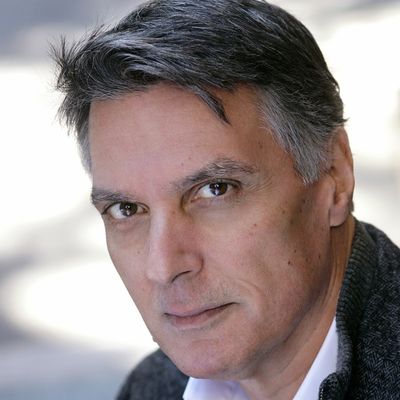
This is the moment because Broadway's very own Dr. Jekyll AND Mr. Hyde, Robert Cuccioli, sits down with Rob & Kevin to look back on his career as both an actor and a director. Robert discusses such projects as And The World Goes Round, Rothschild & Sons, Les Miserables, plus his unyielding love of Shakespeare... Read More
From the show: BEHIND THE CURTAIN: BROADWAY'S LIVING LEGENDS » Podcast
Guests
Featured Shows
About
This is the moment because Broadway's very own Dr. Jekyll AND Mr. Hyde, Robert Cuccioli, sits down with Rob & Kevin to look back on his career as both an actor and a director. Robert discusses such projects as And The World Goes Round, Rothschild & Sons, Les Miserables, plus his unyielding love of Shakespeare. Robert pulls back the curtain on his career to discuss how the basement of a Gristedes gave him a chance to shine, what it was like creating the role of Dr. Jekyll AND Mr. Hyde, and why a terrible audition lead him to a great job! Also, Robert shines the spotlight on Richard Harris, Woody Allen, and Frank Wildhorn! Become a sponsor of Behind The Curtain and get early access to interviews, private playlists, and advance knowledge of future guests so you can ask the legends your own questions. Go to: http://bit.ly/2i7nWC4
Transcript
This transcript was automatically generated and might contain errors.
[0:00] Kevin David Thomas: I dreamed the dream of days to come where sponsorship is high and money is forthcoming.
[0:07] Robert W. Schneider: That's beautiful, Kevin.
[0:08] Kevin David Thomas: I really added a voice onto that one too. I really was trying to go for something there.
[0:12] Kevin David Thomas: Listeners, we love creating this podcast, but it does cost money.
[0:16] Kevin David Thomas: Please don't make me sell my angel record.
[0:18] Robert W. Schneider: Oh my gosh, the original cast recording of Angel.
[0:20] Kevin David Thomas: That like nobody has it.
[0:21] Robert W. Schneider: Nobody has it.
[0:22] Kevin David Thomas: If you like what we are doing and want to keep doing more of it, please head over to Patreon.com.
[0:28] Kevin David Thomas: That's P-A-T-R-E-O-N dot com.
[0:34] Robert W. Schneider: I feel Patreon.
[0:36] Kevin David Thomas: Yeah, Patreon.
[0:37] Kevin David Thomas: Reon.
[0:38] Kevin David Thomas: Patreon.
[0:39] Kevin David Thomas: Yeah, once you're there, search for Behind the Curtain Broadway's Living Legends.
[0:42] Kevin David Thomas: And of course, we don't expect to give without receiving some great rewards.
[0:46] Kevin David Thomas: Such rewards include behind-the-scenes videos, shout-outs on future episodes or episodes, depending on what part of the country you're from, because I said episodes.
[0:55] Kevin David Thomas: And early access to some of our podcasts.
[0:58] Kevin David Thomas: Hell, for the right price, Kevin and I will come to your apartment and act out all of Agnes of God.
[1:03] Kevin David Thomas: So head over, friends, to P-A-T-R-E-O-N.com to help us out.
[1:10] Robert W. Schneider: Hi, I'm ROBERT W. Schneider.
[1:11] Kevin David Thomas: And I'm Kevin David Thomas.
[1:12] Robert W. Schneider: And this is Behind the Curtain Broadway's Living Legends.
[1:15] Kevin David Thomas: Don't forget to follow us on Twitter at Broadway Curtain.
[1:18] Robert W. Schneider: And make sure to join our Facebook page at Behind the Curtain Broadway's Living Legends.
[1:22] Kevin David Thomas: And follow us on Instagram at Broadway Curtain Podcast Plus.
[1:25] Robert W. Schneider: You can always listen to our podcasts on Broadway World and Stitcher.
[1:28] Kevin David Thomas: If you were to Google the term perfect leading man, I am 110% sure that a picture of today's guest would pop up.
[1:34] Kevin David Thomas: As one of musical theater's most dashing romantic heroes, he has tackled Lancelot, Jeff Moss, Guido Cantini, the Phantom, Archibald Craven, and our list goes on and on.
[1:44] Kevin David Thomas: While there are many credits to this leading man's resume, many, many credits, it is his towering Tony nominated performance as both Dr. Jekyll and Edward Hyde for which he is best known.
[1:54] Robert W. Schneider: And the best rendition of Kiss of the Spider-Woman that I've ever heard.
[1:56] Kevin David Thomas: Hell yeah. Just gonna throw that out there.
[1:58] Kevin David Thomas: To tell us what it was like to work with such legends as Susan Stroman, John Kander, Richard Harris, and Woody Allen here, finally.
[2:06] Kevin David Thomas: This is the moment. Get it?
[2:08] Kevin David Thomas: Okay, great. That we talked to the wonderful ROBERT CUCCIOLI.
[2:13] ROBERT CUCCIOLI: God, you guys, my head is like huge now.
[2:16] Kevin David Thomas: Yes, that's the way we want it.
[2:19] ROBERT CUCCIOLI: It's great to be here with you.
[2:20] Robert W. Schneider: Oh, we're so happy to have you. So, ROBERT, where did you grow up?
[2:23] ROBERT CUCCIOLI: Uh I grew up, I was born in Hempstead, New York, and um then we moved to uh Pennsylvania to Abington, Pennsylvania, um, for a brief stint, and then moved back here when I was in the fifth grade uh to Manhasset, Long Island. And um, I did most of my growing up there. So I I hail I pretty much uh claim that I hail from Manhasset.
[2:47] Robert W. Schneider: Okay, so you but pretty close to New York City, though, would you say?
[2:50] ROBERT CUCCIOLI: Oh, yeah, it's only 40 minutes from from Manhattan.
[2:52] Robert W. Schneider: Did you get to see theater a lot growing up?
[2:54] ROBERT CUCCIOLI: Not a lot.
[2:55] ROBERT CUCCIOLI: Okay. Um my parents were not like huge theater people. And uh actually the very first Broadway show they brought me to was Irene.
[3:04] Robert W. Schneider: Yes, I read that, yeah.
[3:06] ROBERT CUCCIOLI: Which is which is not something that would inspire me to become an actor.
[3:10] ROBERT CUCCIOLI: Right. But you know, it was enjoyable. I don't know how old I was when I went, but uh, you know, Debbie Reynolds and uh was it ROBERT Reed?
[3:18] Robert W. Schneider: Uh uh no, you know who it was? Monty Markham.
[3:22] ROBERT CUCCIOLI: How did you pull that out?
[3:23] Robert W. Schneider: Wow and Georgia Serving, too.
[3:25] ROBERT CUCCIOLI: George Georgia Serving, too. Yeah, who was which was great because I see him in that, and then I became friends with him.
[3:30] Robert W. Schneider: Oh, we interviewed him uh my career.
[3:32] ROBERT CUCCIOLI: So it was it was wonderful.
[3:33] ROBERT CUCCIOLI: He's a special guest circle.
[3:35] Robert W. Schneider: Very much, yeah. Yeah, very uh so no, theater was not a big thing, and uh uh I went to uh all boys' Catholic school, high school, uh, and you know, we had side trips and we came to see things like the magic show, I think we saw. I mean, this is dating, I'm dating myself.
[3:52] ROBERT CUCCIOLI: Yeah, that's all right. But um uh that was kind of it. But theater was always part of my life to some extent. Um one of my best friends said, hey, the girls' high school is putting on Oliver and they need some warm breathing bodies.
[4:07] ROBERT CUCCIOLI: Oliver, the girls' high school is doing all of our doing Oliver. So I said, uh sure, I'll go. And so I I we ended up being in the chorus, and that was my very first stint as an as an actor, and then we got our uh we employed our um uh geography teacher, Mr. Giattino, to uh to become the drama, run the drama club in the boys' high school, and his wife, uh Diane was the choreographer, and uh we started a drama club in uh the boys' high school.
[4:41] Robert W. Schneider: So you were part of the reason why you you the drama club was started, would you say?
[4:44] ROBERT CUCCIOLI: Yeah, one of the one of the people that was part of it.
[4:48] Robert W. Schneider: That's pretty cool. Uh uh and that kind of started it, and but I never thought about doing theater as a career. I did a community theater and I was in a rock band and all that kind of stuff.
[4:57] Robert W. Schneider: Right. You were in a rock band.
[4:59] ROBERT CUCCIOLI: Yeah, it was a 50s rock band, and we practiced in my basement, much to my parents' chagrin.
[5:05] Robert W. Schneider: Did you play an instrument in instead rock band?
[5:07] ROBERT CUCCIOLI: I played piano.
[5:08] ROBERT CUCCIOLI: Oh I was the Elvis impersonator, yeah, all those things.
[5:14] Robert W. Schneider: If there are photos, we'd love to see that.
[5:15] ROBERT CUCCIOLI: Yeah, we'll like the post videos. There are, and no, I'm not gonna do any of them.
[5:20] Robert W. Schneider: Okay, so you saw Irene, that was the first one. Uh, when did you realize that musical theater was something that you might want to pursue?
[5:27] ROBERT CUCCIOLI: Not until I was a senior in college.
[5:29] Robert W. Schneider: Okay. Because you went to college for for finance, uh at St. John's University.
[5:33] ROBERT CUCCIOLI: And actually, I was I was uh very proud to say I was just inducted into uh the Chapel Players, which is the um St. John's University uh theater group.
[5:47] Robert W. Schneider: Right. Uh their Hall of Fame this year.
[5:50] Robert W. Schneider: That's awesome.
[5:51] ROBERT CUCCIOLI: So I'm very proud.
[5:52] Robert W. Schneider: Yeah, congratulations.
[5:54] ROBERT CUCCIOLI: That's cool. Yeah. Uh so I did uh I did a show in my uh freshman year there, and I did uh I did Godspell in my senior year. And while I'm studying finance, I I just uh I did this you know Godspell and people said, you know, you're really good. Did you ever think of doing this as a career? And it wasn't until then that the light bulb went off. And I said, you know, if I don't give this a try, I'll say what if all my life. And I didn't want to live with that.
[6:22] Robert W. Schneider: Huh. So then I started pursuing it. I got pictures done, I made up a resume, and uh How do you know what to do? I mean, how'd you even know what because some people go to college for that?
[6:31] ROBERT CUCCIOLI: I didn't know. It's all trial and error, and it was a lot of error. Yeah. There's still a lot of error. But um but that's how I did it. And uh, you know, went on auditions and uh but meanwhile I was working on Wall Street.
[6:46] Robert W. Schneider: What?
[6:46] ROBERT CUCCIOLI: After I graduated college, I worked on Wall Street for E. F. Hutton. Very few people remember the name of that company. I looked it up and it's become another company now, but it's it's become multiple companies. It was taken over by it was a huge uh brokerage house back in the 80s, along with Merrill Lynch and uh and then they were taken over by Shearson, and then they were taken over by American Express, and now it's basically what is UBS.
[7:11] Robert W. Schneider: Okay, yeah. Oh.
[7:12] Robert W. Schneider: That's pretty wild.
[7:13] ROBERT CUCCIOLI: Yeah. Were your parents supportive of the fact that you were going to into a totally different career path than what you had made your home?
[7:18] ROBERT CUCCIOLI: Oh God, no.
[7:19] ROBERT CUCCIOLI: Okay. No, no, no. My mother cried. Yeah, and it it was it was very hard for them. But uh my have three wonderful sisters, two now because one passed away. But um they were all like they were my support system and they were like with me the whole time.
[7:35] Robert W. Schneider: Wow.
[7:36] ROBERT CUCCIOLI: Um but anyway, I was back to the story. I was um uh working on Wall Street, and on my you know, lunch hours and whatever, I would go uptown and I'd select pictures under doors and I'd do like auditions and things like that. And then I had a friend from community theater days who had a friend who was the costume uh coordinator for the light opera of Manhattan, uh-huh. Which doesn't exist anymore, but it was a repertory company that worked 52 weeks out of the year. You did a new show every two weeks, uh, you rehearsed one during the day and you perform one at night, and they did operettas. They did Gilbert and Sullivan.
[8:11] ROBERT CUCCIOLI: Mary Widow. Exactly. And so I got a job in the chorus there. And then I did Wall Street during the day and I did that at night, and I did that for a year and a half until I couldn't do both anymore. And then I I quit Wall Street and I never looked back.
[8:26] Robert W. Schneider: And you ended up getting roles too at the Light Opera.
[8:29] ROBERT CUCCIOLI: Yeah, uh well, I that's it's a it's a long story. I'm trying to give you the readers' digest version of it. But um uh yeah, I would go, I would leave work at uh six, I'd go up and rehearse the next show, and then we perform that night to the show that we're currently doing, and then uh Wednesdays uh for matinees, I would leave at lunch hour and I'd go up and do a show, and then I come back down again and I'd back down to Wall Street and I'd work until six o'clock, and then go back up again and do an evening show. And then when I started getting roles, I had to be there Thursday and Friday afternoons as well for rehearsal, and I would do the same thing.
[9:09] Kevin David Thomas: Oh my god.
[9:09] ROBERT CUCCIOLI: And I was younger then.
[9:11] Kevin David Thomas: Well, I was gonna say only things you could do when you're like in your early 20s, and you're like, Yeah, I'll do that, sure.
[9:16] ROBERT CUCCIOLI: I just sure I can do it.
[9:18] Kevin David Thomas: Was this an equity company?
[9:20] ROBERT CUCCIOLI: Uh yes, I actually got my equity card with them. Um it was primarily non-equity, but they had a couple of equity contracts. And I was basically there for three years. I became their lead baritone.
[9:31] ROBERT CUCCIOLI: Yeah, and I got uh my equity card from them.
[9:34] Robert W. Schneider: Do you like doing operetta? Or did you like doing operetta?
[9:37] ROBERT CUCCIOLI: I did. I found it enjoyable. You know, I loved I loved the music.
[9:41] ROBERT CUCCIOLI: Uh I I don't sing it very much now.
[9:44] Robert W. Schneider: Right.
[9:44] ROBERT CUCCIOLI: But um there's nothing anyway. There's not a lot of call for it. I mean, they did the Merry Widow at that uh uh up in Lincoln Center a few years ago.
[9:54] Robert W. Schneider: Yeah, that's it.
[9:55] Robert W. Schneider: Yeah, wow. Now, were you taking voice lessons in the early stages of all of this?
[10:01] ROBERT CUCCIOLI: Um when I worked for the light opera of Manhattan, uh the artistic director, Bill Mount Burke, uh put me in touch with uh my very one of my very first voice teachers, uh uh Bob Baird, who was a uh bass at the um the Metropolitan Opera.
[10:24] ROBERT CUCCIOLI: So I worked with him, and that was incredible because he was so old school.
[10:29] ROBERT CUCCIOLI: You know, he'd put like chains around your your chest.
[10:32] ROBERT CUCCIOLI: Literally brick springs.
[10:34] ROBERT CUCCIOLI: Yeah. So you had to like strengthen your chest and oh wow, had me lay on the floor with my yeah, lay face out on the floor, and he'd stand on my back as I I mean that's probably where that's probably where my strength ended up coming from.
[10:46] Robert W. Schneider: That's in holy cow he wasn't a light guy so it was but it was he was yeah he was one of my first voice teachers.
[10:54] Robert W. Schneider: That's cool. Did you think you were gonna have a career solely in opera and light operetta or no you know I was it the grass it's like the grass is always greener and I had a natural voice uh I could I could sing and yes I ended up developing it but I always wanted to be known as an actor so I always strove to do roles uh that were dramatically um uh that fed me dramatically you know and they weren't just uh featherweight kind of right roles um so I I really pushed that and I pushed that and it's it's uh it took a while but you know I'm uh you know I think my my talents are equal.
[11:40] Robert W. Schneider: Did you have any role models while you were beginning this journey were there anybody that you looked up to and said boy I really admire them for their talent or boy I admire them for their career trajectory. Or were you just doing it um when I was when I was studying uh with Bob Baird and I was and I was singing at the Lad Opera Manhattan I followed um Cheryl Milns who was a major opera baritone was one of my idols wow uh uh plaza del Domingo also yeah uh so that was in that that period of time when I started doing more musical theater, uh uh it was John Cullum, uh it was John Wait, uh uh it was Len Carew.
[12:25] ROBERT CUCCIOLI: Yeah, uh those are the guys that are um that I uh uh uh uh ROBERT Goulet, you know, those are the guys that are um uh uh closest to me.
[12:38] Robert W. Schneider: Yeah. Now we ask a lot of our guests when you first started this out, what was your go-to audition song?
[12:45] ROBERT CUCCIOLI: I sang I Have Dreamed from the King and I.
[12:49] Robert W. Schneider: Yes.
[12:49] ROBERT CUCCIOLI: And if they needed an up tempo, I just sang it faster.
[12:54] ROBERT CUCCIOLI: I had I had a zero repertoire.
[12:57] ROBERT CUCCIOLI: And I I because I knew it wasn't a good one.
[12:59] Robert W. Schneider: Right, you didn't go to school for that, yeah.
[13:00] ROBERT CUCCIOLI: And I didn't know where to look, and I wasn't I'm not like a real theater aficionado. I didn't like listen to musical theater soundtracks a lot.
[13:08] ROBERT CUCCIOLI: And sure. Uh so it's uh I I I still have a lousy, you know, book. I mean I'm still working on trying to get a better book. I think you're okay, Bob. I have dreamed. I'll do it faster. If you've got suggestions for this new student, but yes, of course. I will uh bring them on. Uh when did the the was the Rothschilds? Did that happen uh around this time too? Uh weren't you a part of that? Uh yeah. Um that was in 1990-one. So then before that was like Camelot. How does uh Camelot come into your life? Um I auditioned for that. Uh this was in 1987? Okay. 86. Or was it 85? It was 85 or 86. I did um I auditioned for it, and I uh got a got the job in the ensemble uh and covering Lancelot. Nice. And um I did one tour which was like a six-month tour, and then it closed, and then we went out again, and then I took over the role that second time around.
And that was that was the time that my parents actually said, okay, we'll we'll buy this. Because I was working with an actor that they recognized. Your king was Richard Harris. Yeah, that's a pretty recognizable uh epic guy. Epic, yeah. That's that's a good way to describe him. Um was that one of your first sort of like we'll call him a celebrity that you had worked with? I mean, was that I mean, because that I mean that can be a little nerve wracking too. I mean to especially legendary. Because he's he's huge. He's larger than light. Yeah. And um and loud. You know, Richard Richard is very voisterous and and um he's always like high energy and up there and and yeah, it was intimidating because I would watch movies with him and I knew exactly who he was.
And I admired him and um and to be able to share the stage with him was in was incredible. Right. And that was the first time though, mom and dad were like, okay, you're gonna be okay. Yeah. Well, I don't know if they said you're gonna be okay, but it was kind of like, well, we we'll kinda like well, you know, they accepted it then. Who was your Guinevere on your on your tour? Elizabeth Williams. Um who she goes by Grayson now, I believe. She's uh and she lives in North Carolina, South Carolina. She sings opera. Oh, okay, all right, cool. And other things and other things. She's she was wonderful. Did you enjoy touring? I did when I was younger. Yes. Uh it's not something that appeals to me now.
True. Uh but also the cities back then were really kind of intriguing and different and exciting. And now they're all it's all kind of homogenized to some extent now. Yeah. Yeah, yeah, yeah. What advice would you give people that go on the road? How to keep your your sanity, how to keep your your wits about you when you're traveling day in, day out? Um probably the best thing to do is to have something else that interests you. Um have something bring it with you, whether it's uh uh an instrument or if you want to write. Or um uh you know, I also I I fantasize when I was on tour that if I continued doing touring, I would probably write a book about um the places to go in each city for for actors to I'm giving this idea to whoever you know wants to come up with you know and do this.
But um that's you know I thought about doing something like that. So I started putting together ideas of restaurants and things to do and stuff like that. That's a really cool idea. Yeah. Um do you like writing? I do. Yeah? Yeah, I write every day. Uh I I journalize, you know, so I I write a lot and um and I'm you know, I'm thinking I've written some short stories, I've written some poetry, nothing that I've put out there. Right. Yeah. I may but still doing it, that's great. That's just the act of sending down every day to do it, is half the battle. Yeah, it's it it's a commitment. Yeah. And uh speaking of smaller stories, Rothschild's the first time you did it. Where did you do it the first time?
We did it. Um it started off with the American Jewish Theater. Oh. Which was uh in the basement of a Gristides on Only New York 23rd Street? No, not 23rd, 27th or something. Uh and um and we were it's a very small area, and then we moved to Circle in the Square downtown. Oh which was like a bowling alley. It was a very long uh stage area with a very tiny backstage. It was kind of like uh putting makeup on in a submarine. And um and uh it was a three-quarter thrust. Um it was a it was a nice big space. And and who directed this? Lonnie Price. Oh, yeah, you knew that. One of Lonnie's first. Really? Yeah, yeah, yeah, yeah. Yeah, it was wonderful production. And I played uh Nathan, the middle child.
That's a great part. And most recently, who did you play? And then it was redone, uh rewritten um by Sheldon Harnick and um uh Sherman Yellen, who wrote the book, and uh our director um Jeffrey Moss re constructed the show and they rewrote it. Um uh there's a lot that's still there, but there's a lot that was trimmed away. Uh a lot of extraneous characters, and and they focused on the basically on the family, you know, on the on the father and the sons. Right. Um however, Göttula, the wife was expanded also. And um, and Sheldon wrote two new songs. Oh wow. Which is phenomenal. And they put back a new song uh called uh uh oh, is it only it's only a map? Um which was in the production way back when and was cut before it came into Broadway.
Okay. And this this Rothschilds we've talked about on our podcast before, but it's sort of a I want to say a lesser known Falcon Harnick show. Yeah. Even though at the time it was a it was a known show. But today I feel like we don't know as much about it as Fiddler on the Roof or She Loves Me. Right. It was um back in was it 1970 that it was on Broadway? Yeah. Uh it was enormous. Yeah, it was a it was a hit. It was an in what but it was an enormous product. It was an enormous production. And uh with a cast of thousands and enormous sets and things like that. And this has been trimmed down to basically a black box with just uh what's the five sons, uh uh Meyer, the father, Gittela, and three, maybe ten, there's ten altogether.
Yeah. It's intimate, but it's very moving. I got a chance to see it in the audience. Loved it. Oh good. Yeah. Oh my gosh, did the audience love it? Yeah, it's a powerful piece, and it's it's uh you know, they wrote this as a response to civil rights. Oh, I didn't know that. They did. And and tell me it's not uh appropriate for today as well. Amen. And very quickly for our listeners that are un unaware, what is the story a bit in a nutshell of of this musical? Well, not many people know uh um the name Rothschild is uh is not as well known now, I guess, but it shows up on wine and it shows up. There's there's the Rothschild Bank in London, which is the which is what was established from this uh from this family.
The Rothschilds was a family back in the uh 1700s in uh Frankfurt, Germany. And uh the father, Meyer, uh they had many uh and and Gettela, his wife, they had many children, but this focuses on the five boys. Um and uh in trying to make a better life for himself and his family, um he was very wise with money, and he uh he amassed this enormous fortune and he sent his sons out uh into the world uh as uh the points of of the finger, the hand, to to uh to amass their wealth uh in trade and in um and in banking and investments, yeah. Yeah, and uh they amass this amazing fortune, and they try to not only better themselves and better their uh better his sons' lives, but also to help his family, help his uh his uh uh his people um from getting out of oppression.
Yes. Yes. So it's a it's a beautiful story, and it's very powerful. And many people may know In My Own Lifetime, which is uh one of the famous songs that came from that. And it made Hal Linden a star. Yes. Oh, yeah. Of course. Yeah, that yeah, he's so incredible. Oh my god. Did he get a chance? Have you met him? Or did you did he come to any of your incarnations of this? Uh no, he did not, but um before I got involved with this, and because I had been uh in the Rothschild family because of the previous production, the original sons of the Rothschilds, the from the original company, um uh asked asked me because uh uh Paul Hecht could not do a benefit performance. And they asked me to join them and do it along with Hal.
So I I was kind of adopted in the original film. Not bad. And then like once a year they get together and have lunch and they ask me to be a part of it. So I've kind of got adopted to the city. That's incredible. They still get together too. That's like it's an incredible story. And if our listeners haven't had a chance to listen to the the original cast recording, please do. Did you make one at the York? Was there one of this new version? Yeah, it's not a live recording, but we did a studio recording. Oh, you did do a studio recording. It's out. It's out. Oh great, then we'll put a link up for everybody to take it out. Now, one of uh our favorite cast recordings and so many others is and the world goes round.
That was a good one. Uh, how does this project fall into your lap? I auditioned for that too. Yeah. Um they had done it at Luna Stage, no, not Luna Stage, it was in New Jersey. Um they did a production out there, and um excuse me, Brent Barrett was playing uh my role out there, and I for some reason Brent couldn't do it, and they were recasting the role. So I auditioned for it, and uh that's how I got the job. And uh I met, you know, a number of incredible people, and we've all been friends ever since. Who else was in this cast? Yes, yes, who else was in this cast? Jimmy Walton. Well, one of our guests on the podcast. Karen Ziemba, Karen Mason, uh Brenda Presley, and me. That's a good that's a group.
All Candornet songs. I mean, can't go wrong. Yeah. And a very inventively staged review. Yeah. It wasn't just you know, you come out in your tuxedo, you sing and then you move away. Yeah. Susan Strowman did an amazing amazing job. And uh we dealt with every prop that ever existed. We were on roller skates, we played banjos. Uh uh Jim was playing the piano on stage. Of course. And after Jim left, uh I took over that track and I played the piano, and uh Joel Blum actually came in to the company. Oh that's I didn't know that. Yeah. Not we didn't switch roles, we switched just that one number that one thing because I wanted I wanted to play. Good for you, Bob. Where was that? Where where was that performed?
The Westside Theater? Ah, yes. It was the West Side Arts back then. Yeah. Yeah. Um did you get a chance to work with John Cander and Fred Ebb? Did they what's that like? That was it was they're the most generous, supportive people. And you know, Fred Ebb, God bless his soul, and I mean, just a lovely, lovely man.
[26:12] ROBERT CUCCIOLI: And John Kander is, you know, equally so. It's just a dear, dear human being. And it was just the greatest experience to work with, you know, two icons like that and to see how just wonderful human beings they are.
[26:30] Kevin David Thomas: Do you enjoy having the writers in the room during your rehearsal process?
[26:35] ROBERT CUCCIOLI: Yeah. Um, they sometimes, I mean, they will rework things because of what you're doing. I haven't come across any writers that have been that demanding of their work or the certain way that it needs to be done and don't accept a different approach to it.
[27:05] Kevin David Thomas: Um, let's talk about the creation of a role. So you get a script, you get cast in the show. What how do you approach a role? What's your process like?
[27:17] ROBERT CUCCIOLI: It depends. If it's historical, then I certainly research the period, I research the character. See if there's anything from that that strikes me in a certain way that to be able to use. For example, I did when I did Les Mis, I read the entire Victor Hugo novel, which is just, you know, four inches thick. And the Waterloo part. And, you know, there was one character flaw that means Javert is such a put-together person, and there was one instance where they said that the only reason that you knew there was something amiss with him mentally was he had one button unbuttoned. And I incorporated that.
[28:16] Kevin David Thomas: Oh, interesting. So speaking of Les Mis, when did, how did that come into your life?
[28:20] ROBERT CUCCIOLI: Again, that's interesting. Because I, as soon as I heard the music to that from the London production, I was like, I've got to do this show. Like it spoke to me. And I always wanted to play Enjolras, the student leader. I auditioned for that maybe six times for the original company and never got it. Then one day I'm auditioning for another musical. I can't remember what it was. It had Julie Andrews. It was a review, I think, with Julie Andrews.
[28:56] Kevin David Thomas: Putting It Together. Was that it?
[28:58] ROBERT CUCCIOLI: Yeah. And Richard J. Alexander was in the room. I forget if he was producing it or general managing it or what, but he was in the room. I gave a horrible audition. And I left there, you know, dejected, feeling horrible. I'm walking towards the staircase, and I hear this patter of little feet coming after me. And he goes, "Bob, Bob, Bob." And I turn around, it's Richard. And he says, "You did great, you did great in there." I'm like, "Yeah, right." And he said, "But we're having an opening coming up in Les Mis for Javert. Are you interested?" And I was like, "Uh, yeah." So he said, "Well, we're gonna call you in." So they called me in, I auditioned for it. And he said, "You're gonna play this role. I don't know when, but you will." And then a couple of months later he called me because Chuck Wagner was leaving and I was to replace him.
[29:54] Kevin David Thomas: Oh my gosh.
[29:55] ROBERT CUCCIOLI: Yeah, that's cool. So you never know where a job's gonna come from.
[29:57] Kevin David Thomas: Yeah, yeah, that's one thing I think we keep trying to stress to our students, which is, you know, the audition for A might actually lead to D. Just make fans.
[30:04] Kevin David Thomas: Was that your Broadway debut?
[30:06] ROBERT CUCCIOLI: That was, yeah.
[30:07] Kevin David Thomas: Oh my gosh. What a debut.
[30:08] ROBERT CUCCIOLI: Yeah. It was incredibly exciting. Again, I, as I said before, I listened to this music and I was, this is a dream. This was a dream for me. And it's funny because I'll tell a personal story. When I was doing, I did Phantom up at the, not the More, the More yesterday, up at the Westchester Dinner Theater. And my sisters came to opening night. It was a dinner theater. They came decked out to the nines. Like rhinestones and everything. I mean, they looked terrific. So I said, "You all look great," and then they said, "Well, for Broadway, it's boas." I'm like, "Okay." So when this thing came up, I didn't tell them that I even auditioned for it or I got the job. I went down Sixth Avenue, and you know those stores that have, you know, the accoutrement and all the accessories?
I went into a dozen of those and looked for three black boas. And, you know, I'd say, "Do you have any boas?" And they all looked at me up and down like, "It's not for me." So I got three black boas, I put them in boxes, and the inside flap of the box I was just like, "Call your brother." So I sent it to my sisters, and they knew exactly what it meant.
[31:32] Kevin David Thomas: That is special.
[31:33] ROBERT CUCCIOLI: So that was, yeah, that was great.
[31:36] Kevin David Thomas: Were you, um, when you were, because you were put into the show because the show was already running, were you the only one going into it at that time?
[31:42] ROBERT CUCCIOLI: No. David Dudu Fisher was going in as Jean Valjean at the same time. So they put us both in at the exact same time.
[31:54] Kevin David Thomas: That's nice.
[31:55] ROBERT CUCCIOLI: Which was really cool because we were both learning on the ropes at the exact same time. And Javert, I know Blaim very well because I did it as well. How much time is Javert on stage, would you say? Because Javert, a lot of characters double parts, but Javert doesn't have to do that. He and Valjean are the only characters that don't do that because Fantine is a bullet boy in the second act.
[32:20] Kevin David Thomas: You're right.
[32:20] ROBERT CUCCIOLI: Um, and how long did you stay with Les Mis?
[32:20] Kevin David Thomas: As well as five?
[32:23] ROBERT CUCCIOLI: I stayed with Les Mis for a year, one month, and three days. And I know that exact thing because that's when Jekyll and Hyde came up and Richard J. Alexander, they would sign us to three-month contracts.
[32:39] Kevin David Thomas: Three-month contracts?
[32:46] ROBERT CUCCIOLI: I don't know, to keep their options open. Well, I had just re-signed a contract, and Jekyll and Hyde came up, and Richard J. let me out of my contract to do it. Oh, I tell him all the time, I owe you for that. You helped change the course of my career.
[33:07] Kevin David Thomas: Yeah.
[33:08] ROBERT CUCCIOLI: Oh yeah.
[33:09] Kevin David Thomas: Oh, and in both ways. I mean, yeah. Following after you in that hallway, patter patter, and also letting you out of that contract, which I feel like doesn't happen very often.
[33:19] ROBERT CUCCIOLI: No, and he's been a great friend ever since.
[33:21] Kevin David Thomas: Yeah.
[33:21] ROBERT CUCCIOLI: So let's talk about Jekyll and Hyde. I knew it was gonna be rear Jekyll headshot. We might spend more time talking about the Rothschild.
[33:31] Kevin David Thomas: I was going to say, we'll get to Lone Star Love later.
[33:33] ROBERT CUCCIOLI: Yeah, where you had to do that. Oh my God. We'll get there. How much longer is this? So tell us, let's talk about the audition process for Jekyll and Hyde. What exactly did that entail?
[33:46] ROBERT CUCCIOLI: Um, I went through three auditions in the course of, I don't know, six months. Maybe four months. I may have the dates, I may have the time vague. And did you know anything about it before the audition? Had there been any concept albums or like anything on your radar?
[34:07] Kevin David Thomas: No, because actually the concept album with Linda and Anthony Warlow was being recorded as the audition process was happening.
[34:19] ROBERT CUCCIOLI: See. So I never heard that. I think I probably heard the pre-concept album, whatever you want to call it, with she and Colm Wilkinson that they did in London. I knew of the project. I didn't know a whole lot about it, but again, I knew this was my role. And I had, I was actually sitting at lunch with my agent at the time, and the casting director friend came over and said, "They're doing this Jekyll and Hyde, you need to get seen for that." So I was going, I told my agent to send in a copy of me singing Kiss of the Spider Woman because I figured that was the closest to that kind of style. And she said she did. I never heard anything about it, and then I did get an audition for it, and everybody had missed their plane.
Frank Young had missed his plane who was running Theater Under the Stars in Houston, and our director whose name runs the Alley, Greg Boyd, missed his plane also. So the only person in the room was Frank Wildhorn and the accompanist. So I sang "This Is the Moment," and I think I sang some of "Alive," and then Frank proceeded to have me sight-sing most of the score. We just sat around this stuff on the table and just sang for a while. And he said, "That's great, you'll be hearing from us." I'm like, "Great." Month went by, didn't hear a thing, more weeks went by thinking everything. Then I finally got called back in again, and everybody did make their plane.
[36:27] Kevin David Thomas: Oh, good.
[36:27] ROBERT CUCCIOLI: And I sang again and I read again, and that was great. "Thank you, we'll be hearing from us." And then I, you know, left, didn't hear anything, but I didn't know they were recording the concept album at the same time, so that's probably why they were not responsive. And then I came in and I did another audition, went away, didn't hear anything, and then I went on vacation. I was still doing Les Mis. I went on vacation, I was in LA. And towards the middle of my vacation, my agent calls me and says, "Frank wants you to come in for another work session." And I said, "No." They saw me three times already. What? And I sang, you know, the whole freaking score for them. So I said, "I can't. I'm on vacation, I'm in LA. I can't."
[37:20] Kevin David Thomas: It must have been hard too, a little bit.
[37:21] ROBERT CUCCIOLI: It was.
[37:21] Kevin David Thomas: Yeah.
[37:22] ROBERT CUCCIOLI: It was. But then I flew back home on a Sunday, Monday morning, I had a phone call and got the job.
[37:29] Kevin David Thomas: Wow. Good for you.
[37:32] ROBERT CUCCIOLI: Yeah. Incredible. So that was really exciting. What were your initial reactions listening to the music for the first time, especially in a room with Frank Wildhorn?
[37:44] ROBERT CUCCIOLI: Oh, I got it. It was exhilarating. And to be able to sing that, yeah. I couldn't not give my heart, my whole soul to it. It was just like the power of that music was just incredible.
[37:57] Kevin David Thomas: What's so powerful about that story, that particular story?
[38:01] ROBERT CUCCIOLI: You know, it's not just Jekyll and Hyde. I think it's every gothic story that's ever been written. Phantom of the Opera, you know, Jekyll and Hyde, Hunchback of Notre Dame. They all are eternal because they speak to the eternal in us. And Jekyll and Hyde is about the battle between, you know, the good and the dark place in us and the good place in us, which everybody goes through, right? Every single day of their lives.
[38:37] Kevin David Thomas: So they all connect to it.
[38:40] ROBERT CUCCIOLI: Yeah. That struggle. And that's something, like you said, you also see in Phantom and Hunchback. It's this gothic idea that somehow is eternal in all of us.
[38:48] Kevin David Thomas: Yeah. That's interesting. That's really, really interesting. I never thought of that way before.
[38:51] ROBERT CUCCIOLI: It's a vocal Olympiad of a role.
[38:56] Kevin David Thomas: It is. I mean, and yes, and you were doing Javert, which is more of a, I want to say a baritone role with some high notes, but now you're, I would call you a tenor when I listen to Javert.
[39:07] ROBERT CUCCIOLI: Well, Barry tenor. I mean, but then you're singing way up there. How do you keep your, how did you keep yourself, you know, focused and carry the show on your shoulders?
[39:15] ROBERT CUCCIOLI: I had, I was on a voice lesson every week.
[39:18] ROBERT CUCCIOLI: Oh, oh yeah. You know, because just to keep myself in tune. Because it's very easy to throw yourself off because I'm doing different voices. And physically I was at the chiropractor three times a week. He said every time you came in, it looked like you were in a car accident. Oh my goodness. Because it's throwing your body. Right. Because each character was a different position. And I had a mental therapist every week, too. So I mean, I had therapy every week. So you're busy off stage. So yeah, it's people don't realize, I mean, lay people don't realize the amount of work that goes into it's a 24-hour a day job doing a show. You know, it's not just, oh, you're only doing it for three hours a day. Did you feel any pressure by being the title character? I mean, I feel that responsibility. But I take it on, and it's part of who I am. I'm a very responsible person. So I think that that's I just don't shy away from that.
[40:22] Robert W. Schneider: And this was, correct me if I'm wrong, this is the first musical that you're originating, correct? Because everything else at that point had either been a revival of some sort or something you had been replacing in. Am I correct in that or no?
[40:33] ROBERT CUCCIOLI: Well, as far as Broadway goes, or not Broadway, but you know, regional stuff I had done. You did some new works and Phantom. Yeah, oh yeah, yeah. And the process of putting on a new work, how is that different than doing a revival of some sort or doing something that had been around for a couple of years? The trial and error that goes into it because, you know, the director doesn't necessarily have everything all mapped out, right? You know, you're gonna do it like this and then it's like this and then like this. It's like we’ll try this, we’ll see what that looks like, we’ll try something else, we’ll see what that looks like. I remember we did the confrontation, the big 11 o'clock number. This is the Broadway production that we're doing and oh, first of all, the Broadway production was the third that I had done.
[41:20] Robert W. Schneider: Where had you gone before that?
[41:22] ROBERT CUCCIOLI: Well, we did a production, it was a co-production between Theodore under the Stars in Houston and Seattle Fifth Avenue. So we did a mini tour there and then we did the national tour which was basically the same production as the mini thing.
[41:43] Robert W. Schneider: All before Broadway?
[41:43] ROBERT CUCCIOLI: All before Broadway and those two productions were slightly different. But then Broadway was completely different, a totally different set, it was a very different script, some new songs were put in, the directors stayed the same the whole time. Greg Boyd directed the other two and Robin Phillips took over the Broadway one.
[42:05] Robert W. Schneider: Were you ever worried that like you were gonna get the axe at all?
[42:09] ROBERT CUCCIOLI: Absolutely. Oh really? Oh yeah. I was never confident in my role. Because first of all, I told you I was very much connected to the big Broadway baritones, you know, John Wright and John Collum and everything. And that's not what this role needed. I needed a pop rock singer, which is not something that I really did. So it was a style I had to learn. And you know, God bless Frank Wildhorn and his team, because they and Linda, she was very supportive, and they all supported me and helped me grow as a pop rock singer.
[42:55] Robert W. Schneider: And this means like to be technical, like straight toning and straight toning, a wider sound, without hurting yourself.
[43:03] ROBERT CUCCIOLI: Exactly, in a healthy way, which helped that you had all that training from your opera teacher before. I mean, really. It's true. You know, that might be the only way you could have done it. There's only one way to sing, yeah, and then you learn how to adapt different styles from that. That's a really good thing.
[43:17] Robert W. Schneider: Oh, that's fantastic. Did was there anything that was removed from those two previous productions before you got to Broadway that you wish had been in the Broadway production? Is there anything that you missed?
[43:30] ROBERT CUCCIOLI: No. I mean, there were some things that were fun to do. I mean, there was a song called The World Has Gone Insane, which we did in the pre-Broadway tour. And we did it maybe three shows and they cut it. But they had these big monolithic walls that would move and I, you know, they basically said, well, go do it. You know, they didn't say what to do or whatever. I was like, go do it. So I literally climbed the walls and singing The World Has Gone Insane and doing it was just nuts. It's insane. It was insane. But it was, there was some fun stuff.
[44:08] Robert W. Schneider: Let's talk about confrontation because it's an iconic visual moment in musical theater history. Where did this idea come about that if you just flip your hair one way or the other, we'll get the two personalities coming out?
[44:23] ROBERT CUCCIOLI: Uh geez. Because it's a brilliant, it's brilliant.
[44:27] ROBERT CUCCIOLI: Oh yes. It's absolutely brilliant. I think that was a combination between Robin and me, where that came out. But when you said, you know, how do things happen in a new production, you know, and rehearsals and this is one thing that changed a lot, and we really discovered some stuff. There was one rehearsal where Robin actually had two ropes tied to me in an X. And the cast was on those ropes like a tug of war. Oh and he had them pull me back and forth, you know, and that was kind of the inception of it.
[45:13] ROBERT CUCCIOLI: And then after we did that, and it wasn't really the idea was there, but it wasn't really working. He came up to me and says, how would you feel about doing this by yourself? And I'm like, yeah. So that's where it became a just a solo tug of war thing.
[45:33] Robert W. Schneider: Yeah, and I joined hair collaboration.
[45:35] ROBERT CUCCIOLI: Yeah. I think the hair kind of, you know, just came out of that and had to pull out just half of it so it didn't all come out and had a flip deck and everything. And now I understand why you're going to a chiropractor. If you watch it, you're whipping yourself back and forth so fast.
[45:51] ROBERT CUCCIOLI: Yeah, that and the initial transformation and throwing myself on the floor and I flipped myself around. Yeah. It was yeah.
[45:58] Robert W. Schneider: But all choreographed within an inch of its light.
[46:02] ROBERT CUCCIOLI: No. No. No. There was one day when I asked our choreographer to help me with some moves or something for the confrontation, and Robin just like yelled, so no, no, no. He just did not want choreography involved in it at all. He just made me do it myself.
[46:21] Robert W. Schneider: Oh wow. I have to ask you, because this I think is the first show in musical theater history that has diehard fans. There was no other show. I mean, there were people who Phantom. Well, yeah, but I mean you guys had names. They called them Jekkies, right?
[46:38] ROBERT CUCCIOLI: Well, yeah, I don't know where the, I don't know who named them, whether they did or we did, I don't know. I think something can be said too about the advent of the internet at this time period as well. Because the internet was, I mean, it's crazy as it may sound, it was just coming into existence for fan uniting fans of theater on an instant scale as opposed to writing letters and all of that. And I think that I when I think back in that time, I think that the internet really unified a lot of people who truly loved, love, love the show.
[47:07] ROBERT CUCCIOLI: I just, they did something different with this, where they released the album before we came in. Right. Which is not normally done. I mean the show opens up and then they do a cast album. But you know, this had this cast concept album out, which got worldwide appeal and praise and that's where the fans had say I've got to see this show and that's where they would come in. The show, I mean the reaction inside the theater was the reaction you would get inside of a theater. People would cheer after some songs or you'd get applause and um but outside the stage door there were just rows of people I've never seen anything like that in my life.
[47:53] Robert W. Schneider: How long were you with the show on Broadway?
[47:56] ROBERT CUCCIOLI: Two years on Broadway.
[47:58] Robert W. Schneider: Two years on Broadway almost and basically two years before that. And then once you leave that production what do you do next?
[48:06] ROBERT CUCCIOLI: I couldn't sing a note after I was done with that. It's like I didn't have another note in me. And I was exhausted. You know it's like I left when I was kind of at my peak. And I felt that I want to leave when I'm still riding high and not when I'm at the point where people said you know you should have left.
[48:27] Robert W. Schneider: Yeah right so um I was pretty exhausted and I just like was no, I was sung out so I went on vacation and then I went to LA for a while.
[48:40] Robert W. Schneider: Huh for the with the purpose of trying to see what I can do in film and TV and establish myself there. Did you get while you were in Jekyll and Hyde I mean it's a high profile role was there interest from your agent or from casting directors or to go in that direction? Did that help in that transition?
[48:53] ROBERT CUCCIOLI: I did I did shoot a film. I shot an independent film I also shot a Woody Allen film, Celebrity.
[49:01] Robert W. Schneider: Hey, can you tell us a little bit about that experience when you walked in for that audition?
[49:05] ROBERT CUCCIOLI: That was hilarious, actually, because it was you'd walk into a room, it was pretty dark and Woody was nowhere to be found, but he was in the back, like behind the curtains. He didn't want to meet, but he just wanted to like see who I was. Like you didn't have any material to do.
[49:26] ROBERT CUCCIOLI: No. I walked into the room and I talked to the casting director for a minute and then walked out, and then you know, I found out while Woody was in the room, and you know, yeah, I hear that he's he hides.
[49:39] Robert W. Schneider: Maybe he's shy.
[49:41] ROBERT CUCCIOLI: He's painfully shy.
[49:42] Robert W. Schneider: Yeah.
[49:43] ROBERT CUCCIOLI: But I will tell you that I saw Celebrity because you were advertised in it. I was a big Jekyll and Hyde fan, and that was the main reason I saw Celebrity.
[49:50] Robert W. Schneider: Right.
[49:50] ROBERT CUCCIOLI: I'm being dead serious. I did not know this about you. All this time towards the musicals, and I never knew that you were a Jekyll and Hyde.
[49:56] Robert W. Schneider: I love Jekyll and Hyde.
[49:57] ROBERT CUCCIOLI: It was a brief shining moment. Did you say is it the Impossible Dream? I was like the Impossible Dream.
[50:00] Robert W. Schneider: Oh.
[50:03] ROBERT CUCCIOLI: At a reunion, right? Nice.
[50:05] Robert W. Schneider: Yeah.
[50:05] ROBERT CUCCIOLI: But one of the greatest things about that was, well, yes, working with Woody. I mean, he didn't give me any direction whatsoever. But I think I asked him once, I mean, do you have any notes for me? He says, just do what you do. I'm like, okay, okay. And I think that's what he did. He hires people that just do what they do. And um, but hanging out with Kenneth Branagh and with Alfred Molina on the street talking about theater and whatever. I mean, that was the best part of the whole thing.
[50:32] Robert W. Schneider: That's so cool.
[50:33] ROBERT CUCCIOLI: Yeah.
[50:34] Robert W. Schneider: Check out Celebrity.
[50:35] ROBERT CUCCIOLI: All right.
[50:35] Robert W. Schneider: And look for The Impossible Dream because it's a good thing. Have you ever played Man of La Mancha? I mean, you Don Quixote?
[50:39] ROBERT CUCCIOLI: Okay, good. Because like that's I'd pay good.
[50:42] Robert W. Schneider: But I want to, you do not want to do that again.
[50:44] ROBERT CUCCIOLI: Oh yeah.
[50:45] Robert W. Schneider: Yeah.
[50:46] ROBERT CUCCIOLI: Yeah. So you could finish up, you do your nine months in LA, you're back in New York. What next?
[50:52] ROBERT CUCCIOLI: Um, I feel like it's the one of the hardest things in this business is when you're been associated with an iconic role.
[50:57] Robert W. Schneider: Yeah.
[50:58] ROBERT CUCCIOLI: And then it's like, all right, now what? You know, I feel like that's one of the hardest parts of our business sometimes, based on what we've talked about with the other people. It was, well, it took me.
[51:14] ROBERT CUCCIOLI: Because casting knows you as one thing, you know, they took me a long time to get another Broadway show. I mean, my next Broadway show was Spider-Man.
[51:21] Robert W. Schneider: Yeah. Not so long. Did you go out to do regional stuff?
[51:26] ROBERT CUCCIOLI: I did a lot. I went out to regionals, yeah.
[51:29] Robert W. Schneider: Can we talk a little bit about regional theater in America? Um and what kind of projects did you look for or did you look for, and or did you say yes to?
[51:39] ROBERT CUCCIOLI: I started doing everything. I started doing Shakespeare.
[51:46] Robert W. Schneider: Nice.
[51:47] ROBERT CUCCIOLI: I decided that it was time for me to like really focus more on my craft and focus more as an actor. And I did a lot of Shakespeare, as I said, a lot of straight plays, a lot of contemporary plays, new musicals. So I did a lot of everything. I worked all over the country in regional theater.
[52:15] Robert W. Schneider: That's and it was great. I really enjoyed it, and I got a lot out of it.
[52:19] ROBERT CUCCIOLI: You probably learn more about Shakespeare and new work, you know, plays by just doing it too, I imagine.
[52:26] ROBERT CUCCIOLI: Yeah. You know, and working with other actors who have focused solely on that. Maybe they've never done a musical in their life, and all of a sudden you're with this guy who's like all he did was study the text his whole life, and then you know, because there are all those shots. I know those Shakespeare files that were like okay, like where's the beat stop, you know? And right, you know, and and and it is musical, so it helps that you had done musical theater because it sh I I do find that Shakespeare is a has there it helps if you know the rhythm of it. Yeah, actually my first Shakespeare was at New Jersey Shakespeare. Um Bonnie Monty uh said to me, I'd done a musical out there with Dana Reeve and um Mark Jacoby.
Oh yeah. And um during the course of that, well she didn't direct, but she came up to me. She said, You can do Shakespeare. Do you want to? And I'm like, yeah. And then she gave me Anthony and Anthony and Cleopatra, which is like talk about it's a little scary. Yeah. Let me just ease you in. No. Sure. So um with Tomara Tooney, which was which is fantastic. That's really cool. Yeah. No, I did a lot of I did a lot of really good stuff. And Shakespeare Theater in DC and uh other regional works and new musicals and and uh some new plays, and it was just an it was an exciting time, and I learned a lot, and it I grew as an actor.
[53:41] Kevin David Thomas: That's exciting, very exciting. Well, okay, I have to ask you do you have a favorite Shakespeare role that you've played?
[53:49] ROBERT CUCCIOLI: Yeah, Iago.
[53:51] Kevin David Thomas: Oh, nice where'd you do that?
[53:52] ROBERT CUCCIOLI: In New Jersey Shakespeare.
[53:54] Kevin David Thomas: Oh my, I would kill to have seen that.
[53:56] ROBERT CUCCIOLI: Yeah, it was fabulous. I loved it. Um I'd love to do that again. I'd love to play, you know, the Scottish King again. Um yeah, but there's some uh there's a lot that I haven't done, a lot of new a lot of Shakespeare I haven't done that. I like to is there one that's you're like, oh, I really want to do this one right now. I'm feeling it.
[54:21] ROBERT CUCCIOLI: Well, I'm still a little young for Lear.
[54:23] Kevin David Thomas: I was gonna say, yeah.
[54:26] ROBERT CUCCIOLI: But that's okay. Maybe Prospero. Mm-hmm. Ah. Yeah. Malvolio? Have you ever done a Malvolio?
[54:35] Kevin David Thomas: I haven't, no.
[54:37] ROBERT CUCCIOLI: I think that'd be fun to see.
[54:38] Kevin David Thomas: That would be fun too. It'd be a different type, but I think it'd be really fun to see it.
[54:42] ROBERT CUCCIOLI: All right, I'm done casting now. Sorry.
[54:44] Kevin David Thomas: One of my favorite things I've ever.
[54:46] ROBERT CUCCIOLI: You can go back to real estate.
[54:49] ROBERT CUCCIOLI: Lone Star Love.
[54:51] Kevin David Thomas: Oh God.
[54:52] ROBERT CUCCIOLI: All right. Just a little bit. I I I saw in uh an out-of-town trial in at Great Lakes Theater Festival uh 2001, I want to say. It was a while ago. And then a couple years later, with Randy Quaid, they were gonna have this Well, they did it off Broadway. Right. Um and it was called Lone It was called uh Merry Wives of Windsor, Texas. Right. And then they changed it to Lone Star Love, which is a much better title. With Randy Quaid as our star. Yes. And wasn't he involved in it financially too?
[55:28] ROBERT CUCCIOLI: I don't know if that I feel like he was a producer of some kind on it.
[55:32] Kevin David Thomas: Yeah. Um so what's your question?
[55:37] ROBERT CUCCIOLI: So I very much. This is like watching the hearings on TV. This is great. You had the same microphones too.
[55:47] Kevin David Thomas: Um well first, how did you get involved with it?
[55:50] ROBERT CUCCIOLI: Uh I auditioned for it. Um like I did with many things. Uh and um Rando was uh was technically the director of it, but he ended up having to, I think because of the the time got shifted or something like that, and he ended up was hadn't to direct a movie, but he became the uh the overall supervisor of it and Randy Skinner ended up directing it but I auditioned for John Rando and uh I discipled for uh the role of Ford um so uh yeah so I just auditioned for it okay and then how far along in the process did did we get with this production um we went to the Fifth Avenue in Seattle well first of all we rehearsed it here right um in the lyrics rehearsal space the lyric theaters rehearsal space and Randy Quaid was he was playing Falstaff okay and uh we were this was an out of town just warm-up we were coming to Broadway we're going to the Belasco and the Marquee was up the marquee was up and uh that's a great cast uh uh Lauren Kennedy uh D Hody uh um Dan Sharkey uh Clark Threll um God who else um anyway and Randy Quaid yeah and we had a we had a good rehearsal period uh it all it all seemed to go well and his wife uh Evie was uh also on hand she was pretty much his manager and uh they had this concept of um using a movie having a movie screen with a projection of a stampede with Randy on a bull, and then he'd get thrown from the bull and get thrown through the he'd jump through the screen. And that was his entrance.
[58:06] Kevin David Thomas: It's a great entrance.
[58:07] ROBERT CUCCIOLI: That was cool. So uh Evie spent all of her time doing that, uh working on the the film, and so she was kind of out of the picture, and we were just rehearsing, and Randy was fine to work with. Yeah, yeah. Uh and um uh that all seemed to go well, and then we went to Seattle and everything changed.
[58:25] Kevin David Thomas: How did it change?
[58:26] ROBERT CUCCIOLI: I I really don't know. I mean it well, um I don't know if I know all the details correctly or not, but I think he uh whether he was a co-producer or he had as an investor, but I think he had creative control over his role. And since his role is pretty much the show, he has congregative control over the show. So he had a different idea as to how the show should go. Um I think he was thinking that it needs to be a broke back mountain kind of a thing. Oh mind you, this is Mary Wives of Windsor. Mary Wives of Windsor. So uh he wanted to to uh change the story, and because that's not the way our script writers wanted it to go, uh it went nowhere.
[59:22] Kevin David Thomas: And were you in performances at this point?
[59:24] ROBERT CUCCIOLI: We were in performances, we were in previews, and the only thing that we could rehearse was the curtain call. And we rehearsed a curtain call every day. Because that's the only thing we could rehearse. And we couldn't change anything else. So uh it was it was ugly. It got really, really ugly, and many things happened, and threats were uh laid towards our producer, towards our writer, uh towards you know, uh John uh Rando from the Quades. From the Quades. And um by the time the last he's he hired security guards and they were they uh um guarded his dressing room, and we're all on the same floor, and it's he guarded the dressing room. Well, like there would be like a person standing out of the dressing room that was yeah, yeah. Okay. All right. That's wild.
[1:00:22] Kevin David Thomas: Yeah. I mean, going to work, it that's a little wild. That's a little thing. It was not a it was not a good environment. And then you gotta be on stage and be opposite him to every you know, you don't barely talk to someone, then all of a sudden you're interact with them on stage.
[1:00:35] ROBERT CUCCIOLI: Yeah, and I had a good working relationship with them. Yeah. Yeah. Of course. You know, and there was one day he actually called me in my dressing room, which was, you know, ten feet away from his. And he called me and he said, Come, uh, I don't want to talk to you, come on in. So I'm like, okay. So I went on in and I told security guard he called me. So they let me in and I talked with him, and and you know, he wanted to talk about the the show, and I knew that it was not going, and it was a very awkward situation because I didn't know what to say. Yeah. But um uh then uh we all found out uh we were all in our hotel uh and we all found out that we were not going to Broadway. And mind you, there were kids that were just making their railway thing. They just got their equity card on this, and everybody was in the lobby crying. It was just it was sad. It was heartbreaking.
[1:01:32] Kevin David Thomas: And um and what was the reason that they gave for not going to Broadway?
[1:01:37] ROBERT CUCCIOLI: Because Randy would not allow any changes to the show, and he, you know, there was nothing you could do with it, and it's not ready to go. Yeah. And um uh then he left the show the last week. Um did not finish the run. He did not finish the run. He claimed that he was ill, and uh he did not, and he and his wife left, and um Tony Lawson was his understudy, and Tony took over the last week and did a wonderful job. Yeah, and um and we all came home, and that was the end of that, and we went to equity and we filed a complaint, and I gave a seven-page deposition, and because as going back, I write every day. Yes. So I had dates and events and everything, and uh, we got him kicked out of equity and fined.
[1:02:24] Kevin David Thomas: Kicked out of equity for life.
[1:02:33] ROBERT CUCCIOLI: Now that I did not know. And fined, yeah.
[1:02:35] Kevin David Thomas: Wow. It's amazing how one individual could could do that. That's incredible.
[1:02:39] ROBERT CUCCIOLI: But what I've heard is, and you you saw and you were in it, is that the score is actually quite wonderful.
[1:02:44] Kevin David Thomas: Red score Red Clay Ramblers.
[1:02:45] ROBERT CUCCIOLI: Red Clay Ramblers in this sort of Tennessee. And they were in the cast.
[1:02:51] Kevin David Thomas: Right. They were on stage, they were playing.
[1:02:53] ROBERT CUCCIOLI: Right. Yeah. But they were also acting, you know, they played Bartol, and they played characters. Well, hopefully I loved it. The score will come back at some point in some incarnation, because I heard it was really wonderful.
[1:03:03] ROBERT CUCCIOLI: I you know, there's some there's something in the ether about it. I hope to God it does, because I think it's a great yeah. I think it's uh it was a great show. Fantastic. Um I want to talk a little bit about uh your solo albums that you've put out and your concert work that you do.
[1:03:18] Kevin David Thomas: Okay.
[1:03:18] ROBERT CUCCIOLI: Um so what what albums have we done recently?
[1:03:22] Kevin David Thomas: I'm I'm kidding.
[1:03:23] ROBERT CUCCIOLI: I was kidding.
[1:03:25] ROBERT CUCCIOLI: The Look of Love is the only um is the only solo album I have done. Yeah. And that came out in 2012.
[1:03:33] Kevin David Thomas: Uh-huh.
[1:03:34] ROBERT CUCCIOLI: Is there gonna be a second one coming out?
[1:03:36] Kevin David Thomas: Yeah, I think there will. I don't know what yet.
[1:03:38] ROBERT CUCCIOLI: Uh it took me forever to figure that one out. Let's talk about the process of putting a solo album together. Where do you start on this?
[1:03:43] Kevin David Thomas: Money.
[1:03:46] ROBERT CUCCIOLI: Okay, okay. We got the money always. Money is one way to start, and also the idea.
[1:03:51] Kevin David Thomas: Yeah.
[1:03:52] ROBERT CUCCIOLI: And what was the idea for the look of love?
[1:03:53] ROBERT CUCCIOLI: Well, the I the the thing that bothered me is that I don't I don't want to do um, you know, a lot a lot of Broadway performers do Broadway albums. Yep. You know, and and that's all fine. That's all well and good. I I d I just didn't want to do that. There was and I was waiting for something that really spoke to me. And the more I listened to the standards, the more I realize how much I really love that music. I'm really, you know, very connected to that music. And um and then I decided to put together a show because the lyrics are so wonderful, and I actually heard like the story of my love life in all those those songs.
[1:04:37] Kevin David Thomas: Yeah.
[1:04:38] ROBERT CUCCIOLI: And what was amazing about it is that one actually connected to another, actually connected to another, actually connected to another. So I I found that you don't even need any dialogue. You can just do one song to the next and it tells the whole story. So that's where that idea came from.
[1:04:56] Kevin David Thomas: What are some of the ideas for the second one? What else do you want to do? Anything else?
[1:05:00] ROBERT CUCCIOLI: I don't have an idea just yet.
[1:05:02] Kevin David Thomas: Shakespeare?
[1:05:03] ROBERT CUCCIOLI: Anything Shakespeare related? Do you want to set some of those sonnets to music and off you go?
[1:05:08] ROBERT CUCCIOLI: I like that. That'd be an interesting idea. Who knows? I also pitch ideas in the fourth part of the podcast.
[1:05:14] ROBERT CUCCIOLI: Well, I gave out my ideas for a tour book. So I'm waiting for ideas coming to me.
© Broadway Podcast Network, All Rights Reserved