

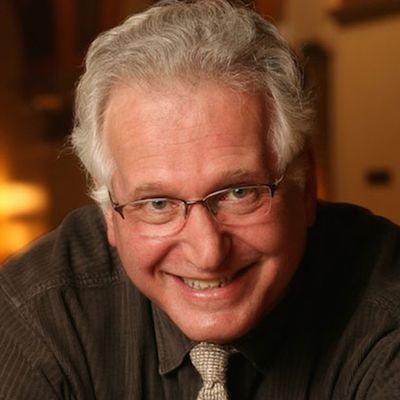
City Center Encores! Artistic Director, and Jujamcyn Senior Vice-President, Jack Viertel welcomes Rob and Kevin into his office to discuss the many hats he wears. Also, Jack's lunches with August Wilson, bringing Leiber & Stoller to Broadway, and Jack reveals the "deep, dark secrets" of conceiving the perfect revue... Read More
From the show: BEHIND THE CURTAIN: BROADWAY'S LIVING LEGENDS » Podcast
Guests
About
City Center Encores! Artistic Director, and Jujamcyn Senior Vice-President, Jack Viertel welcomes Rob and Kevin into his office to discuss the many hats he wears. Also, Jack's lunches with August Wilson, bringing Leiber & Stoller to Broadway, and Jack reveals the "deep, dark secrets" of conceiving the perfect revue. Plus: Dramaturgy in musicals, how an Encores! season is planned, and where to get the best BBQ in NYC! Jack's new book, The Secret Life Of The American Musical: How Broadway Shows Are Built, is available for purchase here: http://amzn.to/1QuMg78
Transcript
This transcript was automatically generated and might contain errors.
[0:00] Robert W. Schneider: Hi, I'm Robert W. Schneider.
[0:01] Kevin David Thomas: And I'm Kevin David Thomas.
[0:02] Robert W. Schneider: And this is Behind the Curtain, Broadway's Living Legends.
[0:05] Kevin David Thomas: Don't forget to follow us on Twitter and Instagram at Broadway Curtain.
[0:08] Robert W. Schneider: And make sure to join our Facebook page at Behind the Curtain Broadway's Living Legends.
[0:12] Kevin David Thomas: Our guest this week is a Renaissance man in this industry. His journey started in Stamford, Connecticut, where he claims to be the worst King Arthur in the history of the American musical theater. Once he hung up his tights, he donned many different hats. First, he was a critic in Los Angeles, then a dramaturg for such musicals as Hairspray, then a producer for Drew Jampson, then a librettist, then a teacher, then an artistic director. And now he adds author to his CV with his amazing new book, The Secret Life of the American Musical Theater: How Broadway Shows Are Built, which is now in stores and available on Kindle to talk about his amazing career here as the artistic director of City Center's acclaimed Encores series, Mr. JACK VIERTEL.
[0:51] JACK VIERTEL: Hello.
[0:53] JACK VIERTEL: I I'm not that amazing.
[0:55] Kevin David Thomas: Oh yeah.
[0:55] JACK VIERTEL: Oh, I think you are.
[0:57] JACK VIERTEL: We disagree.
[0:58] JACK VIERTEL: We greatly disagree.
[0:59] JACK VIERTEL: And I'm not even sure Living Legend applies to anyone sitting in this room, although living.
[1:03] JACK VIERTEL: I am living.
[1:06] Kevin David Thomas: We beg to differ on that regard. But now, growing up in Connecticut, did you get to come to the city a lot to see shows?
[1:11] JACK VIERTEL: Yeah, you know, my parents were both theater lovers, and my father and grandfather were tangentially in the theater business. So my grandfather built theaters. He was a contractor who built theaters, built a Broadway, he built a Broadway in the Hellinger, but also built theaters all over the country, mainly concert halls around the country.
[1:28] Kevin David Thomas: Oh, interesting.
[1:29] JACK VIERTEL: Um and also a lot of housing and office buildings and other things. And my father had written a play that was produced Broadway in 1937 for two weeks at what is now the Richard Rogers Theater. And so they were they were sort of kind of in the theater world, and they first took me to see Peter Pan when I was a little bit of a few years.
[1:47] Kevin David Thomas: That was the first show you saw?
[1:48] JACK VIERTEL: Yeah, with Mary Martin. And then they would take me, you know, to a couple things a year, basically from that time on. I had a very happy childhood, but among the very few sins for which they are not forgiven, even posthumously, is that they wouldn't take me to see Gypsy because they thought it was too racy for a nine or ten year old.
[2:09] Kevin David Thomas: Give them a glove.
[2:10] JACK VIERTEL: Yeah, totally. And so I didn't get to see Ethel Merman and Gypsy and could have. That one I kind of semi-understand because they felt it was a moral issue. They didn't take me to see The Music Man with Robert Preston because they didn't like The Music Man. I thought, boy, wow. I hope I'd be more generous with my kids than that. What kid wouldn't like to see Robert Preston in The Music Man?
[2:32] Kevin David Thomas: Did you listen to a lot of musicals growing up?
[2:34] JACK VIERTEL: All the time. Yeah. And they did take me to see Damn Yankees and Pajama Game and later on Carnival and, you know, West Side Story. I remember listening to the Guys and Dolls cast album when I couldn't have been more than four and falling in love with "Sit Down, You're Rocking the Boat" without having the slightest idea what it meant. And "A Bushel and a Peck," which I actually thought was a song about farmers.
[2:54] Kevin David Thomas: Yeah, me too.
[2:55] JACK VIERTEL: Me too. How would you know when you're that age? It's actually not a song about farmers at all.
[3:00] Kevin David Thomas: Not even close.
[3:02] JACK VIERTEL: Um, so it was in my blood. And a lot of discussion about the theater around the dinner table. Because every time they saw a show, we talked about the show. And when I saw a show, they wanted to hear what I had to say about it. So I grew up, you know, having my ego encouraged in ways that are probably not that.
[3:18] JACK VIERTEL: Informing opinions and all like everything I said mattered.
[3:21] Kevin David Thomas: Oh, yeah. What did you study when you went to Harvard?
[3:23] JACK VIERTEL: I was a straight ahead English major. You know, there's no theater major at Harvard.
[3:26] Kevin David Thomas: Yeah.
[3:27] JACK VIERTEL: Was there ever a desire to be an actor to get in front of the people?
[3:30] JACK VIERTEL: Well, I was a really good high school Fagin and a really bad high school King Arthur.
[3:36] Kevin David Thomas: Right.
[3:36] JACK VIERTEL: Then I got to Harvard in freshman year, was on two plays at the Loeb Drama Center, and quickly realized that I was never going to be a professional actor. Because if you're not the best actor on stage in an undergraduate production college, you're not gonna ever be Lawrence Olivier. That's all there is to it.
[3:51] Kevin David Thomas: Good for you for recognizing that early, though.
[3:55] JACK VIERTEL: It's funny you say recognizing it early. I was actually acting on stage with Stockard Channing and Tommy Lee Jones, but we didn't—I mean, they were good. They were the best act, you know, they were the best actors on stage, but I wasn't even as good as the people who were significantly less good than they were.
[4:14] Kevin David Thomas: And then did you move to Los Angeles immediately following graduation?
[4:17] JACK VIERTEL: I went to London for six months because I was writing the great American novel, also known as the unpublishable postgraduate novel. Really, I just went to London to drink and go to the theater. That was the main thing. And while in London, I met the woman who would become my wife and came back from London. We moved in together in Boston. I did not want to stay in Boston. She had a job teaching in Boston. She did not want to move to New York, where I had way too much family, and so we went to Los Angeles. We went to Los Angeles basically for a few months and stayed 14 years. We just forgot to come home. We got married and forgot to come home.
[5:00] Kevin David Thomas: Made a start there.
[5:00] JACK VIERTEL: Yeah. What were you doing when you were in Los Angeles?
[5:03] JACK VIERTEL: I started, you know, it was a great—that was a golden age of filmmaking. The early 70s. This was when we moved out there just when Coppola was making his first great pictures, Scorsese was making his first great pictures, Robert Altman was making his first great pictures, and on and on. Steven Spielberg made, I remember, made Sugarland Express while we were out there. You know, he was just getting started. So I decided I should be in the movie business because it was really an exciting time in the movie business. The only problem was I didn't really have any talent for the movie business. So I tried to be a screenwriter for a few years and I wrote a lot of bad screenplays because I didn't really know how to write a screenplay.
And then to support myself while my wife was teaching high school out there, I started writing freelance anything. And at one point, a friend of mine from college called me up and said that a friend of his was starting a free weekly and they needed a theater critic. And he said, you know, have you ever written a theater review? I said, No. He said, Well, but you know a lot about the theater, and this is Los Angeles where nobody knows anything about the theater. So if you can write an English sentence, you can probably get this job. So I did. I called the editor of this paper, which was called The Reader. There are very successful editions of The Reader in Chicago and San Diego. The LA one never caught on.
But they hired me to write basically freelance for $35 a published review, which was $35 more than I had. And I did that for a couple of years, and then I got a call from the editor of the Los Angeles Herald Examiner, which was the Hearst paper in LA. It was not—it was the paper that was unsuccessfully trying to compete with the LA Times and had been for decades, sort of like the New York Daily News here. It wasn't a tabloid like the news, but it was a, you know, it was a paper for people at the racetrack and cab drivers and whatever. It was kind of a blue-collar paper, a good blue-collar paper. And their theater critic was retiring and they offered me the job based on what I had done at The Reader.
And I didn't even—when I was at The Reader, I didn't even think of myself as a theater critic. I just thought of it as one of the freelance writing jobs I was doing. But when the Herald hired me, I was a theater critic and they paid me a living wage. I could actually pay my bills. And you know, so I did that for five years, I guess, and they made me the arts editor. And when they made me the arts editor, I realized in a blinding flash that I was climbing up the wrong ladder. I was not actually interested in journalism. I was writing about theater because I was interested in theater. And if I stayed at the Herald and did a good job as the arts editor, they'd make me a city editor or some other thing that had nothing to do with what I wanted to do in life.
So I jumped ship as quickly as I could and got hired by the Mark Taper Forum as a dramaturg. Because I was at the Herald, I saw the press release that the dramaturg was leaving the Mark Taper Forum. And I literally ran from the place where the press releases were delivered to the telephone and called up Gordon Davidson and said, Let's have lunch. Let's talk. And he hired me.
[7:56] Kevin David Thomas: And then did you leave that?
[7:57] JACK VIERTEL: So I left the paper. I left the paper and I went to work for the taper, so to speak. Um and I was there for two years to the day before I came here.
[8:06] Kevin David Thomas: Was it awkward to be at a place that you had been reviewing and criticizing for a number of years?
[8:12] JACK VIERTEL: Yes and no. It was not most of the time. There were people there who were kind of mad at me when I got there who eventually we got to be friends. Um there was one resident director there who did not speak to me the entire time that I worked there. But you know, once I understood that he wasn't going to speak to me, that yeah, you know, okay, so fine.
[8:33] Kevin David Thomas: And then what was your main function for Center Theater?
[8:36] JACK VIERTEL: It was a lot of different functions. Um the taper was a sort of big bureaucratic theater. Uh so I did everything from working with writers on new work, which was the fun part of the job, to um writing pro, you know, ghosting program notes for the artistic director, which he would then edit, and you know, to doing research when we did—we did classics like Hedda Gabler, doing research and you know, putting up stuff in the rehearsal room that says this is what a house looked like, you know, in Norway and the other.
[9:05] Kevin David Thomas: Yeah, no, I was gonna say if you could explain, you know, some of our listeners, maybe younger not really know what a dramaturg does.
[9:11] JACK VIERTEL: You know, dramaturg hats. It's a funny thing. Dramaturg, because I was I was a dramaturg at exactly the right time to understand this. Dramaturg was a term, was a jerk—it's a German term, and it became a highly fundable thing in the not-for-profit theater. The idea was that it helped to have somebody elevating the literary level at these not-for-profit theaters. And so it was—there were in those days when there was quite a lot of corporate giving and the NEA was more generous, and you could get funding for a dramaturg. And so every theater suddenly had a dramaturg because it was a fundable job. And then what they did with that person depended entirely on what the artistic director wanted to do with that person.
So in some cases, they were really a literary manager who handled the inflow of scripts and making sure everything got read and covered and sending them back to the writer or saying we want to do a reading or whatever. And in some cases it was a kind of intimate relationship between the dramaturg and the playwrights. Um, and in some cases it was purely a research job. There were theaters that basically only did classics, and so you spent your life, you know, researching different periods and that Shakespeare's plays are set in or Chekhov's plays are set in. So it was a lot of things. The part that I liked most was because I think because I'd been a critic, the part that I liked most was working with the writers who weren't mad at me.
It took a long time. It does take a long time and should take a long time to build trust with any artist, but if I could build trust with them, seeing the story in its totality and the characters and trying to be a sounding board for that playwright was a really enjoyable, instructive thing. There were two who I loved, John Robin Bates, who was a real kid at the time and who the taper commissioned a play of his. And he and I worked together very closely for those years. And a writer named John Stepling, who has a sort of underground career, but not a popular career, who I actually think, you know, he's kind of one of those genius geniuses who's a genius to the people who think he's a genius, and then other people read his work and say, I don't understand a single word of this or why you're doing it. And I am was an am big fan of his. He now lives in Finland and he writes television and screenplays and stuff. But he wrote some wonderful, weird, weird plays about Southern California.
[11:28] Kevin David Thomas: What makes a successful playwright-dramaturg relationship?
[11:31] JACK VIERTEL: I think, first of all, trust. I think that the playwright has to believe that the dramaturg is on his side, is only helping him try to discover and not trying to write the play for him or drag the play into some direction that the playwright has no real interest in it going. And that just takes time. I mean, I think every artist who has enough faith in the idea that they should be saying something to the world also has a very developed sense of protecting what that is and doesn't want it messed with, you know.
[12:02] JACK VIERTEL: And I think that the way you build that trust, which is sort of the second half of the equation, is principally by asking questions and not making suggestions and saying what you find not yet clear rather than trying to suggest what you think it means and how the playwright could make it mean that better, which no playwright wants to hear.
[12:19] JACK VIERTEL: And in fact, they own that work in the deepest sense, they own the impulse behind it. They own what it is, and if you try to do it for them in any sense, it just destroys a relationship. And it should destroy the relationship because that kind of art is made by an artist.
[12:36] JACK VIERTEL: And what prompted the move from Ellie Rocco Landisman took over this company, Jujamcyn Theatres, which owned five theaters, and called me on the phone and said, "Do you want to come work here?" And I said, "Why would you call me?" And he said, "Because you, when you back in the days when you were a critic, you wrote a terrible review of Big River when it was trying out in La Jolla, and it was a smart terrible review, and I think you know that you can help."
[12:58] Robert W. Schneider: So you can't know each other socially or did he just call from a...
[12:58] JACK VIERTEL: Well, it wasn't as cold a call as I thought it was. I thought it was a completely cold call. I had met him once before; he later confessed to me that this was a kind of job interview. He already knew that he was going to take over Jujamcyn, although he hadn't formally done it yet, and he had this impulse.
[13:25] JACK VIERTEL: We don't think about that anymore because now it's all about can you find a theater to get into; the situation was completely 180 degrees the opposite back then. So he felt since Jujamcyn was the smallest of the three theater owning chains and since Schubert particularly but also Nederlander to some degree had relationships with Cameron Mackintosh and Andrew Lloyd Webber and Peter Hall, that they were always going to get the choice bookings.
[13:50] JACK VIERTEL: And that the only way to fill up these buildings was to produce our own shows in them. We decided we were going to principally do American work; there was plenty of English work out there and it was being done by plenty of people who were very happy producing English plays and English musicals. And that there was this resource, which were these wonderful plays and musicals written by Americans that didn't have producers. So we would do that.
[14:11] JACK VIERTEL: So it's a combination of opportunism and I think actually a pride in native work. Well, I brought two plays with me in my suitcase from the taper. I brought M. Butterfly and I brought The Piano Lesson.
[14:21] Robert W. Schneider: Well done.
[14:22] JACK VIERTEL: Thank you. It was a good place. It was a good suitcase. So Rocco and his then wife Heidi were producing Into the Woods, the first, the original production of Into the Woods. So that was going into what was then the Beck and is now the Hirschfeld. And we quickly made arrangements with Stuart Ostro, who held the option on M. Butterfly, to put that in the O'Neill. That was our first year.
[14:47] JACK VIERTEL: And then we quickly got involved in a couple of other shows. We got involved in Grand Hotel and we got involved in City of Angels. We got involved in Jelly's Last Jam. And the August Wilson play was on one of those August Wilson long tapeworm tours of the country on its way to New York. So we had committed to do it whenever they got it done. And this is as produced. And that opened in the Kirk's as well. We were always co-producers of these shows; we were never the lead producers.
[15:11] Robert W. Schneider: What was the relationship with August Wilson like?
[15:15] JACK VIERTEL: I had a great relationship with August Wilson. I really did; by the end, I considered him a friend. I was such a huge admirer of his work. I was a blues fanatic when I was in college and still am to some degree. So the language of those plays was incredibly familiar to me in ways that I never thought I would hear it spoken on a stage. It combined two different loves that I had: one for the music and the poetry of that culture with Broadway Theater.
[15:45] JACK VIERTEL: So I started when The Piano Lesson, when we agreed to get involved in it, I wrote him a letter and told him how happy I was about it and blah blah, which he never answered. He almost never answered any of my letters, which was fine, as it turned out. And then I went to the world premiere of The Piano Lesson at Yale, and there he was standing there. So I thought, well, I better get... so I went up to introduce myself, and I had never met him before, and he said, "Oh yeah, you sent me that letter. I thought it was a good letter. I like that letter." And I said, "Yeah, you know, and I said, I have to tell you that when I first read this play, I was in the bathtub. I read this play in the bathtub in Los Angeles.
And when I got to the part about where the piano actually had come from and what the piano was, which is a long two-and-a-half-page monologue or whatever, I said, I nearly drowned. I completely lost body control. And I just have to tell you that that's why I'm so excited about this play." And he said, "Oh, well, I changed that. I rewrote all that. That's all different now." So I, and you know, to tell the truth, I don't know whether he did or whether he was just teasing me because I was being so embarrassingly fawning. He changed it a little, I think.
[16:55] JACK VIERTEL: But that was the beginning of that relationship, and we would sit at the Edison Cafe and he would talk to me and I would smile and nod, and then he would send me a script and I would send him a bunch of questions and a letter, and he wouldn't answer the questions, but then another draft of the play would arrive. Some of the questions had been dealt with; some of them never got dealt with. So it was a very oblique but friendly relationship. And he loved to tell stories. He would sit at the Edison with a cup of coffee and tell you. He said to me one day, "So I got this idea for a play. This guy shows up at a house where his girlfriend's living. And he's got a radio under his arm. And the thing is he stole the radio."
I said, and I said to myself, "That doesn't sound like an idea for a play, actually. It's an interesting image, but it's..." and he said, "The play's called Seven Guitars. But I don't think there's any guitars in it." And I said, "Okay." And then six months later, this script shows up called Seven Guitars. The radio was now gone. Except it played a hugely important part in the play because there's a Joe Louis fight on the radio. So I began to understand that he had this image in his mind, and that later on the image morphed into, "Oh no, I don't want the radio under the guy's arm. I want the radio to tell a story that leads to a fight." But you know, all those... he was like an automatic writer, I think; these things came into his head, and then he had to filter them and figure out how they edit them and figure out how they worked.
[18:15] JACK VIERTEL: And so the plays evolved very slowly and inexactly, which was fascinating for me because to see what he would change and how he would change it and how he would get from something relatively formless to something quite formally complete. Really gestation. It never happened the way you would think it would happen. A lot of people just think, "Oh yeah, he just woke up and wrote that play that way." Yeah, or he had an idea for a story, and here's how the story goes. But that was never true. The story was like the beginning of the story was there's a guy with a radio under his arm who's gone to his girlfriend's house and it's a stolen radio. Well, that's the beginning of a story. It turned out not to be the beginning of the story he ended up telling, but you know.
[18:53] JACK VIERTEL: The Piano Lesson, I had heard that the ending was different originally. There was no ending. There was no ending. This was great. And you know, people have always loved this play, including me. But it, you know, the play is basically almost three hours long, and it's about who gets the piano, right? It's a brother and a sister, and they're arguing over what to do with this piano, which is an heirloom heritage. It's carved by one of their ancestors with the history of their family that includes coming over on slave ships. And so the piano is a very... it's not just a piano; it's a very special thing, and it's obviously a symbol of the heritage of this family and thereby the heritage of all black families in a sense. And so the... yeah, what do you do with your legacy? He wants to sell it and buy a piece of farmland so that he can actually begin to prosper in a pragmatic way, and she wants to save it as an homage to a painful history. Who gets the piano?
[19:49] JACK VIERTEL: The play was written. You didn't at the end of the play find out who gets the piano. He never answered the question who gets the piano. So I can't take too much credit for this because I know Lloyd Richards, who was his director, asked the same question, said, "Who gets the piano?" Right. And I said, "Who gets the piano?" And he said, "You know, I don't really care who gets the piano. I'm interested in the fact that there's an argument over what to do with the piano." And I did say to him, I think in a story where you argue that point for almost three hours and an audience is sitting there having paid good money, they're gonna want to know who gets the piano. And he never said he would write another scene.
He ended up writing two other scenes that answered the question. One midway through the second act and one at the end of the second act. And although I hate to give away anything for people who haven't seen The Piano Lesson, although in the end, the boy gets the piano, not the girl. The audience votes.
[20:38] Robert W. Schneider: Yeah.
[20:39] JACK VIERTEL: The audience votes, exactly. I think he could have written it the other way. I think if he had figured out a way to write it the other way, he would have written it the other way. It was like he didn't want to admit that there had to be an ending to this argument. Because in his mind, there is no ending to the argument. And he's right. But it doesn't make as good a story unless you end the story. And then pretty soon all of his works are going to be on HBO, I believe.
[20:59] Robert W. Schneider: Yeah.
[20:59] JACK VIERTEL: So that's awesome. I mean, because only one of them has ever been filmed.
[21:03] Robert W. Schneider: There was a TV movie of The Piano Lesson.
[21:04] JACK VIERTEL: There's a TV movie of The Piano Lesson.
[21:06] Robert W. Schneider: Yeah.
[21:06] JACK VIERTEL: That's great. So a whole new generation's going to be exposed to this.
[21:10] JACK VIERTEL: Or the TV movie, The Piano Lesson, is about half as long as the play. You know, it's a hallmark thing.
[21:15] Robert W. Schneider: Yeah, gotcha.
[21:16] JACK VIERTEL: One of those things. Was The Piano Lesson the only one that you worked on him with?
[21:20] JACK VIERTEL: No, we worked on the last six of the ten. We worked on The Piano Lesson, Two Trains Running, Seven Guitars, Radio Golf, Gem of the Ocean, King Headley was King Headley.
[21:31] Robert W. Schneider: Wow. How did Smokey Joe's Cafe come about?
[21:35] JACK VIERTEL: Smokey Joe's Cafe was actually my idea. I have had an obsession with Lieber and Stoller since I was a little kid. I went to summer camp at age nine with a copy of Yakety Yak, a 45 RPM recording of Yakety Yak in my among other 45s, and a little portable record player. And you know, it said Yakety Yak, and then underneath that in parentheses in little small letters, it said Lieber and Stoller, and then underneath that it said The Coasters. So The Coasters were singing it, and the song was called Yakety Yak, but what did Lieber and Stoller mean? It turned out, of course, they were the authors, and that's how authors were built in those days. Once I realized that that little thing that said Lieber and Stoller was on half the records that I loved, I figured out who they were, and you know, by that time I was probably 11 or 12.
When I saw Ain't Misbehavin' many, many years later, which I still think is the perfect revue, I remember very distinctly driving home and thinking, "Well, you could do this with Lieber and Stoller. There has to be a way to do it." And so that's where the idea came from. I thought to myself, "It'll never be as good as Ain't Misbehavin', but maybe it'll be good enough."
[22:36] JACK VIERTEL: It turned out to be pretty good.
[22:40] Robert W. Schneider: Yeah, it did pretty good. And coming back, right? This summer, is that right?
[22:44] JACK VIERTEL: I mean, I'm not sure; it's gonna all depend on theater availability, I'm sure.
[22:47] Robert W. Schneider: What are some of the secrets to structuring a revue?
[22:50] JACK VIERTEL: You know, these are deep, dark, mystical secrets. But I'll tell you to kill us after you're gonna be able to do that.
[22:58] Robert W. Schneider: Right, exactly.
[22:58] JACK VIERTEL: I'll tell you what that actually generally... Smokey Joe's Cafe was structured in a very specific way to not to tell a story, but to go on a very clear journey, which if you do it right, I think the audience doesn't know it's going on. They get on the ride without realizing it's a ride.
[23:14] JACK VIERTEL: Right. And the ride in Smokey Joe's Cafe is simply this: it starts out with a song called Neighborhood with a bunch of people who seem to be looking back from a vantage point of maturity on their days in the neighborhood. And then it goes, and I realize this doesn't make literal sense, but just follow me out. The next thing that happens happens at about three o'clock in the afternoon when high school gets out, right? And they sing Young Blood to this girl who's going down the street. So it's three o'clock in the afternoon. And when the show ends, it's about three o'clock in the morning. But simultaneously, when the show begins, they're in high school. They're about 16 years old, and when it ends, they're in their forties. So it's a day and it's a lifetime at the same time.
[23:55] JACK VIERTEL: That's interesting. And it ends with them gathering to having gone out, having ridden the B O out to their individual destinations, and having had female trouble and male trouble and marital trouble and alcohol trouble and winding up in jail, and what having lived a big portion of life, they come back together for "Stand By Me" at the end, which is real, and the neighborhood gets reprised two tiny little times in the show to remind you that yeah, these people were all once in the neighborhood.
[24:23] JACK VIERTEL: So that it's a very simple journey of life, basically. It's like songs of innocence and experience or high school to having your own kids in high school, or three o'clock in the afternoon to three o'clock in the morning. And it's just a helpful way to think about where to put certain songs and where to what you know. There's no way that a song like "Stand By Me" should be in the first act, and there's no way that a song like "Young Blood" should be in the second act. They tell you where they belong on that spectrum.
[24:51] Robert W. Schneider: Did Liebling Stoller have any interaction with you as you were conceiving that?
[24:54] JACK VIERTEL: Yeah. They sort of left us alone for how the thing got from one place to another.
[25:07] Robert W. Schneider: Wow. Do you enjoy putting revues like that together?
[25:11] JACK VIERTEL: I love it. I've done it four or five times.
[25:13] Robert W. Schneider: What other ones have you done besides...?
[25:13] JACK VIERTEL: I did "Amos Behaven." I must be having me after midnight, which started out life as "Cotton Club Parade" at Encores and then moved on to Broadway. I did one that we didn't quite pull off based on the Randy Newman catalog called "Harps and Angels." And I did one at Encores called "Stairway to Paradise" that didn't never got past Encores. It wasn't really intended to get past Encores, although it was pretty great, which was 50 years of Broadway review material in review.
[25:44] Robert W. Schneider: Yeah.
[25:44] JACK VIERTEL: And that had a different structure, which was really fun to work on. "Stairway to Paradise," there were all these revues, right? And they were a big part of Broadway history, the Ziegfeld Follies and George White scandals and the music box reviews. And they were all not all, but the success there were many successful ones. And the successful one in those days meant that you ran a season, you know, and you had a couple of hit tunes in it. But when we actually did a revue at Encores, we did the Ziegfeld Follies of 1936 because it was doable. And you realize that those shows were sort of like Saturday Night Live. They were done to entertain an audience that week, you know, with whatever was funny that week.
[26:28] Robert W. Schneider: Yeah.
[26:28] JACK VIERTEL: And or trenchant that week. It's hard to justify doing them today because there's a sketch about someone being caught in an elevator. And if you had been in Brown in 1936, you would have realized that there was a famous newspaper story about somebody being caught in an elevator that they were parodying. But how would you know that today? You need the context. So right. So we didn't, so we thought, well, we can't, we really shouldn't do another whole revue. We shouldn't do, you know, the George White scandals of 1921. But there's all this great material. There's tons of great material. So by focusing on the particular kinds of material that interacted with famous events, not someone being stuck in an elevator, but like World War I starting or World War II starting, and putting it in chronological order, more or less, you could actually tell the whole history and the whole social history of America from the turn of the century to the 50s. Because they hit on everything.
They hit on the ragtime era, they hit on World War I, they hit on the Great Depression, they hit on World War II, they hit on certain fashion trends and certain musical trends, you know, dance crazes and things. So by putting it together without ever saying anything, without ever having a narrator or anything, you just could you get we got you from an old Victor Herbert operetta type thing all the way to the last thing in the show, which was from "New Faces of 1952," which is this great infidelity song called "Guess Who I Saw Today."
[27:47] Robert W. Schneider: Yes, yeah, great song.
[27:48] JACK VIERTEL: But you know, the thing about that song is it's about infidelity, it's about discovering an infidelity, but it's about having moved to the suburbs, which is what happened after World War II, right? She says, "Guess who I saw today? I had to go to town to do some shopping and I parked at this place," and you know, and she caught her husband in a bar with another woman. So you can trace the whole hit. The suburbs didn't happen until after World War II, you know. You know that couldn't have happened in 1929. The way the song was written assumed that people were living in a world where, yeah, we all moved to the suburbs.
[28:20] Robert W. Schneider: That's not licensed, is it? "Stairway to Paradise"?
[28:21] JACK VIERTEL: No. I'd love to see it done again, but you know, it's the only orchestration we have for it is for 30 pieces. It's a great big Jonathan Tunick orchestration. Big one. And it was Kristin Chenoweth. I saw it. I just remembered I saw it, yeah. And Chris Fitzgerald and Kevin Chamberlain top line in it. It was great fun, and it could have moved to Broadway, but Kristin got a TV series and then it went away, and you know, maybe one day it'll come back.
[28:47] Robert W. Schneider: For our Encores audience, which is an older audience that loves traditional theater music, it was, you know, how did Encores come your way?
[28:55] JACK VIERTEL: I was part of the, what were we called, the advisory committee that formed Encores. I was asked to be there by Ted Chapin from Rodgers and Hammerstein, who felt that they had put together this committee to figure out how musical theater could come back to City Center, but that they didn't have a producer on the committee, so no one actually knew anything about the nuts and bolts of how to do it. They knew like what kind of work they wanted to do and what their principles were. So they put me on that committee, and I thought they were all out of their minds. I mean, I thought this can never work. That was my response. Wrong again.
[29:26] Robert W. Schneider: Wow.
[29:27] JACK VIERTEL: And then after Walter Bobbie did the first three years, I guess four years, three years, and then Kathleen Marshall did the next four, maybe they asked me would I like to become the artistic director? So I went to Rocco and said, you know, this was just as the houses were filling up, we were doing less producing and more. I was becoming more of a handicapper. I would say to him, book this show, don't book that show, rather than actually working on the shows.
[29:53] Robert W. Schneider: Yeah.
[29:53] JACK VIERTEL: He said, Well, you know, we made a deal basically. I gave back some of my Jujamcyn salaries to give me 12 weeks over at City Center, and they made up the difference. And so it was all and had artistic directorship in something you strived for, wanted to do?
[30:08] JACK VIERTEL: No, I but I love I really by this time I knew a lot about old musicals. Really a lot about old musicals. And I loved them. And I loved, you know, there were still big gaps in my knowledge, but I had a bunch of knowledge, not enough. And so the opportunity to do that, and also the opportunity that I had not really confronted that I wanted, but that I actually did secretly want, which was to not be a lieutenant for once and to actually run something myself.
[30:36] Robert W. Schneider: Totally.
[30:37] JACK VIERTEL: Not that I was unhappy being Rocco's lieutenant, it was the greatest job you could ever have. But so it gave me an opportunity to do that in a limited way. I kept my job here. I was only, you know, they only do three presentations for a week each. And but it's funny. I had at one point Rob Fisher, who was the founding music director of Encores and was still the music director at this time, said to me, You know, I think it's time to do an operetta. And I said to him, you know, I really hate operetta. And he's a very smart guy. He could have had any one of a number of responses. But his response was, which operettas do you hate? Which made me realize that I had never seen an operetta. So this idea that I hated operetta, because I heard in my mind, you know, some soprano trilling.
I didn't really know anything about operetta, even though I fancied myself as being very knowledgeable about the musical theater. So I thought, well, you gotta take a couple of months here and do some research and listen to some shows and play through some shows. And we ended up doing "The New Moon."
[31:33] Robert W. Schneider: That's how the "New Moon" is.
[31:34] JACK VIERTEL: And I thought, and "The New Moon" is one of my absolutely favorite Encores of all time. It's, you know, crazy primitive form of musical theater, but very grand and with these huge, loopy, soupy melodies and beautiful music. Beautiful music. Yeah, gorgeous score. And no, you know, no rational dramaturgy at all. But who cares?
[31:54] Robert W. Schneider: How do you plan a season?
[31:55] JACK VIERTEL: What it's come down to is you start with one show. Because the key to an Encores season, I think, is making sure that the audience isn't having the same experience three times in a row. So if you say, I really want to do "Cabin in the Sky," that's what I want to do. You think, okay, "Cabin in the Sky" is African American, it's from the 40s, it's very jazzy. It's a folk tale. Now what can we put around it that don't have any of those qualities so that they'll be very different? I mean, I'm just picking "Cabin in the Sky" out of that out of a hat. But we normally start with the one show we want to do most, and then we figure out what goes around it. And there remains a long list of shows that we haven't done, and you know, and then there's a question of can you get the rights?
And if you can't get the rights, then what I mean, one year we said we really want to do "City of Angels," but someone was planning a revival of "City of Angels," and so couldn't get the rights. So then we had to start all over again.
[32:48] Robert W. Schneider: Wow.
[32:49] JACK VIERTEL: And it took us, you know, ten years to get "Most Happy Fellows." But we've been trying and trying and trying, and finally one year they said yes. Because it was under option to somebody for a revival, and eventually that person gave up the option, and that's how we got to do it.
[33:03] Robert W. Schneider: What are some of your favorite musicals that aren't known by the general population?
[33:08] JACK VIERTEL: So not in "Oklahoma," not in "My Fair Lady" either. You've done them in Encores, you haven't, whatever, but just ones that you think are underappreciated gems.
[33:16] JACK VIERTEL: I think by and large, the gems are appreciated. Because when you say gems, I think what you need to mean is shows that work all the way through, that have really good scores, that have really good stories, that are really good opportunities for performers. I think most of those actually are the "Carousels" and the "My Fair Ladies" and the "Guys and Dolls" and later ones as well. So really what you're looking really what I'm focusing on some of the time is like here's a show that has a like "Cabin in the Sky," it has a great, I mean, this is a great score, but a very problematic vehicle for both political and dramaturgical reasons. So those are the things that I get special pleasure out of because I think you're exposing, and usually it's the music and lyrics that you're exposing. I mean, sometimes there are shows that, a random example, I wanted to do "Face the Music," the Irving Berlin show, which we did.
[34:14] Robert W. Schneider: Yeah.
[34:15] JACK VIERTEL: But the truth of the matter is, although I think the score is delightful, I really wanted to do it because I thought the book was funny. And to find a 1935 show with an actually funny book, a book that's still funny after all these years, it's a needle in a haystack. And the fact that it's basically the same plot as "The Producers," which had just opened at that time, I thought, well, this is cool. We're gonna do this just, you know, the opening number in the second act of "Face the Music" is the opening number from "The Producers." It's exactly the same.
[34:43] Robert W. Schneider: Incredible.
[34:44] JACK VIERTEL: And so let's do that. So in that case, it wasn't just the score, it was the whole gestalt of the piece that I thought was worth celebrating. But usually it's a score. Usually it's, you know, people need to hear this music again. I mean, so even something like "Pipe Dream."
[34:59] Robert W. Schneider: Totally.
[34:59] JACK VIERTEL: Which is not a successful show, really. There's two reasons to do it. One is that, at least for 70% of the way, it's a terrific score. And I think the best Rodgers and Hammerstein score from a flop.
[35:11] Robert W. Schneider: Yes.
[35:12] JACK VIERTEL: For me. The other thing is it's really fascinating to watch Rodgers and Hammerstein hit a wall. These guys didn't hit many walls. You know, they usually got home safe. And you can just feel it happening in the show. And you think, well, that's amazing to watch that creative process come to tears right in front of your eyes. These guys couldn't figure out how to do this show. And it's partly because of their what their sensibility was, and it's partly because they ran out of gas. It's partly because Dick Rodgers was sick at the time and not part of the process. But it's just a misfire. And it's fascinating to watch major artists have misfires.
[35:46] Robert W. Schneider: So many of the recent shows have been recorded for CD and on iTunes and stuff. Are you planning on doing that for the future?
[35:54] JACK VIERTEL: You know, I would do it with every show, happily.
[35:57] JACK VIERTEL: The fact of the matter is Encores! doesn't pay for these things and doesn't have funding to pay for it. So if there's an estate that wants to pay for it or some donor who wants to pay for it, we're ready, willing, and able. You know, Rogers and Hammerstein paid for the Pipe Dream recording. Yeah, we've got it's a great recording, great life. And the original show had weird casting problems that made the cast recording not a good recording. So this was their only way of preserving the score at more or less, I mean, I would never claim that it was at its absolute best that it could ever be, but it was a considerable improvement. Good representation of it, yeah, over the cast album that existed. And they were willing to pay the money. So, you know, if you know anybody who's got a couple hundred thousand dollars, they want to throw it at a cast album, I'm ready.
[36:43] Robert W. Schneider: I wish I did.
[36:44] JACK VIERTEL: Yeah, I wish I goddamn do, I wish I do. Some of them don't really, you know, 1776 doesn't really need a new cast album. The cast album is fine, but particularly the ones from way back. Yeah, yeah. Were either not well recorded or not recorded at all, and those are the ones that deserve preservation.
[37:01] Robert W. Schneider: Absolutely. How long have you been artistic director now?
[37:04] JACK VIERTEL: Since 2001 was my first season.
[37:06] Kevin David Thomas: Excellent. Not bad. Well, how long should someone be an artistic director?
[37:10] JACK VIERTEL: That's a big thing. It depends on what the art they put out, isn't it? I mean, like, do you keep—because you seem to be keeping it fresh. You seem to be raising the bar every single time.
[37:18] JACK VIERTEL: I hope so. Well, I think one thing I've learned from watching other artistic directors is that at a certain point, you're almost inevitably going to begin to lose energy and to repeat yourself. And not necessarily repeat the shows, but just repeat the work. And when that happens, you either ought to have the brains to get out or somebody ought to come up to you and say, "Get out."
[37:41] Kevin David Thomas: Yeah.
[37:41] JACK VIERTEL: But you still seem so enthused.
[37:43] JACK VIERTEL: I'm very enthused still. Yeah. And I think one of the things that's making me enthusiastic is that now the shows we can do—because we've done however, what is it? It's our 23rd season. So what is that? Three times twenty-three is a lot of shows.
[37:58] Robert W. Schneider: 63, you know.
[38:00] JACK VIERTEL: Yeah. We're reaching into the pile of shows that are hard to do for physical reasons. The parts don't exist, the scores don't exist. Well, Cabin in the Sky, you had a couple of things. You know, whatever. We spent a very considerable amount of money writing a new orchestration because the orchestration doesn't exist. So that's exciting and fun, and the research is fascinating. And every one of them that you do like that is a mystery story. I mean, you start out with a script from somewhere, and a score that either is like a piano conductor score, or it's just the sheet music from the songs and a playbill from way back when that tells you what order the songs were in and who sang them, which characters sang them, and you start working on it. I mean, why—who wouldn't be fascinated by that? I mean, if you love musical theater, who wouldn't be fascinated by that? It's like looking for King Tut.
[38:48] Kevin David Thomas: Totally.
[38:49] JACK VIERTEL: Get up in the morning and go out searching.
[38:51] JACK VIERTEL: And then your summer series that Encores! is doing, which is now dedicated to off-Broadway musicals. Tell us how that came about.
[39:00] JACK VIERTEL: There was always the idea from the very beginning of Encores! that there should be a second series. But there was neither money nor time. We were so busy trying to figure out the first series that it was like, should that second series be a deeper look at the composers we're doing in the first series? Should it be off-Broadway? Should it be whatever? And eventually, Encores! was running on all cylinders, basically, and so this idea resurfaced that we should do something, and a funder surfaced who was willing to help if we needed it. And so the notion focused on off-Broadway, which is what we weren't doing, right?
[39:35] JACK VIERTEL: And also, a lot of time had gone by. So when Encores! was founded in nineteen ninety-three, is that the first season?
[39:42] Robert W. Schneider: Four, I think.
[39:44] JACK VIERTEL: You know, the seventies were not back so far. Now, you know, another two decades plus have gone by. So off-Broadway seemed suddenly very fertile because Playwrights Horizons and, you know, all these places, the New York Theater Workshop, and everybody's been producing these littler musicals. And the heritage of off-Broadway, which was, you know, the 40s and 50s and 60s, had gotten so far away that there were lots of people who really didn't remember those shows at all, which is sort of what Encores! and operetta is like, in a way. So it just seemed like that was the right thing to do.
[40:20] JACK VIERTEL: And it occurred to me that Janine Tesori, who I have known since practically since I got into this business because she was a part of the music department of The Secret Garden many years ago, would be an interesting person to run it because she's had that experience. She's done off-Broadway. She's been through all of that, and she's an incredibly smart and articulate person with very strong opinions and very strong leadership capabilities. And her idea was when we talked to her was the way you should do this is—you should—I mean, we haven't been able to do it 100% of the time, but the principle of the idea is all those shows, whether you're doing a show from the 30s like Cradle Will Rock, or whether you're doing a show from the 70s or 80s, were written by people who were essentially bound and determined to break the rules, right?
They hated the—they hated the Golden Age. They wanted to react to the Golden Age. I don't mean that they literally hated it, but they were like, "Yeah, we don't like that. We want to do something that's the opposite of that."
[41:16] JACK VIERTEL: And so her idea was, okay, so you take those pieces and you put them in the hands of people who have that sensibility today, who are 20 or 30 years old today and are making a new kind of theater for themselves, but it would be interesting for them to confront what someone in that mood made back then. Oliver Butler is now doing, you know, a show there, or Lear de Bessonet is doing a show there because they're confronting a show from before they were born that was revolutionary in its day.
[41:45] Kevin David Thomas: Yeah.
[41:45] JACK VIERTEL: And I think that's been really exciting to see and also has brought a whole bunch of new young artists to Encores! in a creative phase and a whole bunch of shows and a whole bunch of audiences. And the difference between the Encores! audience and the off-center audience, just looking at the demographics, is stunning.
[42:03] Kevin David Thomas: Yeah.
[42:04] JACK VIERTEL: It's cool though, it's really great. It's great to get a whole new generation in there.
[42:07] Kevin David Thomas: That's so important.
[42:09] JACK VIERTEL: Yeah.
[42:09] Kevin David Thomas: So what's next for you? What are you working on next?
[42:15] JACK VIERTEL: I need a nap, I think. It's all catching up with the music review. We have two more Encores! shows to do this year. I think I'm spoken for. But you know, just as you think, just as you start to—as your head starts to hit the pillow, some idea crops up, somebody tells you an idea, somebody comes up with an idea, or you come up with an idea.
[42:35] Kevin David Thomas: Yeah.
[42:36] JACK VIERTEL: I'm ready to, you know.
[42:37] Kevin David Thomas: He's ready.
[42:37] JACK VIERTEL: I'd like to see a libretto. I'd like to see a musical you do again.
[42:41] JACK VIERTEL: I did one.
[42:41] Kevin David Thomas: Yeah.
[42:42] JACK VIERTEL: I did one long ago, Time and Again.
[42:46] Kevin David Thomas: Yeah.
[42:46] JACK VIERTEL: That's—I could do it better now. I mean, I don't know that that show could be done better now because I think there's intrinsic structural problems with the novel in terms of making it a musical.
[42:55] Kevin David Thomas: Yeah.
[42:56] JACK VIERTEL: Great novel. Fantastic novel. And it had a beautiful score. But my work was not—my work was not terrible. It was just—it was never able to solve the intrinsic problems. I could probably do a better one now. If anybody wants to hire a couple of things, maybe that's a great idea.
[43:13] Kevin David Thomas: Um, and then before we go, Memphis in May.
[43:17] JACK VIERTEL: Oh, what about Memphis in May?
[43:18] Kevin David Thomas: You are a certified—
[43:21] JACK VIERTEL: How does this work?
[43:21] Kevin David Thomas: We were very curious. My stomach's grumbling too, so it's great.
[43:25] JACK VIERTEL: Memphis in May is a month-long event in Memphis every year, the third weekend of which is a barbecue contest. My brother, who's not a cook at all, but who likes to eat, his girlfriend, Pat Daly, who's in the theater business as well, read an item—this was many years ago—saying that there was a barbecue contest at the Jack Daniels distillery. Jack Daniels' annual barbecue contest, and that they were looking for celebrity judges. So she and he and I all enjoy Jack, our glass of Jack Daniels every now and then. So she wrote to the people in Lynchburg, Tennessee, saying, you know, my boyfriend is a producer of Driving Miss Daisy, he'd be a perfect person for your barbecue contest. Now, she didn't define it any more than that. The film Driving Miss Daisy had just won the Oscar. Oh, my brother produced the off-Broadway production of Driving Miss Daisy. But they were very excited about it. The producer of Driving Miss Daisy was gonna come down and be a barbecue judge.
[44:31] JACK VIERTEL: So they went down there without any credentials and had a blast and came back and said, "You gotta be part of this. I mean, this is just too much fun because you get to meet people who are nothing like us. They're from the South and they have their own ideas about everything, and it's really interesting, and the food's really good."
[44:44] Kevin David Thomas: Oh, yeah.
[44:45] JACK VIERTEL: So I went down to the Daisy Theater on Beale Street and got certified.
[44:48] Kevin David Thomas: Best barbecue in New York City. Where do you go?
[44:50] JACK VIERTEL: There are a bunch of good barbecues in New York. But the truth of the matter is I almost never go anymore because in the summer, it's my weekend activity.
[44:59] Kevin David Thomas: And it's cooking it.
[44:59] JACK VIERTEL: Now I have to ask you, how did you get the idea to write this book? What was the inspiration behind it?
[45:03] JACK VIERTEL: You know, I started teaching at NYU about 10 years ago, I guess, at the graduate program at Tisch, writers and directors, and writers being composers, lyricists, book writers. I don't really know that there were any consequential number of directors in the program, but in any case, I did it for a few years, and then I got asked to do little talks by, you know, the local Jewish center or whatever. And I went out and did little talks because at Westchester Community College and places like that.
[45:39] JACK VIERTEL: Yeah. And the talks were nothing but essentially a collapsed version of what I was teaching at NYU over 12 weeks, I would, you know, do in 45 minutes. And every time I did during the little question and answer period, people would say, "Well, when are you gonna write a book about this?" And I thought, "Never."
[45:57] Kevin David Thomas: Yeah.
[45:57] JACK VIERTEL: But it got the question asked often enough, so I thought, well, maybe not never. So I sat down and wrote a little proposal and I sent it to an agent, and the agent said, "This isn't a good enough proposal, but I think we can make it into a good enough proposal, so why don't you do X, Y, and Z?" So I did and sold the book, and then I had to write the book.
[46:16] Kevin David Thomas: You expect to go through with it.
[46:17] JACK VIERTEL: Wow.
[46:18] Kevin David Thomas: That's great. Incredible. Now, I believe there are four musicals in the book that are the basis that you started with.
[46:25] JACK VIERTEL: Well, there were four musicals that I started out teaching at NYU: Gypsy, Guys and Dolls, My Fair Lady, and South Pacific. But by about the third year of the course, I had tossed out South Pacific for a year to try Carousel, and I took, you know, so little by little the four became eight or nine, and then the kids in the class—I say kids advisedly—they're all in their, you know, twenties and thirties, wanted to talk about Mormon and they wanted to talk about Wicked and they wanted to talk about other things. So by the time I got around to the book, although there's still a core of kind of mostly Golden Age musicals that I talk about, it had spread out.
[47:04] JACK VIERTEL: Well, the best book I think is Gypsy, which is Arthur Lawrence, or the two best books are in our Gypsy and Forum, which is Larry Gelbart and Chevalov. I think that Gypsy is the most perfect in the sense that it's the most economical and it pays off everything that it sets up in ways that are really so brilliant.
[47:24] Robert W. Schneider: Jack, thank you so much for taking time and talking to us. We appreciate it.
[47:26] JACK VIERTEL: My pleasure.
[47:28] Kevin David Thomas: Don't forget, please buy Jack's book. It's amazing, The Secret Life of the American Musical Theater: How Broadway Shows Are Built.
[47:34] JACK VIERTEL: Until next time, take care.
[47:35] Kevin David Thomas: Bye everyone.
[47:39] Kevin David Thomas: Join us next week when we interview legendary author and character man Jim Brochou.
© Broadway Podcast Network, All Rights Reserved