

This Week: Celebrating The Triton Gallery, your one stop shop for posters, and the brilliant Disney + documentary about lyricist Howard Ashman (The Little Mermaid, Little Shop of Horrors, Beauty and The Beast) Every week director Robert W Schneider and actor Kevin David Thomas pull back the curtain on neglected, forgotten, and under appreciated musicals, as well as bizarre performances, endearing television appearances, and all things show business... Read More
From the show: BEHIND THE CURTAIN: BROADWAY'S LIVING LEGENDS » Podcast
Featured Shows

About
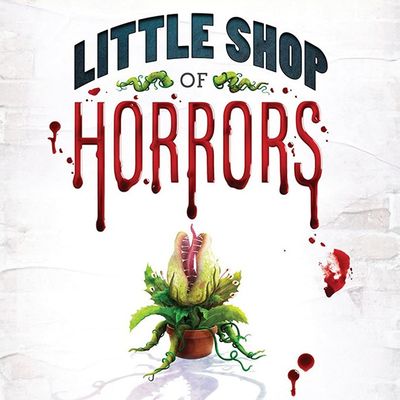
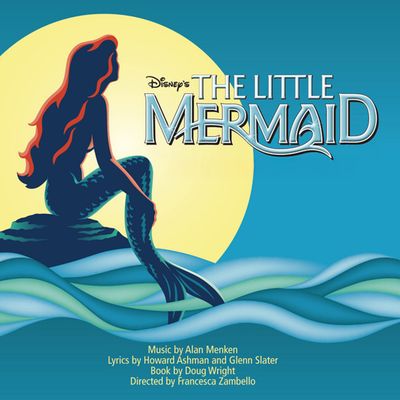
This Week: Celebrating The Triton Gallery, your one stop shop for posters, and the brilliant Disney + documentary about lyricist Howard Ashman (The Little Mermaid, Little Shop of Horrors, Beauty and The Beast)
Every week director Robert W Schneider and actor Kevin David Thomas pull back the curtain on neglected, forgotten, and under appreciated musicals, as well as bizarre performances, endearing television appearances, and all things show business.
Become a sponsor of Behind The Curtain and get early access to interviews, private playlists, and advance knowledge of future guests so you can ask the legends your own questions. Go to: http://bit.ly/2i7nWC4
Transcript
This transcript was automatically generated and might contain errors.
[0:13] ♪ Musical number: "My Favorite Things" ♪
[0:17] Robert W Schneider: Happy throwback.
[0:22] Kevin David Thomas: It's fabulous Friday now.
[0:23] Robert W Schneider: Oh, it's fabulous Friday today because we're busy this week.
[0:27] Kevin David Thomas: We were busy.
[0:29] Robert W Schneider: Well, this is actually, folks, first of all, hope you're doing well. This is really exciting. Kevin, what have you been doing this past week?
[0:36] Kevin David Thomas: Well, yeah, for the last week and last couple months, actually, um, where Rob and I both uh teach uh at the New York Film Academy, they have the professional conservatory musical theater. Um, and we uh boy, a couple months ago, uh Christy Cates, head of the program, and I were talking, and we were figuring out what show we were gonna do for the fall. And uh, you know uh knowing we were in the middle of like pandemic lockdown over the summer, and so the options were very, very few. MTI and a couple other licensing agents put out a couple of shows that they said, you know, are they reduced, these are really good for Zoom. And and the idea of just of doing like Shrek over Zoom just didn't really uh appeal uh to anybody.
Uh and then when we uh found a director to work with uh Travis Chrysler, um, and we sort of pitched him what the idea is, he's like, let's do an original song cycle, let's do something, and let's hire uh a bunch of uh writers from musical theater, up and coming writers. Um, and the idea was to sort of make it sort of like working the musical, if you know that, where it's a bunch of writers got together, Craig Carnelia, Steven Schwartz, and then over the years, Lynn Manwell added some songs. Um fantastic show. Milkane hard. Okay, sorry. Thank you, Carol Lee. Uh so uh we Rob and I did working actually uh at 54 Below. Um uh a concert of it. So this is very much in that similar vein, and this is Travis's idea that we're gonna pitch our show is to meaning called not working.
Uh and a play on words meaning like the system isn't working, uh, what's not working in your life, etc., etc. Um politics, whatever. Um pandemic. Uh and so the school was wonderful and put some money together and commissioned uh about 14 songs um from a very diverse um of just here's some of the great names, and these are just wonderful songwriters that I think are just so special. Um songs that you're you're gonna hear from um are Jariah Kwame, Alex Sage Owen, uh Oyan, uh Andre Katrini, uh great Danny Lincoln, um, who's a teacher with us, uh Preston Allen, Douglas Lyons, Timothy Wang, uh Janet No, Natalie Tannenbaum, Emily Gardner Hall, uh tons of other people that are just really great, great songwriters.
Um, and uh probably really uh we're excited to write a song about these things that are going on. We very much aired on the comedic side because I think we've had enough of of the seriousness for a while. I mean, there's definitely a couple nods in the show, but there's definitely more humor. So, like the humor of uh yeah, just those it's just really fun. And so we are gonna be performing socially distance outdoors at the East River Amphitheater. I never knew about um way on the east side. It's where if the you look at a map of Manhattan, there's like a little nub on the right hand side. That's where the East River Pavilion is. It's like traveling to another country to get there, honestly. It's called the East River Amphitheater.
Ampitheater, not Pavilion, I keep saying Pavilion. The East River Amphitheater. Thank you very much. Uh and it's yeah, and it's this beautiful space that actually Joe Papp did plays there. He did some Greek and Shakespeare, I believe, uh year decades ago. Um and now it's very much um I don't want to say it's run down, but I uh there's a there's a graffiti on that says save the amphitheater, because I guess there's uh it could be bulldozed soon. Um but it's it's unfortunate because when you and I'm excited for you to come on Sunday to see Rob, but it's this beautiful space that you think, my goodness, this is an untouched, this is a gem that should be doing theater. This is a a great place to have art, uh, and it's too bad that we can't. Um but it is great for us that we are able to get a permit from the city uh with the very strict regulations, of course, with face masks, shields and all that, where everyone's always eight feet apart.
Um, but it but the space is so big that we're able to have an audience uh that are all distant in the in the in the uh in the the outdoor space, um, and we'll have a performance at uh 10 a.m. and 1 p.m. Because we have to be out of there by four o'clock because that's when the park closes. Uh and so if you are not doing anything, check us out. It's called not working. You can look up uh New York Film Academy. There's a press release. Uh, and uh yeah, it's uh on Sunday. But we are super excited, and I gotta tell you, it's really great to see the students. They were able to collaborate on Zoom with these composers and artists, and you know, and I think more than anything, everyone was just very happy, myself included, to feel artistic for the first time in a very, very long while, and to be working on something um that is very fruitful and makes you feel good that you're contributing something.
And I it's really nice to be a part of that. So um whether or not it rains or whether or not we get to have this, but we're gonna film it so that it can then be edited and then every the world can watch it in December. How are you doing, my friend? Are you well?
[5:01] Robert W Schneider: I am doing really great, and I I think you saw this. I posted it on my Instagram very late last night. I got a Robert Goulet in South Pacific poster.
[5:13] Kevin David Thomas: It's real, right?
[5:15] Robert W Schneider: It is real, and not only is it real, um, I when I posted on Facebook, people have been responding. Somebody was in that production. It's a painting. It's uh they it's not a photo of Robert Goulet. They have painted Robert Goulet in front of the South Pacific Islands. And I will post it on our on our on our social media as well, which actually leads me to my favorite thing for today.
[5:37] Kevin David Thomas: Let's go.
[5:38] Robert W Schneider: If I if I may.
[5:39] Kevin David Thomas: You may.
[5:40] Robert W Schneider: So I bought this poster, and it got me thinking about uh how much I love artwork. And I recently made a pretty substantial purchase because I'm redecorating the walls in my living room. And I bought some Broadway posters. And I realized we have never celebrated one of the great institutions in New York City. And it really is it's a global thing because now it's online. And folks, today we're gonna celebrate the Triton Gallery. The Triton Gallery. If you're unfamiliar with the Triton Gallery, I encourage you to go to Broadwayposters.com. Once again, that's Broadwayposters.com. Triton Gallery, folks, it's been around since 1965, and it hosts the largest collection of window cards and posters in the world.
And I'm sure if you're listening to this podcast, I am sure you have a window card somewhere in your home. And you know, and there were so many wonderful books on the art of the poster. You can read uh Fravor's book. Uh Fravor was a previous guest of ours. You can read James McMullen's work, who's a personal favorite of mine. He does all the Lincoln Center posters. Um they're beautiful. Some people collect stamps because of the artwork, and some people collect Broadway posters because of the artwork. Um and the Triton Gallery h hosts and holds the largest collection. They have over 5,000 posters available to them. And one of the cool things that they've done is they've photographed every single poster.
So if for some reason you're looking for, you know, I'm looking for a God's favorite, the Neil Simon play that ran four performances starring Vincent Gardini and Charles Nelson Riley. Um, you can call them and be like, do you have that? And they'll be like, yeah, we have it on file. And they can print up the photo and they can put it on a 14 by 22, which is the standard of a uh Broadway window card and sell it to you. Um the the company was founded by a guy named Roger Puckett, who was an actor. He had one Broadway credit in one of your favorite shows, Kevin David Thomas. Goldilocks.
[7:33] Kevin David Thomas: No, Keene.
[7:35] Robert W Schneider: Keene.
[7:36] Kevin David Thomas: Oh, yes, of course. Keen.
[7:37] Robert W Schneider: Um, and he ran Trident Gallery for a really, really long time, and then he sold it to Nicholas Van uh Hoogstratden. Nicholas, I hope I pronounced your name correctly. You're such a kind man, Nicholas Van Hoog Hoogstradden? Hoogstratden? Hoogstratden. Sorry, Nicholas, you can correct us. Um so Roger bought it um in 1965. He bought a frame company called Goldbergs, which had been around in New York since like 1875. And even though it started off as a framing company, he was putting his Broadway window cards in the window, and people kept stopping by going, Hey, where do I buy the poster? And he's like, I make frames. And they're like, Not anymore, you don't. So pretty pretty soon he became a um the the only place that was really distributing and selling Broadway theatrical posters.
And for all of us who remember, it was originally located across from the Al Hirschfeld Theater on 45th Street between 8 and 9th, or as it used to be called, folks, the Martin Beck. Across from the Martin Beck. Always. What do you call it? The Martin Beck or the Hirschfeld?
[8:32] Kevin David Thomas: It's the Martin Beck to me, because that's when I came to New York, it was it was that was what it was. I mean, it was and I think when did it change to Hirschfeld? Do you remember?
[8:42] Robert W Schneider: I feel like the early 2000s.
[8:44] Kevin David Thomas: Was it oh is it way back then? Okay.
[8:46] Robert W Schneider: I feel I feel like it was. I feel like the wedding singer was at the Hirschfeld. I've I feel like I think so. I guess I could look this up while we're talking, but yeah. I think yeah, no, I it's the Mark and Barton Beck to me. It always, it always has been. Uh but yes, yeah, keep going.
[9:00] Robert W Schneider: But it was across the street, and then it moved, of course, to 9th Avenue in 2006. And now, thank God it's located on Eighth Avenue. Um, it's a really, really fantastic place. Uh, you can you can go in first of all, you can go online, obviously, because of COVID, and they have photos of all the posters that they have available, as well as uh this really cool thing where you can roll over different colored frames and you can see which frame color would look best with your poster, which is pretty amazing. Um, according to an interview with Roger, that uh the what really helped put him over the edge in terms of making this um a store that was only selling theatrical posters and window cards was um in 1971, Hal Prince allowed him to sell and distribute Folly's posters, that great David Bird poster.
And because Hal Prince said, Yeah, go ahead, you can sell and distribute these, it's good marketing. A lot of other Broadway producers fell in line as well and was like, absolutely, please take these posters and start selling them because that's gonna really, really help us in terms of our you know, of our marketing. Um he said this is so interesting in an interview. Um, they asked Nicholas, they're like, What's your favorite window card? Like, what's your favorite design? What do you think he said? Another favorite, I think, of yours. It's a Jerry Herman. It's a Jerry Herman that's a favorite of yours.
[10:14] Kevin David Thomas: Perhaps Mac and Mabel.
[10:16] Robert W Schneider: A little earlier, it was Dear World. He says the poster for Dear World is the most stunning poster he's ever seen. And it's true. If you haven't seen the Dear World poster, folks, take a look at it. Um, most of the posters there are if you're if you're looking for a recent poster, like a show within the past couple of years, they sell it for about 25 bucks. Amazing. If you're looking for something older than that, they usually sell it for $77 dollars. And the original, it's an original, or is this the printed kind that's print printed? Either or it can be either or. Sometimes if they have an original one in stock, it'll be $77. If they have to do a photo reprint of one that they don't have in stock anymore, it's still $77. But it looks just like the actual. I mean, you can't tell you you literally cannot tell the difference.
[10:59] Kevin David Thomas: Right. But if I was getting like an original poster of like, I'm trying to think of something very old ish, but like an original Hello Dolly poster, you would think that would be worth more money than one that's been printed on like cardboard and sent to me. Do you know what I mean? Like, yeah, I'm sure that some shows have different ranges. The ones that I found mostly all sort of fit in like the $77 right. Yeah, they've always been that range. Now, this might have changed, but this was in 2005. So it's what, oh my God, 15 years ago. Can you imagine 2005 was 15 years ago? Oh my God. They asked Roger what was the most expensive poster he ever sold? Um, and he said the one it was an original and it was not a very successful show, so they did not make a lot of copies of it originally. They didn't like do a mass production of it. What show sold for $2,500? What show poster? It's a music.
[11:47] Robert W Schneider: $2,500.
[11:49] Kevin David Thomas: It has to be a fan that was like it's like a cult favorite of some kind. It has to be a cult where it's a great artwork. It's you know, like it's good. It's carry or it's it's a cult favorite, it is good artwork.
[12:01] Robert W Schneider: It's a uh cult favorite written by somebody that is a giant in the musical theater industry. We're talking, oh, in the musical theater industry. Oh, I mean, and in in theater, I mean, yeah, he does everything. He's sort of our god. Um was Steven Saund.
[12:15] Kevin David Thomas: It is, it's a Stephen Saundtime show.
[12:17] Robert W Schneider: Merrill roll along.
[12:18] Kevin David Thomas: No, do I hear a waltz?
[12:20] Robert W Schneider: The original Do I Hear a Waltz sold for $2,500 in 2005. I'm curious, uh, Trident Gallery. Um, is there something that has sold for more than that since 2005? That's I'm really curious to find out. So, folks, I encourage you. You know, this is a great time to keep small businesses alive.
[12:38] Robert W Schneider: Go on over to Broadwayposters.com. Take a look at all the posters they have there. They have photographs of everything. You can also get lost for hours looking at all the different artwork that's been out there over time. And once again, if you're looking for something and they don't have it, email them. They probably do have it, it's just not on the website. So my mine this week is Triton Gallery, Broadway Posters.com. Go take a look at them. Kevin, what's your I'm so curious, what's your favorite poster?
[13:04] Kevin David Thomas: Oh, uh oh, my favorite poster. Um, boy. Or an artwork that you like. Yeah, um, let me really think for a second. Uh there's just been so many. I I'm not as uh I'm I'm not I'm I'm I've not been as attracted to them as I know you have been. I know you've bought books on them before and everything, but I'm trying to think um what really I enjoy. Um I'm thinking of like my LP covers that also made its way to like I will always love the Lansbury gypsy with her in that sort of yes, you know, that pose. I love that kind of uh I like the simpler, more less uh, you know, like like simpler covers, you know. I mean, I'm not simpler. Um, I like it, I like a busy cover. I like a mosaic, a mosaic type. I like them, you know, I like the Merrily poster.
I think that show perfectly encapsulates the one with the sign and uh like the three of them pointing on the rooftop. Yes, yes, yes, yes. I didn't I I absolutely love that one. Um yeah, I don't have to get back to you. I really want to look at some of what I have. Because this it really is. When you think about it. So many of the posters are done before the show opens, yes.
[14:09] Robert W Schneider: Right. So they have to capture the flavor obviously talked about this a lot in our interview years ago, but they have to capture the spirit of the show before audiences, before critics, before all of that stuff, you know. And it's very interesting to have that's the that's how we like when I see certain posters, like Ragtime or you know, Parade, even that 1998 poster, I it's like I it informs me about the show. Uh and so that's that's quite a you know, that's an that's huge impact that they have, you know.
[14:34] Kevin David Thomas: Exactly. You know what posters I don't like, and it was a pretty big trend, I think, in the 70s and 80s, it was where they would put somebody's photograph on the head shop, and it was like, you know, Colleen Dewhurst in blah blah blah. And I'm like, give me give me a give me a graphic image. That's fine at the Kenley Players. You can do it at the Kenley Players, but not on the Broadway.
[14:54] Robert W Schneider: Absolutely, not on the Broadway.
[14:56] Kevin David Thomas: Broadway. Absolutely. You can totally do it over there, but just uh don't do it here. So, folks, go to Broadway Posters.com, Triton Gallery, go support local business. I think that is such a good favorite thing, Rob. I'm I'm so happy. I can't believe we've never really discussed it, even though it's been ever present in all of our lives. I I you you said Triton Gallery, and I I instantly remembered going 15 probably before 2005, probably 2002, 2003, going to the gallery, going there and flipping through everything and being just at the time, it still is, but I was like, whoa, this is so expensive, I can't afford these. Um, but that I was just so blown away. And it's fascinating that really Triton Gallery, there's other places that will frame and do all of that, but to be known as the source for Broadway show posters and artwork, I it's just it's kind of amazing that they sort of monopolize that uh corner of the industry.
[15:43] Robert W Schneider: I mean, albeit a very small corner of the industry, but um still it it's fascinating to me that they've done so well over the years, you know.
[15:49] Kevin David Thomas: He's still here.
[15:50] Robert W Schneider: I agree. And if you come to New York, I mean, obviously with COVID, they have different hours, but if you are in the city, hit them up. Maybe they'll let you come into the store and take a look. I what which was what I did yesterday. I went to go pick up my posters from them, and it was just so nice. Yeah, it was Nick was so great and was so nice to go in. Um, really, really wonderful. Kevin, what is your favorite thing?
[16:09] Kevin David Thomas: Well, uh mine is a is uh a documentary, actually. Um it's uh maybe you've seen it, maybe not. Um it's a doc. It's one of those uh it's a favorite thing where it's unfortunately if you have to be a member or subscriber of a certain service in order to access it or know someone who give them your password. Um so my and and I would like to thank my friend and listener, Lori Elias, for for getting on my case to listen to watch this because Lori, I know she's like every week, she's like, Did you watch it yet? Did you watch it yet? Did you watch it yet? Um Lori writes for Disney magazine or one of the Disney um periodicals, forgive me, Lori for not knowing. Um, and she's like knows everything about Disney.
She's in she's a teacher in uh the Cleveland area and is a wonderful, wonderful human being um and a great educator. But um, this is the documentary about Howard Ashman called Howard. It's on Disney Plus. Um, it is uh it is so special. Uh if last week's uh favorite things was us about sort of lightening the mood. This is us being a little bit more perhaps sentimental this week.
[17:06] Kevin David Thomas: Um and this Howard Ashman documentary is just I was just uh riveted, moved, touched, um inspired, couldn't wait to create and be artistic again, uh or continue. Um so for those of you might not know, uh, on Disney Plus, uh Disney produced uh and released uh a couple months ago this uh documentary about the great lyrics of Howard Ashman who died at the very very young age of 40, which is like almost chokes in my throat when I say it because I'm 40. Uh, and it was 1991 when he passed away. Uh, and he was very much at like nearing I I wouldn't even say he was at the apex. I mean, he was like nearing the possibilities of what he could have done and continue to do with his career. Thankfully, we have so much of his body of work to enjoy and respect.
Um the a documentary goes through his in basically his life. There was plenty of talking heads. Um people like the head of Disney or a Disney, you know, animation, Jeffrey Katzenberg. Uh of course Alan Menken uh prom is prominent in this film, and I'll talk about more in in a minute about him. But it really goes through uh Howard Ashman's life. Of course, you know him as the lyricist for such Disney films as Little Mermaid and Aladdin and Sum of Beauty and the Beast, but he also wrote Little Shop of Horrors, of course, and uh Smile, which is like for 20 years is the show that was not to be named because it was such a a huge failure that how uh go ahead, go.
[18:19] Kevin David Thomas: Disneyland. I want to go to Yeah, The Voice of Ariel, Jody Benson. That was a very good thing. Smile also has really great key art and window posters. I'm just putting it in.
[18:28] Robert W Schneider: Yes, it does. Fantastic key art.
[18:30] Kevin David Thomas: Uh, a really, really good place to work.
[18:32] Robert W Schneider: Uh no, really good tie-in.
[18:34] Kevin David Thomas: Um, and it was a big, big, big, big, big, big failure in the 80s. And famously, Alan Man, I mean uh Howard uh uh uh Marvin Hamlish like would not talk about you cannot. That was not you just did not go there. Uh and it was not a good experience. Um uh they talk about Howard's upbringing, uh, you know, and and how he started the WEPA theater, which I did not know any of that history. I had no idea that he he was so off off Broadway kind of guy.
[18:59] Kevin David Thomas: And um, and and they very much go into his personal life, of course, and his his previous lover who died of complications, and um, and then to go through the AIDS crisis and all of that. And it's just it's just uh a beautifully heartwarming, touching, sad but yet inspiring film, um uh you know, uh uh about this great lyricist. And now uh Alan Menken, I'm watching this film and uh watching this documentary, and uh the opening credit, they they're very smart, it's very laid out very well with the intro. You actually don't see Howard Ashman as a talking head until like good 15-10 minutes into it, right? You get to he feel the build-up of it and how special he is. And but this score plays, and I'm like watching it like weeping, because the moon the music is I'm so moved by the score that was written to accompany the you know what they're saying and everything.
And then I look it up, and of course the score is by Alan Menken. And then I did a little more research and went to a couple places, read some things, and turns out that when Alan Menken saw the the rough copy of the film with with Sans music, he was so touched and was so into it that he was like, I I have to score this. I have to do this film. And the powers that be were like, We can't we can't afford it, man. You were like, You're Alan Menken, we cannot, this is not that type of film. And he was like, I don't care, I'm doing it. I will I will score this film. This is my present to Howard Ashman and my tribute to him. And Alan Mencken says it's the best music that he's ever written. It's the most heartfelt, he wrote it over the holidays, like two years ago.
Uh, and he I I and and I'm I'm I have goosebumps just thinking, you know, talking about it, because it really was you could tell that someone who you know, we talked to all these these legends, and you and they there is a twinkle in their eye when they talk about their their beginnings, sometimes they're very humble beginnings. And someone like Alan Mencken, who definitely had humble beginnings as they were in the BMI workshop and they were off off Broadway and they were trying to make their name and get somewhere and eventually become commercial, which he did, and now Alan Menken's, you know, he's doing okay. Um, but I I I love this idea that he sort of comes back to his roots and and has written something so moving as a dedication to his friend and colleague.
[21:03] Kevin David Thomas: Uh, and it really uh lifts the film up even more. Um, and so uh yeah, I I think that it's really really important that every every fan and every student of theater watch this because there's so many people who create that sometimes their their names may be unknown to the greater public. I mean, uh our friends, obviously our pod knows Howard Ashman. But I think it's really wonderful to see to show the world who this great uh this great brain was, and you see him working with singers, and you can see that he sometimes was a little difficult too. But he also when he didn't have time on his hands, he probably felt like um much like Gordon and a new brain, he felt like I have to get my art, I have to do as much as I can before this disease takes it away from me.
Uh and you really get a sense of that towards the end of the film that he was um time was ticking out and he was getting as much done as possible. And it's it's very moving, it's very um inspiring to say like make the most, you know, as cliche as it may be, but the whole Carpe Diem thing really, you cannot only say that so many different ways, and I think this is another great way of sharing that.
[22:06] Kevin David Thomas: So, Howard Ashman, the Howard is what it's called. If you have a friend or know someone with a Disney Plus, why don't you go schedule a date and uh check it out because it is definitely worth it. And you will be smiling, maybe a little tear in your eye, but all celebrating and uplifting this wonderful art form that we love so much.
[22:23] Robert W Schneider: I am very excited to watch this. It's been on my list for a while, but I know it's gonna make me cry, so I've been trying to avoid it.
[22:29] Kevin David Thomas: Um so now I'll just I'll just dig on in and I'll I'll watch it.
[22:33] Robert W Schneider: They're happy tears, you know. They're they're moving tears. They're like the kind that we have, and also you get to see things like you know, Jerry Orbach and Angela Lansbury. That that those clips were kind of going through uh the internet, but those clips of them in the studio singing Beauty and the Beast is fun. There's this tons of archival footage, tons of photographs, um uh great information, a lot of things that I never knew. And um, yeah, it's I just had a I was really, really thrilled to watch it.
[22:57] Kevin David Thomas: I am very excited to jump into it. I will be jumping into it. I thank you for that.
[23:02] Robert W Schneider: Um, and after you watch Howard, everybody go over to Trident Gallery and go Broadwayposters.com. Buy some posters, go support them.
[23:09] Kevin David Thomas: Yes, for local business.
[23:11] Robert W Schneider: I will see you, Kevin, on Sunday. And I think, would you believe? I think this is the first time I'm gonna see you in person since April.
[23:20] Kevin David Thomas: That's crazy.
[23:23] Robert W Schneider: You've changed.
[23:25] Kevin David Thomas: I did get a haircut, so yeah, yeah, me too.
[23:29] Robert W Schneider: You do look good.
[23:29] Kevin David Thomas: You look fresh as a daisy.
[23:30] Robert W Schneider: I got feathered tips.
[23:32] Kevin David Thomas: All right, so I will everyone. We will talk to you soon. Have a wonderful week. Please stay safe, please stay healthy. Support any local art that you possibly can during this time. Please see you next week.
[23:45] Kevin David Thomas: Bye.
[23:45] Robert W Schneider: Have a great weekend.
[23:46] Kevin David Thomas: Bye bye.
[23:47] ♪ Musical number: "My Favorite Things" — performed by Unknown performer ♪
© Broadway Podcast Network, All Rights Reserved