

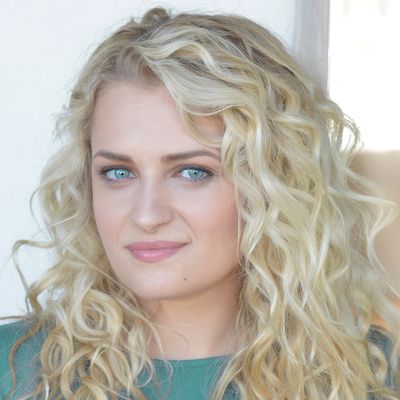
Ali Stroker joins the pod squad for an honest, inspiring conversation about breaking barriers on Broadway and beyond. From her historic win for Oklahoma! to navigating an industry not always built for inclusivity, Ali shares how she turned challenges into opportunities... Read More
From the show: Beltline to Broadway
Guests
Featured Shows

About
Ali Stroker joins the pod squad for an honest, inspiring conversation about breaking barriers on Broadway and beyond. From her historic win for Oklahoma! to navigating an industry not always built for inclusivity, Ali shares how she turned challenges into opportunities.
Ali Stroker is a Tony Award-winning actress, singer, and advocate who has made history as a trailblazer for performers with disabilities. In 2015, she broke new ground as the first actor in a wheelchair to appear on Broadway, starring in Deaf West Theatre’s acclaimed revival of Spring Awakening. er portrayal of Ado Annie in the 2019 Broadway revival of Oklahoma! earned her a Tony Award for Best Featured Actress in a Musical, marking another historic first. Beyond the stage, she has appeared in television series such as Only Murders in the Building, Ozark, and Echoes. Committed to advocacy, Stroker co-founded Be More Heroic, an anti-bullying campaign, and has led theater workshops for women and children affected by HIV/AIDS in South Africa. Her motto, "Turning Your Limitations Into Your Opportunities," reflects her dedication to empowering others through the arts.
Transcript
This transcript was automatically generated and might contain errors.
[0:40] Lauren Van Hemert: This is the Beltline to Broadway podcast. I'm Lauren Van Hemert, your host. And on this episode, I'm chatting with Ali Stroker. Ali made history as the first wheelchair user to appear on Broadway. She earned a Tony Award for her unforgettable performance as Ado Annie in the revival of Oklahoma. She also appeared in the Deaf West production of Spring Awakening and Glee. Here's our conversation.
[1:12] Ali Stroker: I was hurt when I was two, and I don't have any memory of the accident, and I don't really have any memories of before the accident. And therefore I can't give up. And so my dad is a coach. So we were brought up with all of this like, you can do anything, nothing is impossible. It's not the dog and the fight, it's the fight and the dog, you know, characters, the ability to persist against constant opposition, you know, the sports quotes, like that was our religion. And then my mom from I remember pretty young age, encouraged me to speak for myself. So for example, she would, if I couldn't go to physical therapy, she would have me call and cancel. And I remember at a young age thinking, like, why do I have to do this?
But then as I got older, it was so easy. And I was so grateful that like I knew how to speak up because she knew and she had this hindsight, or maybe it was just out of like, I want you to know what this is like. I don't want to protect you from it. So she just knew that I was gonna have to speak up for myself and advocate for myself my whole life. And so we started practicing early, and I saw her battle doctors when she knew something wasn't right. Or she would, you know, when I got x-rays, she would have them cover me with the protective shields because she wanted to be sure that I stayed healthy and that if I wanted to have children one day, that the radiation wasn't negatively affecting me.
So she had this maybe it's a mother's intuition and hindsight that like I wanna, I wanna get you in here. I don't want to protect you from this. And my dad was also really into this concept of like being different is so much better than being like everybody else. And that if there's a problem or there's a challenge, you can get creative and make it up. You can make up your own rules, that you can make up how to do something. And it again doesn't have to be like everybody else. We don't want to be like everybody else. Like being different is cool. And he'd always remind me, he's like, the most popular kid in school oftentimes is not the person who everybody likes the most. And so the reality is the most popular kid in school is the kid that everybody respects the most. And he would just like remember to rewire those things for us because he worked in a middle school and he saw the dynamics of kids every day, all day. And so those things really stuck with me.
[4:55] Ali Stroker: But we do, we have a huge impact. And the other piece that's coming to mind right now that my dad would always say is that if you want your kid to do something, don't tell them to do it, you do it. So if you want your kid to do well at school, you do well at work and talk about how good that feels. If you want your kid to write a book, you write a book first. If you want your kid to shake hands with people and look them in the eye, you do that first. Model, model, model. And my mom was always like the reality is every day you're not gonna feel good, but you put your best foot forward, which means you get up, you make your bed, and you get dressed, you brush your hair, you put on your shoes, and get after it. Because the reality is that life is going to get tough, no matter who you are, whether you have a disability or not. And here are some tools of things you can just do and make them habits so that every day you can show up.
[6:05] Ali Stroker: I love that so much. And I can say for my daughter, I was advocating for her from a young age, but because she saw that, of course, I see in her this empowerment to advocate to ask for help. She's not afraid. And you know, there were days that it was hard to get up and fight and advocate and be the mom she needed me to be, but now seeing how empowered she is to do that, even on her worst days, it's just magical for me. So I love what you said about your mom. And so I'm guessing you're instilling these same values in your son.
[6:53] Ali Stroker: Absolutely. It's so fun now to get to do it, you know, and be the leader and to model and also help him move in the world the way he does, right? Because he has a mom who's in a chair, and so I can't do everything that he needs all the time but what is so cool is I have seen him so physically independent and how empowered he feels in that so even when he's doing something and it might take a little bit longer but I just, you know, I just say I'm right here bud and it's funny you'll see other parents come over and be like do you guys need help are you okay? And he before I can say no thank you he's like no I do it. I do it and it's this amazing thing that he's seen me do that like when somebody comes over to help sometimes I need help yes and I love that people want to help me but also I'm like I'm good thank you so much but I got this and I see that in him. I see that in him and I think it will translate to the rest of his life that his physical independence will be something that he really takes a lot of pride in.
[8:12] Lauren Van Hemert: So at what age did you discover theater and singing and truly find your voice?
[8:21] Ali Stroker: Yeah, seriously, I was seven years old and my family had bought a house on the Jersey shore and we had next door neighbors and their oldest daughter had come home from Stage Door Manor which is a performing arts camp in the Brookshires and she came back to the beach and decided that she wanted to direct a production of Annie and we were her new neighbors, and she cast me as Annie. And I mean, I was afraid to sing happy birthday in front of anybody. So I don't know what she saw, but she cast me as the lead, and it changed my entire life. So we rehearsed all summer long, and I loved it because she was so dedicated and intense about it. Like we're gonna rehearse every day. And I loved that. Like that was like that's my life, right?
Like every day you commit, right? And then she, and then we put on the show at the end of the summer. I share this story all the time, but I remember coming out on stage and singing for the first time, and everyone was staring at me. But it was the first time in my life that I felt like people were staring at me because I was doing something, not because of who I was. And they were staring at me because I was the star and I was hooked. Like I knew I wanted to be on stage for the rest of my life because I could take this thing that felt painful when I was stared at in public and felt like it was totally out of my control, and I could have the power. So I like kind of flipped it on its head, and singing for me is like where I am the most free.
So, you know, I'm in a wheelchair and I am paralyzed, and living in a paralyzed body, sometimes you feel stuck, and sometimes you feel like you can't physically express yourself or move the way that you want to. And that is difficult. And when I sing, there are no limits, you know. I always say, like, there are no stairs, there are no wood chips, there are no inaccessible entrances. It's just like where I can fully express myself. It was just so clear early on that I wanted to be on stage and I wanted to do musical theater, and it also just brought me so much joy. And you know, people always encouraged me like, follow your joy, follow your excitement. What are you excited about? And it is a really difficult industry, you know, and it's a really difficult career, but there's nothing else that I can do because I love it.
But I have found other ways to do it. For example, like I do a lot of speaking gigs and I do a lot of concerts, and it's so fun because I get to be the director, right? And I get to like make the show that I want to do that night. And with speaking gigs, like who says that I can't sing in the speaking gigs, and it's just so fun because this muscle of being creative and making up your own rules comes up again, and it's what I was taught to do my whole life. I have learned how to be myself on stage, and that's a really empowering feeling because for so long I was uncomfortable in my skin, and now I have this ability to get on stage and have an audience in the palm of my hand for an hour for two hours and be myself.
And if that's not the most amazing feeling and the ultimate validation, like I don't know what is, or at least that was really worked for me. And I think it's true, like having a disability, like stuff comes up all the time. So you do need to find ways to fill yourself and make yourself feel confident and good. And I'm also an extrovert, so I get energy from being with people. So being on stage is like the ultimate recharge.
[12:25] Lauren Van Hemert: So was being an author on your bingo card?
[12:31] Ali Stroker: It's so funny that you ask this because I think in first grade I wanted to be an illustrator. And this was before I was introduced to theater. So I loved to draw and I always loved the arts. I loved crafts. I loved music. But I didn't have a ton of confidence around my reading and I think back to Little Ali and like why and a big part of it is that it is a solo activity. You're not with people. And after I got hurt I was just surrounded by people all the time. So I didn't really build this muscle of being comfortable by alone. And I also didn't really ever find books that I felt like I saw myself in. And I think that's a big deal for kids. Like to read a book and be like yeah that's what I'm going through and I'm not alone which is one of the biggest motivations for me with the books is that I wanted to create representation in books for kids with disabilities, kids that feel different, kids that have illnesses like anybody who feels alone in their health I want them to know that like other people have been there or maybe something like it and that you can do it. That you can get through it. And so the other piece of it is that my books I never like the disability to be the main character trait.
[14:04] Ali Stroker: They have a disability, but they have really strong storylines of what they are doing and what they want. Because I think it's, and this isn't just for kids, having a disability can feel like a full-time identity. It can feel like it takes over your life. And for a lot of people, it does. And it's super hard. But I feel like one of the main reasons why I have had success and I've had sort of a balanced life is because my mom, again, she was like, if there's one thing I can give you, it's helping you find what you love. And that has been a huge, huge part of I think my happiness too. So it's been so fun to write the books that I needed as a kid. I always told my daughter when she was growing up, everybody has a little something something.
Some people's something is a little bit more visible, some people's are not, but everybody's got something, something. It's so true. Everyone has something, and it's so important to remember that too, to have empathy and compassion for people because you just never know what they're going through.
[15:22] Lauren Van Hemert: You were the first wheelchair user on Broadway. Is the industry getting better when it comes to representation on stage and inclusivity, especially for people with disabilities? Because I feel like we have the conversation about black and brown bodies and black next bodies and LGBTQ. But when that whole conversation was happening during the pandemic, I often felt that people living with disabilities were kind of being left out. Is the industry getting better?
[16:00] Ali Stroker: Yeah. I think that the industry is definitely getting better and it has improved. But we have a lot of work to do. And I think the disabled community is always really conscious of the fact that when diversity is brought up, oftentimes disability is not included. And I've thought a lot about this. And I think it's because disability is so loaded for so many people. We're still dealing with inaccessible rehearsal studios, people that have never worked with anyone with a disability before. And I think it's scary because we're in a culture now where don't make a mistake or you'll get canceled, or you will be, you know, shamed and shunned. And it's one of the things I feel most strongly about when it comes to inclusivity doesn't mean getting it perfect and like creating opportunities or just hiring people with disabilities doesn't mean getting it perfect, it means committing to the conversations, committing to the education, and committing to discomfort that it takes to change something, and that might be an office culture, it might be a theater on Broadway, but it has to continue not just to happen, but to be talked about and to be celebrated and encouraged and modeled. So I think that the theater has gotten better, but I think that we have a long way to go.
[18:33] Lauren Van Hemert: Right. Like that is not accessible. How do we make it accessible and beautiful and creative? And how do we use disability on stage to make something better?
[18:50] Ali Stroker: And I really believe that's what disability can do in a dramatic setting. And they want to understand, and there's something different that they are trying to get, right? We can use that in the theater, right? Because when I get on stage, I'm giving everyone permission to look at me. Look at me, look at my chair, look at my body. I am different, and I'm inviting you into my world. And I'm gonna move the way that I move in my life. I'm gonna do things that I do in my own life, and I'm giving you permission to be a part of it. This is so important. And not just on stage, but like on television, in the movies, like to create opportunities for people with disabilities where it's not about disabilities. We have to learn how to integrate in that way. So it's just it's exciting, and the biggest piece of it is just not giving up. At least that's how I see it. Because as an actor, it's hard. You get rejection all the time, even with a Tony Award.
[20:14] Lauren Van Hemert: I love that you said that because I think that empowers hopefully theaters and producers to begin those conversations and to create this culture of inclusivity. The conversations have to be had because this blanket ADA I'm so grateful for it and for accessibility and that there is sort of this roadmap, but every single person with a disability wants different accommodations. And that like it's like, oh, that's so scary. How do we accommodate for everyone? But it's just conversations. And a lot of theaters have carpenters, they have people there who build things, and it's like great, let's work together and like do these two things, just these two things that will make my experience at this job better and create more independence for me, right?
Because usually one of the solutions is we'll have someone help you, which is really great, right? Like that's great. But when I was doing Oklahoma and I needed someone to meet me at the entrance every single day, and it was great. But there is a moment of like, I wish I had my freedom here to like come and go and not have to reach out to somebody or if I was having a tough day, or I was on the phone, you know, you're always on, right? You're always interacting with people, and I feel a great responsibility to always be kind and engage with people, and I want to do that, but also I'm human, and so there are times that I just want some space or some independence. So all of those little things like matter.
[22:04] Ali Stroker: And I think for people with disabilities, it's really important to get good at articulating what you need and why. Not because you have to explain yourself, but because it will help the person provide this. And it's so little, but it's a big deal because all of those moments of needing someone else adds up, and it creates this how I can articulate it is it creates this like frustration that so many people living with disabilities really understand. It's like this level of frustration where it's like, why can't this be easier for me? And the truth is is that so much of the world is not built for us. We can get creative and collaborate and find ways to make something happen.
[22:55] Lauren Van Hemert: When you sing, you know, we all know musical theater, I feel like that's your go-to. But what can people expect when they come to your concert in Raleigh? And are there other genres that you enjoy singing other than musical theater that we might hear?
[23:14] Ali Stroker: Absolutely. I love singing country music. When I did Oklahoma, I just sort of had the opportunity to do a deep dive. And there will be some Dolly Parton songs, there will be the Chicks. And I'm gonna sing some musical theater, and I love singing pop music, like gospely music. And that's what's so fun about creating your own show. You can put whatever songs you want and folk music. I'm a big Joni Mitchell fan. And then I think one of the coolest parts is that I get to tell my stories, and you know, it's been a really exciting, amazing, and heartbreaking experience of being in this industry, right? I mean, and just really learning that like this is a marathon, this whole journey of trying to work in this industry and find my way and find the right roles and the right people, and I feel so blessed.
And I also feel like there's so much more to come. And you know, I share like what I was doing right after college and my experiences with Glee, and then my experiences on Broadway and with Deaf West and Spring Awakening and Oklahoma and the Tonys and working on TV. And it's just been just have really, really gotten so lucky. And then, you know, some of the really, really hard moments of thinking that something's going one way and it doesn't. And how difficult it is to know that you gotta let it go. And you don't want to, but if you didn't get it, it wasn't meant for you. And it's really hard, especially as you get older in this industry. You want things to go your way because you've put in your time, you've given, you know, your life to this.
It's like, well, why isn't this going my way? And it's like, well, it wasn't meant to go your way. And so it's really it's such a privilege to get to do these shows like I'm gonna do at Theatre Raleigh because you know, I get to share anything I want.
[25:38] Lauren Van Hemert: What advice would you give to seven-year-old Allie performing in Annie?
[25:43] Ali Stroker: I think to stay patient, to not give up, and that you will get everything and more that you want and that you are gonna work for. And that this is such an amazing road, and also that you will one day be really comfortable in your skin, and that you will feel really confident and you will be able to have a family, and you know, the love of your life is out there, and that you will have a relationship and get married and have a home and children. You know, that was something I really, really wanted. And you just don't take it for granted. Or I didn't as a kid. I was like, I don't see this around me that much. So, like, is it possible? But I'm just so lucky. It's it really has worked out perfectly and beautifully.
And I love being a mom. It's like my favorite role ever. It's also the hardest thing I've ever done. Because there's no end of the show, really. You're tired and it's hard to find time for yourself, but it's also the most rewarding and most special kind of journey and love and experience.
[27:09] Lauren Van Hemert: I am so grateful to have had this opportunity to spend time with Ali Stroker. I have been such a fan of her work, and this conversation meant the world to me. Ali will be performing in concert at Theatre Raleigh on Saturday, May 17th. For more information, visit theaterrolly.com. If you like what you've heard on this episode, be sure to subscribe to this podcast, follow us on social media, on Blue Sky, TikTok, Facebook, or Instagram at Beltline to Broadway, or visit us online at www.beltlinetobroadway.org. Until next time, I'll see you at the theater. Beltline to Broadway.
© Broadway Podcast Network, All Rights Reserved