

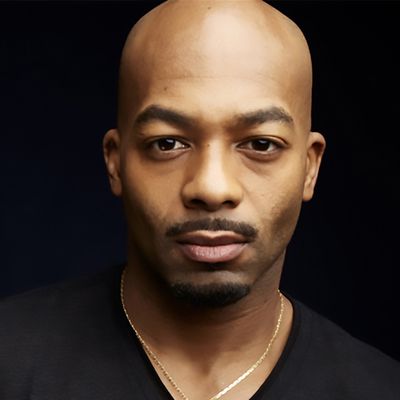
In this thoughtful and heartfelt episode, host Lauren Van Hemert sits down with acclaimed actor, producer, and musician Brandon Victor Dixon to discuss his artistic journey, advocacy, and newly released single, "Maybe." Known for roles in Hamilton and The Color Purple, Dixon opens up about the soulfulness behind his music, the importance of civic engagement, and the power of storytelling in creating social change... Read More
From the show: Beltline to Broadway
Guests
Featured Shows

About
In this thoughtful and heartfelt episode, host Lauren Van Hemert sits down with acclaimed actor, producer, and musician Brandon Victor Dixon to discuss his artistic journey, advocacy, and newly released single, "Maybe." Known for roles in Hamilton and The Color Purple, Dixon opens up about the soulfulness behind his music, the importance of civic engagement, and the power of storytelling in creating social change. The episode serves as both an inspiring dialogue and a wake-up call—reminding listeners that allyship and anti-racism are continuous commitments. Lauren reflects on her own biases, thanking Dixon for challenging her perspective and deepening the conversation.
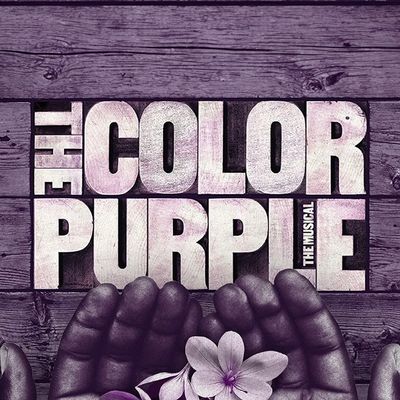
Brandon Victor Dixon is a Tony, Emmy, and Grammy-nominated performer, producer, and activist best known for his unforgettable performances in Broadway hits like Hamilton, The Color Purple, and Shuffle Along. A graduate of Columbia University, Dixon has built a celebrated career defined by versatility and purpose. He originated the role of Harpo in The Color Purple, earned critical acclaim as Aaron Burr in Hamilton, and captivated television audiences as Judas in NBC’s Jesus Christ Superstar Live in Concert. His dynamic talents extend behind the scenes as well—he is a co-founder of WalkRunFly Productions, a company committed to developing socially conscious theater and amplifying diverse voices.
Beyond the spotlight, Dixon is a passionate advocate for equity, civic engagement, and social justice. He’s used his platform to speak out on issues ranging from voting rights to arts accessibility and is widely recognized for his bold 2016 message to then-Vice President Mike Pence during a Hamilton curtain call. Most recently, Dixon released his soul-stirring single “Maybe,” a musical meditation on collective responsibility and hope, inspired in part by James Baldwin. With every performance and project, Dixon continues to challenge, uplift, and inspire audiences through the intersection of art and activism.
Transcript
This transcript was automatically generated and might contain errors.
[0:40] Lauren Van Hemert: This is the Beltline to Broadway podcast.
[0:43] Lauren Van Hemert: I'm Lauren Van Hemert, your host, and on this episode, I'm chatting with Brandon Victor Dixon.
[0:51] Lauren Van Hemert: Dixon is known for his roles in Hamilton and The Color Purple. He is also an award-winning producer and musician who has just released a new single called "Maybe." I have to admit, I was so looking forward to this interview because not only am I a fan of Dixon's work, but also his advocacy and artivism, which truly is why I should not have been surprised when he turned the tables on me. Here's our conversation.
[1:26] Brandon Victor Dixon: So how would you describe your music, your style? I'll use this term, but it ends up being kind of vague and catchall, but kind of a pop soul. You know, that that's probably where I would put my music because I use a blend of rhythm and blues styles and soul styles, and I think, you know, kind of traditional Americana, American songbook storytelling elements in my music. And my music does cover a range, but particularly the songs on this album, both the choices that I made for covers and the original songs that I made for this album are probably in that pop soul vein, I would say.
[2:13] Lauren Van Hemert: Where do you draw that hope and soul from? Where does that come from?
[2:22] Brandon Victor Dixon: I think there's probably an innate connection, I think I have to consciousness, to life, to her, to the planet. And I think that that comes both most certainly from my mother and how she sees the world and how she sees life, and the nature in which she has tried to pour into me and my brothers. Um and I also see it in the fertilizer of my upbringing, you know, the schools I was able to attend, the states in which I grew up and the manner in which they saw, I would say municipal service during that period of time during my growth. And so I just think a lot of the lessons that my parents tried to instill in me were also reflected in the environments that I found around me, and where there was dissonance with that messaging and with that way of living, I did not like it.
I'm fortunate to have enjoyed a lot of benefits in my life and avoided a great many hardships that other people, even in my own family, have maybe had to endure. But I have a great sense of empathy for my fellow human being, and so I, you know, I would say the only times I've gotten in a fight in my life, aside from one, were when I've been defending somebody else. You know, it's like that that is the thing that will drive me to extremes.
[3:56] Brandon Victor Dixon: Advocacy. One of the things that I admire about you so much as an artist is your advocacy work. Um I know you had the foundation, and you've really just been so outspoken about voting rights and human rights. It was recently announced that Trump's budget is going to eliminate the NEA and organizations, including the Classical Theater of Harlem, which is an organization I know you're close to, um, have had their grants rescinded. And so I'm wondering as an artist, as an empath, as a human, um, what would you like to see other artists and truly audiences do to combat this attack on the arts right now?
[4:53] Brandon Victor Dixon: I mean, you know, I think the thing I would say in general, first and foremost, and that I would beg of institutions, particularly ones that do not have direct financial ties to the government, is not to capitulate to the influence you feel is in the atmosphere. Do not, you know, that is a thing that I've been really upset about seeing institutions that have no, that have yet to be pressured, altering policies, altering how they want to behave, altering how they're gonna treat people. And that makes no sense to me. And it's very anti-American. You know, we a lot of times we forget what Americanism is. Well, I made that term up. But what it means to be an American. Um, what it means to be American is not winning at all costs or celebrating wins no matter what.
No, it's independence, it's freedom, it's defending your fellow man. It's freedom from the tyranny of government overreach. Like it's like it's like that's the fundamental crux of our system. Freedom from the tyranny of governmental overreach, overly influencing how we live in our communities, in and amongst one another. You know, and it's a delicate balance between what you want the federal government to protect and where you don't want them to infringe. But, you know, over the last 10, 20 years, we've moved increasingly into a very partisan direction with our politics in which we forget the middle ground, which is, you know, service.
[6:28] Lauren Van Hemert: As I was doing the research for this interview, I was reminded that you made that compelling direct address to Mike Pence when he came to Hamilton. And I thought, ooh, that that was I don't know that it made a difference, but it was certainly powerful. I don't know that it made a difference to the administration themselves, but I think it definitely made a difference to the people who saw it and heard it and what it symbolized to them. And symbolism, whilst it can be empty, it can also be powerful. It has its place.
[7:08] Lauren Van Hemert: It's interesting that you said that because that's how I felt listening to "Maybe," um this single, is that I felt like it was very symbolic of hope in a time where I don't feel like a lot of us feel hope when we turn on the television and see the news cycle. And so I feel like you're gonna send this message to all of us, and I think that's the power of the song, actually.
[7:41] Brandon Victor Dixon: I appreciate that, and I hope so. You know, but one thing I will say about it is I did not want the song, or I also I did not want the song, but this the song is not blindly hopeful. The song carries a message of responsibility, it really is maybe we have to make the choice to transcend. We have to make the decision to do it, and maybe we will. And though the challenges before us right now seem dark, maybe maybe not today, but I believe we can, if we are willing, transcend tomorrow. And but this responsibility of that question, I think is important. We it's something it's a choice we have to make.
[8:24] Lauren Van Hemert: I love that. You've been working on Broadway over a decade. Um how have you seen the industry change and evolve, particularly when it comes to artists of color and story and representation on stage?
[8:46] Brandon Victor Dixon: You know, that's an interesting question. Um, because I think if we're talking about Broadway in particular. We've been through phases. We we've been through phases of representation and what that means, because there are a lot of shows. There are periods, there have been periods throughout time where there have been a lot of representation of artists of color on stage, you know, so there have been certain periods. Now how much power and value they were getting out of the product that was being made at the time is another thing to be debated. And I think that's really where things go because as Broadway has changed, and I don't say evolved, but as Broadway has changed, you know, the thing is it's become an increasingly more commercialized outfit.
And with commercialization, you see a level of homogeny that is that kind of that goes even beyond the social demographics that are at play. You're not even you're seeing you're seeing only a certain kind of thing get produced, and really generally speaking, that's properties. Um so you know, I think we go in phases, and I think we've definitely been through a phase of having challenges and representation for artists of color on stage. Um, but hopefully we are, you know, I definitively we are moving in a positive direction. Uh and you know, it's really about I think the creative teams and the producing teams behind these projects. I just think it's important that artists and entrepreneurs and business people of diverse backgrounds are welcome into those spaces too.
You know, watching the Tony nomination meet the nominees yesterday, there's a lot of um, it seems like there's a lot of representation and representation in roles that aren't traditionally, you know, we we had The Color Purple and we had all these shows that were black shows.
[11:00] Brandon Victor Dixon: Now we're seeing black excellence on stage in shows that aren't necessarily black shows. I uh uh watching Audra and Gypsy, I felt like it was a reclamation of that show. What do you classify that production as? Is that a product is that a black show? Or is it not because of who of the people who were writing it? What defines that this is this is a curious thing. So, what for you defines a black show? And I know there are not hard fixed lines. I know there are, so that's what I'm curious about. To me, watching this production of Gypsy, I wouldn't characterize it a black show, but I think how it was cast and those amazing creatives behind it, because it's not just the casting.
[11:49] Brandon Victor Dixon: I I just had this conversation with someone that I I saw uh a musical recently, and they had done some color conscious casting but didn't think it through, and so it didn't quite work because it didn't make sense in the narrative. Gypsy to me completely made sense in the narrative, and I actually took a little time to think about what was it about that other show that didn't work and this show that did, and it that other show was directed by a white director, and this one has a black creative team and and so they're able to make sense of that I don't believe everybody on the creative team is black George the choreographer yeah yeah so now here's another question is is Candor and Ebbs the Scottsboro Boys a black show wow you're killing me Brandon I I um so pause on that and the next question is why is it important or why is it when is it informative to define a thing as one I don't really I don't know that we tend to extrapolate this out very often but to define a thing as a black show because it's it's hard I don't I don't know what you call the Scotch Row Boys if you're trying to put this label on it and then so then I have to step back and be like all right well what's the relevance of the label itself because how is it relevant to whatever question or whatever topic of conversation is being had and then I think that's where you don't end up and and that's so interesting to me.
[13:35] Brandon Victor Dixon: Now now you're making me rethink uh every question I I ask people because I'm not really sure that that we have black shows white shows I guess where I was going with the color purple well I was gonna come right back to you with the color purple is that a black show now the source material is written by a black woman yes but the show was directed by a a white man, the show's written by a a white woman. Now the music team was multi was multi-cultural. It was a white woman and a black woman and a black man. So I was like, now the cast was uh was was primarily black, and we had we had w one white. No, no, all black, all black casts. But the language in the medium through which we chose to tell the story was and and the audience for which the lens through which we decided to present it to an audience, many could argue, well, that would generically be seen as kind of a white language and white white audience.
Now obviously it translates it's why so it it's a wide air aperture, but that that's what I'm saying. It's like that that that's why the question becomes very nuanced. It's like, all right, well, what defines this, and then how is that question viable to whatever topic of conversation we're having.
[14:56] Brandon Victor Dixon: I mean, I don't know. There the there's something very empowering, and I think uh Hamilton's a great example of seeing our founding fathers who are a lot of them present as white being played by non-white actors. To me, that's a powerful story that you're telling, powerful message. I felt the same way about Gypsy. I don't think it's a black show. Arguably telling that story through the lens of a black family, a black single mom. Mm-hmm elevated the narrative for me. It made gypsy make sense in a way that for me gypsy hasn't always made sense. A lot of these golden age musicals don't make a whole lot of sense. Sometimes they don't always make sense. But I I love what George Seawolf did with it.
I love Audra's performance in it. I love the story. It told in in this fresh way that I hadn't seen before. And so I guess uh when I when I say black shows, I'm not talking about a black show per se. I'm talking about a show that typically has not been played or portrayed by actors of color. Whereas the color purple, if we see a white production of the color purple, we've got problems. I've seen one online.
[16:25] Brandon Victor Dixon: Thank you for turning the tables on me and making me think I welcome that um because it makes me a better patron audience member. So thank you for that. You've done a little bit of everything. I feel like you've you've done power on television you've you've done theater your writer your producer do you have a favorite artistic muscle to flex or favorite medium? Yes acting is my favorite artistic uh meat muscle to flex. And I suppose you know, theater will always have my heart but uh I'm I'm enjoying the I'm enjoying the diversity of television these days as well.
[17:15] Brandon Victor Dixon: I love that so what can fans expect from the album other I mean I've only heard maybe so I don't know what else what else are we what else are we gonna get um you're gonna get some some unexpected classics, some songs that you know are are are are are uh hits that we're familiar with that ain't kind of like our our American cultural song book, and you're gonna get some some songs maybe from some of uh some takes on some of the songs that I'm known I'm known for from shows I'm known for. And then you'll get uh, you know, one or two originals that are not necessarily in the uh world messaging vein of maybe, but still in the the sonic same sonic space.
[18:04] Brandon Victor Dixon: What would surprise fans about you and and your journey? Um I don't know, maybe maybe a thing that I I end up sharing with people during a lot of my like my master classes or my talks or anything. But I think just like anybody else, I uh you know, I I struggle with periods of of low confidence and not being sure what's gonna happen or what to do next. And so um I know when we look at each other from afar, particularly when the only things we receive are these very public moments, you know, on our social media feeds, but you know, I I have the same doubts uh that everybody else does, and you know, and and I'm on the same journey as everyone else trying to find our way through, which is really a journey that the song maybe speaks to.
[18:58] Brandon Victor Dixon: I love that. Thank you. Brandon Victor Dixon says he wrote the song Maybe while reading James Baldwin's The Fire Next Time. He says he wrote it with and I quote the intent to remind each other that we are cycling through the same conflicts repeatedly as a society. But maybe, just maybe, if we can recognize that fact, we can make things all right again. Honestly, I'm not sure I can ever go back and make some of the things that I said in this interview to an artist I admire so much right again. And for that, I apologize to him and to all of you. As many of you know, Beltline to Broadway was founded to be an advocacy organization and to engage the community in conversations about racism and the arts.
This conversation was a wake-up call to me that as white allies, we cannot become lazy, and that anti-racist work is ongoing. Thank you, Brandon Victor Dixon for making me aware of my own implicit bias and how I compartmentalize art and artists of color. Maybe, just maybe, that is the takeaway for me and anybody else listening in pursuit of growth, accountability, and real change.
[20:42] Brandon Victor Dixon: Brandon Victor Dixon's single Maybe is available wherever you listen to music. The music video can be found on his YouTube channel. I'll put links in the episode, please consider subscribing to this podcast. Follow us on social media at Beltline to Broadway on TikTok, Instagram, Facebook, or Blue Sky, or visit us online at www.beltline to broadway.org. Until next time, I'll see you at the theater.
© Broadway Podcast Network, All Rights Reserved