

Telly Leung joins the pod squad to discuss the deeply personal journey of his immigrant parents, their harrowing escape from communist China, and how their sacrifices shaped his artistic path... Read More
From the show: Beltline to Broadway
Guests
Featured Shows
About
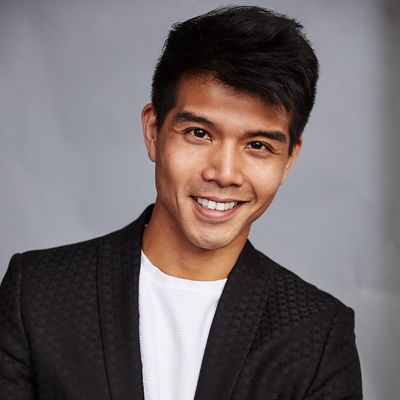
Telly Leung joins the pod squad to discuss the deeply personal journey of his immigrant parents, their harrowing escape from communist China, and how their sacrifices shaped his artistic path. The conversation then delves into the power of storytelling and the ongoing fight for Asian American representation in theater.
Telly Leung is an American actor, singer, and songwriter. He is known for his work in musical theatre on Broadway and his role as Wes, a member of the Dalton Academy Warblers on the Fox comedy-drama series Glee. In 2011, he starred in the Broadway revival of Godspell at the Circle in the Square Theatre. Leung was named one of 12 Faces to Watch in 2012: Dance, Theater, Architecture, and Art by the Los Angeles Times.
Links
https://www.tellyleung.com/ (Telly Leung Website)
http://www.aapacnyc.org/ (Asian American Performers Action Coalition)
Connect with Us
Facebook @beltlinetbroadway
Twitter @beltlinetobway
Instagram @beltlinetobroadway
Transcript
This transcript was automatically generated and might contain errors.
[0:01] Lauren Van Hemert: Welcome to Beltline to Broadway!
[0:14] Lauren Van Hemert: Let's all tune in to hear his incredible story.
[0:19] Lauren Van Hemert: What do you say?
[0:22] Lauren Van Hemert: You could binge any day, listening to Beltline to Broadway!
[0:26] Lauren Van Hemert: So, let's get started!
[0:33] Lauren Van Hemert: Welcome to the show!
[0:36] Lauren Van Hemert: This is the Beltline to Broadway podcast. I'm Lauren Van Hemert, your host, and on this episode, I'm chatting with Telly Leung, who is directing the Theatre Raleigh production of Yellowface. Now you may know Telly for his portrayal of Aladdin on Broadway or from his TV appearances on Glee. But there is much more to Telly Leung than meets the eye, and that is where our conversation begins.
[1:07] Telly Leung: My parents immigrated to America to New York City from Hong Kong in 1975. Now before that, they grew up in communist China during the Cultural Revolution. And so when they were teenagers growing up in the south of China, they grew up in Guangzhou, the Cantonese area. You know, this was a moment of great civil unrest and Mao, during the Cultural Revolution, took all the kids out of schools. It was the agrarian revolution. So, you know, I think it was Mao's vision for China to be a self-sustaining commune where they farmed their own food and didn't need any help from the outside world, and that is a very different picture of what China is today, of course. My parents, being teenagers, realized that without education, there was no opportunity for them.
So they did what a lot of Chinese kids did at the time; they plotted their escape from communism. So they actually escaped communism by swimming from communist China to Hong Kong, and there's a whole generation of people that have done that. They're called freedom swimmers. My mom recalls jumping into the water late at night with several of her friends, and she has never heard or seen from those friends ever since that night. She swam over and made it the first time. My dad actually tried to swim the first time and was caught by the communists, and he was sent to a re-education camp where he had to serve his time doing manual labor in the fields of China. When he was released, he tried again the second time and he made it the second time.
So then they actually met dating in Hong Kong in the 70s at a travel agency. My mom was a tour guide, and my dad was a file clerk, and they realized that they wanted to come to America because they wanted to have a kid that had all the opportunities that they did not have. So they came to the United States in the 70s, and that's sort of why I'm named Telly, because they watched a lot of television to learn English. I'm named after Telly Savalas because Kojak was my mom's favorite show on television. I think music was introduced to my life because my dad listened to a lot of popular American music in the 70s to learn English. So it was the Bee Gees and Donna Summer and Casey and the Sunshine Band, and you know, the whole Saturday Night Fever soundtrack, and then it was all those bands in the 70s too, like Air Supply and Barry Manilow, John Denver, Simon and Garfunkel.
That was always part of my growing up; my dad would always play LPs. So that was the music that was playing in the house. I think that's how music entered my life. And I think my parents, you know, sacrificing everything that they did to go to Hong Kong and then go to America, they had very high aspirations and dreams for me. You know, I think they thought I was gonna go to Harvard, be a doctor, a lawyer, an engineer, marry a nice Chinese girl, and give them lots of Chinese babies, and none of the above happened. I did none of those things. So, you know, in a way, that traditional Chinese home thing of growing up three generations in a home, I grew up with my grandparents; they were in the home with us.
My parents, aunties and uncles, cousins, we all lived in one big two-family house in Brooklyn. We respected our elders, you know, and of course, there's that other level of traditional Chinese home, which is also traditional Chinese immigrant home, where the children carry on the dreams of those immigrant parents who sacrificed so much for them to be here, to be in America, to achieve the American dream. I always say, you know, it's interesting, like for my parents, who first of all did not have an education in communist China, for them, the American dream is always a monetary one. You know, it's about money. It's about like in China, I could not, even if I wanted to, even if I worked really hard, I wouldn't be able to make the kind of money to own my own home or send my kid to college.
They realized in America that's what it was. So they worked hard, saved every penny, owned their own home, had a car. They could only afford one child, so I'm an only child, but they sent me to college. I think in a way, I'm completing the other half of the dream that they didn't get to complete, which is now that I'm in America, now that I'm in the United States, I then get to choose. I have the freedom to choose what it is that I want to do. To be able to choose the arts is amazing. To be able to choose a life doing what it is that I'm doing, I think that was a learning process for my parents too. As I get older and my parents get older, we sort of get to the place where we start to even out as far as status goes.
As far as that traditional Chinese patriarchal respect your elders structure goes, all of a sudden the reverse happens, and your parents treat you like an adult with their own mind and their own sensibilities. There are certain things that I love and I'm passionate about that are mine that they don't understand, and that's okay. But they are supportive of that because they see how much I love it. They are supportive of that because I think they know that what they did was give me a good head on my shoulders, and now I'm able to make those choices. The fact that I can make those choices is not something that they had in China. I realize, and I think they realize and they learned that this life that I'm leading, the life of an artist, the life of being an out member of the LGBTQ community, those are all things that they couldn't possibly have dreamed for me.
But because of what they did, I'm able to live those dreams, and I'm able to fulfill those dreams. I think that they find great joy and fulfillment in that. It took them a minute, but I think eventually we got to a place where they got it.
[6:57] Telly Leung: Whenever I do these interviews, there's always a teacher, a mentor, someone who saw the spark. I kind of feel like your Broadway fairy godmother is Billy Porter.
[7:09] Telly Leung: He's certainly one of them. You know, I ended up going to Carnegie Mellon University, which is a very competitive program for musical theater. They are now actually, it's very exciting, but they're sponsoring an award at the Tony Awards every year. That's the Carnegie Mellon Educators Award. They pick a K-12 educator to honor every year with a special Tony. I'm so excited. This year I get to present the award this Sunday. Billy Porter was also a Carnegie Mellon musical theater student and alumni. He came back to direct my senior thesis show, which was Company. Here I was, a 22-year-old, way too young Bobby in Company, but it's college, and you know, it's not about the show, but it is about the process and what you learn along the way.
But he came back to his alma mater because he wanted to direct. He wanted a safe space in order to learn how to direct. Where better to do that than the place where he gained most of his training? His first Broadway show, he graduated Carnegie Mellon with a Broadway show waiting for him the fall after his graduation, which was the original company of Miss Saigon. He was able to meet so many of the wonderful members of the Asian Broadway community. There's a very tight-knit circle of us. When he met them, he remained friends with all of them. He was sort of honorary in that way. Once you do Miss Saigon, you're sort of an honorary Broadway Asian. When it came time to direct me in 2002, when I graduated, he knew that the revival of Flower Drum Song was going to be on Broadway.
It had a wonderful, very successful run at the Mark Taper Forum in Los Angeles. David Henry Hwang, who wrote Yellowface, did a whole new book, a whole new libretto that sort of took out some of the more, you know, the very racist sort of lines and plot lines that just wouldn't play, wouldn't read right in 2002 anymore from the original in the 1960s. David likes to call it a revisal. It still maintained that beautiful score, those wonderful songs and those characters, but just slightly reimagined and restructured and still captured the essence of what it was. Billy called up his dance captain from Miss Saigon many, many years ago, this gentleman named Mark Oka, who was going to be one of the associate choreographers on Flower Drum Song, and said, "Hey, listen, I have this Asian student that I'm teaching right now.
He has no agent, no connections to New York City, but he's gonna graduate this summer and he'll be in New York in the fall. Would you see him?" So Billy picked up the phone and got me an appointment to my first Broadway audition. This was a submissions-only audition; you had to have an agent or be connected or have done a Broadway show before to be invited to this particular audition. This was not an open call. My agent was basically Billy Porter, who stuck his neck out for me. I played Bobby, who's in every scene of Company, so he was like, "You can't leave tech. You actually have to stay here and do rehearsals for the show." Tech didn't end until midnight, so I had to take the Greyhound bus from midnight that got me into New York the next day.
I remember going, you know, I remember it very clearly; it's like an 11-hour bus ride. It stops in Harrisburg, Pennsylvania, to refuel. I got to New York, you know, nine, ten in the morning, splashed some water in my face, and I was at my first Broadway audition. I told Billy, you know, I told Billy that if I ever got the job, that I was gonna, you know, I know I only get 25 words in my first Playbill as an ensemble member or something, but I was like, "Thank you, Billy Porter." If I get this job, and if you look at my first Playbill, actually, it's like, "Thanks, mom and dad," and the last four words are "thank you, Billy Porter," because it really is a teacher that again sees something in you before you even saw it in yourself.
[11:01] Telly Leung: So you mentioned Miss Saigon. This is a great springboard into Yellowface. Nice segue. See how I did that? David Henry, because he felt so strongly about the casting of Jonathan Pryce in Miss Saigon, that kind of got the ball rolling that led to the show you're directing here at Theatre Raleigh. Very famously, David was the leader in this movement to protest the casting of Jonathan Pryce in the role of the engineer in Miss Saigon.
[11:35] Telly Leung: And it is a Eurasian role. But, you know, for American actors, we said there are so many wonderful Asian actors in America. Why? Why would you, why would British equity and American equity bring a British actor over here? We should really, this should be an opportunity to make a star out of an Asian actor. There are already so few opportunities for us, for people that look like us. And here we are, this huge musical that's coming to New York that had a wonderful run and won so many Olivier Awards in London that it would be a really wonderful opportunity to cast an Asian person. You know, we thought in those days that we were past those days of, you know, Fu Manchu and Charlie Chan and all of that.
So are we, you know, we really thought that we were past the yellow face of that, that we're really gonna have a white actor who's gonna put yellow base on their skin and tape up their eyes in order to play an Asian person. Like it just felt really wrong. And so David, he had just won a Tony Award for M Butterfly. And he was the spokesperson, the leader in many ways of the Asian theater community. He was our champion. He was the person that represented hope and possibility and opportunity. If David Henry Huang could win a Tony Award, you know, and BD Wong could win a Tony Award, then it opened doors for us. And here was the coming of Miss Saigon slamming a big door in our face. So David protested it, but the protest ended up backfiring on David because Cameron threatened to not bring the show into New York at all.
So Actors Equity, who I think in the beginning supported David, they pulled their support because they realized that this Miss Saigon, if it was anything like Le Miz, was gonna run for years and years and years and be work for many, many people. The theater owners, of course, opposed David's protest because they knew that a Cameron show was gonna run forever and ever and be, you know, a good tenant for them. Even the mayor, Ed Koch, even protested it because he, again, Ed Koch is thinking of the city and tourism and how many tourists would come from all over the world to come see Miss Saigon on Broadway. So this thing ended up imploding on David in a lot of ways. And then, of course, notoriously his show right after M Butterfly was a show called Face Value, which was a huge flop.
So I think what David was trying to do with Yellowface now is A, recount that story from his point of view, but also B, use it as a springboard to talk about what it means to be Asian, what it means to be American, through the lens of theater and through the lens of this sort of very backstage show biz sneak peek farce, right? But he really does let us have a sneak peek into the world of what it is to cast a show, what it is to take a show out of town. You know, he writes in real people that exist in show business. So, you know, Vinny Liff is a real casting director, B.D. Wong is played by an actor in the show, Jane Krakowski's in the show. So, you know, all of these were players in this story.
But he also then fictionalizes what if I mistakenly cast a Caucasian actor and thought he was Asian in an Asian role? What if I, being the person who's supposed to be leading this movement for color conscious casting, made a mistake? And I think, of course, comedy ensues when you have somebody who is in that high of a position that then has fumbles and makes mistakes. But I also in some way think it's very valuable for David to put himself in the play because we have to understand that, you know, conversations about race are sensitive, but they are also ever evolving. And we are going to make mistakes. You know what I mean? Jokes that were told by comedians in 2022 are different than the jokes that were told by comedians in 2012, are different than the jokes told by comedians in 2002.
And they should be. We should evolve as a society to go, that's not okay anymore. We shouldn't, that's not it, that's not an okay joke anymore because the joke is now it's what are we laughing at? Why are we laughing at this? And as we dissect that, you know, we have to understand it and it challenges us as artists, especially the comedians to go find a better joke. And it forces us on the other side, the theater makers and the storytellers, to be more careful and more specific in the way we tell stories. But in that, in the creation of art and in the conversations that we have about race, whether that's in a theater or at dinner after we see the show or in living rooms, we are gonna mess up.
And I think what David brilliantly does is he writes a huge mess up in this play, and it gives us permission to A, laugh at him, but B, laugh at ourselves when we mess up, and also learn from that moment of going, oh gosh, I really messed up there. That's not okay for me to say anymore. I've learned from that. I'm even able to like to laugh at myself for that version of myself that I know I can be better than, and grow from that.
[17:02] Telly Leung: Knowing him as a person and directing a play where he is a character, and he's one of the few playwrights that have written himself into a play as a character. Does it change how you approach the show, how you approach directing? I'm gonna be really honest. When I heard about Yellow Face, and I got to see Yellow Face in 2008, I thought, David wrote himself in a show. There, gosh, that's narcissistic, isn't it? And then when I realized what he was doing, which was that he was writing himself in a show and writing a not the most perfect version of himself. Actually, he was writing a very imperfect version of himself so that we could laugh at him. He was making himself the butt of a joke and sort of sacrificing his own image as this, you know, titan of Asian theater, right?
Like he was knocking himself off his own pedestal in order to tell a story and to also hopefully have us have really great conversations about race and identity when we leave the theater. But he made himself a fool in order to do that. And I thought, oh, that's when I saw the play, I said, Oh, that's really bold. And not only that, but you know, he wrote Yellowface shortly after his father passed. So in many ways, it was, and his father notoriously was a very, you know, came to America and was a very patriotic sort of guy. And we talk about this in the play, where, you know, he saw himself as sort of a John Wayne or a Cary Grant or a Frank Sinatra, you know. He thought of him as just like those men who epitomized the possibility and the opportunity that America gives, the American dream, and what a beautiful thing it is.
But of course, David's dad was caught up in a huge scandal that involved his job because David's father, Henry Huang, was the chairman of the board of a bank that was connected to a lot of foreign money. And some of those people had donated to political campaigns, and of course, you know, the elections committee and the government was investigating foreign ties into election financing, and of course, that has become all of a sudden very relevant again with Russia and Trump. So I think he wrote himself in it so that he could tell a very personal story. So, yes, of course, the protest of Miss Saigon ended up backfiring in his face and being very embarrassing. Then he fictionalizes another embarrassing situation.
What if I cast a Caucasian actor by accident as the lead of Yellow Face, as the lead of Face Value? And now I'm a hypocrite, right? But he also did it so that in some ways he's able to unpack the loss of his father. His father who epitomized the American dream to him and hope and possibility. Alan's first Broadway show was the original cast of M Butterfly, understudying BD Wong. And he's playing David's dad. Not only that, but Alan was in the original Broadway company of Miss Saigon. So he knows the Miss Saigon controversy from that side. I met Alan doing the revisal of Flower Drum Song, so he worked with David again there. So, you know, I had to cast Alan because A, he's a brilliant actor, but B, I have somebody who's the source for this unfaithful documentary, if you will, that David's trying to tell, you know. He lived it, he was there.
[20:35] Telly Leung: During COVID, there were several very public Asian hate crimes. We start seeing this swelling up in the hashtag stop Asian hate movement. Lots of solidarity statements, and then following the murder of George Floyd, saw this rising up of the We see white American theater movement. What is the significance of telling this story now? COVID and how it was spoken about by the last administration, which tried to scapegoat an entire country for a global pandemic that is really nobody's fault. I mean, if the pandemic could have easily started anywhere in the world, right? And eventually we all have to contend and deal with it, right? But the way it was portrayed, the terms like kung flu and all of that, you know, done in a way to villainize Asian people where COVID was of no fault of ours, certainly not of Asian American, right?
Where COVID didn't start, you know, it opened the doors, it opened Pandora's box for the worst in us, the fear of and of who's different, the fear and the paranoia that that people that look different than us are out to get us. You know, it sort of suppresses the better angels in us, that reinforces our belief in humanity, that we are all human beings at the end of the day, that we're, you know, that no matter what our ethnicity or skin color is, that we all are mothers and fathers and sons and friends and wives and spouses, and you know what I mean? So yeah, we all know this. That's the better angels of us, and then there's the other side of it that when words are being thrown around like that, like kung flu, you know, that all of a sudden they drown out those better angels, is what ended up happening. And it does open a box of hate out of fear of what we don't know.
[23:00] Telly Leung: Um, and my community definitely felt that. People sort of felt this permission to physically attack people in our community, and not only attack people in our community, but most of the time they were elderly people in our community, people that couldn't defend themselves, which was really heartbreaking. After the murder of George Floyd, our country had to really reconcile race and the structures that have been put in place that we are sometimes aware of, but oftentimes not aware of. You know, for me, I remember growing up as a little kid, and my parents being immigrant parents, knowing that every day I would go to school and say the Pledge of Allegiance. You know, liberty and justice for all is how it ends.
And I remember being five years old and my parents pulling me aside and going, listen, I know you say this Pledge of Allegiance every day. We had to say it when we went to our citizenship naturalization process. Just know that in this country, you say that, and that is the promise of this country, but there are going to be people who don't believe that. No matter what you do, they will judge you by the color of your skin. They will think lesser of you, and it is not liberty and justice for all for some people. So just know that I know you're saying this every day, and we hope to aspire to be that. That is why we love being in America. That's why we want you to grow up American. This is why we moved here all the way from China, then Hong Kong, then New York, right?
But um, that's not the reality. And they said it so that I would be careful. That, you know, there are two separate rules. Well, now I'm married, 18 years to my spouse, who is Caucasian, white, grew up in Indiana, and I remember telling him that I had this conversation as a little kid, and he was like, Really? You had this conversation? And I realized, oh, right. He never had, his parents never had to have this conversation with him. The talk. The talk. And so the Yellowface also deals with that. That and in some way, you know, you can be as American and as patriotic as Henry, and you will be suspected of wrongdoing, or you would be suspected of being, working for China simply because of your last name and the color of your skin.
This has happened, so in some ways, yes, we know that that has happened to black people in America. Oftentimes racism against Asian people is not talked about. I feel like it was more talked about once there were all of these violent acts that happened to my community during COVID. But um, but I think what Yellowface does, and why I think it's wonderful that we're doing it again here in 2022 at Theater Raleigh, is that it's important to also see racism from an Asian American perspective as well. When the Black Lives Matter swelling up happened after the George Floyd murder, and all of these changes around theater and the arts were being left out of the conversation.
[26:20] Telly Leung: Yeah, and I'm listening. When all of that was happening post-George Floyd, when people were hitting the streets in protest, I am very proud of my community because we hit the streets with black Americans. You know, we walked out, we went to protest, we picketed, we did that because we know for sure that no one is free unless all of us are free. And that, to me, I think we've woken up to that. You know, for so long, Asian people have been the model minority in this country or been pegged the model minority. And in some ways, that is just a way for the people who are in charge of the white supremacist culture to then pit one group of people of color against another, right? So, and I think in that moment of George Floyd, my community woke up to that and went, we can't do that anymore.
It's not us against them anymore. We really have to do this together. And in some ways, it was the perfect storm of events, right? Like COVID caused all of us to be home sitting in front of our televisions to watch that horrific thing happen to George Floyd. And it forced us to be still in our homes to discuss this with our family and our children and our friends. And um, and I think Yellowface at Theatre Raleigh hopefully is sort of like a continuation of those conversations. You know, the play is different. The play is gonna feel different and read differently in 2022 than when I saw it in 2008. And if anything, I think we are more prepared to have the conversations that I hope people have when they leave the theater after seeing the show because we've been having them, finally.
[27:58] Telly Leung: The Asian American Performers Coalition just received a Tony. Yay! Brilliant. Um, about time. They've been doing a lot of great work for a long time for Asian artists. Does it feel like progress to you? Or does it feel performative?
[28:20] Telly Leung: I don't know if it feels performative. You know, at the end of the day, being recognized by a Tony Award is awesome. You know what I mean? Like I just, I was just on Facebook this morning and seeing my dear friend who's part of that organization just won a Tony, Christine Toy Johnson, who has been fighting the good fight on Equity Council, you know, speaking for Asian American in theater for years, ever since I've known her, ever since I worked with her on Flower Drum Song tour in 2003. Like she's been advocating for our community. For her to walk that red carpet and receive that honorary Tony plaque is amazing. That doesn't mean that there's not more work to do, and it's wonderful that you receive the plaque.
It's really what happens after that. Now what? So great. We've received this plaque, we've received this recognition. Does the recognition mean more opportunities and more jobs for my community? Does this mean that we're gonna see more of us behind the table directing, producing, investing, owning theaters, general managing, company managing? That's the change. So great. Now that we have this honorary Tony, and now that we've had your attention, will you listen from this point on?
[29:34] Telly Leung: In an article about your empathy concert series, you said empathy is our strongest weapon to combat ignorance, fear, and hate. Um, theater and art have in affecting change.
[29:52] Telly Leung: Yeah, I uh, the empathy concerts grew out of empathy being such a hot word in corporate America post-pandemic. You know, let's be empathetic to all of our first responders, all of those essential workers. Let's be empathetic to people working from home who have to then also parent and homeschool their kids. Let's be empathetic to, you know, all of that, right? Um, what we quickly realized when I started doing these empathy concerts with my co-host Elliot Maisie, who's actually a guru and a leader in the world of corporate learning and development, right? He um, he says, Listen, corporate America has no idea what empathy means. He's also a Broadway producer. He goes, but guess who does? Theater artists.
It is literally our job as actors to walk in somebody else's shoes eight times a week. It is my job to understand the intentions and to try my best to see the world through somebody else's eyes every night in the characters that we play. So of course, we are loaded with the skills. In fact, if anything, I remember when we started doing these empathy concerts and talking about the role of empathy in our lives and the role of empathy in our work, and the role of empathy in our world as citizens of the world. I was like, oh, we do this. Theater people do this, and we don't even think about it. Right? And it's those skills that I was talking about, the theater for life skills of collaborating and being able to share space with other people, with people that don't agree with you, with people that have different ideas than you.
We are skilled at that. We are constantly working with other people in order to make art happen. Actors are constantly asked to jump into the shoes and into the actual costumes of and point of views of other people every night and do that in a truthful way. So I said, Yeah, I think corporate America and all of America has a lot to learn from what it is that we do.
[31:42] Telly Leung: So it's interesting. Like during the pandemic, you know, there was this divide of who's deemed essential and who's deemed who's not deemed essential. And with Broadway shutting down right away, you know, we were deemed not essential, right? Well, I dare those people to say artists are not essential. I say to them, so tell me, during the pandemic, did you watch Netflix? Did you read books? Did you listen to music to make you feel better? Uh, those are all, who do you think makes those things? Storytellers and artists and theater people. So that sort of healing is not more important than the people healing us from a pandemic, but it is healing in a different way and just as necessary.
[32:26] Telly Leung: What do you hope audiences will take away from seeing this production? Well, first of all, um, the play is two parts in a way. It's sometimes very funny and a sort of a showbiz farce, I call it, but it's also a sort of a pretty riveting political drama as well, all rolled in one, as only David Henry Hwang could do. So I hope people laugh, and I hope people come and they are prepared to think and prepared to be challenged by what they think of as race and what they think of as identity, what they think of as the face that they have to show others and their true face. And I, you know, it's always my hope when making theater that people leave the theater and they continue to talk about the play, and they continue to talk about how the play relates to their lives.
You know, it would be my dream if people left Theatre Raleigh, left our space, went, you know, to Denny's afterwards and like talked about it. And talked about how it related to their lives, you know, and share that moment together.
[33:30] Telly Leung: The Theater Raleigh production of Yellowface opens June 22nd and runs through July 3rd. I'll put a link to Theater Raleigh's website in the episode notes. Next up for Telly is an appearance at BroadwayCon in New York City this July. Beltline to Broadway will be there as well, covering every moment. So be sure you are following us on Facebook or Instagram at Beltline to Broadway or Twitter at Beltline to Be Way so you don't miss a minute.
[34:02] Lauren Van Hemert: If you like what you've heard today, be sure to subscribe to this podcast or visit us online at www.beltlinetobroadway.org. Until next time, I'll see you at the theater.
© Broadway Podcast Network, All Rights Reserved