

Kara Lindsay and Kevin Massey join the pod squad to discuss the importance of live theater in a world increasingly dominated by screens and the magic of performing in regional theaters... Read More
From the show: Beltline to Broadway
Guests

Featured Shows

About
Kara Lindsay and Kevin Massey join the pod squad to discuss the importance of live theater in a world increasingly dominated by screens and the magic of performing in regional theaters.
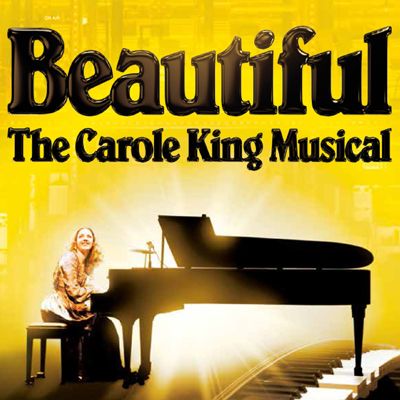
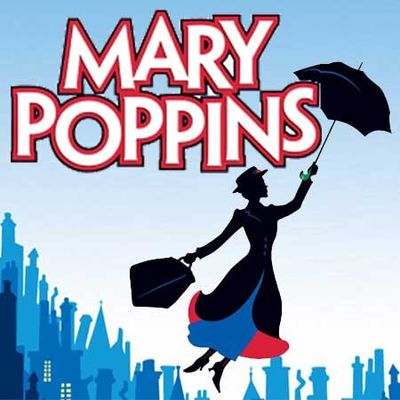
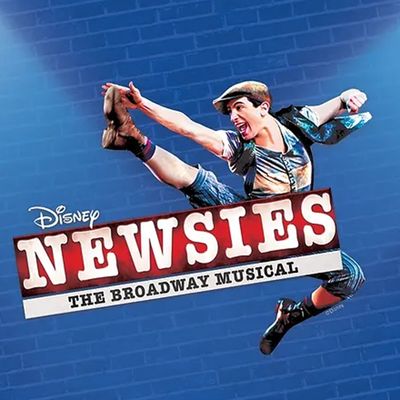
Kara Lindsay is best known for her Broadway performances as Katherine Plumber in Newsies, Glinda in Wicked, and Cynthia Weil in Beautiful: The Carole King Musical. Her husband, Kevin Massey, has starred in A Gentleman’s Guide to Love and Murder, Tarzan, and the national tour of Big River. Both have had extensive careers on regional stages and bring a wealth of experience to their roles in Mary Poppins. In this episode, they open up about their personal and professional journeys, the impact of theater on audiences young and old, and the joy of sharing the stage together as a family.
Love what you hear on the podcast? Join the pod squad by joining our online community! Dive deeper into the episodes, share your thoughts, ask questions, and connect with fellow listeners. Visit https://beltlinetobroadway.org/register-2/ to join our theater fam.
Connect with Us
Facebook/Instagram/Twitter @beltlilnetobroadway
Website: www.beltlinetobroadway.org
Transcript
This transcript was automatically generated and might contain errors.
[0:00] Lauren Van Hemert: This podcast is sponsored by Talkspace. You know when you're really stressed or not feeling so great about your life or about yourself? Talking to someone who understands can really help. But who is that person? How do you find them? Where do you even start? Talkspace. Talkspace makes it easy to get the support you need. With Talkspace, you can go online, answer a few questions about your preferences, and be matched with a therapist. And because you'll meet your therapist online, you don't have to take time off work or arrange child care. You'll meet on your schedule, wherever you feel most at ease. If you're depressed, stressed, struggling with a relationship, or if you want some counseling for you and your partner, or just need a little extra one-on-one support, Talkspace is here for you.
Plus, Talkspace works with most major insurers, and most insured members have a zero dollar copay. No insurance, no problem. Now get $80 off of your first month with promo code Space80 when you go to Talkspace.com. Match with a licensed therapist today at Talkspace.com. Save $80 with code Space80 at Talkspace.com.
[1:02] Lauren Van Hemert: Beltline to Broadway. Oh my helps get through about tough times. Broadway hooray. Let's all tune in to Beltline to Broadway. What do you say? You could binge anything. Listening to Beltline to Broadway. Beltline to Broadway. This is the Beltline to Broadway podcast. I'm Lauren Van Hemert, your host, and on this episode, I'm chatting with Broadway Power Couple, Kevin Massey and Kara Lindsay. In 2016, Lindsay played the title role in North Carolina Theater's production of Disney and Cameron McIntosh's Mary Poppins. She is now reprising that role opposite Massey, who is playing George Banks in a new North Carolina Theater production. Here's our conversation.
[2:11] Lauren Van Hemert: You were here in 2016 doing Mary Poppins, which I love because I saw that production and love that production so much. What are you bringing from that Mary experience into this Mary experience?
[2:30] Kara Lindsay: That's a good question. I mean, on a basic level, I'm hoping some muscle memory kicks in. But I think, you know, it's nice to be able to approach the role again with fresh eyes many years later. I'm now a mother. So I think I have a better understanding of who Mary is. And I think, you know, Eric Woodall, the director, he was just saying, like last time it's such a fast process. So last time we were really just trying to get it up and make sure nobody got hurt. We did it, we did it. Now it's like we can actually dig in a little deeper, which is really wonderful. It's more than the blocking, it's really understanding the reasons why. And I mean, of course, we dug into that last time as much as we could, but it's like we have a little bit more time.
So hopefully just adding more layers to Mary would be wonderful and the connections with the kids and just the undertones under the messages that she's giving to the kids and the parents. You know, we think it's a lot about the lessons for the kids, but it's really for the parents. And I think that's really, really important. And it's really touching. I think now being a parent, I see it so much, I see the messages more. And I'm gonna take that with me.
[3:54] Lauren Van Hemert: It's so interesting you said that about being a parent. You know, I remember watching the Julie Andrews movie and really thinking it was all about her and the kids. And it wasn't until I saw the Broadway production that I got that it was really about Mr. Banks. It's George Banks' arc, it's George Banks' story. Do you both feel that way?
[4:21] Kevin Massey: Well, I, you know, when I first got offered the role and I hadn't seen the Broadway version. I grew up on the movie. For me, it was kind of a peripheral character, what I remembered at least. And so when I was reading the script again, I thought I was like, oh no, I have some things to do. I need to change. And it's just so wonderful to learn from young people. You know, and as our son is growing older and he's saying new things, he's also reflecting back to us what we're doing or what we're saying. And you know, some of it's really funny, and some of it you're like, oh, do I do that? It's just seeing the world through children's eyes is really wonderful. And learning those beautiful lessons of giving, forgiveness, I think is really the most impactful for me as a person, but probably for George Banks too.
[5:21] Kevin Massey: I don't have a lot of scenes with Mary. I have some, but really all it's all the things she's doing to other people, mostly the kids, better than coming back to me. So that's how I learned my lesson.
[5:34] Kara Lindsay: A hundred percent. And I think that's what I loved about the stage musical. You know, the children can go and they love the magic and the flying and all of the songs that they know so well. But I think there's layers to the stage musical that make it just really interesting for parents too.
[5:55] Lauren Van Hemert: How does being a parent inform how you approach this now as a dad, as George, and as Mary? I mean, you talked about it a little bit, but does it change how you tackle Mary this time around?
[6:10] Kara Lindsay: I think it does in ways I'm not realizing, you know. I think because I'm a different person now. So I think I'm a different Mary. I think there's this all-knowingness about Mary, and she's this magical being, which is like beyond humanity, you know, that I think is tough to delve into. But I think as being a parent, your kids are more comfortable when you are confident in what you're doing, right? So when you are unsure as a parent, they feel uncomfortable. So I think the more all-knowing that I'm bringing, the more real it is for and the more true to Mary I'm being. And I think I didn't really realize that last time because I wasn't a parent and I didn't have that knowledge of the more confident I am in the decisions we make as a family or the decisions we make as we go through the day, the more safe they feel.
And that's kind of Mary. She has this nurturing aura and magical and fantastical aura also, but it's this all-knowing nature of her that I think makes everyone feel more comfortable. It's like, oh, she knows what's up, like she knows what to do, she knows how to go through life. We're gonna follow her. So the more I can bring that all-knowing confidence, the more safe I'm gonna make Jane and Michael feel. And yeah, and that's the same with motherhood.
[7:48] Kevin Massey: I think for George Banks, the needle's gone a little too far the other way. He's projecting this confidence, I know what's best, which is not really what's best. He's sort of he's been taught this thing that he thinks you know, you're gonna learn this way. This is the best way, and he needs to be brought back. But I think what I've kind of he's yelling a lot, he's frustrated, he's stressed. And I get that now as a father, and I get how you there's a lot of pressures in your life. You want to be providing, you know, we're a family, we're both providing, but you want to do your part, and you can kind of get lost in that in moments, and you can be more frustrated than you want to be, and yet still love this little being, these two little children, you know.
So I can relate to that, I think a lot more than I would have been able to before I was a father. And it also allows you to having gone through that and you've had those moments, but you also have it's mostly I love this kid, you know. I've been really frustrated with you before, but I really don't care about that. It was just a moment. Overall, I'm gonna remember how much I love you. So that gives me a little more ease, I think, when I'm having those really intense scenes with the kids because it doesn't feel great to yell at little kids ever, even if you feel like they deserve it. It just never feels great. So as an actor, at least that's allowing me to forgive myself in the moment and feel real about it too, because it is really frustrating sometimes, and they don't really understand everything that's going on, and they can't. I can't put all that weight on them. Even George Banks knows that. So he's trying to protect them even in those moments. I think that's a little bit of my fatherhood coming through.
[9:36] Kara Lindsay: Yeah, the job stress, financial stress, especially when the financial stress falls on the working parent. I mean, that's a lot, and so that you're projecting that onto the kids, and you know, Mary's coming into her mind, what's important. It's the family. And so if your core is good, then everything else will flourish after that. It's such a sweet story. I mean, now I feel like it just all makes so much more sense.
[10:05] Lauren Van Hemert: Kevin, you're from North Carolina, so talk about what it's like to play on the hometown stage.
[10:15] Kevin Massey: Every time I set foot in North Carolina, no matter where it is, I hear the sing song-y of the accents. I see the air, the heat sometimes. It just there's a my body kind of relaxes. Yeah, I'm from the mountains, so it's a little different than this area. I didn't grow up performing on this stage, you know, a lot of my memories in North Carolina are either at Chapel Hill where I went to school or in the mountains. So, in some ways, it still feels a little new to me. And it's changed a lot since I was here. But it's so wonderful when I get these messages on Facebook and that hey, we're coming to see the show.
[10:53] Kara Lindsay: You know, people I haven't seen in years, or I was in a cappella group at college called the Clefhangers. I know, really nerdy. Uh, and a bunch of those guys are coming with their partners now. And it's just, I don't know. It's just really awesome to be able to share this thing we've been doing for over 20 years now all over the place, and be able to come back and say, hey, this is a little bit of my life, and then they get to come and we get to celebrate. I get to hear about their lives, get to see them again. It's just always such a joy to be here.
[11:26] Lauren Van Hemert: And you both performed on regional stages across the country. And I think this is such a pivotal moment for our regional theaters because so many of them are in trouble and closing. I mean, we hear about it every single day. It's kind of sad. So talk to me about the importance of regional theater in this country, and the importance of audiences showing up.
[12:00] Kara Lindsay: There's nothing like live theater, and life is about connection. Um, you know, and with the pandemic, I think we really realized how much we need a hug. We need that to be breathing the same air. And, um, that connection that you feel with the audience, it informs how you perform. I mean, you are another character in the show. Your response, your laughter, your, you know, whatever response you have, we have to then respond to it in terms of the rhythm of the show or the rhythm of the scene. Um, and depending on how the audience responds, that's how we perform. Um, so it is this like, it's this whole we are all a part of the same thing. And that's what I mean, Eric Woodall was saying yesterday.
He got emotional just talking about how there's so much more gratitude now with performing. I mean, we all, we've always been grateful to do what we love to do, because it's rare to get to do that. So we realize it's such a privilege. But even now, when it was, you know, taken from us for so many years, um, we're like, oh my gosh, we get to be here, we get to perform live and be sing to each other and sing with this audience, and they're gonna be singing along with us. Um, that's what it's all about. That's what life is about. Life is about connection and it's about relationships and, um, not a screen. Um, there it makes you feel more alive when you're actually connected with people. Um, you know, having a coffee date in person versus talking on the phone. I mean, that's the difference. Um, that's, it's more heart-filling.
[13:41] Kevin Massey: It's also wonderful how these theaters really work in tandem with the community. You know, we, as a performer, uh, I'm coming from New York. I've had my experience when I was first starting off, I was mostly doing regional theaters, and I got to learn from these actors that had either been the pillars of the community there doing, uh, you know, three shows every summer at this regional theater, and I got to learn their craft, or when they bring in people from, uh, Chicago or LA or New York, and I would sometimes be, hey, can I have a coaching with you afterwards? You know, it was a chance for me to learn my craft at these regional theaters. And, uh, you know, hopefully we're gonna be able to share our experience with these young kids.
I mean, the way they can't run up to her and say, I saw you in Newsies, you know, I couldn't imagine being able to meet my heroes, you know, when I was their age. But even more than that, there's all these programs that are connected with regional theaters, or educational programs or, um, training programs, they're going out into schools, they have cabaret spaces where you can come and just hear different kinds of music. I mean, it's such a lifeblood of these different communities. Sometimes there's restaurants connected, people go see the theater, they eat beforehand, they go out for drinks afterwards. It can be a really great economic engine for these little towns. It's just, I just love them. I mean, they're little cities in and of themselves.
[15:12] Kara Lindsay: Yeah. We're so fortunate in North Carolina in Raleigh to have these incredible theaters with Broadway talent. I mean, the two of you, Sarah Jane, four, I mean, this is an incredible cast. So, um, Kevin, you mentioned Newsies. I feel like there's something so smart about the way that Disney tackles their theatrical properties in that they build in all these additional layers that's not in the original thing, so that there is room to play. How do you step into an iconic role like Mary and truly make it your own?
[16:03] Kevin Massey: It's an honor and a privilege to get to tackle this. Um, I think, you know, similarly to, um, when I joined, and it's not similar at all, the roles aren't similar, but the experience in terms of taking over and replacing, um, with Glinda in Wicked. Um, you know, I had that similar pressure of like, okay, that they're gonna expect the audiences might expect Kristen Chenoweth. I'm not Kristen Chenoweth, though that would be nice. Um, but I'm me. And I think I had to bring myself and the things I've learned in my life experience, um, to the role, and then it can be honest and true. So, you know, that's what I have to do with Mary. I mean, and also taking what I've seen, and I've seen the show, I saw Ashley Brown play Mary Poppins on Broadway.
Um, I got to see, obviously I know the movie very well. So I think taking those bits of what I connect with with their performance that's honest to me, then I can apply it. But I can't be a version of Ashley Brown or be a version of Julie Andrews. I have to be myself through Mary Poppins. Um, so I think, you know, there's this ease with that, knowing that I have to be me as Mary, um, and how she inspires me. Uh, so that's how I'm approaching the role is just I need to be honest, otherwise it'll be a hat on a hat.
[17:25] Kara Lindsay: Do you remember your first Mary Poppins experience seeing that movie for the first time?
[17:31] Kevin Massey: I don't think I remember like when or where. I think I was very young when I had seen it, but then, you know, when I then watched it again, I was like, I knew it already because I think I watched it at a very young age, and I was just telling my mom, who's here watching our son, so it's a whole family affair, but I was just saying to her I remember that whole scene at the beginning when the cannon goes off on the roof, remember? And the house shakes and um, George Banks is like sipping his coffee and the table moves and then it comes back and he sets it down just in time for the, it's just this, it was like to me that it was like, what is this world that we're entering? And like it wasn't animated.
I mean, there were animated parts with Jolly Holiday, but it was mostly this real world that that's fantastical and I remember that being like, that stuck in my brain and wondering if that could ever happen here, you know? And I think, yeah, it just, it was exciting to watch and those are the scenes that stick in my brain. Um, and like you say, it's different than the Broadway production. Um, we don't have a cannon going on, but to I like, I love Charlie Chaplin movies to me and I was, I love that scene too. That's good old-fashioned stagecraft, you know? It's not, uh, CGI and they had to time that and rehearse that like a play, like a musical.
[18:08] Kara Lindsay: What do you hope families will get from seeing this show? And for some of these kids, it'll be their first theater experience.
[19:06] Kevin Massey: I think that for when I'm looking at this now, I think that that anything can happen if you let it, that message is just so wonderful for everyone, but I think that's kind of for the kids, you know. I think, well, everyone, but you know, that if you can dream it, it might happen. Um, and then for, I think the parents, I think what resonates for me as a parent is just that we can get so distracted with the stresses of life, and what's really important is each other, and um, just making sure that that core is strong and making sure that we connect with one another and that everything else will fall into place, um, and helping each other through this stressful life, you know, making sure we don't lose sight of one another and giving each other love and making time for one another, um, even when it's hard. Um, yeah, I think those two are the important lessons to me.
[20:03] Lauren Van Hemert: The North Carolina Theater production of Mary Poppins opens July 25th. I'll put a link to the North Carolina Theater website in the episode notes. If you like what you've heard on this episode, please consider subscribing to this podcast. Follow me on social media on Facebook, Instagram, or TikTok at Beltline to Broadway, or visit the website, www.beltlinetobroadway.org. Until next time, I'll see you at the theater.
[20:36] Lauren Van Hemert: Beltline to Broadway. This podcast is sponsored by Talkspace. You know, when you're really stressed or not feeling so great about your life or about yourself, talking to someone who understands can really help. But who is that person? How do you find them? Where do you even start? Talkspace. Talkspace makes it easy to get the support you need. With Talkspace, you can go online, answer a few questions about your preferences, and be matched with a therapist. And because you'll meet your therapist online, you don't have to take time off work or arrange childcare. You'll meet on your schedule, wherever you feel most at ease. If you're depressed, stressed, struggling with a relationship, or if you want some counseling for you and your partner or just need a little extra one-on-one support, Talkspace is here for you.
Plus, Talkspace works with most major insurers, and most insured members have a $0 copay. No insurance? No problem. Now get $80 off of your first month with promo code SPACE80 when you go to talkspace.com. Match with a licensed therapist today at Talkspace.com. Save $80 with code SPACE80 at talkspace.com.
© Broadway Podcast Network, All Rights Reserved