

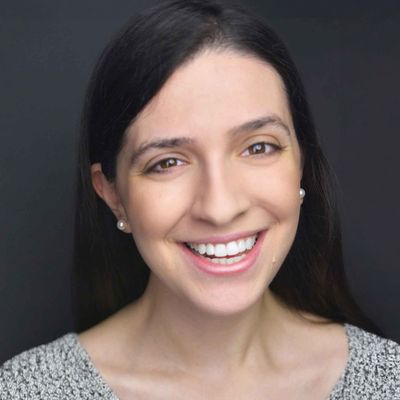
Sammi Cannold joins the pod squad to discuss disability representation in theater, the creative process behind adapting the documentary into a stage production, and the broader impact of inclusive storytelling in the industry... Read More
From the show: Beltline to Broadway
Guests
Featured Shows
About
Sammi Cannold joins the pod squad to discuss disability representation in theater, the creative process behind adapting the documentary into a stage production, and the broader impact of inclusive storytelling in the industry.
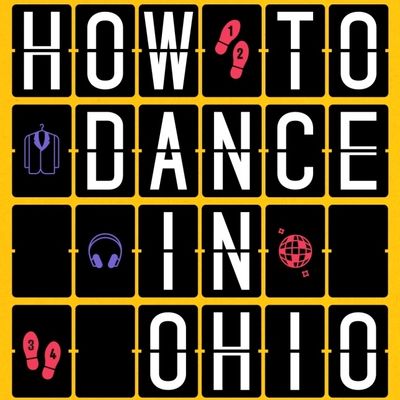
Sammi Cannold is an acclaimed theater director known for her innovative and immersive storytelling. A rising star in the industry, she has been recognized for her work on productions that push the boundaries of traditional theater. She made her Broadway directorial debut with How to Dance in Ohio, a groundbreaking musical featuring an autistic cast, based on the award-winning documentary of the same name.
Cannold is a Forbes 30 Under 30 honoree in Hollywood & Entertainment and has directed major productions at institutions like New York City Center, American Repertory Theater, and the Kennedy Center. She is also known for her site-specific productions, including Evita in Argentina and Ragtime on Ellis Island.
Love what you hear on the podcast? Join the pod squad by joining our online community! Dive deeper into the episodes, share your thoughts, ask questions, and connect with fellow listeners. Visit https://beltlinetobroadway.org/register-2/ to join our theater fam.
Transcript
This transcript was automatically generated and might contain errors.
[0:01] Lauren Van Hemert: Welcome to the Beltline to Broadway podcast!
[0:07] Lauren Van Hemert: Oh my, that's good through about tough times.
[0:11] Lauren Van Hemert: Broadway, hooray!
[0:14] Lauren Van Hemert: Let's all tune in to Beltline to Broadway.
[0:19] Lauren Van Hemert: What do you say?
[0:22] Lauren Van Hemert: You could binge anything, listening to Beltline to Broadway.
[0:33] Lauren Van Hemert: This is the Beltline to Broadway podcast.
[0:40] Lauren Van Hemert: I'm Lauren Van Hemert, your host, and on this episode, I'm chatting with Sammi Cannold, who is the director of How to Dance in Ohio on Broadway. If you've followed this podcast at all, you know that we've had lots of conversations around disability culture, representation, and inclusion on stage and off. This is something I'm very passionate about because my daughter is on the autism spectrum, and we've seen firsthand the synergy that can happen when there is intentional inclusion and a sense of belonging. Cannold agrees and tells me that working on How to Dance in Ohio has forever changed the way she will work in theater. Here's our conversation.
[1:29] Lauren Van Hemert: For folks who don't know, the show is based on a documentary of the same name, which I also loved, which follows the work of a doctor who plans a dance for the folks under his care who are living with autism spectrum disorder. So, I mean, there are shows that are inspired by real-life stories, but this was not only a real-life story, this was a documentary. So how is it to take that documentary piece and then adapt it for the stage and keep the integrity of the original source material?
[2:08] Sammi Cannold: It's, you know, I get asked that question a lot, and it's something I think a lot about because I didn't think a lot about it, if that makes sense. And I think the reason why is because the writers really did the heavy lifting when it came to the adaptation. By the time I had come on board, there was a full draft of the show already on paper, and they had spent, you know, hours and hours and hours and hours and hours going through not just the documentary, but they were given all of the footage that was on the cutting room floor by the amazing filmmaker Alexandra Shiva. And they used that to sort of inform their process. A lot of the lines in the show sort of come verbatim from either the doc or that cut footage.
But what ended up happening sort of over time is that the material evolved to be, you know, sort of part documentary, part what was sort of coming out of the writers' brains, and then part what our actors were bringing to the table. And so it was really like a collaborative thing that was made over time. But I think, you know, adapting a doc, if you're gonna be extremely faithful to the details of what happened and to, you know, the plot line, I think would be very challenging. In our case, the writer sort of decided to use the true story as a jumping-off point, but not be beholden to all the details that are depicted in the doc.
[3:45] Sammi Cannold: I would be remiss if we didn't mention Hal Prince, who had started working on this and developing this piece. What notes or vision had he had for the show that you and the creative team were able to use and glean from? So at the point that he very sadly passed, the writers had completed a draft of the show, and they were about to—they had had sort of like an internal reading, but they hadn't had anything beyond that. And so Hal never got to stage the show or design a set or, you know, anything of that sort. That said, he did have three copies of the script that he had written all his notes in the margin of. And those scripts were given to me, and then I used them to sort of craft and mold sort of the direction that I took directorially, which was such a gift.
And I also had recordings of his meetings with the writers and with the producers about the show. And so I used those recordings to also sort of inform the choices that I was making. But unfortunately, he never did, you know, actually stage or design anything on the show. And so it was sort of up to the team that came on board to, you know, kind of take his vision and run with it as much as we could.
[5:19] Lauren Van Hemert: What an amazing gift, though, to have that script with notes in the margins. I can't even imagine. One thing that makes the show so authentic is right at the beginning of the show, right at the start, the seven principals come out and they say, you know, if you know one person with autism, you know one person with autism, now you know seven. The seven young people in this live on the spectrum. And what's so interesting to me is as I've done so many of these interviews and talked about inclusivity, a lot of the producers I've spoken to are hesitant to cast people living with disabilities, either because they're afraid that they won't be able to make accommodations, or they're afraid of not getting it right, not getting it 100% perfect.
And so I want you to speak to that because I know you brought in accessibility coordinators and folks to help you make those accommodations. And so can you speak to that process and what kind of accommodations these performers needed?
[6:29] Sammi Cannold: Yeah, absolutely. I think in our case, it was about making sure that everybody had what they needed. I think that, you know, we as a team felt like it was our responsibility and our job to make sure that both the audition process and the rehearsal process were ready to meet our performers, autistic or otherwise, with what they needed. And I think that, you know, in the audition process, a lot of that was just sort of breaking down different parts of how to make it as human as possible. You know, so for example, some audition rooms that you walk into, you just automatically are supposed to, you know, start doing your material, and there's not a sort of any introduction or, you know, conversation or anything of the sort.
So what we really wanted was, you know, an actor comes in the room and we say, hello, here are the names of everybody at the table. Here's how this audition process is gonna work. You know, we walk them through it. And, you know, I think to people who aren't in the theater, that's a little bit like, well, duh, why wouldn't you say hello? And I think to people who are in the theater, sometimes that's like, oh my gosh, you know, you have to fit so many people in in one day. How do you have time to do that in the audition process? And I think it was really just about saying, you know, our priorities are where our priorities are. And so we're gonna prioritize saying hi. And, you know, and then, you know, that's just one example of like many, many, many, many different things that we did to sort of adjust the process.
And I think that, you know, one of my big takeaways is, you know, of course, the impetus for adjusting the process was that we had autistic actors in the room and were going to have autistic audience members as well. But ultimately, a lot of what we learned from making the process more quote-unquote accessible is that we should really just be doing this always. You know, it's not, you know, it's really just about asking what people need and then figuring out how to make sure everybody can do their best work. And that's something that I will carry with me into any other process I do, you know, regardless of sort of who's in the company.
[9:00] Sammi Cannold: The other piece of this story I appreciated so much. So much focus has been spent on these tremendous actors who are just tremendous actors who happen to have autism. But the story there, and that piece of it really touched my daughter. For me, the piece that really touched me was the story of the families and the arc of the moms. And I felt like it didn't sugarcoat things.
[9:37] Sammi Cannold: It really was real. I mean, I remember so many times as my daughter was going through high school having those moments where I just was like, I wish my daughter could have this experience. I want this experience so badly for my daughter, which those moms express in this piece. Can you talk about directing and helping those fabulous women to take on multiple roles through the show, develop their arc in the midst of everything else, the other storytelling that was so much at the center of the show?
[10:27] Sammi Cannold: Yeah, absolutely. I think, you know, those three women are such—two of them are our moms, and I'm not. So I think that was a sort of really exciting conversation where like they had a lot to bring to the table that I didn't, which was really enriching. And I think, you know, one of the three of them has several children who are disabled, and I think bringing that perspective as well was invaluable. I think that, you know, to me those characters in the show, my way into them is thinking about growing up with my brother who is autistic and so badly wanting to help him with what he was encountering and also not having any clue how. I think that a lot of what the parents do in the show is sort of highlight a knowledge gap and an unfamiliarity that we as a society have with how to talk about disability, how to raise disabled children, and how all these things that feel like now we're in an age where this information is now being shared on TikTok and in Broadway shows and on television, which is really exciting. Ten years ago that really wasn't the case. So I think that I'm excited about where the conversation is going, and it was really wonderful to be able to mold those characters alongside those actors.
[12:14] Lauren Van Hemert: I love that. And I love that you said that because truth is, when my daughter was growing up, and you mentioned ten years ago, ten years ago, what we all thought was autism or the only reference we had was Rain Man. And so I think as my daughter was growing up, one of the things that was really difficult for us because she is high functioning was, you know, folks would look at us and be like, well, she's not Rain Man, she doesn't do those things. And it was like, okay, that's just one side of this spectrum. So I love that there are stories now depicting other sides. So we see that it is a spectrum and not just one character that we're all referencing. So I think we're moving ahead a little bit on the representation. I mean, that was something that was really important to the writers, that the show intentionally depicts seven different narratives of autistic individuals, not one.
[13:21] Sammi Cannold: And that's not to say that all seven of them sort of complete the spectrum. They don't, you know, but it is to say that there are so many different narratives from autistic individuals, and to just sort of highlight one and say that we've covered it would sort of be incomplete. The show is sadly closing, but I feel like there's been so many conversations and narratives around the show that I'm hoping it changes the industry. Do you think we will, not just with this show, but even with performers like Ali Stroker, who won her Tony Award, even with that kind of representation, that we're gonna start seeing a shift on Broadway as to the kinds of stories we're seeing and the folks who get to tell those stories?
[14:23] Sammi Cannold: Absolutely. I mean, I think to me the show's closing is first and foremost related to the financial state of Broadway right now, and the fact that of the five new musicals that opened in the fall, only one will still have survived a week from now, and that's Back to the Future, which has its own built-in audience. So I think that to me, what's happening with these shows, and it's not just ours, is that the cost of running them and the time it's taking to build an audience for titles that people may not be that familiar with isn't aligning. And it's really unfortunate and it's really sad. That said, on the other side of it, I think that like to me, the legacy and the purpose and what the show has accomplished stands on its own regardless of the length of its run.
And that's not, you know, my sort of patting myself on the back. It's about a company of hundreds of people that made this happen. Because I think that, you know, to me, the victories are a few different things. One, I don't think you'll ever be able to have a musical on Broadway that has an autistic character and not cast an autistic actor again. You know, we've proven that the talent is out there. And so that can't happen. Two, I think that, you know, it's a platform to take these stories and have the platform of Broadway say these stories are important, these stories need to be amplified. I hope that it, you know, for folks who might not be that familiar with the subject matter, I hope it encouraged them to, you know, go learn more, ask more questions.
You know, and I think it's a step in a series of many steps, but you know, we're there. I think there are many different ways in which the show being on Broadway at all or existing at all is really important. And so I'm excited to see sort of what comes next in terms of where else it could be performed. And I'm really excited to actually see productions one day directed by other people, you know, in schools and community theaters and everything. And that will be such a joy for me.
[17:12] Lauren Van Hemert: It's interesting. I interviewed Katie Sullivan, who just brilliantly performed in Cost of Living. And she and I were talking about the same thing. Seeing that play, seeing this show live on in other places and other theaters in regional theaters and give so many performers and directors opportunities, I think is gonna be really exciting. You know, I always tell people, you know, my tagline for my podcast is I'll see you at the theater, but truly what I mean is go support your local theaters, your regional theaters, and if you can, the Broadway theaters in the off-Broadway community because these artists are working their butts off and need the support. And so I hope everyone will go to the theater, and I hope everyone who can, who's listening to my voice right now, can go see How to Dance in Ohio before it closes because it's such a beautiful show.
My takeaway was it has so much heart; it just had so much heart. How to Dance in Ohio runs through February 11th at the Belasco Theater on Broadway. I'll put a link to the show's website in the episode notes. If you like what you've heard on this episode, please subscribe to this podcast, follow us on social media on Facebook or Instagram at Beltline to Broadway or Twitter at Beltline to be way, or visit us online at www.beltlinetobroadway.org. Until next time, I'll see you at the theater.
© Broadway Podcast Network, All Rights Reserved