

Jason Robert Brown joins the podcast to discuss the complexities of adapting books and movies into musicals, the differences between stage and screen storytelling, and the evolving landscape of Broadway... Read More
From the show: Beltline to Broadway
Guests

Featured Shows
About
Jason Robert Brown joins the podcast to discuss the complexities of adapting books and movies into musicals, the differences between stage and screen storytelling, and the evolving landscape of Broadway. He also reflects on his musical influences, his collaboration with Theatre Raleigh's Lauren Kennedy, and the creative process behind his eclectic body of work.
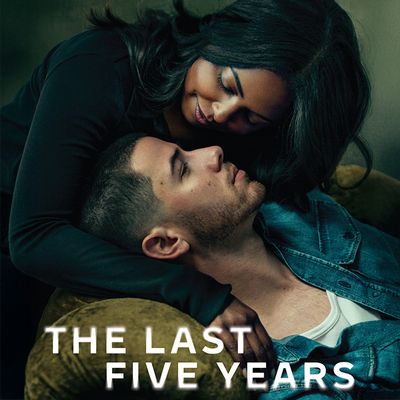
Jason Robert Brown is an acclaimed composer and lyricist known for his unique blend of musical styles, ranging from folk and gospel to rock and pop. He has won multiple Tony Awards for his work on Parade and The Bridges of Madison County and is widely recognized for his groundbreaking shows, including The Last Five Years, Songs for a New World, and 13. Beyond musical theater, Brown is also a performer and recording artist, regularly debuting new works in concert settings. His contributions to the theater world have made him one of the most influential voices in contemporary musical storytelling.
Love what you hear on the podcast? Join the pod squad by joining our online community! Dive deeper into the episodes, share your thoughts, ask questions, and connect with fellow listeners. Visit https://beltlinetobroadway.org/register-2/ to join our theater fam.
Transcript
This transcript was automatically generated and might contain errors.
[0:41] Lauren Van Hemert: Welcome to the Beltline to Broadway podcast.
[0:45] Lauren Van Hemert: And welcome to all of our new listeners on the Broadway Podcast Network. I'm Lauren Van Hemert, your host, and I am so thrilled to be part of this lineup of incredible theater podcasts.
[1:01] Lauren Van Hemert: I can't wait to share with all of you the exciting work happening regionally here inside the Beltline of Raleigh, North Carolina, and beyond. So let's get started.
[1:13] Lauren Van Hemert: This week marks the twelfth anniversary of the Broadway opening of The Bridges of Madison County. The musical, which is based on Robert James Waller's best-selling novel, features a book by Marcia Norman and music and lyrics by Jason Robert Brown.
[1:34] Lauren Van Hemert: Brown earned two Tony Awards for his work on The Bridges of Madison County. And having seen the show this weekend for a second time at McGregor Hall in Henderson, North Carolina, I was reminded why.
[1:50] Lauren Van Hemert: I spoke to Brown in 2019 in advance of the Theatre Raleigh production of The Bridges of Madison County. Here's that conversation.
[2:01] Jason Robert Brown: There are so many movies being turned into musicals right now. What are the challenges of taking a well-known beloved book or movie like The Bridges of Madison County and turning it into a musical for the Broadway stage?
[2:20] Jason Robert Brown: Well, the biggest challenge is that movies are inherently visual. And because they're visual, they can communicate things in ways that musicals just can't. Musicals are not primarily visual; they're obviously primarily musical and verbal. So to that end, there are things about movies where characters can be kind of passive, and that passivity is really hard when people have to sing because you can't sing about passive emotions. I mean, you can, I guess, but they're just not very interesting songs. I find that most movies are about things that happen to a person, whereas musicals have to be about a person who does a thing. So the challenge is right from the outset: how do you keep your characters active?
How do you keep them alive? With movies, you generally have stars in the movies, and those movie stars come with a lot of baggage on them. You know, they come with a lot of things that we already associate with them. The minute that we see Clint Eastwood on a screen, we know what that means. And the minute we see, you know, Billy Crystal on a screen, we know what that means. Whereas if you don't have that actor show up on Broadway every night, and you probably don't, you have to not just invent what the character is, but in some ways you have to replace those associations. You have to give them something else that makes them as recognizable to the audience as beloved by the audience. And that's hard. It's a lot to do. But you know, that's the job I got.
[3:57] Jason Robert Brown: And is there a process of teasing through the script or the story and kind of picking out those movie moments that might translate into a song?
[4:08] Jason Robert Brown: I sort of go the opposite direction. I figure if there's anything that everyone remembers from the movie, then that's the thing I'm definitely not going to put in the show. Because I, you know, you just can't compete with it. When writing any musical, what you're looking at is what makes the characters sing. What do the characters want so much that they have to sing about it? So I've, that's you know, when I start any project, that's my first question: where is the music coming from and why does it have to be sung? What do they have to sing about now? What's so important now that it requires singing? So, you know, movies are no different than any other source material when I'm trying to figure that out. The trick about movies is, again, they're just these iconic things about them, and you have to serve an audience's desire to get that iconic moment, but you also have to make sure that what you say is fresh and is new and is yours.
[5:00] Jason Robert Brown: And there's actually a show that I was working on for a couple of years that was based on a very famous and well-known movie, and everyone was like, "Oh, that movie will be a perfect movie to make a musical out of." And what I realized is that actually all anybody wanted was to sort of see the movie, but with, you know, people just yelling out song titles in the places where they think they would be funny. And I had to bail out of it because I thought I can't make this show work in a way that's gonna make the audience satisfied.
[5:29] Jason Robert Brown: And kind of on the flip side of the movie, the stage adaptation, what are some of the challenges taking a show like The Last Five Years and then adapting that for a movie version?
[5:44] Jason Robert Brown: Well, thankfully, I didn't have to worry about it too much because with The Last Five Years, the adapter was Richard LaGravenese, who's an extraordinary screenwriter and who had a real sense of how he wanted to adapt the piece. It had come up a bunch of times in the years beforehand, this idea that The Last Five Years should be a movie. And I always thought, well, it is inherently a theatrical piece, so I wouldn't be the person to ask in terms of how to make a movie out of it. But fortunately, Richard is the person who you ask to make a movie out of it. He's a brilliant movie maker. And so, you know, he was able to do that and to find out how to translate it into visual terms, all of these things that I had wanted to say in theatrical ways. But you know, if it had been left up to me, it probably would have looked about the same as it looks when I staged it, you know, in the theater, because that to me is what the show is.
[6:39] Jason Robert Brown: Your work has been called jubilant. How would you describe your musical style?
[6:45] Jason Robert Brown: You know, what is most important to me as a musician is the feeling of everyone creating music at the same time together. That thing where, you know, I'm playing something and you respond in a certain way, and that makes the music come alive. That interaction between the musicians is really part of my favorite part of the whole thing. And I think it's a big part of my aesthetic, is just that sense of what is it that we all do to make music together. You know, stylistically, I'm a big bag and it goes from sort of folk and country music to gospel music to rock and roll to whatever musical theater is, but I guess it does have a sound these days. And you know, I also grew up listening to Leonard Bernstein and Steve Reich and Joni Mitchell and Billy Joel, and everything gets piled into sort of whatever it is that I do. So as much as I would like to know what the specific name of my style is, the most I've ever come up with is I just sound like me.
[7:44] Jason Robert Brown: Can we talk about how Prince and your relationship with him and how maybe that relationship has informed who you are as an artist?
[7:53] Jason Robert Brown: I don't think the musical theater the way we know it would exist without Hal. And when I first got to the city, I started working at a piano bar and I met Hal's daughter Daisy there. And Daisy and I created two pieces that I love and that, you know, matter so much to me.
[8:11] Jason Robert Brown: But through Daisy I got to meet her dad and through her dad I got to be part of this lineage of what I think the classic musical theater is.
[8:20] Jason Robert Brown: I think so much about not just my professional aesthetic and not just about the work I create but in terms of my personal well-being, you know, in terms of how I conduct myself in the world I have this incredible model.
[8:34] Jason Robert Brown: I had this amazing man who, you know, guided me through it.
[8:38] Jason Robert Brown: The most recent album, How We React, How We Recover, what are you trying to say with these songs?
[8:45] Jason Robert Brown: Up until I released the first album, I was sort of content to just let the work speak through the shows.
[8:51] Jason Robert Brown: And then I felt like there were just all these other parts of me that I wasn't getting to manifest when I was writing musicals.
[9:00] Jason Robert Brown: And I thought, you know, I had always intended that I was gonna be a performer and that I was gonna be a singer-songwriter.
[9:06] Jason Robert Brown: And it sort of got subsumed by this musical theater thing, and I didn't know that that was how I wanted to let it run indefinitely.
[9:14] Jason Robert Brown: So when I made the first album, I thought, great, let's just see how this goes.
[9:17] Jason Robert Brown: And it was very gratifying.
[9:19] Jason Robert Brown: You know, I look at that first album as sort of being a summation of, you know, I was 35 at the time, and sort of what did that feel like and what does that sound like and look like.
[9:28] Jason Robert Brown: And I've been working with those songs for a long time, but the original idea was that I was just gonna put out an album every year.
[9:35] Jason Robert Brown: And of course, that didn't happen.
[9:36] Jason Robert Brown: Among other things, I had two children, but also I wrote three shows and worked on a whole bunch more in that time.
[9:43] Jason Robert Brown: Thankfully, when I moved back to New York a couple of years ago, I was offered the chance to do a monthly residency at a club called Subculture down here.
[9:52] Jason Robert Brown: The terms of my residency were such that I said I wanted to create a new song for every month.
[9:57] Jason Robert Brown: I wanted to make sure that I had something new that I wanted to say.
[10:00] Jason Robert Brown: And all of that happened to coincide with the election, with the sort of ridiculous rise in the gun violence, and I felt like there was no way not to sing about it, not to talk about it.
[10:15] Jason Robert Brown: If you have a microphone, I think you're obliged to say, you know, important things in it.
[10:20] Jason Robert Brown: I think it is important.
[10:21] Jason Robert Brown: I think it's important to talk about what we're feeling as a country, what we are individually feeling like through this process and through that to connect.
[10:31] Jason Robert Brown: You know, lyrics make certain things clear, but music is a much more elemental connection.
[10:39] Jason Robert Brown: We hear music and we respond to it, and it does things to us.
[10:42] Jason Robert Brown: And then I try with the lyrics to encapsulate those feelings, to direct them because music can also be kind of amorphous and used for various ends.
[10:54] Jason Robert Brown: And I guess I still hope that I'll be putting out an album every year, but I know that I won't.
[10:59] Jason Robert Brown: But, uh, I think the idea of being an artist who has something to say about the community and the society he or she lives in is very important to me.
[10:59] Jason Robert Brown: The New York Times called you a leading member of a new generation of composers who embody high hopes for the American musical.
[11:19] Lauren Van Hemert: So where do you think the future of American musical theater is going?
[11:25] Jason Robert Brown: What does that look like now and how is it moving forward?
[11:30] Jason Robert Brown: You know, I, I, we, I'm wary of pontificating about stuff like that.
[11:35] Jason Robert Brown: If you look at what Broadway is, I think there are certain things you can assume about how Broadway is going, and I'm not particularly optimistic about it.
[11:43] Jason Robert Brown: But in terms of what musical theater is, I think there are a lot of very exciting voices that are all finding new ways to express theatrical ideas through songs and through music.
[11:54] Jason Robert Brown: And, uh, you know, I listen to people like Shana Taub and Lin-Manuel Miranda, and, uh, you know, I think these are people who have great and exciting musical and theatrical ideas.
[12:09] Jason Robert Brown: Whether they are best situated within the middle of the commercial landscape is always a question I have, and, you know, something I struggle with myself.
[12:21] Jason Robert Brown: But it looks like most Broadway shows are really just gonna be the catalogs of, uh, of old pop singers with some sort of goofy stories around them or biographies, and that as a creator of musical theater is absolutely uninteresting to me on pretty much any level.
[12:37] Jason Robert Brown: But in terms of what is actually being done in terms of the people who are creating new musicals, uh, you know, I'm excited by what's out there and what I'm hearing.
[12:47] Jason Robert Brown: And as something like Hadestown, you think, oh, well, that's a voice you've never had in the musical theater before.
[12:54] Jason Robert Brown: That's a new sound and a new world.
[12:57] Jason Robert Brown: And so I, I, I get excited by, uh, by all of that stuff, and I'm looking forward to seeing what happens.
[13:03] Lauren Van Hemert: Can you talk about your history with Theatre Raleigh's Lauren Kennedy?
[13:07] Jason Robert Brown: Lauren, I met in 2001 because she auditioned for, uh, The Last Five Years when we did it for the first time.
[13:16] Jason Robert Brown: We, uh, we did it, uh, in a production in Chicago, and Lauren came in and just did a spectacular audition.
[13:23] Jason Robert Brown: Uh, and I said, well, that's the part, she should absolutely do the show.
[13:27] Jason Robert Brown: And we had a wonderful time collaborating on the show out there, and then when it came to New York, Lauren had a different job and she couldn't come to New York to do it.
[13:36] Jason Robert Brown: So, you know, in my mind, she's always been kind of the embodiment of what that character was.
[13:42] Jason Robert Brown: And Lauren came to me, uh, a year later and she said, listen, I want to make an album of all of your songs.
[13:49] Jason Robert Brown: And I said, well, I don't know, uh, you know, I don't know why you want to do that, but I want to hear you sing all of my songs, so that makes me happy.
[13:57] Jason Robert Brown: And so we worked on an album which was called Songs of Jason Robert Brown, which seems perfectly reasonable, and we had just a wonderful time working on it, and we did a lot of concerts together.
[14:07] Jason Robert Brown: I mean, probably 50 or 60 times we would get on stage together and just sing my stuff.
[14:13] Jason Robert Brown: And it was a great partnership and a great collaboration.
[14:17] Jason Robert Brown: But ultimately, it was time for Lauren to head back to, uh, to North Carolina and start her theater and start this phase of her life, which I'm immensely proud of her, and I think it's where she belongs and what she should be doing.
[14:30] Jason Robert Brown: So, you know, I lost a singing partner, but instead Raleigh got an incredible theater maker, and I think that's, uh, a trade-off I'll have to live with.
[14:38] Lauren Van Hemert: Do you have a favorite score or favorite song that you've written for the theater specifically?
[14:46] Jason Robert Brown: You know, everyone asks, so I should probably just make up something, but I think the real truth of the matter is like any writer, the important stuff is what I haven't done yet.
[14:55] Jason Robert Brown: I am immensely proud of that whole body of work, and I, you know, what I love is that I can look back at all of it and I see pieces of myself in there and I say, yes, that's what I meant.
[15:06] Jason Robert Brown: That's what I wanted to say, that's who I am.
[15:09] Jason Robert Brown: I'm running forward.
[15:10] Jason Robert Brown: You know, there's more work to do, and, uh, I can stand on the work that I've done and say, yes, I, I stand behind it, I'm standing on top of it, and I'm proud of it.
[15:19] Jason Robert Brown: The Henderson Players production of The Bridges of Madison County runs through February 23rd at McGregor Hall.
[15:28] Lauren Van Hemert: I'll put a link in the episode notes.
[15:30] Lauren Van Hemert: If you like what you've heard on this episode and want to talk about it, I would like to invite you to join our online community on our website at www.beltlinetobroadway.org.
[15:44] Lauren Van Hemert: You can also find us on Facebook, Instagram, TikTok, or Blue Sky at Beltline to Broadway.
[15:52] Lauren Van Hemert: Until next time, I'll see you at the theater.
© Broadway Podcast Network, All Rights Reserved