

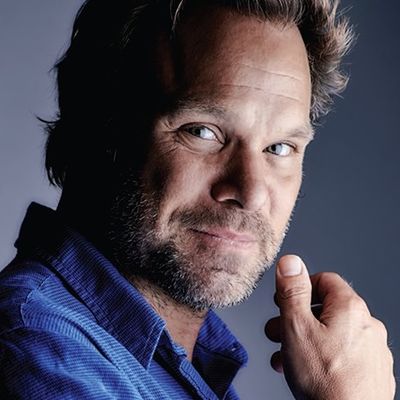
Norbert Leo Butz and Lauren Kennedy reunite to reflect on their journey as the original Cathy and Jamie in The Last Five Years. They share behind-the-scenes stories about the show's development, including how Jason Robert Brown shaped the music around their performances... Read More
From the show: Beltline to Broadway
Guests
Featured Shows

About
Norbert Leo Butz and Lauren Kennedy reunite to reflect on their journey as the original Cathy and Jamie in The Last Five Years. They share behind-the-scenes stories about the show's development, including how Jason Robert Brown shaped the music around their performances. The conversation explores the challenges of performing such an emotionally intense two-person musical, the struggles of engaging audiences with its unconventional structure, and how the show deeply influenced their personal and professional lives.
Norbert Leo Butz is a two-time Tony Award-winning actor known for his powerhouse performances in Dirty Rotten Scoundrels, Catch Me If You Can, and My Fair Lady. A versatile performer across stage and screen, he has appeared in TV series such as Bloodline, Fosse/Verdon, and Debris. Lauren Kennedy, a celebrated Broadway actress, is known for her roles in Sunset Boulevard, Side Show, and Spamalot. Beyond performing, she has made a name for herself as a producer and director, shaping the next generation of theater artists.
Transcript
This transcript was automatically generated and might contain errors.
[0:00] Lauren Van Hemert: Hi everybody, I'm Lauren Van Hemert, and this is Beltline to Broadway, where we talk about the theater from inside the Beltline to the bright lights of Broadway and beyond.
[0:27] Lauren Van Hemert: Time for you to step into the Beltline.
[0:33] Lauren Van Hemert: Sideways and step into the Beltline.
[0:36] Lauren Van Hemert: Time racing, step into the Beltline.
[0:39] Lauren Van Hemert: Time for you to step into Beltline to Broadway.
[0:47] Lauren Van Hemert: In the musical theater canon now, these two characters, Kathy and Jamie, they're characters we all know. If you're a musical theater kid, you know Kathy and Jamie, but you all knew them first. Talk to me about the development process of The Last Five Years and truly discovering these characters for the first time.
[1:10] Lauren Kennedy: When I went in for my initial audition and I got a callback, then he had me do a work session with him at his apartment. At that point, there were only like two songs he had written for Kathy, and I think a couple for Jamie as well. I mean, it was not fully written at all. So Norbert and I had this really incredible experience of those songs really being informed by us too as singers and actors. I think he had written "Still Hurting" and he had written "I Can Do Better Than That" for Kathy, and that was it. A lot of the songs were written, you know, once I was cast, and once Norbert was cast. So that was really a rare experience. You know, I just—I didn't, you know, besides the fact that my name was Kennedy, and you know, she was an Irish girl before she was the Shiksa goddess, that I was like, "Oh, yeah, that's why I'm cast."
Kennedy was a great name for that. Little did he know I'm actually Scottish, but it was amazing. Then getting to do some demo stuff and being in the studio with Norbert, and then like the rehearsal process was just like nothing I had ever experienced before because I had done new shows, but never like a two-hander or never like the lead. And with somebody like Jason, who I had also auditioned for Parade, and he didn't remember me. As a matter of fact, he saw me in a show at Paper Mill Playhouse and famously tells a story where he thought I was terrible in it. He told me that he even announced me on stage one time by saying, "She was completely misguided. She was absolutely terrible that night in Paper Mill Playhouse, ladies and gentlemen, Lauren Kennedy."
But that's also a great story because you don't ruin your chances with people just because you may not be amazing in one show. At least he gave me a chance to come in and sing for him. But I think he was a hundred percent like, "Oh, it's not gonna be her." And then it ended up being me. So you never know. Working with Norbert, though, was one of those unbelievably inspired moments where, you know, Norbert, if you will allow me to say a few nice things about you, or maybe even air some dirty laundry. He's the least precious actor on the planet. Like, he's an amazing actor, and he's like to his gut, he's like the real deal, but not precious and doesn't like overthink things. He's just super inspired.
It was so cool to work with him because anything he said or did was just interesting and smart and hard and felt deeply felt. I truly believe that working with him made me a better actor. I was not a great actor until that point. I didn't even know what I was doing. I thought about it too much. You know, I was like writing all the stupid musical theater things like, "Where am I going? What do I want? Who am I? What has somebody said about me? What do I say about myself?" I was just thinking too hard. And Norbert comes in and he's like, "Whatever." And he's so good. It's just so naturally good. I didn't know what I was getting involved in.
[4:20] Norbert Leo Butz: And it's so funny you should say he commented on a play you had done. I am more experienced in musicals. I know I have these Tony Awards or whatever, but the truth about me is that I didn't, especially during The Last Five Years, have very much experience in musical theater at all. I had done two professional musicals, and they were both on Broadway. My first musical I was ever in professionally was Rent on Broadway. Because, like I said, I always sang and I always played music, I always had bands, and I'm a guitar player, duos and trios, all that kind of stuff. I always continued to study, but I was in the acting department. So I was busy all through my 20s after I did my master's. I worked in regional theaters, but in plays only.
Nobody even knew I sang. It was like what I did with my friends in bars and clubs, blah blah blah. Jason had seen me in Rent, and I think that's how I had originally come. I got the audition for a workshop for Parade. When we got into the room, I agree with what Lauren said. There's something about the beauty of a small cast of two people, or three, and a director. It just means that there's only four or five people in the room at any given time, and you just become like a band, like a band of brothers and sisters. It's very intimate. Lauren and I had never met before. We didn't know each other. And like she's one of my dearest friends in the business. That was within like two weeks. You know, you do this kind of fast track.
And with a piece like that, you have to. I had this similar experience with Sherry Scott off-Broadway. Those characters, you're opening your hearts to each other, you're singing in each other's faces, huge notes, you know, you're falling in and out of there. There just has to be so much trust. There just has to be that permission in the room to say, "Hey, go for it." And I think because I didn't have more experience in musical theater, I didn't know what the rules were. So I just—I think maybe that's what Lauren's talking about, where I just kind of went for it. But having said that, we really worked on it. Daisy was our director, Daisy Prince, daughter of the legendary Hal Prince, of course, coolest, sweetest, warmest lady.
We did. We sat down, and you got to do the math a little bit. You got to fill in dramaturgically all of the stuff. We would work with the show, rehearsing it in a different order to try to see what that would bring. Yeah, because you can think about it like now it's part of the canon that people know so well, and everybody knows the sort of the way it goes backwards and they meet in the middle, or Kathy goes backwards. But for us, we were like, "What is this? Why did Jason think this is a great idea?" You know, and it was hard, it was kind of a hard sell. I remember even it was very hard because when you start that show, the actress playing Kathy has to spend 15 minutes preparing, you know, getting in that dark place for that first song.
Jamie's got to come in and right away start belting high-ass notes. So he's got to be part of the audience. It's like, "Whoa, whoa, that's a whole lot of emotions coming at them. We don't even know you people." So the audience is dropped in well into the action. They don't know if they care about these people. Why should we care that this couple breaks up? People break up every day. It was odd, and you could see them sitting back, like, "Hmm." Yeah, assessing, enjoying it, but in a kind of a cerebral place. You could feel that from the audience. It was really tricky to not go on the front foot. You know, we want to be liked so much, we want the applause, we want them. And this show doesn't work like that.
The actors have to just really trust, don't worry about the audience, and then you got to tell that story to each other. Yeah, Lauren would be out there belting her face off, and the applause would be like very polite. Same thing with all the Jamie's songs, and it wasn't that we weren't doing a great job; they're literally putting a puzzle piece together while this music is washing over them. It's a very tricky play to get right in the same way that sometimes Merrily We Roll Along is very difficult to get right. Anytime you have that conceit, you're instantly taking the audience from an emotional place to a cerebral place. They want to feel, but they just can't, and then it slowly starts to come.
So it's a genius thing that he's done. If he didn't have that cerebral kind of distance from the piece, you wouldn't be able to handle all the emotions. So he removes the audience in almost like an expressionistic way, so that you can begin to put this apart. And then the audience has got to do their work. A smart writer, a smart director makes the audience do their work. And again, like because it's so known in the vernacular now that everybody knows how it goes, and you're gonna pretty much know what's gonna happen anytime you watch it. But when Norbert and I were doing it at Northlight, nobody knew. Nobody knew the show at all. And it was so fascinating to also we would go out and have drinks and stuff afterwards and sometimes meet up with friends or people would see us while we were out.
It was very like Team Jamie, Team Kathy. You know, they definitely got invested in sort of the storytelling because it was so brand new, it was so fresh, and they didn't know what was happening, they didn't know what they were experiencing, and it was really wild. You just had to trust that we were telling the story and worry about, you know, Daisy, and Daisy will make sure they get it, but we just have to commit to the emotion of the songs.
[10:08] Lauren Kennedy: But I also felt like too, for me, because I was going backwards, and to Norbert's point, I literally did like for 10, 15 minutes before the show, I had to think about all the things that would get me in the right place. I was always and still am to a certain extent, sort of thought of as somebody who's more like sunny and frothy, and not like you're a deep, you know, dark actress. Honestly, I think The Last Five Years really helped to open up that part of me because what ended up happening was Kathy's an incredibly flawed human, and it was also hard for Jason to write because it was, you know, based on a real-life scenario that he had to be kind of like walk the right line. She did have some darkness, and she had some, you know, things that were really not, you know, perfect.
At least the character that I was creating at the time, that's what it felt like. But what helped me make her more interesting was the fact that it did go backwards. So, in essence, I started super dark, but that darkness informed the whole show for me. So, even when she was young, even when she was like, "I Can Do Better Than That," or had the whole world in front of her, it was still a little like there was something underneath. And I loved that as an exercise as an actress. It really helped me. And the way that Daisy directed it was we played in each other's scenes. So when Norbert was singing, "If I Didn't Believe in You," I was literally looking at him taking it. So he was singing this whole thing to me.
And I was like, you know, went through my experience as his scene partner, but then had to turn around and sing, "I Can Do Better Than That." So I'm like on the verge of tears, and then we're in the car and we're going to meet my parents. And so it had this awesome layer of like, oh, you know, like resentment towards him already, even though she was, you know, hopeful of her future, but she was still already resentful.
[12:04] Norbert Leo Butz: And it helped me play that. So I loved it. It was amazing. Yeah. And similarly, Jamie starts with this boyish brash exuberance and hope about the future. And that hope is just barely lit at the end when he's destroyed and heartbroken. It's that's what finally allows the audience to feel, and it's kind of gorgeous what he does. The audience doesn't get the full emotion of the piece until the last moment of the play, which is very difficult to do. It's difficult to end a play. It's one of the hardest things to do. It's so hard. And to end a play at the right time, which is when the play ends. Like the play ends because this is the right time for the play to end. And to really get that, it's almost impossible.
We've all seen plays where it's like, oh, this is the third ending. Not with him. It's so beautifully constructed, and it goes and the da da. They the waltz turns in, the waltz, they walk around each other, they turn to each other, lights out, and the audience gets the whole experience in that blackout. It's a real special piece in that way.
[13:19] Lauren Kennedy: How did the experience developing that work? Because it was fairly early in both of your careers. How did that experience inform your artistry as performers, as actors, you know, going forward?
[13:38] Norbert Leo Butz: The director Joe Mantello, who directed me in Wicked and a couple of other things, he was a brilliant actor, and Joe always told the story. You know, Joe famously was in the original production of Angels in America, the original Broadway production, and he played Lewis and was nominated for a Tony Award, and that was his first big job in New York. He was talking about the challenge of when your first experience is the greatest play written in a hundred years. You're so lucky, but at the same time, it's really tricky because you're like, uh, what do you do after Angels in America? I know what that kind of work feels like, and that's rare air. And it's similarly to The Last Five Years. If that's your benchmark for what a score should sound like and what you're looking for in character development, I mean, I'll be honest, I haven't really had a role since.
I've played many great roles, but in musicals, no, no, not even close, where I got to use all of my voice, all of me, all of my all of me, a holistic experience. Very, very, very rare for actually it's rare for men in musical theater, especially when you get into your, you know, Jamie's a young character, you get into your 40s and 50s, and there's not a lot of there's still great roles, there's not a lot of great singing roles for men in there. It was like Sweeney Todd, you know, Don Quixote, okay, name two more. But those are really kind of like there's not a lot of them, and that's a score that allows for that kind of singing.
[15:20] Lauren Kennedy: Well, I was just gonna say, on top of like it's setting such a high bar for me in terms of like what my expectation was as I was moving forward as an artist. Also, because the irony of me not being able to do it when we went to New York. So while we were in rehearsals at 890, I literally got the call from my agent that I got cast in South Pacific. And Norbert was, he intimately knows how much I struggled with that decision if I was gonna do it or not. Funnily enough, he had already been cast in Thou Shalt Not. So I actually thought it was gonna be him that wasn't gonna be able to do it if we went to New York. And then it ended up being a little bit.
[15:54] Norbert Leo Butz: Let me explain to Lauren. We did Skokie, and then the show went into kind of a legal no man's land for a while. There was a time when it was like, while it was being sort of held up in some litigation they were like you're our people we want you to stay but we understand if you have we have no New York producers we don't know what's gonna happen. And I was like Lauren gets this amazing opportunity she's like God I want to but I gotta go take this it was Nelly in South Pacific at the national I mean it's this huge job I mean just I had to do it and I left to go do a job I went left to go originate my first role on Broadway in this Harry Connick Jr. musical that just happened to be a big bomb and we oh previews uh 9-11 was during previews and we we just never we ran it for a couple months and not even and then we it closed so I was available when they got their legal stuff fixed they got the space and it kind of happened quickly and then it was like and then Lauren was on and ultimately as I look back on my life I mean to me is the way it worked out the way it was supposed to work out because actually when I knew that was going to happen and I wasn't going to be able to do it I was like well I you know Jason and I became such good friends and collaborators and I loved like I said I was obsessed with the music like anybody would be that I wrote him and I was like hey listen I I've been wanting to do an album can will you do it with me?
Can we do can we do like can can I do like a Lauren sings Jason's situation? He was like okay. I didn't expect him to say yes and I was like oh now I've got to do it. But again, like to me in the big picture of life that I wanted to be associated with him and his music, and the crazy like left-hand turn that I didn't know was going to be a thing is it taught me how to be a producer. It was the project that I like developed. I hired, I got insurance, I hired musicians, we did charts, I booked rooms, you know. And it's like I learned how to do what I'm doing now on that, and learned how to direct and do like tell a whole story with one you know piece of art, which was the album. So it was incredibly serendipitous to me, and in so many ways, put me on the trajectory of my second career, which I never really saw coming.
[18:09] Lauren Kennedy: So, you know, I every now and then on social media I will see a video of the two of you in that 2001 projection. When you look at those videos and that experience, what advice would you give your 20-something, 30-something, those people in that video now knowing what you what you know now?
[18:35] Norbert Leo Butz: What would I give? What would I tell my younger self? I don't know that I would tell my younger self anything. I look back on The Last Five Years, and I told you the story, he played me two songs, and I had to go to the bathroom. And the real secret of The Last Five Years is that I didn't know when I started The Last Five Years that my own marriage was falling apart. I was it was this very weird thing where I'm doing this play about this relationship falling apart, even some of the dynamics in the show. It was a really strange experience. And so my first wife and I were divorced like a year after The Last Five Years closed, like so during The Last Five Years. And it had started before that as well.
I guess I look back with some pride that I got through it. I had two small daughters. It was a really hard saying my I was I was playing a guy in a complicated marriage and I said really complicated marriage and I got through it as best I can I had great great scene partners. If I had to do it again I would tell my younger self to not drink so much or smoke cigarettes in between numbers because I was still doing things like that. I used to drink and smoke a lot. I stopped a long time ago but I would be singing that score knows and then I'd go out the back door and like have cigarettes or in New York I would sing that score in between shows and then go down to the Manetta Tavern and have like two vodka tonics and then go on and sing it again.
And I think I what I was doing was the show was so emotional. I found after doing it a while I no longer had a filter and it felt scary to be out there. Sometimes it felt like the emotions that were controlling me and me not controlling them. And I didn't understand it at the time because I it wasn't we we knew something was going on but it was like boiling underneath it wasn't until like the year after The Last Five Years where where it really fell apart and long story short I have a much better ending to my story. Two beautiful daughters we are dear friends we parent together and we've raised two beautiful girls and you know, it's and she's she and my wife, she's been fantastic to my wife.
I mean, I'm so lucky, so so so so lucky. But I but dealing with both of those things that your stage life can sometimes be totally unlike your character that you're playing in. Sometimes it can be quite similar. And those are those are those are good roles because you're really working with the real stuff, but they can be kind of dangerous after a while. So maybe I've been a little easier on the after after show drinks, but um we had some fun though.
[21:35] Lauren Kennedy: Um, we should go I I would say I would give myself the advice of just like hey, you could drink calm down. No, I dry, I would drink and I'd have a couple cigarettes or two for sure. Oh no, you didn't. I don't remember it. You would have done it just to be when I say a couple, I think I had two with you for fun. I was not a smoker, I never was though. But I definitely we definitely had a good time. I mean, it was a 70 minute show, and the two of us were like it was over at eight, like 820, because it started like 7:30, whatever. I can't do math. But it was over really early, and it was just like we would rent movies and Jason was there and Tom Murray, who's now the you know, conductor of Parade, and um Mary who was the cellist.
There was like a four or five of us that were just like this little crew in like smoky Illinois. And so, you know, we would just like hang out. We all became really good friends and it was really a fun time. But um, I would tell myself to just calm down a little bit, like relax, you know, you're gonna be fine. You don't have to be a star, just love the work, love the you know, the experiences. And um, you know, I stressed about my voice all the time. It was such a big sing. And I was in the prime of my vocal life, and I don't know why I was so worried and why I cared so so much. Um, which sometimes, by the way, makes it worse, you know, makes it harder to sing when you're so focused on it. Those were like life lessons that I learned in that that sort of period of time with that kind of pressure of that show on me.
Um, and I just really, really, really wanted to be good. And I just I would gripped, you know, I gripped a little bit more. So my the 50-year-old Lauren would look back and say, calm down, you're enough, you're fine, you're gonna be great. Relax.
[23:16] Lauren Van Hemert: If you like what you've heard on this episode and want to talk about it, I would like to invite you to join our online community on our website at www.beltlinetobroadway.org. You can also find us on Facebook, Instagram, TikTok, or Blue Sky at Beltline to Broadway. Until next time, I'll see you at the theater, and I'm gonna go to the world.
© Broadway Podcast Network, All Rights Reserved