

Robert Ariza (Hamilton, Spring Awakening) and Maya Jacobson (Fiddler on the Roof) join the podsquad to discuss how even quirky cult musicals like Little Shop carry deeper critiques of capitalism and power... Read More
From the show: Beltline to Broadway
Featured Shows
About
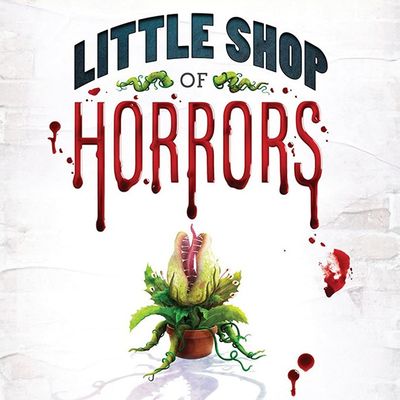
Robert Ariza (Hamilton, Spring Awakening) and Maya Jacobson (Fiddler on the Roof) join the podsquad to discuss how even quirky cult musicals like Little Shop carry deeper critiques of capitalism and power. While early in their careers, both actors bring insight into how the stage can be a space for healing, rebellion, and storytelling that transcends language and background.
Robert Ariza is a dynamic and versatile stage actor known for his work in boundary-breaking productions that blend artistry with activism. A proud alum of the groundbreaking Spring Awakening revival by Deaf West Theatre, Robert stepped into a unique role as a swing, learning American Sign Language from scratch to help bring an inclusive and visually stunning production to life on Broadway. His work reflects a deep commitment to storytelling that empowers marginalized voices and pushes the boundaries of traditional theater.
Robert’s journey has also led him to the national tours of Hamilton (Chicago), Les Misérables (North America), Natasha, Pierre & The Great Comet of 1812 (Shanghai).
Best known for her role in the acclaimed Yiddish Fiddler on the Roof, Maya Jacobson brought powerful emotional nuance to a production that not only celebrated Jewish heritage but also honored her own family's Holocaust history. Regionally, she has been seen in Beautiful: The Carole King Musical (Asolo Repertory Theatre), A Crucible 001 (Bard), Fiddler on the Roof (Paper Mill Playhouse), Fun Home (Studio Theatre), Fiddler on the Roof (The Lyric Opera of Chicago), A Walk on the Moon (George Street Playhouse).
Follow Beltline to Broadway on Instagram, Facebook, Bluesky or TikTok @beltlinetobroadway.
Transcript
This transcript was automatically generated and might contain errors.
[0:39] Lauren Van Hemert: Welcome to the Belt Line to Broadway podcast. I'm Lauren Van Hemert, your host, and on this episode, we are diving into one of my favorite shows, Little Shop of Horrors. For me, theater is as much about the experience as it is about story. And I have so many dreamy memories connected to this show, from sharing it with family and friends to witnessing my buddy Aaron Harrington make history as the longest running voice of Audrey Two off Broadway. So needless to say, I am a fan of the fly trap, which is why I was so excited to sit down with robert ariza and maya jacobson, who are playing Seymour and Audrey in the PlayMakers Repertory production. Here's our conversation.
[1:36] Lauren Van Hemert: Although the two of you are pretty young and early in your careers, you've had these really seminal musicals that you've been in. And so I kind of want to touch on that for a second because you both did two different musicals that I think really speak to the universality of theater. Robert, you did Spring Awakening, the Deaf West Broadway version. Maya, Yiddish Fiddler at the National Yiddish Theater directed by the unbelievable Joel Gray. How did these two productions so early in both your careers set you on a path of understanding the universal language of theater and art?
[2:28] maya jacobson: Yiddish Fiddler was so formative to my career and my beginning of my career and my interpretation of material as an artist. Um, my grandpa speaks Yiddish. And he's actually he's a Holocaust survivor. He came here at three years old and was on one of the last boats that was able to get to America. And so I I didn't grow up speaking Yiddish. I grew up speaking some Hebrew and my mom's a cantor, but then to marry this Jewish world that I've been very much a part of the fabric of who I am since I was very young, and theater, um, which is so important to me, married with Yiddish Fiddler. I mean, hearing those songs in the language that the people who would have come here would speak in, um, it was such a it was such an honor.
And every night during our pogrom scene, there was a big um parchment that said Torah in Hebrew, and during our pogrom um it would be torn. And every night for me, watching that in real time was so visceral, and you could feel the audience feeling that too um and then to be in the room with a legend, a true legend who has contributed so much to musical theater and watching him work and direct and working with Steven Skybel who was our Tevyah and then I I got to do um another production of Fiddler with him at the Chicago Lyric Opera um a year later or two years later what is time um but he is such a generous um brilliant actor and person and and I feel that watching him work was so formative to how I approach theater and and I just learned so much from him and Joel and so many people in that production.
[4:30] robert ariza: Yeah, so the original production of Spring Awakening came out when I was in high school and I was immediately obsessed listening to the cast recording and you know, it was like the soundtrack of my life at the time, right? Like it just was kind of permeating every aspect of it. And I remember going to an open call for the Broadway production and like, you know, hundreds of kids lined up around the block like trying to get seen for this thing and um like I think maybe like four months later or something like that I got called in to audition for I think it was a cover for Melchior and Moritz and I was like my mind was blown I was so excited. And then nothing ever came of that and then soon after that actually the production closed on Broadway and I was like, oh man, I had some such dreams of like being in Spring Awakening on Broadway, and now it's never gonna happen.
After I graduated from the University of Michigan, um, I was in a production of Spring Awakening at the Hangar Theater in Ithaca. Like a week after our production closed, they were casting the Spring Awakening uh the transfer from from uh from LA to Broadway for the Deaf West Revival. They were looking for a swing. And the director of the Spring Awakening that I did was like, make sure you get talk to your agents, get yourself in that room. Like you're exactly what they need for this. And I was like, I've never signed before in my life. I don't think I've ever even met a deaf person. But you know, I I got in that room and uh did what I could, and then they they taught us basically. It was like a work session where they taught us the sign language for the show for a scene and a song, and they were like, work on it, and a few days later you'll come back and you'll do it for the team.
And I did nothing but sign for all of those days from that work session until my final callback. And I ended up getting cast, and it was life-changing for so many ways for so many reasons. It did set the standard in terms of like uh the work ethic that I would have to find for the rest of my career. I mean, especially as a swing, you know, it's so much work. I was covering um all of the male tracks except for the adult. Um, and I had to learn basically all of the sign language in the show because of that. And it was hard and thrilling at the same time, and it just brings me so much pride to have been a part of it in some small way. And I don't know, I guess I kind of hope that someday I'll be a part of it again, maybe as the adult, because I feel like no, I might be a little too old to be in that cast.
[7:04] Lauren Van Hemert: Nah. Robert, I want to stick with you for a second because you were in the Chicago production of Hamilton. Hamilton was supposed to play the Kennedy Center and pulled out after Trump became the chairman of the board. Having been a part of the Hamilton community and the Hamilton zeitgeist, do you feel that theater has a place in taking a political stand?
[7:39] robert ariza: I always think of Hamilton saying, you know, if you stand for nothing, what do you stand for? Um and and I feel like Alexander Hamilton would approve. Yeah, I think theater is inherently political almost always, if not always. Because obviously his plays were like political and purposefully so, right? Like they were like in your face about it. Um, but I really think like we're doing this show Little Shop of Horrors, and you know, it's this bright, lovely comedy, and it's quirky and weird and this cult classic, but it is very political, you know. I mean, the messaging behind it, behind uh the the idea that capitalism is the enemy and that we cannot just like feed into this idea greedily is I mean it was inherent back then, and it's probably even more so now, right?
So I think I when I hear about uh things like like the the production of Hamilton uh canceling their engagement with the Kennedy Center upcoming, I I am proud of that. I'm proud that the that the creative team and and the producers were on the same page and and made the right decision because I do think it's the right decision. I think we're not living in normal times. I think that the Kennedy Center is unfortunately right now under control of an administration and a person specifically that has no respect for it, you know, and would rather see it become uh a tool for his own regime as opposed to what it was created for, which was a cultural hub for the arts, a place a national theater.
[9:31] maya jacobson: Exactly. A national theater and a theater that would express all kinds of views and and welcome all kinds of people to share in the love of art and music. So yeah, I am I'm glad to hear that they took such a strong stand.
[9:49] maya jacobson: Oh, so why Little Shop? Why now? Um to piggyback on what Robert was saying. Yeah. This this show is is so potent, I think, in in just the insidiousness of capitalism, of greed, of what power corrupts. Um yeah, it's anyone who comes and thinks it's just a good time, you know, there's nothing we can do on our end about that, but I I don't think it's possible to not be to have not have Skid Row and and that messaging penetrate the world that we are living in. I wanna talk um about the role of Audrey, because this role is for a long time was so defined by Ellen Green's performance.
[10:50] maya jacobson: But I also think because she had this iconic performance that for a while, subsequent Audreys were kind of cast in trying to fit that mold. And then after the pandemic and subsequent productions, we've seen this really beautiful evolution of Audrey being played by the incomparable Joy Woods, Woman of Color, Jinx Monsoon. So as you're diving into this role, how do you see the evolution of this character? Ellen Green is incredibly iconic. I feel that my Audrey is informed by her Audrey and also Jinx's Audrey and Joy's Audrey. I've really consumed a lot of what all of these women have done, and that's not to say that it's a copying or manufacturing, but um Ellen talks about how her Audrey was influenced by you know Marilyn Monroe and um Judy Holiday, and so I've also and and Faye Faye Ray, and so I've also watched a lot of clips and videos and films with those women too.
And so my Audrey is is me because I can't possibly be anyone else. Um, but it's also it's also a beautiful uh pot of of these of things that I've seen in these women and women in my life. Um and I do do a bit of uh I do I totally do a voice and an affectation because to me it feels good and it feels right. There's an innocence, there's a there's a childlike wonder, and and there's a there there are there's darkness and there's lightness, and I think a lot of people fit into that character.
[12:49] robert ariza: You were in the uh Virginia production directed by our Jeff Mianza here at Playmakers. So what did you learn from playing Seymour there that you can bring here? Uh on a purely technical level, I learned how much of a beast of a role it is. I mean, my gosh. And it's one of those things I think it's kind of similar to the way that people look at Little Shop. Like the way that I looked at it, at least before I was actually in it. You know, I c I always loved Little Shop, and it's always been like, oh, I yeah, it's a great show, you know. Um, but it really wasn't until I was in it and really dissecting it and like exploring it from within that I was like, wait, this is actually so brilliant. Because the book is just so tight.
The exposition is not spoon-fed, it's like very seamlessly uh woven through the text. And so in that way on a on a scale more macro scale, or maybe micro, I'm not sure how to put it, but with Seymour, it was like it was a role that I kind of was like, oh man, I feel like I'd be good at this role. But I it was for a long time, actually, a role that I didn't think anyone would ever consider before because it was played by white people for a really long time. And that mold had never been broken really for until I mean I I don't know who the first person was, but it wasn't till much recently that I would say that I I started to actually think, oh yeah, I could, you know, why not? You know, I have everything that I need to be able to play this role.
I am a self-proclaimed nerd, so I identify very much with that in Seymour. Um, but yeah, but getting to do it uh last summer at VTF, I I did. I really got to know just how much work it takes to bring this character to life and do it in a way that that's that feels authentic and still comedically entertaining, you know, because he goes through so much in this show, and it's it just like starts at one level and it kind of just continues. The way I like to describe Seymour is that he's in this constant state of anxiety, and every situation that he finds himself just worsens it. Even the good, even the good moments, like even in suddenly Seymour, like it's this like rush of emotions. It's like he never has a chance to kind of settle.
Everything just kind of gets stacked, and and that's the beauty of the show too, and in the movement of it, right? That that it just kind of propels you to its ending, to its inevitable ending. Um, so yeah, I think I think I have learned just how um important the show is and how masterful cra how masterfully crafted it is.
[15:35] maya jacobson: How do you find the balance of performing with a man-eating puppet? Obviously, tapping into the comedy of it, but also finding that authenticity, otherwise, this show just doesn't work. You know, something of I love about acting is that it really is just playing, especially in a show like this, that where I get to actually feel like I'm playing and and I'm experiencing these intense situations and these moments. It reminds me so much of the way that I used to play as a kid. So, you know, getting to work with a puppet and really like as a scene partner, there's no pretending, it feels like in the moment. Like I feel like this is a man-eating plant. I have kind of brought it to its full glory. And what do I do with that information? How how do you know like it feels real in the moment, you know? It's the monster you love to hate, but also like love. Because it's just it's fun, it's sexy, it's scary.
[16:39] robert ariza: I do want to ask you, so I don't think of Little Shop as a dance show. However, the amazing Tristan Andre is choreographing this piece. And what I love about Tristan is he is so connected to movement and body language and using body language to really tell a story. So can you talk about the movement and the choreography? I am lucky enough to say that this is my second time working with Tristan on this show because he also choreographed the production that it did last summer. And what I was blown to and blown away to to find was that that was his first time working on a musical. That was his first time choreographing a musical. And specifically, he had not really encountered Little Shop before.
So, with that being said, his immediate um knowledge of what the movement of the trio was supposed to look like and feel like spot on, spot on. And it's so infectious and very much in line with the way that the score is written, right? I mean, people walk away really humming the songs of the trio. The urchins. And um I can tell with now with with his uh prior experience now coming into this process, like he's fine-tuned some of his moments, he's made things sharper, you know, and it's been really cool to see how that helps elevate this trio even further in the storytelling of the show. And I mean, it like I I love it so much because it makes me want to dance. I'm not a dancer, but I I cannot help when they are singing Little Shop of Horrors at the top of the show, I'm like off stage waiting to enter, and I'm doing the choreographer choreography right along with them.
I mean, it's just so fun, you know. So yeah, I think Tristan is incredible. I I'm so glad that he is working on this production. Any production would be so lucky to have Tristan at the helm of movement. Um the way that I mean, our our trio, uh, Shayla, Shelby, and Bria are just so good. And so the combo of having someone choreograph, because they they are doing most of the dancing in this show. Having these three just carry this journey of movement and and it's it's it's infectious and it's so motivated by story. Tristan doesn't do anything without the intention of story. So you're not seeing movement that's not informed by what's happening in the lyrics or what's happening in the music or where we are in in the story. So it's just he's everything.
[19:28] maya jacobson: What do you think about the show has made it so beloved for so long? I think it's a perfect musical comedy. I think it's perfect. I I completely agree with what Robert says that there are no skip songs, there are no lines that are feel unnecessary. I mean Howard Ashman and Alan Mankin made a perfect musical. Yeah, I 100% agree. I think that one of the reasons why it is become this cult classic and even beyond a cult classic at this point. Now it is just it is just the classic, is because it is so charming and and it charms an audience regardless of where they're coming from. And that is the magic of their writing. They they're able to lull an audience into this state of entertainment while also telling them what's really up, you know, underneath the surface.
I think they knew exactly what the show was from the beginning. And I think that is my criticism of a lot of theater that I see these days is that it's like I feel an uncertainty when I'm watching it about like how what is this show? Is it supposed to be a drama? Is it supposed to be a comedy? Is it supposed to be both? But then how do you navigate that line without it feeling like it doesn't know what it is, right? But this show knows exactly what it is. I could do it again and again and again. The playmakers repertory production of Little Shop of Horrors runs April 9th through 27th in Chapel Hill. I'll put additional information in the episode notes. If you like what you've heard on this episode, subscribe to the podcast, follow us on social media on Blue Sky, Facebook, Instagram, or TikTok at Beltline to Broadway, or check us out online at www.beltline to broadway.org. Until next time, I'll see you at the theater.
© Broadway Podcast Network, All Rights Reserved