

The incomparable Carmen Cusack—Tony-nominated star of Bright Star, Wicked, and Flying Over Sunset joins the pod squad. She shares the fascinating arc of her career, from training as an opera singer to finding her authentic voice in roles that defy genre conventions... Read More
From the show: Beltline to Broadway
Guests
About
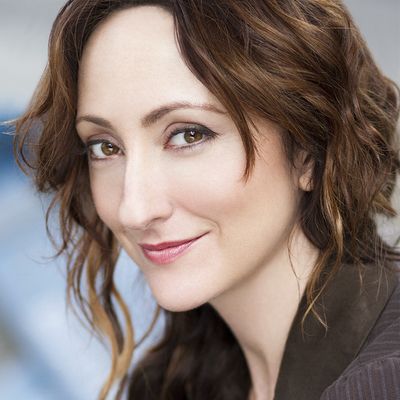
The incomparable Carmen Cusack—Tony-nominated star of Bright Star, Wicked, and Flying Over Sunset joins the pod squad. She shares the fascinating arc of her career, from training as an opera singer to finding her authentic voice in roles that defy genre conventions. She also offers a behind-the-scenes look at her artistic process as she prepares for an immersive concert at Theatre Raleigh. With humor, honesty, and soul, Carmen Cusack reminds us why she's one of the most compelling performers working today.
Carmen Cusack is a Tony-nominated actress and singer best known for originating the role of Alice Murphy in Bright Star, for which she received critical acclaim. With a rich background in opera, gospel, and contemporary music, she has brought powerhouse performances to the stage in roles like Elphaba in Wicked, Clare Boothe Luce in Flying Over Sunset, and Nellie Forbush in South Pacific. A genre-defying artist, Carmen continues to forge new paths as a musician, storyteller, and collaborator in both musical theater and original music projects.
Transcript
This transcript was automatically generated and might contain errors.
[0:15] Lauren Van Hemert: Time for you to step into the Beltline to Broadway podcast. I'm Lauren Van Hemert, your host, and on this episode, I'm chatting with Carmen Cusack. From her Tony-nominated performances as Alice Murphy in Bright Star to commanding the stage in Flying Over Sunset and Wicked, Carmen's voice and presence have activated audiences around the world. But Carmen's interest in musical theater takes a back seat to creating her own music. She tells me that she is currently experimenting with some new sounds for her upcoming concert at Theatre Raleigh, which feels like a far cry from where she began on the West End. Here's our conversation.
[1:46] Carmen Cusack: So where is your voice naturally landing?
[1:53] Lauren Van Hemert: And how do you nurture that instrument to keep that range?
[1:58] Carmen Cusack: Well, let me just say if anyone were to ask me to play Christine Daaé at this second, I would say go fall off a cliff because I wouldn't be able to do it. I've grown out of that kind of soprano-y, legit voice. I did train operatically when I was growing up, and so that was just a no-brainer. Of course, I'm gonna play Christine because I'm a coloratura. I trained in opera. I was professionally trained by a professor when I was in high school. So I started early, and that just kind of was there early on. But then I also went to church and sang gospel. So I had these different styles growing up. I sang and then I would sing, you know, off the radio and mimic all my favorite singers, you know, and so I guess I just learned a lot of it.
I self-taught myself what my instrument was at a really young age. But then when my mother people started coming to my mom and saying, "Hey, she's got quite a voice," then it started becoming serious, and then I started getting trained properly with a professor. But I always had those various styles in me. I guess I was just a little bit of an impersonator when I was little, you know, just trying to make myself sound like all these different people. And I kept all of that stuff with me. Now, what does Carmen Cusack sound like? What would I sound like? I would say the role that suits me closest to my own voice was Bright Star.
[3:43] Lauren Van Hemert: That makes sense, right?
[3:45] Carmen Cusack: Yes, absolutely, that makes sense. And I think fans know you for that role. And so I kind of want to go there for a second because Steve Martin and Edie Brickell—talk about working with these two icons.
[4:06] Carmen Cusack: I don't think Steve Martin is really known as a musical icon, but he's so musical. You heard it, just listen to him on the banjo. I would say, yeah, he's incredibly, incredibly musical. So talk about helping develop Bright Star and really developing your role because your role really was written as kind of a small part and then wasn't.
[4:28] Carmen Cusack: Yeah, it kind of originally was supposed to be Billy Kane's journey, who is the young man that we end up realizing is my son. But it was really supposed to be through his eyes the show. As they started to pull it apart and put it back together, as you do in these processes with new musicals, you pull them apart, put them back together, throw a lot of stuff to the wall and see what sticks. Especially watching this journey with Steve Martin being a comedian, he's fearless in what he experiments with. Watching him do crazy things that I thought were wild, and yet enjoying it, having a great time with it. But all of a sudden, of course, obviously, some of it was a little too wild. But as we went through the process, the more and more I think they started to dig into it, they started to realize that the deeper story, the more interesting story was the woman's story.
And as often is the case, and hopefully is changing, seeing something through a woman's perspective, having a woman's story on the stage, needed to be told. And so that's what kind of gave them this focus on what they were really trying to do when they focused in on actually this story is Alice Murphy, Alice's story. They started writing amazing music for me, and Edie and I just had a great time because her sensibility of rhythm and soul is just so on the same page as me. We were both Texas girls, and it just really we started to understand that we had a real kind of soulful connection. It just started to be not throwing things at the wall and seeing what sticks. It started to become, okay, we know what we're doing. And then we flew with it.
[6:56] Lauren Van Hemert: I love that. Did working with her inform how you approach your own music?
[7:05] Carmen Cusack: Absolutely. It's crazy how similar in just rhythms, quirk, style—it's bizarre how connected I feel to her style. And it's funny that you're asking this because we've been talking about making an album together, which I'm really excited about. It's because we just kind of get each other in a lot of ways and we understand and appreciate soulful, interesting stories. She's just an incredibly gifted, prolific woman, and anytime I'm in her presence, I feel like I'm floating, you know, because it's almost as if I've met my twin. But I know we're not; our lives are very, very different. But sometimes when you just turn on the radio and you think, "I feel like I know that person" because of the way that they're creating, the way that they're singing that song, the way they're putting this story together, you just feel like you have a connection with them that's kind of indescribable, and that's what I felt and still feel constantly with her.
[8:26] Carmen Cusack: And I think what I love about Bright Star so much is when I first saw it, and I feel the same way about Hadestown, it didn't sound like any other musical theater I had heard at that time. It sounded just so different. I love it when musical theater doesn't necessarily sound like musical theater.
[9:01] Lauren Van Hemert: I totally agree. I honestly, when I've been asked this many times, you know, what's my favorite musical? I really can't say because I usually say musical theater is not my favorite genre of music at all. So I tend to veer away from the musical theater sound and kind of always—I'm more drawn to a different kind of style. So yeah, Bright Star was just a no-brainer.
[9:34] Carmen Cusack: Do you view yourself as a singer who acts or a musician?
[9:41] Lauren Van Hemert: Yes.
[9:43] Carmen Cusack: I view myself now—I’ve never had before—but I've realized now that I am a musician. And I always have been. But it took me a moment to pick up a guitar and realize that it was coming from a desire, but also a deep almost genetic connection because, well, I knew my real birth father was an incredible musician, incredible guitarist. It never dawned on me to pick one up and be able to play it like he does. But when I did finally pick one up and start playing, I realized, oh god, this feels like I've done this before in another life. Have you ever picked something up and thought, oh my god, I should have known this ten years ago? That's what it really felt like. I thought, well, this just feels so natural.
When I was learning music and going to university and studying music, the piano did not come naturally to me. And even though I have these crazy long fingers—look how long my fingers are! They're like E.T. fingers. As much as I tried, it just never came natural. Then I picked up the guitar and I was like, oh, wait a minute, whoa, this feels like I've done this before. I'm not saying that I'm great, nothing like my dad was, but I immediately felt like, oh, I am a musician. I've always been a musician because if you're a singer, that is your instrument. You are a musician just through that alone. But then to have this other thing, I do also feel that I'm an actor. I've always just wanted to act or just sing.
Putting the two together was not necessarily the aim I was going for, but I landed in it, and I'm very grateful because I get to do both. I get to sing and act and sing all sorts of different styles and just keep it interesting.
[11:53] Lauren Van Hemert: The musical theater aspect and the acting aspect, I almost feel like flexes two different muscles for you. In this particular article, you were talking about wanting to do straight plays so you would be taken seriously as an actor. Are there straight plays in your future, and do you still have that desire? Or is the desire to make more music or both?
[12:17] Carmen Cusack: Well, I'm talking to an artistic director right now in regards to a certain Tennessee Williams play that I'm really excited about. It was something that was offered a couple of years ago, and I couldn't really commit to it because there were too many other things on the burner. But it's still something I want to do. So we'll see. We shall see. And I truly feel that Broadway is having a moment with straight plays right now.
[12:52] Lauren Van Hemert: Yeah.
[12:52] Carmen Cusack: The amount of plays and contemporary writers that are doing such amazing work—oh my god, yeah. Plays are having a moment.
[13:02] Lauren Van Hemert: Yeah, I'm almost tempted to go. I've got a birthday coming up, and I'm almost tempted to go to Broadway just to do nothing because every time I go to New York, it's always to work, to work, to work, to work. But I'm tempted to go to New York to just be fulfilled, be edified by my other peers doing great work. So we'll see.
[13:24] Carmen Cusack: Speaking of other great work, I do want to touch on Wicked. You played Elphaba in the first national tour and then went to Australia. Is it surprising to you that we are still talking about this show ten years later and that it has become the juggernaut that it is?
[13:36] Carmen Cusack: A little bit, yeah. It is surprising to me. For me, because I mean, it was so long ago that I did that. It feels like another universe ago that I did that role. And I had actually, as I'd mentioned before, musical theater wasn't like my first and foremost. I wanted to just be a singer and then on the side act. So I took a year off. I just got tired of the roles that they were asking me to audition for, and nothing was really so exciting to me. So I just thought, you know what? I want to focus on music. I want to focus on my musicianship and work with other musicians. So I took a year. I didn't think it was gonna be just a year, but then I took a year off and decided I was just gonna sing jazz. I was just gonna hit all the jazz venues in London and all over the UK. And I said, if something comes up that really perks my interest in musical theater, then I'll do it. And then, of course, Wicked came up.
[14:39] Carmen Cusack: And uh I thought, well, this is a challenging role. This is hitting all of the challenges that I, you know, I haven't yet had in this genre, and let's see if I can do it. And then I've started, you know, singing "Defying Gravity" and all the other songs that she does, and thought okay, it's not something I want to do forever, but I kind of want to play this role. I want to play this green girl and see how that feels, see if the shoe fits. So I did, and what was so great about it is I was in the UK for like 14 years and I auditioned for this role. I decided to come back off the jazz tour because I wanted to make some money again, and being a jazz singer doesn't pay the bills really. So I thought, well, I'll audition for this.
And they said, oh, okay. Um, we want you, but we want to take you back to the States. Would you be interested in coming back to the States? And I was like, yeah, I would actually. I've been trying to find a reason to get back, but I needed a job to go to to get back to the States. Um, and uh, but now I don't regret the 14 years of being in the UK because I can always go back, especially right now. There's an option to go back to the UK. And um, so yeah, I'm just uh I'm very blessed that I've had these opportunities come up. Um, but going back to "Wicked," I am a little bit surprised. I'm not surprised that the movie came out and it was a huge hit, and that's why we're talking about it. But I haven't, I know you're gonna ask the next question is gonna be, have you seen the movie?
And I can say no, I haven't. I haven't. And I'm even talking to Christopher Ashley, who was the director I just worked with on a show called "Three Summers of Lincoln" in La Jolla Playhouse, and he was like, let's go see the movie. I'm like, okay. It was a hard role to do eight times a week. Let's just say it was one of those that I was really glad to see the back of because it was just a lot, a lot, a lot of work. I did read that your opera training, because you were classically trained, really helped you because there are so many actresses that hurt themselves.
[17:15] Carmen Cusack: Yeah, it's a beast. That's why I ended up in Australia doing it because I'd finished my contract. I never thought I was ever gonna see that role ever again. And the next thing I know, I get a phone call, and um they're saying, you know, I think it has something to do with the fact that I could work in the UK and my visa was one that could be worked around. I don't know if it, I'm maybe I'm just making this up, but for some reason I was able to go straight to Australia and work and take over um the position of this girl who had heard her voice needed surgery. And um, but while I was there, I was negotiating my contract for Lincoln Center National Tour "South Pacific" at that time. That's how long ago that was.
Um, and so I, you know, was in Australia and they kept saying, can you stay for another week? She's not ready yet, she's not ready yet. And well, I'm thinking, well, she's never, she's not gonna be ready. Um, she just had surgery on her voice. There's no way she's gonna be able to sing "Elphaba" next week. It's just not gonna happen. "Elphaba," it's like unless you understand the mechanics and the absolute discipline and the marathon, the athleticism of that role. Um, do you understand? It's just you cannot have surgery and then go straight back into singing "Elphaba." Um, and I just sat there thinking, I could sit here for six weeks, three months, and she's still gonna need more time, you know.
But I wasn't my call, but I just kept staying as long as I could until I had to absolutely come back to the States and start rehearsal for "South Pacific." But she wasn't, you know, it can be a real, it's a really hard role um unless you know exactly what you're doing with your voice. And I would suggest to anyone that really wants to go into musical theater on any degree and hold on to any role and sing something eight times a week that's bouncing that your cords are like doing this eight times a week for three hours every day. Um, and sometimes six hours, you know, if you're when you're doing two shows a day um I would strongly suggest opera training to understand how to protect yourself. I love that you said that because I do feel like we're living in this YouTube generation and so many people jump online and try to um mimic their favorite pop singers, favorite theater musical theater singers, and it unless you're trained you can really, even those who are trained have screwed up their voices, no joke.
Yeah, it's kind of not what you should, I mean six and two, you know, I think most large roles should have um an alternate just period um because eight shows a week is hard on anybody. But I think what people do is they think, oh I can sing this song, I can hit all those notes, but can you do it eight times a week? Um, the voice is a muscle and you have to train it as you would any, as any athlete would train to run a marathon. The voice is a muscle and you have to train it. Um, there's that's the, you know, the simple, it's just as simple as that. You have to train it and you have to maintain it and um, you have to look after it as you would as athletes have to look after themselves.
[20:54] Lauren Van Hemert: Last fall you were here in Theatre Raleigh doing "Bull Durham," playing Annie Savoy in this new musical. How did your experience helping develop "Bright Star" and even working on the reworked version of "First Wives Club"? How did those experiences inform how you approached "Bull Durham" here in Raleigh?
[21:22] Carmen Cusack: Well, I think experience in general helps you through every, you know, every new job because every new job is just going to be so different. You're dealing with very, very different people. Anyone that's, you know, creative um and are putting their hearts out there to give to you and entrust you to make it fly, to make it beautiful, to make it work. Um, they're giving a lot, they're giving so much of themselves up to you. And so it's a very, very vulnerable position. And every process is because of that, every process is oh, oh, oh, so different, you know. Sometimes you work with people that really want and want your input and want your ideas and what your thoughts, but then there's um, you know, a discrepancy there.
How much should you offer then the, you know, to the point that, oh, maybe I'm helping you write this, and you know, what is that another conversation? So it's just it's a very fine line to navigate um every single time I go into these rooms and start um the collaborative process. And that's all I like to do these days. All I want to do is new material and work with creators and creatives. Um, but there is, you know, it's always that fine line of sharing and being in a collaborative spirit where everything is sh is is great is is under is is understood as um uh everyone trying to solve a problem. Sometimes that gets misconstrued. And so you have to, and I've learned that, you know, on certain um certain projects I've re I've learned that you know, you have to just read the room really carefully and decide do they really want my ideas for or is that gonna or are they gonna feel like their authority is being undermined, you know, or their creative, you know, are they gonna so it's it is it is like navigating and you gotta figure out people's personalities, you've got to figure out their sensitivities.
It's like being in a, being a therapist in a sense. You really have to understand each and every individual in their different places in life and in their different um moments in, you know, m there's some writers that have been throwing this stuff out all the time and they're not so precious. And then there's new brand new writers that are very precious and yet do and because they're new, they need how they need some cap, you know, they need your advice, they need your expertise. But you know, you have to be careful.
[24:15] Carmen Cusack: Yeah. So it's been a real learning curve all the way around. And there is no one in experience um that was like the big, oh, that's how you do it, you know, because they're all so very, very different. And creators, writers, musicians, um, composers, they're all so beautifully different in their personalities and the way that they approach their work. And that's what makes it so interesting for me. That's why I love doing it. I think my second major in college was um being a therapist. I that was my next what I would fall at what I would end up doing if I couldn't make, you know, acting and singing work, you know. And I find that I'm able to use those that in these collaborative ways.
[25:00] Lauren Van Hemert: Were you a baseball fan?
[25:02] Carmen Cusack: Well I, I mean I love, I I think I realized that I was a baseball fan because I really, really enjoyed being in the park and watching that. I, you know, I didn't grow up, I didn't have a dad that was taking me to the baseball game every day, you know, every week so that was that was a totally kind of a new experience for me that I was just had a great time with but I, I had known the movie "Bull Durham." I'm a huge Susan Sarandon fan and and Ron Shelton, um all of his sports films are just definitely worth looking at again because there's so he's so um he's just such a smart man and he knows so much about what he's doing in this from the sports aspect to the directing and the writing and I just knew I was going to be in good hands with him.
If he was the one that had wrote the film and and directed the film and and he was going to put this on the stage I was going to be there. And then he takes us to all these baseball games and now I'm yeah, you know you're never gonna turn down uh going to the baseball field with Ron Shelton. I mean there's just it has had its run and I know that they, you know, they've been working on this for I would say like 15 years. But what I think what they've come to realize is that we need to give them the movie on the stage. And uh I think that's what we've landed on, and I think that that's what's really working.
[26:26] Carmen Cusack: You're now returning to Theatre Raleigh for a concert. And I read that, you know, whenever a show goes to Broadway and goes through this development process, of course, there's going to be um songs that are cut. And I did read that there were songs cut from "Bright Star" that you enjoy performing in concert. So will we get to hear some of those? Will we get to hear some from the album? What are we gonna hear?
[26:52] Carmen Cusack: You know what? That's just brought up a really good idea to me because yeah, there was um that's a great idea. I hadn't thought of that. Uh there are some a couple of songs that I just were very, very dear to my heart that were cut that were taken away out of the what happened on the stage, the original Broadway version of "Bright Star." So I might just add, I've got one in particular in mind that I think would really sit nicely. And I I'd have to I have to look at the we're still pricking, you know, we're still grooming and pruning the set right now. But that's kind of a fun idea. I might I might throw one little one in there that's that's not been heard that was written for "Bright Star" and didn't because those they love that kind of stuff, don't they?
But no, what I what I really wanted to ex what I'm excited about is that I'm getting to work with I I've just been writing the last year. I wrote and and recorded some new music, and I and I found this guy who has a studio, but he's kind of a multi-instrumentalist and he has all these really cool sounds, and um so I'm bringing him with me, and we're going to experiment with some new um sounds. We're making it more of an immersive this this that this evening that I'm that I'm the that I'm taking to Raleigh is gonna be a little bit more immersive and it's gonna be using it. People will see how it's made. You know, he's a producer, he's also um an engineer. They're gonna see something that I hope they haven't seen before in my shows. Um, where it's gonna be gonna see it basically they're gonna see how the sausage is made. It's gonna be a theatrical kind of immersive kind of experience, hopefully, for everybody.
[28:37] Lauren Van Hemert: Carmen Cusack will be performing in concert at Theatre Raleigh on May 10th. For more information, visit theaterraleigh.com. If you like what you've heard during this episode, be sure to subscribe to this podcast. Follow me on social media, on Instagram, Facebook, Twitter, or Blue Sky at Beltline to Broadway, or visit us online at www.beltline to broadway.org. Until next time, I'll see you at the theater.
[29:10] Lauren Van Hemert: Beltline to Broadway.
© Broadway Podcast Network, All Rights Reserved