

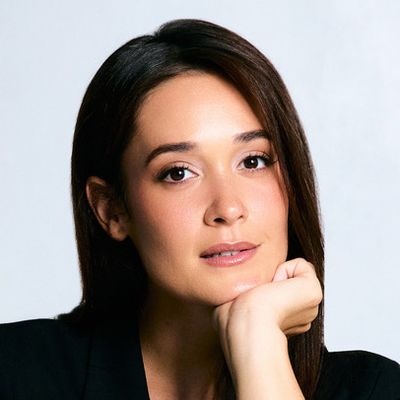
Gerianne Perez (Operation Mincemeat) joins the pod squad to talk about her journey from singing in her high school's show choir to Broadway. Hear what she has to say about the importance of representation in theater, the quiet confidence learned from working with powerhouse women, and the performer mindset that helps overcome nerves... Read More
From the show: Beltline to Broadway
Guests
Featured Shows
About
Gerianne Perez (Operation Mincemeat) joins the pod squad to talk about her journey from singing in her high school's show choir to Broadway. Hear what she has to say about the importance of representation in theater, the quiet confidence learned from working with powerhouse women, and the performer mindset that helps overcome nerves.
Gerianne Perez is a powerhouse performer known for her soaring vocals, emotional depth, and commanding stage presence. A proud New Yorker of Puerto Rican descent, she has built a dynamic career spanning Broadway and several national tours.
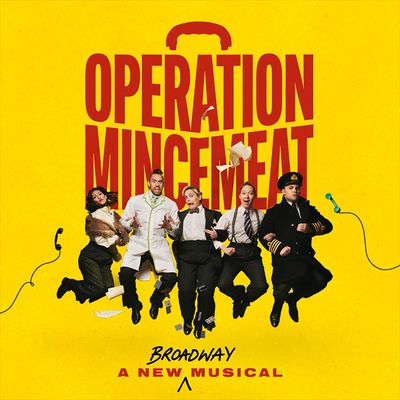
She made her Broadway debut in the groundbreaking a cappella musical In Transit and went on to appear in Waitress, where her vocal strength and heartfelt performance left a lasting mark. Most recently, she is standing by for the tour de force role of Montagu in the U.S. premiere of the West End hit Operation Mincemeat, earning praise for her comedic brilliance and versatility in one of the most buzzed-about new musicals of the season.
Her national tour credits include Vocalosity, Waitress, and the original U.S. Boleyn Tour company of SIX, where she originated the role of Catherine of Aragon. Gerianne has also worked extensively in regional theatre, bringing warmth, wit, and vocal fire to both classic and contemporary roles. For more information visit www.gerianneperez.com.
Be sure to follow Beltline to Broadway on social media @beltlinetobroadway OR visit us online at www.beltlinetobroadway.org.
Transcript
This transcript was automatically generated and might contain errors.
[0:30] Lauren Van Hemert: This is the Beltline to Broadway podcast.
[0:43] Lauren Van Hemert: I'm Lauren Van Hemert, your host, and on this episode, I'm chatting with Gerianne Perez. Perez currently can be seen as a standby for the tour de force role of Monty in Operation Mincemeat on Broadway. She tells me that as a proud New Yorker of Puerto Rican descent, there is no place she'd rather be. Here's our conversation.
[1:59] Gerianne Perez: We're putting their all into this, and I learned so much from them that I was like, I could make a career of this. And more than anything, I felt like I would love to do this. One thing I know about artists is we could be successful at a lot of things, but there was nothing that I thought would be as fulfilling as going into theater and performing for a career. I've said before on other podcasts, I wanted to be a neurologist. I could have actually gone to a program and gotten a full ride to be a choir director, and those are things I probably would have been great at, but somehow I stumbled upon this thing that I'm doing now, and I still love it. I really do. So I made the right choice, but I feel like it was a bit cumulative, and then by senior year, I really had to make the choice.
What am I going to school for? I didn't have parents who necessarily were the, let's take a gap year. Let's just have you go to school and kind of figure things out. I have career-based parents and parents who wanted that for their kid, and so that's when I had to make the choice, and it was the right one for me. My husband's an engineer, very science, math-minded, and so I see the way he breaks down problems and compartmentalizes things to come up with solutions. Because you have this science brain, does that help you navigate the emotional roller coaster that is this business?
[3:36] Gerianne Perez: Yeah, I mean, I guess I would have never thought of it like that, but I understand what you mean about the sort of compartmentalizing. I think that, to be quite honest, what helps me most with rejection and the ups and downs of this career has to do a bit more with my own personal mindfulness practice and my mental health practices versus my sort of science and logic brain. Now, my science and logic brain is what can always give me the perspective, hey, this is a business. Hey, sometimes it's not personal. Hey, it's about the money. They want to trust that you can carry a show because at the end of the day, you're selling a product, which is a show, and you need ticket sales. Producers need to be able to trust you with something like that.
So I would say that that's where the logic can come in of sometimes being like, it's not always about me. It's about whether I'm a right fit for a show. But yeah, I would say the things that keep me grounded and keep me, I guess, maybe less emotional have to do with those mental health practices, mindfulness, kind words to my self-affirmations. My coach has me doing mirror work these days, which can all sound very woo-woo, but I think in a business as crazy as the one that I'm in, I need anything to keep me tethered to the ground, and that's what does. I feel like mindfulness and rituals, no matter how woo-woo they seem, ground you in any profession.
[5:13] Gerianne Perez: And so I feel like as I was scrolling through your social media, the fact that you are so transparent about that, so transparent about the anxiety, despite all these incredible roles that you've had and experiences, it's so relatable. That's the positive side of social media, I think, for young people who are aspiring to do what you do. What are some of the mindfulness rituals that you do to get ready for a put-in?
[5:50] Gerianne Perez: Thank you so much for saying that. I have had a really lovely outpouring of support for the transparency because I think that not enough people talk about it, in my personal opinion. And also, I think that there's a good amount of people who sometimes don't go into the industry or leave the industry because they struggle with this, and there aren't enough resources for how to navigate through it. I have said before that it's about making your way through, but squashing my nerves is never going to happen. I am always going to get the jitters before a high-pressure performance situation, especially an audition, for example. But in terms of some of my practices, I have a myriad of things that I'll do.
One of the great things is you can journal. And within journaling, I'm journaling about the thing that I'm afraid of going well. I'm talking about, hey, so this first time that you go on for this role that you understudy, you're going to step on the stage, and you're going to feel grounded, and your breath is going to be with you, and the audience is going to be with you, and the company is going to be behind you, and it's going to be a beautiful experience. And it's just going to be wonderful. It's about visualizing and journaling out this thing that you're afraid of. You're visualizing it going well. The same thing happened for my audition process for Operation Mincemeat, for example. My coach was having me journal what my audition day looked like, so much so of saying, what do I have for breakfast?
Then do I do some yoga and some stretching to kind of get into my body? Then I get into the room, and the room feels like people who are already my co-workers. They are looking for their problem to be solved, and I am the solution. I am the person that they want. It's about seeing all of the best case scenarios. It's just so much more likely to happen if you visualize it, if you really kind of put that seed in your brain that things can go well.
[7:56] Gerianne Perez: Another thing that I will do is meditate. Now, you can do meditation in various forms. You can just kind of sit in a quiet room with silence. Let your thoughts come and go. You know what I mean? Or you can do guided meditation. Sometimes I'll do meditations that are positive visualizations or are specifically about anxiety. Those will walk me through some breathwork things and stuff like that. That'll really kind of help. Again, it's all about grounding. It's all coming back to I am here in this moment. I am present. I also think that sometimes anxiety comes from thinking the worst thing can happen, so you really have to kind of help yourself let go of those big fears because you don't know that those things are going to happen. It's about kind of like taking control of the worst case scenario, if that makes sense.
[9:52] Gerianne Perez: Yes, and then the last thing I will say is definitely yoga and stretching, moving your body. It's not just about mentally prepping yourself. It's about feeling connected to this whole vessel. Those are some of the biggest and most essential grounding practices that I do.
[10:06] Lauren Van Hemert: I love this so much because I feel like what you're speaking to is having a toolbox. You have a toolbox of mindfulness tools that you access when you need them to cope with and give you the strategies. I think we normalize having the mist for your throat and all of these physical tools, but I don't think we normalize enough having the mindset toolbox. I love that you're speaking to that.
[10:49] Gerianne Perez: Absolutely. You have to have all of your self-care practices like, hey, before my audition, I warm up, I steam, I do this, this, and that, but it's also about how do you mentally get prepared to do something under pressure, under adrenaline? You have to have that as well. One of the things I love so much about your career so far is you have worked with some incredible women from In Transit and being your Broadway debut. That's no slouchy thing right there.
[11:26] Gerianne Perez: Not at all. I earned my stripes with that one.
[11:31] Lauren Van Hemert: Yeah. Your Broadway debut in In Transit with the great Kathleen Marshall and then working alongside Sara Bareilles and working on the national tour of Six. In Transit is penned some of the music and lyrics by Kristen Anderson Lopez. I feel like there's these incredible women. So what have you learned from these women, especially the ones that you worked with so early in your career in In Transit? What did you learn from them that informed how you approached this business as a strong female powerhouse performer?
[11:59] Gerianne Perez: Oh my goodness, so much. Thank you for pointing that out. That has been always something that has been a little secret of mine. It's just all of the wonderful women and non-binary folks that I have gotten to work with in my career. Everybody knows that to be a woman in power is hard, right? We have to be a very specific thing in order to be received well. I think one of the biggest things that I have learned from the women that I've worked with is they always had a quiet confidence about them. They never apologized for their presence in a room. They knew that if they were in that room, they had really, really earned it. And that was what was brilliant about working with Sara, Diane Paulus, Kathleen Marshall, Kristen Anderson-Lopez, the team from Six.
It's this quiet confidence. Typically, they knew they couldn't be the loudest person in the room. They could never come off too stern, too harsh. They could never really let their ego get too large to the point where arguments were being had. It's just in all of them. Also, Lauren Lataro, another wonderful, wonderful woman who was on the creative team for Waitress. They all never apologized for their presence, but they seemed to be very careful with how they asserted not dominance, but asserted their authority, if that makes sense. I think that speaks to being a woman in this industry. There are some things that we can't get away with that, humbly, I will say the opposite gender can. There are moments when I have learned the wrong way that I should have stayed quiet about something.
Maybe let somebody else fall on the sword for that issue about that thing in that show. I think, yeah, just back to it, and I've said it a third time now, having confidence in being there and knowing that you have a right to be there. Yeah, that's the biggest thing.
[13:54] Lauren Van Hemert: I want to touch on Waitress. I love that show so much. I did see the show right after COVID. I interviewed Drew Gehling a few weeks ago, who is delightful.
[14:13] Gerianne Pérez: I was talking to me about how much it meant to him to reopen Broadway in that show and welcome audiences back. And I just want to sit with that for a second and ask you, what did that moment mean to you? I mean, I could cry about it. Because after the pandemic, and even during the pandemic, I think a lot of artists grappled with, will I be able to do this for a career ever again? We didn't know. There was so much unknown about the future of our world post-COVID. If we were ever going to get past COVID, was it ever going to be safe to be in large groups again? There was just so much unknown. And I had been doing a show right when the pandemic shut down that I was so in love with. And we went through that thing of, and I had also had other jobs lined up, I was going to go on the Tootsie Tour.
I had a summer regional gig booked. I had things lined up and watching those things slowly fall through as the pandemic swept the world was debilitating. And I got to a point where, you know, the year later, it was summer of 2021. I wanted to move back to the city. We had been vaccinated, which was great. And I felt like I had to be back here. I had been living with my parents. And they were just wonderful during that time. But I had wanted to be on my own footing again, under my own roof again, but I didn't have the means. So I got this remote job as a customer service representative for a mortgage company. And that enabled me to come back to the city. But what I didn't know was that the job was going to be terrible, and a not great experience, you know, that there were going to be many exams I needed to take in order to qualify for different things in order to be doing this job in the first place.
And I will just never forget, you know, getting a call from my agent on a random Monday morning. Hey, Darian, the Waitress team, they're starting rehearsals in about 72 hours. Would they just want to do an avail check? Are you available to join the Broadway company as a swing? Rehearsals would be in two days. And obviously, like my heart just dropped. You don't get straight offers to Broadway, you know, unless you're a name or anything like that. And just the timing of that post-pandemic was just crazy. I thought it would be so long before I could book my next theater job. And I said, absolutely, I'm available. I didn't hear anything for a full day. So anxious, so anxious. The next day, I text my agents.
Hey, do we know anything? They said, no, they're still working some things out. We should hear by end of day. End of day, Tuesday, I believe it was. I get the offer. And I had to start rehearsal the next morning, go in an hour early for my COVID test and everything. So being in that room was also insane. That first day where they were taking the shots of all of us greeting each other, that wasn't even a room I knew I was going to be in. And I couldn't actually believe it. And I, again, I was a swing. But shockingly enough, for that first week of performances with the invited drafts with the reopening, I was on due to another cast member being out. So again, I wasn't even supposed to be there.
But again, the universe works the way that it does. And I was supposed to be there. And I will never, ever forget what it felt like to be offstage right before we enter for "What's Inside." And the scrim goes up. And all you hear is that sugar, sugar, butter, and the audience just erupts in applause. It had been the first show to open post-pandemic, and people were desperate for live theater again, live performance again. And I will never forget the full body chills I got. It was unbelievable. And we all looked around at each other. We were like, this is crazy. This is crazy to be doing this right now. But it was truly an out-of-body experience. And I will never forget what it felt like to hear applause for the first time after the pandemic.
Sarah Bareilles has also been someone I have loved and listened to since high school. And when I found out that Waitress was being made, what was this back in like 2013-2014, there were rumblings of it. I was like, of all of the artists that could write a musical, someday I must find my way into Waitress. I had felt that to the core of my being. And so not only getting to work, you know, on the first national tour, but then getting to actually be in the show with her. I went on for Nurse Norma. And there's this very beautiful scene in the second act that they have together. And it just was so insane to do that with her, to do the show with her, to watch her perform this material that she wrote.
I've never seen anybody wield their voice the way that Sarah can wield hers. And I learned so much from her, again, another woman with beautiful, quiet confidence, but a genius and incredible at what she does.
[20:18] Lauren Van Hemert: Oh, my gosh. Yes. And were you on the tour with Desi Oakley?
[20:22] Gerianne Pérez: Yes. Yeah. Another person who is a spectacular musician in the way that they utilize their voice like an instrument. This past season on Broadway was incredible. A lot of people tout it as one of the best seasons in years because every show was just so fantastic. And you're part of that in Operation Mincemeat, which is one of the most celebrated shows of the season. Talk about working with this team and this very chaotic, crazy, real story.
[20:56] Gerianne Pérez: The way that the Brits are is very different than I think New Yorkers are and New York theater creators are. What I love about them is I feel like they have peace and release. Like it's not everything is so precious. Not everything has to be perfect. I think one of the things that is brilliant about Operation Mincemeat is there is a hint of danger to it. There is a, are they going to make that? Are they going to do that? Nothing. And here's the thing that's also brilliant about Operation Mincemeat. They've thought of everything. So everything you could think to critique, they've already in their minds been like, the reason that exists is because this is this. They've been developing it and working on it and doing multiple productions of it for seven years.
And they never make a choice without having a full dialogue about why they want to do this thing. But it's just when you watch it, I'll never forget. They flew the understudies to London to not only see the show, but to rehearse for three and a half weeks as opposed to having the typical, you're rehearsing in New York at New 42. No, no, we were in London. We were in the center of literally where this show is set. And I will never forget watching it and saying, how am I going to do that? I don't know. I have swung before. I have covered before. But when I watched the show for the first time, I had no idea how I would do this. Somehow I figured it out. But it just hangs on the edge of a cliff the whole time.
I feel like it has you in suspension the whole time. And working and also covering one of the writers has been a really wonderful and scary experience. The first time I saw, and I'm going to call her Tash because that's what she goes by. The first time I saw Tash in front of an audience here in New York, I will never forget. I had always loved what she was doing in the room. But one of the crazy things about this cast is what shifts when all of a sudden they have an audience to play off of. They have always said that the audience is the sixth cast member of this show. They feed off of the audience and especially Monty breaks the fourth wall constantly. So he really is a give and take between the two.
So the first time I saw Tash in front of an audience with our invited dress, I will never forget that. And again, I had a moment where I said, how am I going to do this? How will I do this? This is scary. This is crazy. How am I going to fill those shoes? That's the beautiful thing is, is that I'm watching this person who has created all of the best parts of her. So the role is stunning on Tash because it's her. It's everything, every sparkly, cool thing about who she is as a performer, a comedian and a human. She has worked into this role when she laughs as Monty. That's actually what her laugh sounds like in life. You know what I mean? Like I'll hear her. We'll all be out to drinks and she'll just let out a big belly laugh.
And I'm like, that's Tash. That's just her humanity, which is beautiful. But the wonderful thing is they, as the writers, have always been very transparent that they're happy they're not stars because they want people to be excited to also come see the covers. They don't want anybody asking for their money back. They want to cast brilliant human beings who lead with their humanity, their kindness, their love, their great comedy skills. And they want people to fall in love with the new version of the show that will happen when that different person enters the stage. I have heard from wonderful people who come to see the show. You feel so different from Tash, but it also is within the world of the show.
It just feels different. I see it in a different way. And it's with a positive light. It's not a this is different, so it's worse. It's I receive the show in a different way because you have a slightly different take. But I've definitely crafted it within the world of the blueprint she's created because it is brilliant.
[25:27] Lauren Van Hemert: Oh my god, I feel like watching these women that you've covered and you've worked with is like your own masterclass. That's the only thing I can liken it to. I have learned from every incredible woman I have covered my entire career has been covering except for six. And I have learned something beautiful and new from each and every one of them and even the women that I didn't cover. But it's there's a reason those wonderful human beings are in those roles. And there's always some little nugget of information, knowledge, skill that you can glean from somebody else. And I just it's again, it's a toolbox that you build over time. We talked about what a remarkable season this past season has been. The other notable thing about it is we saw a spotlight on Latinas on Broadway and Latino shows.
[26:28] Gerianne Pérez: I fell in love with Real Women Have Curves.
[26:30] Lauren Van Hemert: Me too. I loved it so much.
[26:37] Gerianne Pérez: And I have not seen Buena Vista Social Club, but that's also on my list to see. Because my grandparents came from Spain, there was always music in the house, just part of the culture. And Real Women Have Curves. I mean, it's such a timely story, immigrant story. Those women were amazing. Oh, my goodness. Yes. Talk about this moment for Latino representation on Broadway. And where do we go from here?
[27:15] Gerianne Pérez: Yeah, I think that this is where you're going to see my logic brain come in. So what I'll first say, OK, scrap the logic. Let's talk as a human. It was wonderful to see two beautiful shows come in this season. Original works, not revivals, not old, old shows telling old narratives, but new shows. And specifically, if we're going to talk about Real Women Have Curves, an incredibly essential story that we needed right now. It was wonderful. I unfortunately haven't gotten to see Buena Vista because they are our neighbors. They are literally right down the block from us. They were in previews and rehearsals and all that stuff and opening right alongside us. So being able to see them schedule-wise just hasn't been possible for me personally.
But I oh, my goodness, I loved their Tony performance. I was at the Tonys and I just loved hearing that music. I loved seeing that dance. I loved seeing it get, you know, acknowledged with some of the awards that they received specifically for the content, the design, the dance.
[28:27] Gerianne Pérez: You know, to speak about *Real Women Have Curves*, I was able to see that one of my fellow Six queens who played my Katherine Howard is Aline Maya Goytia, and she played Itzel in *Real Women Have Curves*. So I went to see, I went to see support and support her and support the company, and I absolutely loved it. It was colorful, it was beautiful, it was bright, it was uplifting. I cried, you know, it was such a hero's journey for Anna, the lead of the show, and I absolutely loved it. And then there was a little piece of me that had FOMO to be a Latina but not be a part of Latina narratives, you know, in this season, but to see it get acknowledged, to see the shows loved made me so happy and made me feel like there are people who will come to see these shows, you know.
This side part of that and the logic brain is everything is about money and ticket sales, right? So we can never really quite understand why something hits or doesn't. I could hypothesize until I was blue in the face, but I don't know. And so it was definitely sad to see *Real Women Have Curves* close. It's been beautiful to see *Buena Vista* stay above the fray and still do beautifully, and I hope and pray for a very long run for them. But what I can say in regards to *Real Women* is it made a massive splash in our community, and for those who did see it, for those who did get themselves in the house, they are forever moved. It was a story that they needed to hear, and I'm glad that for the portion they existed on Broadway, Broadway audiences heard that story because that's a story that we need right now in terms of moving forward.
And I'll also add in other representation with maybe *Happy Ending*. Again, we go to the logic brain of we just have to prove it's profitable. So I just hope that these shows that showcase diversity and a multitude of different cultures, races, etc., I hope that they continue to be financially profitable because then people will put their money into things that they think can make money. But if any of these things, you know, flop or don't do well, then that's when we get fearful that these narratives don't get told. So we just have to hope that things keep making people money, and that's how I think the stories continue to be told. Obviously, the stories have to be great, but sometimes we've seen beautiful shows with wonderful heart to them close, and you can never quite know why. So all I will say is I hope that they just make money. That's it.
[31:31] Gerianne Pérez: I love *Maybe Happy Ending*. I love Andrew Barth Feldman. I love Darren Criss. I love the show. I love the story. I know there were a lot of people hurt by the casting of Andrew Barth Feldman, and he's a nice young man, talented young man. I've interviewed him. He's lovely. So this isn't to speak to his talent or character or anything, but there are some people that are concerned that this sets a precedent for the tour for the show when it goes on tour, for the show when it goes into regional productions. Do you think that we're going to start to see either playwrights or licensing houses very similar to *Cost of Living* where it's very specific about the type of actor that's going to be put in those roles? So it has to be an actor living with disabilities. Do you think the onus is going to be on the playwright to be very specific?
[32:42] Gerianne Pérez: That's a really good question. What I want to say is two things. First, I'll never shame an actor for really much of anything. I know I'm different from other people in that, and there's accountability that can absolutely be had. What I won't do is shame that person. And also, you know, with the writers, I have seen them frequently get, if we go in terms of who gets to call the shots, I have seen writers get sort of on the lowest rung of the totem pole of who gets to call the shots, including in casting. I think that oftentimes they get put in a position of, hey, it's either we make this choice or we close, or we make this choice and your show doesn't move. And so I think that they're put between a rock and a hard place because they've written this beautiful thing that odds are they've put years of effort into, and if it's about either a make-or-break thing for my piece of art, what can I bend on?
What is essential? What's less essential? I'm not going to say not essential, but what's less essential to make sure that the story gets told? I guess what we saw with this gray area of *Maybe Happy Ending* is the consistent dialogue that AAPI representation within this specific role is not essential to the story versus if, say, we're in *Buena Vista Social Club* and you're playing actual human beings who existed, then yes, you are protected, and this representation needs to exist as best it can. So I think that's the gray area of how essential is it? And you know, with this dialogue specifically, I think the biggest issue is simply that it was a show that was so praised for its representation, and I will shout to the rooftops that it has been a very long time since we've had a show that is AAPI-centered be financially profitable.
So in that, you want to—like I was at those Tony Awards. I was seeing them get all of those Tonys, and I was seeing people on that stage that are not typically on that stage winning, and that was a beautiful thing to witness. I am not AAPI, but I can acknowledge and be excited for a community that is not typically winning and see them win and find that beautiful. So I think that's the hard thing is, again, what do we bend on? Because also, I'll never wish for a show to close. So I will never say what I want for the future of that show is for them to lose ticket sales, for that show to close. Nope, you won't see me in these streets wishing for that. I just really hope that we do not take away opportunities from so many actors. We've got really, really well-written roles in this show, so I hope that people get to play those roles who don't typically get to play roles like that. Does that make sense?
[36:17] Gerianne Pérez: 100%. And I think having audiences be able to see themselves on stage just makes theater richer.
[36:26] Gerianne Pérez: I completely agree. Yeah, that was one of the most beautiful things about being Latina and playing Catherine of Aragon on tour. That was one of the loveliest things because she was a Spanish queen. So much of the way that the role is written and even her song has a lot of Latin influence. And so I got a lot of really lovely messages and even folks that I met at the stage doors. I toured with that for 18 months, so I really got to take it across the country, and I got seen in communities that have a strong Latina population. It was wonderful having people say, "I see myself in you. I now have a new person to look up to because you're not only Puerto Rican, but you're also not a size two as well, and you're wearing this beautiful costume that showcases your whole legs."
You know, the Catherine of Aragon costume is a beautiful leotard with an open skirt to it, but my legs are fully exposed. It's modeled after Beyoncé's silhouettes in a good amount of her concerts. And so I was acknowledged not only for body representation but also my race, my what I identify as, the color of my literal skin. And it's, again, you don't realize it. You're just trying to get these roles. You're just trying to get these jobs and feed yourself and pay your rent. But what you're also doing is showing other people who look like you, "Hey, you can do this too. Come join me. I'm starting a path for you," and there are wonderful women ahead of me who told me it was safe.
[38:23] Gerianne Pérez: What advice would you give the high school student deciding to pursue this career? What advice would you give her knowing what you know now?
[38:34] Gerianne Pérez: Oh my goodness, multiple things, multiple things. The first thing I will say is, and I will share this always, I heard this at my NYU freshman orientation, and I will always share these two bits because I will always pass on the greatest tips that I ever received from educators ahead of me. First things first, if there is anything else you could do that you would love, go do that. This business takes such resilience and force of will. You must love this. Don't go into it just because you're good at it. Don't go into it just because it's what you've always done and you feel like, "Well, I might as well make a career of this." Do it because there's nothing else you could do that would make you happy and fulfilled to wake up to every single day.
The second thing I will say is be nice to everyone. And by nice, I don't mean agreeable, people-pleasing. I'm saying be kind. Learn people's names, ask them how they're doing, and really want to know the answer. Kindness goes far in this industry, and a lot of the people that you see who work consistently, if you ask people who have worked with them, they say, "Gosh, so-and-so is wonderful." Derek Klena, never met him. I don't even think I've seen him perform. But one thing I have always heard is that he is a kind man, a wonderful person to work with, and that's one of the reasons he works all the time. You see him everywhere. It's like, "Well, because that's a kind person to have in the room, a good hang when they come in the room.
You're happy to see them. Be that person." Especially, I will say, if you're a woman or a non-binary femme, I really want to just be super, super clear to that, that if anybody is listening, and it's specifically—we have a different set of expectations when it comes to our reputation. And so you have to lead with kindness, with light, with joy more frequently. And it's also okay if you need to protect yourself and go in your dressing room and just put your headphones in and all that stuff because you're not feeling like being a joy and a light that day. You're just going to work and surviving that specific day because that happens. We're also allowed to be human beings. We are going to work.
We are clocking in, even though we love doing this thing, and this is a joy and a privilege to be able to call it a career. But you're also allowed to be a human, protect yourself, you know what I mean? And just to truly take exquisite care of yourself with whatever that means to you.
[41:35] Lauren Van Hemert: One of the things that most impressed me about my conversation with Gerianne is how transparent and forthcoming she was not only about representation on stage but also about mindset, nerves, and performer anxiety. My thanks to Gerianne for her candor and honesty. You can follow her journey on social media at gerianne.perez or online at gerianneperez.com. I'll put links in the episode notes. If you like what you've heard on this episode, please consider subscribing to this podcast, follow me on social media at Beltline to Broadway, or visit me online at www.beltline2broadway.org. Until next time, I'll see you at the theater.
© Broadway Podcast Network, All Rights Reserved