

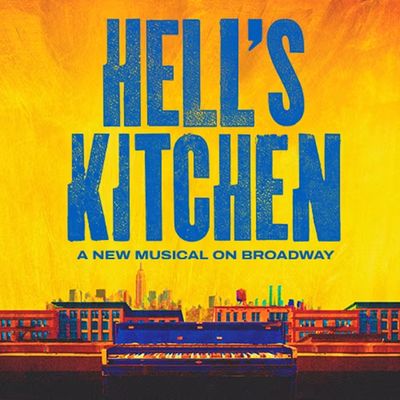
Kennedy Caughell—currently starring as Jersey in the national tour of Hell’s Kitchen— joins the pod squad to share her journey from growing up on a small Oklahoma farm to building a career on Broadway, reflecting on the faith, visualization, and relentless discipline that fueled her dreams... Read More
From the show: Beltline to Broadway
Featured Shows
About
Kennedy Caughell—currently starring as Jersey in the national tour of Hell’s Kitchen— joins the pod squad to share her journey from growing up on a small Oklahoma farm to building a career on Broadway, reflecting on the faith, visualization, and relentless discipline that fueled her dreams. Kennedy also discusses the profound influence of Carole King and Alicia Keys on her artistry, leadership, and upcoming music projects, while exploring how Hell’s Kitchen speaks to today’s divided cultural moment—reminding listeners that community, creativity, and collective action remain powerful forces for healing and hope.
Kennedy has captivated audiences nationwide with her powerhouse vocals and magnetic stage presence. She was most recently seen as Jenna in Waitress and has starred in iconic roles such as Carole King in the national tour of Beautiful: The Carole King Musical, Elphaba in Wicked, and Elsa in Frozen. Broadway credits include Paradise Square, Beautiful, and Natasha, Pierre & The Great Comet of 1812. Kennedy made her Carnegie Hall debut in the leading role of Super You, returning just a month later to star in Mozart: Her Story – The New Musical. Other favorite regional credits: MTWichita, NLB, 9 to 5 at the Fulton (Judy), Tick, Tick… Boom! at the Kennedy Center (dir. Neil Patrick Harris), and Great Comet at PCLO (Sonya). On screen, she’s appeared in Law & Order: SVU, Parked for Love, and The Outlier. Beyond the stage, Kennedy is preparing to release her debut album, Just the Beginning, and is a passionate educator, offering master classes and private coaching across the country. BFA in Music Theater from Elon University.
Transcript
This transcript was automatically generated and might contain errors.
[0:41] Lauren Van Hemert: This is the Beltline to Broadway podcast.
[0:44] Lauren Van Hemert: I'm Lauren Van Hemert, your host, and on this episode, I'm chatting with Kennedy Caughell, who is currently playing Jersey in the National Tour of Hell's Kitchen. Kennedy grew up on a small farm in Oklahoma and tells me it was her mother who first introduced her to Broadway and gave her the courage to close her eyes and to leap. And that is where our conversation begins.
[1:12] Kennedy Caughell: My mom always loved Broadway, and we took a trip to New York when I was seven, I wanna say. And my sister, who was also in the business, um, she knew that she wanted to do this. I kind of just went along for the ride and was like, okay, I'll just go with the family on this trip to New York and see my first Broadway show. And so I had two moments where I was bit by the bug, as we say in the business, and my mom brought me to see Annie. And apparently during intermission, I don't remember this, but my mom says that I turned to her and I said, I can do that. I want to do that. I didn't know you could do that. You know, you see this, which is why representation in the theater is so important, because when kids see themselves on stage, they see what they could be and they see possibility, right?
Uh, and then I went, we went back to Oklahoma. I had a perfectly normal childhood in public school. Uh, and for a while I put down, I want to say that I put down the dream of being on Broadway, and I was I almost became a veterinarian. But then we had one more trip to New York when I was in middle school, I want to say, like late elementary, early middle school, and my mom made the mistake of taking me to see the original cast of Wicked, and I saw Wicked, and I said, Nope, nope, I'm gonna do that. That's what I want to be doing. And then from then on, I didn't look back, and I threw myself into lessons and the idea of getting into a good school. I was just so driven to achieve my dream and attain this goal, and I did, God willing, I did multiple times over, and I'm continuing to live my dream daily.
[2:59] Kennedy Caughell: Carole King has the song "Color of Your Dreams," and I feel like your whole career is this song. Not to dismiss the hard work because I know it's such hard work, but are you someone who practices um visualization or journaling or other manifestation techniques? Is it faith?
[3:19] Kennedy Caughell: That's a really great question. Uh, I think yes, part of it is actually most of it is faith. Um, I am Christian, I grew up in a Christian household, and I am a practicing Christian, and so a lot of my faith comes from trying to discern God's will and kind of follow the path that he sets for me. That doesn't work for everybody. I totally get that. Um, but I'm very I wouldn't say religious, but faith is a great way to look at it because I don't know how I don't know and belief. Here's another way you can say it is just belief, belief that there is a higher power that has a plan for you, that you have a purpose in this world to bring this world to the next step of life, love, and joy um, and just the betterment of humanity.
I think that everybody has that purpose, and that's one way I do it is through my art. So, but I'm not gonna I'm not gonna go on a tangent and say it's all been sunshine and roses. There's really there's been some hard days. Don't for all the artists and people who are artists adjacent who are trying to achieve their goal and achieve a dream, there are some days where it is really dark and really hard. This is one of the hardest industries to maintain your joy simply because one the amount of rejection and two the amount of perceived unfairness of casting of who gets what job and whatnot, perceived unfairness though, like I said, because it's a it is a business at the first and foremost it is show business, you know.
So learning that lesson was really deep, and there have been several there have been many times where I've gotten to the final, the final final, and I said, Lord, is this it? This must be it, and I did. I visualized that's what you have to do, right? When you go in. So to answer your question, yes, I do use visualization. I do. I like to imagine what life is like for where I want to be going. Because you can't really get to where you're going if you don't know where you're going. Because when you visualize, when you start to imagine what that feels like, and you start to make that plan, you start to act as though that's the truth, right? And that's why I think manifestation for people works so well is because when they visualize where they want to go, they act in the moment as if it's already theirs, and it changes their behavior, right?
There it changes their big daily behavior because dreams aren't achieved overnight. Dreams are achieved in the consistency of your daily practices. Like I did not, I was not able to sing alphabet, sing jersey, belt really high eight times a week overnight. That started with since from when I was 14, and then in college, consistently getting getting in the practice room, getting my reps in, if you will, my vocal reps, my acting chops reps, my dance class, getting getting just into the practice room and putting in this consistent work and consistent hours of building my art form, right? Before the pressure, the added pressure of the business was even on. So, yes, I would say I do visualize. I like to visualize where I want to be going. It's not really my business to know how I get there. That's God's business. And my b and it's my job to stay present, stay connected, and stay loving with everybody else as I move forward.
[7:10] Kennedy Caughell: There have been really hard, tough, tough decisions before, and there's been really hard heartbreaks. Um, where I really thought that this was the moment and then it didn't happen. And you know, it's not necessarily fun, but it's how you handle the closed doors because rejection isn't really rejection, it's just redirection of where you're supposed to be going. I do believe that. Like what's for you is for you, will not pass you by. I've had jobs where I people told me, like some I've had a casting director say, You'll never play Elphaba, because it'll never go that short. You know, and so and then I went in. The next audition I went in for was Elphaba, and what did I do? I released the outcome, and I said, Well, you're never gonna cast me, so this is how I would play Elphaba.
And little did I know that energy was exactly what they were looking for at that time. Um, so you just never know. I love that you're saying this because I feel like it's about aligning the mindset with the dream. There's those two things have to be in alignment to make it happen. I love that. I think people get caught up in the planning of this is the timeline I have to hit. Well, there is no timeline for this thing called life, everyone's timeline is different, and so I think we get our heartbroken with expectation of where we think we should be, as opposed to having gratitude and understanding that we're all in process and that it may not happen in your timing, and that's okay. That's okay.
As long as you believe that it will happen and you act as though it will happen and continue on that way. I find that I find that you'll be people are much more happier when they release the need of the timeline.
[9:01] Kennedy Caughell: Yes. Yes.
[9:02] Kennedy Caughell: Um, Paradise Square is extraordinary. I'm so grateful I got to see it. But the show was definitely marred by some dirty deal in this backstage. And that's the dark business part, right? Well, and that's what I want to ask you. What did Paradise Square teach you about this business and this industry?
[9:29] Kennedy Caughell: Yeah. Well, first of all, let's talk about the musical in general that didn't get its due because I think Paradise Square deserved much more than it got. So let's talk about that first. So this little slice of history, right? This little slice of history that I wasn't taught in school. I don't know about you, but in Oklahoma, we were not taught about the draft riots. We were not taught that there was this beautiful community of black merchant class intermingling with the Irish and other immigrant class, intermingling, having children, having community. And yes, I mean it wasn't necessarily like rich, but it was rich in the fact that they were together and they had community and they built that life on the little that they had.
Like the resilience of the human spirit and how close we are, how similar we are in that regard, and how the rich upper class and also politicians, this again, everything is cyclical, what's happening in our world today. The politicians see a group of voters, a group of people who could possibly control the election and then decide to do something about that and pit people against each other. I mean, it's it's almost like, wait, when was this written? Like, what when did this happen? In the 1800s? Oh, it didn't happen yesterday. Um, so it's such an important story for a time such as this. And not only that, I do believe that in a in the in a world that is so dark and divisive, the message of the show was unity and how we should love each other and how we should band together, uh, regardless of the differences because we're so much more alike than we are different, and we are stronger together than we are apart.
It's such a beautiful message of healing between the races, which I feel like America needs desperately, right? America needs that so desperately. So it makes sense, right, that there were forces at play that did not want this show to succeed, right?
[9:30] Kennedy Caughell: Um, now let's talk about the business side of the business. You had an incredible team of writers, directors, lighting design, sound design, sound that you didn't even get to hear, people who should have won Tonys for this. And so there was a lot of things that were happening behind the scenes that I learned later, um, because I realized the our music team and our directing team they tried to shield us from a lot of what was going on. So um, and then on top of all that, you had the COVID, you had the COVID crisis. So we still had the COVID measures that we were doing, right? And that was crazy in itself because I had to go on for Annie during previews without any sort of rehearsal for this version that we were doing.
[12:31] Kennedy Caughell: I was expected to do it, and I did do it because when I cover, luckily everything you do trains you for the next thing. So I had covered before I knew what I needed, and I was very meticulous when I understudy because when you're called upon, you're the one in the hot seat; everything comes down to you and your preparation. That's it. It's a very high demand, and I have such respect for all the covers of Broadway because it's the hardest job in the business. Having to do something that you don't get to do normally in your own track, being a lead is so much easier. Um, so there was just a lot of chaos, right? Around the two weeks after opening, which is a very pivotal time, right? In a financial sense for a show, and then we had too many people go out because they tested positive, and at one point we were trying to do the show with, I think, a third or a quarter of our cast.
It was just like there was no way, and so we had to cancel, and unfortunately, we closed for like 12 days, which is killer diller for any show. For any show. I don't know if Paradise Square would have closed if it hadn't been for that long of a span. Because for those of you who don't know, whenever you have to close, whenever you cancel a show, you're losing hundreds of thousands of dollars. Now, every show takes hundreds of thousands of dollars cost-wise to run and break even. So from the little that I understand and the little that I know, because again, I wasn't privy to the conversations, that technically tanked the reserves that they had for the show to cover us during, you know, light ticket sales if that was to be the case.
I also think that that wouldn't have been the case personally because people were coming right and left, and the word was getting out. I feel like just as the word was getting out, the show closed. And when you stop, then the word is, "Oh, the show's canceled," like, "Oh, they're not open yet," and of course, it's like to stop the momentum is so—that's like death; that's like financial death for a show. So trying—and that's what they did say—is trying to get the tickets back up, trying to get, once we were open, getting the word out that we're like, "We're open again, come see us," you know, that kind of tanked the momentum. And then the dark underbelly parts of the financial stuff started coming out, then the whispers, then the—you know, everyone loves a good hot cup of tea, and we were definitely the hot tea for that season, you know, based on the backgrounds of some of the people who put the show up.
And it was really hard, and there were times where we as a cast had to band together. I remember that equity reached out and was like, "Okay, if we don't close, if they don't close the show now, the equity bond that we have won't cover if you do one more show; we won't be able to cover the losses of that show." And it was about, I think, three weeks out from the Tony Awards. And all of us were like, "This show deserves to be seen." And, you know, we may not win Tony Awards just based because Tony Awards are very political, very political. Um, and sometimes the artistic wins, like those are the ones that we love, right? Like Shekina Calikango, there was nobody who came close to what she did, and she deserved that Tony.
I've never boohooed so hard in my life. But, you know, we as a cast and creative came together and said, "Okay, if we close, I mean, this is the last shot we have to keep our show open and drum up excitement is the Tonys." It's a huge slot. So we decided to do it. We decided to stay as a cast. We weren't—we decided that we asked equity to kind of like—we understand, but we want to try to save the show if we can for the little power that we had, right? The little power that we had to save the show, get the word out about the show. And so when people said that cast performed on the Tonys like they were fighting for their lives, basically, we were fighting for the show. We were fighting for the survival of the show.
Um, and unfortunately, we didn't win enough Tony Awards and garner enough to make any sort of difference because I think at that point, the finances of the show were pretty tanked, as well as people didn't want to support the producing team in charge, so they didn't buy tickets. So it was a lot of—I think a lot, just a perfect storm and amalgamation that I don't think may not have happened if it hadn't been for the COVID policies and having to close the show for twelve days because I think we might have had a shot. So all that to say, what did I learn from this experience? I learned my worth. I learned the power of no when you stand in a group and you stand in front of the man, the powerful man, and you know what you're willing to do and what you're not, and especially as a group, because actors are kind of, you know, we don't have power unless we're together.
Which is wild because that's what was happening in the show, right? We all stood together, and that basically saved the community, right? When you stand together and say no, stand as a whole. So I learned the power of my personal no. I learned the power of standing with your people and saying no together is even more powerful because really that's all you have as an actor, kind of, is knowing your limits and knowing what you're willing to do and what not to do, and it's okay to say no. I also learned that the business is broken, and this business is so fragile. The idea of making money and profit on art is so fragile, especially in today's world. I mean, I was also in the cast of Great Comet, and one rumor, whether true or not, can really spread like wildfire over the internet, and either—I’ve seen the Twitter warfare tank a show.
That's not exactly what happened with Paradise Square, but it is a part of it. Um, and but I also learned—I also learned that some things are worth fighting for. And I do believe that that show is and still continues to be worth fighting for. I hope that it gets a second life. I hope that eventually the beautiful orchestrations that Nathan Tyson and Howland and Vance have recorded and the voices on the album, I hope that comes out because it is gorgeous. It is one of the most gorgeous scores I think I've ever heard in a long time since Ragtime. I just have a lot of hope and love for the project, and it was—but it was not easy. There were times where I coming into work was like suiting up for war, especially emotional warfare because a lot of—because within the internal turmoil, there was a lot of internal turmoil, right?
We didn't always agree as a cast on how things should be done, on whether we should make a statement as a cast; there was so much because people were just like, "What can we do?" And there was a lot of internal dialogue and dissent about how that should be handled. We all eventually came together, and it was all of us or none of us. We agreed. We're like, "Listen, if there's even a group of people that are uncomfortable with this way of going about it, then we decided that no matter what, we needed to stand together." And so really it was wild that art was imitating life as we were living it and portraying it on stage. Um, it was a time. It was a time, but I do feel like that it just made me more of the woman that I want to become.
You got to know Carole King a little bit during Beautiful. And you've said in—I dabble in other interviews, um, that that was one of those moments where you're meeting your hero. What did meeting her and working on that show teach you about being an artist, being a woman?
[21:26] Kennedy Caughell: I just feel like it's a master class. Well, Carole King was—she was one of the artists that I feel like was one of my musical influences growing up because my father played the Tapestry album, and he even says the Tapestry album was the album to my college years. So he had the Tapestry album, and he gave the album to me to get it signed, you know, if I ever met her, which I eventually I ended up meeting her while I was in the Broadway cast, and I learned so much from Carole King's life. Well, one, she's such a humble human being, and when she walks into a room, the joy that radiates from her is otherworldly, and there's just some people that you meet that there's this aura, this sense about them that they are completely at peace.
I call them thermostats, not thermometers. They're people who are thermostats in a space, and they can literally change the atmosphere of when they walk. And that—and as soon as I met her and obviously geeked out a little bit, that's the one thing that I took. I said, "I want to be a thermostat. I want to change the feeling of a space to joy and peace wherever I walk." So that meeting her, that was the one thing that I learned, and she was so nice and so lovely, and she looks like we have the same kind of face shape. I didn't even think that I looked like her that much until I took a photo with her, and then I look back, and we have the same smile, same facial shape, and I'm like, "She could literally be my grandmother."
It's—that was really cool. She was so, so kind and so lovely and took her time with everyone and made sure people felt seen. So I said, "Okay, I also want to make sure that if I'm ever in that position, I want people to feel seen. I don't want them to ever think that they're not important to this planet." Now, about her life. The crazy thing about Carole King, I don't think a lot of people, including myself, knew how much—how many songs she actually wrote. This woman had a heavy, heavy hand in the Motown and pop sound influence that you even hear today. Because back in the 60s and 70s, this woman not only wrote for herself, she started writing for other groups because she thought—she's like, "No, I'm not a singer.
People won't listen to me sing. Who's gonna listen to that?" You know. But she, at 16, she was writing and working at 1650 Broadway for Donnie and writing these hits after hit after hit. It's just—she has it. So the other thing I learned is don't count yourself out because you have so much more to bring than you think. And especially for those young folks, just write. Write the song, write the song and try. Um, because in the show, and Carole King as a whole, she's actually like—as humble as she is, she also has a really good sense of self and what she has to bring. She's very driven, and that served her well, I think. Um, so that when inevitably life happens and things don't always go your way, and things are not perfect, and things maybe fall apart, makes for a good story, right?
But also difficult to handle in the moment. She's able to lean on her music and lean on her art and lean into the pain and kind of use that as a channel to heal. Um, so I'm just so—you know, I try to take those things that I learned from her, so use music as healing, be a thermostat, not a thermometer, and whatever work you do, do it well and commit yourself to that work and just know that the right people will see it.
[25:14] Kennedy Caughell: And be so good that they can't ignore you. That is verbatim what Carole King did, because she was a woman in a man's world. Starting from the early from 50s to 70s, she was always a woman in a man's world and learned how to navigate that while still remaining true to herself. And so those are all the things that I learned and that I hope I'm bringing with me in my life. Alicia Keys, another artist, um, with a very clear vision and focus. You're now on tour as Jersey, loosely inspired by her mom. How did working on Beautiful prepare you for this moment for this role? That's a great question because Carole King is very different from Jersey. So maybe not necessarily in a character preparation, but learning how to have resilience in the eight-show week to never leave the stage.
That was super helpful in Jersey. Now, Jersey sometimes leaves the stage, but her vocal track is very taxing. And her emo and the emotional weight that you have to hold within the show. Because Jersey, yes, we follow Allie, but the one thing I've realized about the beautiful structure of the show, right? Is that especially in Act Two, Jersey holds the emotional weight and protects the emotional journey of the show? And Carole King not only le she doesn't ever leave the stage, she sings all the songs, she has to, she's basically the anchor of the show in the way that Allie is the anchor of Hell's Kitchen. But she holds, but Carole King holds the emotional weight throughout the show, and so learning to do that with Carole King, I was able to bring that into Jersey so that I'm able to anchor the show emotionally, especially in Act Two, and I think that's definitely that's that's how that helped me.
[27:10] Lauren Van Hemert: And you're getting such good reviews, especially for that Act Two number that oh I can't wait to see it next week.
[27:18] Kennedy Caughell: Alicia Keys, she's very hands-on, she spent 13 years developing this show, and it's definitely her baby. Um talk about working with her and what you were able to learn from her. Alicia Keys is so incredible in the way that she is a legend in the pantheon of music, and she's so young as well. That's the thing. She's like in her young 40s, y'all, and she has already done all of this. This woman, she leads with love and peace when she's in a room. Again, she's a thermostat, so she's a true leader. And the one thing I've learned from watching the way that she moves is her intentionality. Alicia Keys moves with extreme intentionality. Everything, every choice that's made by both Alicia and Michael Grife, and Camille A. Brown and Monet and Tom Kitt and Adam Blackstone, all these incredible names.
Everything they do from the trickle down top effect is every every choice they make is done with intentionality. Everything is meant. Oh, and obviously, like our book writer, just like from the book to the music to the choreography to the lights to the sound to day day with our clothing, everything is very intentional so that it serves the through line of the story piece. And Alicia getting to watch, you know, loosely based Allie, because obviously we know that she was writing music long before 17. And she was actually in the pop world by the time she was 17. So this is a loosely based story of a 17-year-old who has never touched a piano before, right? So, you know, there is separation. Um, but during tech, like she really sat down with all of us and kind of talked through her vision for the show overall and our individual character art.
So for Jersey, um, she the one thing that she always said was the reason I wanted to write this show is because it's in a love letter to my mom. Because my mom protected me, loved me, saw something in me, and really and continues to push me to be my best. The things that she would say really resonated and and helped me, and in my mind, I look at the show as a whole and I go, Act One is Allie, and you are you are introduced to this world, right? And you follow Allie through through line of her story. You're not really sure about Jersey because honestly, she's difficult to love. She is a difficult human to love because of what life has thrown at her. And then Act Two, I call Jersey's Act because you really see the image of what she has crafted, and then you start to see the cracks, and then you see her crack wide open to the girl she used to be through, you know, the living of this life.
And that, and that is one thing that Alicia said. She said, you know, I know it's really difficult to be this person, but when she cracks wide open, I mean, all of a sudden the audience goes, Oh, oh, am I am I team Jersey now? Like, you know, and that's how it should be. You should be delightfully surprised by the outcome of the show. And um, she was instrumental in in the through line of that. She was instrumental, very meticulous in how she wanted her music, because listen, that that pop R&B world is very specific with uh what you your intonation and which beats you hit and the words, the lyrics that she wrote specifically and the rhythmic of it. It's I I've learned so much about the R&B world just from working on this show alone. Um, but she has shepherded us all through that with such grace and intentionality.
[31:29] Kennedy Caughell: So between Carole King and Alicia Keys and you getting ready to put out your own album. Have these women um kind of informed your own music, your own your first album? Yeah. Well my first album. Well, first off, this first album is actually Broadway covers and Broadway pop adjacent covers. My second album will be an album of original music, which is scary for me to even contemplate. But um yeah, when you have women like Carole King and Alicia Keys who are doing what they're supposed to be doing and and meant to be doing and sharing their vulnerability with the world, of course you're gonna be inspired because that's somebody showing you what's possible. And how often do we as human beings take ourselves out of the running because we're like, oh, that could never happen to me, or oh, I I don't know if who would want to truly I would have put out albums earlier, but I had this thought in my head, I said, nobody's gonna want to listen to that.
Nobody it's just another I'm just another Broadway girl. Who's gonna we have so many of those? Who's gonna want to listen to that? But I had I was lucky enough that I had enough people in my corner saying, no, I want to listen. And I finally listened to that and said, you know what? I'm gonna I'm gonna put something out in the world that we everyone involved can be proud of, and hopefully makes people's life just a little bit better. I I love this show so much. I it's funny, I really wasn't um when I saw the show, I wasn't really an Alicia Keys fan. I knew her music. I mean, I've heard her music, everybody's heard her music, but I wouldn't say that I was, you know, a diehard fan or anything.
I I went to the show because people told me how great it was, and and I'm so happy I did. One of the things that strikes me is Allie learns to take her pain and her anger and her passion and her just saltiness to the world and channel it into this beautiful music, you know, and and and I don't want to say take it out on the piano, but really through music, she learns to channel the negative and turn it into something so positive. And I think that so much parallels what our country is going through right now because we're just so divided, and there's so many people that are angry and in pain, especially young people being angry and in pain and scared. So how does Hell's Kitchen? I mean, now that you're on tour and so many more people are gonna get to see this beautiful show, how does it speak to what we're going through collectively at this moment?
[34:35] Kennedy Caughell: Well, one, we need each other. The show Hell's Kitchen speaks to how much we need community because that's why teachers are and mentors are so important, right? They cover the gaps that the parents can't reach and they help further the next generation. I think it's also speaks on how especially today, I think a lot of people feel powerless. I think a lot of people, you know, hope hope is really hard to kill, but we have to feed that hope, right? By taking action. And I think when Allie learns how to channel her art into healing and make something bad into something that can serve the world, I think in times in uncertain times like these, with an administration like this, with where you literally see where some people believe they are above the law.
I think the only thing we have is standing together as a community. And also it seems like we don't have power, but we actually do when we take action. Everything you do matters. This it's been a really really hard time in history for our country. Um but I think there's a lot we don't have control over, but you have way more power than you think. And if if people can lead this podcast with that in mind, don't get complacent, don't lose hope, take little action where you can. And if that means channeling your own healing into your art form so that somebody else can go get healed one when they hear your art, when they see your art, anything that helps you heal might heal someone else too. And that matters.
Even if you feel like it doesn't make a difference, it will. So do something about it. Don't just sit there and say I'm powerless, because that's a lie. That's a lie. Do what you can. We can't do everything, but do what you can. And us all together collectively creates a movement that creates change and makes it better for the next generation after us. So don't give up hope. Hell's Kitchen is currently on tour.
[37:03] Lauren Van Hemert: For more information on the tour stops and schedule, visit hellskitchen.com. If you like what you've heard on this episode, please consider subscribing to this podcast. Follow me on social media at Beltline to Broadway, or visit me online at beltline to broadway.org. Until next time, I'll see you at the theater.
© Broadway Podcast Network, All Rights Reserved