

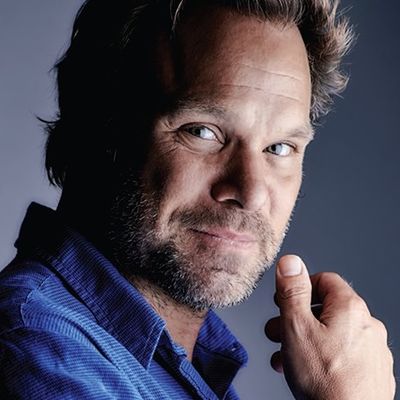
From June 2021. We have the honor of welcoming our very first Tony Award-winner to The Batter's Box, as the great Norbert Leo Butz joins us for Episode 90!.. Read More
From the show: Break A Bat! where Baseball Meets Broadway
Guests
Featured Shows
About
From June 2021.
We have the honor of welcoming our very first Tony Award-winner to The Batter's Box, as the great Norbert Leo Butz joins us for Episode 90! Butz's many Broadway accolades are highlighted by four Tony Award nominations, winning twice for Best Performance by a Leading Actor in a Musical thanks to his performances as Freddy Benson in Dirty Rotten Scoundrels in 2005, and again in 2011 when he portrayed Agent Carl Hanratty in Catch Me If You Can. He's also starred in Rent, The Last Five Years, Wicked, Big Fish, My Fair Lady, among other prominent credits.
In addition to all of his accomplishments on stage and screen, Butz is just as passionate about baseball as he is for theatre. Growing up in St. Louis, Missouri, he spent much of his childhood at Busch Stadium during the heart of the Cardinals' great run in the 1980's with Whitey Herzog at the helm. To this day, he still gets major adrenaline rushes on stage when his performances coincide with Cardinals' World Series games, and has some very memorable stories about those occasions. In an extremely candid conversation, he discusses growing up in what he describes as a very Catholic household with 10 other siblings, and how sports and performing were always at the forefront of his passions. He also takes us through some of the major personal triumphs he's experienced within the Broadway community, having found the ultimate teammates that bring out the best in him to help propel some of his greatest grand slams even in trying times.
Anyone from Joe Torre to Keith Hernandez to Bruce Springsteen has come to see Butz perform on stage, and even with all of his success as an actor, he's as humble as anyone we've gotten to speak with. That humbleness, as well as his gratitude and brilliant comedic wit are on full display in this conversation that can be enjoyed by baseball and Broadway fans alike!
Connect with Norbert Leo Butz on Instagram: @norbert_leo_butz
Connect with Break a Bat! on Instagram: @break_a_bat_podcast
Hosted by Al Malafronte
Produced by the Broadway Podcast Network
Edited by Matthew Hendershot
Transcript
This transcript was automatically generated and might contain errors.
[0:08] Al Malafronte: Hello and welcome to the Break a Bat Podcast where baseball meets Broadway, an attempt to show that my two favorite mediums don't have to live in such separate worlds and maybe even break some stigmas.
[0:20] Al Malafronte: We're happy to have you with us.
[0:22] Al Malafronte: Now let's play ball.
[0:27] Al Malafronte: Hello and welcome to another edition of Break a Bat where baseball meets Broadway. I'm your host, Al Malafronte, coming at you for the Broadway Podcast Network.
[0:36] Al Malafronte: Tonight we're actually going to be joined by the very first Tony winner we've ever had on the program.
[0:41] Al Malafronte: And since our special guest has in fact won two Tony Awards, this is almost like talking to a Frank Robinson or Ernie Banks, if you want to draw a little baseball parallel in the Broadway world.
[0:51] Al Malafronte: My guest tonight began his career on Broadway all the way back in 1997 when he made his Broadway debut in Rent. He's since gone on to originate roles in some of my favorite productions of all time. You know how much I love The Last Five Years, Wicked, Dirty Rotten Scoundrels, Catch Me If You Can, Big Fish. The list goes on and on.
[1:09] Al Malafronte: In addition to everything he's accomplished on stage and screen, he's also one of the biggest baseball fans on Broadway. Having grown up in St. Louis, he's one of the most passionate Cardinals fans that you're gonna find in New York. And I'm so stoked to talk some baseball and Broadway with him tonight as he shows me his Cardinal swag.
[1:27] Al Malafronte: So with that being said, I'll ask you all to please turn your attention to home plate. Just be on the marquee, now batting Norbert Leo Butz. Norbert, welcome.
[1:37] Norbert Leo Butz: Thanks, Al. That was a lot of metaphors you got in there, man. That was impressive.
[1:41] Norbert Leo Butz: I hope you took the Ernie Banks call as a compliment. I know he was a couple, but he's a Hall of Famer, right?
[1:48] Norbert Leo Butz: That's a little over the top. My favorite Cardinal of all time, though, is Ozzie Smith. Although I was a big Keith Hernandez fan too. So Ozzie Smith, always my favorite Cardinal.
[2:02] Norbert Leo Butz: God, you're bringing me. I did not catch it. I see I'm old, so like, you know, I'm going back to that incredible club in the 80s and the early 90s, you know what I mean?
[2:12] Norbert Leo Butz: Yeah, the Whitey Herzog teams, the best exactly. You know what amazes me about those teams is that that core group was intact for most of the late 80s. They went to three different game sevens. I think had Don Denkinger not screwed up in '85, you might be talking about one of the best baseball dynasties of the modern era. Would you agree with that?
[2:32] Norbert Leo Butz: Of course I would. And to be a kid at that time, I mean, so I graduated from high school in 1986. So we won the series '85, '87. We won again. I beat the Royals. Or no, Royals beat the Cardinals. We had, like you said, we had three World Series in that time with that team. And you know, to be 14, 15, 16 years old when all that was going on and really falling in love with the sport was amazing.
[3:04] Norbert Leo Butz: That was amazing. So I kind of like you, I was that was the same time I was really falling in love with acting and music. So I had those heroes, but then I had, you know, Keith Hernandez and Ozzie Smith and that incredible lineup there, man. Incredible guys.
[3:28] Norbert Leo Butz: I mean, it amazed me. Willie McGee was another guy that's like, oh my gosh. And Bruce Sutter, Hall of Fame closer. It was just such like all those names are so recognizable, but I mean, none more so than Ozzie Smith, obviously. And I wish we saw him. And the credit has to be also given to Whitey Herzog. You know, there are legendary coaches, you know, who are kind of mythical, you know, and he's one of them.
[3:56] Norbert Leo Butz: Even the name, you know, it's just such a great baseball manager name, you know, with that white cropped hair and what a leader he was. I was listening, Cardinals are not having the greatest June so far. Our team is struggling right now. And I was listening to a Cardinals podcast that I listened to earlier in the day. And you know, the blame was coming to Schilt and the management and all that kind of stuff.
[4:22] Norbert Leo Butz: And you really remember in baseball how much like the CEO of any company or the president, how much the blame is laid at the feet of the management and the coaching staff. It just reminds me of the pressure of that position. And a guy like, you know, you get your guys like Whitey Herzog that could handle that pressure and keep all that grace and guts. It was such a great time, yeah.
[4:55] Norbert Leo Butz: I hope you've done a lot of great things on Broadway. Have you worked for many directors who haven't been able to do that, so to speak, to keep that grace among the cast?
[5:04] Norbert Leo Butz: Oh, sure. Of course I've worked with lousy directors and had, but not just in my field, you know, leadership in general is, you know, that's what a great director is. And you know, it's a gift when people have those leadership skills. I've mostly worked with amazing directors and incredible teachers, but yeah, there's bad apples everywhere.
[5:30] Norbert Leo Butz: Were you a Tony La Russa guy?
[5:33] Norbert Leo Butz: Of course. I mean, yeah, are you asking like personally or as a manager?
[5:41] Norbert Leo Butz: No, no, not his driving record, but just as far as did you like his style of managing and you know, the fact that he's still involved in baseball today kind of amazes me a little bit because I, you know, we've seen already he's all of two and a half months into his tenure with the White Sox after being out of the game for so long and having these communication issues with his players. I wasn't sure if I mean he used to, he was the manager for McGwire and Pujols, Jim Edmonds, all those guys, much more of an old school breed. But I feel like the off-the-field stuff for a lot of Cardinals fans has kind of tainted his legacy a little bit. So I wasn't sure how you sort of viewed him.
[6:17] Norbert Leo Butz: I mean, I don't want to opine on anything personal about him. All I can say is the White Sox just smoked the Cardinals, and so you know, he's still coaching good ball, you know. So you have to give somebody just the, like you said, the length of the career is brutal, right? Professional sports of any kind, anything at that level, the pressure, you know. So for these guys who last that long, I think props got to be given, you know.
[6:51] Norbert Leo Butz: Definitely in my field.
[6:53] Al Malafronte: Yeah, I can imagine. Were you playing ball before you started acting? I feel like for guys like us, you kind of go from the field, you know, little league or junior high ball to the stage. Isn't that how it worked for you?
[7:04] Norbert Leo Butz: I went, I played everything growing up and was not good at anything necessarily. I was fast, so I went to Catholic education all the way through, right? So from St. Louis, Missouri, and our school was small. It was a small local parochial school right in the city of St. Louis. I was in a class of maybe 20 kids, maybe like nine guys. And so, you know, we had a baseball program, whatever the Catholic youth, baseball, soccer, basketball, those were the three sports you had to play. If all nine or ten kids didn't play, you couldn't have a team, depending, you know.
[7:44] Norbert Leo Butz: So I played everything from first grade all the way up to eighth grade. Soccer is what I, if I had any ability as an athlete, it was really as a soccer player. And I played that through middle school and a year in high school. And I was fast, but I was a lousy baseball player. I was afraid of the ball. I was terrible. I didn't, it wasn't, and like I said, it wasn't until as an adult really that the strategic parts of the game and the mental parts of the game and how subtle and sophisticated it all is. None of that was all lost on me as a kid. You know, in terms of playing it, but yes, I did play growing up, yeah.
[8:35] Norbert Leo Butz: And I had, you know, I'm one of 11 kids, you know, no halves, no steps, one mom, one dad, you know, all 11 were theirs. I have seven brothers. So we were our own team. I mean, basically, you know, in the alley behind our house, we had stickball games that would last for hours, or whatever you'reet ball was. That's really mostly what we did.
[9:03] Norbert Leo Butz: And I was always this, I was the small, I'm the seventh kid in my family. So I have older brothers, several of them great athletes. I couldn't even compete. I'm the, I was the shortest, the smallest, you know, I got my butt kicked playing sports with my brothers. But I guess it made me have a thick skin, which was good for the profession that I chose, I guess.
[9:31] Al Malafronte: Oh, absolutely. Now did you have any, were any of your older siblings into the acting or the drama clubs in school? Is that kind of how you got hooked on it, or was it from something else?
[9:41] Norbert Leo Butz: Yeah, it's kind of a combination of things. So I would say first it was music. My family is really musical, you know, big Catholic family. We didn't have a lot of money. It was a piano in the living room, and everybody just sort of gravitated to it. My parents were really religious. My dad, a super strict Catholic, my mom actually a super strict evangelical. So we had to go to Mass with my dad, and then we'd still go to like Wednesday night church and prayer meetings with my mom. So it was like all church all the time.
[10:18] Norbert Leo Butz: And so we all learned how to sing, you know, so all the hymns in the choirs. It's the first place I heard harmony, you know, as the first. And my oldest brother played guitar in the church band, and we all learned a few chords, and then the next brother, my grandparents are from Germany. My next brother started playing the accordion, and then we all grew, you know. So we had an accordion, a guitar, a piano around the house. And so it was really music and singing first.
[10:49] Norbert Leo Butz: But then yeah, I had two brothers older than me who were in their school musicals, and I thought that was just the coolest thing. So my oldest brother's 10 years older than me. So I'd be like seven or eight years old and going to see the high school shows and just being, you know, we're talking like Midwest Catholic high school production of like The King and I. Like right now, it would have been so canceled so quickly, like brown makeup, you know, painted on Asian eyes. This is like this late 70s, early 80s, you know, spray paint in the hair to cover all the blonde.
[11:32] Norbert Leo Butz: But that whole idea, um, that the kids from my neighborhood, and you know, my babysitter or the guy from church, they're all like so exotic looking. Uh I was definitely a huge inspiration to me. And just that whole idea that I could transform myself and be somebody else besides this sort of like, you know, a sort of uh very provincial kind of Catholic kid in this family, you know, uh I could distinguish myself in some way, or or even escape a little bit, you know. Like I said, I was a big family and noisy, and we didn't have, you know, a lot of the creature comforts, and so it was a place for me to kind of, I think, my imagination started to really take off. And so maybe that's why I didn't continue to to be as interested in in sports, especially soccer, which I really did love, was because the acting and the music, the imag the imagination.
The sports didn't do that to my mind. But they must have rubbed off somewhere because people have described me as a very physical sort of actor. And it doesn't, yeah, and I think musicals is what I gravitated to because of the kinetic energy and athleticism, really, that it takes to do a Broadway musical. Susan Strowman actually said that of Nathan Lane and Matthew Broderick when they were doing the producers. You know, she called them great athletes of the theater. And that's really what they are. That's really what we do. And I've always I have always felt a kinship with professional athletes in that way.
[13:46] Norbert Leo Butz: I know I'm going off, but um we have been so plagued by injuries, right? That's our problem this year, right? We've got all these guys benched, and you know, you know this as well as I, the strength of your club, it it it's it's completely related to the health of your players. The same is true of a Broadway show, especially in the long-term maintenance of that show. You have shows where people start to get hurt left and right, you know, injuries happening. Sometimes it's because you're on a raked stage. Sometimes it's because the choreography is raw. It's too difficult to do eight times a week. And so there are a lot of similarities between a Broadway performer and a professional athlete. Now you're doing what you love, but be real with me for a second.
I mean, you talk about the toll it takes on your body, all the maintenance you have to do to stay in shape, especially depending on the role you're taking on. Does life suck once you leave the theater? Like outside of like your family and friends, like all the little stuff in between, though. Does it just like do you do you hate it? Like, do you hate that part of it?
[14:51] Norbert Leo Butz: Like, do you hate that part of it, or does what the reward you get on stage make up for it? I mean, hate is a strong word. Um, it's it is a challenge. It I hear what you're saying now. You you um I think what you're saying is something that is a huge challenge. Um when you're doing a Broadway show. Um you sign up for a sh uh or or even a play. It really does ask all of you, all of your concentration, all of your physical strength, all of your imagination, all of your heart, your whole soul. And so, yes, you have to monitor yourself all week long. It's this kind of um highly disciplined state of living, which I find very challenging. Uh, and it's not germane to me. I don't do that instinctually.
I'm kind of a very instinctual person. If I want to eat this, I eat it. If I don't, but you're absolutely right, you know. Um, you start preparing for the show that night from the minute you wake up. It's really true. I've been doing it a long time. And so you learn how to um keep a few plates in the air. I can still do my life and take care of my kids and you know, do the errands and walk the dogs and be a husband and be a dad, but always that, you know, not far from the frontal cortex is that show that's coming up in a few hours. So right upon waking, you test out the voice, you do you see what's left from last night, and you start from there. You feel your body, you get out, you do a couple of straights stretches, um, and you go about your day, but um, there's no mistaking that you are uh taking almost like taking data um on your your physical apparatus all day long.
Um you just learn how to synthesize that. Um, but yeah, man, it can be a drag sometimes. It's mostly a drag. I think what you're asking about is when it infringes on your personal life, like not being able to make weddings or not being able to do, you know what I mean, family things. You you there are certain personal days you can get, but you sign that contract just like a baseball player. Do you know what I'm saying? They don't get um, they don't get to miss, you know, uh uh a double header with the Cubs because someone's daughter is graduating from kindergarten do you know what I mean? It just doesn't it doesn't work like that. Um and and yeah sometimes you can go yeah I wish I could do that. I wish I could have it all um but I do for me it it was my my calling and so it I've I've made peace with that you know.
[17:57] Norbert Leo Butz: Yeah now you talk about not being able to miss things I find this kind of cool and I'm curious to hear if you and I think the same way on this front you were originating your role in dirty rotten scoundrels during the 06 season. The cards went on to win that October. Catch me if you can 2011 they won right during the heart of your run on that with that show. Actually I have to correct you the Cardinals went to the World Series in oh in 06 but they lost to Boston. No that was oh four. Oh six they beat Detroit. Oh Al, you are so right in 04 I was doing the out of town Dirty Rotten Scoundrels with John Lithgow, who is a big Boston fan and I'm a big Cardinals fan and we would be on stage with the transistor radio and I think I was on stage when we lost that um lost that series. I was yes that I guess because I get my years mixed up. I remember that very well.
[19:10] Norbert Leo Butz: Well what I was gonna ask you was like for me for example, I'll piece together different events I've had in my life to different chapters of Yankee baseball. Like, for example, Jeter's three thousandth hit. Oh, 21st birthday trip to California. Do you look back and say, like, oh, Pooh holes three home run game in the World Series, Carl Henry. Uh okay. Now you're you're you're uh reminding me. So 04, 04 was Dirty Rotten Scoundrels with Lithgow. 06 during that World Series, I definitely remember where I was in the sixth game, which we needed to win, because it went to seven games, right? Wait a second. Wait, am I I if I recall 06 went to that was gate, that was uh five-game series, but 2011 was the seven was the seven-game series against uh Texas.
The 2011 series, final game, I'm on a movie set. I am shooting an intimate scene with the with an actress, and we have to pretend to have sex. And I only say this because that game was going on, and when it came time to shoot the scene, the actress started having a disagreement with the director. He, you know, it it I can't remember if if she had didn't sign a nudity clause or something. They were hammering this out, and I was like, please, please just make a decision because I again I had the phone under the bed while I'm in the bed with like a little thong on, right? The rest of me is in the buff. And and I can't let them know that I'm listening to this game. That I remember, I and I would never say who that actress was.
Uh um, and I just remembered, I remembered the actress was saying, but I don't want to show that. And I just said, you know what, I'll show everything because I just wanted to get the shot. So I was like, this game, it's so terrible. Um and that's what we did. Um that's what we did. I think you can see my ass in the shot. Um that was the quickest solution to the shot, so I could get back to the game. That's terrible.
[21:30] Norbert Leo Butz: So now we're gonna know who the actress is. If we uh hunt down your IMDV, check the uh year. If you if you need to do all that, then you know you got bigger problems. You need to do all that. Have at it.
[21:46] Al Malafronte: Oh man. You've been in New York a while now. I have to know who's more passionate in your eyes, the Yankee Met fans or the Cardinal fans.
[21:54] Norbert Leo Butz: Oh well, just you know, it's it's about size. I mean, my God, St. Louis is a is a small town compared to New York City. I'm always astonished at just how large just Brooklyn is, right? Just the borough of Brooklyn. Uh St. Louis is like a little river town. Uh, but I I think we give them a run. What we lack in, you know, numbers, we we make up for and orneriness. No, I think um Cardinals fans are really, really passionate, but Cardinals fans don't go the way of a lot of clubs, you know, one that we don't have to mention, you know. Um the Red Sox. Yeah, you know, we don't we don't have um you don't see players getting booed, you know, former players. People generally stay, I mean, there's like I said, bad apples, but we're we're generally uh it's a baseball loving town, truly loving the sport of of baseball.
[22:59] Norbert Leo Butz: Um we have great fans though.
[23:02] Al Malafronte: Have you been to the ballpark in St. Louis?
[23:05] Norbert Leo Butz: I have the privilege. I call it the new ballpark because I'm still like in Busch Stadium, you know, in my mind. That's that's how old I am. But it really is beautiful. They did a gorgeous job with it. Um they have. I know. I remember when the old one was closing in '05. So the Yankees were facing the Cardinals for the first time in St. Louis because interleague play was still all of what, seven, eight years old at that point. I remember they had Joe Torre, they like uh would reduce the number for how many home games were left. And I remember, you know, you remember Joe Torre, of course, great Cardinals player, then he managed the team. They had him, you know, pull the lever down. Um the old one had so much character, but what I like about that ballpark is uh the new one anyway, they've been able to not make it a carbon copy, but it really is inspired at an old one, whereas a lot of the new ballparks, I don't know if you can necessarily say that. I mean, there's very little character from the house that Ruth built um at this new Yankee Stadium.
[24:09] Al Malafronte: I agree.
[24:10] Norbert Leo Butz: Um, I agree. You said Joe Torre, and um uh I had the pleasure of meeting. He's a Broadway fan, and he came to see uh Dirty Rotten Scoundrels. And I remember him coming backstage, and I'm not particularly nervous to meet famous actors or um uh uh we're all, you know, you we we know our own kind. Um I'm not really that impressed with sort of acting royalty, but sports royalty or music royalty, I sometimes get. And Joe Torre was there on the same night that Keith Hernandez was there. Um and I just loved Keith Hernandez. He has you know great comeback stories, such a long career. I think he's had such a great post-baseball life. And I just remember they were there the same night, and I was just overwhelmed.
I was geeking out. Um, it was pretty thrilling. Um that's the beautiful thing, you know. New Yorkers, I mean it's you know, you're doing this Broadway and baseball thing. That's the beautiful thing about New York. You would never find that combination in St. Louis, right? You would be a sports fan or you'd be into the arts in New York. It's like, hey man, Broadway, baseball, you know, it's it's New York. Do you know what I mean? It's it's all equally part of the identity of you guys. And it's it's a very beautiful thing, very cool.
[25:37] Al Malafronte: Well, thanks. I'm glad you appreciate what we do. And you know, it seems it sounds like you you kind of grew up the same way I did. The fact that you lived in a house that embraced the music, that embraced the arts, and your dad was still taking you to the ballpark. I mean, that's just what a beautiful gift as a kid, right?
[25:55] Norbert Leo Butz: Totally. My dad, the music coming in, that was all my mom's side of the family. My dad was the rabid sports fan. My dad actually was a uh sold peanuts and cold cokes at at Old Busch Stadium, you know, when he was 12, 13, 14 years old, those were his first jobs. Um and had season tickets as an old man. So he lived at that ballpark, and not just the St. Louis Cardinals, man. Everything. Every sports team, and not even just our professional sports, our college sports. We went to hockey was always that was a very special treat. My dad, like I said, he had 11 kids. Hockey is an elite sport in Missouri. Those tickets were always too expensive, way too dear for our working-class family. But maybe once every couple of years on a birthday, you got to go to a hockey game.
But you know, the St. Louis football Cardinals, and then of course the Rams, you know, that was all part. But then even like my dad was into like we were an arts house, but we were really a sports house, man. The indoor soccer league, the St. Louis Steamers we had for a while. We have St. Louis University there, Mizzou football, Mizzou basketball, all of that stuff we went to. All of it. My dad was at a sporting event. I'm not kidding you, Al, five nights out of seven. It was my mom's side that was really musical. And um and I think the arts bug was was bit there. Yeah. So it's a good combination, my parents, I guess.
[27:31] Al Malafronte: Yeah, absolutely. Yeah. You know, Norbert, I'm a fan of yours, and I'm sure you've been asked this before, but I've never heard the answer. Out of all the stuff you've done on Broadway, what is your favorite role? Because I mean, I've seen you in I I saw you in the OBC of Wicked when we went on a middle school field trip to see it in 2004. Catch Me If You Can, one of my favorite shows I've talked about on this podcast before, how much I love The Last Five Years, which I know technically wasn't on Broadway, but like with all the cool stuff that you've gotten to done, do you ever sit around and rank them and you know pick a favorite?
[28:07] Norbert Leo Butz: Um I don't really. Um your your favorite one is whatever you're doing at the time. Um I'm actually wary of of looking back too much and and spending too much time going, oh yeah, that show, that show, like pondering about the career, because uh I'm all about like moving velocity, like moving forward. Um I'm grateful for every job I've had. It's a really hard business to stay employed. It's a hard business to stay, you know, actively employed and to make a living at this. Um, so I'm super lucky that I've gotten good as long as I have. Um certain shows were really heartbreaking because they close too early, you know. Other shows you you love but they're really successful, and then you get like super burned out because you've been doing it for a year. So it's it's um they're all don't make me pick between my children, you know. Don't make me pick.
[29:16] Al Malafronte: That's fair. That's fair. You know what? Not that I'm I've been in any Broadway cast or that I've played on any Yankee teams, but if people ask me my favorite show to see, there's different or favorite show that I have seen, there's different answers depending on how fondly I guess I'm looking back on that chapter in my life. And and the same with the Yankee teams as well. Like, you know, there were certain things about 1999 that was special because I was nine years old and watching with my dad, and then there's certain things that were special about 2009 because I was in college in a different chapter of my life, and you know, kind of becoming a man at that point. So it's yeah, not that I consider uh any of the Yankee World Series teams to be my children, but it's the experiences that go along with them that just makes everything so unique and have such a unique identity. So I totally get why you s why you put it that way.
[30:04] Norbert Leo Butz: And you know, there there are some jobs that you know great shows, great projects, but like maybe something was going on that year personally that was super hard for you. So it's like, oh my life really sucked at that time. Do you know what I mean? So associated with that is this show, and it wasn't the show's fault, you know. It's just your job. But um, yeah, so I'm super grateful for all of them, man.
[30:33] Al Malafronte: Yeah, well, you've certainly done some good ones and you've accomplished a lot, Norbert, but uh now it's about to get a little bit tough here on Break A Bat because we do this little segment to wrap every show called uh Fastball Derby.
[30:44] Norbert Leo Butz: Oh jeez.
[30:45] Al Malafronte: Yeah, man. I want you to picture yourself in the batter's box, ninth inning, game's on the line. You gotta think quick because Aroldis Chapman is on the mound throwing a hundred five miles an hour. So you gotta put your best swing out there. You're also a great storyteller. So don't don't feel like you have to be wrapped up.
[31:01] Norbert Leo Butz: I hope I can swing better than my guys have been swinging the last couple of weeks. Holy crap, man. We are just not hitting that ball. Ugh. We gotta get Goldie going. We gotta I mean Arenado's starting to come alive a little bit compared to the beginning of the season. But I think I think that you're gonna swing a power better power bat than those guys for this segment. But you know, we don't we don't have a the Cardinals are an interesting team, right? Because we've had these eras with that monster hitter, you know, of Pujols, you know, or McGwire, although that's a whole other story. You know, we don't we don't have that. We've always in the and I think our I love Cardinals baseball because we have.
We've been lacking those bigger funds, you know what I mean? We've been a full team team. Do you know what I mean? We chip away at it, you know, one at bat at a time. Um lots of singles and lots of doubles can still bring in a lot of runs. Do you know what I mean? You don't need the all the all the home runs. Um, but we're just not we're not hitting that ball right now. So hopefully that's gonna change.
[32:11] Al Malafronte: All right, let me have them. Let me have them.
[32:13] Norbert Leo Butz: All right, batter up. Favorite New York City meal.
[32:18] Al Malafronte: Oh, um, I'm gonna say, I'm gonna say a steak.
[32:18] Norbert Leo Butz: I'm gonna say a steak at that place down the street from Wicked. It was so good. Is it Gallagher? Wait, no. I remember well, there is a Gallagher Steakhouse that I don't now the Gershwin I'm trying to think is on the Gershwin on 51st.
[32:44] Al Malafronte: Yeah.
[32:46] Norbert Leo Butz: I don't remember if it's on is it right by Ruth's Chris? Because there's like the I think Gallagher's for some reason is right by Ruth's Chris, which in the 40s, but I could be wrong about that. But do you like a New York City steak though?
[32:57] Al Malafronte: Yeah, that was that was a great meal.
[32:59] Norbert Leo Butz: Yeah. I just remember that steak.
[33:02] Al Malafronte: I was gonna say my favorite meal was this restaurant called Sosa Barella, which used to be on 9th, and it was Argentinian. It was also a major amazing Argentinian beef. They still might have their downtown uh um location. But yeah, a good steak.
[33:22] Norbert Leo Butz: That was a pretty that was a weak swing. Give me another one.
[33:27] Al Malafronte: Greatest Cardinals game you've ever been to.
[33:29] Norbert Leo Butz: Oh my gosh um I can't think of a specific one but I would have to say I did go to I guess I went to the second game of our series in in '87 that we that we ended up losing to to the Royals and that's the only I just say that because it's the only World Series game I've I've ever been to and to be a part um even though we lost the night that I that I went was astonishing I've never felt that energy before or since yeah '87 World Series yeah wow.
[33:27] Al Malafronte: Actor actress you learned the most from.
[33:27] Norbert Leo Butz: God that's so hard I'll say John Lithgow it's a great choice yeah I learned a shit ton from him um not just about about acting and about being in the theater but just about being in a person just a great human a great uh friend uh I really consider him a mentor in a lot of ways how he lives his life is really exemplary I love John and he's freaking hilarious.
[33:27] Al Malafronte: Person in the audience you were most nervous or intimidated to perform in front of.
[33:27] Norbert Leo Butz: God that's easy Bruce Springsteen.
[35:01] Norbert Leo Butz: Oh God. What did he come see? Is he was he a wicked guy or was he a catch me if you can guy? Where was he coming from so my Springsteen story, I actually told this on another podcast not that long ago. But um yeah, I'm a huge Springsteen fan. I grew up as a kid, you know, I was doing classical music as a kid, studying piano and voice, and then my high school girlfriend got me super into old Bruce Springsteen, and I've never looked back. And I switched from piano guitar to guitar because of him, and I started writing songs, and I'm a huge fan. And when I'm in, I have a very strict policy when I'm in a show. I do not like to know who's coming. Some people love it, I don't. It makes me nervous, it makes me self-conscious.
I like it to not distinguish a show in any way, like, oh, this one's gotta be extra. I do much better if I just, you know, every show is just like another game that I'm just trying to do my absolute best for. But in Dirty Rotten Scoundrels, there's a moment where my character had to do this quick state, quick change on stage, and then like a wall of guys kind of covered me up. And one of the guys in the ensemble said, Did you see that? Springsteen's in the fourth row. Did you see Springsteen? I was like, fuck, don't, you know. And so, and that was the top of the first act. So the whole show, sure enough, I can see him. He's right on the aisle. And that show was a lot of mucking with the audience and improv, and we're looking out to that, you know.
I could see him and his wife and their three kids, and he was cracking up. So that kind of emboldened me. And then after the show, uh, the stage manager knocks on the door and says, uh, uh Bruce Springsteen is here. He's in John's dressing room. He'd like to say hello. And I said, uh, I was getting out of the shower, and I was, I was just froze. Um, I remember I downed a beer really quick. I no longer drink, but I used to drink right after my show. So I like chugged two beers to just get up some courage. And um, and I went and I went into John's dressing room and I met him, and he was like super gracious, almost shy, you know, and just super complimentary, and his wife was lovely and his kids were super sweet.
And then I did this weird thing. I was like, and I thanked him. I said, Mr. Springsteen, I just, you know, your music and your writing and your voice have changed my life. He's like, Oh, thanks, man. Thanks. He was so nice. And I got in my car and I start driving home like it's any other night, and I start to cry. And I just wept like for the longest time. And I like thought about that moment so many times. Like, I don't know if I've ever cried so hard in my life. And it was this weird moment where I think when we're a kid, especially if like I was kind of an outsider kid, I was kind of lonely. I really escaped into music, you know. And you create your icons in your head, you they turn into gods to you.
Do you know what I mean? Like larger than life, like my imagination couldn't comprehend a Springsteen, like he was an actual human being, you know. And so when I met him, in some ways, it was like it destroyed that like he became a man, he became a person. I couldn't, and then I just thought, who am I to have gotten someplace in my life to where Bruce Springsteen would ask to meet me? I don't know, it was this strange shift in my mind. Um of reality. I can't really describe it. But it really shook me. And so I thought after that, I was like, now I no longer meet. If there's people that I really am intimidated by, I run in the other direction. I'm just too overwhelmed by. And I'm not like that with a lot of people, just a few, but Springsteen was definitely one.
[39:06] Al Malafronte: Wow. Yeah. That's unreal. That's an epic story. I'm thankful thank you for sharing it. I know you've mentioned uh it was uh it was it no, it was a really seminal moment in my adult life, as silly as that sounds. Um, that's how deeply I identified with the myth of him and what he was creating through his songs. Um and so it was it was it was a really cool moment though, yeah. And now we're besties. Yeah, I'm meeting him, I'm I'm meeting him uh to play pool and to have a couple of beers. Uh yeah, no, I'm always stone pony, right? That's his spot I've heard in Asperger for. All right, now how about this one? This is a tough one. Proudest moment of your career. Not asking you to pick between your favorite children, but what's the proudest moment of your career?
[40:01] Norbert Leo Butz: Hmm. Proudest moment of my career. Um I'm really proud of uh this is kind of heavy, but it's just the truth. Um, when I was doing catch me if you can in Seattle in 2009, my my younger sister was uh uh killed very suddenly um the night before our first preview. She actually lived in Seattle. She was like my best friend in the world, and she was taken really violently, and uh we had to postpone the show by a few days, and uh we uh my parents flew out and we flew her body back to Missouri and um we buried her, and then I went straight back to Seattle and uh when we opened the show. We opened Catch Me If You Can just four days after her murder, and it was I I look back and it's some part of me thinks I was maybe I look back and I I should have maybe waited longer, but I'm I'm so proud.
I don't know if I'm proud of myself. I'm so proud of my company of the company of that musical um of Catch Me If You Can. They um, you know, I was in a my world was really shattered in that with that event, you know, and uh they just picked me up and carried me through that performance for the whole run. Um so I did a five-week run, you know, just taking uh four days off. And um I was so grateful to have a job that I to go to to put my energy into something useful, you know. You just feel so out of control. Um but that company just surrounded me with love and and supported me, and and you know, I get upset and I couldn't get on stage, and they just would just literally kind of hold me up and kind of shepherd me through, and they did that all through that run, and then we moved to Broadway, and they continued to just really support me and my whole family.
It was the first time, I guess I was so proud to be an actor and to be part of, you know, community is really everything that we do. You know what I mean? Our cast, they become our families. I was telling you earlier, you give up a lot, you know, in terms of time with your family. But the beauty of what I do is the families that we make. It's like a team, just like a great team. Do you know what I mean? When all the players are right, uh a cast is like that too. And uh I was just I'm so lucky that that's do you know what I mean? Like that's my my people at work are are such beautiful people and and uh actors really are, man. We're neurotic and we're we're we're a lot to handle, but we have big hearts, and my friends who are actors, you know, most all of them have huge hearts, and so they they saved my ass during that process and got me through it, you know.
Um, so that's probably my proudest moment. As sad as it sounds to talk about it, that was just the first thing that came to my head. That was like the hardest thing I ever had to do. And um the fact that those people allowed uh uh gave me the space to do it. I'm super proud of that. And and you know, it's a long time ago now, it's 11 years ago, and so I can have that perspective on it and know how freaking lucky I am.
[43:34] Al Malafronte: Yeah, well, you know what? We're uh we're pretty lucky as the Broadway community to have people like you in at Norbert. Seriously, man. I mean, you're such an inspiration to so many people for what you do on the stage and you know, the way you carry yourself off of it. There's a lot to be said for that, man. And uh I would like even if you didn't like baseball. But let's face it, it's better if you like baseball.
[43:56] Norbert Leo Butz: Yeah, totally. It's just so fun. Well, you know what? Now, since we have interleague, some of my favorite Cardinals games have been at Yankee Stadia. You know, have been it's been so great to have them up a couple of times a year now, you know, for series with Mets and the Yanks. So it's I can see him right here in my backyard.
[44:17] Al Malafronte: Yeah, all right. Well, we'll meet there at the park uh one of these days in person.
[44:22] Norbert Leo Butz: Absolutely. I'll be the guy in red.
[44:26] Al Malafronte: Hey, listen, you know what? There there's uh people say that there's a Yankee way of doing things. There's a cardinal way of doing things, and like you said, it's a great fan base, and uh you're certainly a great part of that one. And I'm so grateful I got to chat with you tonight, my man. Thank you.
[44:41] Norbert Leo Butz: You too, Al. It's so much fun, man. Absolute blast. And uh thank you to all the folks at home to who listen to Break a Bat tonight. I hope you subscribe and follow us wherever you get your podcasts. This is Al Malafronte signing off for the Broadway Podcast Network. We'll see you next time, and I think that's a good idea.
© Broadway Podcast Network, All Rights Reserved