

Turn those no’s into yes’s and make your own work. Scott Coulter tells us how he started his own company spot-on entertainment, and now produces concerts around the country. He explains how you can use your voice and passion for performing in other ways outside of broadway... Read More
From the show: Breaking Broadway with Kerry Butler
Featured Shows
About
Turn those no’s into yes’s and make your own work. Scott Coulter tells us how he started his own company spot-on entertainment, and now produces concerts around the country. He explains how you can use your voice and passion for performing in other ways outside of broadway. Learn how to take control of your career the way Scott did.
Resources mentioned in this episode
- Spot-On Entertainment
- Feinstein's/54 Below
- Marcy Heisler & Zina Goldrich
- Carnegie Mellon University (CMU)
Produced by Dori Berinstein and Alan Seales
A proud member of the Broadway Podcast Network.
Transcript
This transcript was automatically generated and might contain errors.
[0:04] Scott Coulter: Once I played a pandy who just couldn't stop the beat. Yes, with rather skits on her feet. Although just recently to see. A real quo mom.
[0:36] Kerry Butler: Now come with me, I'm your host, Miss Kerry Butler. Together, you and I are breaking Broadway. We have Scott Coulter with us, who is a musical theater performer. He's worked extensively in musical theater, but has also started this whole other career. He's won awards in cabaret, Mac Awards, and then he has also started his own business. So why don't you tell us a little bit about what you dreamed of when you were a kid, how you got your start?
[1:15] Scott Coulter: Sure. Well, when I was a kid, all I wanted to do was sing. That's all I ever wanted to do from the time I was, you know, four. And then through a weird twist of circumstances, I found myself auditioning for the musical theater program at the University of Cincinnati. Great program. Yes, College Conservatory of Music, CCM. And I got in. So I took that as a sign from the universe that I should go, so I did. And when I graduated, my class was the first Cincinnati is the very first musical theater program in the country. It's the first school to offer a degree. They just celebrated their 50th year, but they were the very first. And Pam Myers, Tony nominee from Company, another Hundred People, was the first graduate from the school.
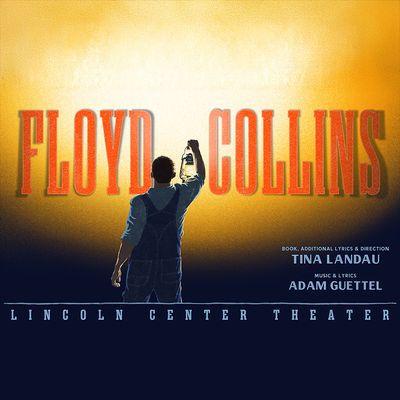
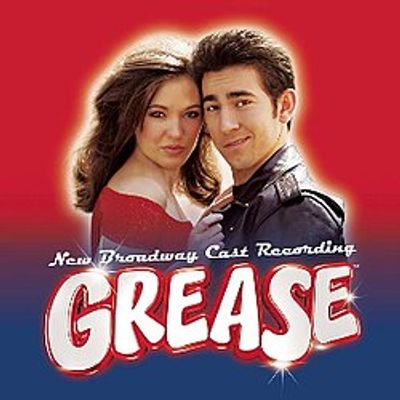
Anyway, just a little plug for the school. But when I got out, we were the first class to do a showcase in New York City and got an agent from that. So I moved to the city with an agent, did the auditioning thing, booked my very first audition, which was for the first production of Floyd Collins, Adam Gettle's Floyd Collins in Philadelphia. So I did that, and then I did the National Tour of Forever Plaid. And there's a point to this story. While I was on that tour, I got called in to come in and replace Duty in Grease, the Sam Harris role in Grease, the crazy high those magic changes. And they flew me in from the tour. I auditioned on the stage. Back then you got to audition on the stage a lot, and those were the days.
And I nailed it. I remember the music director ran down the aisle after the song. I was like, Oh my gosh, where will you be for the next two days? How can we reach you? Do we have your phone number? Yeah, I said, Yeah, yeah, yeah. You know, it's all great. He said, Okay, fabulous, fabulous phone. You can really do this, you can do this. And I left and the stage door man said, you know, welcome to the family.
[2:51] Kerry Butler: Wow.
[2:51] Scott Coulter: Actually, Paul Castree was actually there, and he congratulated me after my audition, saying it's gonna be so great to have you. And I never heard from them.
[3:00] Kerry Butler: Oh my gosh.
[3:03] Scott Coulter: Yeah, that is the worst. I never heard one way or the other. It wasn't through my agent; I had gotten the tour from an open call, so this was Stuart Howard Casting was just contacting me that way. And at that moment, I was devastated.
[3:17] Kerry Butler: Yes.
[3:18] Scott Coulter: And I'd only been here, I think maybe two years in New York, but I was like, never ever again will I wait for someone to give me permission to do what I want to do.
[3:27] Kerry Butler: That is a great story.
[3:28] Scott Coulter: So that's the point, that's the point of that whole build up. But so did you ever hear, like now that you've been in the business forever, did you ever say, Hey, what happened there?
[3:35] Scott Coulter: No, no, I mean I think I know what happened. I think I probably I had been on a tour bus for six months. I'd probably gained a little bit of weight since the last time they'd seen me, but not enough that I couldn't, you know, do the role. I don't know what it was. It was just really I was the only person they saw that day for the role. Oh, they were seeing Daisy Fuentes for Rizzo and Billy Hufsey, two soap stars for Kanicki and me. And I just I don't I but I look at it as a gift because had it gone the other way, I wouldn't be sitting here talking with you.
[4:03] Kerry Butler: Yes.
[4:04] Scott Coulter: So, um, but I really it was sort of a shake up and made me realize that I, you know, so often as performers, we put the power in other people's things. We have no control.
[4:12] Kerry Butler: Yes.
[4:13] Scott Coulter: But that's actually doesn't have to be true. There are so many avenues open to us that we can sort of make things happen. So, long story short, I decided I'm gonna do my own concert. So I called some of the people that I graduated Cincinnati with, and we remounted our senior showcase as a cabaret act for four people instead of 15. And the last night, a critic walked in and ended up giving us a Bistro Award for best review of the year.
[4:39] Kerry Butler: Oh, yeah.
[4:40] Scott Coulter: Isn't that amazing? And at that awards presentation, I met two other winners. They were songwriters, Marcy Heisler and Zina Goldrich. And they said, Will you come sing with us? And I just met them at the award show, and I said, Sure. So I started I've been singing with them, I think ever since that night. And through that, they wrote a musical called Dear Edwina, which is a very good thing. I'm on the recording of Dear Edwina. Well, Scott, Edwina's love interest is me. Oh, I'm Matt Scott. They named him after me. It was written for me. Yeah, I was away when the recording happened, so I didn't get to do it. I'm so bummed. But from Dear Edwina, we did it at the Berkshires, and I met Stephen Schwartz, who saw the concert and was like, Oh my gosh, who are you?
And then a month later, he called me and asked me if I would tour with an evening of his music with him at the piano and Debbie Gravitte and Liz Callaway and myself. So everything just sort of happened, you know. Once I saw he said, I'm done waiting. So after many years of doing that Stephen Schwartz concert, the man that booked it sold his business. He was done.
[5:40] Kerry Butler: Oh.
[5:41] Scott Coulter: And everybody was oh my god, that was a nice ride. But I, of course, needed that to keep happening. So I said to Stephen, Would you mind if I tried booking this show myself? And he said, No, knock yourself out. So that's sort of how the whole thing started.
[5:54] Kerry Butler: That is such an inspirational story. Go you.
[5:56] Scott Coulter: Yeah, yeah. Like, I love it. This is exactly what I love having in my podcast.
[6:02] Kerry Butler: Yeah, I'm glad. So now how that must be a totally different mindset to book the tour.
[6:09] Scott Coulter: It is a mindset, it um, a set of skills that you yeah. Well, I didn't really have those skills, which I think is the probably the most important thing I can tell you today is that I think if you should always say yes.
[6:23] Kerry Butler: Yes.
[6:23] Scott Coulter: If you don't say yes, someone else will. And if it's I always this is probably a terribly inappropriate thing to say, but I always say, unless someone asks me to sing Old Man River, I'm gonna say yes. Do you know what I'm saying? For one thing it's too low. For another thing, I'm the wrong race. Like it's just it's just not right. But anything else someone asks you to do, if there's any humanly way that you think you can work it out, then you should say yes and figure it out. Because really that's what we're all doing.
[6:48] Kerry Butler: Right.
[6:49] Scott Coulter: But you don't know until you're sort of in the midst of it, and you're like, Oh, everyone's sort of figuring this out. Anyway, I did not know what I was doing when I started booking shows, and so I had for many years a business partner, a guy in LA who had a record label. And we combined forces, and he helped, he showed me the ropes, he really gave me a great education, and then we split about seven years ago. So now the company is I have my company and he has his own company. But he was a huge help to me.
[7:14] Kerry Butler: And I know Debbie Gravitte, and she has told me a little bit about what that lifestyle is like, where she will, you know, just be gone from her family all weekend doing shows, but it pays the bill. Like she doesn't, she almost doesn't want to do theater because it doesn't pay.
[7:32] Scott Coulter: Yeah. Well, she Debbie is sort of a unique example in that she's been doing this for a very long time. After she won the Tony, she sort of did she's done concert work ever since. And the concert world has changed in recent years. I now do a lot of symphony concert stuff.
[7:46] Kerry Butler: Oh, I always wanted to get into that.
[7:47] Scott Coulter: It's great. Well, I actually want to talk to you about that. That's a different conversation. But it used to pay incredibly well. And it's still pretty good, but there's now this whole thing with licensing where you have to actually pay to arrange a song for an orchestra, which has always sort of been somewhere hidden in the ASCAP BMI clause that every venue pays, but it's never really been enforced. And then because the music industry has changed so much and revenue streams have dried up, they're really going after that now. So it can cost sometimes up to five hundred dollars a song per performance just to arrange it for an orchestra. So it's but once you have it, then it's per performance. You have the arrangement, but you have to buy the right to arrange it each time out. It's ridiculous. It's a really new concert is so expensive, it isn't worth it. It doesn't, it isn't even worth it anymore.
[8:36] Kerry Butler: Right.
[8:37] Scott Coulter: So we've all had to get really creative about how to create concerts where some things were licensing and some things are already exist and some things you know you own. So it's a different sort of animal now. So there's still it's still great fun, and there's still money to be made, but the money that we get to share in as performers and producers is less than it used to be. But performing arts centers don't have that problem. So they're a booming market.
[9:01] Kerry Butler: So okay. So now do you have somebody else that you work with or do you do everything yourself?
[9:07] Scott Coulter: I do I have several employees that work for me. I have an assistant, I have a booker for symphonies, I have a booker for performing art centers, but at the end of the day it all I mean I'm pretty nonstop doing stuff.
[9:18] Kerry Butler: And you have a lot of you make a lot of shows, right?
[9:21] Scott Coulter: We do. We have I think about fifteen shows for performing art centers and symphonies that are out at any given time.
[9:26] Kerry Butler: Wow.
[9:27] Scott Coulter: And I think we're out about we're on the road between thirty-eight and forty weeks out of the year.
[9:31] Kerry Butler: Wow.
[9:32] Scott Coulter: Which is good. Yeah. Not full weeks, but you know, half weeks or weekends or stuff like that.
[9:37] Kerry Butler: And how would young performers get to do this? You think I mean you kind of your story is already inspirational because they just do what you did, just put up a cabaret.
[9:45] Scott Coulter: Sure. Well, I think that's a great way to do it. The other thing is to always I like I keep going back to always say yes. I remember when I first moved here and people would ask me to do stuff and I of course would say yes, and my I would talk to my mom and dad back in Tennessee and my mom's like, Are you getting paid? And I was like, No, you've got to get paid. I was like, No, no, you have to sometimes you just have to do it. And because you make the connections and you need to do it. And nowadays a lot of the kids that come to New York, because I work with a lot of young people and they're all terrifically talented and they're lovely people, but a lot of them are hesitant to do things for free.
[10:18] Kerry Butler: Yes.
[10:19] Scott Coulter: And I'm I don't know where that started. But you're gonna knock yourself out of contention for a lot of things if you don't make those connections early on. You never know what saying yes to something for a free concert is gonna lead to.
[10:34] Scott Coulter: I did so much stuff for free when I started out, the plays, everything. And then, you know, I would have another job that was flexible that you could actually make a living. But you have to.
[10:45] Kerry Butler: Sure. Uh, so do you hire people for your shows and where do you find the people from?
[10:50] Scott Coulter: Well, I have uh the name of my company is Spot-On Entertainment, spot hyphen on, and it's a hyphenated word. Um, and I, I, it's basically my friends. I mean, I've been doing this a long time, so it's, it's listen, if you're gonna be on the road, there are a million people in New York City that can sing. There are a handful of people in New York City that are nice and can sing, and you know that. Like nice people, it really makes a difference. And you want to work with people that are nice and that, um, have your back and that are gonna do, you know, be a team player. So I have a repertory company of people that I use that we sort of rotate in and out of the shows, but I'm always looking for new talent.
And I actually, I get um, I'm not suggesting that any of you listening do this, but I do get email uh inquiries and submissions all the time for people that want to work. So I found people that way. I, I do um, I'm a director of original programming at 54 Below, 54 Below, so I create shows there, I meet people there. I, for many years directed a show at Town Hall called Broadway's Rising Stars, which was um like 24 of the best new musical theater graduates. So I've gotten a lot of um, my performers from those 10 years there. So just, you know, around, just different places.
[11:59] Scott Coulter: But what is interesting, and I will especially maybe for younger people, is that once you cross the Hudson River, nobody in America, this is the sad reality, knows anybody's name. Like the big Broadway names that we know and love, very few of them will sell at a 5,000 seat house in, you know, Peoria. The names just don't, they don't. It used to be that brought, you know, you'd do a Broadway show, you'd win a Tony, you'd get a TV show. Right. You know, like when I was a kid, Linda Lavin was a star of Alice, you know, came straight from Broadway. Uh, Bonnie Franklin, One Day at a Time. That doesn't happen so much anymore. There are a handful of people for whom that happens, but the business has just changed so much.
So really it's not the performer name that matters so much as the, what you're selling, the show name. So the theme of the show, they're gonna go see a show called, um, we have a show called, um, Bet Babs and Beyond, for example. Oh, okay. Uh, which is Bette Midler, Barbara Streisand, and all female vocalists. So it doesn't really matter who's in that. Um, they're gonna go see the show because the title sounds intriguing. Um, we have a show that's all the music based on the novel The Wizard of Oz. So stuff from The Wizard of Oz, from Wicked, The Wiz, pop songs like "Ding Dong! The Witch Is Dead." So it doesn't really matter who's in there. So that gives someone, someone younger without maybe perhaps a resume, but that has this idea or this vision, the permission to go ahead and create something. Because you don't have to wait till you have a star name.
[13:25] Kerry Butler: Right. Just make a star product. Is there a different skill set to doing concert work?
[13:30] Scott Coulter: It's completely different. Um, to be in a show eight times a week, you are, um, you don’t a costume, you don’t a character, you are fulfilling someone else's vision, uh, basically. But to do concert work, you're, it's just you for the entirety of the performance you're selling yourself, your personality, your skills, your talent, your vision and your voice. So it's, uh, a lot of people, um, can do one or the other. Not a lot of people can do both. It's a very, it's a sort of a, it's a, and you'll see concerts, um, of someone, you're like, oh, this really isn't their thing. Or someone you're like, oh my God, they were born to do this. Like this is where they really shine. So it is completely different.
And because there's no fourth wall in concerts, you really have to have a rapport with the audience and be able to like, you know, handle anything that's thrown your way. You know, you can't, you know, when the phone goes off, you can actually address it when, you know, yeah, when someone's disruptive, you can address it when someone's laughing, you can, you know, there's a lot of, it's, it's a lot more, it's more fun. It's more freeing, I think. And it, uh, for me, I think it's a lot more fun. Uh, I mean, I, I find it very nerve-wracking just to just to think that for, you know, the next hour, forty-five minutes, it's just me, right? And you know, and like a lot of the songs I'll do, like the audience knows the words and so I'm like, oh my gosh, if I forget my words, right, right, they'll know, they'll be singing along and that's right.
But you know, there's something very forgiving about concert work too. Those people are just so happy to sort of be in that atmosphere, right? And be, and it doesn't happen as much as it used to in the past. You know, like concerts are so expensive now. Um, you know, in or they're in arenas. I remember when I was a kid, I used to see famous people at the theater in Chattanooga, like, you know, maybe a thousand seats, twelve hundred seats. It still felt intimate. And now everything is so full-blown arena that it's nice to have a chance to see people in smaller settings again and, and it feels like you're part of something. So I think they're forgiving, I think. And, and when you go up on your words, you can address it like in a live concert, but you can't in a show like the train keeps moving. You know, you can't really, right, you sort of have to, it's fight or flight, I guess.
[15:36] Kerry Butler: Yeah, you'd be like, let's start over. Um, do you see any young people making mistakes like you said one thing is them not saying yes and not working for free?
[15:36] Scott Coulter: Well, this is probably gonna get me, um, you know, banned from the city. But I'm so sick of young people doing concerts where they're supposed to learn one song or maybe even two songs, and they're asking the audience to pay 50, 60, 70 dollars for a ticket, and they use a music stand.
[16:05] Kerry Butler: Oh.
[16:06] Scott Coulter: I'm like, you know what? If you at 25 years old can't learn this song, you just need to pack it up and go home. It's sloppy, it's lazy, it looks unprofessional. It puts, uh, it, the main thing it does, it puts a barrier between you and the audience. Uh-huh. And the whole thing we're there to see is the connection between the singer and the audience. And if you're, you know, looking down, it, the magic is instantly broken. And listen, I, I am a great believer in cheat sheets. You know, when you've got an hour and a half of stuff to do with facts and names and lyrics, it's okay to have like a little cheat sheet here and there. Like put it on top of the piano, tape it to the monitor.
[16:42] Kerry Butler: Yes.
[16:45] Scott Coulter: One of the biggest names in the Great American Songbook always has lyrics taped to the monitor. One of the monitors isn't even on, it's just for lyrics, but nobody knows. Because you have to have um, you know, ways to sort of help you through like a big evening like that. But if you're doing one song, just learn it.
[17:00] Kerry Butler: Yeah.
[17:01] Scott Coulter: I would say learn it or say, I'm sorry, I can't do this date. If you can't do it, it's, I, for me, that's my thing. But if there's a whole big movement now, you know, you go see the shows and there's 10 music stands across the stage, and it's not a reading, yeah, it's a concert, it's a performance. Learn, learn the song. I, I, I, that is a big no-no for me. It's just a big turn-off. And it, it telegraphs to me that you're not really serious about this. Uh-huh. And, and you want to work with and you want to go see people that are serious.
[17:29] Kerry Butler: Yeah, yeah, I think that's um really good advice. Do you have any other advice for young people starting out? Anything you wish you knew when you just start were starting out?
[17:39] Scott Coulter: Um, when I, when I was first moved here, my roommate Jessica Hendy was, and I moved here together. She's a big, she's a Broadway performer, and uh, she was most recently, she was Grizabella in all every variation of Cats that's ever been in New York. But um, when we first moved here, of course we lived in a fourth-floor walk-up in the middle of Hell's Kitchen, which is not where you wanted to live at the time. And then within the first month, we went to get our fortunes told, our palms read downtown. And um, the woman looked at my palm and she said, oh, this line right here, you're gonna be very successful. But this right here, it's gonna take a very long time. And I was like, okay. I mean, like, that's, I just sort of wanted someone to say, you're gonna be okay.
Uh-huh. But I think if she had said you're gonna be very successful, and this right here means you have to start today, then I think my whole life probably would have been different. Do you know what I'm saying? I think the power of what we mentally think um really can affect the outcome of things. And so I would say just, you know, hit the ground running. Don't, don't wait. I mean, it, it may take a long time, but don't act as if it's gonna take a long time, and really, you know, just show up, be present, do the work, say yes, show up prepared, and, and, and be willing to take, uh, you know, the reins, be willing to take control and, and, and make your own things happen. It's so easy nowadays with YouTube and I mean you can, you can put stuff out there in ways that we couldn't or I couldn't when I moved here. And so now the world is sort of your oyster, there's nothing holding you back from doing it. I think someone should create, well, here’s a million dollar idea I'm gonna give up.
[19:17] Kerry Butler: Well, you want you want to give it for free?
[19:20] Scott Coulter: Yeah. Someone should create a series of videos. And Rogers and Hammerstein, um, their estate has sort of started doing this, but like just videos, like MTV videos of musical theater songs. Like, don't you want to see another hundred people staged in the middle of Times Square? Yeah. Or, oh, what a beautiful morning in Central Park as the sun comes up. I mean, that somebody could make a bazillion dollars doing that. Yeah. And, and, and it's out there and readily available, and you all have the skills. You can do it with your phone.
[19:49] Kerry Butler: That's right.
[19:50] Scott Coulter: Um, but you know, anything that sort of um gets your name out there and advances the art form and, uh, you know, brings you an audience. I think is just do it. Don't wait for somebody else to give you the permission.
[20:03] Kerry Butler: Yeah, thank you so much for being here. I learned so much from this interview. Um, what would you like to plug? Do you have any concerts coming up around?
[20:12] Scott Coulter: You know, we have concerts, like I said, we're on the road about 40 weeks a year, so we have almost every weekend there's a Spot-On show somewhere in some city. So you can go to our website www.spot-onentertainment.com and uh see what's going on. Check us out.
[20:27] Kerry Butler: Thank you so much for being with us.
[20:27] Scott Coulter: For having me.
[20:36] Kerry Butler: Thank you so much for listening to Breaking Broadway, produced by Broadway Podcast Network.
[20:42] Kerry Butler: Opening song by Aaron Acurso and Joey Mazzarino.
[20:45] Kerry Butler: If you like this podcast and want to hear more, please like, leave a comment, or share with your friends.
[20:52] Kerry Butler: See you next time for more insider tips to making it on Broadway.
[20:57] Kerry Butler: Together, you and I are breaking Broadway.
© Broadway Podcast Network, All Rights Reserved