

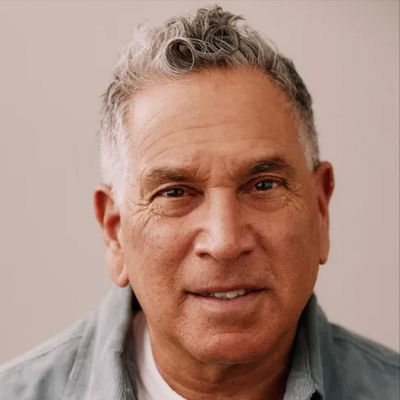
Robert Horn, the Tony nominated writer of Shucked and classic tv shows Designing Women, Teen Beach Movie and so many others, tells us what the creative team looks for during auditions. And, why you may have given the best audition, but still not have gotten the part!.. Read More
From the show: Breaking Broadway with Kerry Butler
Guests
Featured Shows

About
Robert Horn, the Tony nominated writer of Shucked and classic tv shows Designing Women, Teen Beach Movie and so many others, tells us what the creative team looks for during auditions. And, why you may have given the best audition, but still not have gotten the part!
Follow Robert @rhorn1 on Instagram and Twitter.
You can find me on Instagram @kerrybutler1 and TikTok @kerrybutlernyc.
For coaching and teaching, visit my website at kerrybutlercoach.com, follow @kerrybutlercoach on Instagram, or email me at kerrybutlercoach@gmail.com.
Transcript
This transcript was automatically generated and might contain errors.
[0:06] Kerry Butler: Once I laid a penny who just couldn't stop the beat. Yes, with rather skits on her feet. Although it's recently to see a real coma.
[0:36] Kerry Butler: Tina. Now come with me, Emma. I am your host, Miss Kerry Butler. Together, you and I are breaking Broadway.
[0:56] Kerry Butler: Hey everyone, I want to welcome my very special guest, Robert Horn today. We have a long history together, but right now he is represented by Shucked on Broadway, the hilarious show. Last season or two seasons ago, he was represented on Broadway with Twitzy. He's done tons and tons of TV work. Welcome to the show, Robert Horn.
[1:20] Robert Horn: Thank you, Kerry Butler. This is so exciting. We do go back. Uh-huh. And I have been watching your success for years now and how you're thriving and just expanding your creativity in so many ways. And I love seeing it. I love seeing it.
[1:38] Robert Horn: Yeah, years ago, Kerry and I and Laura Bell Bundy. Did you meet Laura Bell on an airplane?
[1:44] Robert Horn: I met, I had gone to see Hairspray. I'd gone to see Hairspray. And the day, and literally that night, I went to the matinee, I think, or whatever that maybe it was the next day, whatever it was, or that night, I got on a plane to go back to Los Angeles, where I'm based. And she had a boyfriend at the time in Los Angeles.
[2:03] Kerry Butler: Yes.
[2:04] Robert Horn: And she got on the plane still in her makeup from Hairspray and got on a plane and sat across from me. And I then, sorry, I just have to say, I literally just saw you in the play this afternoon, and I think you're wonderful. And we started talking. And if anybody's Laura Bell Bundy, say, Hi, my name is, and you're her best friend. And so, and so that was that's how our friendship started.
[2:29] Kerry Butler: So Laura Bell met you on the plane. Then you started, we started working on a pilot together, and we went out to places and would pitch it.
[2:37] Robert Horn: Yeah. And so they everybody out there, like you literally never know where your break is going to come from.
[2:46] Kerry Butler: On an airplane. Like that's the perfect example.
[2:48] Robert Horn: That's a perfect example. Even though it didn't go anywhere, it started this great relationship between all of us.
[2:54] Kerry Butler: It did. And you know, of course, I you know her from Hairspray, correct? You had not known her before that.
[2:59] Robert Horn: No, yeah. We became best friends in Hairspray.
[3:02] Kerry Butler: Yeah.
[3:03] Robert Horn: She, you got you two were very close, I remember. Um, and that I mean, and then the other connection we still are.
[3:09] Kerry Butler: Yeah, I know. Oh, I know. She tells me all the time.
[3:11] Robert Horn: And the other connection that you and I now have is Jack O'Brien. Because Jack O'Brien did Hairspray and now just did Shucked and is just the best.
[3:23] Robert Horn: The best, a legend and an icon.
[3:26] Kerry Butler: Yes.
[3:26] Robert Horn: I did, I got to do Catch Me If You Can with her.
[3:28] Kerry Butler: When you did Catch Me If You Can, best song, best song in the show. You just rocked it in that show.
[3:31] Robert Horn: Jack is amazing at comedy because he's so grounded in drama, and he knows how to heart. It comes from a very true place.
[3:43] Robert Horn: True place, and you know, he loves and trusts the actors and the material, and he's just, he's like, just do what's written. Just do what's written. And he's just fancy, so we share that bond as well. And another bond is Eddie Perfect.
[3:59] Kerry Butler: Yes.
[4:01] Robert Horn: He and I are writing a musical together right now.
[4:03] Kerry Butler: Amazing.
[4:04] Robert Horn: And he wrote Beetlejuice. Um, Broadway is such an insular sort of dense world. Unlike LA, where you could go months without seeing anybody you know. On Broadway, there's, you know, I always say there's 15 square blocks in New York City that is my family.
[4:23] Robert Horn: And yeah, and when I was there, I saw you, right? As I came into Shucked, you were there in the theater. And I was like, oh my god, hi!
[4:31] Kerry Butler: You always run into, that's why you always have your makeup on. You always run into somebody you know, just within 12, 15 blocks.
[4:39] Robert Horn: It's a really, I love that, and I miss that very much. So I want to get to talking about Shucked, but first, everyone who's on, I always like to ask in their journey to theater. Like, did you, um, how did you grow up? Did you grow up loving theater from an early age?
[4:56] Robert Horn: I grew up loving theater. It was always my passion, my heart. So I've told this story before. My mother, when I was, when she was 19, was Ed Sullivan's secretary. A lot of people don't know who Ed Sullivan is, but Ed Sullivan was the most famous man in America, and he had a weekly variety show on television where there were three networks. Um, and literally, like 70 million people across the country watched it. He was one of the most famous men in the world.
[5:26] Robert Horn: Um, and my mom worked with him. And she worked with the theater, the Broadway acts that would be booked on the Ed Sullivan show. So she was a, my mom was a theater girl from way back. And when I was a very young kid, she would take me to theater. Literally at five years old, she'd take me to my first show, which I think was Fiddler on the Roof. And it just something ignited in me.
[5:48] Robert Horn: I also was a little gay boy. And she would, I would watch, at that time there were things like the Judy Garland show was on CBS. And I would, I mean, I was very young, but she has pictures of me like this watching. And she would take me to see My Fair Lady and Sound of Music and all these big musicals that came out, movie musicals. And I grew a love for this art and knew at some point I wanted to be in it. Um, and so, uh, that's that was how my love for theater started. I was surrounded by it.
[6:22] Kerry Butler: So then what happened?
[6:23] Robert Horn: Then, so then I, we were living at that time. I mean, I'll do the condensed version because we were living in, we were at that time, uh, I had, we were living, I think, in Connecticut. Uh, I had, we were, I was from New York and then we moved to Connecticut, and then my mom, um, we struggled financially. We were really poor, and my, we ended up moving back to Brooklyn to be near my grandparents. Uh, and then my mom just struggled with a lot of things, and it was, you know, it was a very different time, and the family struggled.
[6:58] Robert Horn: So we went into family counseling, and that it was through an organization called the Jewish Childcare Association. And we did that in order to have, we had, if we had family therapy, they would then give us help. So they would give us a housekeeper, they would give us money, they would help us because we were on welfare and it was very poor. And ultimately my mom suffered from, she suffered from depression, which is not uncommon. And just in those days, they didn't know what it was. So they would just medicate you and knock you out. They didn't know how to, it wasn't part of the conversation.
[7:27] Robert Horn: It wasn't in the zeitgeist. There was a stigma to it actually. And ultimately they ended up taking my twin sister and I, um, to go. They sent me to live in an orphanage and they sent her to live in a group home. Um, and so this I was about nine years old. I went to live in this orphanage upstate in Pleasantville, New York, an ironic name. Um, called Pleasantville Cottage School. Um, and I lived there until I was about, I was there until I was about a little shy, just a little shy of 14, like a little over 13.
[7:56] Robert Horn: Wow. And I was like, I'm out of here, man. Screw this. And I ran away and ran back to New York and lived on the streets of New York. Um, at 14, 13, 14 years old, and it was fantastic. Oh my god. I was saying, I've said this before. It was such a different time in New York. You could survive in a way you just could not now.
[8:16] Robert Horn: Um, I originally lived in what was sort of called a group home through this organization, the Jewish Childcare Association. So somebody rich donated two apartments in Elmhurst to this organization, and there were like 12 beds in this apartment, and for about six months or eight months, I lived there. Um, and then I made just lived, I made some friends and lived on people's couches. And then at about 15, this I've told this story and I love this story. I was like, I need to get an apartment.
[8:43] Robert Horn: And so I was walking around the village, and there were these guys playing chess out on the street in front of this building. I didn't know at the time, but they were, let's just say they were mobsters. And I said, Hey, is anybody in over an apartment for that I could rent? And this guy said, come with me. And he, it was, he showed me an apartment on Thompson Street, Thompson in Houston. He said, Can you pay the rent? It was like $95 a month. He said, You put the rent under my door every month, you cause no trouble, nobody knows you're here, and I'll give you the apartment. And I got my first apartment on Thompson Street and um that and lived a 15 years old on my own, living in New York, had to go in the theater, second acting everything.
[9:29] Kerry Butler: And then I think I've told you this when I was about to.
[9:32] Robert Horn: How did you, how did you, how did you make money though to pay the rent and everything?
[9:35] Kerry Butler: Well, some things I won't tell you. But you know, you do what you have to do to survive. And I mean I did things that I'm like not proud of. I did all kinds of stuff, but then I also did like I was a messenger, you know, like I was a messenger. I got away, I was a roller skating waiter. Uh, I sold, I sold Black Beauties to NYU students so they could stay up when they were taking their, which was like speed.
[10:01] Robert Horn: Um, I oh my gosh. And you know, New York had a city work program at that time, which was they pay you minimum wage was like $350 an hour, and you and they would place you in a job, and I got a job working the front desk at the Martha Graham dance studio. It was just the, I know it was crazy. The most exciting thing. Then I got a job working for the Environmental Protection Agency testing the air for pollution, like these crazy jobs you would get.
[10:25] Robert Horn: Um, and then I started waiting tables. I worked at Serendipides, at Yellow, all these different restaurants around the city, and struggled to try to make it in theater and be a playwright. And it didn't happen. And I, and I, I uh eventually my mom, who I had reunited with, moved out to Cal, had moved out to California back in like the mid-70s. And my twin sister had then followed her out.
[10:47] Kerry Butler: And I said, you know, this was now the age crisis.
[10:47] Robert Horn: You have a twin sister?
[10:52] Robert Horn: I have had a twin sister. She died three years ago of pancreatic cancer, but we were very close.
[10:57] Kerry Butler: Oh, I'm so sorry.
[10:58] Robert Horn: And then, and so did she go to the orphanage too?
[11:01] Robert Horn: She went to another place in Mount Vernon, which was more, it was like a group home. So where I went, there were like 450 kids. Where she went, there were like 25 kids in a house.
[11:10] Kerry Butler: Wow.
[11:11] Robert Horn: So sh it was just that you go wherever you're, it's called placement. Right. You go wherever a bed opens up. The place I went to was a little more strict, it was a little more, uh, uh institutionalized, whereas where she went to more of a home where she could go to public school, I couldn't. So it was those kind of no way, and so uh I ended up back in the, you know, the age crisis has hit, every had hit. I was just losing my people were just crumbling around us. It was a horrible time.
[11:41] Robert Horn: The city, New York went into sort of a financial depression, I couldn't get a job, and I just said I'm going out to California and just gonna stay with hang with my mom and my sister who had moved to San Diego, and I did, and then I moved to LA about six months later, and said, and I was about to move back to New York and just got a job in television, started writing television.
[12:02] Kerry Butler: Uh, what was your first television job?
[12:05] Robert Horn: The first job I got was, uh, it was some pilot, it was some show that like lasted three episodes and left. It was called Five Up Two Down. It was with, um, Diane Carroll, and uh, it was basically a remake of a show called The Mothers in Law.
[12:19] Robert Horn: Uh, and then I got another, I got another, I just got a bunch of shows.
[12:22] Kerry Butler: How did you, how did you get it? Did you have an agent into that portion?
[12:25] Robert Horn: What happened is I was struggling to be a writer, and I had a really good friend who is now Howard Sussman, who's one of my best friends of the world, who does the costumes for Dancing with the Stars. And had a friend, uh he was, he came, he came a come out, he had to come out to LA to do costumes.
[12:44] Robert Horn: He was on a show, I think it was called Moonlighting. He was on a show at that time. Oh yeah. And he was at the beach and he was hanging out with some friends, and he said, one of his friends said, Man, I wish we had a joint. And he said, Oh, you know what? I bet my friend Robert has a joint. Because I thought those days I always had a joint. And this group of people came to my house to get a joint from the beach. And one of them worked at CBS as an assistant to the head of current program, which doesn't matter, but and we started talking, and his name was Danny Marcosis, and he said, I'm trying to be a writer. And I said, I'm trying to be a writer. And we wrote he he said, Let's write a pilot together.
And we did, and because he worked at the network, they had to show them anything he wrote. They had the right to it. And he showed it to this wonderful executive named Joe Vogci, who's no longer with us, who was very successful executive. And he said, I like this. I'm gonna give it to a couple of agents and see what they think. And literally within a month, we were signed with ICM, had our first age. Oh my gosh! And got a and started going out and getting TV shows. And then a year or two went by, we were doing these shows. We just couldn't get that big break. And then I was struggling, and I finally said, I can't do this anymore. I need to get a job. And I I enrolled in Marinella Beauty School because I was gonna be a hairdresser because I said I'm never gonna make it.
And the nice true story, the night before I got a phone call that changed my life, was the night before I was gonna start my first class in Marinella Beauty School, and it was designing women. And they called and said, We'd like you to come in and and take be part of the staff. Uh and that was my first job. Oh my gosh. When it was 1980, that's an incredible story. Yeah. You you never wrote your story. No, I'm gonna do it eventually. It's so hard for it. Yeah, you have to. When you're close to it, it's very hard to do it. So I and I said, and you know, it was always like, I'm gonna go back to New York, I'm gonna go back to your. And then we got on designing women within about a year. Um I ended up running the show through a whole series of events, which I won't go into.
Um, ended up and working with there was a I mean, you all y'all people need to look these people up because these are legends. There's a gentleman named David Steinman, who's a very famous stand-up comedian and actor and then director, and he was directing designing women, and he said, I'm gonna teach you, I'm gonna teach you how to run a show, I'm gonna teach you how to edit, I'm gonna teach you how to cast, I'm gonna teach you how to be a showrunner. And this man took me under his wing and taught me, and that was and that was my first job. My old writing partner and I ran designing women for the last like two, two and a half years of the show. And then from that, I got on a show called Living Single, which be was the first um African American sitcom that was with female empowered, was Queen Latifa and Kim Feels and Kim Cole's and Erica Alexander.
It was an incredible show created by a legend of television, um, a Vet Lee Bowser, who was just um uh awarded uh a lifetime achievement award for the WGA, and and then my career just kind of started. Then I got my own show on the air called Living uh High Society with Gene Smart and Mary McDonald and Faith Prince, and then I got an overall deal at Warner Brothers, and it just sort of grew. And I said, Well, I guess I'm in LA now, and all I wanted to do was theater. And the last part of the story I'll tell you is that so I got a phone call at Warner Brothers to meet a very famous producer named Bob Boyette. Bob Boyette was part of a team called Miller Boyette. And they had created, they had like six shows on the air Full House, Family Matter, Step by Step, all incredible shows.
And I met with him to team up to do a pilot, which never happened, but he became one of my best friends. And he then came to New York ten Tony Wards later and became the legendary producer, Bob Boyette. And he called me in and he knew I wanted to do a theater and gave me my first job in theater. And that's how I started her. What was your first job in theater? What was your first job in theater? My first job he gave me was Dame Edna. It was Dame Edna the Dame Edna show. Oh, yes, I remember that. And um so he he yeah, so he gave me, and Tom Schumacher, who's the president of Disney Theatre, gave me an opportunity, which I'm not allowed to talk about because I kind of helped with the show. Uh helped, you know, make it a little funny.
And so then he gave me so Bob gave me the Dame Edna show, and then he gave me another sort of infamous um Broadway show called Lone Star Love, starring Randy Quaid, which kind of went down in history as one of the biggest fiascos. And then he remembered. And then he said, I'm doing a show called 13, the musical. And would you meet with a composer named J Sor Brown? And I did, and that's sort of what happened, and then it went from there. Yeah, I loved 13 too. So so great. Yeah, we just did the movie on Netflix, which is a whole other story. I know. I have to see the movie. I haven't watched that yet, but I loved the show so much. So let's talk about Shocked for a minute. I mean, shock full of jokes, like so funny, but then like really heartfelt at the end.
Really, really great message. And you had been working on that for a long time, right? So it started back in 2012, 11 or 12. I got a phone call. There was a show on television for 25 years called Hee-Haw. And I got a call from the Grand Old Opry through my agent. Would I like would I be interested in making a musical out of the TV show Hee Haw, which was a variety show? It was sort of like 10 second skits and musical country music guests. It was sort of a blue-collar uh Rowan and Martin's laughing, if anybody knows that show. Anyway, so I was like, I yeah, I wanted to, I wanted to work in theater, so I was like, Yeah, and I love vaudeville. I love that sort of fast-paced comedy. And so uh I said yes, and I wrote an outline, and then they asked me to go to Nashville to meet with songwriters because they knew they wanted somebody um authentic, not somebody from the theater world trying to write country-inspired music, but actual country artists.
And I went, I met with a bunch of people, and then I met with Brandy Clark and Shane McEnally, and I, the minute we met, we fell in love. They were both um proud out uh um gay artists in a in a in a in country music in a world where that was uh in short supply. Uh I loved their music, their their storytelling in their music. I love their vibe. We all laughed the first meeting, and uh, and I could knew that they could get they understood my comedy, um, and they were funnier than I was, and so we met and we did a and we wrote a show and we did it in Dallas in 2015, and the show just never found its story, its heart. It just, we just, I don't know, it just wasn't right. I maybe it was a little because we were locked to source material.
And so we really write the show. That's what I that's what I that's what I loved about it now. That you weren't uh mocking, because I, you know, so many people do mock that kind of uh thing. And I I mean we need to come together now. And that's what I felt about. What happened was after that Dallas production, we just let it go. We just said, you know what, we're done. Um and then about three years later, the world changed and politics changed, as we know, country changed, and I started just seeing the the division and the vitriol that it started to happen. And and as you know, I'm married to a southern man. You know, an incredible southern man, John Leverett, um, who his family is very conservative, southern, ideologically opposite from myself, and and and so, and yet our families, myself and my mom, because that's all that's left, but at the time my sister, um, and he and his family loved each other, and we were brought together by this, and we we never we stopped taught, we didn't talk about what we didn't have in common.
We broke bread together and loved each other because we were family. And I knew from that there's a way that that it I no, neither one of us tried to change the other one's minds. We just loved each other because of some some things and in spite of others, and I wanted to write about that as as the world was as the country was just getting more and more aesthetic and divided. I called Shane and Brandon. I said, we gotta go back to this, man. We've gotta, we've gotta talk about this. This is horrible. And and I and we did, and I I came up with this idea to write a show about a town that had closed themselves off on the outside world because they didn't didn't want anybody coming in, telling them how to live their lives, wanting to change them, which is sort of where the world had gone.
And don't tell us we're wrong and you're wrong. And I I needed a way to I wanted it to be Heartland America, and I needed a way to close them off from the outside world, and they were farmers, so I said, We'll use corn. And corn sort of became a metaphor because the show is sort of about when you learn to open your heart to people who are different than you, you can find you can grow. You cannot grow. So the corn dies at the beginning of the show and comes back to life at the end of the show because people open their hearts. And so it's sort of been a it's a metaphor for that. And and that's where the shows, this version of the show started. I love that so so much because I did think that I was really surprised actually at where it went.
And I love I didn't know that there was a personal story connected to that. And I just love that so much because I feel the same same way. Like my family, you know, is very republican, and like how do we love each other and get along in spite of our you know, the differences challenge. Um, and what I also felt was I didn't want to hit anybody over the head with a message. You didn't you didn't, you didn't. That was one of my favorite things too. I what was really important to the composers and to all the whole team, Jack and the composers and and and our incredible producer, Mike Bosner, who literally has changed the way shows are marketing on Broadway. It's a that he did an amazing jay, which which I want to talk about.
Oh, yes, it was so funny. We we knew that what we wanted was people to just have the best time and then walk out of the show and the next day let it really hit them what that was about and what that meant. Because I don't think people want to be lectured to anymore. They're tired of that. We're injured. We spent a year and a half, two years in such a dark place. And it's not just that people want to laugh, they just don't want to be told how to think. And and I think and we find we find our I'm a firm believer that we find our tribes, we find our community. And and that's what the show is about, community. And so we just wanted to pull that all together in a way where where it was uh I one of the great things about this show and about Mike Bosnor, our producer, and and Jack O'Brien, our director, is they let me write the show I wanted to write.
I mean, it wasn't often you're just noted to death, and everybody has an opinion, and it's such a collaborative art form, which I love, but they never stopped me from. I'm like, I want this to be a joke fest. I want to exhaust people with comedy for a moment and get this gorgeous ballad, or get this really this moment filled with pathos in between the humor where you and and they let me do that. And Jack is a is is just a genius at how to how to how to make sure that you when the audience needs to breathe, when the audience needs to think, when you just want to keep them roaring. And so it took 10 years, but we got there. Yeah, and and also I just love that you know, so many times they say like liberals talk down about people in the South, or and and like I feel like this is a show that everybody can go to, and no one's gonna feel like you're being made fun of.
It's like we're different and we can love each other and get along and laugh together. And it's it's so much more than that. It's really important to us, all of us, that we never condescend to any of these people. That we create people that are that have lives and are characters and are real people. And the same, I mean, we sort of play with both the tropes of both city people and country people, but in a in a very, very loving way. You know, there's a line in the show. I won't, I can I don't like to I don't like to talk about the jokes of the show outside of the theater because I think it's a sacred place where the comedy lives. And if people coming in already knowing the punchlines or the jokes, it's not funny.
[25:32] Robert Horn: And he turns around to me and says, you know, just a little bit of a warning. We may be simple folks, but there's a cornfield of difference between simple and stupid, and that's a simple mistake that stupid people make. And I wrote that line because I love that line. Just because people might not live in the same world as you, have the same educational experience as you, whatever it is, don't be fooled to think that they're stupid people. Don't be fooled to think it's just, you know, there are people who work with their hands, there are people who work with their heads, there are people who work in many different things who have just as rich and cultured and live in different ways. Your culture may be different than my culture, but that does not make it.
That doesn't mean it's not culture. And so it was really important to all of us that we got that message across in this show. And then we make it accessible. I love it. And you're not going to be able to do people come to the actors, they line up, you know, with the stage door, and they say to the actors, people from the heartland of America and the South, and they'll say, I never felt represented on Broadway in a non-judgmental way. But that was my family. And I love that.
[26:39] Robert Horn: Yes. Yeah. I love that too. I love that too. Because that is the way that you change hearts by just welcoming everybody and embracing everybody. I love that so much. So my podcast is for like people trying to break into the business. Do you have any tips like even for say performers who want to become writers in the business or people who are, you know, sitting on a script and have no idea how to start?
[27:12] Robert Horn: Well, and listen, I talk a lot to the next generation of artists because I think it's really important that we pass our knowledge and what we've learned on to the next generation so they understand the tradition of theater, but also bring their own generation to it and their own interpretation of it. The thing I always say to everybody, whether they're performers or writers, is you walk into that room or you open up that page and you're going to bring something that nobody else does. You are a unique creature, whatever that is. So first of all, I always say, don't look at this business. This is a competitive business, but you're not competing with anybody but yourself. Because your uniqueness is gonna those same lines that you're gonna come in, or that same song that you're gonna sing as everybody else, you're gonna do it in a very unique way. So don't try to conform yourself to what you think anybody else is, because you will lose what makes you special, and what makes you special is what makes you will make you successful.
[28:11] Robert Horn: The other thing I say is don't, if you really want it, don't give up. Everybody's journey is different. Don't compare your journey to anybody else. There are people that make it right out of college, and there are people I didn't get my first job until I was in my 30s. So you never know what your journey is going to be. Do not compare yourself to anybody else. And the third thing is if you're a writer, write what you know. That doesn't mean you have to write your life. It means you have to write the I write comedy, for example, and I see, but comedy only works if it's grounded in a place of drama, if it's grounded in a place of confidence. So write what you understand your life to be, your life experience, the prism through which you look at life.
Always write that. There'll be fictional characters, it'll be a fictional situation. You have to write your biography. But write it in the way that you view your the view of the world. And then you can interpret how a character might view the world through that prism. Same thing for an actor. As an actor, you have to inhabit a character, but you have to bring your talent and who you are to that. And that's what's gonna make that character come to life, or that scene or that character pop on the page.
[29:16] Robert Horn: And the other thing I'll say is it is a business of networking. So be as much as you can. You know, people will reach out to me all the time and send me messages on Instagram and saying, hey, I saw your show, blah, blah, blah. Can you give me some advice? Can you do it? Don't be afraid. So don't stalk people because that's really bad. But social media, social media is a very interesting thing I found some really talent, I've cast and found some really talented people just by seeing their TikToks or their Instagram. It's an incredible thing. It's an incredible medium used correctly and honorably that can give you a lot of exposure. Take advantage of that. Reach out to people whose work you respect.
Show your audition for everything, be in anything, write for free. Do what you have to do to get your work out there. Because like I said, it's a competitive business, but you're competing with yourself. Nobody's doing what you do, but there's a lot of people doing it. So just make sure you get seen. And that's all about it. Success is a serendipitous meeting of timing and ability, of luck and ability. You've got to do the work and do the ground and be ready for your opportunity. And then you gotta hope that opportunity comes. Because when it does, you get one shot. And so you have to be ready for that. Study your craft, know your craft, know the history of your craft, know the actors and the writers that came before you, the plays and the musicals that came before you, who and learn from that and interpret and so anyway, that's what I say to people.
[30:53] Kerry Butler: Amazing advice. Everyone, write all of that down because that was such good advice. Do you ever now you're auditioning for Broadway theater? Do you see any like mistakes that that actors make when they come in the room?
[31:07] Robert Horn: That's an interesting, that's it. Yes, interesting. You know, I here's here's what I what I like to when we audition. I love to see people who have made a choice. It can be the wrong choice. But you want to see that people are thinking. Because then, you know, often we'll say, Hey, can you try it this way? And then obviously what you want to do is see somebody who knows how to take direction and could try don't aren't locked to a performance, but free enough to make a change in the room that so I uh I would say walk into a room with confidence. You can always tell when somebody comes into a room that isn't confident in their own body and their own being. And they may be very talented, but what we'll sit there and say is they're not ready.
They're just not ready. There's a when you walk into a room with confidence on who you are, not cockiness, but confidence. We feel that, and we want to work with you. Be uh you can walk into a room and everybody behind that table might have a sour face. They might have been sitting there for six hours hearing the same material over. But be who you are and win them over. You every every audition is a chance to show the world who you to show people who you are.
[32:21] Robert Horn: Um, and then the other thing I'll say is, you know, is that is that you just uh audition for everything. Just don't don't don't be scared. Just try you never know. And you never know why you don't get something. You may not get a part for something that has nothing to do with you. What a lot of actors don't know is auditions are a negotiation for all of us. I want someone who's funny. The composers want somebody who can sing a certain way, the music director wants somebody who can do this, the choreographer wants somebody who can do this, and you barter. You say, okay, look, I love that person, but fine. I will have to pass on them because you need somebody who can also dance and who can also do this thing, who is a tenor or a bat. You're you're negotiating. So you might be the best person for the world and not get it purely because we also need somebody who can do something else that may not be your forte. So, but I'll remember you for another show.
[33:18] Robert Horn: That's no one's ever brought that up on the show, and that is so so true. Even if you give in on one person, then it could be, oh, it's their turn. Now they have to give in for your person, right? It's it's like a negotiation within the team. Maybe there's a role that has a little less singing or a little less dancing, but a big comedy role. So they'll say, okay, Robert, that's who do you want? Because it's really there's an incredible character actor in shock named Kevin Cahun, who's been on Broadway for many, many years and television. He is he got nominated for a Tony, and he's a star. And he has a little bit less of a singing role than some of the other characters, but more comedy than almost anybody.
And so I put I said, when he came in and auditioned, I said, this is not a negotiation. I want him. He, he, he, um, and and so everybody will say, yes, there are other roles, there are people I was dying for, and and the and Jason Howland, our incredible music director, said they just can't sing what I need of. I need somebody who can sing tenor or soprano, or in a way that they're just not going to be able to sing that track. And it broke my heart, it would break my heart, but yeah. So it's always a negotiation.
[34:37] Robert Horn: So interesting. Actors don't know that. They'll be like, I thought I was great. Why didn't I get that? And I'm promise you so many times it has nothing to do with whether you are good or not. Last question Do you have any advice for your younger self?
[34:53] Robert Horn: Oh use a use aging cream earlier. Start using aging cream earlier. Start in your 20s. You look great. Um, but uh, you know, I I will say, I don't want to sound, I don't want to say, I don't want this to come out wrong. But I I was very lucky that, you know, my mom struggled in a lot of ways. But when I was a very young boy, like, and I remember this, like six or seven years old, my mother pulled me aside, and I something had happened, and I was very sensitive and I was crying. And she pulled me aside and she said to me, I'm gonna tell you something. You're going to be different. She knew I was gay, she knew I was artistic. And she said, You're going to be different, and it's going to be hard, but don't let anybody tell you it's not wonderful.
She told me that at a very young age. And because of that, I never didn't have confidence. So there's, in a sense of telling myself, you know, believe in yourself and all that. I always did because she told me that I was different, that I was special. And I hope parents, any parents that might be listening to this, tell their children the same thing that you may be different. You don't worry about what anybody else thinks. You are special. And it changes the way you look at yourself through very difficult times in your life. So I always had confidence. I always believed in myself because my mom believed it. So really, you know, I I don't know that I there was probably nothing about my journey that I would do differently because it got me here.
And I also along the line is to get in that door, and how many people never get the opportunity to do it. And every day I am thankful for the chance that I get to do this because people with so much more talent than I have sometimes just don't get that chance because of whatever reason. And so I just I I mean, I I yeah, I would tell myself, use age, it's aging cream earlier.
[36:57] Robert Horn: So you know it was bad, you know, wrinkles around your eyes. Well thank you so so much for for being with us and sharing all of that incredible information and knowledge and um I adore you thank you for being with me.
[37:12] Robert Horn: Kerry Butler, this is such a thrill. I'm so I love your success. I'm so happy for you. You're one of the most talented people in this industry. We share a love for Disney, which we know which and um I'm so honored that you would have me on your on your show. I appreciate it.
[37:33] Kerry Butler: Thank you so much for listening. If you would like me to come to your school or theater group and give a masterclass or a talk back, please reach out at kerrybutlercoach.com. If you like this podcast and want more episodes, please go to bpn.fm slash breaking broadway and subscribe, like, or share. Together, you and I are breaking runway.
© Broadway Podcast Network, All Rights Reserved