

So wonderful to catch up with Dede Ayite, who made her Broadway debut in the 2018 revival of Children of a Lesser God. On the podcast today, Dede and Hal explore how to use design to construct character, how she imparts the value of transformation on her students, and the creative benefit of embracing failure... Read More
From the show: Broadway Biz with Hal Luftig
Guests
Featured Shows

About
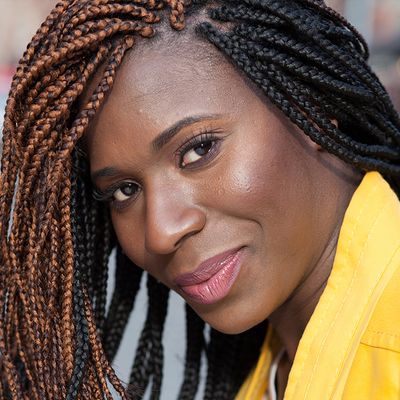
So wonderful to catch up with Dede Ayite, who made her Broadway debut in the 2018 revival of Children of a Lesser God. On the podcast today, Dede and Hal explore how to use design to construct character, how she imparts the value of transformation on her students, and the creative benefit of embracing failure.
Dede Ayite is a two time tony nominated costume designer whose Broadway credits include A Soldier’s Play, Slave Play, American Son, and Children of a Lesser God. Select Off-Broadway credits include Secret Life of Bees, Marie and Rosetta, (Atlantic); By The Way, Meet Vera Stark, (Signature); BLKS, School Girls… (MCC); Bella: An American Tall Tale (Playwrights Horizons); The Royale (Lincoln Center); Toni Stone (Roundabout). Regionally, Ayite’s work has appeared at Oregon Shakespeare Festival, Steppenwolf, Arena Stage and more. She has worked in television with Netflix, Comedy Central, and FOX Shortcoms. Ayite earned her MFA at the Yale School of Drama and has received an Obie, Lucille Lortel, Helen Hayes, Theatre Bay Area, and Jeff Awards, along with four Drama Desk Nominations.
To catch a glimpse of what she's dreaming up next, follow Dede on Instagram @DedeAyiteDesign.
Transcript
This transcript was automatically generated and might contain errors.
[0:00] Dede Ayite: Yeah, no, putting together those outfits is sort of like dreaming through clothes, right? It's dreaming of different worlds. Um, and not in the grand way as we do in theater, but like in my sort of small way with my little sister, sort of dreaming of different personalities and worlds through the clothes that we had in our closet, or that my in my mom's closet or my dad's closet.
[0:20] Hal Luftig: I love what you just said. Dreaming through clothes. Wow. I'm gonna I'm gonna like coin that phrase. I'll give you credit, but I'm gonna use it a lot.
[0:35] Hal Luftig: Hi everyone. This is Hal Luftig with my Broadway Podcast Network show, Broadway Biz, where every episode I will chat with my friends, some of the top theater professionals in the business about the business of Broadway.
[0:55] Hal Luftig: I'll join the Broadway Biz. You'll be a Broadway wiz. You'll learn to raise cash to open your smash. You'll be all the rage from the patron stage. In no time you'll know the business of show, the great extra there is. Let's get busy with the Broadway Biz.
[1:28] Hal Luftig: My guest today is Tony Nominee Dede Ayite. I'm proud to say that Dede's Broadway debut was as costume designer for my recent revival of Children of a Lesser God. And though Dede's star is on the rise, she's already working to pave the way for the next generation of designers. I cannot wait to begin today's conversation with Dede on this episode of Broadway Biz. So let's have a big Broadway Biz welcome for Dede Ayite. Hi, Dede.
[1:59] Dede Ayite: Hi, Hal.
[2:01] Hal Luftig: How are you?
[2:03] Dede Ayite: I'm good. I'm sitting in my apartment in Brooklyn staring out the window and excited to be speaking with you.
[2:10] Hal Luftig: Me too. Um thank you. Thank you so much for being on the show. I'm just, you know, checking everything okay, you're well.
[2:17] Dede Ayite: I am, yeah. Thank you. Thankfully, I'm well, you know, have a lovely place to stay in, and just sort of taking the time and to wait, you know, this wait this odd timeout.
[2:31] Hal Luftig: Yeah. How has that been for you?
[2:34] Dede Ayite: You know, it's um mostly useful. It's been a mix of emotions. In some ways, I'm grateful for the pause because it's given me the space to think about my career, think about my family, just think about my life and goals I might have, maybe restructuring the goals that I have for myself to also just think about my role within the theater and how that can expand in terms of advocating for um younger designers. Also granted me the opportunity to um just look back at some of my like old art pieces and just look at my journey and think about what I'd like to do next. So I am grateful for that. But it has also been terrifying um because of because of COVID and because of um you know the attack on like black lives.
So that's been very troubling and the elections. Um I have to say it's like living in two separate worlds where I'm happy for the pause and I'm happy for the blessings that have come my way, but at the same time, I'm afraid because a lot of people are suffering, and um, there's a lot of work to be done.
[3:38] Hal Luftig: Absolutely. When Broadway does come back, it will look a little different than when we left it.
[3:45] Dede Ayite: I hope so. As you say, it's a lot of work. It's gonna take, you know, a lot of work all at once, you know, because while we're figuring out the physical mechanics of getting Broadway back up, we also have to talk about, you know, the part that you mentioned, Black Lives and you know, voices and things like that.
[4:04] Hal Luftig: You know, it's it's so funny, and I'd love to get your opinion on this. You know, we did a production of Children of a Lesser God, that's when I met you and was thrilled to do this. And um, I'm telling my listeners right now, you know, when you meet somebody for the first time, if they have that thing that we call a show business, you just know it. And you just know that that person is someone to watch or stay in touch with or work with again. And Dede is one of these people.
[4:36] Dede Ayite: Oh wow, thank you, Hal.
[4:38] Hal Luftig: It's true, Dede, it's true. But part of it though is the team, you know. I mean, um, if potentially if we were any other team, the show would not have been as great as it was, right? So I can bring what I have to the table, but um a lot of it, you know, that magic comes out of like everyone else on the team, like all of us sort of contributing a little tiny bit of ourselves to the project.
[5:04] Dede Ayite: And it all starts with uh our wonderful director, Kenny Leon.
[5:08] Hal Luftig: Kenny, yes. Great, yeah. I've had him on the show. He's been with that our conversation was fantastic.
[5:15] Hal Luftig: Dede, I you know, I often think, and maybe I just think this because I was the producer, but I often think if we did that show now, given where the world is now, I just think that if we did that show now, it would be so relevant.
[5:30] Dede Ayite: I know that's what I was trying to accomplish uh with that revival. I fear now we were just a couple of years ahead of our time.
[5:39] Hal Luftig: Yeah, people might not have been ready.
[5:41] Dede Ayite: Yeah.
[5:42] Hal Luftig: How do you feel about that? How do you feel it would have played?
[5:46] Dede Ayite: I mean, audiences are so unpredictable, but I would like to think that because the show does deal with listening, what it means to truly listen to someone and acknowledge where they're coming from, even though their um experiences and um ideas are different from yours. That the show explores sort of that concept that you have to really lean into listen to someone and what does that look like, right? And how do you perceive them and accept them for who they are and give them space to be themselves? So I do think um the show would have impact if it were to be presented today.
[6:25] Hal Luftig: You know what, Dede? Maybe we should just we'll all put our collective mind together. Maybe it's time to do a revival of the revival. What do you think?
[6:35] Dede Ayite: What was it that drew you to the production of Children of a Lesser God?
[6:40] Dede Ayite: You know, it's I would say, first of all, it's a world I wasn't quite familiar with in terms of the deaf community and the hard of hearing community. So I was um interested in learning more about them. I was also quite intrigued about, like we've said, like the idea of really listening to someone and um leaning into the different ways that people can communicate their thoughts and feelings with each other. The show also deals with love, right? It's a complicated love story.
[7:08] Hal Luftig: Yes.
[7:09] Dede Ayite: And so for me, that was intriguing to consider and think what is the role of the man and the woman in this show in this story, and how does that grow? How do how is the woman able to advocate for herself? And how is he able to acknowledge that and really hear what her needs are? Right, which you know, clearly he didn't do very successfully.
[7:32] Hal Luftig: He did not do a very good job.
[7:34] Dede Ayite: Hal, I wanted to talk about how you approach a project, if we can, a little bit. So you can use Children of a Lesser God, you could use, you know, um, Slave Play, A Soldier's Play, anything you'd like. But when you do say yes to a project, what is the like the initial approach that you take?
[7:53] Dede Ayite: You know, what's crucial for me is that first read-through. That is sort of my special time where I get to experience the show without any judgment, without any preconceived notions, and I simply go on the journey that the playwright has um presented on page. That for me is so crucial because I'm able to just read the play, let it sort of wash all over me and envision and dream of all the possibilities of what it might be or what it's asking me to do. Um, because I won't get that again, right? Because once I start talking to the director or my uh collaborators or researching, I start to form opinions, I'm starting to, you know, my uh my goals that uh attempt my goal is to answer various questions. So that first read through is very crucial for me to really just enjoy the play, just to experience it, not even enjoy it, just to experience the words on the page. Um, and then I have the first discussion with the director, and we go from there.
[8:55] Hal Luftig: And then after that, how do you then you have to make lots of decisions, as you just you said, you know, and that that I would imagine um includes everything from period of the play to what you're trying to convey in terms of you know of a character's maybe um uh backstory?
[9:18] Dede Ayite: 100%, yeah. Yeah, I start to ask all the questions of who, what, why, like who is the work for, what is our intention as a production? Um, and then I try to find my way into every single character, no matter like you know, size or scope, and I'm addressing what their need, the characters' needs are, what you know their dreams are, and who those characters are really, um, and how that might be communicated through the clothes that they wear.
[9:45] Hal Luftig: I'm very proud to tell our listeners that um Children of a Lesser God was your Broadway debut.
[9:50] Dede Ayite: It was, it was, I'm telling you, I've listeners follow this woman. She's a major force. Um, but I remember the day that I heard uh Kenny say to most of the designers, I want the play to be relevant, to look relevant for today, but yet not deny that it was actually you know written in the 80s, for example, you know, we didn't have cell phones, so we can't pretend that this play is taking place in the 21st century when in, you know, in truth it was written in 1980, and we don't want to deny that either. Before I comment on how wonderful a job you did, how did that resonate with you? Did that did you think, how the heck am I gonna do that? You know, uh how did how did that flow work for you?
[10:42] Dede Ayite: You know, I actually love that idea that Kenny presented because it allowed the play to feel fresh. And the way that we just said, you know, the play could exist today and and could be presented today and feel relevant. Um, that was a great window for in for me, right? It allowed me then to think about who um who the characters were and how they would dress and present themselves in our current day. And but then I was doing that through the lens of the 70s and the 80s. So I was taking some inspiration from the 70s and 80s, but then making sure and tried my doing my best to make sure that it still felt current and truthful to our world today. Because you know, fashion always fashion recycles itself.
Like style comes, you know, things come back in fashion. There's always a recycling of style. And so it's very, it's it's easy to um acknowledge present-day um style and fashion, but through the lens of like another time period and then sort of draw some of those influences into the design.
[11:46] Hal Luftig: The first time I saw your costumes, it looked very contemporary, and yet I could see these people wearing just that back in the 80s. It that it was it was tremendous uh in in that way.
[12:01] Dede Ayite: Thank you. So, you know, Dede, I uh knowing that Children was your Broadway debut, your next foray into the Broadway arena was Slave Play and then A Soldier's Play. Um, and and Slave Play was incredible. I mean, it it is what theater should do. It should be provocative, it should be, you know, stimulating. You should be kind of roused by it, you know. And so, you know, I thought your work in that show was also incredible.
[12:42] Dede Ayite: Um, how did your you know, children, your experience with children uh influence you in doing those next two plays. You know, my experience with children was a very special one because I made a lot of friends um with my team, and I had a great group of collaborators. And so that was a great way to usher sort of myself into Broadway working as a designer, not as an assistant or an associate. It allowed me to feel comfortable to know that I could lean onto my collaborators when I needed to, or I and I could trust them in terms of the journey. Um with that, I also picked up more um skills and just in terms of understanding the infrastructure of how to navigate budgeting, bidding, and um the whole the entire process of putting up a show as the designer and not necessarily as an associate or as an assistant, right?
Um so those skills really took me through. I mean, I had I was able to do, and I worked with Kenny actually on American Son, which was before Slave Play and A Soldier’s Play, and that was another stepping stone for me. So I've been very fortunate that with the shows I've I've gotten to um work on on Broadway, they've been with people who I know and who I trust. Um and so we're able to truly collaborate in terms of getting the story up on stage.
[14:05] Hal Luftig: Dede, you mentioned something I want to just go back to because you know the part of the purpose of this podcast is to discuss, you know, how the artistic needs of a of an artist like yourself meets the financial needs of you know a person like myself, yeah, producing theater, and you know, have to make the two those two issues marry. Coming from the world of regional theaters, I wonder if you can talk about a little of the differences that you may or have noticed, you know, how regionals do that, how they take the artists' consideration in, and how on Broadway, if there's any difference.
[14:48] Dede Ayite: There are definitely some big differences. With most regional theaters, you do have uh an in-house costume shop or a craft shop that is helping you put together the production. Whereas in New York City on Broadway, it's most likely me, my associate or assistant, and then interns, and we're the ones who sort of create our own shop and then we outsource what we need to uh the different costume um houses within the city. And then we also then tend to do a lot of the online shopping or local shopping ourselves. So I would say, in terms of responsibility and um legwork, a lot of that falls on the designer in New York City, whereas in a regional house, you do have an entire team that is set up to help you execute your vision.
Um, so I was quite fortunate that when I started out, I had a lot of um, I was able to work in a lot of regional houses because that allowed me to collaborate with various artisans who bring a lot of experience to the table, and I was able to learn from them in terms of how they would um approach a project and how they would take what I had drawn on paper uh to bring that to life. So that gave me a wealth of information that when I then started working in New York City and then on Broadway, I was able to take all the things I'd learned in reach, you know, at these different costume shops and apply them to my shows.
[16:16] Hal Luftig: I understand. I was gonna ask uh if in a regional situation when you have assistants, people who help you shop or help pull things from your absolute right.
[16:28] Dede Ayite: Most regionals have a costume, they call them costume collections. Is that an easier process for you? Because then you're trying to adapt either what they're thinking it should look like or what they already have. And it's like, you know, Dede, you're gonna have to make this blouse work somehow.
[16:46] Dede Ayite: It's a mix, honestly. Because there are times where that's great because um, you know, and I think whether it's regional or even on Broadway, there's always a fine balance in terms of how where you spend your money. So as a designer, I'm always having to navigate where um where I can get the biggest sort of bang from my buck, right? In terms of my design. And so there are times where I might shop, you know, from cheaper stores, and then I might spend a ton of money on one garment because I know that I need that garment to look a certain way or to do um to do certain things on stage. So there's always a fine balance I'm having to navigate um and whether it's regional or in the Broadway house in terms of the execution of the costumes.
So there are times, you know, in a regional house, if I'm pulling from stock, that's helpful because I can, you know, use that as a filler for my background um characters, or I can use that for the base, and then I put my energy and focus into having the shop create the you know the big things that I want to see on stage for for the character.
[17:48] Hal Luftig: What yeah, this is so great. I'm learning, I'm learning so much from you, Dede. Thank you. When I was looking back as you know, when we met on Children of a Lesser God, I and I have since discovered that as an undergraduate, you studied behavioral neuroscience. And I was like, What? Can you just talk us through how the journey from you know behavioral neuroscience to the arts, you know, came to you, what that was like.
[18:18] Dede Ayite: I will say I did, you know, I've always done, I've always I studied behavioral neuroscience, but then I also double majored in theater. So I have I've always had theater as um in addition to sort of my science background, and they're just different parts of me that make up all of me, right? So in high school, I took AP art, but I also took like my AP biology because I was I'm equally fascinated by both things. Um and then eventually I in in undergrad, after taking several painting classes, working in the scene shop, I decided that I owed it to myself to try um pursuing design because I truly loved it. And I had sort of come to a crossroads and and thought, even though I I loved working in the lab as a scientist and doing you know, learning about how the human body sort of functions and how it it works and what makes you know who we are.
I was equally as fascinated and intrigued by what design could do in terms of how it could move people and could create change and could create experiences. And so I felt that you know it I felt that I might as well try I might as well you know give that gift to myself to go on the journey of pursuing design professionally.
[19:38] Hal Luftig: So let me ask you do you ever use some of those skills what you just described as behavioral neuroscience do you ever use any of those skills?
[19:49] Dede Ayite: Hundred percent yeah as a scientist you know you you learn how to research you learn how to problem solve and as a behavioral neuroscience major I had to take a lot of psychology classes and that's setting behavior right and and trying to understand human behavior and so with you know me practicing as a costume designer I'm constantly problem solving whether it's budget whether it's the investigation of a character that is part of my job and so I would like to think that you know the practice of problem solving and research comes definitely comes in handy um when I'm working as a designer and then also just working with actors and being in the fitting room with them trying to understand and and he truly hear and listen to what they're saying and and truly addressing their needs I have to I'm pulling and I would like to think I'm pulling in some of my psychology background into the you know those meetings and those fittings with the actors.
[20:47] Hal Luftig: That is brilliant. I was just gonna ask you that you because I I know too that sometimes uh in every part of theater the temperament of the actor you know takes has to be taken into consideration things like that. And I'm just I you know, I was gonna ask, you know, in costume design, has that ever, you know, have you ever taken that into account where it's maybe altered a little bit of of your costume design for that uh character, but for that actor. You know, I mean, I know at some point they meld together. The actor, you know, becomes a character, but they are people first. And that's I you know, and that's important, right? I have to remember that. That at the end of the day, it's a human being standing in front of me who's going to have to go on stage in front of many people to act out a certain a specific role.
And so as a costume designer, I have to give them the grace and and and I have to be compassionate enough to hear where they're coming from, how they're approaching the character. Because I'm not the one who's going to be on stage. They are. So I'm sort of combining the intention of the production. I'm combining all the conversations I've had with my team and with the director, and I'm combining what I know and what I think of the character, and I'm I'm checking in with the actor about what they think as well. I'm also considering body type. I'm also considering skin color when I'm making this um choices, because that all communicates something in the final product that we we end up seeing on stage.
[22:19] Hal Luftig: Right, right. And I agree. I think an actor, you know, in every way, shape, and form has to be comfortable because as you say, they're the ones going out on the stage and they're the ones that are um letting this character, you know, absorb them so they can properly portray the character. And I I think if they don't feel comfortable in any aspect, whether costumes or lights or uh, you know, something that they're not comfortable with, um stage direction, you know, you're forcing someone to actually do something that they're not, it it doesn't seem uh genuine to them. It's going to be very hard for them to then just comfortably, you know, excuse the expression, fit into the skin of the character.
[23:05] Dede Ayite: Yeah, yeah. And you know, and the heart of all of it, what drives, I would like to think what drives my conversation with the actor and what's also driving the actor is finding the truth to that character, right? So we're all on the same page because we're here to tell a story, and we're all we're all agreeing that as a as a team, we're here in service of the story, and that's what's leading. I find that we're able to at least we're able to have a good collaborative process.
[23:32] Hal Luftig: Yeah, I agree. And it has to happen at some point, or you're going to end up with what may feel like a very disjointed show. Dede, I wanted to ask you what was your relationship when you were growing up to the arts and to clothing and uh you know things and art and things like that.
[23:55] Dede Ayite: Oh, I love clothes. I've always loved clothes. Really? I have I I don't know. I've been fortunate that, you know, growing up with my dad, he'll uh granted me the freedom to dress up however I wanted to. I've always had, you know, dressing up days where I'd even rope my little sister and say, let's just, you know, throw clothes on and practice different, you know, put on different outfits together and let me put together outfits for you. So I've always loved clothing. Um, luckily in Ghana because of um the way um we typically don't have like, or when I was growing up, we didn't have huge department stores. And so the way you get clothes made, or you the way your access to clothes was having them custom made for you.
And I enjoy that process. And I would sit there, pull up research or find images that I liked and magazines and I would sketch out like dresses that I wanted to have made and then I would go to the seamstress and spend time in her shop and watch her and talk her through my designs and my my my the details I wanted in my in my dresses. So I luckily I've I'm I really do love clothes and I love how they make people feel how they make me feel and um how much they can communicate without someone having to necessarily open their mouths right I mean very true our first our first you know uh acknowledgement of a person is visual if we're certainly if it's in person it's visual is visual.
[24:58] Hal Luftig: What I just I have to I'm curious when you would do that in Ghana and you would go to the seamstress with your designs you know or your ideas was that something that they uh uh you know understood your creativity at that point?
[24:58] Dede Ayite: I would like to think so yeah they didn't say they didn't but no yes no I you know I because I would spend time in the shop and learn you know how they would embroider um I think the seam seamstress I was working with she was also a family friend she enjoyed having me around and she would you should give me little scraps of fabric to put together you know and sew together little outfits for my dolls as well so I would like to think that um she and it was she it was an enjoyable process for both of us.
[26:10] Dede Ayite: Yeah, and you know I'm gonna venture to guess that even when you were playing dress up, you know, with your sister and things, you in some way were creating a type of character by what you were wearing.
[26:24] Dede Ayite: Yes, yeah, no putting together those outfits is sort of like dreaming through clothes, right? It's dreaming up different worlds, um, and not in the grand way as we do in theater, but like in my sort of small way with my little sister, sort of dreaming up different personalities and worlds through the clothes that we had in our closet or that my mom's closet or my dad's closet. I love what you just said, dreaming through clothes. Wow, I'm gonna, I'm gonna like coin that phrase. I'll give you credit, but I'm gonna use it a lot. I'll give you credit, I promise. You know, you have full credit, but I never, I have never thought of clothing that way, but you're dead right. So, Dede, when did costuming or when did creating, you know, these kinds of looks, even if as a young girl you didn't think of them as, you know, as necessarily costuming, when did costuming stand out to you specifically as an art form? Do you remember when that occurred to you?
[26:24] Dede Ayite: So, as an art form, I would say in college. Prior to college, um, a little small tip, my little claim to fame, um, which I discovered the other day while I was looking through old photos, in sixth grade I was actually screwed and I remembered making and creating my own hat and putting together my outfit for that production. And so in terms of a professional idea of like practicing and being a costume designer, that wasn't until college. But prior to that, my friends and I had put together fashion shows in boarding school.
[28:02] Dede Ayite: Um, you know, I had helped out in costume shops for, you know, smaller productions, but in undergrad I recognized that, and I, from attending shows in the theater, I recognized that this is something that I would love to have be involved, and it's something that I would love to practice and do.
[28:23] Hal Luftig: And now I'd like to shift gears and you turn us to more current events in your life. You are a visiting lecturer at Harvard, and you teach a class called transformative design. How would you describe transformative design?
[28:42] Dede Ayite: Because I must say I don't even know what that is.
[28:56] Dede Ayite: And I was describing to her how one of the sort of like the one of a pressure, a precious moment for me is when I'm in the fitting room with an actor. I'm in the fitting room with an actor, and we're trying to discover the character together. I have ideas, they might have ideas, and I put together a costume or an outfit, and they try it on, and it might be adding a scarf or an earring or a pendant, and in that moment, the actor's entire physicality changes. They just tap into a different place, and for them, they found the character. And seeing that happen before my eyes is quite magical, and that to me sort of is the essence of transformative design, right? It's like the ability for some sort of visual or material element to amplify and interpret like the message that I'm trying to get across or the production's trying to get across, right? It's a way that these sort of like visual design choices can provoke and astonish an entire group of people because of the choices I've made.
[30:10] Hal Luftig: So, how do you impart that philosophy that you just described so brilliantly?
[30:15] Dede Ayite: Um, how do you impart that to your students? So, with my students, um, I try to present them with opportunities for them to experience it for themselves, right? For them to read a script and be astonished by the script, to dream up worlds from the script, and then to identify sort of key visual and material elements that they can sort of draw on that they believe would create a transformative moment.
[30:43] Hal Luftig: And do you ask them or require them to explain what that transformative moment for them might be?
[30:53] Dede Ayite: Yes, yeah. And they do that through mood boards, through sketches, and through discussions in class. Um, we have great discussions about the plays we read in the class and discuss the, you know, the significant moments in the play and how costumes or other aspects of the design can enhance that dramatic moment to create a transformative moment.
[31:17] Hal Luftig: You know, as a producer, Dede, I may take your class next year. I just think that is so fascinating the way that you ask people to reach into what they're feeling or what they are feeling by reading a play and then translate that into a design element, um, is completely mind-boggling, you know, to me because it's so important, and I've never, you know, really given it a whole lot of thought, but it, it the basis kind of for everything about the character, right?
[31:57] Dede Ayite: And uh, so I may actually take that class so I can learn a little bit about this. You know, uh, Dede, you've often talked about, you know, reaching back so you could create opportunities for emerging designers. And I was wondering who were some of those people for you who reached back? Do you still stay connected to them? And how, you know, do you, um, how do you use where you are now to reach back and pull those emerging designers up?
[32:29] Dede Ayite: First, yeah, I do. I am in contact with a lot of people who acknowledged me and saw me and gave me a chance. You know, there's, and there are people I still work with to this day. I, we have many lovely conversations and spend a lot of time together. You know, there's Clint Ramos, um, Emilio Sosa, there's Paul Tazwell, and I would even consider, you know, someone like Robert Kenny, Patricia McGregor. These are people who gave me a chance, right? They saw me and acknowledged me and decided to give me a shot. And I'm very grateful to them all for that.
[33:02] Hal Luftig: But when you reach back, uh, is there something that you're looking for specifically in an emerging artist or something, um, do you see a talent there or do you see?
[33:02] Dede Ayite: Not necessarily, not necessarily because I think, you know, that's not for me to judge, right? I would like to think that most people just need a shot in the same way that someone gave me a shot. People just need um access. So for me, I'm checking in with, I'm actively like looking for younger designers to ask them if they need help. I'm having meetings with them or just having coffee to talk about navigating the business and sort of sharing my story and my path. Um, I'm also, I believe, um, the union actually had like a drive for people of color in terms of in the union. And so I checked in at the drive for names for people who I could potentially work with. Um, I also just check in with various Facebook groups, like there's a black network group that I check the list to see if there are people I can hire or people I can amplify on, you know, from that list to other designers for them to hire.
But it is important to me. It's something I think just growing up, it's always been with me about like remembering to be one, being grateful for the opportunities that have come my way because someone else sacrificed something to get me where I am today. And so I have to pay that forward.
[34:30] Hal Luftig: To my listeners, do you see why I so admire this woman? Um, I couldn't agree with you more about reaching back because somebody did that for me too. You know, they reached back and they took me by the hand and they, you know, it didn't form my career, but they helped me figure it out, and I think and gave me a shot. And I think that's what people need, you know, and they need, we all need that, yeah. That shot, you know what I mean? And this is why, you know, hope happens when theater comes back that we create a space where people aren't afraid to fail. Because, and I don't say that like I hope they failed, but you know, that's how we learn.
[35:15] Dede Ayite: No, but that's so important. I love that you're saying that.
[35:17] Hal Luftig: Yeah.
[35:20] Dede Ayite: That is so like the ability, like the ability not to be so afraid of failing. Because why are we artists if we can't fail and then try again and then try again until we land on sort of like the thing that just sparks um our imagination or sparks like a, and you know, provides new breath of air or fresh air and like light. And you know, there was a time where theater had that. You know, I mean, not everything Tennessee Williams wrote was brilliant, or Edward Albee, or you know, uh many, many people. I'm just mentioning playwrights, but directors and designers and things like that too. There, you know, you have to give them a place where you know their creation or their art form cannot be life or death, you know, like okay, that it didn't work, so you're out of the game. You have to give people a place to fail. You know, it's easy to succeed, right? It's much harder to fail and learn from that and move that forward.
[36:20] Dede Ayite: And even then the definition of success, right? That's something I think we need to reexamine.
[36:24] Hal Luftig: Yeah.
[36:26] Dede Ayite: Right. What is success?
[36:28] Hal Luftig: What is success?
[36:29] Dede Ayite: That's right. You know, I want to ask you something I've always been interested in and never had the opportunity to ask, uh, which is about textures and fabrics that go into a designer's choice. Um, and I really became aware of that specifically to you in Slave Play.
[36:54] Hal Luftig: Um, I was I was fascinated by, you know, one person's costume was ruffly and, and you know, a little tattered and someone else came out in that scene where, you know, she's wearing vinyl and um, you know, and so I wonder could you talk a little bit about, you know, how texture influences you and what you use texture kind of for and how you choose it?
[37:22] Dede Ayite: You know, I mean like I'm able to use texture as another way to either consciously and subconsciously communicate with the audience, right? And so when you see an actor come out on or a character come out on stage in a specific costume, the amount of space they might take, the amount of sort of volume they take with, and then you know, and that including how much texture is on them communicates something to the audience, right? Whether it's frills and ruffles, that gives you a certain impression, it evokes a certain quality. Um, whereas if something is not as textured and as shinier and smooth, also it evokes a different quality to it, right?
[37:58] Dede Ayite: So all that is simply it's a tool for me to communicate and sort of like weave my ideas and get that across to the audience without them knowing. My attempt for that, you know, is for it to be subconscious, for it to impact them without them knowing. And so it's able to stir up a feeling in the person watching without them even realizing it. As a producer over the years, I've always noted that sound design and lighting design are two things that you don't actually see until you're in the theater. You know, set design, you see models and clothing designs, you see drawings, or perhaps while the costumes are being created, you know, you can see a fitting happen. But sound and lighting, you know, there's no way. And I'm curious from your point of view, does when you see your costumes on an actor for the first time during tech under a lit stage, how does that affect you at all about going back and rethinking something?
[39:06] Dede Ayite: Oh, deeply. There are times I'm in horror because I'm like, my costume doesn't look the way I intended it to look because of the color of the lights. And then there are also times where it actually lifts up the costume in a way that I could have never imagined, right? It just completes the picture and completes the story. It does, it takes the costume that much further because of what the lighting is doing on the costume and it's playing with the layers I might have on the costume. Do you ever have you ever had a conversation with the lighting designer about your costumes and its relationship to the lights on the stage?
[39:43] Dede Ayite: All the time, yeah. No, I love, you know, with the way I work and the people I work with, we tend to always, you know, check in with each other. So there are times I might provide costume swatches to the lighting designer beforehand, just so they have a sense of the materials I'm using. And they can make specific lighting choices based off of that. And there are times a lighting designer might show me their sort of initial concepts or ideas, and that could be through research or through renderings. And then once I get a sense of that, I also then will adjust accordingly. I might play up a color on a fabric, knowing that under lights it'll look a different way.
[40:21] Hal Luftig: Will you do every show that I do? This is such a terrific person. Are you ever tempted to do the set design and costume design for the same production?
[40:40] Dede Ayite: Sometimes but not necessarily because with the way I work and the people I work with, we're all in the room together discussing all the aspects of the production at the same time, right? So I'm able to ask questions of the set designer, I'm able to offer suggestions, and I also welcome questions and suggestions from the set designer or lighting designer. So I feel like because it's such a collaborative process, I don't necessarily miss set design that much. In some ways, I'd like to think that I do, I definitely do consider the set and what the set might be doing in relation to the costumes when I'm designing. But for right now, I'm very happy and loving working as a costume designer. And in the future, I could see myself doing both. I would like to think it depends on the production.
[41:29] Hal Luftig: Yeah. Well, I hope when you decide to do both, it's something that I would have the honor of being, you know, attached to, because I think it would be a fantastic looking piece of the theater. Is there a particular design that you're proud of?
[41:50] Dede Ayite: Oh, I have several. I do well, like every project taps into a different part of myself. And whether I'm entirely happy with it, you know, I'm sure there's whether there are parts of the production that I don't love, but I value every single production because it teaches me something. But I have many shows that I love, many, many shows.
[42:14] Hal Luftig: That was kind of an unfair question. I apologize. Let me try and like hone in on you know, maybe something a little more specific. Is there a specific time or era that you are particularly drawn to in terms of costume design?
[42:33] Dede Ayite: Ooh, that's a trickier, right? Yeah, for me though, that's the ability to like we had talked about dreaming and you know, through clothing. So I the fact that I can switch time periods, I can switch different eras and dream of different worlds is fascinating to me, right? I mean, in terms of I think it's actually easier for me to answer the production question because readily to mind, yeah, I'll give you that one. But I will say picking a time period, there's just so much beauty and wealth of knowledge in the different time periods that I don't know that I would want to sort of like as of right now, there isn't a period that I, you know, that I just I would lift up as my favorite or top period to work in because every period asks me of something different, and every production asks me of something different.
But I will say that I designed The Wiz at OSF, which I loved. I loved my production for the production of The Wiz Robert and I did at OSF. I also love I don't know if you got to see By the Way, Meet Vera Stark at Signature Theater in New York City. I also had a fantastic time working on that production and had a lot of fun with the actors. Because I'd like to think that I bring my own unique sort of voice and vision to any sort of time period. And that's what makes design special. That's what makes us special. And so as of right now, I don't know if there's a particular period that I would say that I'm fond of working in. I want to do it all.
[44:04] Hal Luftig: That you know, that is great. I want to do it all too. I want to be you when I grow up. Dede, it's almost time for us to wrap this interview up, which I've I again I am so grateful that you agreed to come on this podcast, and everything you've said is so insightful. And I think for the rest of my life I'm going to coin that phrase dreaming through clothes. I just think that's amazing. But before I do say a final adieu, I have three questions that I call the rapid fire part of the program. And the only thing I ask is that you don't overthink it. I ask it and you say the first thing that you can think of that comes into your mind. Is this a fun moment where you know we just it's not a trick or aha moment or anything like that, okay?
[45:08] Dede Ayite: All right. So here's your first question. What is your favorite musical?
[45:15] Dede Ayite: The Wiz.
[45:16] Hal Luftig: What is the wackiest moment you've ever experienced in the theater?
[45:22] Dede Ayite: Oh my god, the wackiest moment. All right. So we were in tech um teching Bella: An American Tall Tale, which is a new musical. We were checking it at Playwrights Horizons, and I believe it was a 10 out of 12, and we were nearing the end of the tech, and you know, 10 out of 12s are long, everyone's tired, and for this show, and it's a musical. For this show, all the actors were dressed in costumes and clothing from like the 1860s. So they had, you know, bustles and hoops, and everyone was quite tired. However, Robert, I think around maybe the last break, so maybe like around 10:30 or 10:45, he had the sound designer play a song from Whitney Houston, and so we had the entire cast dancing on stage in these weird costumes. That was a joy.
[46:21] Hal Luftig: That sounds like a joy. I'm truly sorry I missed that. You know, I may do that in my next show because I know what you mean about the 10 out of 12s. You're like, just let me go home. People were done, but just to have a moment where as a community we were just jamming to Whitney Houston and celebrating, and it was just quite odd because they're all in these period costumes. That's the beauty of what we do.
[46:52] Dede Ayite: Yeah, right, exactly. Okay, last one. More serious. What is something you hope to see change about the theater in your lifetime?
[47:03] Dede Ayite: Better pay and healthier practices, healthier practices in terms of our approach to theater, right? So I think finding a much more healthier and sustainable way to do what we do. Cause we ask a lot of out of families, out of people, and they're not necessarily compensated for that time and a lot of people end up burning out. So I would like to, yeah, I think better pay.
[47:34] Hal Luftig: No, I understand. I completely agree. And even if you are compensated, you know, I always say, you know, to my husband when a show is in tech or in previews, you know, the show family becomes, takes up more of my time and I spend more time with them than my real family, you know. And it's you're right. You just burn out a little bit because you don't actually get to reconnect when you come home. You know, it's late, you're tired, you know, you've spent the whole day and then you just want to like go to sleep or something, and so you lose connection with your real family. So I and it's just, you know, it's not sustainable. Ten out of twelve, you know, for a whole week, and then you have one day off, and probably on that one day off you're working to get notes done.
[48:23] Dede Ayite: Right.
[48:23] Hal Luftig: Or you're right, exactly. Or you're just, you know, heaven forbid you're just trying to, you know, catch up with the real life part of your existence and then you burn out on that too. It's not really a day off when you're, you know, figuring stuff like that, like laundry and you know, that kind of thing.
[48:46] Dede Ayite: Yeah, I totally get it. Well, I think those that is really something I hope that when we come back, we all get to look at because we're gonna have to look at sustainability, we're gonna have to look at, you know, just simply health issues. You know, and so maybe that can be part of it, folding it into, you know, not just what we breathe in the theater, but how we exist, you know, in the theater. So though that that's a really good suggestion.
[49:15] Hal Luftig: Dede, I can't thank you enough. I know my listeners will probably just absorb everything you said because it's so brilliant. I can't thank you enough for taking the time to spend this afternoon, you know, with me on Broadway Biz.
[49:25] Dede Ayite: Thank you.
[49:32] Hal Luftig: So please be well, stay safe, stay healthy. We will be back, and when we are, I want to do more and more projects with you.
[49:43] Dede Ayite: Thank you, Hal.
[49:43] Hal Luftig: Thank you for listening to today's episode. Broadway Biz is part of the Broadway Podcast Network, is produced by Dylan Marie Parent and Kevin Connor, and is edited by Derek Gunther. Our theme music is by Nell Benjamin and Larry O'Keefe. Be sure to subscribe to Broadway Biz and follow us on Instagram at Broadway Biz Podcast.
© Broadway Podcast Network, All Rights Reserved