

This episode, Hal invites Maggie Brohn to the podcast. Maggie is the Executive Producer for Hamilton worldwide and Chief Operating Officer of Adventureland LCC, the lead producer for Hamilton and other Broadway shows... Read More
From the show: Broadway Biz with Hal Luftig
Featured Shows

About
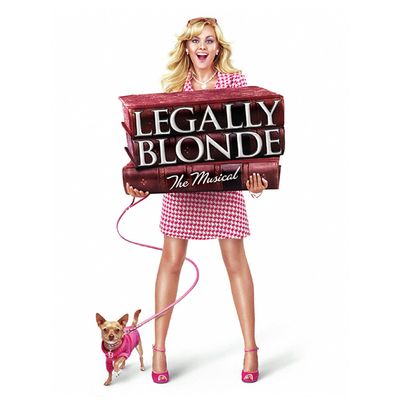
This episode, Hal invites Maggie Brohn to the podcast. Maggie is the Executive Producer for Hamilton worldwide and Chief Operating Officer of Adventureland LCC, the lead producer for Hamilton and other Broadway shows. Hal and Maggie break down the roles and responsibilities of a general manager, reveal the story behind Legally Blonde's infamous "party bike", and try to answer that age old question, why are Broadway tickets so expensive?
Maggie's other recent productions include Derren Brown: Secret and The Cher Show. Previously, Maggie was a partner at Bespoke Theatricals where she general managed over 20 productions on Broadway and tour, such as MOTOWN the Musical, Hugh Jackman: Back on Broadway, After Midnight, A Behanding In Spokane, and Venus in Fur. Maggie is on the Board of Governors and Executive Committee for The Broadway League, and a former Co-Chair of the Labor Committee, which represents producers in collective bargaining negotiations.
For all things Broadway Biz, visit our Instagram @BroadwayBizPodcast or our website broadwaybizpodcast.com.
Have a question for Hal or a topic you'd like him to explore? Send Hal an email at broadwaybiz@halluftig.com.
Transcript
This transcript was automatically generated and might contain errors.
[0:03] Hal Luftig: Hi everyone. This is Hal Luftig with my Broadway Podcast Network show, Broadway Biz, where every episode I will chat with my friends, some of the top theater professionals in the business about the business of Broadway.
[0:28] Hal Luftig: You'll learn to raise cash to open your smash. You'll be all the rage from the patient stage. In no time you'll know the business of show the greatest job there is. So join our squad as we unplug our love things Broadway. Let's get busy with the Broadway Biz.
[0:56] Hal Luftig: Hi everyone. My guest today is one of the best general managers in the biz, Maggie Brohn. Maggie is currently the Chief Operating Officer of Adventureland LLC, which is the executive producer of Hamilton. I always have so much fun talking to Maggie. I can promise you you're in for a real treat with this episode of Broadway Biz.
[1:20] Hal Luftig: Yay! Hi Mags.
[1:21] Maggie Brohn: Hey, how are you, Hal?
[1:24] Maggie Brohn: Thanks for having me. That was the best introduction I've ever gotten to anything ever, so thank you.
[1:29] Hal Luftig: Well, it's you know what? It's easy to do when it's true.
[1:34] Hal Luftig: So well, thank you for having me on. You know, I had to check my schedule today because there's just a lot going on while we're all at while you're homeschooling, really.
[1:45] Maggie Brohn: Yeah.
[1:46] Hal Luftig: As we've said, I want to know when the kids learn how to mix cocktails.
[1:50] Maggie Brohn: Because I think that's a very, very important skill to learn.
[1:54] Hal Luftig: Absolutely. That is a very, very useful and practical learning tool, you know, learning tool. I'm sorry. In my house it is anyway.
[2:06] Hal Luftig: Anyway, Max, when I was thinking about having you uh when you on the show, I I this I wonder if you remember this too, but I have this image that I will never forget and I just want to share with our listeners. So during the uh the strike of um when was the blonde track? What year I couldn't 2008.
[2:27] Maggie Brohn: 2008.
[2:28] Hal Luftig: 2007.
[2:29] Maggie Brohn: 2007.
[2:30] Hal Luftig: So it was a while ago. Um, and it was over the Thanksgiving break. So especially with Legally Blonde's, we had uh a lot of young girls and mothers with their daughters and grandmothers with their granddaughters coming, you know, to see the show.
[2:48] Hal Luftig: And instead of just having these patrons that we couldn't reach before, you know, we realized we had to cancel performances. Um I didn't want them to just go up to the door of a the of the Palace Theater and see a sign saying, you know, performance canceled.
[3:06] Hal Luftig: Um so I said, I told Maggie I was going to stand in front of the theater, and as people came up, I would explain. I'm the producer, and here's you know what is going on. And Maggie said, I'll do it with you, which was great, except she was nine months pregnant.
[3:25] Maggie Brohn: Do you remember this name?
[3:26] Hal Luftig: Oh, yes. And people would come up and they would they, you know, they were first shocked that when we gave them this piece, you know, this information and we handed out a leaflet just so they could read it when they when they went home and talked about refunds or exchanges and all that kind of stuff.
[3:43] Hal Luftig: But what was really funny was after they took this, they looked at Maggie like wait, what's going on here? This was a big thing. Is this a joke? This woman looks like she's gonna give birth any minute, and she's standing in the you know, it was November in the front of the Palace Theater handing out these things nine months prior. Do you remember that?
[4:03] Maggie Brohn: Oh my god, I do. I remember so vividly. That was a that was a bonding experience for us of one of many on that show.
[4:07] Hal Luftig: One of many.
[4:12] Maggie Brohn: Yeah, the others unfortunately we can't talk about on air, but I know.
[4:17] Hal Luftig: But it'll be in the book.
[4:18] Maggie Brohn: It'll be in the book.
[4:21] Hal Luftig: That's right. That's right. I always say that, Mag, I'm gonna write a book six months before I die. And you know, if when I know they if I have some disease or something, and I'm gonna tell real stories, name names.
[4:34] Hal Luftig: But here's the deal. If they come up with a cure for whatever I have, I don't take it. I'm gone. You can't. I'm out. I can't, because no one will ever talk to me again. That's my fantasy.
[4:46] Maggie Brohn: Yeah, yeah.
[4:47] Hal Luftig: So, hey Max, let's uh let's start at the beginning um for our listeners. Uh I'm sure a lot of people out there don't know what a general manager does. They may not have even heard of that title.
[5:01] Hal Luftig: Um so can you give us a uh explanation of what it is that you do and what a general manager does?
[5:08] Maggie Brohn: Absolutely. So um I think of the general manager as being the the inside of the bicycle wheel, um, and then all the spokes go out from there and create a circle.
[5:22] Maggie Brohn: Uh we basically are hired by the producer who has either gone to or is in the process of getting rights to do a project and hiring a team and the producer comes to us and says okay what do I do and I mean some producers come to say what do I do? Some know what they're doing and then they just say go do what you do.
[5:43] Maggie Brohn: And what we do is we make budgets. We hire everyone. We make sure the set gets built on time. We make sure that um the all of the contracts are negotiated and in place and we basically take the idea that the producer has with the creative team and we on the ground make the business operate.
[6:10] Maggie Brohn: One and that's all you know we do all the stuff before the show starts happening and then once the show is up and running we have someone who's going to the theater every night. We have someone paying all the bills. We have someone uh doing talking to the cast and the crew and watching how much money is coming in through box office ticket sales.
[6:31] Maggie Brohn: We will s go with the producer to ad meetings to make sure that the marketing strategy that the producer and the advertising team wants fits in a budget and also some producers ask us to you know consult on it as well because we've all been doing it a long time.
[6:50] Maggie Brohn: Um I I basically feel like we just keep the train running in all ways. We get the train started and then we keep it running. Um and we are we are middle management, though, I will say, in that we manage up to the producers who are in charge of everything, and then have to manage all the employees um that make a show work, which, as you know, Hal mentioned, just started to mention all the people, the actors.
[7:20] Maggie Brohn: There are, I can I can go further and talk about the 20 something unions on Broadway that we deal with and on the road and all of that. But we basically, as far as I'm concerned, are the hub of what makes sure everything gets done.
[7:34] Hal Luftig: Wow, what a great answer. What is the difference between then in a producer and a general manager?
[7:42] Maggie Brohn: Well, it's I'm glad you're asking me that question because um it is different with every producer and every general manager, right? And some producers want to be intimately involved with every aspect of their project, including you know, knowing what kind of negotiations you're going to do with your lead actor, and they want to know every step of the way.
[8:08] Maggie Brohn: And then uh on the other hand, there are producers that say, You have a budget, we've approved a budget, go hire everybody for that budget. I don't want to hear about it unless there's a problem.
[8:17] Maggie Brohn: And, you know, the the former is like Hal, who you and I were on the phone with a lawyer who shall remain nameless about a contract that shall remain nameless on Legally Blonde's, where we we were told that our hair was going to be set on fire if we didn't get the deal done.
[8:37] Maggie Brohn: And then there are other producers who would never have sort of gotten in the weeds like that to be a part of those conversations. Um the the truth is the way the business has been structured in the old days, you know, the Manny Eisenbergs of the world were producers and general managers because general management was a sort of a smaller business.
[8:58] Maggie Brohn: There were less aspects of each show. It was easier to put on a show, right? And it's just gotten bigger. You've got more departments. You've just you need a whole team to manage things.
[9:09] Maggie Brohn: But really, the only job that a producer cannot farm out to a general manager is raising the money. That's really uh as far as I'm concerned, raising the money is the only job a producer absolutely has to do.
[9:28] Maggie Brohn: Then based on their palette level for details, they can sh have the re the general manager do almost everything else if they want to and not.
[9:39] Hal Luftig: Mm-hmm. Wow, you know, I think we need to add the raising money to the list of the general well, don't you think though, Hal, that the job of a general manager has really changed over time?
[9:51] Maggie Brohn: I I feel like it's gotten much harder and much more, and some of that is because there are a lot of producers who haven't done it before and they need the general manager. You know, most producers aren't you and uh and or the my my my current boss, Jeffrey Seller, most of them don't know and with projections.
[10:12] Maggie Brohn: I I like to talk about projections. When I first started in this business, no one used projections in their shows, but now everyone does. That's a whole new department that needs to be managed, right?
[10:23] Maggie Brohn: And so I look at all the new departments that have come about since I've been doing it and how much harder it is.
[10:29] Hal Luftig: Well, that is yeah, I hadn't thought about that. That's an excellent point. We've just made everything get more and more complicated.
[10:36] Hal Luftig: Um, let me ask, how did you you know become a general manager? How did you start in the business and how did you find your way uh, you know, to um being a partner in Bespoke and then moving on and you know, managing the the world domination of Hamilton, as it were. Can you talk a little about that?
[10:56] Maggie Brohn: Um the short story is um I went to college and realized I wasn't talented enough to be on stage, so I figured I had to do something backstage and uh learned a lot about production management and in college.
[11:13] Maggie Brohn: Well uh we had a very um large extracurricular theater department at Brown, so uh I learned a lot there. And then I went to work for Jujamsen the week after I graduated for co from college.
[11:27] Maggie Brohn: Um from those of you who don't know, Ju Jamsen is one of the three major theater owners, and I was answering their phones and I was taking house seat orders for over the phone because you couldn't do it over email then.
[11:41] Maggie Brohn: And um I spent a year there and sort of got to know all the aspects of the business. Um and then I floated around a little bit, and right before I left Jujamsen, knowing I had you know I had done my time as answering the phones, I wrote a bunch of emails to a bunch of uh a man named Howard Rogut, who was a general manager, uh suggested I might enjoy general management, so he helped me and I wrote uh resumes and letters to every general manager in the business, one of whom was Nina Lannon Associate.
[12:16] Maggie Brohn: I didn't hear back and went and took a couple of little jobs. I worked at William Morris for a minute, I worked at the public for a minute, I worked for Bob Cole for a minute, and then uh about a year later, I got a note from a woman named Amy Jacobs.
[12:31] Maggie Brohn: Uh, sorry, a phone call from a woman named Amy Jacobs saying, you know, we just pulled your resume out of a file that we had. We're looking for someone to come answer our phones and run things to the bank and you know, do stuff.
[12:44] Maggie Brohn: And she was Nina Lannon Associates' chief assistant, and I went to work there. That was in 1998.
[12:53] Maggie Brohn: And uh I was there for 18 years.
[12:56] Hal Luftig: Wow.
[12:57] Maggie Brohn: Wow.
[12:59] Hal Luftig: That's a great story. It's just you just knew you needed to be in this industry and just kept at it until it happened. I love that.
[13:09] Maggie Brohn: I mean, I do remember that starting, you know, like I said, answering the phones and taking the bank the deposit checks to the bank, and then one day uh one of our other colleagues was sick, and so Nina said to me, I need I need a budget for this reading of a show called Tom Sawyer that we were doing.
[13:27] Maggie Brohn: And I was like, What what do you mean a budget? She was like, Uh I need a budget. I need you to tell me how much it's gonna cost to do this reading.
[13:33] Maggie Brohn: And she was like, Go on Excel and make a budget. I was like, What's Excel?
[13:39] Maggie Brohn: And that I remember that moment because I just had to go figure it out, and that was the first minute that I remember going from being an assistant to being like, Oh my god, budgets, that's so fun.
[13:52] Maggie Brohn: I know I'm crazy, but it was so fun, and and and that, and then from there on I was off and running, and I loved and I still love, and I say to people who think about wanting to be a general manager, you have to really love business, and you have to really love negotiating, and you have to really have patience because people are gonna ask you for things that you can't afford all the time, and they're part of your team, and you have to say yes.
[14:20] Maggie Brohn: Um, my former partner Devin Coudell at Bespoke, we say that his greatest talent is talking to someone and walking away, having them think that he said yes when he flat out said no.
[14:38] Hal Luftig: Wait, I think he did that to me once.
[14:42] Maggie Brohn: Probably twice. I have not, I do not have that talent. Everyone walks away from me going, oh, she just turned me down, but like hilarious.
[14:52] Hal Luftig: Hilarious.
[14:53] Maggie Brohn: Thank you for this. You led me into what my next question is, and I'm sure our listeners would love to know. What is the process of figuring out a budget? What goes into that process for you?
[15:07] Maggie Brohn: I will say that it is all built on those who have come before, right? Every budget that I've ever made is built on the foundation of having done it before, which is why the first time you do one, it's really hard. But you have to, every office I will say has their own format for a budget, but they're all pretty much the same. You know that you are going to have to build a physical production for your show, right? So you have a budget for all of those. You know you're gonna have to hire a creative team, so they have to make fees either based on what the union says they have to make or sort of what they get paid in the industry. So you have a section for that. You know you're gonna have salaries for people once you start rehearsals and really get the show running.
So you have a section for that. You know you're gonna have general and administrative, so insurance and taxes and office fees and union benefits and an opening night party. So you have a section for that, and then you have a development section. And as you know, every show has a different path of development, some cost a lot more than others. So basically, you start with all of these categories and you have them all listed on a piece of paper, and you fill in the things that are designated by a union, and you know what the union minimum is. So you put that in so that there's those you know you have, and that and you get the answers to that by calling your creative team. So, how many actors do you think are in this show?
And then the producer comes in and says, No, no, no, you can't have that many. And so we go back to the creative team and says, the producer says you can't have that many. No, no, no. We never, we never, we never throw the producer under the bus. Um and um, but you Okay, I'll let my listeners believe that. But continue, please.
[17:08] Maggie Brohn: Um, how many, how many, so okay. So if you have 30 actors on stage, and is this a heavy costume show, Mr. Greg Barnes costume designer? Should I be thinking that I need 10 dressers or nine dressers? And then, like I said, oh, um, you know, I keep using Legally Blonde's as an example, Jerry Mitchell. Are you gonna think you're gonna want projections? So should I add that department or no? And all of these questions start to get and a lot of them you don't know when you're first starting because the show hasn't been designed, and sometimes the designers haven't even been chosen when you want to start raising money for this. So you're just taking bits and pieces of information that you can get from the creative team, bits and pieces of information that you get from the union minimums, and experience of how much does a set cost for a big musical?
How much are the lighting packages? Um how much does it cost to orchestrate a 23 per musician band as opposed to an eight musician band? And a lot of it is guesswork with knowledge behind it, with experience behind it. And then you give it to the producer and they have a, they have and then they faint.
[18:34] Hal Luftig: Yeah, yeah, I was gonna ask what happens when a producer, you know, or an artistic team changes their mind, they tell you they want one thing, and now you're building the set, or it's about the and they did they realize they want something else or an added part to that set. What happens in that situation? Because I'm sure that must happen a lot, right?
[19:00] Maggie Brohn: People all the time. I mean, pretty much on every show ever. Um well, when you are building your budget, you always build in a contingency, and it can be anywhere from a flat amount to a 10% amount, and you usually build that in for two reasons. One, not every show makes money during previews because you're working really hard and making changes and spending money on rehearsals during the day, so you want to have some money in a contingency in case you need it for those, and the other reason is because a show is a living, breathing project and product, and it changes so much from when it is first birthed in the brains of authors, producer, and director to when it gets up on its feet in a rehearsal room and on a stage.
So you have to have room to make changes. Now, the other little thing I'll tell you, I can't believe all my fellow general managers are gonna get really mad at me. But the other thing you do is you never tell everybody how much money you have in the budget for the physical production. You hold a little back because they're always gonna make changes, and then you can go and say to your producer, it's okay, I don't have to touch the contingency. We can give them that. Um, it's all a negotiation, and I actually think this is another to answer your earlier question. This is another part of the job that a producer can really be helpful with. Um, and sometimes really does. I mean, I can't make the decision about how much money to spend, it's not my money, it's the money that the producers have raised. So ultimately, I have to come to you as a producer and say, if you make this decision, you have this much left to do X, Y, or Z, and it's a negotiation usually.
[20:54] Hal Luftig: Yeah, I'm living proof of that actually. Uh if you remember, um, during Blonde, um Jerry had decided with uh David Rockwell towards the end of the process of building, if you remember this story, that they wanted the Delta New, had to have, you know, neon lights that said Delta New. Yep. And, and you know, Jerry was quite convinced that would make all the difference. And um, you know, I was freaking out, and I went to you and said, Maggie, they want to do this, and you know, they really feel Jerry really feels strongly that it will help the storytelling and where we're going to get the money. You said, It's okay. We have a little squirreled away that no one knows about. I was like, oh my God, that's brilliant. And it turned out to be a great, great decision. I'll never get that, yeah.
[21:41] Maggie Brohn: It did, but why don't you tell the story that instead about the um the bike? The uh the um what Maggie is talking about. This is funny. I bet a lot of people don't remember this, um, these things. Because it never saw the stage, actually. Right. And and they only lasted on the street of New York for about five minutes because they were dangerous, but they were a thing called a party bike. And it was a circular bicycle that like six people could sit on and all pedal, and and somebody had the ability to steer it, uh, which Jerry saw on the street uh one day on coming down Broadway, and they uh actually the uh uh the mayor quickly pulled them off the street because they're dangerous. You can't really control where they go.
And you know, there's seven people or six people on this thing in the middle of traffic. So they lasted for like 10 minutes. But Jerry saw it and said, I have to have one because the Delta New Sisters would definitely have that, and it needs to pedal across the stage. And uh we kept saying, Jerry, no, I'm sorry, that's like a $20,000 bill.
[23:00] Maggie Brohn: Yeah, they were like $20,000. You're absolutely right. And and he, you know, just again insisted it's part of the storytelling. We have to, you know, show that these girls, you know, what their idea of fun is and all that. So we've said, okay. It was delivered. We were doing our first tech rehearsal in San Francisco where we were doing our tryout. The bike came on, and as I said, you can't really steer these things accurately. So it came on from stage left, it tried to make its way to stage right, and the girls almost fell in the orchestra pit. But but the funny thing was, so we said, okay, that has to go. There's a waste of 20 grand, but it just disappeared. Right? We never saw it again. It was cut from the show on a Tuesday afternoon. Wednesday, it was just gone. And nobody knew where it went. And I really wanted to sell it on eBay, but it was just gone.
[24:00] Hal Luftig: I know, I know. I remember we wanted to have at least one try on it before it went on. You, me, I forget who else, Kristen, Mike. We were all gonna get on the party bike and uh pedal down San Francisco Street. But but but but interestingly, that is sort of a semi-small but still a large ticket item that represents how when a creative person feels really, really passionate about something as a producer, you want to support them. You hired them to deliver an artistic vision. If they need a party bike, you want to be able to give it to them, even if you're thinking to yourself, I don't know if you need a party bike.
[24:40] Maggie Brohn: Right, right, exactly, exactly. So, you know, with that in mind, and I'm not, I'm not, you know, fishing here, but but in your opinion, then in those kinds of situations, what makes a good producer?
[24:54] Maggie Brohn: That's it's a really good question. Um, because I I think that you have to find a way to make sure your creative team feels supported in their vision and also understanding that ultimately you as a producer, your responsibility is to the investors who put their money in. And these creative team, this creative team agreed to do this show with you at the helm as the producer, which means they trust you and they trust your business instinct as well as your aesthetic, and that sometimes you have to say no to them when it's really painful, and you have to keep saying no, and they have to trust that you're only gonna do that when you really strongly feel it is not in the best interest of the show, and it's really not gonna add enough to give you the bang for the buck.
Um, and I I also think what I and then in terms of supporting your general manager, the best producers are the ones that either say to you, Maggie, you're gonna go say no, and then he's then they're gonna come to me and I'm gonna say yes. I'm telling you that right now, so be ready. And then you're okay, because you're like, okay, great. I know I'm the no guy, and they're gonna be the yes guy. The hardest thing for a general manager is when a producer says, No, no, no, you have to say no, I'm gonna say no, we're gonna say no, and then you have said no, pushed no, probably gotten in a fight with the creative team, no, and then the producer says yes, which ultimately undermines your ability next time as a GM to say no. So it's best when the producer and the GM have their roles set up beforehand.
[27:49] Hal Luftig: Wow. Terrific. You know what? I just learned something very important. Thank you, Maggie. Because uh uh I have to say I'm probably guilty of what you just described.
[27:56] Maggie Brohn: Well, it's hard. It's hard. You're not living in the day-to-day dollars that the GM is of the budget. You're not thinking, you're thinking about delivering the best show possible, which is your job as well. Which is why I've always said to producers, just tell me if you're gonna want to say yes to this, or if you think you might want to, I'll soft pedal a no. And then you can come in because they're gonna and you also, as a producer and GM, you have to know your creative team and which creative team members, the first thing they're gonna do is call the producer and say, that general manager said no, they're terrible. You have to tell them no. It it's it's I think that the GM producer relationship is in fact the most important relationship, um, business-wise.
[28:14] Maggie Brohn: Well, that's a really good question, and um, it is a bit of a guessing game. You know, when you are creating your budget, you're creating what we call a pro forma or a break-even, which shows you how much income you have to bring in on a weekly basis in ticket sales in order to meet all your expenses of the show ongoing, and then sort of make enough profit to put a little bit back back towards paying back the upfront costs.
[28:46] Maggie Brohn: And so sometimes you are literally looking at how much you have to be able to bring in in a week at X Theater in order to back into a reasonable number of weeks it might take to recoup your upfront expenses based on your operating expenses.
[29:08] Maggie Brohn: And then if you say, if you're looking at a big theater and you say, well, oh my god, I have to bring in 1.5 million dollars over 75 weeks every week to break even, then you have to go back to your budget and fix it, and you also might need to raise your ticket prices.
[29:27] Maggie Brohn: Um, so I will say ticket prices, at least in the last several years on Broadway, to me, with the exception of premium prices, there isn't much variability. I feel like all the musicals sort of have the same sort of prices and they go up every season or two, and the plays the same way. Where you can get lost, and where you can get found is discounting and premium prices, which and now the ability to dynamically price I think everybody sets their prices it uh on the market prices right that wherever the market is that's where we set our prices then the show is up and running and you're seeing where your demand is and if your demand is good you can start to take a look at those market prices and eke them up a couple dollars here a couple dollars there raise the rear the rear mezzanine which usually was 40 raise it to 45 there did the demand is there and on the other side if you come out and you're not seeing it there then you have to look at your discounting and how can you get the audience in to love it enough at a discount price to hopefully then be able to offset it with some higher pricing later it I I dynamic pricing which was very late to come to our industry I think uh as opposed to like the airline industry or others um and even the sporting industry it allows you to uh fudge your prices not fudge but move your prices to help you when the demand is there I think the hardest lesson that we all that I've had on many shows and that I've loved and worked on so hard is that if the demand isn't there it really doesn't matter what your price is you can't price your way out of a show that people don't want to see.
[31:32] Hal Luftig: That's an excellent that is true.
[31:34] Hal Luftig: That is true.
[31:36] Hal Luftig: Um you know, the who is it? Santheim who said in one of his flops, they stayed away in droves.
[31:43] Maggie Brohn: So if there's no if there's no demand, you're right.
[31:50] Maggie Brohn: And I just want to say and maybe this is a topic that we can have and when I when I have you back is um we can talk about the the ways that people 'cause the other thing I always hear is I can't afford to go to the theater.
[32:07] Maggie Brohn: And I I think it'd be a really interesting discussion on yes there are and to say the ways uh that that can happen. You know, through lotteries, through discounts, all these other sites.
[32:21] Maggie Brohn: Um I always I always bristle a little bit about that because there are ways. You have to do a little extra work but you know and you might have to wait a little while but yes there are ways.
[32:30] Hal Luftig: Can you talk about one of the more challenging shows you've worked on and and perhaps what made that either challenging or difficult?
[32:30] Maggie Brohn: Oh yeah I mean you know I think any general manager worth their salt will tell you that they are all challenging in different ways. I will tell you that I I've had a lot of I mean Legally Blonde's was challenging but there was so much joy in that one that I would never look at that as one of my most challenging because the joy offset the challenge um there are some that are challenging and and not as joyful. I would say that one of the hardest shows I've worked on was Motown and um and and the reason it was hard, it was hard top to bottom.
[33:22] Maggie Brohn: And I will say right now, working with Kevin McCollum as a producer has been one of the great joys of my career. I I think he's so smart and funny, and um, and I had a great time. So, and and also being able to work with Barry Gordy, I mean, who can say that in their life, right? I mean, that was amazing too.
[33:40] Maggie Brohn: So it wasn't about the people per se, it was about the dynamics of all the levels of approvals that you had to go through. You're dealing with, you know, a brand, a huge brand that has ownership, the music is owned by Sony and Barry Gordy, and you're doing a show about all people who some many of whom are alive right now, and you have to get life rights, and um then also there are challenges in having your book writer be the person whose story it was, um, and someone who's and someone who's never written a musical before.
[34:20] Maggie Brohn: That's really hard. Writing a musical is really hard, as you know. Um and then dealing with handling uh a topic that everybody felt so close to. Everyone feels like they know Diana Ross, they know Stevie Wonder, they know the Temptations, and at every um turn, you sort of had to stop and uh and make sure you were doing everything service and and making the show match what people have in their minds about the music, right?
[34:57] Maggie Brohn: You want people to when you do a jukebox musical, you really want everyone to feel like it's the music they know and love, but you also want it to be Broadway, right? So there's a little bit of that. Um, I will also say it was a massive cast, a very big cast of people, and um many people making Broadway debuts, many people who hadn't been on Broadway.
[35:22] Maggie Brohn: We had been really lucky enough to find some cast members who had, you know, been living in Detroit, just hanging out and happened to be really, really successful and amazing, and found them on a video. And so I think getting that group together w um and keeping everybody happy and on the same page when the material that they felt like they were delivering was so personal to them and not something at that point that was reflected on on Broadway all that much.
[35:54] Maggie Brohn: You know, The Color Purple had done it, and but at the moment that Motown was in, it was really reflecting the um, you know, the way the country looked in a way that a lot of shows weren't. And that I think put a lot of pressure on those actors um to deliver things that I think wasn't just you know entertaining every night.
[36:15] Maggie Brohn: Um so keeping everybody together, it also was a huge cast, and it was an incredibly expensive show. So from the business standpoint, it was very challenging, even when there were tons of people coming, it was awesome. I mean, that we really had great grosses for the first year and a half of the show, but it was such an expensive show, and to deliver a show that carries five decades, yeah, you need different wigs for every person in every in every scene.
[36:46] Maggie Brohn: We had eight hair people, 14 dressers, you know, massive numbers of people backstage. So for me as a GM, the biggest challenge, and it was sort of heartbreaking was to see how great the show was being appreciated by people, and yet we couldn't make a ton of profit every week because the expenses were so high. That was very challenging.
[37:09] Hal Luftig: Wow.
[37:10] Hal Luftig: Wow.
[37:11] Hal Luftig: I'm in the business and I didn't know that.
[37:13] Hal Luftig: So uh thank you for sharing.
[37:15] Hal Luftig: But uh uh as we wind up, because I know you and because I've worked with you and because of what you just said, um, you know, people may think that general managers are only about contracts and numbers.
[37:32] Hal Luftig: But I also know um that you particularly are very creative. So how do you in your work, when or how do you feel the most creative? Because I know you are.
[37:45] Maggie Brohn: Oh, well, thank you for saying that. Um it uh I really to me, when I'm working on a show that it is just on the margins of being able to make sense to happen for financial reasons, like you just can't get the budget down and deliver the show you want to deliver. For me, it's about trying to find a way to bring to change the structure of the budget or the royalty package, or some way to make sure that the creative team and the actors and everybody working on the show feels valued for their work because they need to be, but also is willing to, you know, maybe work together to bring everything down.
[38:27] Maggie Brohn: It it it it for me being creative is redesigning a budget, it the and and making people feel good about it. Um I also, you know, I I have to say some producers as a GM want to know your creative thoughts about the show, and some don't, and obviously that is not what I do, but it is really awesome to work with a producer that trusts your business instincts enough and knows you well enough to be able to say, you know what, do you have any creative notes either?
[39:01] Maggie Brohn: Because we as GMs, we get very in there. You know, we're really in there. We're watching all the changes, we're watching all the readings, we're watching everything, and many of us are working on 15 shows over the span of two years. So we really see how things work and how things don't. So it's nice to be asked. I I I um I don't necessarily think that I have good creative ideas, but but I like to be able to share in it and give the producer my thoughts based on my experience.
[39:35] Hal Luftig: Well, just I didn't want to interrupt, but I just want to say for the record, I completely disagree with your statement that you don't have good creative ideas.
[39:44] Maggie Brohn: Yeah, there you go.
[39:49] Hal Luftig: Well, um, hey Max, this has been great. It's been great fun. Um, but as they say, all good things must come to an end. But uh before we finish, I'm going to ask you three rapid fire questions.
[40:02] Hal Luftig: And I'll I ask these to every guest on the show. Um, and I the rule is you can't think about it. First thing comes into your mind you have to say.
[40:12] Maggie Brohn: Okay, right.
[40:13] Hal Luftig: Okay, ready?
[40:14] Maggie Brohn: Yeah, yeah.
[40:15] Hal Luftig: It's like a Roschalk test. Um first one is what is your favorite musical?
[40:23] Maggie Brohn: Wow.
[40:24] Maggie Brohn: Oh, that's great.
[40:25] Hal Luftig: Um, and uh the second one, what is the wackiest moment you ever experienced?
[40:32] Maggie Brohn: Being backstage with um Al Pacino and Marissa Tome on Salome, watching them walk around before the show, getting into character, talking to themselves as their characters, and being just I know they were in character, but to me, I was like, what the heck is going on here? It was completely whacked out.
[40:49] Hal Luftig: That is great.
[40:55] Hal Luftig: See, this is why you're creative.
[40:57] Hal Luftig: Okay, and the final question, riffing on your answer to that.
[41:01] Hal Luftig: Uh, and the lesson learned from that.
[41:06] Maggie Brohn: After half an hour, I mean.
[41:08] Maggie Brohn: Don't try to talk to them because you have no idea what their process is for getting ready.
[41:16] Hal Luftig: Oh my god, that's genius.
[41:18] Hal Luftig: I think so far we've won the best answer to that question, that award.
[41:23] Hal Luftig: Um, thank you so much.
[41:30] Hal Luftig: That was great.
[41:31] Hal Luftig: Um, thank you so much, Maggie.
[41:33] Maggie Brohn: Oh, thank you, Hal, for having me. This has been really nice.
[41:36] Hal Luftig: Thank you.
[41:40] Hal Luftig: Thank you for tuning in to this episode of Broadway Biz.
[41:45] Hal Luftig: If you have any questions about today's episode or the business of Broadway in general, let me know on Instagram at Broadway BizPodcast or via email at Broadway Biz at Hallufting.com.
[42:01] Hal Luftig: Be sure to follow me at Broadway Biz Podcast for updates on everything Broadway Biz, the Business of Broadway.
[42:09] Hal Luftig: Broadway Biz is part of the Broadway Podcast Network.
[42:13] Hal Luftig: Huge thanks to Dory Berenstein, Alan Seals, and Brittany Bigelow.
[42:18] Hal Luftig: This has been produced by Dylan Marie Parent and Kevin Connor and edited by Derek Gunther.
[42:24] Hal Luftig: Our fabulous theme music is by Nell Benjamin and Lawrence O'Keefe.
[42:29] Hal Luftig: To learn more about Broadway Biz, visit bpn.fm slash BroadwayBiz.
© Broadway Podcast Network, All Rights Reserved