

In our first episode for 2021, Hal welcomes Kenny Leon to the podcast. During their chat, Kenny shares with Hal how he approached directing the same play for Broadway twice, why he believes the arts are such an important part of education, and the positive ways the pandemic has forced us to be better listeners for each other... Read More
From the show: Broadway Biz with Hal Luftig
Guests
About
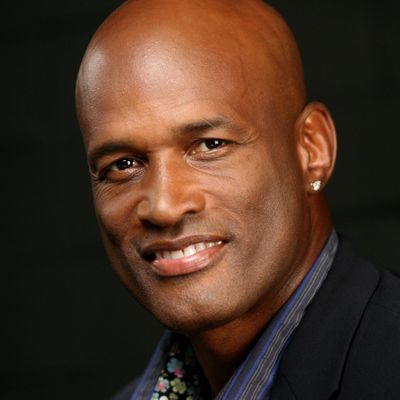
In our first episode for 2021, Hal welcomes Kenny Leon to the podcast. During their chat, Kenny shares with Hal how he approached directing the same play for Broadway twice, why he believes the arts are such an important part of education, and the positive ways the pandemic has forced us to be better listeners for each other.
Kenny Leon is a Tony and Obie Award-winning and Emmy-nominated Broadway and Television director. Most recently, he directed Lifetime’s Robin Roberts Presents: The Mahalia Jackson Story set to air this spring. Last year, he directed the Broadway premiere of Charles Fuller's Pulitzer Prize winning masterpiece, A Soldier's Play. He also directed The Underlying Chris at Second Stage Theatre Company and the acclaimed production of Much Ado About Nothing at the Delacorte/Shakespeare in the Park. Broadway: A Soldier’s Play; American Son; Children of a Lesser God; Holler If Ya Hear Me; A Raisin in the Sun (Tony Award; 2014); The Mountaintop; Stick Fly; August Wilson’s Fences, Gem of the Ocean and Radio Golf. Off-Broadway: Everybody’s Ruby, Emergence-See! (The Public), Smart People (Second Stage). Television: “American Son” (adapted for Netflix), “Hairspray Live!,” “The Wiz Live!,” “Steel Magnolias,” “Dynasty,” “In My Dreams.” Author, Take You Wherever You Go. Artistic Director Emeritus, Kenny Leon’s True Colors Theatre Company.
Follow Kenny on Twitter @iamKENNYLEON and see his latest projects on KennyLeon.com. To support Kenny Leon’s True Colors Theatre Company, please visit truecolorstheatre.org.
For all things Broadway Biz, visit our Instagram @BroadwayBizPodcast or our website broadwaybizpodcast.com.
Have a question for Hal or a topic you'd like him to explore? Send Hal an email at broadwaybiz@halluftig.com.
Transcript
This transcript was automatically generated and might contain errors.
[0:03] Hal Luftig: Hi everyone, this is Hal Luftig with my Broadway Podcast Network show, Broadway Biz, where every episode I will chat with my friends, some of the top theater professionals in the business about the business of Broadway.
[0:22] Hal Luftig: I'll join the Broadway Biz.
[0:25] Hal Luftig: You'll be a Broadway Biz.
[0:28] Hal Luftig: You'll learn to raise cash to open your smash.
[0:31] Hal Luftig: You'll be all the rage from the patron stage.
[0:34] Hal Luftig: In no time you'll know the business of show, the greatest job there is.
[0:40] Hal Luftig: So join our squad as we upload our love thing, Broadway.
[0:49] Hal Luftig: Let's get busy with the Broadway biz.
[0:56] Hal Luftig: My guest today is Tony Award-winning director Kenny Leon. I was so moved by Kenny's direction of Children of a Lesser God, and I couldn't have been prouder to have him on my team for that revival. As a director, author, and founder of Kenny Leon's True Colors, Kenny brings incredible care and insight to all of his projects. I am so honored he's here with me today on this episode of Broadway Biz.
[1:23] Hal Luftig: We are so lucky today to have one of the most preeminent directors currently working on Broadway. I first became aware of our guest today when he was the head of the Alliance Theater down in Atlanta, which he I think single-handedly turned into a major player in the regional theater circuit. So let's give a big Broadway biz welcome to Kenny Leon. Hey Kenny, how are you?
[1:50] Kenny Leon: Hey Hal. It's good to be here. And uh, you know, I hope you and your family are doing really well.
[1:58] Hal Luftig: Well, we are, thank you. And yours.
[2:01] Kenny Leon: Everybody, it's healthy and good. And I just had the uh the grandkids over who live in uh in Berlin. And so they were over here for like three months and now they've gone back. So I I mean I I I enjoy the peace uh that I have now that they're gone, but I miss them.
[2:23] Kenny Leon: I miss them terribly. I miss them terribly.
[2:27] Kenny Leon: So it's great. Kenny, I wanted to start our conversation talking about Raisin in the Sun. It was the first play you directed uh on Broadway, and you again, like I said, you did it in 2004 and again in 2014. In all of my experience in theater, I have never seen or had never seen a director do the same play 10 years apart. The way you mined the gold, if you will, from each production was just stunning to me and it blew me away. And I wonder if you could you could talk about how that first opportunity to direct for Broadway came to you.
[3:07] Kenny Leon: My first Broadway production of A Raisin in the Sun was uh produced by uh the great David Binder. So David Binder produced that production, and the one in 2014 was produced by Scott Rudin. Um I feel that I am lucky and blessed to have had the opportunity to direct uh uh such high profile uh productions of the same play. Because actually I approach every play the same, whether it's a new play or uh a revival of a play, I approach the play as if it's a brand new play.
[3:50] Kenny Leon: So in 2004, when when I cast uh Sean P. Diddy Combs as Walter Lee and Felicia Rashad uh as mama, Audrey McDonald, Sonar Lathan, the late great Bill Nunn. That was the a production that uh that I will love forever because I had so many um different styles. So I'm always trying to approach the play based on who we cast in the play. And at that time, Sean Puffy Combs had not even uh acted ever. And so it was my job as a director, I'm always trying to disguise the warts of my actors. So in the first couple of weeks of of uh rehearsal, I'm trying to see where the weak spots are.
[4:44] Kenny Leon: So with that production, since Sean had not uh uh acted before, I kept him still. He was uh uh stationary a lot. I didn't want to, I wanted him to go for honesty, and I didn't want him to think about uh where he had to move. And you had these women around him uh with uh all the women got nominated for Tony Awards that year, and Felicia Rashad and Arger McDonald won that year. Uh in fact, we had 10 Tony nominations that year, and the only category that was not nominated was the directing category.
[5:19] Kenny Leon: So Felicia Rashad always jokes with me. She said, I guess the play directed itself. Right. I always loved that. Yeah. So with that production, I I'm I I moved the women physically a lot, uh uh an awful lot around Walter Lee. And in 2014, with Denzel Washington playing that role, I had him moving a lot, and I had the women stationary. In that production, you had Latanya Jackson, Aniki Noni Rose, and it was a great cast. Very different. We were after the truth. And so I'm also thinking about what the audience is gonna get from each production.
[5:59] Kenny Leon: So 2004 in our country was very different than 2014. 2014, you know, the the president of the United States was the first African American. Barack Obama and Michelle Obama came to the play. And I'll always remember having a conversation with Barack, you know, during the play. He would tap me on my on my knee and say, Oh wow, that music you got, that's that's Miles Davis. That's his first, that's from his first album. Oh, wow, wow, that tune there's from 1959. And I was so impressed that how in tune he was with the jazz I used in that production. In that production, I used Miles Davis.
[6:38] Kenny Leon: And the and the other production, I used the original music. So in 2014, it was important for me to create an intimate version of a big play. And so with the set design, we even had the set move toward the audience in the first few seconds of the play. The the stage just moved into the lap of the audience. And I thought that was great. And also, as the audience walked in, before they got to that moment, when they walked into the theater, they heard the voice of Lorraine Hansbury and a Studs Terkel interview. And that was important to me because people had not recognized, you know, the brilliance and the intelligence of Lorraine Hansberry. And I wanted, I wanted the audience to feel that, to feel her voice, to feel her energy, to feel her intellect, to feel her opinionated uh nature.
[7:34] Kenny Leon: And then 2004, it was more uh let's look through a keyhole to this family that lived in 1959. Both both plays highlighted the discrepancies between the housing market, you know, um in our country. So we didn't change a word in the play, but audiences receive uh receive plays differently depending on what's happening in the world. So I always try to uh uh attack each play by what does it mean to the audience today, right now. And when I was directing the 2014 production, I never for one moment, not one day, did I think about that previous production. I treated it like it was a brand new play just written in 2014.
[8:31] Hal Luftig: Wow, that is fantastic. Because you know, as an audience member, it certainly felt like that. Felt like, you know, the 2004 production was was stunning. And as you said, you know, it had Felicia Rashad and Audrey McDonald and Sean Combs, who, you know, everybody agreed, wow, he's really a good stage. He has stage presence. Right. And and in 14, you know, I remember you had Denzel, and people were saying, um, and this was what's fascinating to me, he's too old for the part. And you know, I'm not giving away secrets here, but the actress who is the you know playing the mother, you know, need to replace, and Sophie Akinita, am I pronouncing that right?
[9:11] Kenny Leon: Yeah, Sophie was the wife.
[9:13] Kenny Leon: And she was a revelation. Latanya Jackson replaced the great Diane Carroll and who had to leave our production. But Latanya was amazing. And I remember when uh Denzel and I decided to do the play, and uh, you know, Scott Rudin uh encouraged us to work together. It was our second time working together. We had done Fences together on Broadway in 2010. Uh so Denzel and I met in LA and he said, after we finished eating breakfast, he said, I want to take you somewhere. I said, okay. And we get in his car and we go to this house, a nice, nice, beautiful home with a nice yard and nice flowers out front, and we knock on the door, and uh a woman comes to the door and she says, Oh, he's expecting you. And we go inside, and there standing there is the 89-year-old Sidney Poitier, who played who played Walter's uh in 1959. And I was like, Oh my god.
[10:15] Kenny Leon: So on one side I got Denzel Washington, and on the other side I have Sidney Poitier. So for this country boy from Tallahassee, Florida, who who never even could imagine being uh or working on Broadway, but to be just surrounded by two giants in in the industry was just, you know, I was just um I was I was speechless. And I can take the three hours that we spent together, I can take that to my grave as one of the most uh wonderful, wonderful moments of my life. And and I had so much respect for him. And I said, uh, Mr. Poitier, you know, we've been getting a little pushback uh when we just whispered that we were that Denzel was gonna take on this role, and and some people say, well, I don't know, his age may be a factor. And I said, What do you think about that?
[11:05] Kenny Leon: And Mr. Poitier said, let me tell you something. I did that play in 1959, and it was the one of the joys of my life. And Lorraine was an amazing writer. And I don't think there's anyone in our country right now that can do more justice to that role than Denzel Washington. And I said, wow, I said, but you know, some people say that, you know, you know, he's 60 years old playing that role. And I thought that um since the play is about the realization of dreams, I thought that if the actor was older, then it made the situation more desperate. So I said, what do you think, uh, Mr. Poitier? What, you know, uh they they they they they push back and say he's too old, and he looked me straight in the face, and I hope I can say this on the podcast, but he looked me straight in the face and he says, fuck them.
[12:10] Kenny Leon: And I love it. I tell you how when he said that, I had we had his blessing. We had his blessing to not try to duplicate what they did in 1959, but to just, you know, carry on the legacy, carry on um the legacy of of the great performance of Walter Lee, you know, played by Sidney at one time, played by Ossie Davis before that, and played by so many African American actors all across our country and throughout regional theater. So that was a really important production, but I'm so glad that uh Mr. Poitier blessed it. Whatever work we do, in special revivals, we have to thank the people who were there when the page was blank, when it was when it was when it was nothing. So we when we reinterpret it in future generations, we stand on the shoulders of all those artists who were there when the page was blank.
[13:09] Kenny Leon: And so that's one of the joys of my life to have had the opportunity to have directed two productions of um of A Raisin in the Sun for Broadway.
[13:20] Hal Luftig: Wow. I gotta say, Kenny, publicly, I I still find myself in awe when I'm around you and listen to you about uh how sensitive you are and how forward-thinking you are that you know that Walter Lee at 60 is gonna feel more desperate than Walter Lee at 30 because there, you know, I never thought of that before, that that an older Walter Lee would would have that desperation. Um I'm just so always amazed at your ability to look at things like that in a contemporary light and and and bring in the original, you know, like family and and learn from their experience. That's what makes you you, Kenny. That's what makes you you. Um, and I'll love you to death forever uh for that. Kenny, I I wanted us to take a uh step back in time um and ask you what were some of your goals um and how you became the artistic director of the Alliance and when that happened, because you're so goal driven, and I don't think anything you do, sir, is done by accident or on you know, fly by the seat of your pants.
[14:38] Kenny Leon: So I'm interested in how that was for you, you know, at the Alliance and what your goals were for that theater.
[14:47] Kenny Leon: Well, you know, I mean, as many people may or may not know, I did run the Alliance Theater in Atlanta for about ten years and at the time was one of the very few black artistic directors running major artistic institutions. But that was not my goal growing up poor in Tallahassee, Florida. You know, my mother was fifteen years old when I was born and she was pregnant with my brother and my sister was two years old and she headed south from Tallahassee, Florida down to St. Petersburg, Florida, and she left me with my grandmother. My grandmother had thirteen children and I always consider myself as the fourteenth. And so that time was beautiful. That was a beautiful time in my life when just growing up with my grandmother on a small farm in Tallahassee, sitting on the porch, watching cars go by, taking a bath in a tin tub after you warm the water on the stove and poured it into a tin tub in the middle of the living room.
And so that's how I grew up. And then later on, I went to live with my mother and stepfather down in St. Petersburg, Florida, and ended up being the oldest of five. I meant together, my stepfather and mother probably made like $10,000 a year. And so, you know, I never knew I was poor. I didn't think of myself as poor, but certainly college was not even in the forecast. And I got involved with a program called Upward Bound, which was to assist poor income families, low-income families, and guide us to college if we had college potential. And Angela Bassett, who grew up in my hometown, was also in this Upward Bound program. And so from ninth grade on, we were taking college classes on the weekends, and in the summertime we had to stay on a college campus and take classes and play sports and act in plays.
And they guided me toward college. And I knew I was the first class, I integrated my class racially in high school. And so I spent a lot of time with, you know, with my white friends. And so when it got time to go to college, I knew I needed to go to a black college. I just wanted to know more about my own culture. And so I couldn't go to Tallahassee because that's where grandma and my uncles and aunts lived. So I went to the next state up. I had never traveled anywhere. And I went to Georgia and Atlanta and in Atlanta and Atlanta University Center. There was a Clark College. I was a student at Clark College. Across the street was Spelman College, which was all female. And across the street from that was Morehouse College, where Dr. King went to college.
And during that time, I met people like Samuel L. Jackson, who was an older professional working with college students. And then there was his wife Latanya who was there. And then Spike Lee was studying there. And so we all were friends. Angela Bassett, Kenny Leon, Samuel Jackson, all of us, Spike Lee. And that's where I kind of got the bug, you know. And I was a political science major, but a theater minor. Long story short, I went to law school for a minute, and then left law school, left law school and came back to Atlanta. So six or seven or eight years later, I'm still there, and I get the opportunity to direct a play. And it was a play called The Wishing Place. And it was a really odd, crazy play with snow in the living room and leaves blowing through the bathroom.
It was a crazy play. But I loved it because as an actor, I felt like I was always just that slice of the pie. But as a director, I felt like, oh, I have to know what the pie is made of. How sweet are the potatoes? What kind of pan is it in? What are all of the ingredients? And I love that. And I said to the artistic director, I want to do more of this. And he said, Kenny, I don't think you have the skill set to direct. We think that you could be the next Denzel Washington. You could be just an amazing actor, but we don't think. And at that time, I decided to leave that company. And in that same year, an artistic director by the name of Timothy Near approached me because she had saw my work with the homeless population.
She saw me act in several plays. She saw my work in the community. She said, we should apply to this grant for the National Endowment for the Arts for this director fellow program. And I'm gonna be working at the Alliance Theater across the street. And you can come in for this one year and be our resident director. And we could help diversify that big institution. I said, okay. So we filled out all the paperwork, and the panel decided that I would be one of the six fellows. But they said, we do not want you to go to the Alliance Theater. We do not want you to stay in Atlanta. You must leave Atlanta. So I hadn't ever been anywhere. So I looked at a map. I said, okay, I want this fellowship. I want to go to this place.
It's called Baltimore, Maryland, center stage in Baltimore, Maryland. Why Baltimore? Because it's not New York. I was afraid of New York. It's like that's the big city. And then Washington, D.C., that was like that was very political. So I went to Baltimore, worked with Stan Voyevoski at Center Stage. And during that year there, I went, I took a group of board people to New York to see a play, my first Broadway play in 1988. And that play was a play written by a young African American writer by the name of August Wilson. And it was a production of Fences. And James Earl Jones and the great Mary Alice were performing in it. And sitting in that audience, I was like, I've never felt this before.
For the first time, I feel that my mother's rituals and her myths and our storytelling is on a raised stage in front of the whole community. I was like, wow, I know what it smells like in the kitchen when your mother put a straight comb on the stove and put that steam on your sister's hair and straighten her hair. I know what it feels like to sit on the porch and eat a slice of watermelon. I know what it is like when black men gather around the porch on Friday after returning from a job that they hate. I know what it's like when garbage men come home and say, you know, why does the white guy always drive the garbage truck and the black guys always do the lifting on the back? I remember those stories, and I said, wow, that's what I really, really want to do now for the rest of my life.
And I met August after that, and he says, if you ever need me, you can always contact me, and you always will have permission to do any of my plays. And a year after that, I was all after that fellowship, I was offered two or three jobs in the country. And one of those was Associate Artistic Director at the Alliance Theater, the theater that I was trying to get through for the fellowship. I for a year later, I'm hired as their associate artistic director. And then two years after that, I was named as artistic director to run the entire institution of that $15 million institution. And then the first play I did as associate artistic director was Joe Turner's Come and Gone by a writer named August Wilson.
The play had not even been printed yet. I mean, published yet. And then when I took over as artistic director, I directed a play called Fences by August Wilson. And during all that time, August always would come to Atlanta doing tech and previews and note the show and work, and we would spend a week together or so. And that's the way I ended up doing all 10 of his plays in Atlanta. So that's my short story about the Alliance Theater. I ran that for 10 years, and I found out in my life that every eight, seven, eight, nine years, you should try to reinvent yourself. You should try to do something different or you should energize the job that you're in. So I found that to be true. You know, starting at the Academy Theater, I was there for eight, nine years.
Then at the Alliance Theater, ran that theater for 10 years. And then I thought I was going to come to Broadway and just do plays in 2004, but you know, somebody put on my heart and spirit to start a theater company. So I started a smaller company called True Colors Theater Company, a theater committed to the storytelling of African American writers. And now I'm no longer artistic director, but it has a wonderful artistic director there by the name of Jamil Jude, and we're in our 18th year. So I'm so proud of that company. I'm so proud of starting it. I'm so proud of my work with the Alliance Theater all those years, and I'm proud of the 12, 13, or 14 Broadway plays that I've done, including, you know, Children of a Lesser God with you, which I couldn't be more proud of and proud of that cast.
And I remember we took the chance of casting Lauren Ridloff, who was a stay-at-home mom, deaf woman of color. We cast her, and now she's the first superhero in a Marvel picture, you know, as a deaf woman. And so I take a lot of pride in sort of all of the work that I've done collectively with all of these great artists in our wonderful country.
[24:37] Hal Luftig: Yeah, as you should, Kenny, as you should, and congratulations on True Colors. You never cease to amaze me, even as I'm listening to what you're saying now, some of which I did not know. And you really do. You're like a chameleon, if you'll excuse the expression, but because you do reinvent yourself, it's not just words. I've actually seen it. You start in one place and you end up morphing into something else, which is all about genius and creativity. It was fascinating. And to that end, I want to back up for a second and talk about Children of a Lesser God, if we may. I want to know, if I may ask, you know, what were your thoughts when you first read that play? When it was first approached to you and you had to read it, what did you think about the play at that moment? Do you remember?
[25:33] Kenny Leon: Yeah, when I first read it, I just I remember the film version of the play. And I felt like, okay, this is a pretty good story about a deaf woman being in love with her hearing teacher. And I was like, I love love stories, so I'm gonna commit to that. And I feel great that the Broadway world has approached me to direct a play that's not necessarily African American specific. And so when I agreed to do it, I was thinking of doing all Caucasian production of this love story between this deaf woman and a hearing man. I spent time with an ASL instructor because I knew that it was gonna be at least two or three people in the play that were deaf. And so I wanted to take these classes, and a friend recommended two instructors, and one of those people was Lauren Ridloff, and I flipped a coin to decide which one to approach, and it came up heads on Lauren Ridloff and I approached her, and she was my ASL teacher for a year every Tuesday, waiting for us to get a Broadway home or decide how we're gonna move the play forward.
I was just taking class from her, you know, in public places. We would go to public places, and one day we would study our colors, and the next day we would study transportation, and you know, it was just a great experience. And then when the producer, when you asked me, like, okay, we have to do a reading for this play, who's gonna play the roles? And then it occurred to me like, why can't Lauren play this role? Oh, she's not Caucasian. Oh, right, right. But okay, but who says the woman can't be a woman of color? Okay. So then if that is a woman of color, we knew at the time that Joshua Jackson was gonna play the hearing teacher. So, okay, so she could be in love. Now it's an interracial couple, interracial and challenged with hearing.
Okay, then who's a mother? You know, so it was the foundation of then casting a fully diverse production in every way age, race, abilities. And as a director, I'm always listening to the universe about how to cast or how to make moves or how to build a production. And I have to say, going into this, I thought I was gonna have an all-white production, and then we had the most diverse production ever, and it was the most beautiful production ever.
[28:30] Hal Luftig: Yeah, you're right, Kenny. It's like when the ethos, you know, are talking to you. The reason we had that reading was because Joshua had to decide whether he wanted to commit to this part. I mean, it's a great part, but whoever played that part really had to learn ASL. He couldn't fake it; it would have been too insulting to the deaf community.
[28:51] Kenny Leon: So he wanted to hear it read. And I just need to tell this to the listeners because it's I hope I don't embarrass you too much. But at that reading, yes, we said, let's use Lauren. She knows, you know, the role. She is, you know, a deaf, you know, person who's who signs. So why don't we just use her? We said, sure, it's just a reading, you know, it's really for Joshua. How it turned out was really for him. It turned out she was amazing. And for our listeners, it also turned out that from the age of 13, she had made a choice not to use her voice. Um, she took a strong stand on, I have a language, and it's called sign language. And if you want to speak to me, you know, you learn that. I don't want to have to be forced to lip read or use my voice to communicate.
And so she hadn't used it since she was 13. And we got to the part in the reading where uh uh the Sarah, the character, has to yell back at at James, her husband, her then husband, because she's so frustrated, he said, I, you know, I won't speak to you unless you speak my language. My language. She made this guttural sound that just slayed everybody, including her mother, who had not heard her voice in all those years. But I looked over at you, and here's, I hope there's not the embarrassing part, who I and have never seen this since. You, like everybody else, were so visibly moved and shaken. And I've never seen that before. And I, and when I looked over and I saw you feeling that, I thought, this play's gonna happen.
This play's gonna happen because it just it touched you. And I think when a good play is done, it has to touch the director in that way, you know, deeper than cerebrally. It has to really get inside of him.
[30:52] Hal Luftig: Thank you for sharing that. That was a special moment because the day before, it was a two-day workshop. And the day before, Lauren said to me through an interpreter, she says, Well, I haven't used my voice. Should I should I rehearse it today? And I said, No, don't do that. Let's just save it to the performance, to you know, when there's an audience here. And you have to understand that uh Lauren has no idea what the human voice sounds like. So no matter what we may feel about how it sounds, it's still we're judging it, we're making the judgment. And she's like, I'm not giving you that. So she can't tell what it sounds like. Uh and so on that day when she, and we're all human, so when she let that out, I really understood the play in a deeper way then, because it taught me as a director and a human being, sometimes we're trying to force people to live the way we want them to live, and how awful and cruel that is.
Because the sound that Lauren released was beautiful, it was raw, it was ugly, but it was an ugly act from this hearing person making this person who was in love with him, this non-hearing person try to communicate with him on his terms. And I'll never forget the last line of our play, which is uh I I'll help you if you'll help me. And I've taken that with me since that production. You know, it's like whether we're talking politics or we're talking about the differences and racial issues or or gender issues. I think we should say to ourselves, you know what? I got to do my part. I'll go halfway and you meet me halfway, and then there should be some growth there. So actually, when you caught me uh teary-eyed and shaking, it was really a human moment where I realized how ugly we can be as human beings to each other.
[33:03] Kenny Leon: Right, right. It's it's true, it's true. And every time that scene, every time I saw the performance, it just it just melted me. And it's and it was prophetic, Kenny, because it it's sort of like where we are now about you know, in the Black Lives Matter movement. It's like people want to be listened to. They haven't been listened to. And and you know, it's it's a very important lesson. Like how do we listen to people who don't exactly speak what you know our language or what we're saying? Continually think as we move further down, you know, the road, especially in the theater community, um, I I'm always reminded of that the message of that play. Listen. Stop talking and listen. And that's what James kind of learns, you know, at the end of uh at the end of the play. So, you know, it is it is one of the most rewarding things I've ever done. I thank you for that.
[34:02] Kenny Leon: Thank you. But now we're gonna now we're gonna hop skip over to the other side of the country and talk about you know, Hollywood. You you directed um the TV version, the live version of Hairspray and and also The Wiz, both stunning productions. Um can you talk a little bit about you know what the difference was for you as a director, as an artist, you know, working in the two different mediums?
[34:28] Kenny Leon: Well, it's interesting that you bring this up on the day after the Emmy nominations, which were yesterday, and I received my first um Emmy nomination for producing and directing American Son for Netflix. Congratulations.
[34:47] Kenny Leon: Thank you. I'm so I'm so proud of that. And um also except for except for the loss of life. My my mother lost uh well, I lost two aunts and an uncle to COVID. And except for not being in the room with people like you or with my fellow artists, you know, those are two major things now. And and and I hate that. But everything else about this pandemic and about this attention to uh issues of race or racism in our country, I think it's been great. It's been a wonderful moment for our country and our world to slow down, to stop, to be still so that we can listen to each other and listen to ourselves so that we may move to a more uh uh beautiful place. I'm in a group called Black Theater United. And one of the things that we realize is that police reform and prison reform and community reform and reform in our industry in terms of race, it's all connected. So the tenets of Black Theater United, it's is focused on the integration of all of that and how every area affects another.
[36:11] Kenny Leon: When I jump to the um to the television side, uh I'm I'm I describe myself as a storyteller. So I just I say some things are meant to be on the stage, some things are meant to be to be used in uh a musical way to express yourself through song. Some things are meant to be on um behind the camera. So I'm always trying to figure out where is the audience. When I'm in the theater, I know where the audience is. The audience is in the dark, breathing the same air as the performers. And it's a sacred place, which probably we will probably be the last one to come back because the pandemic has taught us one thing that we are one of the most sacred places. We are a gathering place to share our stories, to listen to each other's, to listen to each other.
So everything about the pandemic is anti-theater. But I think when we do come back in our fullness, which I think we will, I think people will have a greater appreciation for that sacred, holy space we call theater, that gathering place to share and learn about each other. And so I think that's that's I love being in the theater. When I'm translating a piece of art to the camera, I'm saying, okay, these people are in their living rooms now. They're in their kitchen. So I have to tailor it to that. When we did The Wiz Live and Hairspray Live, the reason I didn't have an audience for The Wiz Live, because people kept saying, why don't you have an audience? I was like, this is not theater. This is television.
The audience is the people at home. So I want to tailor this for that audience. So I shot it in a way that would engage people in their homes. When we did Hairspray Live, I had a little audience because it lended itself to an audience when the scenes were outside. But when you had love scenes or when people were in their bedrooms, you couldn't have an audience because I'm always thinking about the viewer, the experience that you're gonna have if you're the audience. So where is the audience? Is the audience in a big theater? Is the audience in our homes, or is an audience in a theater with the actors? So I always, and I love that I can do all of that. Like when we did American Sun, we did the play first.
And then when I made it a movie, I shot it totally different. Just like you said, those Raisin in the Sun was different from each other. American Sun as a film was very different. My subtitle to myself for the film of American Sun was a Mother's Worst Nightmare. So I shot the movie from Carrie Watson's point of view. What did it feel like for her to be in that room with three men all with guns at four in the morning and you don't know where your son is? And the reason that is called American Sun, and the reason I never show you never, you never did see their son's face in this movie. And that was important to me because I think once we see someone's kid, once we see the face, we like, oh, that's a black kid.
That's an Asian kid, that's a white kid. And I wanted the people watching this film to say, what if their son was my son? What if all the kids in America, what if they belong to all of us? Let's look at these young people through the lives of mothers and fathers. So I wanted everyone to feel that this kid is their son. And that way you take um you take the other kind of controversy out of it. So I I love I I love television and film, but theater is the one I could never give up.
[40:25] Hal Luftig: Well, that's great, Kenny, because we're not letting you go. You know, I'm good at I'm just gonna I'm gonna horse tie you and you're gonna stay in board for me. Um you know, it it's funny that you said, you know, the uh an audience and their reaction different, you know, mediums. Um I was also very taken, you know, you did this wonderful production of Much Ado last summer in the in the park. And and by the way, congratulations on your Obie Win. But one of the things that I was so taken by in that production was your inclusion of the audience. It almost felt like, you know, on stage, the actors were, we were there like a third character. You know, they talked to us, they they looked at us, you know, you know, and and at one point I I remember one of the actors asked the audience member a question.
Um, and it was just it was it was fascinating to me. Do you um when you were doing that production, was that on your mind of of how you can get this vast because the Delacorte's a big, big big theater. How you can bring everybody in, like scoop them up and and you know, hug them towards the stage?
[41:41] Kenny Leon: I'm always thinking, yeah, I'm thinking about where the where the audience is. It's 1800 people at the Delacorte. And I said, What if my father, who's no longer with me, what if, and he he was born in Talassett, Florida, a country, country guy who never got on a plane until like 2010 when he came to New York to see my production of um The Mountain Top with Samuel L. Jackson and Angela Bassett. And I would tell the cast, I want Shakespeare to be clear for my daddy Leroy. So he would be like, What are they saying? And I find that Shakespeare that's done in our country, a lot of the times we try to imitate the Brits. And we don't, we don't search for clarity and honesty and intentionality. And so, and knowing that the play was a comedy full of music, I never let myself forget that.
It's a comedy, but it had subtle messages about the way we're living our lives. And then setting the play in the future, I hate I had to keep asking myself, what if Shakespeare was alive today? What if Shakespeare was alive in 2020? What would he say? How would he move this? And so I was on them. Like I didn't want the play, I knew going in, I said the play can't be over, you know, uh uh originally I said two hours, but I ended up doing it in like a little over two hours. But that was the most important thing. It's like, let's say what you gotta say and move on. That's because a lot of comedy is in the rhythm and tempo, you know.
[43:18] Kenny Leon: Sometimes we may not understand everything that is said, but in terms of the delivery, the tempo, the rhythm, has a lot to do with meaning as well. So it was important to me to keep the fun in it. It was important to me to have those it move at such a pace so that when I wanted to slow it down, the audience would be with me and slow down with me. So I was real, you know, real, it was a real delicate balance. But um I'm really proud of that production, and I would love to see that play have a uh a future life. And um, I think to see African Americans play those roles and to do Shakespeare really well and to see a plus size woman play Beatrice I thought it said a lot about identity and perception of self and I still get many, many letters about that production from all kinds of people all across the world.
[44:15] Hal Luftig: Well Kenny, you know, full disclosure to our listeners, I want to be one of those producers who moved that production and maybe a positive one of the things that was in a roadblock was Danielle's availability and theater availability. You know, maybe one of the positive things that can come from all of this is that theaters will be available. I'm not sure about Danielle's schedule but maybe even that will open up a little bit as production starts ramping up.
[44:15] Kenny Leon: Yeah, I think you're right because if we had gone to Broadway we would be closed now. So you know, that's true and you'd be talking to a maniac and Danielle's schedule, this is Danielle Brooks from Orange is the New Black, it'll open up. In fact, I'm starting a film in September prep and October I'm shooting this film for Lifetime and they're gonna announce it soon but it's the Mahalia Jackson story.
[44:15] Kenny Leon: Oh wow.
[44:15] Kenny Leon: With her music and her life and I've cast Danielle Brooks in that lead role so we're gonna do that and we'll be done with that by the end of the year.
[45:32] Hal Luftig: So all the next year.
[45:34] Kenny Leon: We're available. As soon as we open up, yeah because it's yeah, who has any idea about that, man? I just know that whenever we do come back to Broadway Theater, I think there will be a greater appreciation and love for gathering in the theater and sharing diverse stories.
[45:52] Hal Luftig: I agree.
[45:53] Kenny Leon: I agree. It's one of the things that I've noticed that people are truly missing that experience, that community, that happens, that sharing of energy, if you will, between the actors and the audience, and even you know, some of the stuff that happens backstage that jumps over the footlights, you know, the stage crew and the costume department, the way all those people working so hard and dedicated to making that performance that an audience member is seeing, you know, unique and special and you know, they don't ever take it for granted. And I think we miss that. We miss that in theater.
[46:33] Hal Luftig: Kenny, I just wanted to touch upon one last thing before we have to unfortunately say goodbye. And that is in your Tony acceptance speech that you said you were looking forward to the day when every child in America could have a piece of theater in their daily educational lives. I am such a supporter of that concept. For the past 10, 15 years, I work with TDF to make sure that you know, on Wednesday matinees, whatever show I'm working on, a number of tickets gets donated to the school system so they can take kids in the inner school system that would never have the opportunity to go see a Broadway play into the theater. And um I'm just wondering, you know, clearly why that's important to you, and do you see a way forward for people like myself, producers, management, to be able to make that dream a reality?
[47:42] Kenny Leon: Hal, I do believe that theater and art and music should be important parts of every young person's life in grade school and junior high and high school. I think it's so important to develop our creative minds to nurture our storytelling. A big part of what we need to do is just make sure all of our young people feel good about their life and their stories that they have to share and contribute to the world.
[49:14] Hal Luftig: Beautifully said.
[49:16] Kenny Leon: And especially now listen and encourage and support, you know, playwrights, directors, artists, actors, you know, of color to support the notion that they get to tell their story. Al, it's important to me that every American life have equal access and equal worth. And we need to take the judgment away from it. And I think we need to be truthful about our past, our history. And some of us we need to study a little more in terms of knowing our history and how it got from you know 1619 to 2020. And we have to admit that white racism in this country is foundational, that you know the country began on the foundation of like, okay, we need to sell this cotton, we need free labor, we need that. So that's the truth.
Let's admit what the truth is, and only from admitting to what the truth is can we create a much more beautiful life for our grandkids. And that's what I want to be a part of. I want to be a part of making a much more beautiful country where every life has equal importance and equal beauty, and it's all there. The beauty is there. We just have to realize it and help these butterflies fly.
[50:56] Hal Luftig: Yeah, I'm with you, Kenny, and anything I can do, I give you my word, my pledge, anything I can do to help support that notion or help you support that notion, I'm in. This has been amazing, as I hoped it would be, because you are one of the most amazing people I know.
[51:17] Kenny Leon: Thank you.
[51:17] Hal Luftig: But before we go, I ask every one of my guests these three, I call them rapid fire questions, and I'm most interested now to hear your answers to these. And here's the first one. Kenny Leon, what is your favorite musical?
[51:35] Kenny Leon: The Wiz.
[51:35] Hal Luftig: As a director, as an artist, you know, in any role that you've been in the theater, what was the wackiest moment, the weirdest, funniest, bizarre thing you ever experienced in the theater? Do you have one? Can you recall?
[51:50] Kenny Leon: I remember one time I was doing a production of Fences, and you know, when you have diverse groups of people together, they respond different. So for Fences, it was a large group of black audience members that were at this one performance, and they were, you know, they talk back, they talk back to the audience, they are engaged, and then your traditional audience sometimes they don't understand that. So I remember these two women just got up arguing in the theater because the black woman was enjoying herself too much. And they had this big argument. She says, "Don't you laugh out loud like that? You can't do that. I paid good money to sit here, and you can't laugh like that." "Ladies, lady, I paid my money too."
And let me tell you one thing, and this big argument, the usher was stuck in the middle and had to solve it all, but it was just the challenges of trying to put different cultures in the theater together, and some people feel like they are the theater police. So that was funny.
[52:54] Kenny Leon: One of the more beautiful things that happened to me, I remember when we did A Raisin in the Sun in 2004, and Sean Combs, who was, you know, he was a rap artist and he had never acted before. So he felt a lot of pressure to play every performance. So he played every performance until this one Sunday, he was really sick. He was just, he was just very, very sick. And he had to end up, you know, in the bathroom every few minutes, and he was just sick. And we begged him, "Don't you know, your understudy, Billy Eugene Jones is your understudy, he's ready to go on, don't worry." "No, I'm going on." And he did the play in serious pain. And he did the first act, and he was just in pain, and then it came off at intermission, and the doctors just wouldn't let him go on.
And so you had to drag him off stage, and then Billy Eugene Jones went out and did the second act. And that experience of seeing this actor who's new to acting, who gave everything he had, and then an actor who was his understudy, who was a really trained actor to get the opportunity to go on as well. That audience that night had a special, unique performance. And I'll never forget that performance of the two Walter Lees. The audiences love that. You know, we in theater producers, directors, you know, are horrified when that happens. But the audience, you know, it never ceases to amaze me. They love it when the set malfunctions, when an actor has to be replaced, they just go crazy for it.
[54:30] Kenny Leon: You know what? And I think it's because they know it's live. As a director, I was happy that it happened that we changed actors in the middle of the show, as opposed to at the top of the show, having to announce that the star is not going on. So it was like, you know, the perfect in both, you know, both worlds.
[54:50] Hal Luftig: Well, Kenny Leon, I cannot thank you enough for joining us today. Um, you've just inspired me and I'm sure all of our listeners on ways to move forward and ways to be considerate of other cultures and other people and to look at things with a more sensitive eye and to just look at storytelling in various ways. So I cannot thank you enough. I'm sending tons of love to you and your family, and I can't wait until we open up and we can actually do that production together of Much Ado.
[55:31] Kenny Leon: Well, thank you so much. And just to end on a more positive note about the Black Lives Matter, you have to say black lives matter. Of course, we know all lives matter, but the question before us now is does black lives matter? And if we're in a neighborhood of houses of different colors, and the black house is on fire, and we have to put out that fire, that black house. We have to put that fire out, and that's been burning for 400 years. And once we put that fire out, we will learn a lot about all the other houses.
[56:07] Hal Luftig: So black lives definitely matter.
[56:11] Kenny Leon: Beautifully said. Beautifully said, a perfect way to end the program. Kenny, thank you. I'm sending you a big virtual hug. And I can't wait today where we can have one of our world famous breakfasts together.
[56:24] Kenny Leon: I would love it.
[56:25] Hal Luftig: Until then, stay well, stay healthy, and all those good things.
[56:30] Kenny Leon: You too. Thank you.
[56:32] Hal Luftig: Okay. Thank you. Thank you for tuning in to this episode of Broadway Biz. If you have any questions about today's episode or the business of Broadway in general, let me know on Instagram at Broadway Biz Podcast or via email at Broadway Biz at Halluftig.com. Be sure to follow me at Broadway Biz Podcast for updates on everything Broadway Biz. The business of Broadway. Broadway Biz is part of the Broadway Podcast Network. Huge thanks to Dory Berenstein, Alan Seals, and Brittany Bigelow. This has been produced by Dylan Marie Parent and Kevin Connor and edited by Derek Gunther. Our fabulous theme music is by Nell Benjamin and Lawrence O'Keefe. To learn more about Broadway Biz, visit BPN.fm slash BroadwayBiz.
© Broadway Podcast Network, All Rights Reserved