

What do Leonard Bernstein, James Joyce, woolly mammoths, Bebe Neuwirth, the ice age, and Mario Cantone all have in common?.. Read More
From the show: Broadway Bound: The Musicals That Never Came to Broadway
Guests
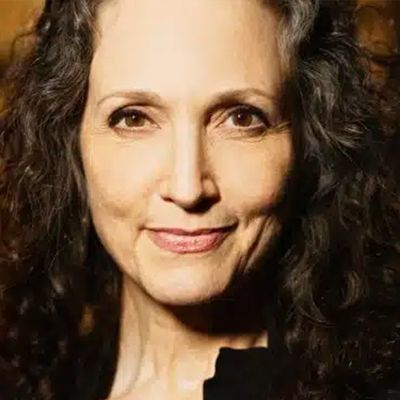
About
What do Leonard Bernstein, James Joyce, woolly mammoths, Bebe Neuwirth, the ice age, and Mario Cantone all have in common? They all tried to succeed by the skin of their teeth in John Kander, Fred Ebb, and Joseph Stein's musical adaptation of Thornton Wilder's meta-theatrical experience titled The Skin of Our Teeth, Thornton Wilder's The Skin of Our Teeth, Over and Over, All About Us.....
Transcript
This transcript was automatically generated and might contain errors.
[0:00] Rob Schneider: Today's story begins all the way back with the beginning of time. Think dinosaurs and ice ages, and throw in a dash of biblical allusions, add wacky neighbors like Homer and Moses, yes, that Homer and Moses, and don't forget to include a mute Dorothy Loudon, a dancing dinosaur, a skeptical B.B. Neuwirth, a worried estate, novelist James Joyce, and the greatest razzler dazzlers of Broadway, John Kander and Fred Ebb, and you got the beginnings of today's musical, perhaps the most interesting in our series, a musical version of Thornton Wilder's The Skin of Our Teeth. See, what happened was, well, get in your time machines and find out. Don't forget to include room for the mammoths. Hi, I'm Rob Schneider and welcome to another episode of Broadway Bound, the musicals that never came to Broadway.
Now, if you like what we're doing, please head over to www.robwschneider.com, click on the tab that says AMTA, and make a tax-deductible donation to help support my theater-going habit. Now, two names are going to pop up today that you might have heard before on this podcast. Making their second appearance is playwright Thornton Wilder, and making her third and final appearance this season is Dorothy Loudon. All of them connected in this wild world of a musical sometimes known as The Skin of Our Teeth, the musical, sometimes known as Skin of Our Teeth, sometimes known as Thornton Wilder's The Skin of Our Teeth. I always love that when they do that. Like, Thornton Wilder's The Skin of Our Teeth, as opposed to who?
Like, Neil Simon's The Skin of Our Teeth? August Wilson's The Skin of Our Teeth? I don't know. Over and over, and all about us. Yes, those are all the titles that the show had gone through at some point. I also have to give a big shout-out to our good friend J.V. Mercanti for helping me with some invaluable information on this particular show.
[2:08] Rob Schneider: Now, who the hell knows what Thornton Wilder was smoking in 1942, but he was doing it while reading James Joyce's Finnegan's Wake, a 1939 novel that is one of the most experimental and daunting works in literature. Filled with new language, new ideas, and new ways of interpretation, the book ends with the sentence fragment, quote, A way alone, a last, a loved, a long the, end quote. And beginning the book, beginning the book by finishing that sentence, River Run, past Eve and Adams, from swerve of shore to bend of bay, brings us by a commodious vicus of recirculation back to Houth Castle and in Vyron's. I have no idea what I just said. Joyce himself revealed that the book, quote, ends in the middle of a sentence and begins in the middle of the same sentence.
Now, these drugs were very strong for Mr. Joyce at the time. One hopes he got help. How does one even begin to summarize this work, Finnegan's Wake, which was almost negatively panned? Well, I read this book for this podcast, and this is the best I could come up with. Finnegan's Wake by James Joyce centers around a dreamlike narrative following the recurring dream of a pub owner named Humphrey Chimpden Earwicker, HCE, who embodies various mythological and historical figures, primarily referencing the Irish folktale of Tim Finnegan, a construction worker who seemingly dies but is revived at his wake. The novel is essentially a stream of consciousness exploring themes of life, death, rebirth, and the cyclical nature of time with a heavy focus on language, play, and puns, often blurring the lines between characters and identities through complex wordplay and allusions.
[4:05] Rob Schneider: Thornton Wilder, the Pulitzer Prize-winning playwright behind Our Town, The Merchant of Yonkers, and many others, opted to be inspired by Finnegan's Wake and wrote his own bizarro version of the book called The Skin of Our Teeth, and it debuted in 1942 with direction by Elia Name Names Kazan and starring Frederick March, Florence Eldridge, Montgomery Clift, and Tallulah Bankhead. In Wilder's version, we meet the Antrobus family, Antrobus being Greek for human, whose patriarch has invented the lever, the wheel, multiplication tables, and the alphabet. They live in Excelsior, New Jersey, but also at the dawn of the Ice Age, and they're dealing with a problem. A massive ice wall from Canada is coming down and will kill them all, including their pet woolly mammoth and dinosaurs.
Humanity extinct, and their house ends up being a refuge for people from all over time, including Homer and Moses. Sabina the Maid will narrate the show for you and attempt to explain because when Act 2 opens, and we're now in Atlantic City, where Mr. A is being sworn in as President of the Ancient and Honorable Order of Mammals Subdivision Humans, being seduced by a beauty queen also played by Sabina. Her fellow contestants in the beauty pageant include Cleopatra and Joan of Arc, and they're all dealing with massive weather shifts which forces the family to pull a Noah's Ark and get whatever animals they can onto a boat and escape the end of the world. Okay, that's it, right? Nope, because we have a third act, which is called The Great War.
It's the 1940s, so we need three acts, and the third act takes us back to the Antropos home, which is now destroyed, not because of an apocalypse, but a war which has put father and son against each other. The family debates how the human race can rebuild after always destroying itself, and they ask, is there any accomplishment or attribute of the human race of enough value that its civilization should be rebuilt? But before that can be answered, the stage manager appears and tells everyone some of the actors can't play their roles because of illness, and they are replaced by various crew members, janitors, etc. The play then ends where it begins, Sabina the maid cleaning the house, waiting for Mr. A to come home, and she looks and tells the audience that the responsibility of continuing the action of the play is theirs.
End of play. Look, now I am sure in 1942 this was revolutionary and wonderful and exciting, breaking every theatrical convention known to man. It got a Pulitzer Prize, plus a major scandal when people accused Wilder of stealing Joyce's ideas, and it was revived quite often, but with each revival it seemed to be less and less groundbreaking as it was between 1942, and now, the ideas Wilder first used are now seen as commonplace. We've seen people breaking character, and locations changing, and characters changing, and if you don't think meta is still around, please look at any musical from the 2000s. Seriously, what the fuck was that? But with each major production, the less interesting the show becomes.
The Public did it in 1998 with John Goodman, Frances Conroy, and Christian Stewart, and it was critically panned, and it was at Lincoln Center in 2022, but all anyone ever really talked about was how cool the set design was. It's great for colleges and universities, but it's not really as shocking as it once was.
[7:54] Rob Schneider: Yet, it intrigued a pretty powerful triumvirate because in 1962, Adolph Green, Betty Comden, and Leonard Bernstein all announced they were musicalizing The Skin of Our Teeth, and they were gonna call it Help! Help! Hooray! Now, this sounded like such a sound plan that Bernstein would actually take a leave of absence from his position as principal conductor of the New York Phil to work on the show, which would debut in the 1964-1965 season with Jerome Robbins at the helm. Come on, kids, this is a big deal! Get Alfred Drake as Mr. A., Gwen Verdon as Sabina, we got a show! Or do we? In 1965, the team announced the show was no longer happening, and Bernstein, in pithy style, published a poem explaining.
Mr. Bernstein? Since June of 1964, I've been officially free of chore and duty to the NY Phil fifteen beautiful months to kill. But not to waste, there was a plan, for as long as my sabbatical ran, to write a new theater piece, a theater composer needs release, and West Side Story is eight years old, and so a few of us got hold of the rights to Wilder's play The Skin of Our Teeth. This is a play I've often thought was made for singing and for dance. It celebrates the wonder of life, of human survival told in pity and terror and mad hilarity. Six months June to bleak December, and bleak was our reward when Christmas came, to find ourselves uneasy with our work. We gave it up and went our several ways, still loving friends, but still there was the pain of seeing months of work down the drain.
Now, two of the songs the team wrote together, Spring Will Come Again and Here Comes the Sun, made it into the 1975 Off-Broadway Review by Bernstein, and Up Up Up made it into the therapy session that we now call The Madwoman of Central Park West. Here is Spring Will Come Again.
[10:15] ♪ Musical number: "Spring Will Come Again" — performed by Leonard Bernstein ♪
[12:39] Rob Schneider: Now you don't hear about any of this in Maestro. All you hear in Maestro is Bradley Cooper with a sinus infection. Honestly, how do you leave a biopic knowing less about a person? But I digress. Honestly, I love Compton Green, but they are not the people for this show. They are right for The Matchmaker, if you're going to do The Matchmaker. If you're going to do The Skin of Our Teeth, the musical, you want people like Kander and Ebb. Yes. Yes, you do. John Kander and Fred Ebb. Cynicism mixed with razzle-dazzle. We all worship Hal Prince and Bob Fosse. But those two gentlemen would be nothing, and they would admit this more than anybody, without the material given to them by John Kander and Fred Ebb.
And they knew how to take dark material and make it sing. Yes, we can make Nazis sing. We can make murderers sing. We can make political prisoners sing. They can make anything sing. Cabaret, Chicago, Kiss of the Spider Woman, all of it. Dark and complex source material, each massive hits. One musical, one that was great, but in the level of the other three, but never really gets mentioned, was Zorba. A 1968 musical that said, quote, life is what you do while you're waiting to die. This was one of the team's favorites, and they adored working with the book writer on that show, Joseph Stein, the man who also gave the world Fiddler on the Roof. And for years, they would sit around Fred Ebb's kitchen table and pitch ideas back and forth to one another.
And Skin of Our Teeth kept coming up as an option. John Kander loved Skin of Our Teeth, so much so that when he was an undergrad, he saw the show five nights in a row. He said the show was a wonderful, semi-surreal form of the piece. I've said it a couple of times. It's Hell's a Poppin' Meets the Old Testament. I find that, oddly enough, very moving. And Joe Stein's wife had been in a production of it, and Fred Ebb, who worked the coat check of the 1955 production, knew he could articulate the thoughts of these people as they struggled with the meaning of life and its survival. He was the king of creating survivors.
[14:39] Robert W. Schneider: Sally, Roxy, Molina, all of them sympathetic in Ebb's hands, but what he wasn't comfortable with was the show's ever-shifting movement from real to non-real, which is interesting because *Cabaret* had a similar idea, but maybe not as extreme. Stein, a man who was right up there with Arthur Lawrence for good book writing, said, "It has all the right elements. One, it has larger-than-life characters than you can imagine singing. There are also some strong relationships among the characters. And finally, the play is about something really important, the survival of the human race. You would think that it would be too large a subject for the stage, but Wilder handled it. It was an extraordinary piece of imagination.
It's a difficult project because it's not a straight-line kind of a show. It doesn't have an ordinary plot, but it has something that, for my taste, is far better." Kander, more than any of them, wanted to explore how a benevolent God exists in a world of cruelty. My collaborators aren't too eager to have that spelled out quite so much. The character of Mr. A starts as a fairly subservient man in terms of his relationship to God, but by the end, he realizes that if there is a God, he's not interested in us. Religion, I think, is responsible for just about every disgusting condition you can think of in the world today, and the disappearance between church and state today is just horrifying to me.
I'm not sure whether Mr. Wilder or even my collaborators would agree, but I feel so much toward these poor people in the play who are just doing the best they can when, wham, something confronts them as if it were a test. Yet, at the same time, I am amazed at their capacity to survive. The human spirit just amazes me. And from that came this song.
[16:48] ♪ Musical number: "By the Skin of Our Teeth" — performed by Bebe Neuwirth ♪
[19:32] Robert W. Schneider: Yet, between *Zorba* and 1992, when Kander and Ebb officially announced they were working on *The Skin of Our Teeth* as a musical, they had many other projects to get through. For Kander and Ebb, they went through *70 Girl 70*, *Chicago*, *The Act*, *Woman of the Year*, *The Rink*, and then a period of trying to get two shows up and running at the same time. One, a murder mystery musical with Peter Stone called *Who Killed David Merrick?* Yes, that was the original title, and it would later be renamed as *Curtains*, which we all saw, and *Kiss of the Spider Woman*. But the Merrick piece kept getting delayed, and *Spider Woman* had a pretty disastrous public performance in 1990, so what to do if none of these shows were getting traction?
Perhaps it was time to return to *The Skin of Our Teeth* right after *Kiss of the Spider Woman* had opened on Broadway in 1993. The team went to the notoriously protective Thornton Wilder estate, which was run by Thornton Wilder's sister and her son. Now, this estate didn't just sign off on property, collect a check, and walk away. No, no, no. They were very hands-on in making sure that their brother and their uncle's work was preserved in the best possible light, and that meant that they had a say in what was going on, and they flexed their muscles. So, for example, at the end of Act One, Kander and Ebb had Jesus Christ appear, and they cut that, and they were also very firm in saying, "You cannot call the show *The Skin of Our Teeth*.
That's Thornton Wilder's. Come up with a different title." So, after Kander and Ebb won Best Musical for *Kiss of the Spider Woman*, they were hot again. While their most frequent collaborator, Hal Prince, was readying his sprawling revival of *Showboat*, Kander and Ebb needed a director with clout to help get this show up and to get money behind it. If you didn't have Hal Prince, you'd need some help. If only the hottest director at the time would sign on, things would be well. Well, the hottest director at the time was Jerry Zaks, and he was interested. Zaks was one of those directors who at the time could do it all. He understood the absurd, as seen in his plays with Christopher Durang, and he understood comedy with pathos like *The House of Blue Leaves*, farce in *Lend Me a Tenor*, drama in *Six Degrees of Separation*, and glorious, glorious musical comedy heaven with his revivals of *Anything Goes* and *Guys and Dolls*.
Plus, he was very chummy with Jude Jampson, one of Broadway's most iconic producing houses, with hit after hit under their belt, a lot of it thanks to Zaks. From the time Zaks was announced in 1994 to 1996, the team structured the show and crafted it adhering to Thornton Wilder's observations on the play, which was that the pacing should not be uniform because it prevents both the serious aspect of the play from emerging and prevents a real sense of excitement in the possibility of danger before the oncoming ice. That's a very good point, Thornty! That's his new name. So, full steam ahead, keeping this in mind, keeping Thornton Wilder's advice in mind, they juggled the dynamics of making sure the show felt like a musical and not a review.
Now, Tappan Wilder, he's not a great name, Tappan Wilder, who was Thornton Wilder's nephew, observed that this show, *Skin of Our Teeth*, had been elusive for musicalization. And it kind of makes sense because Wilder was musical in his own right, and some of his shows did offer musical inspiration, you know, the plot of *The Matchmaker*, the emotional humanity of *Our Town*. All of those could easily be turned into a musical, and they were. *Matchmaker* obviously became *Hello, Dolly!*, and *Our Town* became *Grover's Corners* from earlier this season. Yet, what did *Skin of Our Teeth* have except cynicism and a plot that you had to be high to enjoy? Yet, Kander and Ebb leaned into the craziness and created a score that had a little of everything, including lullabies, tangos, marches, gospel, Gilbert and Sullivan.
It was all their kids, a smorgasbord of composition. And finally, it was time for a reading, but in between the announcement and the show's first workshop in 1996, something happened. Zaks was no longer the hottest thing in New York, and neither was Hal Prince. No, it was Kander and Ebb. See, *Encores!* had decided to do a concert version of their musical, *Chicago*, and what was appreciated in 1975 was now looked at as revelatory. It moved to Broadway, where it is still playing as of this recording in 2025, and spawned a massive regeneration into the appreciation of John Kander and Fred Ebb. Producers were now very hungry to get more Kander and Ebb on Broadway, and how could it all be fast-tracked?
The show's closest to being finished were *The Skin of Our Teeth* and a musical about dance marathons during the Great Depression called *Steel Pier*. Both shows were slated to open in the fall of 1996, and with the rumor that the Donmar Warehouse production of *Cabaret* was coming to Broadway, Kander and Ebb could have had four shows running on Broadway at the same time.
[24:53] Robert W. Schneider: They put *Skin of Our Teeth* into overdrive, and a reading occurred with James Naughton as Mr. A, Deborah Monk as Mrs. A, Louis Stadlin, David Garrison, and as Sabina, the saucy maid, Bernadette Peters. And then, the news. And it wasn't good. The news ended the show. Zaks said ambiguously after not a very successful workshop, "It was fascinating and had some wonderfully comic performances, but I haven't a clue where it could go from here." But Zaks knew where he was going, which was off the project and to the land of Los Angeles to direct television. People who had attended the readings said the show had some great songs, but it may be too bizarre and surreal to be viable. So, with that on hold, *Steel Pier* moved up, opened in the spring of '97, ran for less than 100 performances, and closed.
Ironically, people wanted more Kander and Ebb, just not new Kander and Ebb. *Chicago* overshadowed their new works, which can be very frustrating. For Stein, Kander, and Ebb, the feeling from the industry was their best days were behind them. Producers were more interested in reviving shows—they were actually going to revive *Woman of the Year* with Joan Collins—than pushing new works from Kander and Ebb. But Kander and Ebb were persistent. They had tons of shows in the pipeline that they wanted to be seen, and it seemed like instead of trying to do a Broadway production, maybe it could start in a regional theater and move to Broadway from there. So, they announced in October of 1997 they were looking for a theater and a new director, and a theater did emerge, and it came with its own director.
In 1989, only eight years earlier, a graphic designer by the name of Eric Schaefer had been disappointed by Washington, D.C.'s theater scene, which was mostly large institutions producing classic plays—you know, plays like *The Skin of Our Teeth*—and wanted to challenge the theatrical community with edgier fare, so he created the Signature Theater in a middle school auditorium. Then, they moved to a 136-seat auto garage that they turned into a theater, debuting with the production of *Sweeney Todd* that was the darling of Washington, D.C. Sondheim was also a fan—some say of the work, some say of Schaefer personally—and soon the Signature became a temple to Stephen Sondheim, producing all of his works, and Schaefer was brilliant at luring major people down to his tiny theater, including Kander and Ebb for a revival of *The Rink*.
Well, they must have liked what they saw, and liked Schaefer because when he asked them to let the Signature be the place to debut *The Skin of Our Teeth* with him at the helm and a *Chorus Line*'s Bob Avian choreographing, they said yes. Fred Ebb said, "That's why we're here. Our admiration for Eric Schaefer. He has energy and enthusiasm and a real commitment to the material. You want always to do your best for him." Sandwiched in between *Nijinsky's Last Dance* and *Tell Me on a Sunday*, please, from January 16th to February 14th, 1999, the Signature Theater would debut Kander and Ebb's 12th show, *Over and Over*, which is what *The Skin of Our Teeth* was now being called. This was a major coup for the Signature, which was known for mostly revivals.
A brand spanking new Kander and Ebb musical, if this was successful, it could put Signature on the national map and rake in a lot of revenue. Also, with Kander and Ebb associated, it wouldn't just be D.C. actors who are all amazing, but some real New York stars. And that's exactly who Kander and Ebb secured for this production. Broadway vets David Garrison and Linda Imond as the parents, and as Sabina, the saucy maid who leads us through the show, one of Broadway's hottest actresses, Bebe Neuwirth. Not only had she won the Tony Award for *Sweet Charity* in 1986, she won it again for starring as Velma Kelly in the *Chicago* revival, and she is a true triple threat. She can sing, she can dance, she can act, and oh, oh, oh, and she was a television star. She was best known as the icy cold Lilith Crane on the TV show *Cheers* and then on *Frasier*.
[29:17] Robert W. Schneider: Where she won an Emmy Award for playing this role. This was a major get for the Signature. Could it get any better? Why, yes. Yes, it could. Joining the show was another bona fide Broadway star, Tony winner Dorothy Loudon from *Annie*, who hadn't really been doing a lot since, well, *Annie*. She was going to play the role of Lulu Schreiner, and as her partner and cry Bob Corleone, they got Mario Cantone, one of the most brilliant comic minds ever. Just a little sample of Mario. Thanks for that Broadway welcome. You know what's worse than the Broadway shows this year? The commercials for the Broadway shows. They're the worst thing. What about that guy, the Manila Mancha commercial? Sheena Easton is a babe.
Yeah, there's a theatergoer. Yeah. And the worst one is the *Grand Hotel* one with that insane woman like, oh, I loved it. This charade was fantastic. Her dancing, her singing, her movement. I want to see it twice more. So you didn't like it? Oh, I loved it. Are you going to see it again? As soon as I can get tickets, my husband works in this area. This woman is so insane. She's sick. First of all, she's balding as she speaks, okay? Patches of hair are like falling out of her head like she got a bad batch of Clairol somewhere. She looks ridiculous. And then she's like in your face. She's like a rabid dog. She's relentless. Oh, I loved it. Oh, she's so ridiculous. It's wonderful. And the show she's advertising for is *Grand Hotel*.
Do you ever see it? It's sick. Two hours and six minutes, no intermission. I was like, I'm going to pee on these people in a second if they don't stop. Now, if you know *The Skin of Our Teeth*, you might go, I don't remember Lulu and Bob. And you'd be correct. More on that later. As wonderful as all of these people were, it was really B.B. Neuwirth that was the most intriguing to audiences and soon *Over and Over* sold out. She was what they were promoting. B.B. Neuwirth and *Over and Over*, the new Kander and Ebb in that music. The creative team was so excited by a dancing B.B. Neuwirth, they conceived a great dance number for Sabina called "Someday Pasadena" to show her desire to not just be a maid, but to be a movie star.
By the end of Signature, it won't be a dance no more. But sometime between announcing her and Christmas Day of 1998, yes, Christmas Day, two weeks, two weeks before the first preview performance, it was announced that B.B. Neuwirth was no longer in *Over and Over*, not because of scheduling conflicts or a better offer, no, but because of, quote, "artistic differences." And while the press quotes were polite with Schaefer saying, as with any developmental process, all of us are learning as we go along. Working with B.B. helped us to define who Sabina is. That was an enormous help. And B.B. saying that she still adored Kander and Ebb in the score, it was clear something was going on. A source from the Signature had leaked to the press, quote, "they both realized they weren't working on the same show."
That would be Eric Schaefer and B.B. Neuwirth. In the last week, it became clear B.B. was miscast. And when asked about Schaefer, B.B. said she had no comment. The press immediately began to infer that B.B. Neuwirth was difficult to work with and that she was fired from the production. There had been the usual stories and the usual names, you know, those ascribed to women who demanded a high standard of those around them. If it's Nathan Lane, he's a genius. If it's B.B. Neuwirth, she's a, well, you know what they say. And maybe Miss Neuwirth didn't work in the role. Who knows? As she does arch better than anyone. But Sabina needs vulnerability, and that's not a color Miss Neuwirth uses as much.
But it was clear the blame was being laid at her doorstep. So who are they going to use to replace her? How about Donna Murphy? She's unavailable. How about Christine Baranski? She's uninterested. Maybe not a star. Then how about an emerging talent, someone who could be sexy and vulnerable, a great voice, great pathos and great presence? What about that girl from *Elaborate Lives*, Sherry Scott? Of course, we now know the show as *Aida*, and we now know her name as Sherry Renee Scott. And she came on to take over the role of Sabina. But there was something that could not be laid at B.B. Neuwirth's doorstep. Eric Schaefer was quite good at taking something pre-existing and tinkering with it. *The Rink*, *Sweeney Todd*, et cetera.
A song from Act 1 is now in Act 2. Let's add a line to clarify this. A character should be removed so we can accomplish that. But whatever he was working on, the shows, they were done. The hours and days and years and fights about all of those things in the script and score had happened years before Eric Schaefer got there to direct the show. There's a difference between being an architect and being an interior decorator. A decorator can spruce up the house, but he can't build the foundation. *Over and Over* needed a foundation. This was nowhere more evident than in the roles played by Loudon and Cantone, who were relegated to a stage manager's desk on one side of the stage, doing nothing except for making wisecracks and entering humming "New York, New York."
See, Loudon was a stage manager or radio announcer named Lulu Schreiner, and Cantone was her assistant. And they were quite possibly presenting *Skin of Our Teeth* as a musical for our enjoyment, or maybe not. But then it seemed that they were also trying to break show business. Randomly, a Kander and Ebb trunk song called "Military Man" was played with Loudon and Cantone dancing in a military kick line. What did it have to do with the show? No one really knows.
[37:23] ♪ Musical number: "Military Man" — performed by Mario Cantone and Dorothy Loudon ♪
[38:50] Robert W. Schneider: They thought it would be a good idea to underline the insanity of the show by having this major player only appear once in each act. That's Dorothy Loudon. That's great for esoteric thinking, but she's Dorothy Loudon, who got the biggest laugh of the night by ending her tour de force number with the quote, "I'm too good for this show," to which the audience gave a massive ovation. But that wasn't the only problem. The great Dan Dietz, in his books about each decade of musical theater, said that the song "Nice People for the Fascist Son" was so embarrassing and poorly staged, it might have been the most inept moment for musical theater during that decade. I will say, being the 1990s, that's a lot of competition.
In this song, Henry, the son, an adult, wore khaki shorts and army boots and stomped around the stage having a petulant fit. What are you looking at? Go on, tell me. What are you looking at? Go on, answer. You don't like me, do you? Well, who gives a damn? Because I am what I am, and I like what I am. I'm a lion, my friend, not a lamb. I know plenty of stuff, and all of it's true. I know what's wrong with the world. I'll tell you what's wrong with the world. It's people like you. You're all such namby-pamby, wishy-washy, fuddy-duddy, irritating, nice people. Giving love and never thinking twice. Nice and sugary and spice people. You know the kind. The kind that follow all the rules. The kind that tells you where to go and what to do.
You know the kind. The kind who take their own advice, and if you say they're full of beans, the hell with you. Like, for instance, Henry, go comb your hair. Henry, go wash your face. Henry, please sit up straight. Henry, give back that bike. Henry, she's just a girl. Henry, don't kick that dog. Henry, put down that rock. Henry, put down that knife. Henry, put down that gun. Henry, you're much too rough. Henry, I said enough! Enough! Enough! Enough! Enough! Enough! Enough! Which is typical of namby-pamby, wishy-washy, fuddy-duddy, nauseating, nice people. Nice people. Nice people. You know the kind.
[42:53] Robert W. Schneider: From the people I spoke to, who declined to go on record, said the show was leaderless and without focus. Even Stein, usually discreet, began grumbling to the press. The Virginia version was, I hate to use the word fiasco, but I think it was badly mishandled. Characters were added which I felt were unnecessary. It just didn't work properly. But that is what Out of Town is for, to make change. And boy, oh boy, did they make changes. Mostly starting with the mess that Loudon and Cantone were having to make work. *Skin of Our Teeth* is a confusing enough play, and it really lives in two worlds. The world of the Antropus family and their survival, and the meta-theatricality that The Maid brings to the show.
However, someone decided a third world needed to be added, and that would be Loudon and Cantone's world, a world in which those putting on the show took on more prominence, but it's not needed. And if you're going to do it, it should feel in support of the play. Loudon and Cantone, brilliant actors, are not really who you think of when you hear the word supportive.
[43:57] Robert W. Schneider: They come off as the main event. Soon, their roles were being clarified in previews and over daily lunches at an IHOP across from the Signature Theatre. Now, this I can get on board with. Their scenes were being shortened, Loudon's character of Lulu was eliminated, and she now played BVM, standing for the Blessed Virgin Mary, and one of the Beauty Queen contestants, ironically, the Miss Titanic, who belted out a song called "This Life." That role had been played by Beulah Watkins, but she was let go to make room for Dorothy Loudon. Same with Larry Widener, who was let go to make room for Mario Cantone to play the telegram boy. The song for the Wooly Mammoth, which is also very funny, was also cut.
Once again, the Wooly Mammoth is extinct. Who knew? Of course, writers can be overly critical of their work, especially with so many changes. Perhaps the critics would be less picky. They weren't there to see the sausage get made. Maybe the writers had lost focus. They had lost the forest through the trees, and a critic was going to come along and tell them how good everything was. February 3, 1999. The show opened, and the critics had things to say. This is from Variety. George and Maggie Antrobus, the archetypal man and wife from Thornton Wilder's The Skin of Our Teeth, survive an ice age, a flood, and a harrowing world war in the course of three acts. So they'll surely survive, over and over, the bafflingly disjointed and seriously misbegotten musical adaptation of the 1942 play.
How weird is this new Kander and Ebb show, which is making a low-key debut at the Signature Theatre in Arlington? Here's a hint. Dorothy Loudon plays the Virgin Mary, but due to its freewheeling mixture of tones, Wilder's play is particularly problematic. And on the evidence of Over and Over, at least in its current form, this material requires a delicacy of touch that appears to be at odds with the traditional Broadway instincts of Kander and Ebb and book writer Joseph Stein, and outside the purview of talented young helmer Eric D. Schaefer, the Signature's artistic director. Wilder's surreal comedy, through which currents of deep seriousness are always coursing, is reduced in Over and Over to either tongue-in-cheek silliness or leaden sentiment.
Stein's book follows closely the structure of Wilder's play, with the first act introducing us to the Antrobus family, as they fend off the ravages of an encroaching iceberg and the havoc it's wreaking on civilization. In what must be one of Ebb's worst lyrics, the show begins with a chorus number riddled with bad jokes about frozen body parts.
[47:49] ♪ Musical number: "O God" — performed by the cast ♪
[48:05] Robert W. Schneider: The show's super abundance of musical numbers crowds all nuance and reflectiveness out of Wilder's tale, leaving only a cliff-notes version of the story that seems not pointedly absurd, but ludicrous. If the show is to have a future, more careful attention to plot, character, and tone, and some stringent cutting of songs are required. In its current form, the musical provides some nice material for Scott, who is bewitchingly sexy as Sabina, and Mario Cantone, as the frazzled stage manager. And then there's Loudon, who seems to have wandered in from another musical, or rather several other musicals. In addition to the Blessed Mother, she plays a USO girl leading a military march, and a decayed beauty queen, all with a scene-stealing shamelessness that in this instance is excusable.
As the beauty queen, her sash reads Miss Titanic; she has her best number, a vaudevillian lament called "In This Life." Midway through, she turns to the audience and cracks, all too aptly, "I'm too good for this show." With the ruthless instincts of a hard-boiled veteran, Loudon knows when to desert a sinking ship.
[49:37] ♪ Musical number: "In This Life" — performed by Dorothy Loudon ♪
[52:37] Robert W. Schneider: In 2002, Barry took the show to Manhattan Theatre Club and did a reading where they retitled the musical Skin of Our Teeth, eliminated Lulu Shriner, and started from scratch. MTC, unfortunately, turned the show down, but the writers knew they had something that was working. Kander and Ebb continued to work on the show, to the chagrin of Fred Ebb who felt they were beating a dead horse that wasn't going to get up and walk. They worked on The Visit, The Minstrel Show, which would later become The Scottsboro Boys, and Curtains was looking more and more like it would be on Broadway by 2006, with Rupert Holmes writing the book as book writer Peter Stone had died in 2003. And then, September 11, 2004, at the age of 76 years old, Fred Ebb died of a heart attack, ending one of the most prolific partnerships in musical theatre history.
I would say only Rodgers and Hammerstein were more important, but Kander and Ebb will be more lasting. Now what? All those shows, in various stages of productions, what will happen? Does John Kander just throw them out and start with a new collaborator? Does he try to finish the works on his own? Maybe just retire, as he was 77 at the time, what a run it would be. But it's hard to just stop. You can't just stop. So all the projects they were working on would continue, with Kander filling in the blanks to the best of his abilities. Barry and Stein were on board with him, so they did a few more readings, some with Michelle Paulk and some with Karen Ziemba as the maid. They kept nice people and they added songs like "Warm," "When Papa Comes Home," "Save the Race," "A Discussion," and "World Peace," and cutting material that had worked once before, like "Someday Pasadena."
[54:24] ♪ Musical number: "Someday Pasadena" — performed by the cast ♪
[58:35] Robert W. Schneider: Ninety to ninety-five percent of the show was complete before Fred Ebb's death, Tazewell Thompson, the artistic director, said. It's burlesque, it's vaudeville, it's theater of the absurd, and there's a musical rhythm to it. You can imagine all these characters singing. Plus, it also helped that this was also in Thornton Wilder's home turf. It also helped that commercial producer Jody Schoenbron-Carter enhanced the production by a few hundred thousand dollars. From April 10 to April 28, 2007, audiences could be treated to All About Us, its new name because the Wilder estate had reversed course on using The Skin of Our Teeth, with a cast that included Shuler Hensley as Mr. A, Yvette Freeman as Mrs. A, Katie Huffman as Sabina, Huff & Puff Incorporated, and as a fortune teller named Esmerelda, Eartha Kitt.
Yes, the Eartha Kitt. Eartha Kitt was a life force and was still very active, showing her brilliance in LaChiusa's Wild Party just a few years earlier. She would be able to have Loudon's presence but be able to add discipline, memorization, and her character, who could tell the fortune and predict the weather, felt integrated now into the plot, and her line readings as the fortune teller, can you imagine her saying things like, "You're a woman and you're poor, you have no fortune?" This was a major casting coup, and boy did she deliver, especially on the song, Rain.
[1:00:25] Robert W. Schneider: I see your tomorrow, see it filled with pleasure, or I see it filled with pain. As for other matters, I can tell the weather, and believe me brother, there's gonna be rain, rain, rain, rain, rain, rain, rain, rain, rain. See that man down there, sitting in your ear, sitting in your ear, see what he'll do, you're gonna get real lucky, make a lot of money, hit the jackpot almost every time you bid, but you'll still be whining, and you'll keep complaining, and you'll die, brother. Death, by regret! Oh! I can see your tomorrow, see it filled with pleasure, or I see it filled with pain. As for the matter, I can tell the weather, and believe me brother, it's gonna be rain, rain, rain, rain, rain, rain, rain, rain, rain, rain, rain, rain, rain, rain!
So let my love live, sitting on the island with his cave mask and his master's life, you're gonna have some women, and you'll have some wives, have a different woman, maybe, maybe not, and you won't respect, you'll never be contented, no matter how many times! You'll lower your case! Death, by romance! Oh! I see it's crazy, there's a dance, something terrible will happen on the sky, you know dear brother, what I'm telling you is, let me tell the truth, neither do I, but there's a dark cloud gathering, shattering your window, and tearing your window pane, there is no doubt in my mind, you're gonna look at mine! Death by pouring rain, rain, rain, rain, rain!
[1:04:42] Robert W. Schneider: Like the Antrobus family that survives one disaster after another only to start again with renewed optimism. So goes All About Us, John Kander and Fred Ebb's musical based on Thornton Wilder's The Skin of Our Teeth, while this latest version of the 1942 Pulitzer Prize-winning work may be more true to the playwright's original text, a satisfying musical whole still proves elusive, you know you're in trouble when some of the most memorable numbers are performed by supporting characters or extinct animals. Then there was the New York Times, the paper of record. Is there anything that can't be saved by Eartha Kitt? Sheathed in a shimmering red dress and wearing a feathered purple turban, she slinks on stage at the Westport Country Playhouse to issue a somber warning, there's gonna be rain.
Miss Kitt, the 80-year-old show business legend, plays an Atlantic City fortuneteller named Esmeralda, working her hands and her brows and her knees, not to mention her voice, to alert humanity to the coming flood. Or had you forgotten that New Jersey is in that Bible story? Until Miss Kitt unleashes her incomparable hooch act, it's not exactly clear why the musical theater royalty responsible for All About Us, the author of Fiddler on the Roof, Joseph Stein, and the songwriters behind Cabaret and Chicago, John Kander and Fred Ebb, felt so strongly about this material that they shaped it into a musical in 1999 and then kept revisiting it.
[1:06:34] Robert W. Schneider: All About Us, directed by Gabriel Berry, never achieves the critical mass that transforms a collection of discrete numbers into an all-embracing universe. That is, until Miss Kitt arrives with her gloom-and-doom weather report and miraculously brightens the sky. Theater Mania added, Kander is reportedly committed to having every show that he and his late songwriting partner completed brought to the stage. He was right to press for the recently opened and entertaining Broadway musical Curtains, but this time, the bigger favor would perhaps have been to keep the trunk lid firmly shut. And this is the most astute observation from The Times. On the other hand, parables create a distance that undercuts the emotional intimacy that grounds a musical.
By necessity, the Antrobus clan is generic. George has invented the wheel and the alphabet. Maggie is his loyal wife. Their children, Henry and Gladys, are forever squabbling. Their saucy maid, Sabina, is the eternal other woman. While it's easy to see why Mr. Stein, Mr. Kander, and Mr. Ebb were tempted by the musical possibilities of The Skin of Our Teeth, it's also easy to see why they have had so much trouble with it.
[1:07:50] Robert W. Schneider: What's interesting about the story, however, is that all its theatricality makes it seem like the show could be musicalized. It's colorful, funny, fanciful, absurd, and music could maybe enhance its storytelling. Except, a musical needs a heart. The Skin of Our Teeth doesn't have a heart. It's bleak, it's cold, it's cynical. There's a little bit of optimism, but overall, it's bleak, it's cold, it's cynical. It looks like it should sing, but it doesn't have a reason to sing. Not in the traditional sense. The score is not totally lost. Sherri Renee Scott covered This Life, Brent Barrett covered The Skin of Our Teeth, and a wonderful album called John Kander Hidden Treasures has five songs. Maybe one day we will see it again, but not too likely, as it seems that all parties in this have just lost interest.
Which is really a shame, because one of the lasting things about Kander and Ebb is that even though Ebb passed away in 2004, their work was so prolific and so productive, they had tons of shows ready to go, lined up, one right after another. And the fact that they got to Broadway, even after Ebb's death, is still pretty fascinating. It's a testament not only to John Kander's love and dedication of his partner and his projects, but also to the inventiveness and excitement that surrounded a Kander and Ebb show.
[1:09:12] Robert W. Schneider: I wonder now if a show like The Skin of Our Teeth, or All About Us, or Over and Over, might actually carry a little bit more resonance today. When Kander and Ebb were writing, the world was not as fractious as it is now. The world didn't have such a sense of gloom and doom as it does now. There was always a sense, I think, with The Skin of Our Teeth of, oh, that's funny, they're imagining how bad it could be, but it could never get that bad. Could it? And then I think with everything that's going on in the world, from politics to global warming to war, suddenly The Skin of Our Teeth seems a little bit more immediate and a little bit more prescient. So if the estate is willing to maybe reverse course on their decision of not to allow The Skin of Our Teeth the musical to continue, and if it's something that people would like to pick up and try again, I think it could be quite interesting to do. I think probably streamlining it down to like ninety intermission-less minutes or a hundred intermission-less minutes might actually behoove a production like this.
[1:10:17] Robert W. Schneider: The last Kander and Ebb show to come to Broadway was The Visit in 2014, starring Chita Rivera. And I'll tell you something very quickly. I don't know if it's an appropriate story to tell, but I'll tell you anyway. I don't want to get anybody in trouble. When I went to go see The Visit, I was sitting up in the balcony, which was very empty at the time, and the usher up there said, OK, you're sitting on the aisle, but you might want to move closer to this. You can move closer to the center because it's not really filled, but there's a problem. And I said, what's the problem? He goes, well, the further in you move, the more of the show you have to see. Ah, I think, to be honest with you, I mean, I hate to do comparisons, but I feel like The Skin of Our Teeth is actually a show that, if it was the last original Kander and Ebb to come to Broadway, I think it would actually be a much better coda for them and their work than The Visit.
[1:11:11] Robert W. Schneider: Now, we've seen established composers go to established playwrights and tell them that their original creations will be better with music. We saw that with Johnson Schmidt on The Grover's Corners, and we saw that right now with Kander and Ebb on The Skin of Our Teeth. But what happens when an established playwright chooses to take their play, all by themselves, into the world of musical theater? Well, you will have to tune in next time as we explore a musical called Up from Paradise. It is the only musical ever written by Arthur Miller. See you next time!
[1:12:15] Robert W. Schneider: If you like what we are doing, please head over to robwschneider.com. That's R-O-B-W-S-C-H-N-E-I-D-E-R dot com. Click the tab that says AMTA. That stands for the American Musical Theater Archives. And make a tax-deductible donation to keep shows like this one on the air. Oh my gosh, I sound so much like PBS right now. I'm so sorry. And sadly, I can't even send you a tote bag, but I can wave energetically if I see you on the street. And isn't that worth the price of a donation alone? Actually, donate to PBS. That way, they can send you a tote bag. You can put it over your head so nobody sees me waving at you, if you're really ashamed and embarrassed of my vociferous energy. Once again, robwschneider.com. Click AMTA. Make a tax-deductible donation. And I will be forever grateful.
© Broadway Podcast Network, All Rights Reserved