

This one is a heart-breaker, friends. A real, honest to Sondheim heart-breaker. Like Avenue Q beating Wicked heart-breaker because, unless without a deus ex machina at Paramount Studios, we will never, ever see a musical that everyone says was one of the greatest musicals of the 1990s... Read More
From the show: Broadway Bound: The Musicals That Never Came to Broadway
Guests

About
This one is a heart-breaker, friends.
A real, honest to Sondheim heart-breaker.
Like Avenue Q beating Wicked heart-breaker because, unless without a deus ex machina at Paramount Studios, we will never, ever see a musical that everyone says was one of the greatest musicals of the 1990s.
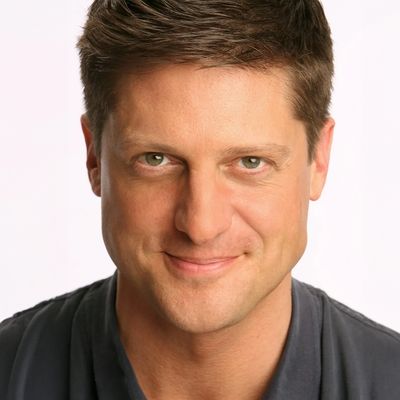
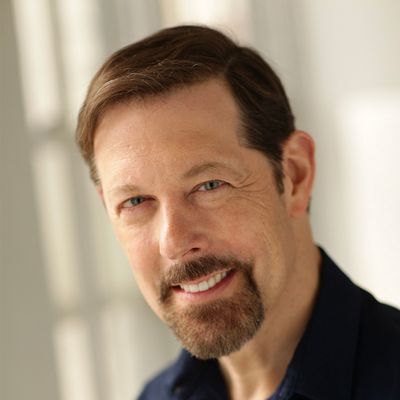
Starring Christine Ebersole, Gregory Harrison, and......wait, why should I tell you when book writer Martin Casella and ensemble members John Bolton and Christopher Sieber can as they back on 1993's Paper Moon.
BROADWAY BOUND PLAYERS
Charles Kirsch as The New York Times Critic
Matt Koplik as The New York Times Reporter
CJ Schneider as Larry Grossman
If you like what we are doing DONATE HERE
Fair use is a legal doctrine that promotes freedom of expression by permitting the unlicensed use of copyright-protected works in certain circumstances. Section 107 of the Copyright Act of 1976 provides the statutory framework for determining whether something is a fair use and identifies certain types of uses—such as criticism, comment, news reporting, teaching, scholarship, and research—as examples of activities that qualify as fair use.
Transcript
This transcript was automatically generated and might contain errors.
[0:00] Rob Schneider: Hey friends, make sure to listen to the end of today's episode for some exciting information.
[0:12] Rob Schneider: Close-up. A young girl is staring up at a man. They are in front of a 1930s car. Up close, the scene is tender, moving, and filled with warmth. Their moment is ruined by a voice off camera yelling, what did they say? The camera pulls back to reveal that this tender moment is happening in a cavernous space where the audience is a million miles away from the action. The two actors make eye contact and sigh. In the dark, a yenta yells, why is it a paper moon? For these prices they could have afforded wood.
[0:49] Rob Schneider: Hi friends, Rob Schneider here and welcome to Broadway Bound, the musicals that never came to Broadway, the podcast. This one is a heartbreaker folks, a real honest to Sondheim heartbreaker like Avenue Q beating Wicked heartbreaker because unless without a deus ex machina at Paramount Studios, we will never ever see a musical that everyone says was one of the best musicals of the 1990s. That musical was 1993's Paper Moon. Anyone I speak to about Paper Moon, their eyes light up with joy. I know it was not joyous for the people backstage, but for the people that got to see the show and the people that were in the show, it is just filled with absolute joy. What is Paper Moon? Well, originally the title was Addie Prey and Addie Prey was the brainchild of novelist Joe David Brown, a southerner whose life was quite colorful.
His family was involved in preaching and his job as a reporter had him learning about confidence games, so why not put these two worlds together and create something that utilized his knowledge in both arenas. And in 1971, the character of Addie Prey was created in the eponymous novel. Orphan Addie Prey tells us her story which takes place during the Great Depression as she teams up with a conman named Moses, who may or may not be her father. You see, her mother was quite wild and her dad could be one of three men, so basically this is Mamma Mia in the Dust Bowl. The second part of the novel has Addie and Moses meet an elder conman who teaches them class and sophistication in their cons, and the last third of the novel, Addie is more directly involved in a scam, posing as the long lost granddaughter of a supposedly wealthy old woman.
The novel got great reviews, so like all successful novels, it has to be made into a movie. But how would this sweet story work in a 1970s film world with grit and violence everywhere? The top movies of the early 70s were The French Connection, The Godfather, Deliverance, Last Tango in Paris. Or Paris, depending on how you want to say it. What would a cute little girl and her roguish father do to get people in movie theaters? In fact, road movie genres had all but fallen out of fashion. Originally Paul Newman and his daughter Nell Potts were to star in Paper Moon, with John Huston as the director, but the project fell through. Luckily the assignment fell to wunderkind Peter Bogdanovich, who was making a name for himself as the heir apparent to screwball comedy with movies like The Last Picture Show and What's Up Doc.
Bogdanovich then formed the director's company with Francis Ford Coppola and William Friedkin, co-owned by Paramount Pictures. Paramount allowed the directors to make a minimum of 12 films with a budget of $3 million each, and it was through this entity that Bogdanovich's Paper Moon was produced. Bogdanovich cast Ryan O'Neill and his daughter Tatum as the two leads, Addie and Moes. It was Tatum's first film role, and from most reports she was very difficult on the set. Bogdanovich said later that working with Tatum O'Neill was one of the most miserable experiences of his life. Nevertheless, the end result won Tatum O'Neill the Best Supporting Actress Oscar, making her the youngest actress ever to win that award.
Various changes were made in adapting the book to film. Addie's age was reduced from 12 to 9 to accommodate young Tatum O'Neill. Several events from the book were combined for pacing issues, and the last third of the novel, when Moes and Addie graduate to the big leagues as con artists after going into partnership with a fake millionaire, was dropped. The location was also changed from the rural south of the novel, primarily Alabama, to midwestern Kansas and Missouri. Peter Bogdanovich also decided to change the name of the film from the novel, Addie Prey. While selecting music for the film, he heard the song It's Only a Paper Moon by Billy Rose, Yip Harburg, and Harold Arlen. Seeking advice from his very close friend Orson Welles, Bogdanovich listed Paper Moon as a possible alternative title, and Welles responded, that title is so good you shouldn't even have to make the picture, you should just release the title.
Bogdanovich added the scene in which Addie has her picture taken in a paper moon solely so the studio would allow him to use the title. Out of the darkest days of the depression comes the adventures of two unlikely con artists, Moes Prey and his companion Addie Loggins. Ryan O'Neill is Moes Prey, his most challenging film role. Tatum O'Neill, daughter of Ryan O'Neill, is Addie Loggins, her very first film role. This is the Peter Bogdanovich production Paper Moon, or as P.T. Barnum put it, there's a sucker born every minute. Afternoon ma'am, I was wondering if Mr. Bates might be at home. Mr. Bates is dead. My name is Prey, Kansas Bible Company, I'm just here to deliver this Bible that Mr. Bates ordered. Bible? Bible? What kind of Bible?
[6:12] Rob Schneider: The film earned an estimated $13 million in North America theater rentals in 1973, that's equivalent to $86 million in 2022 standards. On Rotten Tomatoes, the film holds an approval rating of 90% based on 48 reviews, with an average rating of 8.7 out of 10. The site's critics' consensus reads, expertly balancing tones, Paper Moon is a deft blend of film nostalgia and finely tuned performances, especially from Tatum O'Neill, who won an Oscar for her debut. Metacritic assigned a weighted average score of 77 out of 100 based on 8 critics. In 1974, TV took on Paper Moon with Judy Foster, but the series lasted only a few episodes. Also, Paper Moon was really the last real hit for Bogdanovich, who would then stumble with a bunch of flops at Long Last Love, I never miss a Cybill Shepard vehicle, Nickelodeon, and Saint Jack, I never miss a Ben Gazzara vehicle.
Paper Moon became a cult classic, one of those movies that would pop up every once in a while on cable television, and its striking black and white cinematography always had viewers stopping to watch it. And, it even stopped a gentleman by the name of Matt Casella. Before he was the go-to casting director for Disney, Matt Casella was making quite a name for himself as a theatre director in California. In 1986, he directed a production of Pump Boys and Dinettes at the Old Globe that was so wonderful, it kept extending, making a ton of money for the theatre. Paper Moon was Matt's idea, and to tell us about that is the book writer of Paper Moon, Matt's brother, and also the star of Poltergeist, Martin Casella. Tell us the origin story, Martin.
[8:06] Martin Casella: Frank Levy, who was a part of Catalina Productions, who originally were the producers, they were Roger Berlind's producing partner in Los Angeles. My brother had directed a show that was a huge hit for them, that ran like two years, and then was in New York for a while, in trousers. And basically, they came to my brother and said, tell us what you want to do. And in the meantime, my brother had directed a production of Pump Boys and Dinettes at the Old Globe, which at that point was their most successful show they ever did, and it ran longer, and they had to keep extending it. And my brother was, we were going to originally do, we were going to do a musical of Jungle Book. Not the Disney film, but we were going to, because the novel was in public domain, we were going to do our own version of it.
And Jerry Goldsmith was going to write the music, and John Bettis was going to write the songs. And then something came up, and like five other people were doing the Jungle Book, including like the Royal Shakespeare Company. And so we were kind of sitting around one day, and Frank Levy said to my brother, what's another musical you want to do? And my brother said, well, my favorite movie of all time is Paper Moon. So they just said, well, let's put this together. Let's see what we can do. And then we'll go to Paramount. Let's make sure it's as good as it possibly can be before we approach them.
[9:28] Martin Casella: And the gentleman producer, Roger Berlind, known for his kindness and warmth and hits like Amadeus, The Real Thing, and City of Angels, he opted to become the lead producer. But now they needed to have a team to write the music. Enter Larry Grossman. Larry is a composer whose melodies should be up there in the public's mind with Jerry Herman, Irving Berlin, and John Kander. And despite an illustrious six-time Emmy award-winning television career, folks, he was the music supervisor for The Muppet Show. So anytime you saw a number between one of the big Broadway stars and a Muppet, that was Larry Grossman's idea. His amazing scores were just never really celebrated for the theater. That includes Minnie's Boys, Good Time Charlie, A Doll's Life, and Grind.
How did Larry get the job? A guy approached my brother, who was a lyricist, and I guess or he found my brother down and said, oh, I don't have the rights, but I've been working on this version of Paper Moon. And I've been working with Larry Grossman. And my brother said, oh, that's interesting. And he knew the kid knew we had the rights and that and the tentative rights to the novel. And we met with him and we got to meet Larry. And as always, Larry's melodies were fantastic and the guy's lyrics were OK. They weren't great. And my brother said, maybe we should. Larry's fantastic. Maybe we can get a different team or something. And we talked to Larry and Larry said, well, you know, I just did Grind with Ellen.
I look back on it. And when we met with him, Grind felt like it had been like 40 years before. It was three years and they got Tony nominations and they'd worked with Hal Prince and all that. And so Ellen and Larry wrote a spec song and then they played it for us. And it was wonderful.
[11:30] Martin Casella: Robert Villagas of Playbill noted in 1996 that Paper Moon may be the best reflection of Grossman himself. The characters find a way not only to survive economically in the midst of the adversity of the Great Depression, but they learn to keep their love, hope and humanity alive. All the while immersed in the music of the 1930s. Grossman rarely paints songs in a single bold color. Like Bill Finn, he prefers to compose each moment in each song, each line, sometimes each word in distinctive melodic hues. Yet he usually does this while staying within the boundaries of the song form. Pretty Like Your Mama from Paper Moon. Great example of this. It's sung to a young girl, but a shimmering piano figure keeps pulling the male singer into memories of her mother. This is Larry Grossman's Pretty Like Your Mama.
[12:24] ♪ Musical number: "Pretty Like Your Mama" — performed by Larry Grossman ♪
[14:17] Martin Casella: Tough as nails she wasn't. Bright as day she wasn't. In a way she doesn't seem a bit like you.
[14:35] Martin Casella: But you're pretty like your mama, and only half so wild, your mama cared. Now someone needs to care for her child. And who could be the lyricist to bring this story to life? Grossman had enjoyed the work of Hal Hackerty on three projects, Betty Condon and Adolph Green on one, there's great stories on that one. And then Ellen Fitzhugh on his last Broadway musical, Grind. Fitzhugh was a journeyman lyricist, one who in my opinion did good work, not great work, good work, strong work. But I think that's because her sensibilities were not used correctly except in one show, and that show is Paper Moon. Also, it seems that this time Ellen Fitzhugh was going through a bit of an ordeal with adoption and was driving everyone on the team a bit batty.
When she turned in a song, it was usually a song about abused children and how neglected children suffer. It's not really the tone of Paper Moon, too, quote, artsy fartsy, as one person involved with Paper Moon told us. In fact, years later, Ellen attempted to take her songs from Grind and Paper Moon and combine them into a new show about a kid's burlesque house. Don't ask any more questions, but her score had some lovely moments in it, especially this wonderful song, Girls Like Us.
[16:17] ♪ Musical number: "Girls Like Us" — performed by Christine Ebersole ♪
[18:59] Martin Casella: Martin discussed what it was like being in the room with these two people and how they turned the show into a musical. You had a little girl who kept all of her thoughts to herself and didn't open up and basically had a secret, which is always good for musicals, and it's good for any kind of play. We had a leading male character who was full of braggadocio. He was a braggart, and he exaggerated, and he was a big old liar, and he was a con man, the greatest con man in the theater, Harold Hill. We knew the script was really, really emotional. We basically made a decision in the beginning, as my brother always used to say. The second half of the movie is a car chase across Arkansas, and so we went back to the novel, and in the very first version we had, there was the captain, whatever his name was, and they were using Addy to go on the radio and be an evangelist and blah, blah, blah.
In the novel, they trick an old woman into thinking Addy is her long-lost granddaughter, and we tried that for a while, and that didn't work. It didn't really sing well, and then we finally went, well, what could happen? Ellen, in her infinite wisdom, she was a genius. Sorry, I can't talk about it. We'll choke up here. She and I got along like a house on fire. Larry and I didn't get along in the beginning because he, let's just say, he didn't understand why he had to work with a kind of unknown playwright who was a nobody, and then by the end of our working together, he and I became very close, and I just love him now, and Ellen said, let's make her a child evangelist, and in the first version, that was done at Paper Mill.
She was a big, fancy child evangelist with show numbers and Linda Hart and John Dossett as her fake adopted parents, and we found out really quickly that didn't work, and we got to the point where she was just going to be an evangelist sort of on a very small scale, working out of her aunt's backyard, so when Moes takes her to her aunt's house, we find out that her aunt runs a little church and has a radio program, and that we discovered after the big, giant version at Paper Mill, especially when we started at Goodspeed, that that worked better, so we knew from the beginning that those four characters, Addie, Moes, Trixie, and Emma Jean would sing, and then Ellen grew up in the South. Ellen knew those people.
Ellen said, I had relatives like this. I know what these people are like. Eventually, things came to a head with Ellen. The story that had been circulated was that she just didn't like the tone and style in which the show was developing, but there was actually something a little bit deeper there that we found out. It seems that the split from Ellen and Paper Moon happened over an audition. It seems the director had told Ellen Fitzhugh that her daughter could audition, but that was interpreted as her daughter could be in the show, and for whatever reason, she was not cast, which led to Ellen walking off the project, leaving Larry Grossman searching for a new lyricist. The man wrote an entire score with one person.
Now he has to find a new lyricist. So he decided to look around, and while he was doing that, Roger Berlin was buying Ellen Fitzhugh out of her contract. They looked at Gretchen Cryer from I'm Getting My Act Together and Taking It on the Road, but she was unavailable, so they went with Carol Hall, someone whose humor and sensibilities seemed to match much more this show than Ellen Fitzhugh's sensibilities. She did Best Little Whorehouse in Texas, so Paper Moon should be right in her wheelhouse. So now both Fitzhugh and Hall would occupy the same space, being billed as lyrics by Ellen Fitzhugh and lyrics by Carol Hall. It's an odd billing, but OK. Martin Casella remembers Carol Hall. As much as I loved Ellen, I adored, I mean, there's big differences.
I adored Ellen, but Carol was just, Carol was one of the funniest, loveliest, and she was wicked and funny and she was a great cook. And we did half the show in her apartment on Fifth Avenue and while she'd be making fried chicken. And what it was, was we basically said, there's six places where the material's not, the musical material's not right yet. The opening number and the song where Addie and Mose decide to team up, which is fine in the show the way it is, but it used to be a song called Entrepreneur and it like stopped the show every night at Paper Mill. It was amazing and it was a gorgeous transition song of the two of them not only melding together, Addie realizing she was going to stay, Mose realizing what a genius this kid is.
There's a word I know, I think it comes from France. Means you're doing business by the seat of your pants. It means you drop a dollar, then you get back five. It means you're doing better than just staying alive. The word is entrepreneur. Just listen.
[29:09] John Bolton: There was a thing in backstage, and at that time I was going in for everything and anything at all, all on my own. I didn't have an agent. I was just going to absolutely everything. And Katie Finneran, who was one of my friends and a former roommate, she was my roommate for a little bit, and Andrea Burns was my roommate for years. And Devin and Janky was also my roommate. And I remember getting the audition, and they were looking for barrel-chested guys. I remember that was the description. And so I was like, well, I'm not barrel-chested at all, but I will go in. And I went in, and they liked me. And I was absolutely floored. And then they called me back, and they gave me a side, a line. They gave me a couple of lines to do for the callback.
And I was just, I don't know what to do. This has never happened to me before. I don't know what I'm doing. I mean, okay, all right. So I called Katie Finneran, and I said, I have a callback. And literally, the line is, well, there you are. I was wondering where you got off to. Hey, where's your paw? That was the line. That was the line. And I was so nervous that I was going to do it wrong that I called Katie Finneran because she had done, I believe it was my favorite year, I think, at Lincoln Center, or she was still doing it at that point. And I said, does this sound all right? Does this sound right? And she said, yes, it sounds great. And so I did it like Katie. Katie worked on me. It was so funny.
Finneran and I worked on the phone for, I don't know, five, 10 minutes on one line. And then I got the job. And I couldn't believe it. I could not believe it. And I got a phone call because I was the contact. I didn't have an agent. So they called me, and I couldn't believe it. And I called Katie immediately. I was like, yay, oh, my God, oh, my God, this is amazing. Because it was, it was slated for Broadway. So I knew I had my first Broadway show. And then I remember thinking, well, I've got a line. I could be a best supporting actor for a Tony Award. My part was photographer. My part was photographer.
[37:50] John Bolton: And I went to an open call. And of course, it was long, long, long. And I'm just, you know, I look really Midwest, Western, Midwestern. And I don't know, I just really connected with the material, the little side of a kindly young policeman that they gave me to read. I think we may have done the typing out thing to where they just bring in, you know, 16 to 20 people and say, no, no, no, no, yes, no, you can't do that anymore. But there's odd because there was diversity in the show, but I think they know. But I did my little clip of a song and then had a callback. And then when I when I got it, I remember our Matt Casella, our wonderful director, coming up to me, putting his hand on my shoulder and saying, you are open call find. And I was like, OK, I guess.
[38:48] John Bolton: This is great. I think now I might I might think I love this song. I love that you've chosen to musicalize it. But why is it huge? Why is this particular moment an enormous cast balls to the wall thing when we should really be focusing on on the meat and potatoes of the story? So I think I think in their desire to make it a musical, this is hard to say because I love these humans and who knows? I was just so happy to be there. And it's one of the most happy experiences of my life. But I, I feel like in their desire to musicalize it, it got a little and on that huge stage with huge sets. And so the expectations were great, big, splashy Broadway musical where, yes, there were moments when that would work in this show.
But there were moments when it just needed to to sort of, you know, go and focus in on the smaller story at hand. And there were act two issues because we you know, we'd have a different version of the big number that opened act two every day. We'd show up and there'd be a new version of a song called Put Your Hand on the Radio led by the amazing Linda Hart. One of a kind, Linda Hart as the Amy Semple McPherson role. And it was this big gospel revival tent number where we're all these hand clapping white folks in the big robes singing about Jesus. And, and of course, it was meant to be evocative of the era, but also a bit of a spoof on that. And that kept changing. And they did, the authors did continue to focus the show on the story at hand.
And I know that beyond our production, they really got to that. I know the next production was at Goodspeed and then at Ford's Theatre. I was not a part of either of those, but they, they really, in fact, I'm not sure any of us from the original were, but I believe they really began to focus in on the story at that point and get rid of some of the glitz, even though the glitz was a lot of fun to do.
[41:09] John Bolton: It was thrilling. We'd heard at the theater out in Jersey that they, it was going up and we showed up to watch it go up. And it was Brooks and Chris and Renee and just several others just, just there watching it go up. And we took pictures in front of the box office. It just opened and there was some sort of gimmick or promotion with the first however many people that bought tickets. And we were there with our Paper Moon hats on and t-shirts. And I still have the pictures of us all going, yeah, look, and pointing up at the big marquee on the Marquee Theatre that faced Broadway. You know, so it was literally on Broadway.
[41:52] Christopher Sieber: There were, there were times when, I mean, we, we did the, the very first day. It's, it's, it's especially for someone who's never done a Broadway show before and it's your Broadway debut and it's your first rehearsal with all the people and the, it's just incredible. And you're, you're, you're the first equity show, really, truly. And they read through the script and you can't believe you're part of it. And you, they sing through the score and you get to hear the music for the first time. And it's just so incredibly exciting. And then you start working and you are part of something that you don't know really where you fit in yet and you're trying to find your way. And yeah, there were, there were things that were choreographed.
Alan Johnson was our choreographer and Alan Johnson came up with a lot of stuff. There were musical dance numbers that were, that were created but never used. They decided to not do much choreography. It was more of a story without choreography. So he did more staging. He started off as, as choreographing a number. There was a big thing when they buy the new car, there was a new car that they buy. And there was a whole thing where these people are buying new cars and it was like this dancey Ginger Rogers type thing. It was fantastic. But I think that they wanted the story to go, rather than a dance number, they wanted it staged. So that was one of the things. We had a couple new songs that were added throughout and I didn't know anything about that.
I thought, oh yeah, they wrote it and so we'll just do it. No, that's a, it's a new show. So things change. And there were moments when we were going on stage and we just got the new lyrics and we would go on stage and hope that everyone knew the lyrics as well.
[43:43] ⚠ About 15 minutes of audio could not be automatically transcribed.
[58:18] ⚠ About 15 minutes of audio could not be automatically transcribed.
[1:12:53] Martin Casella: Ellen had moved a distance from the city, which made working difficult for her and Larry, who at that point had really stopped enjoying his collaboration with her. At this point, Larry had alienated his friend Carol Hall, and for Ellen, who he was not really into the show with anymore, Larry, rightfully frustrated, said he would only continue if the royalties were increased because he was now going on his third score for Paper Moon. Plus, news had just developed about Martin's book and a secret producer. We weren't aware that Gregory was a producer. We knew that Frank Levy was, and we knew obviously Roger Berlin was, but we didn't know Gregory was a producer, and that caused some issues. And a couple of my closest friends are very good friends with Gregory.
I don't have any enmity toward him. I'm fine. I almost Facebook friended him the other day. But there got to be a point where there was a big giant falling out, and that was after the Paperville version shut down. There was a lot going on. People felt like they couldn't get the show they needed. Roger Berlin had already booked the Marriott Marquis. They had very, very specific dates by which day the first preview had to happen. Since I was the one that was on that level anyway, the least experienced, I finally just said, look, if this is a problem, replace me. I mean, I've been working on it at that point for almost six years. I said, we know that three quarters of the script works. There's some of it that doesn't, or maybe two thirds.
And why don't you guys replace me? And as long as I get my credit and my points and all of that, because I'd worked really hard and the structure was all there. What ended up in the version that ended up being done all over was mine. And it was, don't ever try to write a musical based on a script by Alvin Sargent.
[1:15:04] Martin Casella: So Gregory Harrison left and Christine Ebersole left and no-name actors were interested in joining a tainted project. Eventually, Mark Zimmerman took on the role of Moe's, Lindsay Cummings and Joanna Pichidi. If you're an Annie, not going to be me, Annie no more fan, Joanna Pichidi, she would be Addie and Julie Johnson was going to be Trixie. So in 1995, Paper Moon was part of NAMT, the National Alliance for Musical Theater, which is really a booking presentation for musicals in which five musicals can present 45 minutes worth of material to potential theaters and producers. This time around, all the lyrics were by Ellen Fitzhugh and the score had undergone major revisions. You know, you do two or three days.
I've done that two or three times with other shows. And at the end of the first day, Sue Frost ran outside into the parking lot where we were all standing and she put her hand up and she introduced herself and gave us her card and said, I'm Sue Frost from Good Speed. I want this show. You're going to have people throwing themselves at you over the next to the next performance and probably when I walk away. Please don't talk to anybody else. I can't guarantee you something, but I can do pretty close. But I have to talk to Michael first for during the summer, next summer when we'll have a huge crowd. And we've been on the phone with Bernard Havard at Walnut Street and he will, it'll be a joint production and he'll transfer it.
We had so much fun and the show had been restructured and redesigned and brought way down. We all had agreed that there was not going to be a real car and they sat on stools and pretended it was a car and the audience didn't care. They loved it and we had no idea what was going to happen. We couldn't get anyone to come see it. We couldn't get anyone to come see it. Not a soul that could help us or move us forward. And we had these, we had this stack of reviews, I mean, and the Philadelphia critic was like, wow, they solved all the problems. This is great. Somehow, like one of the last nights we were performing, the woman that used to run Ford's Theater, she was married to some guy on 60 Minutes or the producer of 60 Minutes.
She sort of magically showed up like at one of the last two performances and came back and said to us, I'm really interested in moving forward with this. And we did it there. And then that's when kind of weird stuff started happening. Ellen wanted to cut songs that were wonderful and perfect and working that everybody loved. And by that point, we had gotten a contract with a big giant Japanese production company to do two. They were doing tours. The show would be done for a certain amount of weeks in Tokyo in a big giant theater, 3,000 seats. And then it was going to tour around. And I got to fly over there and see the opening night. It was a gorgeous, gorgeous production and very Japanese. When Addie sang, when they all sang A Place Where You Belong to her, Addie stood there with her hands like this in front of her mother's grave. And then there's a little moment where she has a little solo and she sang her solo and then she pulled her hands apart and paper cranes fell onto her mother's grave. So beautiful.
[1:18:49] Martin Casella: So why have we not seen Paper Moon since it was done in Japan? Here's Martin Casella telling us why. And then the Paramount people called and said, well, you've had it for three years or two years. Yeah, we made a lot of money from the production in Japan made so much money and Paramount got a huge portion of it. And they said, well, that's, you know, and our agent was fighting going, but, but, but, and the guy at Paramount went, no, we're taking the rights back. And he said, can you at least give us a writer that says they can finish the production in Japan? I mean, you're canceling the rights that we had and they're going to sue us. This is a big giant money making thing there. And they said, oh, fine.
OK. And our agent got a writer that said the production in Japan could finish it out. Freddie Gerson called them Gershon. He called and I remember him yelling at me on a phone saying that idiot, that idiot at Paramount was such a stupid person. And I had to say to them, do you know who I am? I run the largest licensing company in the world. And he couldn't get through to the people at Paramount. We couldn't get them on the phone. They wouldn't answer emails. They wouldn't. We wouldn't talk to our lawyers. They just said, no, absolutely not. And I had a friend who worked at Paramount. And a couple of months later, I said, what what's going on? And he just said, oh, they want to they want to do an all black version movie and put Eddie Murphy in it.
And I said, oh, he said, they're they're totally black. Everyone has been locked out of the rights. No one's allowed to do it. So we tried on several times. I when I got a new agent in 2005, she and her husband was a her husband was a big entertainment lawyer. And Larry and Ellen and I got together and we met. I went to Larry's house and nothing. They wouldn't even return our calls again. I had a friend who was a huge executive at Paramount. And I told him the whole story and he said, let me see what I can do. And he called me a couple of days later and he said, this is the guy to explain the whole thing to our guy who's in charge of IP, because by then it was intellectual property. It wasn't just a musical.
And he said, I've spoken to him. You need to write him. And my agent had interest from people. I was still getting one or two calls a year from big theaters saying we want to put this in our season. And I'd say, can you hold on? When I wrote. The guy at Paramount. He wrote back, oh, he wrote back and that was with the introduction and he wrote back and said, these rights are not available, leave us alone. I sometimes wonder why Paramount was so vitriolic in their denial of the rights to this particular movie. Like I said, the movie is a movie from over 50 years ago. It is a movie that's a cult classic, but not one that's consistently around. It's not really generating any revenue. So why are they preventing this movie from being turned back into a musical?
Interestingly enough, a few years later, it was discovered that Paramount did allow some new musical theater writers to work on a version of Paper Moon that went nowhere. So my feeling is, is that maybe there was something about these particular writers that Paramount for whatever reason felt burned by, or did not want to get involved with again, which is really, really ashamed because Paper Moon has a gorgeous score. It's book is actually quite clever. And if it's being performed in an intimate setting, to me, the marquee was the wrong theater for it altogether because the marquee is like a cruise ship theater. What you really wanted was something like the booth theater, something that was small and something that was intimate.
To me, I feel Paper Moon could find a nice home off Broadway if Paramount was willing to reverse their decision on this. I would love to end our look at Paper Moon today, and I hope it's not our only look at Paper Moon. I hope that we actually do get to see a production of it at some point, but I would love to play for you the last song that was written for Paper Moon. The song is called Turns Out, and I cannot think of a more apt title to end this particular podcast episode than Turns Out. Music by Larry Grossman, lyrics by Carol Hall, and this is Larry at the piano singing, accompanying himself with this beautiful song from Paper Moon.
[1:24:05] ♪ Musical number: "Turns Out" — performed by Larry Grossman ♪
[1:26:05] Robert W. Schneider: Thank you so much for listening to Broadway Bound, the musicals that never came to Broadway. If you like what we are doing, please spread the word and most importantly, rate and review us on iTunes. And if you have any thoughts on today's show, hit me up on Instagram. Yes, that's what the young kids do, right? Rob W. Schneider on Instagram. And if you really like what we are doing, please consider making a tax-deductible donation to my non-profit, the American Musical Theater Archives, which is diligently working to ensure that the music, lyrics and librettos of these shows, as well as many others, are being preserved for future academics and theater lovers. Every dollar that you contribute, once again, a tax-deductible dollar, helps to legitimize the study and practice of musical theater.
Simply click the link in today's show description or simply go to my website, www.robwschneider.com. Look for the tab that says AMTA and you can make a donation there. Please, let's make sure that the future academics who love musical theater and see it as the art form that it truly is, have the financial resources necessary to keep spreading that love and preserving this history. See you next episode.
© Broadway Podcast Network, All Rights Reserved