

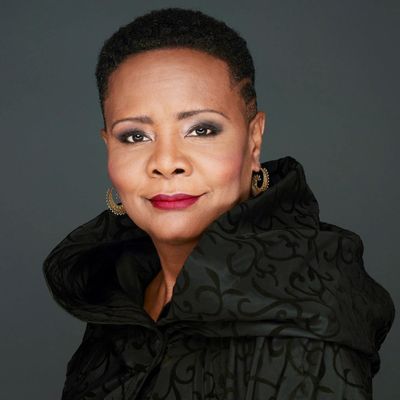
From her Tony Award-winning turn in JELLY’S LAST JAM to her immortal performance in CAROLINE, OR CHANGE, in TV and film, in front of and behind the camera, Tonya Pinkins is an actress, a writer, producer, director, and a fierce, outspoken activist and advocate for so many important causes... Read More
From the show: Broadway Gives Back
Guests
About
From her Tony Award-winning turn in JELLY’S LAST JAM to her immortal performance in CAROLINE, OR CHANGE, in TV and film, in front of and behind the camera, Tonya Pinkins is an actress, a writer, producer, director, and a fierce, outspoken activist and advocate for so many important causes. With her new film, RED PILL, premiering this month, join the Tony Award winner for a thought-provoking discussion on art, activism, and more.
Looking for ways to give back?
Check out the Red Pill trailer, Tonya’s You Can’t Say That podcast, and worthy organizations discussed in this episode:
- Red Pill movie
- You Can’t Say That podcast
- Pan African Film Festival
- Broadway Cares/Equity Fights AIDS
- Theater Resources Unlimited
- TrickleUP
- Color of Change
Connect with Tonya:
- Twitter: @tonyapinkins
- Instagram: @tonyapinkins
Connect with The Broadway Gives Back Podcast:
- Facebook: @broadwaygivesbackpodcast
- Instagram: @broadwaygivesbackpodcast
- Twitter: @broadwaygives
Hosted & Executive Produced by Jan Svendsen and co-produced & edited by Jim Lochner.
A proud member of the Broadway Podcast Network.
Special thanks to Dori Berinstein, Alan Seales, Brittany Bigelow, Katie Rosin, and Yo Nikolova from BPN; Julian Hills from The Bulldog Agency; Eric Becker and Broderick Street Music; the Charity Network; and Glenn Weiss!
Transcript
This transcript was automatically generated and might contain errors.
[0:05] Jan Svendsen: Welcome to the Broadway Gives Back Podcast.
[0:07] Jan Svendsen: I'm your host, Jan Svendsen.
[0:10] Jan Svendsen: This podcast spotlights Broadway actors, shows, and organizations in their pursuit of social impact and philanthropy.
[0:17] Jan Svendsen: Join us as some of the brightest lights on Broadway share their stories about their favorite charities and how they got involved and the people and the causes who benefited from these philanthropic efforts.
[0:54] Jan Svendsen: She is also a fierce, outspoken activist, an advocate for so many important causes. I am so thrilled to have her here today. Tonya, welcome to the Broadway Gives Back Podcast.
[1:05] Tonya Pinkins: Thank you for having me, Jan.
[1:07] Jan Svendsen: So you have your own podcast at the Broadway Podcast Network called You Can't Say That.
[1:13] Tonya Pinkins: Yes, where you have done over 107 episodes so far, which is insane.
[1:19] Tonya Pinkins: I am now on episode 10. So I think I'm gonna need you to mentor me. And maybe after this recording, you can give me some advice.
[1:28] Jan Svendsen: But in the meantime, I did want to talk to you a little bit about your podcast. You use three words to describe your podcast: fierce, unstoppable, provocative. So tell us what you talk about on your podcast and why you chose those particular words to describe either you or the podcast, I'm not sure.
[1:48] Tonya Pinkins: Um, well, what we talk about on my podcast are things that interest me. I'm a very curious person. I love people, and I think that everyone has a really interesting story, and I find that because I really genuinely am interested and I listen to people, people often tell me their truth, and I think that it's rare. And so when people, you know, trust me that I'm not gonna try to shame them and embarrass them, I invite them to come on my podcast and share their truth. So we have some remarkable and difficult conversations. I often don't agree with the people that I have brought on. You know, we have opposing opinions, but we have interesting, respectful conversations, and a lot of what I've done in the last year are conversations related to my movie RED PILL, the red pilling of America, and how we have come to know that the enemy is actually within.
[2:50] Jan Svendsen: So that's a perfect segue. And I'm glad you talked about speaking your truth and being comfortable about with that. So hopefully I can make you comfortable to talk about that as well. But I did want to segue to talk about your new feature film. You are an actor, a screenwriter, producer, and a director for this film, RED PILL. Um, and it sounds like it's so relevant for the current political atmosphere. I watched the trailer last night. It scared me to death, and it also intrigued me. And I kept thinking the film is really like this art message. You know, you're calling it a socio-political horror film.
[3:27] Tonya Pinkins: We are a majority in this country, and we're gonna win the election. Do you know what the red pill is? A red pill is someone who infiltrates a group and then destroys them from the inside.
[3:46] Tonya Pinkins: This place is spooky.
[3:48] Tonya Pinkins: Some people like to live dangerously.
[3:50] Tonya Pinkins: Yes, why are you so jumpy tonight?
[3:53] Tonya Pinkins: You know what, guys? I'm gonna go back tomorrow. Did you hear about the creature woman that attacked a father and son hunting down here?
[4:01] Tonya Pinkins: I don't see the case. This place creeps me out. I think we should call the sheriff's office.
[4:30] Tonya Pinkins: They're after all of us. What do we do, Amelia? We die. But we take some of them with us.
[4:43] Jan Svendsen: So can you just talk to us about how did this project come about? Um, when are we gonna see it? Give us all the scoop.
[4:50] Tonya Pinkins: Absolutely. Um, I made the movie I Wanna See. And as a black woman in America, I think that, you know, Malcolm X said the black woman is the most unprotected, most disrespected, most ignored woman. And that is how I often feel. It doesn't stop me from doing what I want to do, but I wanted to tell a story from my black female point of view. And it's a unique point of view in that we often know exactly what's going on, we know what needs to happen, and everybody's ignoring us and telling us we don't know what we're talking about. So the main character in this film that I play is Cassandra, the mythological woman who is destined to tell the truth and to be ignored. And that is the state that black women are in. So very much a lot of what has come to pass this past year, even including the insurrection, I saw it coming and I made a movie about it.
[5:52] Jan Svendsen: So let's segue here because I think that's so important. The Black Lives Matter movement has even hit Broadway, obviously, and there's some long overdue scrutiny with regard to systemic racism in our industry. And I just wondered what your feelings were regarding Broadway and its past regarding racism and what your hopes are for the future with regard to that, and especially from your point of view, being a woman of color.
[6:19] Tonya Pinkins: Well, you know, I have many opinions. So I think that, you know, when you build something, your house, you get to build your house and do whatever you want to do in your house. So there's a way in which I feel like asking someone to change what they want, that's just not realistic. Like it's mine, it's my money, I'm gonna do what I want with it. I think we have to go further back to see why do only some people have the money. Why do only some people have the ability to build houses where they get to do what they want inside of those houses? And I'm down in Mississippi now working on a new ABC anthology called Women of the Movement, and we're telling the story of Mamie Till, who another black woman who really incited the modern civil rights movement.
And then last night I watched United States versus Billy Holliday. And she too also was a black woman who incited civil rights with her song Strange Fruit, which the US government went out of its way to destroy her career because that song was so provocative. So this is something that black women have been doing since slavery, abolition, suffrage, and yet we're not included in the frame of who the leaders are. And so I think we have to look at how has wealth been distributed in this country. As I said, you know, Color of Change is thinking of trying to help Broadway figure it out. And I said to them, we don't need diversity and inclusiveness. We don't need, we don't, we don't need jobs, we need resources.
[8:08] Tonya Pinkins: And being down here in Mississippi, I was visiting, traveling around, and someone reminded me of Red Summer. And Red Summer is it's something that people may have just heard it, but during 1919, for 26 black cities were burned to the ground, and one of them that I'm very near, Elaine, Arkansas, for one week an armory was opened, and any white citizen could pick up a gun, and for a week they hunted and killed black people, and at the end of that massacre, they put 12 black people on trial and convicted them and sentenced them to death for massacring their own people. This is part of the history of America that isn't told, and so black people know how to build wealth, it's just every single time we have built our own cities with our own wealth, they have been burned to the ground.
Tulsa, Oklahoma, it was bombed to the ground. People talk about the bombing to the ground, but they don't even talk about the fact that then for the next year and a half through a winter in Oklahoma, they were in intern camps, just like the Japanese. And so we have to get back to the founding of this country, which was on the idea that we are leaving England where we're, you know, serfs, and we're gonna let anybody who looks a certain way come to this country, kill off all the people here, and by killing them off, we get to start a new country that's only for people that we deem are white, and that even changed over time because there have been these huge movements between where the poor whites who were who are cracker comes from rich white people calling poor white people crackers, and as the poor whites and the free blacks and the indigenous people, when they began to form a movement, that is when the slave patrols were created, which became our modern day police force because they're like, oh, well, we can tell these white people that they are not suddenly special because they're not black people or indigenous people, and that'll keep them from rising up against us. So we have to get back to that as a basis for the founding of America.
[10:15] Jan Svendsen: Yeah, we have to go all the way back in order to fix things. And I guess it, you know, it makes me think of, you know, particularly with Broadway, if you could wave a magic wand and what changes would you like to see when Broadway reopens? Like, are there specific action steps that you think the industry should be taking? And you talked before about we need resources. What did you mean by that?
[10:40] Tonya Pinkins: Well, um, theater companies that are, you know, Asian American, Latino American, Indigenous American, Black American, they need the money to make the product. Still so much of what is happening is we know that people of color make the culture in America. We make the culture in the world, and yet we don't get access to the wealth that that culture creates that is then sold across the world. So one of my ideas was that since New York is the city of Broadway, maybe we need to have a Broadway theater on every borough. Maybe we need to have a Broadway theater that represents every culture that there is that makes up New York, because New York is really a melting pot city. It's a segregated city still, but that Broadway needs to be just a broader thing than a set of blocks in the middle of Manhattan.
[11:32] Jan Svendsen: I love that. You know, when I worked at the Broadway League, we had this idea that I actually wrote a treatment for called Broadway and the Boroughs. And the idea was literally to do concerts that were open to everybody in the boroughs on a regular ongoing basis to touch people with, you know, with theater and with music and with that art. But I think your idea is I love that idea. I hope somebody's listening to that at the Broadway League.
[11:59] Tonya Pinkins: Yeah, because see, going and doing concerts in the boroughs, it's charitable.
[12:04] Tonya Pinkins: The wealth doesn't come there. It's you're coming in and you're doing some donation. No, no, no. You want to come to New York, you want to see New York. There's a Broadway theater in Queens. Go to Queens, take some of that money and those resources to Queens, where those businesses and the business owners and those families can also benefit from New York City being the home of Broadway.
[12:25] Jan Svendsen: That's a great idea. You said in an interview, something like when you were talking about Black Lives Matter, you said that you support it financially and with your voice. But you said something like your time has sort of almost passed, and that younger people need to build their world now. And so maybe these are some ideas that can lay the foundation for the next generation to take on these issues and hopefully fix them once and for all.
[12:52] Tonya Pinkins: Yeah, I love that. So I did want to go back to this idea. This podcast is about social activism and doing good and being, you know, philanthropic. You, Tanya, happen to be an amazing example of all of this. So I just wondered, like, what motivates you? Why are you so passionate about making the world a better place?
[13:14] Tonya Pinkins: I feel like when I'm giving, it's the time when my life feels most meaningful. I don't—creating and giving are when I feel the most alive. And that's just like a biological sensual thing. When I am in the act of creating, and I create in order to give my understanding to the world. So it's this generative circulation of the energy of life that is what makes this meaningful for me, being in a body. Like, what's the point? Like if I was just doing for myself, it just wouldn't be interesting. I don't have any material needs. I'm grateful to say that, but my life is very simple. When I spend money now to buy things, I'm spending money to support a business, a family, keeping going. I'm spending money to keep circulating the wealth in the world.
I just have always felt that way. And maybe it comes from the fact that when I grew up in Chicago, my family always took in immigrant families, we took in homeless people. So not only was I living with five generations under one roof, we always had some other people who were living in our houses, and we'd be sharing a bed with some people who had come from another country and they needed a place to live. And so I just grew up thinking that's what you do. If you have a little something, you share it with someone else.
[14:48] Jan Svendsen: That's definitely been a theme for the other nine podcasts that I've done before yours that everybody seems to think, you know, that a lot of their giving spirit is in their DNA, but it's something that was modeled for them when they were growing up. So I find that super interesting. Back in November, you received the 2020 Rachel Cruthers Leadership Award from the League of Professional Theater Women. And that award is given to a theater woman who has distinguished herself in exemplary service and sacrifice for a cause. You're only the second person to have received that award. And I just wondered, did you know that? And I just wondered, you know, awards, you've received so many nominations and awards over the years, but I just wondered that particular award, like, did that—what did that mean for you?
[15:36] Tonya Pinkins: That was really special. And you know, getting it in a global pandemic was lovely because I was sitting in my own living room, and there was just, you know, usually from the computer, there's a different energy coming, but there was just all this beautiful people saying wonderful things about me. It was just, it was incredible. And, you know, for the most part, standing up and speaking out, you don't get awards for that. You get labeled difficult and you don't get work. And so it was very special. That's really the only thing I can say because I don't do what I do because of it. And so being acknowledged when you have no expectation of it is just an affirmation that you're on the right path, that you're doing what you're supposed to do. And even if I never got an award, I wouldn't be able to do it any differently.
[16:36] Jan Svendsen: It's interesting because you say you get labeled as difficult, like if you speak out. And hopefully this year everyone is speaking out, or a lot of people are speaking out. So a lot more people are speaking out. So hopefully that label will not be stuck to us, you know, it's to the people who speak out in the future.
[16:54] Tonya Pinkins: I don't think that that's true. I think that the label difficult actually means for people who operate from a capitalist model that I can buy anything. If someone can't be bought, then they're difficult. If my money can't solve it for me, that's a difficulty because there are people who believe that money can solve any problem. So I don't think it's even so much the speaking out because I mean you can buy people silence. And so it's just difficult when money can't solve the problem.
[17:31] Jan Svendsen: Talking about money, you know, obviously we were talking about this before. Resources are so important, fundraising is so important. And also awareness building. You've been participating in lots of events that helped raise money and raise awareness for different causes. And I noticed that you recently returned to your soap opera roots for the ABC Daytime Back on Broadway benefit concert, which raised money and awareness for Broadway Cares/Equity Fights AIDS. I was also learning that your soap opera days weren't necessarily always the best or happy. There were some things that weren't maybe as pleasant. And I just wondered what it was like to revisit your soap days and I guess balancing that with raising money for such an important cause.
[18:20] Tonya Pinkins: You know, I think actors are the most generous people in the world. We are always getting out and giving our talent in order to help other people. And so anytime I can do something for Broadway Cares/Equity Fights AIDS, it is my pleasure. They do incredible work, not only just for people who are actors, for anybody in the industry. And I want to mention something that you may not know that I participated in, which is Trickle Up New York, which is something Taylor Mack was one of the founders of, where we—different performers just created performances or shared performances that we had that no one had ever seen, and we gave them to Trickle Up New York, and then they like allowed people to pay what they wanted to see these performances, and the money was given to artists who were in need right now. So I definitely want to, you know, give a shout out to Trickle Up New York and the work that they were doing providing direct support to artists in need during this pandemic.
[19:18] Jan Svendsen: You know, and what you said is probably the impetus for this podcast is that actors are so philanthropic and they do give up their time and their energy and their sweat equity and their money too. And that is, you know, one of the things that I was thinking about, you know, what could—what would be interesting to talk about? Well, let's talk to people who are, you know, who are artists who make this choice to give their energies to do good, and why do they do it? And so that's really what the basis was for this entire podcast. You're also going to be doing something on February 21st for Theater Resources Unlimited, True Speak. What's that?
[19:57] Tonya Pinkins: Um, really just helping to raise money for them. Bob Ost has an organization that provides training and services, and Bob is always having very, very difficult conversations, and he has difficult conversations with me. And so I think having the conversations is really important. For most people in America, it's uncomfortable just living all the time. And so for the people who are just now starting to feel uncomfortable, I think the more all of us get comfortable being uncomfortable, that's going to go a long way towards making the entire world a better place for all of us.
[20:38] Tonya Pinkins: And I want to say this: there are people in our world who have more money than they could spend in 10 or 20 lifetimes. It's not that the world doesn't have enough resources, it's that people are hoarding those resources. And I had the privilege on my podcast of speaking with Tyson Yankaporta, who is an aboriginal man, and he said it just goes against the law of nature. Nature is about circulation and giving and flowing, but capitalism is about extraction from one place and then stockpiling in another place, and it rots there. So it goes against the natural flow of the circulation of energy in life when anybody's hoarding something.
[21:21] Jan Svendsen: You know, I've been a big fan of yours as an artist and an actor for many years. And what I didn't know when I was, you know, Googling things to prepare for this podcast was that I didn't realize that you were in Sondheim's Merrily We Roll Along in 1981. And I always thought your first show was your Tony Award for Jelly's Last Jam. But there's a whole decade in between there. So, like, what was—first of all, those were two amazing groundbreaking roles and shows that you were in. And what was going on in the 10 years in between?
[21:51] Tonya Pinkins: In the 10 years between Merrily and Jelly, I did All My Children and As the World Turns.
[22:04] Jan Svendsen: Okay.
[22:07] Tonya Pinkins: Yeah.
[22:08] Jan Svendsen: So you were in—so okay. And what about those roles? I mean, those were pretty amazing shows to be part of. Both of those shows.
[22:16] Tonya Pinkins: Well, Merrily, you know, my—the people you dream when you want to be in musical theater, it was Hal Prince and Steve Sondheim. And of course, I would be in the show that sort of broke their relationship for a very long time. But yeah, to come to New York as a 19-year-old in a show with them was, you know, it doesn't get any better than that. People say, How did you get into the theater? Like, my story is just not a normal story.
[22:39] Jan Svendsen: So let's tell your story because I mean some people may know it, but I like—I think it'd be great. You Chicago to New York.
[22:46] Tonya Pinkins: I was at college at Carnegie Mellon, and I was heading to Puerto Rico over my Christmas break, and my elementary school teacher said he had seen a cattle call in one of the Chicago newspapers that Joanna Merlin was coming to town to cast a new Hal Prince Steve Sondheim show. And my teacher implored me to come to skip my vacation and come home to Chicago and do this cattle call, which I thought was ridiculous. There's no way I'm getting a Broadway show from a cattle call. But you know, I listened to my teacher and I came in and did that audition, and Joanna Merlin said we'd like to fly you to New York during this vacation. And so during that Christmas break, I auditioned in Chicago. Then they flew me to New York, auditioned for Hal and Steve.
And at the end of the day, they said we would like to have you come back in about—I guess it would have been about nine months or seven months to do this show. So I went back and finished my first year at Carnegie, knowing that I wouldn't be coming back in the fall because I would be going to Broadway to do Merrily We Roll Along.
[23:48] Jan Svendsen: Wow. So I have to tell you, I just—I had Michael McElroy on last week, Carnegie Mellon, and Judith Light is a very close friend, and she was actually on my very first podcast. And I'm very close with the Carnegie folks because I worked with them when I was working on the Tony Awards, they're a sponsor.
[24:05] Jan Svendsen: Um, we work on the education program together. And um, so I've been talking to uh their dean, and we're gonna try to do a Carnegie sort of podcast get together with all the alums because there's so many of you.
[24:18] Tonya Pinkins: Wow.
[24:29] Jan Svendsen: So you're in good company. Okay. That's so interesting. Um, but then you went on, you've done the wild party. Um, and then my personal favorite, Caroline, or Change. I mean, that was just a life-changing moment for me, for all of us. Um, you know, why do you think that role was so pivotal for so many people? Like what, like it's just, it's in me still, you know. It must be, I don't know, when you're acting, do you keep the roles within you too? Um, but I just think Caroline was so amazing.
[25:05] Tonya Pinkins: Thank you. I think that um the Caroline that we did in New York couldn't have been without George Seawolf. I've seen, you know, many versions of it, and the material in and of itself is quite beautiful. But I think George, George's um guidance for that show made it possible to be as universal and impactful as it was. Um, it started a little tropey, you know. Uh, Tony had written Caroline as illiterate, and George was like, I don't know any illiterate black woman. My mother has three degrees. And so George's um pushing of Tony and Janine to to not just write generic tropey black people. And then I'm a very strong personality. Every time and every place I've ever gone to work, they always applaud me for my strength, and then they get terrified by how strong I am, and they want me to no, no, you're too strong.
No, no, no. Turn it down. And um, you know, George is a strong, powerful person, so he's not in any way intimidated by that. And so this was the first time in my career where I didn't have someone tell me I need to be likable. What I think touched everyone about Caroline is that the pain, the frustration with not being able to be all that she could be is something that every human being knows the truth of. That I was willing to be that naked and vulnerable because I was allowed to be that. Most people don't want to look at it in themselves. They certainly don't want to look at it in anybody else. But George allowed me to do that. And I think that that is something that for people who are willing to be broken open in that way is a transformative thing. It was transformative.
[27:12] Jan Svendsen: Speaking of George, last night we watched Ma Rainey's Black Bottom. And it made me think about George, but it also made me think about August Wilson. And the post office just released their forever stamp with August Wilson. And you were in Radio Golf.
[27:31] Tonya Pinkins: I was also in Piano Lesson before it came to Broadway. So I got to work with August and Lloyd Richards at Yale when they were developing the Piano Lesson.
[27:40] Jan Svendsen: So yeah, by the time I did Radio Golf, both of them were not with us anymore.
[27:45] Tonya Pinkins: Right. That must have been so emotional. But you got the chance to work with them before. I didn't realize that. What was that like?
[27:51] Jan Svendsen: You know, pretty incredible. I mean, I think that Lloyd was definitely for me the best of the August interpreters of that work.
[27:59] Tonya Pinkins: Um, detail, detail. I mean, Lloyd had a sense of detail that was incredible. And you know, August is just a very cool, chill guy. Not a lot of talk, but you know, a poet and the language is unparalleled.
[28:17] Jan Svendsen: So a lot of people listening to this are your fans. And if they're not listening to your podcast, they're probably listening to this one, or they're listening to both, hopefully. Um, and I just wondered, uh, like what, you know, what would you say to people about getting involved? Like, you know, how do you motivate people to take action? So many people I've talked to sit there and say, well, I want to help, or you know, I'll donate a little bit of money here every once a year, you know, I'll donate right before the holidays. Um, you know, I go out and make sandwiches for the homeless, but you know, I just can't commit to doing that every week or whatever. And it's just I find that there's always some excuse. And um, there's first of all, there's so many people that do so much good. So I just want to acknowledge that. But I find a lot of people are looking for inspiration, motivation. And I wondered if you had any words of wisdom to share.
[29:12] Tonya Pinkins: Well, as I said, for me personally, I think that a lot of our fear and shame and insecurity and unhappiness comes from having our attention on ourselves. And I think anytime you can put your attention on someone else and what they might be going through, you're on a path to healing yourself. So you start simple, you know. Who's right there next to you that you can do something for? No questions asked. You know it's needed, you do it. See what it feels like. Because there is something to unconditional giving that I do believe is its own reward. And I don't know that our culture celebrates that or acknowledges that. But if you that I think there was a movie about it, I never saw it. The pay it forward movie.
I think that that started to be sort of trendy tropey, but just doing something for someone where they don't even know your hand is in it, and then sitting back and watching the joy that you can bring into people's lives. What else is there to be alive for? So that's what I'd say. It might be your partner. You leave something and they don't even know how it happened, and you don't take credit for it, or a neighbor, or for me, it is always simple things. Even saying someone's name every time you go somewhere, finding out someone's name and speaking to them, speaking their name to them, asking someone how they're doing, and actually listening to hear what their answer is, and not allowing yourself to do the reflexive, oh, I'm so sorry.
You know, when people tell me a terrible thing, I go, that's terrible. That must feel horrible. And I don't, I don't ever tell people it's gonna get better because you know what? I don't know. And I think that we are all so longing for someone to be with us in an honest way, because Facebook and Twitter and Instagram is all of the, you know, the painted pretend versions of our lives, and we are just longing for a true connection is for me like what art is about, but particularly theater, you know, that feeling of being connected.
[31:38] Jan Svendsen: You said just a minute ago, you said unconditional giving, and I really love that. Um, my mother was a big proponent of unconditional love. And um, I love the idea of combining unconditional love and unconditional giving. I had an experience um last week um where um I do um I do make sandwiches and bag lunches for the homeless um every Sunday. And um we were walking by uh a store the other day, and um somebody was, you know, begging for money, and so somebody else put money in their, you know, in their little cup. And another woman stopped and said, Don't do that. You know, they're just gonna buy, you know, drugs or alcohol. It's better to give food. You're right in front of a restaurant, give food.
And then this other person comes up and starts saying, Wait a minute, who are you to say what they should be, you know, they should be using the money for? You know, if you're giving the money, you should be giving it unconditionally. And as you were talking, it made me think about that, and it's a sign of respect for you know, for that person that you were giving the money to as well. Um, and I just I love that whole idea of the unconditional giving.
[32:48] Tonya Pinkins: Yeah, I have to say that I am aware that when I am giving, I'm giving for myself. I'm giving because it makes me feel good. I'm not giving for that the other person. I feel good that I gave. What they're gonna do with it is not my business. And it's it's very colonialist, paternalistic to think that you can tell someone how to spend their money. It's also uh disrespectful in the sense that you know what? Some people are in so much pain that they need some drugs. And we wouldn't have the oxytocin, uh, the oxycontin, you know, problem that we have if people weren't in a lot of pain. So um, you know, a bit of compassion that, you know, everybody's not in the same place that you, and maybe your drug is uh cigarettes, or maybe your drug is candy or overeating or whatever it is. We all get in places of pain and we need some comfort. Who or is anyone to judge how someone comforts themselves when they're in pain?
[33:46] Jan Svendsen: Yeah, I agree. All right, I'm gonna, I'm gonna end this with unconditional love and unconditional giving and um and actually to use unconditional gratitude for everything that you have shared with us about your it's through your art, but also through your activism. So thank you.
[34:04] Tonya Pinkins: I want to say, because you ended on gratitude, that gratitude to me is the most powerful prayer that exists. That if you can be in a state of gratitude for everything that comes your way, no matter what the label is you would put on it, I think that gratitude brings abundance into your life. You know, to get biblical, I think it's how Jesus the Christ multiplied the fishes and the loaves. He said, I'm just so thankful, and somehow there was enough. We don't know how many they didn't tell us how many were made. We just know that everybody was fed. And that might just mean that everybody was fed because we shared and everybody got a little something. And everybody knowing that everybody had a little something was enough for everybody. So, you know, thank you for bringing up gratitude because it is it is a powerful prayer. And I'm gonna put an exclamation mark at the end of that and say thank you, and I am grateful.
[35:00] Jan Svendsen: Thanks for listening to this episode of Broadway Gives Back. Broadway Gives Back is part of the Broadway Podcast Network, produced by Dori Berinstein and Alan Seales with Brittany Bigelow, and music by Eric Becker at Broderick Street Music. Special thanks to my producing partner, writer, and friend, Jim Lochner, and to Katie and Yo at BPN, Julian Hills from the Bulldog Agency, the Charity Network, and to my fiance, Glenn Weiss, who is always my consultant. If you like what you hear, don't forget to subscribe and rate this podcast wherever you stream your podcasts. You can also follow Broadway Gives Back on Facebook and Instagram at Broadway GivesBack Podcast and on Twitter at Broadway Gives. To learn more, visit bpn.fm slash Broadway Givesback.
© Broadway Podcast Network, All Rights Reserved