

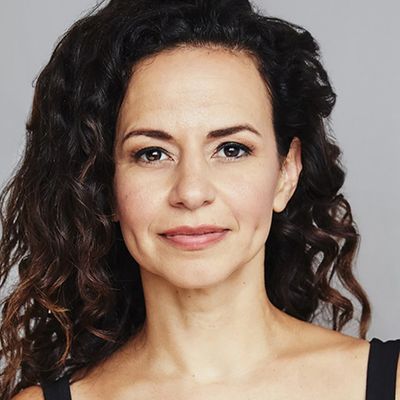
From Nina in In the Heights , Angelica in Hamilton, Elphaba in Wicked, Amneris in Aida, and many more, Mandy Gonzalez has carved out her own unique niche on Broadway and in music, TV, and film... Read More
From the show: Broadway Gives Back
Guests
Featured Shows


About
From Nina in In the Heights , Angelica in Hamilton, Elphaba in Wicked, Amneris in Aida, and many more, Mandy Gonzalez has carved out her own unique niche on Broadway and in music, TV, and film. She’s as passionate onstage as she is off, lending her vocal talents, time, and energy in support of a number of important causes. Join this triple threat as she talks about surviving breast cancer, her multifaceted career, and much more.
Looking for ways to give back?
Learn more about the worthy organizations discussed in this episode:
Connect with Mandy:
- Website: MandyGonzalez.com
- Facebook: @mandygonzalez22
- Twitter: @_mandygonzalez
- Instagram: @mandy.gonzalez
- Fearless book
- #FEARLESSSQUAD
Connect with The Broadway Gives Back Podcast:
- Facebook: @broadwaygivesbackpodcast
- Instagram: @broadwaygivesbackpodcast
- Twitter: @broadwaygives
Hosted & Executive Produced by Jan Svendsen and co-produced & edited by Jim Lochner.
A proud member of the Broadway Podcast Network.
Special thanks to Dori Berinstein, Alan Seales, Brittany Bigelow, Katie Rosin, and Yo Nikolova from BPN; Julian Hills from The Bulldog Agency; Eric Becker and Broderick Street Music; the Charity Network; and Glenn Weiss!
Transcript
This transcript was automatically generated and might contain errors.
[0:05] Jan Svendsen: Welcome to the Broadway Gives Back Podcast.
[0:07] Jan Svendsen: I'm your host, Jan Svendsen.
[0:10] Jan Svendsen: This podcast spotlights Broadway actors, shows, and organizations in their pursuit of social impact and philanthropy.
[0:17] Jan Svendsen: Join us as some of the brightest lights on Broadway share their stories about their favorite charities and how they got involved and the people and the causes who benefited from these philanthropic efforts.
[0:33] Jan Svendsen: From Nina in In the Heights, Angelica from Hamilton, Elphaba in Wicked, and Amneris in Aida, and many more, Mandy Gonzalez has carved out her own unique niche on Broadway and in music, television, and film.
[0:47] Jan Svendsen: She's as passionate on stage as she is off, lending her vocal talents, her time, her energy in support of a number of really important causes.
[0:56] Jan Svendsen: I've gotten to know Mandy from our mutual friend Lin-Manuel Miranda, and we've worked together on some televised concerts.
[1:01] Jan Svendsen: I remember the Tony Awards preview show and Viva Broadway.
[1:06] Jan Svendsen: She is a fearless and beautiful human inside and out.
[1:09] Jan Svendsen: Mandy, welcome to the Broadway Gives Back Podcast.
[1:12] Mandy Gonzalez: Oh, thank you for that introduction, Jan. I'm so thrilled to be here.
[1:16] Mandy Gonzalez: Oh, I'm so happy to talk to you. We have not talked in the last year.
[1:20] Mandy Gonzalez: And I'm just sitting here as I was preparing for this, I was thinking, well, 2020's been a shit show for everybody, but particularly difficult for you.
[1:28] Mandy Gonzalez: And I mean, a cancer diagnosis. I'm so thankful that you beat it.
[1:31] Mandy Gonzalez: Um, but cancer, a pandemic, a Broadway shutdown where you were starring in Hamilton as Angelica and shut down in March.
[1:41] Mandy Gonzalez: Dealing with virtual schooling for your daughter, political and social upheaval. What has this last year been like for you? And are you okay?
[1:49] Mandy Gonzalez: Yes. I'm okay. I think this last year was a lot, and I think for everybody, but for me, I was diagnosed with breast cancer um stage one in October of 2019, and so everything started very fast.
[2:14] Mandy Gonzalez: When you get a diagnosis like that, it was after my first mammogram, and I don't have breast cancer in my family, so it was a real surprise.
[2:23] Mandy Gonzalez: Um, and you go, everything happens like I said, really fast. And so I was scheduled for surgery uh in November, November 17th.
[2:33] Mandy Gonzalez: And through all this, I was trying to kind of maintain my normalcy, which is eight shows a week.
[2:40] Mandy Gonzalez: And I just said, you know, let's have can I have surgery on my day off so that way, you know, I'll have an easier time to recover and get back on stage.
[2:48] Mandy Gonzalez: It was just, you know, the craziness of loving what you do for a living, um, and just wanting the show to go on.
[2:57] Mandy Gonzalez: And I remember having my surgery being off for a week. I had a lumpectomy and being off for a week after that, and then going back to the show and not being able to raise my arm for the work pose.
[3:11] Mandy Gonzalez: And being very embarrassed, I hadn't told a lot of people that what I was going through at that time.
[3:17] Mandy Gonzalez: And I remember telling my stage manager, Amber, I can't lift my arm. And she goes, That's okay. You can lift it as much as you can, and then you'll get there. And I was like, Okay, I'll get there.
[3:27] Mandy Gonzalez: And then, you know, going and starting chemotherapy. So it was just kind of getting everybody in my family prepped for that and getting myself prepped for that, and beginning that, and what you know that is which is really hard.
[3:47] Mandy Gonzalez: And then in I think it was like the end of February or beginning of March, um, my parents came out to see me to help me with my daughter during that time.
[3:59] Mandy Gonzalez: And then we started to hear rumblings at the hospital about a pandemic and you know this coronavirus at the time that's what they were calling it but we didn't know what it was and you know not to be too alarmed they were gonna have a meeting at the hospital and then at the show um starting to hear you know you no longer could go have visitors backstage you no longer could go to the stage door starting to be um cautious and then to the next week my parents leave um and I look at them and I'm like we don't know what's happening when am I gonna see you again and then all of a sudden it was like the show's closed and the world stopped and yet I had to keep going for treatment.
[4:49] Mandy Gonzalez: Oh wow I had to find a way to get into New York to go to treatment and at that time you know my daughter couldn't go to school so and we couldn't use a babysitter because we didn't know what was going on.
[5:02] Mandy Gonzalez: So they had to come with me to treatment and that was something that I had wanted to protect from her uh protect her from seeing me like that and um my husband made the best of it and we made it a family trip, and then from there that happened in March, uh, things got really difficult, and I could no longer have anybody in the room with me.
[5:24] Mandy Gonzalez: And I could I had a really hard time getting into New York. But luckily, my oncologist was at Memorial Sloan Kettering and Memorial Sloan has um a facility in New Jersey.
[5:35] Mandy Gonzalez: And so they decided to move me to New Jersey. And instead of being um with somebody that I love going through this, um, I was by myself.
[5:47] Mandy Gonzalez: And my husband was waiting in the parking lot with our daughter for those five hours that I had to have treatment.
[5:54] Mandy Gonzalez: Um, but I made it. I made it through that, and I was so, you know, it's like the little things that you get really bummed about.
[6:03] Mandy Gonzalez: Like I was like, we're gonna ring the bell together, and it's gonna be this big moment, and you know, nobody wanted to get near you, or you know, you were in a full mask and gear, and but you know, I'm so thankful to um the nurses there because after I finished my chemotherapy, they all came out, it was raining, and they all came out and started to applaud.
[6:25] Mandy Gonzalez: And you know, I guess being the actor that I am, I needed that, and so I just felt like yes, and then my husband was there with the sign, and it was like we did do it together, and then I had to start radiation, it's like it never ended.
[6:42] Mandy Gonzalez: But the thing was, um, the thing that I took away from this time, you know, during my beginnings of chemotherapy, I still kept trying to go and do the show, and you know, I would have really bad days, and I had to allow myself to take breaks.
[6:59] Mandy Gonzalez: So I was doing about five shows a week, but I didn't realize until I stopped how much I needed to stop and just go through what I needed to go through and um and just be on this journey, you know.
[7:14] Mandy Gonzalez: So you were there was an event, it was the breast cancer research foundation called Hot Pink Evening.
[7:21] Mandy Gonzalez: Yes. And you, I'm gonna quote what you said at that event. And I'd love to hear you comment about this.
[7:27] Mandy Gonzalez: You said hi, I'm Mandy Gonzalez, I'm a breast cancer survivor, but I'm so much more. I'm a mother, I'm a wife, I'm an actor, I'm a daughter, I'm a sister, I'm a friend, and I'm the founder of the Fearless Squad.
[7:39] Mandy Gonzalez: When I was diagnosed with breast cancer in November, my world turned upside down, and I learned that we can not only survive breast cancer, but we can thrive.
[7:47] Mandy Gonzalez: Yeah. So let's talk a little bit about. Well, let's talk about the Fearless Squad.
[7:53] Mandy Gonzalez: Okay. Well, you know, I created the Fearless Squad almost four years ago. And I started the Fearless Squad, hashtag Fearless Squad because um I was getting a lot of you when I first started on Broadway, people would write you letters.
[8:09] Mandy Gonzalez: Do you remember those? They would write you letters and it would take time, and then you would write them back. But now everything is so immediate.
[8:18] Mandy Gonzalez: And when I started Hamilton, you know, Hamilton is such a juggernaut, and it brings so many people to you that I had so many young people that were writing me and feeling so alone, like they didn't belong, and these messages that they would send me, I just my heart just poured out to them.
[8:37] Mandy Gonzalez: And I've been so blessed in my own life to have a Fearless Squad that I could count on. But I thought, if you don't have a Fearless Squad, you can just be part of mine.
[8:45] Mandy Gonzalez: And I put it out on social media, and I had no idea that it would become a movement that would, you know, start to bring in thousands of people from all over the world that had this connection of and had this need of wanting to belong.
[8:45] Mandy Gonzalez: And I had no idea that when I created this Fearless Squad that I would be the one that would need it the most at a certain point in my life, because I've had a lot of people from the squad that have reached out to me that are going through a lot of different things.
[9:19] Mandy Gonzalez: Um, a lot of young people going through cancer, um, their parents going through cancer or an illness and feeling like they needed support.
[9:29] Mandy Gonzalez: And so when I did finally come out and talk about um my diagnosis, I think I came out in January.
[9:38] Mandy Gonzalez: Um, it was such a relief. I was so scared to do that. And then it felt like such a relief because they were right there for me.
[9:46] Mandy Gonzalez: I had so many messages of support, not only from my Broadway community, but from my Fearless Squad. And uh I really felt like I was no longer alone.
[9:56] Mandy Gonzalez: And now it continues with so many uh people that I've met along the way on my journey, you know. When I said those things, I'm a breast cancer survivor, thriver, whatever you want to say.
[10:08] Mandy Gonzalez: Um, I but I'm so much more. I never wanted this to define who I was, you know, because and I think we all feel like that when we're going through a diagnosis of some kind of illness where we we have this, but we're also this and this and this and this, and it doesn't life doesn't stop because you you get diagnosed with um breast cancer.
[10:32] Mandy Gonzalez: In fact, it keeps going like even more because you have all these other things that you have to deal with.
[10:37] Mandy Gonzalez: So I wanted people to um to be able to see themselves and I guess a little bit of my story. I hope they do.
[10:45] Mandy Gonzalez: And I know that uh through other survivors and thrivers that I've met, they've now also become a part of uh the Fearless Squad. So that makes me so happy.
[10:57] Mandy Gonzalez: It's so awesome. Laura Benanti did a performance of You'll Never Walk Alone from Carousel for you that night.
[11:03] Mandy Gonzalez: And she said, You were the bravest, kindest, and most selfless person. And that's so true.
[11:08] Mandy Gonzalez: And I think the whole concept of the Fearless Squad is just an example of that. You know, you've given so much to so many people.
[11:16] Mandy Gonzalez: And I think you've also shown people from your own example that you know bad shit can happen, but good shit can come out of the bad shit.
[11:24] Mandy Gonzalez: You know what I mean? And the whole thriving part really comes out of that. And um, I think that's a really important lesson for people to learn.
[11:31] Mandy Gonzalez: And you've demonstrated it so beautifully, and I'm sure you've got good days and bad days still, and then you can rely on you know your Fearless family to help you because we're all in it together, right?
[11:43] Mandy Gonzalez: Yeah, you know, I've learned so much um from my life in the theater. But one of the things I've learned is that um, you know, because you do eight shows a week, you want every show to be perfect, okay.
[11:55] Mandy Gonzalez: But that's just not possible. You may have one show where you feel like, oh, it's 100% my voice, and I felt like I was just one with the character and with the fellow actors, and then there's those other shows where you're sick or something happens.
[12:11] Mandy Gonzalez: But uh, I've learned that there's perfection in the imperfection too. You can learn things from those moments where it's not uh at all what you expected.
[12:22] Mandy Gonzalez: And I think that I've brought that into my own life, and especially throughout this past year, I've learned that there are perfect moments in the imperfection.
[12:33] Mandy Gonzalez: So and I've tried to hold on to that, you know.
[12:37] Jan Svendsen: Yeah, I think that this past year, if there's anything, it's about just gratitude, right? And being grateful for the even the things we have, and every day just trying to be, you know, take from an actor's point of view, even though I'm not one, but being in the moment, being present and just um connecting with it's the hardest thing.
[12:57] Mandy Gonzalez: It really is. I I think that it's something that I have to practice on a daily basis. And I'm so lucky because we have this incredible child who reminds us of that every day, you know.
[13:12] Mandy Gonzalez: She's nine, and it's like you could be having the worst possible day, but something happens for her, and it's like in the moment, and it becomes your whole world.
[13:21] Mandy Gonzalez: So I feel so lucky that I feel so lucky that I made it so that I have more time with her, you know.
[13:28] Jan Svendsen: That's my most uh that's what I'm most grateful for.
[13:32] Mandy Gonzalez: I totally understand having three daughters, yes.
[13:36] Jan Svendsen: Although much older and not exactly every moment is perfect, you know.
[13:41] Mandy Gonzalez: Yes, I get it. But you know, the other thing I was thinking about um that kind of connects us in a way, you just took part in um the 18 voices, which was the liberation day readings for of young writers from their diary from the Holocaust as part of the International Holocaust Remembrance Day, and it was the day that Auschwitz was liberated because I think it was the 76th anniversary.
[14:04] Mandy Gonzalez: So I know you're a little bit of a mutt, you're half Latina and half Jewish, yes.
[14:10] Jan Svendsen: Right. And yeah, I'm Jewish and my family are Holocaust survivors. So I could really relate to that and um you know talk about sort of taking some good out of some bad um things that happen. But what um you know how did you become involved with that cause and what does it mean to you personally?
[14:27] Mandy Gonzalez: Well you know I started this program uh with the JCC after my diagnosis after really getting through chemo um and we started a program that happens now monthly on a Monday every month and it's a cancer cares program and I didn't realize that the JCC offers free um cancer care for people going through cancer or their families and it's free classes like dance classes, singing, um painting, writing and I I we put together this this show called Broadway's best for breast cancer and I I bring some of my friends on and we do a couple Broadway songs for um for people that are going through this. And the producer of that show told me uh about this project and she wanted to know if I wanted to be a part of it and I said absolutely as a lot of people don't know you know I am Mexican American but I'm also Jewish.
I've had people throughout my life go Gonzalez Jewish like what is that um but yeah it's part of me it's who I am and I remember my Bubby you know my my great grandparents came over um came to this country in the early 1900s and but their family did not they were they stayed in Poland. And so I remember my grandmother telling me stories about uh she and her mother would put together boxes of clothes um and send back to Poland every month during the war. And they never heard back from anybody, but they kept doing it because that's what you do. And so I felt it was so wonderful to tell these incredible stories from young people that were going through this because I think about you know young people right now and and what they're going through and how this time is affecting them.
It's it's so difficult. And so uh the 18 voices, I I got to tell two stories. Um got to be a vessel for two beautiful stories, and one was about a young girl who was about 12 or 13 and couldn't fit in her dresses and she didn't want to wear this one dress because it didn't fit her anymore. But you know, they were in um the ghetto, the Warsaw ghetto. And so, you know, uh that song really made me think of my grandmother and made me think of her and when she was young and those dresses she would send to everybody, and uh so it it was a wonderful and beautiful connection. But uh I'm so glad that those stories were told. It was so important.
[17:03] Mandy Gonzalez: I just it's funny we're talking about this, but I just recently found letters that my grandfather, who was in Vienna, um wrote to his sister who had escaped to New York in 1939. Um, ultimately he was killed in a concentration camp. But um, he wrote, I guess like 50 letters in a period of like nine months, and we had them all translated from German to English, so I was able to read them recently. And they're just it was so uh it was just so moving and so incredible. But I found before I even found those letters, I've been reading, you know, during this pandemic, for some reason I've been focused on the Holocaust. So I've been reading all these books and listening to all these audiobooks about the Holocaust. And somehow I think it's helped give me some perspective. Um, like if they went through that, we can get through this kind of thing.
[17:52] Jan Svendsen: Yeah.
[17:53] Mandy Gonzalez: I remember um when I first uh came out with my diagnosis, a really good friend of mine, she gave me a book called The Choice, um, which is a Holocaust like memoir. Um, and I felt at the time like, why would she give me this book? Like, I don't know about if I want to read this, I want to read things that are gonna just uplift and you know, but it was the best book I could have gotten because it was so inspiring and so uplifting. And I think it it just reminds me of the human spirit and what is possible, you know, when you go through um times of angst, times of just horrible times and how you get through it and how you keep going. And I think that I carry that story and stories that I've heard throughout my life with me, you know.
[18:45] Jan Svendsen: I think that's right. I think that we're so somebody said early on during the pandemic that think back on your own family's history and all they've gone through and the resiliency that they've had. And I think that's helped me a lot just getting through the last year about my strong, particularly the strong women in my family that um you know live through so much um tragedy.
[19:06] Mandy Gonzalez: Yeah. Absolutely. Well, speaking of tragedy, then it leads to me to think of a little bit about empathy. And you also performed at the empathy concert.
[19:15] Jan Svendsen: Yes. Um how did that all come about and when was when was that anyway?
[19:18] Mandy Gonzalez: Oh gosh, that was just this past week. You know, I did another one of uh these concerts. My my dear friend and Broadway actor Telly Leong had contacted me and he puts together these uh concerts with his friend uh Elliot Maisie. And it's really beautiful. It connects um Broadway performers with people in um the business industry, like all different industries, really. And we we talk about just what's going on in the world, and then we sing, and I tell you, it feels so good to sing right now. Uh, I tell young people that I that I work with, students that I do master classes with, but you know, it's important to find your safe space to sing because I don't know about you if if you sang when you were a kid or did something that my brother and sister, it was like I was just such a weirdo, you know, because I just love to sing out loud and I loved Ethel Merman.
And you know, I just wanted to sing all the time. And so we had rules in my house, which is um, you know, no singing at the table, no singing after this time. And so I want kids to know like you gotta find that space where you can sing. And these empathy concerts or any concerts that I do right now, I always just say, Hi neighbors, because if you've heard me sing, like you're gonna hear my voice. But it's so freeing. Um, the thing I miss the most is being able to collaborate with other artists because of um how things are uh virtually. There's no way to really sing live. I mean, there are ways, but it's very difficult to sing live with the with an accompanist with a you know, with a piano player with a bass line, and you know, I miss I miss that so much, you know.
[21:04] Jan Svendsen: So do you sing every day?
[21:05] Mandy Gonzalez: I sing every day.
[21:06] Jan Svendsen: Yeah.
[21:07] Mandy Gonzalez: Sing just walking around the house.
[21:08] Jan Svendsen: Oh, I'm just doing doing the dishes.
[21:09] Mandy Gonzalez: Yeah, my husband and daughter are like, oh, you know, but yeah, I sing all the time. And my daughter sings all the time. I mean, her stuff, she's very into um Joan Jett. And uh Yeah, she's she's started to learn how to play the electric guitar during this uh pandemic time. That's been her uh along with dolls and and things like that. That's been her uh her love. But uh we sing all the time. Even my husband sings, which you know, sometimes it's okay and sometimes it's but he's a painter. So um there's a lot of creating always going on in my house.
[21:48] Jan Svendsen: That's well, especially during this time, I probably that's just a good outlet for all of you, right?
[21:53] Mandy Gonzalez: Absolutely. I mean, there's not a notepad. I always buy notepads. Um I order them online, or if I get a moment to go to Target, it uh I go and do that, but there's not a notepad that stays clear in my house. It's constantly filled. I mean, I'm sure you have the same thing. It's like constantly filled with ideas, and you know, I I never throw anything away because it could be something, you know. Who knows what's going to be?
[22:17] Jan Svendsen: So other than singing, one of the things that um I've noticed when I talk to some of the guests is and and for me it was definitely true, um, people are very influenced by the way they've grown up as far as their philanthropy and their social activism. You obviously are very, you know, you're a social activist, you're a philanthropist, you you know, give so much of your your time, your energy to um to important causes. So did you grow up that way? Did your parents do that? And same part B to that question, I guess, is are you how do you model that?
[22:49] Mandy Gonzalez: Well, you are modeling it for your daughter, but do you actually have like do you have her doing anything or does she see you doing it? Do you have conversations about cause and how important it is to be?
[23:00] Absolutely. Um, you know, she's a a Girl Scout, and that has continued throughout the virtual uh realm. This for Valentine's Day, she's made um, she and her troop have made Valentine's for uh a local senior center uh that uh somebody is going to drop off to them. Uh so she's very aware of it.
[23:21] Jan Svendsen: Okay, wait, quick quick question about the Girl Scout thing. Is she selling cookies?
[23:25] Mandy Gonzalez: Yes, she but the it's our I'll send you, I'll send you the link. I want to sell it just not going uh door to door.
[23:33] Jan Svendsen: Right. Like they have digital cookie now.
[23:37] Mandy Gonzalez: Okay, perfect. Yes, she's got it all. But um, but yeah, I think I I've always had I I think that that's a big superpower that I have is my empathy, and I definitely learned that from my parents. You know, I come from a very hardworking family. Um my father grew up uh traveling between Mexico and uh America with his parents, you know, they were they would travel and follow the crop. They were farm workers, and so they would migrate along with the crop, and they ended up uh in a small town in California because my my Aulito got a job as a foreman. And I think growing up in two different worlds, you know, my parents met as pen pals. Uh my father was drafted uh to the Vietnam War when he was 18.
My mom, I think a lot of my empathy comes from my mom, but my mom wanted to join the Peace Corps, and her parents were like, absolutely not. So she did the next best thing, which was um a pen pal program, and she wrote to soldiers that maybe didn't have anybody to write to them. And my father, like I said, his family, everybody was working. My dad, um, growing up, he would work in the fields in the morning, go to school, come back and continue working. My abuelita, she would get up, she would make all the food um for everybody, and then also go work in the field. And so I think seeing that from a very young age, that didn't stop when I was a kid, you know, they still did that work. And so my parents met as pen pals, and um I was really brought into these two different worlds, you know, um, but they were so similar in so many ways.
But seeing how hard um my father family, my father's family worked, I always felt like um we always knew that uh there was more we could do, you know. Uh there was always toys we were bringing, there was always clothes, nothing ever went to waste in my family. I think it's and I think it's from both sides. I think that my my grandparents were from the depression era, and so nothing is wasted. And I think that whatever you have, if you have enough, you give to somebody else. So I think that that started from a very, very young age, just seeing what was around me. You know, what my my abuelos, what they had was the fruit from the farm. And if they had enough or extra, they would give it to us.
And that was always one of my favorite things because I mean the fruit from the farm was incredible. But it would be maybe the fruit that fell on the ground, or you know, it wasn't perfect. It was the peaches and the tangerines, and they picked all of it, you know, the grapes, everything. So I learned that everything is is precious.
[26:50] Jan Svendsen: Okay. Yeah, I have to I got choked up here a moment. It's interesting though, because you're right, like the the Latina side of you and the Jewish side of you, there really is, it's so similar in some ways. It's tradition and family, right? And the same values.
[27:05] Mandy Gonzalez: Yeah, absolutely. And I think that if you I don't know, if you're lucky, you have um for me, I I had such an incredible uh grandmother. Uh I had a Bubby and I had an Abuita that were just very strong, strong women. And uh as a young girl myself watching them, it was just I learned so much of uh what it takes, you know, to be fearless.
[27:36] Jan Svendsen: To be fearless, absolutely. So speaking of which, um, you wrote a book called Fearless.
[27:41] Mandy Gonzalez: I did.
[27:43] Jan Svendsen: So wait, when is that coming out?
[27:45] Mandy Gonzalez: So the book is gonna be launched um by Simon and Schuster on April 6th. Um, I'm so beyond excited. It's a my first middle grade novel.
[27:56] Mandy Gonzalez: I am writing actually a Fearless series. So during this pandemic, I've been writing my second book, which will be coming out in the spring of 2022. But I wanted to write stories, you know, after I created this Fearless squad and I started to learn so much more about people, I started to think about different stories that I wanted that I would want to see and that I wanted to see as a young person. You know, I started writing, I've always been writing, but I started writing a lot more when my daughter was born. I started to create these different characters because I couldn't get a job. So I was home. And so I was just, I would create stories and characters that I would want to see. And so I wanted those characters kind of stayed with me.
And as I was creating stories for my Fearless squad, this character Monica Garcia from Readley, California, where my father grew up, came to me. And, you know, as a kid, I didn't know how to get to Broadway. You know, I was from a small town. No, everybody just kind of worked hard and survived. And, you know, I didn't know what to do, but I had this incredible grandma who had loved musicals and Broadway. And so I created this story around Monica Garcia. She's Mexican American and she looks like me. And she has a dream of going to Broadway. And so this first book follows her journey from California all the way to opening night on Broadway, and she takes our Aurita with her. And so it has been such an incredible journey writing this story.
I would say for the past nine years, but you know, doing rewrites and all these things for the past three years. So I just can't wait for people to meet these incredible characters and along the way she creates a Fearless squad and they go on adventures in New York City, which is the place, you know, my Emerald City, the place I always wanted to go and feel like I belonged. I always felt that New York was the place that allowed me to feel that way.
[30:22] Jan Svendsen: I know I miss New York right now.
[30:24] Mandy Gonzalez: So I know me too. You know, a lot of people feel like there, first of all, there's so many words for being philanthropic or supporting causes and, you know, social activism, and there's a lot going on. And, you know, people they always ask me, like, how can I get involved? What can I do? I can't do anything, you know, I don't have this or I don't have that. What would you say to like your Fearless squad about being socially engaged or being, you know, philanthropic or charitable?
[30:54] Mandy Gonzalez: I would say the same thing. We all have this part of us that feels for other people that wants to help. And I have a lot of young people that come to me like after they've gone to school and they say, Well, how do I get auditions? Like, how do I do that? And I said, Well, are you getting the trade papers? Are you looking out? I mean, now they don't have to do that because they have it all on social media on virtual. But I asked them, Well, are you doing that? And they say no. And I said, Well, that's a place to start. So if people feel like they don't have a place to start, it's like, okay, well, are you connecting with your community? How do I do that? Well, every community has an Instagram page or has a Facebook page that says, we need this, you know, not being able to work during this time at my regular job has been very hard, but it doesn't mean that I don't want to help.
I don't want to put myself out there. And so I do have friends that I've found that are collecting packaged foods and canned goods for other families that are in a place that needs more help, you know, at Christmas time. What does your community need? Look, my at for Girl Scouts, you know, we had to find what does our community need? Man, seniors aren't gonna be able to see their grandkids for this holiday, for any holiday. Wouldn't they love a card that just said, I love you, I'm thinking about you, you know? It doesn't, you don't have to have a lot of money in order to make a difference. It just starts with what's inside, you know, and I would say, I would say that don't feel because you don't have a lot of money that you can't make a difference in somebody else's life. You know, it just starts with, like my mom, it just starts with a letter sometimes.
[32:45] Jan Svendsen: Oh, yeah. There's one question that I've been thinking about and I've asked a few of my guests, and I don't really know the answer to the question myself, but if you could sort of imagine when Broadway comes back, what changes would you want to see when it reopens? Like what would be your perfect Broadway? Like what would happen now that hasn't happened in the past?
[33:15] Mandy Gonzalez: Wow, that's a great question, Jan. One thing that I would love is more bathrooms for women backstage. Also in the audience, please, in the house. Because right now we have one stall for the entire cast downstairs for the women. The men have a couple stalls, and I think that that's really unfair because when the theaters were built, it was more men working at the theater, and now there's just as many women, and I think that that needs to change.
[33:48] Jan Svendsen: Well, to that point, I really hope all the theater owners are doing some, you know, things right now to enhance the theater experience going experience.
[33:55] Mandy Gonzalez: But I hope so, especially with cleanliness and things like that. Like we need at least two. Come on. And the next thing I would just love to see, you know, I've been so blessed to work with incredible producers who have taken chances on so many people to tell stories that have really changed my life, you know. Seeing Rent when I was in high school on the Tony Awards, you know, and seeing somebody like Daphne Rubin Vega and Adina Menzel who look like me and feeling like I can do this, like there's a place for me. You know, and then being able to be a part of In the Heights and Hamilton. I would love to just see more chances taken on writers of color. I think that we need to be on the stage, but also behind the scenes as well. And I know things are changing and we will get there, but I think that this, I hope that this definitely has shined a light on stories that need to be told because it's very important to move forward in that way.
[35:15] Jan Svendsen: I yeah, I completely agree. A lot of people have said the same thing, you know. I think that again, out of bad can come good, and hopefully there'll be positive changes in theater going.
[35:25] Mandy Gonzalez: Absolutely, and I think, you know, one of my favorite things has been to do student matinees, you know. And that started with Lynn Manuel and doing that at In the Heights. And, you know, before that, we didn't do that at any of the shows that I was a part of. So I would love to also see that just more students being able to come and see a show, and whether it's the hit show or the not hit show, like so they know the difference and they because there's nothing like having students in the audience, they are so honest. I remember when we had students during In the Heights off Broadway, and at that time, you know, we had people that were coming to see us, but we were still, you know, just trying to get people in the seats, you know.
I remember Chris Jackson and Lynn Manuel and I like going to these different places, singing their singing songs, going please come see our show. And, but then you know, the students would come and it was like their story. They got it. And we were like, this is it. If we don't do another show, like this was such a great experience. And so I think that's what the theater has to be about, about giving back and bringing young people in, you know, they deserve it too. And hopefully with this new administration, the arts will be funded better and more people will be able to come to theater and it's just that inauguration. I mean, you know, I love seeing you on the video, and it was so funny because my husband and I were like, Oh, who directed this? It was so well produced and so well done. You know, and then I saw your face and go, I know who did it. Like so great.
[37:05] Mandy Gonzalez: But you know, when I got the call from Seth Rudetsky, if I wanted to be part of this song that they were gonna do for the inauguration, I had no idea that it was actually gonna be on CNN or anything like that. But the fact that we were included, you know, the fact that Lynn Manuel was up there, you know, representing and I just felt like, gosh, Broadway, it's so nice to be included, especially during this time because we're here. And I think a lot of people forget that when they talk about New York and they say, oh, it's a ghost town, Broadway's a ghost town. It's like, no, we're here. And we are have been performing virtually and we've been doing what we can do, you know, don't count us out. But it made me feel so hopeful, Jan, for the future.
[37:55] Jan Svendsen: Yeah, I think the inauguration, well, obviously I'm a little biased here on many levels, but yeah, I feel like I don't have to watch the news as compulsively as I did because I feel a little more relaxed, you know. Like I don't need to, you know, just sit there watching CNN all day now.
[38:12] Mandy Gonzalez: Exactly. Trust, I trust the people in power, but yeah, you know, but that said, I think it goes back to the whole idea of arts education and you know, it's such an important, such an important thing. And you know, as a non-performer, I can say that I grew up with a mother who took me to all kinds of cultural events and to theater. Growing up in LA, we went, you know, downtown to the music center, and that's where I saw my first Broadway show, touring show. And it changed my life in a different way. Like, not that I wanted to be on that stage because I knew that wasn't gonna happen. But it, you know, it's just it became part of the DNA that I, that was a bit that it made me, it helped form who I was.
And there's so many proven benefits of theater for kids and all kids, for and it's so important to get the kids that are at risk and that don't have the same resources to be able to go to theater too. So it's important for them to see and to know that a life in the arts is possible to learn about all the backstage jobs that are possible and you know I didn't learn about those kind of things growing up and I think that it's so important for kids to know that because I talk to a lot of kids and kids whose parents were worried about them having a life in the arts, I mean now their parents are like what like you can do that you cannot make money and I like to tell them no you can a life in the arts is still possible. There are new things being invented every day by young people or people in general that are allowing us to do this on a virtual platform. So don't count yourself out. A life in the arts is possible.
[39:52] Jan Svendsen: For sure no one had ever told me that I could be, you know, the head of marketing for Broadway and the Tony Awards. Like I didn't know that job existed.
[39:58] Mandy Gonzalez: Exactly for me it was just like it was a huge gift. But this time this last year as difficult as it has been for so many people, you know, there's a lot of creativity that's come out of it and a lot of things that I think we'll all take with us into whatever comes next. And it's been so nice to talk to you and catch up on every level. I just adore you, and I am so grateful that you're healthy and I'm so grateful that you are there being our fearless captain, you know, our fearless leader, truly, and helping so many people get through not just this last year and everything with the pandemic, but just you know, especially the young girls getting through just those crazy, crazy years and the feelings of not being enough, and you really make so many young women feel like they are enough, and that's so important.
[40:49] Mandy Gonzalez: Thank you so much, Jan. I appreciate that.
[40:52] Jan Svendsen: Thanks for listening to this episode of Broadway Gives Back. Broadway Gives Back is part of the Broadway Podcast Network, produced by Dori Berinstein and Alan Seales with Brittany Bigelow, and music by Eric Becker at Broderick Street Music. Special thanks to my producing partner, writer, and friend, Jim Lochner, and to Katie and Yo at BPN, Julian Hills from the Bulldog Agency, the Charity Network, and to my fiancé, Glenn Weiss, who is always my consultant. If you like what you hear, don't forget to subscribe and rate this podcast wherever you stream your podcasts. You can also follow Broadway Gives Back on Facebook and Instagram at Broadway Gives Back Podcast and on Twitter at Broadway Gives. To learn more, visit BPN.fm slash Broadway Givesback.
© Broadway Podcast Network, All Rights Reserved