

What do Pixar, George Clooney, and Larry David all have in common? They’re all smart producers that hired the amazing talents of actor Richard Kind... Read More
From the show: Broadway Gives Back
Guests
Featured Shows
About
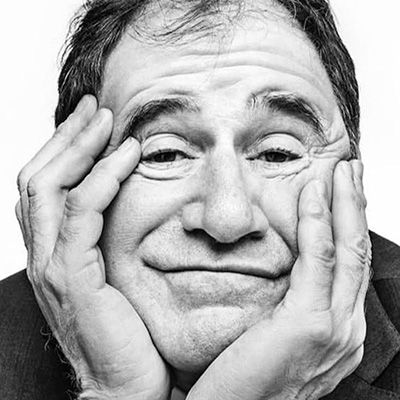
What do Pixar, George Clooney, and Larry David all have in common? They’re all smart producers that hired the amazing talents of actor Richard Kind. A familiar face on Broadway, TV, and film—from CURB YOUR ENTHUSIASM and the Oscar-winning film ARGO to his hilarious and heartbreaking performance as Bing Bong in Pixar’s INSIDE OUT—join the Drama Desk winner and Tony Award nominee for a serious discussion about kindness, giving back, and much more.
Looking for ways to give back?
Learn more about the worthy organizations discussed in this episode:
Connect with Richard:
- Twitter: @RealRichardKind
- Instagram: @RealRichardKind
Connect with The Broadway Gives Back Podcast:
- Facebook: @broadwaygivesbackpodcast
- Instagram: @broadwaygivesbackpodcast
- Twitter: @broadwaygives
Hosted & Executive Produced by Jan Svendsen and co-produced & edited by Jim Lochner.
A proud member of the Broadway Podcast Network.
Special thanks to Dori Berinstein, Alan Seales, Brittany Bigelow, Katie Rosin, and Yo Nikolova from BPN; Julian Hills from The Bulldog Agency; Eric Becker and Broderick Street Music; the Charity Network; and Glenn Weiss!
Transcript
This transcript was automatically generated and might contain errors.
[0:05] Jan Svendsen: Welcome to the Broadway Gives Back Podcast.
[0:07] Jan Svendsen: I'm your host, Jan Svendsen.
[0:10] Jan Svendsen: This podcast spotlights Broadway actors, shows, and organizations in their pursuit of social impact and philanthropy.
[0:17] Jan Svendsen: Join us as some of the brightest lights on Broadway share their stories about their favorite charities and how they got involved, and the people and causes who benefited from these philanthropic efforts.
[0:33] Jan Svendsen: What do Pixar, George Clooney, and Larry David all have in common?
[0:37] Jan Svendsen: They're all smart producers that hired the amazing talents of our guest today.
[0:41] Jan Svendsen: Drama Desk winner and Tony Award nominee, Richard Kind is, if you'll pardon the expression, one of the kindest men on or off stage.
[0:50] Jan Svendsen: A familiar face on Broadway, TV, and film, from Curb Your Enthusiasm and the Oscar-winning film Argo, to his hilarious and heartbreaking performance as Bing Bong in Pixar's Inside Out.
[1:01] Jan Svendsen: Mad About You and the new and very provocative Big Mouth.
[1:05] Jan Svendsen: Richard's humanity and comic timing light up every project he takes on.
[1:10] Jan Svendsen: That humanity extends to numerous causes that he's supported over the years.
[1:14] Jan Svendsen: Rich, welcome to the Broadway Gives Back Podcast.
[1:17] Richard Kind: Thank you very much. Nice to be here.
[1:19] Jan Svendsen: So this morning I went for a run, and on my running playlist was Harry Styles' new song called "Treat People with Kindness." And it made me think of you. And you're the embodiment of kindness. I mean, it's even in your name. So these are really difficult times. And on this podcast, we've talked a lot about social activism and philanthropy, but we've also talked about this idea of kindness. So during these times, Richard, you seem like the perfect person to ask. How do we generate more kindness?
[1:51] Richard Kind: Well, first of all, let me take exception to what you said. I do not think of myself as the embodiment of kindness. I think of myself as kind. I try to be kind. I don't know whether I always am. When I find myself not kind, I stop. I try and be kind, but I am certainly not the embodiment of it. On the flip side, I find it hard. I thought about this the other day, that it's weird that I'm an actor because I find it really hard to lie. I used to be a really good poker player. I'm not anymore. I'm not good at lying. When I start to lie, I tend to giggle. If confronted with something where I have to. Now, if I'm not confronted, I can lie. I can say, oh, I had to do this. And if nobody comes back at me, I can live with the lie.
But if they come back at me and say that, I cannot keep that lie going. I cannot look in their eye and lie. And I thought of this in terms of Trump behavior, where he famously is 30,000 lies during his tenure. I can't do it. As far as being kind, I try. I in small ways. I don't know whether you're familiar with the show The Good Place. Uh, do you know the origin of how the man who created how he started it? He was at Starbucks. And he bought his coffee, and he was about to put the money, the change into the tip jar when the barista turned his back and didn't see him. And he waited until the barista was looking so that he could put the money in and get affirmation that he's a good man. And he asked himself, what is true kindness then?
And I was always having been raised at the Hebrew school and you know, and Sunday school and stuff like that, we were taught Maimonides' 10 laws of charity. And it's something that I always remember, and I remember the image of going up to a blind man who's holding a cup of pencils and giving him money and not taking a pencil. That was the highest form of charity. I try and live my life like that. I don't know whether or not I always do. So therefore I'm very much more observant of my kindness than you are because you say I'm the embodiment. But I really am a liver of do unto others as you would have them do unto yourselves. I do think this notion of random acts of kindness or being doing the right thing and being kind even when no one's looking, you know, that's a really powerful thing.
[4:47] Jan Svendsen: Oh, it's very and I guess all we can do is just try our best, right? And it's the small things that count. You know, what you just said, trying your best, that is what we have to do. And we have to be honest with ourselves about am I trying my best? That's something else. For instance, small thing. When somebody comes up to me and asks for a picture or an autograph, I'm happy to do it. Usually, but if I'm being interrupted, I'm with my kids walking on the street. I often get a little prickly. When I do, my children catch me on it and they say, What if that was somebody who I loved? You know, what if Justin Timberlake was walking on the street or whoever, and they walked up to him and he reacted that same way.
And so I catch myself. And do I want to act the way that my children want me to act? No, not really. Am I grateful that somebody appreciates my work? Of course. But I have to catch myself in certain instances. Now that's the small little nothing of kindness, but I have to catch myself. I have to. And how do we do that? We have to be conscious of those situations. I live my life also under the what I call the drowning man in ice philosophy. If I see a drowning man in ice, would I go and try and help him? In my heart of hearts, I believe I would. But it's trying, it's like trying to tickle yourself. You really never laugh when you're trying to tickle yourself. You gotta be there. You have to have somebody tickle you. You have to be in that situation when somebody is drowning in ice and see whether or not you really will do it.
[6:42] Jan Svendsen: You know, we have met many times, but one of the things that sticks out in my memory is we both live on the Upper West Side. We both have Bernese Mountain dogs named Bella. And so we've walked on the streets with our dogs, and I will say that everybody recognizes you. And my experience with you is that you do treat people with kindness and you are very gracious to people when they come up. And everybody knows who you are. Your face is, you know, everybody knows your face.
[7:05] Richard Kind: Sure.
[7:08] Jan Svendsen: And it reminds me, you did an ESPN interview, and you said, and I quote, very few people know my name. That's okay. I'm very lucky to do what I do. My greater fame has allowed me the opportunity to work and do some personal projects that are meaningful to me. I will go one step further with that because it has happened recently. My desire is to help the world. It is my great desire. Because of my limited fame, I often get asked to do certain things, which I wouldn't normally be asked to do. Okay, help out a charity, help out somebody who is in trouble. I am able to do a myriad of good things. What you said about, you know, if I a modicum of fame, people know my face. They don't know my name, but they know my face. And I look at the opportunity I've been given to help. I feel better.
[8:12] Jan Svendsen: So, all right, you just said that because you are an actor, opportunities come to you, and you have this great platform from which you can then help other people. How do you think people can create those opportunities for themselves, people who aren't actors and don't have that platform? Or even Richard, how can you create opportunities that don't come your way that are sort of not incoming, but more things that you can create outgoing?
[8:38] Richard Kind: See, now you're making me work. This is tough. How do I do it? Or how do other people do it? Like what would you advise people?
[8:46] Richard Kind: Gosh, that's such a good question. Don't you think it goes back a little bit to just the beginning of this conversation where we just talked about trying your best and those random acts of kindness, you know?
[9:01] Jan Svendsen: Well, no, okay. How do you do it? You take a charity, you take a foundation, whatever it is, and you search online and you make yourself available. And you want to know something? I actually have done that. I've gone to Alzheimer's walks, and then I go to them and I say, what can I do? The thing is, I'm Richard Kind am given a myriad of opportunities like that. With the USO, I don't do stand-up, so I can't go on tour. I can't visit those remote war sites, which I would love to do. I wish I did. But here I am doing something for the USO, and because I had that intro, I said I am available anytime. Anytime you want to call on me, anytime you need somebody, can be last minute. I'm not one of those celebrities who, if you call me last minute and say, you know, and are insulted that they've been called. If I know that I'm taking somebody's place because they dropped out at the last minute, happy to do it.
[10:12] Richard Kind: I will tell you something else. You ever hear of an organization called Project ALS?
[10:17] Jan Svendsen: I have. I've actually done a lot of work for them.
[10:19] Richard Kind: And you're involved with that with Project ALS, right? I know you've done work for them too. Since day one, because I knew Jennifer, I knew all the people who were putting together the very first fundraiser. I remember where it was, I remember the bar, everything like that. Needless to say, my wife became executive director of Project ALS. So I know firsthand what they go through and what they've been through and how to raise money for a nonprofit like that. You have no idea what people in my industry can be like with the demands, with the dropping out at the last minute. It's awful. We can be awful. And you and this is a nonprofit. This is for something that helps people on the flip side. Many of them are as generous and giving of their time and of themselves as am I about things like that.
But it really is horrible when you see people who make a commitment and then drop out at the last minute. In any case, I'm one of those guys, call me at the last minute. I'll take somebody's place, whatever I can do. And don't think I haven't been asked to do that. I have. You know, I do walk the walk, I do put my money where my mouth is. Am I as proactive as I'd like to be? Well, you know, that's Oscar Schindler's thing. I could have done more. What more can I do? Of course I ask myself that sometimes, and out of guilt, or and sometimes because I want to be that guy who puts the dollar in the blind man's cup and doesn't take the pencil. Michael Fox has a charity. Well, you know, whenever, whenever he needs me. I'm there. Granted, it's usually fun. It is usually fun. However, I go up and do whatever I can, and I do. And showing up is something that's easy. Most of the time.
[12:18] Jan Svendsen: But you know, you said a lot of the things that you participate in on the fundraising side are things that are enjoyable, like playing golf or you know, hosting a trivia contest. Those are all fun things for sure. But you know, I think the idea of just giving is also really rewarding for the person who is doing the giving.
[12:39] Richard Kind: Oh, absolutely. And I think that a lot of people, I mean, that's one of the themes that we've talked about on this podcast is you know, that it's actually a very selfish thing when you give because it makes you feel so good.
[12:50] Richard Kind: And I'll tell I'll tell you one other thing is I uh haven't done it the past year and a half because uh or the past year because of obvious reasons, but I am called upon more than I want to be to host events. You get a big event in some ballroom, and I have to go up. Now they think that I do stand-up. I don't do stand-up, I just don't do it. That's not what I do. I'm not I'm not facile. I I can be funny, but I don't be funny, but I don't say funny things. I say things funnily. But to host an event, they need somebody, and I'll go there. And I'm not nearly as funny as they want me to be, but I can be entertaining. What I can do is be welcoming. And that as a host, that that's what I do. I start out with a good joke that I know will be hilarious.
I've got about three of them. It's a great story joke. And what I say to myself is I've done my job. I've made people laugh with a joke. I've my job is done. Now all I have to do is be kind and host. And that's all I do. But I always start out with a joke. I don't even say hello. I just start out with the joke. I may not get as many laughs as Jerry Seinfeld or or uh uh Lewis Black, but I've gotten a laugh. They feel welcome.
[14:18] Richard Kind: So speaking of funny people, Carol Burnett once said something about you. She said that you were born in the wrong era. What did she mean? I agree with her totally. I wish that I had been born in the vaudeville days. I just I just do you're on stage, you can act big, it's uh it's even burlesque. It's it invites big. The camera doesn't always invite as big as I would like to be. And Carol was lucky that she was born in the era that she was, you know, in the 50s, 60s, and certainly the 70s, when she could be as big as she was. What is great about her, and what I have modeled myself is is she also learned how to act in front of a camera that just has uh a lens and could focus in a small area. But what she is known for, what she is, I can't even say what she's best at, but what she is great at is knowing how to perform.
She was astounding. She could perform in front of a in front of the camera, but she was performing in front of a live audience at the same time, and the camera caught that joy of trying to go out to the audience. Whereas Michael Fox only performed for the camera. He was small, he only performed for the camera, but he needed the audience's laughter. He needed to interact with the audience in order to be funny. That's why he always uh did did uh the four camera shows like Family Ties uh Family Ties or Spin City, because he needed that audience and that that laughter, that live laughter. But he only performed for the camera. He was that small. Carol was not. She was huge.
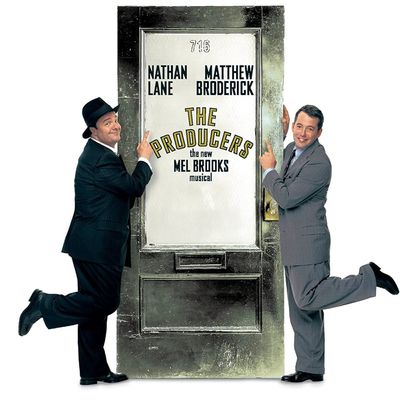
[15:56] Jan Svendsen: Well, you're pretty versatile too. I mean, all of your Broadway work, the producers, Kiss Me Kate, Tale of the Allergist's Wife, and then all of your film work and your television work. So you're you do it all. Which I which one do you feel? I mean, I guess they're all different, but do you feel like there's one medium?
[16:15] Richard Kind: I do it all. I'm the I've done an opera at at Lincoln Center at the New York City Opera. I'm the luckiest guy in the world. I I get I get to challenge myself. The bad thing is usually with movies, they can't take a chance uh like they can on stage. On stage, you can take a chance because your economic consequences aren't as great. You do a movie, uh, the movie has to serve, you know, there are stockholders who, if the if the movie is not successful, stockholders and companies lose money. Uh uh a star may not get uh another his next movie. Uh so the there are huger consequences and they can't be as uh they they can't they can't gamble on Richard Kind. Uh but an independent movie can do it, a small theater can do it. So I that that's why I'm I've been very lucky.
[17:07] Jan Svendsen: Well, that diversity in you is is it's a I mean it must be exciting to be able to work in all those mediums, and also you are such a diverse kind of actor, you can really bring it to wherever you're around the time of Mad About You into Spin City, I just kept getting all of these weak, weak parts of you know, the the the nebishes and and you know the the hen pecked husbands. So uh when I did stage, I made sure that it was the opposite. Uh I I I've been very lucky uh that the stage has provided me an outlet to counter uh uh some of the typecasting that I've had to do. And then of late, uh I I have been able to uh uh to escape that. So it hasn't been as bad lately.
[17:56] Richard Kind: Speaking of origins, um let's just go back to yours and a little bit more about you know just this idea of of being a socially responsible person. So were you raised in a family where you know people were philanthropic or charitable? Um I certainly know we've mentioned your daughter is is you know super socially conscious, and um, but you know, how did you how did you have how did you transfer that? You know, if you were raised by parents that were like that, and then you're like that. How do you sort of impart that upon your children as well?
[18:31] Richard Kind: I have to admit, my parents were very charitable. Uh my dad was on, you know, on the board of the temple, the uh the brotherhood, my my mom was in the sisterhood. Uh my dad was was on the board of McCarter Theater and George Street Playhouse on the board of the bank. And of he was in Princeton, so he was very influential in Princeton, New Jersey, and was really really charitable when I think back on it. I don't know, I I because I never knew my parents' finances, I have no idea how much they gave to charity. I think there is a rule of thumb that you should give five or ten percent of your income to charity. I will tell you that's what I do. My children are victims of their mother's kindness.
Their mother is uh she rode horses, raised horses from when she was in her teens up until her 30s. Anyone who works with horses, you can trust them to be the kindest people in the world. It's like an animal lover. This is one step above animal lovers. People who work with horses are the kindest, most generous people. I don't know why. And it may be my prejudice, but it truly is how I envision people who work with horses. They are kind. She imparted all that kindness of loving animals, and she is an animal whisperer, does it to our dogs, to our cats, and my children have learned. They have learned from their mother. I'd like to think they get some from me.
[20:15] Jan Svendsen: Now I know you have to meet your daughter, so I'm gonna uh ask you one more question before we uh before I let you go meet her. Um and I've been thinking about this a lot, and I've asked some of my other guests. Um, you know, these are crazy times that we're in. And um I was thinking about if we could wave a magic wand, um how would you like to see Broadway change when it reopens?
[20:38] Richard Kind: Lower ticket prices, lower ticket prices, get the real estate people to lower their rent, get the unions to lower the uh uh some of the outlandish rules that they have. There's that famous thing about that you have to pay three musicians or something. There's union rules. Even if you're doing a straight play, you have to pay three musicians. There are there are loopholes and things within the unions, and I'm a union guy. These people should be paid. When you have outsized checks to the stars, don't do it. Don't do it. You do theater, you're gonna lose money. A star will lose money. They have other avenues to make greater amounts of money. But any actor who's paid $50,000 while the chorus members paid between $800 and $1,400, take less.
Just take less money. You don't need it. If you're if you're at that level, you're making your money elsewhere. Theater to somebody like that is is it's what you're you have to do, and you do other projects, those are the waiters' jobs where you make a lot of money so you can go do theater. And you pass those savings on to people who cannot afford the theater. So when you have to go to the TKTS booth and you're paying $90 or $100 for a half price ticket, and you're taking a family of four, that's $400. That's a lot of money. Let them go for $220. Get a family together and take them for $220, $250. That's plenty. And let young people go to the theater. Do not make it uh an elite activity. That's just and I know giving away 10 seats or 100 seats uh at a performance for $10 at the that's special stuff.
I'm talking about down the line. I think one thing that the pandemic may have done is to uh uh is to to lower the bar of ticket prices, and I think that's that's great in order for for Broadway to come back. Theater, theater isn't should not be a money-making proposition.
[23:06] Jan Svendsen: Well, I hear the passion in your voice. I mean, the your love and commitment to theater is so obvious, and I think the idea of making theater more accessible to all is a really noble.
[23:18] Richard Kind: I think I I do it. There's another place. I walk the walk. I do theater for $700 a week. I I do. I go out to Bay Street Theater in uh in Sag Harbor, and I'll do a play for $700 a week plus room and board. No, plus room. Not bored. No, board, room, whatever it is. I am a patron of the arts by giving my talent for less money so that people can see it at a lower cost.
[23:50] Jan Svendsen: That's what I do. You know what? That's a perfect way to end this podcast and get you over to meet your daughter. Um, and it's obviously we see how impactful this is and how important this is to you, and we appreciate all of your talents and all of your passions. So thank you so much for joining this podcast.
[24:08] Richard Kind: It's my pleasure. It's first of all, I half of the reason I got on was to say hello to you.
[24:13] Jan Svendsen: Thank you.
[24:15] Richard Kind: I see you. I love you, you know that.
[24:16] Jan Svendsen: Thank you so much, and thanks for those kind words. Um, kind ha words at the end. Um, I love you too, and um stay safe and uh sending you love.
[24:20] Richard Kind: Love you.
[24:27] Jan Svendsen: Thanks for listening to this episode of Broadway Gives Back. Broadway Gives Back is part of the Broadway Podcast Network, produced by Dori Berinstein and Alan Seales with Brittany Bigelow, and music by Eric Becker at Broderick Street Music. Special thanks to my producing partner, writer, and friend, Jim Lochner, and to Katie and Yo at BPN, Julian Hills from the Bulldog Agency, the Charity Network, and to my fiancee, Glenn Weiss, who is always my consultant. If you like what you hear, don't forget to subscribe and rate this podcast wherever you stream your podcasts. You can also follow Broadway Gives Back on Facebook and Instagram at Broadway GivesBack Podcast and on Twitter at Broadway Gives. To learn more, visit bpn.fm slash Broadway GivesBack.
© Broadway Podcast Network, All Rights Reserved