

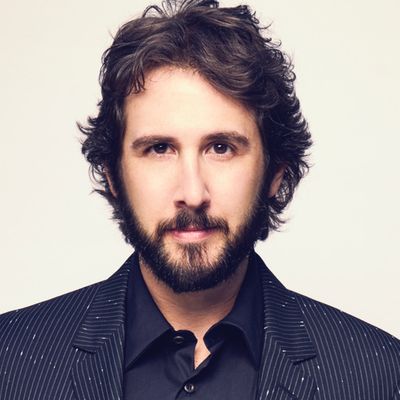
To music fans around the world, Josh Groban is a four-time GRAMMY-nominated singer who has sold over 22.5 MILLION records in the US alone. But for Broadway fans, he’ll forever be the star of the hit musical NATASHA, PIERRE & THE GREAT COMET OF 1812... Read More
From the show: Broadway Gives Back
Guests
Featured Shows
About
To music fans around the world, Josh Groban is a four-time GRAMMY-nominated singer who has sold over 22.5 MILLION records in the US alone. But for Broadway fans, he’ll forever be the star of the hit musical NATASHA, PIERRE & THE GREAT COMET OF 1812. As the founder of the Find Your Light Foundation, Josh uses his voice and talent to support a number of causes, especially arts education. Join Josh for an impassioned discussion on music, theater, Sondheim, and the joys of giving back.
Looking for ways to give back?
Learn more about the worthy organizations discussed in this episode:
Connect with Josh:
- Website: joshgroban.com
- YouTube: @joshgroban
- Facebook: @joshgroban
- Twitter: @joshgroban
- Instagram: @joshgroban
Connect with The Broadway Gives Back Podcast:
- Facebook: @broadwaygivesbackpodcast
- Instagram: @broadwaygivesbackpodcast
- Twitter: @broadwaygives
Produced by Dori Berinstein and Alan Seales with Brittany Bigelow
A proud member of the Broadway Podcast Network.
Special thanks to my producing partner, Jim Lochner; Katie, and Yo from BPN; Julian Hills from The Bulldog Agency; Eric Becker and Broderick Street Music; to everyone at the Charity Network; and my fiancé and consultant, Glenn Weiss!
Transcript
This transcript was automatically generated and might contain errors.
[0:05] Jan Svendsen: Welcome to the Broadway Gives Back Podcast.
[0:07] Jan Svendsen: I'm your host, Jan Svendsen.
[0:10] Jan Svendsen: This podcast spotlights Broadway actors, shows, and organizations in their pursuit of social impact and philanthropy.
[0:17] Jan Svendsen: Join us as some of the brightest lights on Broadway share their stories about their favorite charities and how they got involved and the people and the causes who benefited from these philanthropic efforts.
[0:33] Jan Svendsen: Broadway fans know him as the star of the hit Broadway musical, Natasha, Pierre & The Great Comet of 1812. To music fans around the world, Josh Groban is the four-time Grammy-nominated singer who has sold over 22.5 million records in the U.S. alone. To me, Josh is the leader of the Find Your Light Foundation, which he created. He uses his voice and talent to support a number of causes, especially arts education. I'm proud to call him my friend, and I'm over the moon to have him here today. Josh, welcome to the Broadway Gives Back Podcast.
[1:05] Josh Groban: Jan, it's great to talk to you. It's great to be on the podcast. Congratulations on the podcast.
[1:09] Josh Groban: First of all, you have such a great speaking voice. I'm thrilled that you are in this landscape because you're awesome.
[1:17] Jan Svendsen: Oh my god, I'm blushing because you're telling me I have a good speaking voice. Thank you. I never thought that I did. You know how you always hate your own voice.
[1:23] Josh Groban: Take it from somebody with a great singing voice and a terrible speaking voice. You have an enviable speaking voice. I don't know how your singing voice is, but I'm sure it's also great.
[1:31] Jan Svendsen: I was asked to lip sync in Glee back in sixth grade, so not good.
[1:35] Josh Groban: There you go.
[1:36] Jan Svendsen: Oh, yeah, that's okay. Anyway, well, thank you. So you recently turned 40, you little baby. Congratulations. What'd you do to celebrate?
[1:46] Josh Groban: Well, you know, I was fully expecting it to be a real depressive kind of existential crisis-y kind of a day. And you know, it was lovely. My girlfriend took me to a kind of an animal sanctuary here in LA, just kind of about 45 minutes outside of town, and I got to pet a giraffe and hold a monkey and play with a pony. It was a place that both takes in rescue animals and then also trains animals for commercials and TV and stuff. And so I met the Geico raccoon. There's all kinds of things. And so, you know, I had a great time and then just, you know, FaceTimed with my brother in New York because he and I share the same birthday four years apart. I got a baby brother on my fourth birthday. So one of our only birthdays we've been apart, so that was bittersweet.
But he was there, and it was just, you know, I'm very grateful that I was able to spend time with my parents who both have had their second vaccination, and so they felt safer for us to come over and have cake with them, which was such a crazy thing. It feels very strange to be around them because for a year we've been conditioned to be apart, and so we're gonna have to condition ourselves to feel okay being with each other again too.
[3:07] Jan Svendsen: Right, those hugs. I can't wait for that.
[3:09] Josh Groban: But I'm also a little nervous for that, right?
[3:12] Jan Svendsen: Exactly. But all in all, it was a really and then a lot of people sent in really lovely messages, and it just was a very simple but very heartfelt birthday. I was very grateful.
[3:21] Jan Svendsen: Oh, well, happy birthday.
[3:22] Josh Groban: Thank you so much.
[3:23] Jan Svendsen: Happy and healthy birthday. I guess that's what we need to say in 2021.
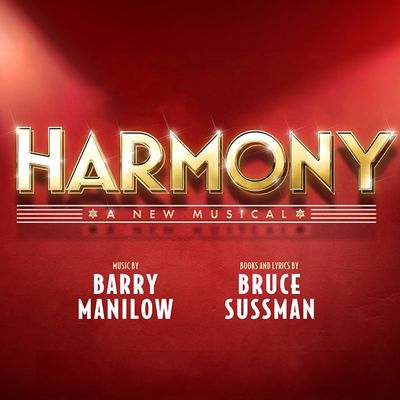
[3:27] Josh Groban: Absolutely. 2021 is obviously a year for the history books on so many levels. But it also marks the end of the 20th anniversary of your first album. Gosh, where did time go? And this past November, you released your ninth studio album, Harmony, and I just wondered, what did this album mean to you? And what did this collection of songs say to you? Or like what did you want to communicate with that?
[3:54] Josh Groban: This was kind of a bucket list album. I was about a fourth of the way through with the recording and a little bit more than that in the choosing process of the songs when we all went into lockdown. And so I didn't even know if this album would finish. I didn't know if we would ever get this album to come to fruition. Certainly not. I didn't know we'd be able to do it last year. But these are songs that, you know, as a vocalist, you collect bucket list songs, songs you've wanted to sing a long time, just waiting for the right life experience, right arrangement. That's a huge one. Getting the right arrangement. The unsung heroes of my world are the orchestrators and the arrangers who give you a template where you say, "Okay, I finally feel like I can do something with this as a singer because this is an album of primarily classic songs," and there's always the nerves of do I belong in this song?
Does anybody care about the 500th version of this? And so part of the thing that gets you through that maze is getting a great arrangement, realizing that you can do something that both honors the original and gives you a fresh approach. And it was a lot of fan requests too. You know, you tour as long as I've toured, and people write in saying, "Gosh, I would love to hear you sing this," or they even yell out, you know, whatever the equivalent of "Free Bird" is in the audience. And you know, you collect a kind of a list of those songs, and for a long time you kind of say, "Oh, yeah, yeah, yeah, okay." And it got to the point where I said, "You know, I have a lot of those songs in my mental file cabinet."
And so after touring for a year and a half on an album called Bridges, which was a very personal, very original music kind of an album, I said, "Okay, well, I'm gonna take off that hat for a minute and I'm gonna put on the interpretation hat. And I'm just gonna, I really wanna dive into these songs, these melodies that feel timeless." Then of course, you go into quarantine, the world changes. And the incredible thing was that these songs that I thought I was just singing because they feel relevant normally took on an entire new level of relevance and of meaning right now. Songs we weren't gonna do suddenly became even more relevant. Songs we were gonna do felt like, you know what, maybe I'll wait for another time to do this. So it was a great and challenging experience to finish Harmony, especially when you consider that all the musicians were around the world virtually. So it was crazy.
[6:09] Jan Svendsen: You even did a duet with our mutual friend Sara Bareilles.
[6:12] Josh Groban: That's right, yes.
[6:13] Jan Svendsen: And she actually recorded this podcast last week.
[6:16] Josh Groban: Oh, good with us, yeah.
[6:17] Jan Svendsen: It was great. But you two were my favorite Tony hosts of all time.
[6:21] Josh Groban: We had so much fun.
[6:23] Jan Svendsen: Thank you so much.
[6:24] Josh Groban: Yeah, that was awesome. But you know, this year's been hard on artists in general, and but you seem to have embraced this live streaming thing. And I hear you even live stream from your shower.
[6:36] Josh Groban: Well, that's kind of how it started.
[6:37] Josh Groban: Yeah, fully clothed. I was doing a Billboard Live concert from right where I'm sitting right now. I have, you know, kind of a little setup here and was just doing it in the corner of my bedroom here. And, you know, some people were saying, "Oh, I want to hear you sing 'Anthem,' or I want to hear you sing 'You Raise Me Up' or whatever it was." And I'm thinking, "Okay, this isn't an anthemic reverb-y corner. I want the real reverb." So as a joke, I brought my iPad into the shower and just said, "All right, I'm gonna sing this, it's gonna be in the shower, sing along." And my manager, Deermid, said, "You know, that sounded really, really good." So I started doing something on Instagram called Shower Songs, where each time I was gonna sing a song in the shower and, you know, dedicate each time to a charity, and we would raise money and do Shower Songs for charity.
And you know, I'm always in my head, I'm always disorganized, I'm always writing and finding songs and stuff. My manager is such the planner for me. And he's the one who kind of said, "Look, I think there's a way we can do this safely, put my band and crew to work," which was a huge initiative for us to make sure that we keep the circle of musical family behind the scenes employed and working. And also give the fans something that was more than a level up from the corner of the bedroom and the shower, which was a lot of fun and was great. It was very homespun, which was something that was unusual for me to do. But we tried it. We did one in June of last year, and we thought whoever, you know, whoever signs in, great, 100 people watch, you know, so be it.
We had 65 countries tuning in, and it really showed us, even though there wasn't any applause, it showed us the delayed reaction of how meaningful it was afterwards. I'd get the tweets, I'd get the Instagrams, I'd get the emails from people saying, "We gathered around, it gave us a sense, some semblance of normalcy, it gave us some feeling of connection to your music, to live entertainment." And I kind of turned to my manager and said, "You know, as I often do with him, you were right." And then we did another, and then we did another, and then we said, "Let's do a Christmas one. Let's do a Valentine's one." And each one we've gotten more and more people, and now we've got 90 countries that are tuning in.
And it's not the same as a show, you know. We will, of course, embrace with open arms when we get a chance to be in front of all those people screaming our heads off, high-fiving. Nothing will replace that, and nothing ever will. But to be able to reach countries I've never been, to be able to reach people at a time when both I and they really need this release, really need to express ourselves, it's so good for our emotional well-being and mental health. It's been a lifesaver. It's been really, really a fun thing to do, and we've also continued to raise a lot of money for charities. So I've been enjoying it.
[9:31] Jan Svendsen: Which is a perfect segue, thank you. The purpose of this podcast. I read an interview that early in your career, Celine Dion gave you some advice, and she told you, "I think it's be kind to people. You never know." And Josh, you are one of the kindest people I know, and you are one of the most giving people that I've ever met. And I just wondered, you know, where does that—like is that just who you are? Is that something that was modeled for you from your family? Or like how—why are you such a good giving person?
[10:03] Josh Groban: Well, very kind of you to say, takes one to know one, I might add. Thanks. And you know, I was very lucky when I was thrown into the insanity with which there is no playbook or rule book or, you know, music business for dummies, other than the classic Donald Passman legal book, Music Business: Everything You Need to Know About the Music Business. There really isn't a handbook for how to deal with the emotional impact of the pressure, the criticism, the praise. And at a young age, when you're already at a really volatile and sponge-like time in your life and feeling very confused about just, you know, this is why it was hard not to have the experience of college of failing and getting back up.
I started when I met Celine in that fateful moment, I was 16 years old. And so I give a lot of credit to my parents because, and I know I was very, very lucky in that regard that I had really down-to-earth parents. I grew up in Los Angeles, but was not a showbiz kid. They knew that I had the bug for the arts and theater, but not in a "I want to be famous" kind of way, or "we have to make our son a star." It was just, "Well, okay, we'll do the training, you know, keep practicing and you'll get what you get, and we'll be there to support you." And so anytime things got too heady or I was up in the clouds too much, or my ego got the best of me, or whatever, I was very lucky that I had such a grounded family to kind of bring me back down to earth.
And not only that, when I was feeling way down in the dumps, which this business gives you, I think mostly. I think a lot of times people assume that even with all the great success that you're just floating on a cloud the whole time. But many of us that are creative, the dirty little secret is that we're also super sensitive. And so even though there might be 10,000 people screaming their heads off, we are all zoning in on the one guy with, you know, crossing his arms, rolling his eyes that didn't want to be there. So having a great family system to get me through that, those demons too really helped. And when I see artists that are young that are, you know, finding themselves losing their way, I'm, you know, reading Us Weekly at the airport, and I'm seeing, you know, just behavior that I think to myself, "God, that's so unfortunate.
That's such a cry for help." You go back and you watch the Britney documentary and you go back and you see how, you know, the media has treated people who were going through full-on mental breakdowns. And you think about situations where maybe the family environment wasn't what it should have been, or the friends weren't the best friends they could have had, or the business didn't give them the tools to handle what I think the human condition is not really meant to handle. We're not really in our DNA meant to have that much of a microscope on us.
[12:54] Josh Groban: Uh and so a lot of a lot of bad habits can form. Um some bad habits formed for me behind the scenes. There were things that I had to, you know, talk through a therapist for and get myself, you know, um in the right head space and and learn self-love and learn you know how to deal with criticism and learn how to be um a more relaxed performer and and and a more um open, you know, person. I there there are all kinds of things you battle privately too that you're lucky you've got people around you to help to help you. But to the point of being nice, I think luckily also I was just in a in a genre that um was a lot of hard work without a lot of hype. Um if I had been a top 40 pop star, um, you know, I might have been a jerk.
Who's to know? Because everybody around you wants to throw a party for you every five seconds. Um I was in a I was in a particular part of the music business where people were like, Who's that guy? But I was still selling 20 million records. So it was this weird thing of my salvation was keeping my head down and just doing the work. And I'm I look back on that and I was very lucky.
[14:03] Jan Svendsen: Well, you've also been very inspired to always give of yourself too. And you know, I know that I always feel good about myself when I give to others, right? So maybe that also helped balance some of your, you know, your demons is that, you know, that inclination that you've always had to also give.
[14:22] Josh Groban: 100%. I think altruism and philanthropy are um a demon slayer for all of our internal demons. Giving back, finding causes that are bigger than yourself, going outside of yourself to be of service, um, I think is one of the one of the tenets to true happiness and true balance in life. Uh it's something that I learned at a young age from both of my parents, my mom being a former, you know, arts uh school teacher, um, and my dad being in music as well, and philanthropy being a huge part of their life. And then growing up in this business with David Foster, who was of course introducing me to charity events every time I was singing, it was almost always when he was giving himself to some some sort of philanthropy.
And so seeing, you know, having that be my first stages, uh charity stages, um, really taught me very, very early on that that that should be a huge part of my career and of my life. And um, and I think it played a big role in what you just said of getting out of my head.
[15:21] Jan Svendsen: Well, and you made that a really big part of your life, and and you've helped so many other people. So I do want to talk about Find Your Light Foundation. Um you and I have worked together many times in um with my day job at the charity network, raising money for Find Your Light. Um, and I know that Find Your Light is it's about it's about arts education, but it's about support and education and outreach and advocacy. And I just wondered if you could talk a little bit about like what was your impetus to start it and what you're most proud of.
[15:48] Josh Groban: Sure. Well, first of all, we're very grateful for your help. So thank you so much for for being such a supporter of ours and for everything you've done. Um we, you know, I uh when I first started having a platform in this business and realized that I could lend my voice um to to causes, uh, it was a kid in the candy store situation. I was so happy to be asked by so many worthy causes to to help. And I and I always wanted to. And so my fans, when I started to get fans, kind of knew from album one that that was something I liked to do. Um taking on the responsibility of having your own foundation is its own animal. It is a lot, it's a huge responsibility. And for uh a good portion of my career, I felt that my best silver bullet, the best way for me to be lean and mean in the philanthropy world, was was just to be able to simply lend myself to organizations that needed me so I could help them raise as much money as possible.
Um at some point on that fateful night, I was playing the Greek theater in Los Angeles in I think 2004, 2005. My fans who knew I loved philanthropy came to the front of the stage with a giant jumbo check and they said, Josh, you know, it's always a risk when you give the microphone to the front row. But um, but they said, Josh, they said to all 8,000 people were there, we've collected autographs, we've been raising money for years, and we've collected, I think it was something like $65,000. And they said, We're giving you this check, and we want you at some point with it to start your own foundation, and you can decide when you want to do that. And I was just floored, it was so hard to get through the rest of the show just because I was so I was just so emotionally uh floored by by that generosity.
And um, and so to know that that I have a fan base that would be there with me to be to be a part of that with me, um, was a huge one. And so it started slow. I made it the Josh Groban Foundation uh and we raised money and gave a little bit to a lot of places. It wasn't until a group called Americans for the Arts, wonderful organization that is uh helping to secure funding both on a government level for the arts jobs in the arts, both on stage and behind the scenes, and also to make sure that those artists and people within the arts worlds continue to be funded. They asked me, along with uh Linda Ronstadt and Winton Marsalis to testify to Congress on Arts Day on the Hill. Now, Arts Day on the Hill is a little bit of a, you know, it's a little bit of a dog and pony show because if anybody, as you know, works in government, they have their rubber stamp of what they know they're gonna do, and it's nice, you get to take your pictures.
But I realized in speaking on the hill about the arts and what arts education did for me in my life, that that was something that I knew so well from my own personal experience that I made a decision in that moment that even though I would continue to give my time and money to all different organizations, that my organization would be something that A, I knew a lot about because of my personal experience, and B, a little bit would go a long way. That I knew that when it came to instruments, teacher salaries, repainting that art room, get get paintbrushes into the hands of kids, making sure that after-school programs stay alive, um, especially in inner cities, we could do a lot with a little, and that was a fun prospect.
I also hadn't died, so I didn't want to call it the Josh Groban Foundation because I didn't, you know, I that not to be morbid, but also I didn't want the foundation to be reliant on whether or not I was on the top of the charts or not. You know, I wanted it to be the kind of thing that could live and breathe on its own. And so it became the Find Your Light Foundation, and it really is about making sure that young artists around the world get the opportunity to express themselves, to learn about the tools that the arts can give them in a curriculum, um, that give them those leadership skills that's, the self-confidence, expression, empathy, and learn about themselves and learn about the world through the arts.
We're not a talent search. When we find great talent, it's a wonderful bonus, but we're more about how the arts can benefit these young kids from a foundation level to make them just better, more well-rounded human beings.
[19:51] Jan Svendsen: I have just such enormous respect for the foundation, but also for the way you have been so strategic in putting it together. And you know, there's such a solid foundation to the foundation.
[20:08] Josh Groban: And because of that, it's such a respected organization that does so much good.
[20:14] Jan Svendsen: And you've you've got you know, it's that strong base of strategy, and then you've got these amazing tactics, and you do reach so many people and you help so many kids. Um, arts is so important.
[20:25] Josh Groban: It's so it's so important, and that's part of it has been getting rid of the stigma of arts as like a luxury or an extracurricular.
[20:31] Jan Svendsen: And um, you know, steam versus STEM, right?
[20:34] Josh Groban: That's it, yeah, making sure that A is in there. And uh and it's it's it's wonderful when the math is on your side because we're also you know venturing forth into the arts education world at a time when the data is proving, you know, in a non-fou-frou way that you know the inclusion of the arts in schools helps with graduation rates, helps with uh increased knowledge in other academic, you know, areas, um, helps with home life, um, you know, high school graduations sometimes for the first time in their families, college graduations for the first time in their families. Um, it it is a it's a you know, protecting our future issue as well as it is a feel-good issue.
[21:16] Jan Svendsen: And so it's it's it's fun to have that.
[21:18] Josh Groban: But um, but thankfully, because of friends like you and other people who get it, I'm I'm a terrible ask. I'm really bad. I'm very shy at picking up the phone and saying, hey, will you do something? It's the worst part of my job, you know, is is having to ask favors or asking them very, very shy about that. But then I I think every time I pick up the phone that I'm not asking for me, you know, I'm asking for that kid in the south side of Chicago. I'm asking, you know, for that teacher, I'm asking for that, for that instrumentalist who doesn't know they have a passion, you know. So it's it makes it easier for the asks, and luckily I've had a lot of friends that have said yes.
[21:54] Jan Svendsen: Um you also, as you've been saying, you support so many other charities over the years and so many causes. Um, and I just wondered, you know, because you're so strategic with your foundation. Are you that same way? Are you strategic when you decide which other charities you're gonna support?
[22:11] Josh Groban: Um are there other ones, are there other specific causes that are near and dear to your heart? Or do you kind of just say yes to friends? Or how do you how do you decide?
[22:19] No, it's it's um, you know, it's it's always the challenge because there are there are just endless amazing causes that are all doing valiant and and important work, and we're all in that regard, we're all on the same highway trying to get to the same location, which is to enlighten and and make a better future for people, whether it's in healthcare, whether it's in arts, whether it's in, you know, um shelter, food, medicine. Um, we're all trying to, we all have a passion to reach a goal of doing better for people. And so when I'm asked to do something, really the only thing that will that will make it a a no or at least a not right now is is simply if it's a scheduling thing or a bandwidth thing because you also want to give your all to something and to someone.
And so you you can there can be a situation where you really want to dive headfirst into something and be asked to do something, but no, it's at a time when you've been stretched so so thin that you wouldn't give that particular organization at that exact moment or that gala everything that you have that you want to give. And so um I try to, if it's a no, it's it's it's usually a not right now, and at some point I'll get back to it.
[23:29] Josh Groban: Um and I also like to support my fellow arts education organizations because we all we all help each other, you know. I've been very grateful for the teamwork with groups like Americans for the Arts, Young Arts, Um, Turnaround Arts, which was Michelle Obama's initiative that has done extraordinary work to um to quite literally turn around some of the um, you know, one of some of the most down and out schools in America that were facing huge problems, behavioral problems, uh structural problems, I mean everything, and using the arts and the infusion of the arts to turn around the entire morale of the program and to turn around these kids. I've been um honored to be a uh a mentor at at um Chalmers School of Excellence on the south side of Chicago and done that.
So we all we all tag team with each other, and it's you realize that in in philanthropy, unlike in you know, fighting for chart position in the music business, there really isn't a lot of communication, uh competition, a lot of communication, not a lot of competition. You're you're all helping each other, and um you can't go wrong when you do.
[24:37] Jan Svendsen: Well, that collaborative spirit, I think you're absolutely right, and I think people in the arts organizations who feel like there's competition for the dollars, I feel like that's you know, that's the wrong way to think about it. I think it is about collaboration, and that kind of leads me to um theater, because that is one of the most collaborative, you know, things that we that you have been part of.
[24:57] Josh Groban: And um, so I have to talk about Natasha and Pierre.
[24:59] Jan Svendsen: Of course, sure.
[25:00] Josh Groban: Um, what did that show mean to you? I know what it meant to me. I loved it. Um what did it mean to you?
[25:06] Josh Groban: I mean, where do I begin? It it was um, you know, when you're the kid and you're in your bedroom dreaming of doing Broadway one day, you you you know, you know, most times your your greatest dream, you know, you gotta you gotta settle. You know, you gotta say to yourself, well, it was almost that that, or it wasn't quite what I expected, but still good. Um, to be a part of a show that had such a forward-thinking, innovative, inclusive team and cast that was that was as was challenging for me as a musician, as a singer, as an actor. Um, and then also it, you know, brought Broadway, I think, further along by its inventiveness and and uh and and then to to feel like the show was recognized in such a wonderful way.
[25:53] Josh Groban: And then on top of that, the friendships. The first Find Your Light gala that I did ever was while I was on Broadway. And to look out on, you know, a city winery, you know, as a small, we had a small kind of gathering, and to see my whole cast there and to see, you know, the support. Uh because you mentioned the parallels between theater and philanthropy. And quite literally, they were happening at the same time for me while I was in Natasha, Pierre. Um, we even auctioned off at the foundation gala. Um, hey, you can be in Natasha, Pierre and the GREAT COMET, you know, for if you auction, we'll put you in the show, which was something nobody had ever done before. And I asked our producers, can I can I do this legally?
Can we get away with this? Yeah, we'll figure out a way. So somebody auctioned, but gave a huge amount of money to the kids, and we dressed them up in a costume, and during one of the big party dance scenes, they got to dance across the stage with the cast. And nobody in the audience knew, but for them, it was, you know, so you know, there, they're the way that we have felt being a cog and a beautiful wheel in the philanthropic world, um, is the same way that I felt that camaraderie in the theater world that we all have each other's back. We were splitting wall space with Hamilton on one side, Dear Evan Hansen on the other, and we would run into each other every night, and it was this feeling of, How is your show?
How is yours? We got to come see it, let's hang out, let's get a drink. Let's just and you know, again, and before Sarah and I hosted the Tonys, and I was kind of asking some previous hosts and kind of talking about you know the Tonys, and do I really want to do this? Well, just is it, you know, oftentimes, I mean, my answer to Glenn and to everybody else was of course, yes, but you also know that sometimes a host position, you got to be a little bit of a glutton for punishment. And so um, I wanted to ask some advice, and and you know, the overriding feeling that I got from previous hosts about the Tonys, and it relates to this conversation, is that everybody in that audience supports each other and has wanted this since they were a kid.
There isn't a lot of accidentally falling up in in the theatrical world. It's hard work, it's blood, sweat, and tears, it's community, it's selflessness. And unlike some of the other award shows, where a lot of people got that break, they've got the 50 people around them telling them they're incredible, that everybody's entourages are bumping into each other, but not really interacting. There is a loneliness to the music business that I've experienced full on, and then when I go to a place like the Grammys, it's it's 15,000 lonely people. And um, and in theater, there is a family, and you're all rooting for each other. We're given the standing ovation for whoever wins, and uh, and so to have that theater experience alongside the philanthropy experience was just that childhood dream just could not have been any better.
[28:35] Josh Groban: And when it comes to childhood dreams, I want to talk about Freestyle Love Supreme.
[28:39] Jan Svendsen: Oh, yeah.
[28:40] Josh Groban: So we're actually recording this podcast with them next week. Um so Chris Jackson has his name is C Jack, and Lynn is Lin-Man. Um, Anthony is Two-Tone, and Chris is Shockwave. So I wondered first of all, what is your FLS name gonna be? And how did that come to be?
[28:59] Josh Groban: Oh man. Um, I would say it's probably a toss-up between J. Grow and uh you know, Sarah Silverman calls me Grobes, so maybe Grobes, maybe with a Z at the end. Um but uh I I you know loved being on that show. They invited me back when we were all still in New York and doing shows, and um, and I forgot who it was, I think it was Tommy Cale that said, Hey, well, because I went to the premiere, you know, the opening night of that show.
[29:29] Jan Svendsen: I saw you there.
[29:30] Josh Groban: Yeah, I saw you there, of course, and was talking to them, and they said, Hey, if you ever want to come on and do it. Now, I took improv classes when I was younger, but that kind of thing absolutely terrifies me because it's that is such a sport. Those are the LeBron James and Tiger Woods and Lance, you know, Lance Armstrong, except they're not cheating. Um, you know, uh their mental capacity, their muscle to do that is something that I've always been in awe of. But in the spirit of wanting to scare myself, I said, okay, yes, I'll do it. And it was the most fun night. I had the most it's like improvising on that level with those kinds of people is like walking on air. It's the coolest feeling in the world. And when you get the audience on your side. So I had a blast, and uh, and I was very grateful to be be a part of their world for a minute.
[30:20] Josh Groban: Talking about New York, um, you were on Watch What Happens Live, and you said to Andy Um that you wanted to be in a Sondheim musical. And just following up on our conversation about theater, what are your, I mean, and we know you've, you know, your starring role in Fiddler on the Roof when you were how old?
[30:37] Jan Svendsen: 16, 17?
[30:38] Josh Groban: Yeah, so 17, yeah. Um, so I just wondered if there were other roles that you've kind of like, oh yeah, I really want to do that.
[30:45] Josh Groban: Well, the thing I loved about Sondheim's work, even from a young age was just um how smart it was, how beautiful the melodies were that just touched my soul. And also just how how little dancing was required. As a as a as a double threat, not a not a triple threat. Uh, luckily in GREAT COMET, I had to put I didn't have to pretend to be a really clumsy dancer. That was something that that came naturally both to Pierre and to and to me. Um, you know, I've loved telling Sondheim's stories in his songs. I mean, I'm for those of us that got the bug early on, you know, I grew up listening to um to Assassins and and you know, Sweeney Todd and Sunday in the Park with George, and you know, these were um these were scores that just that just resonated and always have.
Um I felt the same way about growing up listening to Phantom of the Opera and Andrew Lloyd Webber and and you know, Les Misérables, and you know, they were the shows that that just kind of captured my imagination at a young age. And so you always think about those full circle moments as you're an adult, and you say to yourself, okay, well, I actually am in a position where I can make a call and see what might be possible. Um my favorite moment in GREAT COMET probably was getting a letter at stage door from Sondheim and welcoming me to Broadway and being able to see him in the audience because he promised me he wouldn't tell me when he was coming, which is very self-aware of him to know what that does to a cast, you know.
Um and the only reason I wound up actually knowing was because of course somebody it's such an immersive show that somebody in the cast, of course, saw him and gave a red alert at intermission, screaming at the top of their lungs, and I'm thinking, thank God I finished it. I'm thinking God I finished my hardest song before I knew that. Um but you know, getting to know him and and feeling his um support after so many years of um of just loving his work was was a really has been a really cool thing. So, you know, we'll see. I was spoiled by GREAT COMET to bring a new piece to Broadway, you know, something, you know, at least new to Broadway, um was was a great opportunity and responsibility that was something I'd love to do again.
I'd love to be able to lend my name to something that is a little bit off the beaten path and and deserves a second look and deserves to to have some some attention. But at the same time, if if I were to do a revival, I think something Sondheim would be just something would be a blast for me.
[33:18] Josh Groban: No jukebox musicals, no jukebox musical for you, right?
[33:22] Jan Svendsen: You know, you know, Andy pushed me into answering what I don't like. And as a as a theater lover en masse and former Tony host, I I I have to say that I I all I have an appreciation for jukebox musicals, especially the extraordinary performers that are in them because those are oftentimes sometimes the hardest shows to perform. You know, I know Andy was was pooping on um Rock of Ages, but uh I know people who were in that show and they were giving some of the most challenging performances of anybody on Broadway night after night. And those songs are of course they're awesome. They're fun they're entertaining. Those are fun shows. And it's just not the kind of show that I would go back to Broadway doing.
[34:07] Josh Groban: So I've asked a lot of my guests the same question uh lately and I I um I think it's a really important question right now. Um and I'd love to hear what you think. If you could wave a magic wand what changes would you want to see um on Broadway when it reopens well um that's a big question and and something that I know we all are dwelling on and thinking about as we've had this time away to reflect and to just miss it more than we ever could have possibly imagined. We thought we had a ceiling for how much we loved it how much we appreciated it but I think there's a whole new level of gratitude um not only for those of us that um just miss being up there but I think a huge amount of national and global gratitude for what theater gives us in our community what what it actually does beyond just spending two hours and taking a cab back to your hotel and you know humming the tunes.
What an infusion into how important it is into our humanity into our cultural landscape. We are better people because we have the arts, because we have the impact of of theater and all the incredible people who work in it. So I hope that when when it comes back and when there is a renaissance of creativity and love and support, that there is just a celebration and a continued, with no amnesia, appreciation for the men and women that provide that for us and uh and give New York and beyond this incredible cultural gift. I also hope that the continuing important discussion about um inclusivity and equality uh uh in the behind the scenes in casting decisions, um, continues to be at the forefront of how we change um the mentality and the power dynamics uh and uh in on Broadway.
I think it's uh a conversation that's been raised by a number of different people. Um I was very proud to be in a show that was among the most diverse ever. Uh and I think that that needs to continue. And I think that that conversation needs to continue, and I think that um it will only make Broadway even more vibrant, more um powerful, and uh and I look forward to to being part of it. You know, it's uh it's something that is gonna be an amazing and emotional feeling to uh to welcome audiences because you know those seats are close, you know. And you know, if if if if there was ever a situation where the closeness, the intimacy, and what we love about sharing the air of a magic theatrical space, that's why we love it, is because we are all sharing the molecules of what we're creating in that world. When you have a pandemic, that is not a space people can enjoy. And so uh, you know, I can't I can't wait until we can all share our molecules again.
[37:08] Jan Svendsen: I couldn't have said it better. Thank you so much for sharing your molecules here with us today.
[37:14] Josh Groban: I'm beaming my virtual molecules to you, Jan and Glenn, and everybody. Thank you for the amazing work you do and for allowing me to be a partner in that work and um and for the great chat. Uh it was a great chat, and I look forward to the next steps on uh on Find Your Light and how we can do some more good together.
[37:19] Jan Svendsen: Thank you.
[37:32] Josh Groban: Me too. Sending you a high five.
[37:34] Jan Svendsen: Right back at you.
[37:35] Josh Groban: Thanks, Jan.
[37:36] Jan Svendsen: Thanks for listening to this episode of Broadway Gives Back.
[37:40] Jan Svendsen: Broadway Gives Back is part of the Broadway Podcast Network, produced by Dori Berinstein and Alan Seales with Brittany Bigelow, and music by Eric Becker at Broderick Street Music. Special thanks to my producing partner, writer, and friend, Jim Lochner, and to Katie and Yo at BPN, Julian Hills from the Bulldog Agency, the Charity Network, and to my fiancé, Glenn Weiss, who is always my consultant. If you like what you hear, don't forget to subscribe and rate this podcast wherever you stream your podcasts. You can also follow Broadway Gives Back on Facebook and Instagram at Broadway Gives Back Podcast and on Twitter at Broadway Gives. To learn more, visit BPN.fm slash Broadway Gives Back.
© Broadway Podcast Network, All Rights Reserved