

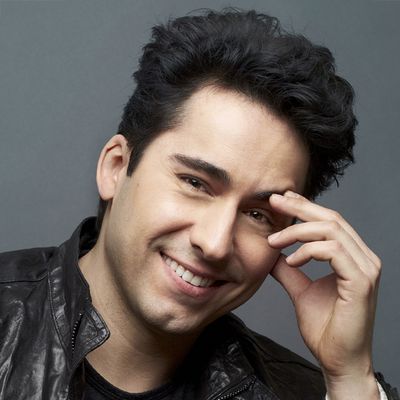
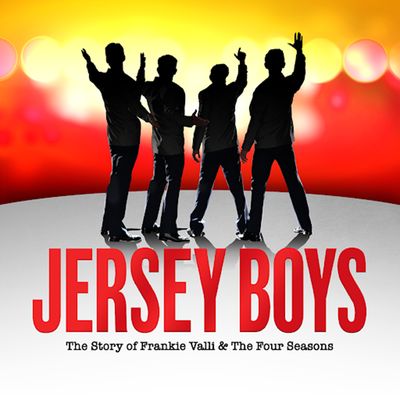
In 2005, John Lloyd Young took Broadway by storm with his portrayal of Frankie Valli in the Tony Award-winning Best Musical JERSEY BOYS. He won the Tony Award, a Drama Desk, a Theatre World Award, and a Grammy for his memorable performance as well as starring in Clint Eastwood’s 2014 film version... Read More
From the show: Broadway Gives Back
Guests
Featured Shows
About
In 2005, John Lloyd Young took Broadway by storm with his portrayal of Frankie Valli in the Tony Award-winning Best Musical JERSEY BOYS. He won the Tony Award, a Drama Desk, a Theatre World Award, and a Grammy for his memorable performance as well as starring in Clint Eastwood’s 2014 film version. Throughout his career, he has used his voice and his talent to support a number of important causes on Broadway, in Washington, and beyond. Join John for a raw, vulnerable discussion about art, artists, and doing good.
Looking for ways to give back?
Learn more about the worthy organizations discussed in this episode:
Connect with John:
- JOHN LLOYD YOUNG BY REQUEST: LIVE FROM LAS VEGAS concert
- Website: JohnLloydYoung.com
- Twitter: @GenuineJLY
- Instagram: @JohnLloydYoung
- Soundcloud: @JohnLloydYoungofficial
- YouTube
Connect with The Broadway Gives Back Podcast:
- Facebook: @broadwaygivesbackpodcast
- Instagram: @broadwaygivesbackpodcast
- Twitter: @broadwaygives
Produced by Dori Berinstein and Alan Seales with Brittany Bigelow
A proud member of the Broadway Podcast Network.
Special thanks to my producing partner, Jim Lochner; Katie and Yo from BPN; Julian Hills from The Bulldog Agency; Eric Becker and Broderick Street Music; to everyone at the Charity Network; and my fiancé and consultant, Glenn Weiss!
Transcript
This transcript was automatically generated and might contain errors.
[0:05] Jan Svendsen: Welcome to the Broadway Gives Back Podcast.
[0:07] Jan Svendsen: I'm your host, Jan Svendsen.
[0:10] Jan Svendsen: This podcast spotlights Broadway actors, shows, and organizations in their pursuit of social impact and philanthropy.
[0:17] Jan Svendsen: Join us as some of the brightest lights on Broadway share their stories about their favorite charities and how they got involved and the people on the causes who benefited from these philanthropic efforts.
[0:33] Jan Svendsen: In 2005, John Lloyd Young took Broadway by storm with his portrayal of Frankie Valli in the Tony Award-winning Best Musical Jersey Boys.
[0:42] Jan Svendsen: He won a Tony Award, a Drama Desk Award, a Theatre World Award, and a Grammy Award for that memorable performance.
[0:49] Jan Svendsen: Plus, he starred in the 2014 film version directed by Clint Eastwood.
[0:54] Jan Svendsen: John is not just an actor, a singer, a dancer, but also a visual pop artist.
[0:59] Jan Svendsen: So he is a quadruple talent.
[1:01] Jan Svendsen: But never one to rest on his laurels.
[1:03] Jan Svendsen: John has used his amazing talent to support a number of worthy causes.
[1:07] Jan Svendsen: And I'm so thrilled to have him here today.
[1:09] Jan Svendsen: John, welcome to the Broadway Gives Back Podcast.
[1:12] John Lloyd Young: Thank you so much.
[1:14] Jan Svendsen: So before we chat about philanthropy and what you've been up to, I would like to play a little game with you.
[1:20] Jan Svendsen: Haven't tried this before with any guests, but I thought we would try a little quick, like rapid fire Q&A to break the ice.
[1:27] Jan Svendsen: Are you uh are you game for that?
[1:29] John Lloyd Young: I'm game.
[1:31] Jan Svendsen: Okay. What's your guilty pleasure?
[1:34] John Lloyd Young: Cadbury cream eggs.
[1:36] Jan Svendsen: At what job would you be terrible?
[1:39] John Lloyd Young: Accountant.
[1:41] Jan Svendsen: If you weren't an artist, what would you do to earn a living?
[1:44] John Lloyd Young: Probably something in politics or that kind of thing.
[1:50] John Lloyd Young: Engaging with the public somehow in another way. Writer, maybe.
[1:54] Jan Svendsen: Give me three adjectives that you would use to describe yourself.
[1:57] John Lloyd Young: Creative, uncertain, and serious.
[2:03] Jan Svendsen: What do you most give a damn about?
[2:06] John Lloyd Young: Justice.
[2:07] Jan Svendsen: What is a dream you've yet to achieve?
[2:10] John Lloyd Young: I've done it before, but like living and working abroad in a sustained way, more than just for a few weeks.
[2:17] Jan Svendsen: What is something that you always say you're going to do, but you know that in your heart you never will?
[2:23] John Lloyd Young: Read all the books in my library.
[2:25] Jan Svendsen: Name one thing that you've had to give up to achieve your current level of success.
[2:31] John Lloyd Young: What would be recognized as the normal path or the stability, you know, white picket fence kind of setting down roots in one place, you know, that kind of taken for granted kind of stability.
[2:43] John Lloyd Young: Any stability, actually.
[2:46] Jan Svendsen: John, what are you most grateful for today?
[2:49] John Lloyd Young: My health.
[2:51] Jan Svendsen: No holds barred. That's I think we can all understand how we could maybe have a new appreciation for that under circumstances.
[2:59] John Lloyd Young: For sure.
[3:00] Jan Svendsen: What was the last random act of kindness that you performed for someone else?
[3:05] John Lloyd Young: It was just a couple minutes before I got on with you. A young student wrote to me on social media that he just discovered me, and his voice teacher mentioned me as someone who was a talented singer, and he um and he said he was a fan or whatever, and I gave him some advice that it took me 20 years to learn.
[3:32] John Lloyd Young: And said I want to give you a head start that before you sing, warm liquids, literally warm your voice up. And it took me 20 years to learn it, and good luck.
[3:44] Jan Svendsen: That's great advice. I've been trying to drink tea before I do these podcast report recordings, but today I forgot.
[3:50] John Lloyd Young: So my voice will probably be a little froggy.
[3:53] John Lloyd Young: It's not always, but it definitely definitely kick starts a warm-up, especially if you don't have a lot of time to warm up before a performance or something. A hot liquid will get you there.
[4:06] Jan Svendsen: Okay. Ladies and gentlemen, you heard it here. Um anyway, thanks for playing that little game with us.
[4:13] Jan Svendsen: Um let's just talk about, yeah, I guess let's talk about this past year. Have you been coping? Um and do you feel hopeful or more hopeful now?
[4:23] John Lloyd Young: I feel hopeful with a little bit of hesitancy. Um that things are going to come back kinder.
[4:31] John Lloyd Young: The reason I say with hesitancy, and I'm thinking specifically to kind of our business, uh, or Broadway specifically, you know, but the entertainment business at large.
[4:44] John Lloyd Young: It's a business of egos. You have to have a healthy ego to keep coming up to bat when when people say no. I mean, because that's like the beginning of every career, is just being said no to over and over again for most people.
[4:58] John Lloyd Young: And so a healthy ego is a good thing, because you kind of uh can endure, but as we've seen recently, even with everything shut down, there are some people who don't want it to come back the way it was and expect people to be treated nicer.
[5:18] John Lloyd Young: And I want to believe people will be treated nicer, but I uh there's certain individuals who've been called kind of called out in the last year or so.
[5:29] Jan Svendsen: The last week in particular?
[5:31] John Lloyd Young: The last week.
[5:33] John Lloyd Young: And for every individual that's called out, there's at least 20 more who behave that way all the time, who haven't been called out and who might not be. And I've seen it with my own eyes.
[5:42] John Lloyd Young: I worked in production offices uh before I was an actor. So it almost is like uh it's almost like you had you just have to accept this is what this is this society is like, and if you can well, how many times have we heard people say you have to have a thick skin?
[5:57] John Lloyd Young: Well, literally, if a stapler's being thrown at you, you better have a stuff thick hide or else you're it's gonna draw blood. But I mean, but that also applies to certain um harassment situations where you have emotional thick skin, to certain quid pro quo situations where you have to do something that denigrates your integrity in order to um be in contention even for a job or whatever, and we know all the clichés, they've been portrayed in entertainment, you know, in shows or whatever.
[6:33] John Lloyd Young: So I'm hopeful that after this big um pause, forced pause that we'll come back kinder and um more compassionate, but I don't know. I'm I'm I'm a little hesitant to believe it'll be that way.
[6:47] John Lloyd Young: Anyway, but let me uh let me answer the first part of your question, which is that how uh I've dealt personally with the pandemic. Um you know, the first thing I did was to go back into the art studio because I have an art career um on you know on the side running just right alongside of everything else, you know.
[7:09] John Lloyd Young: You know, I see it like my career has been sort of like a pie chart, you know, at any one time, one of those quadrants is is active.
[7:18] John Lloyd Young: So when uh live performance shut down, I was right back into the art studio. And uh and so that was a saving grace for me that um going back into the art studio creating several pieces, I mean more than probably about 120 pieces I've sold um during the year.
[7:35] Jan Svendsen: Wow, that's that's a prolific amount of art.
[7:39] John Lloyd Young: Well, didn't we have a lot of time on our hands?
[7:42] Jan Svendsen: We did have a lot of time on our hands.
[7:44] John Lloyd Young: Um so that was one that was the first thing I did, and then um as certain protocols started to open up, then I started to do live stream concerts from um first the space in in LAS VEGAS where I had done live concerts before with live audiences.
[8:01] John Lloyd Young: I started doing those in July of 2020. I do it probably about every six weeks or so. I have one coming up May 1st. Um that's all request.
[8:11] John Lloyd Young: And then also um, you know, I play Michael Feinstein's clubs around the country, you know, pre-COVID, and his club here in Los Angeles where I live, Feinstein's at Vitello's just started their own um live streaming a few months ago.
[8:28] John Lloyd Young: So and so I've been able to kind of keep my momentum going, not just as a performer, but also keep my audience engaged, uh, you know, give them little stones across the river of of this COVID pause to, you know, until we get to the other side, little landmarks along the way to gather together little breadcrumbs, yeah.
[8:50] Jan Svendsen: Yeah. You know, don't you think though, I'm I as you're talking about this, I was thinking that, you know, we've so much bad has happened this last year, but there's interesting and good things that have come out of it too.
[9:00] Jan Svendsen: And this whole idea of these virtual concerts that you've been doing and others as well, you know, I think that they're gonna continue even after we come back to whatever the new normal is.
[9:11] Jan Svendsen: So to me, there's this opportunity to see live performance, which is there's nothing like that, obviously. But I think there'll still be an opportunity to hit more people and um and you know, be able to perform for more people and touch more people through virtual.
[9:28] Jan Svendsen: Do you think you'll continue to do both if you have the opportunity?
[9:32] John Lloyd Young: Absolutely. And I also think that I think maybe in the past there was a bit of um of an anxiety about like if you let people if you if you let people watch something live, um if you let them watch it virtually, that you would then not have people would want to show up and come and see the live thing and pay, you know, to see it live.
[9:53] John Lloyd Young: I don't I've never agreed with that philosophy, and it's because when I was a kid, you know, I always wanted to be in New York City, but my dad was Air Force, so I wasn't at, you know, in lots of different random places across the country.
[9:53] John Lloyd Young: When I was a kid, my connection to Broadway was whenever I would visit my grandparents in the summer, and they lived in Queens, you know, so I'd see my occasional Broadway show maybe once a year.
[10:15] John Lloyd Young: And then of course the Tony Awards. There was no internet when I was a kid. So the Tony Awards, I'd watch those.
[10:21] John Lloyd Young: But I also remember that there was um you might remember Rosie O'Donnell got her start, at least became started to become well known when she was the MC for um Caroline's Comedy Hour.
[10:36] John Lloyd Young: Do you remember Caroline's Comedy Forum?
[10:38] Jan Svendsen: Yeah.
[10:39] John Lloyd Young: And so um, you know, I was I remember distinctly I was a kid in Omaha, Nebraska, very far away from Broadway in New York where I wanted to end up.
[10:52] John Lloyd Young: And I would watch Caroline's Comedy Hour, and I knew it was coming from New York City, and it was coming from a club in New York City.
[10:59] John Lloyd Young: And then whenever I would be in New York City, I'd want to go to Caroline's. You know, at first I was too young to go there.
[11:05] John Lloyd Young: But uh it would be and then live at the Apollo, which would come on after I think maybe Saturday Night Live.
[11:11] John Lloyd Young: And so, and it was from the Apollo Theater in Harlem, that famous theater. So it made me want to go to those places when I or when and if I was in New York City.
[11:21] John Lloyd Young: And because I was my own focus group for this idea, you know, I know it, I know it personally that it made me want to actually be there, or the the Tony Awards made you want to actually go and sit in the audience for those shows.
[11:34] John Lloyd Young: I believe that streaming um is only going to be an enhancement for the live shows.
[11:41] John Lloyd Young: And if I were some guy in again in Omaha who couldn't necessarily get to Feinstein's 50 Board Below to see John Lloyd Young, but I wanted to see the concert uh that particular concert, I would watch the stream, and then in the future, when I was in New York and able to see John Lloyd Young live, I'd go there too.
[12:00] John Lloyd Young: So I think that they're they will feed each other, and I hope that it doesn't go away when things lift.
[12:07] John Lloyd Young: I I think it's more eyes on the prize.
[12:11] Jan Svendsen: Exactly. No, I I think that too, and um being able to leverage both of those experiences are are really are really special, and especially with the virtual now, because you can still do like a talk back after your virtual show if you wanted to, or do a meet and greet.
[12:25] John Lloyd Young: Absolutely. I do those as a matter of course.
[12:28] John Lloyd Young: Well, you do you do requests beforehand for concerts too, right? Everyone has been sort of different. It's been an interesting way for me to kind of look at my repertoire and play around with what I've got and see what I've got and do different themes for different things. But the one thing when I started the live streams that was a little bit of just a little blip of confusion at first was one of the most popular things about my live shows are my meet and greets, which sometimes are so popular that they last longer than the concert. When the virtual became necessary, I was thinking what can we do to sort of scratch that meet and greet itch? And so what we've done with every single live stream that I've done, and I maybe done about 10 now or somewhere around there, we do the concert just as I usually do, and so the audience is a fly on the wall for the concert, very similar to what you would see if you're sitting in a live room with us.
And then afterward, because I can't do a receiving line and talk to people individually, I think of something that might be a fun way to kind of relax and hang out afterward, the after party we call it an after party, virtual after party. We've done Q&As, we've done some bonus songs maybe, answered questions from people, you know, in real time. After the Valentine's Day concert, I actually was given a landline phone and called people, fans, and had like a little five-minute speed dating round. I set up a table like out at a cafe table, right? And I had a bottle of wine and a wine glass, and as the hour went on, I was drinking wine and taking calls and talking into the camera one-on-one with someone at home. And we went person to person and just probably did about 20 people, and then when we ran out of time, I just did a speed round of answering the questions that we would have discussed.
[14:41] Jan Svendsen: And I'm assuming the bottle of wine was empty by the end of that too, right?
[14:45] John Lloyd Young: Yeah.
[14:46] Jan Svendsen: What, and I got looser.
[14:47] John Lloyd Young: It was like I was gonna say your answers were longer and a little more intimate.
[14:51] Jan Svendsen: Right.
[14:51] John Lloyd Young: It was pretty fun. It was uproarious at some points. And so this next one, the May first show is all by request. So the first, the concert is songs that the audience chose that are songs that I'm known to sing that they wanted to hear. So it's the first time ever in my career of doing concerts that I put together a whole concert of requests. So they chose the first half that and then the after party is gonna be songs that I've never done before that they want to hear me do. And Tommy Farragger, my music director, and I are gonna work them up in real time. If the key needs to be changed, we're gonna change the key. If it's like you take this part, I take this part, we're gonna do all that stuff live with the audience watching, and then I'm gonna I think be set up with there's a live chat that goes on during it, and I'm gonna be set up with that so that if I wanna talk to people in real time, you know, get feedback and back and forth about what we're doing, I can do that.
So it's almost like an open studio session. Each one has been different, and each one has I think really scratched that itch of the meet and greet, the one-on-one kind of the personal connection to the artist after the performance.
[16:11] Jan Svendsen: What do you get out of like the meet and greet?
[16:14] John Lloyd Young: I like the pressing flesh part of it and the engaging with the people who are supporting my concerts. It's almost like engaging with your constituents in a way. It's fun for me to kind of remember a part of a conversation that we had a month, two months ago, or whatever the last time I saw them in a meet and greet, and to continue where we left off. I'm interested in them as people, and I like that interaction. So it's actually a fun exercise for me. It's just that after giving a, you know, after drawing blood with all these, you know, sometimes very emotional songs in a show, it can be physically exhausting, but it's always rewarding, always.
[17:02] Jan Svendsen: Well, there are so many people that appreciate your art, whether it's your visual pop art or whether it's your performances, and it must be really gratifying to exchange that energy with those people after and be rewarded with that.
[17:18] John Lloyd Young: I think people on my side of things do this because we want to mean something to people, and so when we see that we are meaning something to somebody, that's why else will we put up with all of the slings and arrows of this kind of business? It's very hard to be my part of this business, the artist. Part of the reason that you're good as an artist is because of a certain sensitivity that makes you pretty vulnerable when you're around kind of hardened business people who, in order to endure the, you know, the difficult economics of Broadway, for example, of live theater space or the, you know, that they need to be tough, but ironically, the artists need to be soft in order to make that connection to the audience.
So you're supposed to have a thick skin. I've never been good at that, which is why I'm good as a performer. I don't want to get too thick a skin, but it can be painful sometimes when you're confronted with things that you're ill-equipped constitutionally to deal with.
[18:25] Jan Svendsen: Well, using the concept of having a thick skin and having a thin skin, so to speak, but you know, your skin is also thin when it comes to caring for other people and being philanthropic. And you and I actually met back in 2005 in conjunction with the Tony Awards, and you and I worked on a number of programs, charity programs for Broadway Cares at the time. But I know that you supported so many charities over the past years, including Broadway Cares, but also Amfar and the AIDS Project of LA and Cystic Fibrosis and Paul Newman's Hole in the Wall Gang, the USO, American Cancer Society, the Actors Fund. And you know, that's also another way of being meaningful to not just your fans, but you know, meeting in life, right? And I just wonder why you are so philanthropic. Why do you care?
[19:18] John Lloyd Young: When I was the kid, I was the one who was sort of the wallflower who would rather read a book in the corner and was kind of awkward about other, you know, engaging with all like the popular kids, you know, especially when they started to like drink beer and stuff, and that was illegal, and I was like, you know. But you know, I had a military father, so it was kind of a strict upbringing, and you know, we were expected to almost like if your parents are politicians, like you gotta stay in line, it's about the dignity of your family, you know. So, but I was also inherently shy and a creative person, and I said earlier when you asked me those adjectives of uncertain and uncertain only because awkward, because I'm a natural introvert, and it's taken to me until in my 40s to say it's okay, even in an extroverted business and an extroverted society to be who you are and to just declare to yourself I'm a shy person or an introverted person.
So that feeling of alienation that happens, anyone who was ever a teenager knows what I'm talking about. The feeling of alienation and sort of not fitting in and being a misfit or whatever, outcast, even some at some points, how can you not come out of that with more of a sort of a softness or an empathy for other people who are struggling?
[20:45] John Lloyd Young: So what's really weird is I have so much engagement with charity, but I wouldn't choose to wake up one day and say, Oh, I want to go and work for charity today. Like I do it because I know it helps, but I actually have a very awkward engagement with the idea because it also requires getting up and getting around people, you know, some and some I'm kind of a brooder, and so it's like, and one of the things that happens when I'm asked to do charity stuff is I'm like, how much impact, how much impact can I even have here? You know, do I bring enough eyes to this? What I've learned in the meantime is that I'm really good at the, and I, you know, I think it's not surprising for a kind of introverted person. I'm really good at this sort of one-on-one thing. I'm good at a board meeting, I'm good at a table of a small group of people, I'm good at ideas, and I'm good at one-on-one interaction.
[21:43] John Lloyd Young: So one of the things you didn't mention, but was a deeply important part of my philanthropic activities was being a presidential appointee for Barack Obama and working with his arts and humanities committee. The co-chair of that was actually a Broadway colleague that I knew since I was in college. I invited her to come and speak to our seminar when I was an undergrad at Brown, Margot Lyon, who just recently passed away, the famous producer of Hairspray. Great, yeah, very and very intelligent and whip smart. She was the co-chair of this committee. One of the initiatives that I was engaged with was called Turnaround Arts, which was conceived under Michelle Obama and this committee, and then migrated over to the Kennedy Center.
So it still exists, even with everything that happened with Trump, it survived and because we moved it over to Kennedy Center right before the election. This was sending artists into underperforming schools to use the arts and the humanities as a lever to lift the whole culture of the school. So, for example, like if you started to give them dance recitals, then parents would come and be engaged with the culture of the school, which would be better for the students. If you got the whole school involved in a mural project to paint a mural in one of the hallways, those cinder blocks turned into this magical thing that the students felt ownership over. And it helped everything in the school.
[23:15] John Lloyd Young: Okay. I found that my individual engagement with some of these students was more my style. So I remember I was backstage one time, we were practicing a little dance thing that was going to go in a video from all of these schools across the country we were working with who were gonna put a video together and send it to the White House for Barack Obama to see, you know. So I was working with these little kids in I think it was Broward County, Florida, and there was a little girl, a little African-American girl, standing in the wings with me before we go on, and it was just the two of us in the wings, the other kids were on stage doing something. And I said to her, You Barack Obama knows about you.
And she said, He knows about me? I said, Yeah, that's why I'm here. They care about you kids. And she said, About me? And I was like, Yeah, I'm here from Washington, DC. We're here for you guys. And when you guys do well, the Obamas find out. They know that you're doing better or that you're doing well, you know. So that to me crystallizes my favorite way of giving back, which is that one-on-one. Or I but with like someone really established, like I was at I was at a dinner at Frank Gehry's house, okay, in Santa Monica, with like Josh Groban was there and Paula Abdul and Matt Groening who invented the Simpsons, okay. That's the kind of group, Maria Shriver. This is the kind of people that were there. And little old me. Just the normal people you hang out with. Little old me, who's a member of the president's committee.
[24:55] John Lloyd Young: So we would have to enlist people to go and visit these schools. And Matt Groening was there at this dinner, but he wasn't involved yet. And I got up and, as the least famous of all these people that I just mentioned, and just imparted to this group of people at this dinner what this program was and how we could affect these kids, and that it has a deep impact for these kids who are otherwise ignored to know that someone from the highest office in the land is aware of them and cares about them. That's huge. When I was a kid and I got the presidential fitness award, you know, because I was able to pass those fitness tests. Yes. Like, and I got, and it was signed by the, yeah. I was, I didn't care who the president was when I got mine.
I was like, wow, this is from the president of the United States. It was a great feeling as a kid. So I tell this story, something similar to that, whatever, and Matt Groening, you know, slaps the table. He's like, I'm in. You know, the creator of The Simpsons is gonna go to schools. Every kid knows The Simpsons, and he's gonna go and work with kids in their school, you know. So those sort of impacts with small groups, I realize that's where I do the best work. But in the beginning, I just showed up because I was asked to. And also, if you want to mean something to people, you know, a year before JERSEY BOYS happened for me, I was an usher for the same producers for the Dodgers. For the people who don't know, Broadway Dodger Productions is a big producer.
I was an usher working at 42nd Street, the musical, you know, a year before I was starring in a show for them, my own show. You know, it was a survival job. And so, and, but yet I was around the theater. I got to see the show every day and learn from watching people go get up to bat every day, do the same show. No one cares about you when you're an unknown actor. No one cares about you when you're an out-of-work actor, but then you're starring in a Broadway show and you can help with these initiatives and you can bring people to the table, like Broadway Cares, which you basically get involved with Broadway Cares automatically when you're a Broadway show because they're fundraising drives a couple times a year.
And this again was pre-social media, but I had a little blog on my personal website and I had JERSEY BOYS fans reading what I wrote on my blog. And I was like, this is amazing. I can, let's see what I can do if I ask these followers to contribute to Broadway Cares. And so I, with small little checks from people, like as little as like 10 or 20 dollars, I brought a fat envelope of checks that were sent to me at the stage door to Tom Viola, head of Broadway Cares, for like $30,000, you know. It was amazing to me how much I could take the goodwill from being in a great show and translate that into action toward benefiting charity. And so it's fun for me to gather interest around something. How can I complain when you're sitting around a boardroom table with 30 people appointed by a president of the United States? You're making an impact. You're in the room where it happens, so to speak.
[28:17] Jan Svendsen: You literally were. I started this podcast, and the idea was to talk about this interaction or this intersection, really, between, you know, celebrity and cause and giving back and to help motivate and inspire people and fans to be more philanthropic. And I really think that there are many different ways that people can give back. You know, the work that you've done, especially sitting on boards and using your, again, your empathy and your intelligence together to help create some of the programs is, you know, is so important. But we don't do this to be doing it in a vacuum. We don't do this to be the tree that falls in the forest that no one hears. There are so many different ways to give back or to be philanthropic or to be a social activist.
But if you were to advise your fans, because you do have a lot of fans, and people care about you and they care what you think and what you say, how would you advise your fans to become more philanthropic or more socially engaged in causes?
[29:25] John Lloyd Young: I would say the first thing is if you can write a small check to a big cause, there's power in numbers, and there's other people doing that. So sometimes it is give money. You can do one-on-one stuff with other adults, and that is philanthropy because what is that love of other human beings? Right. So if there's a kid, you take that child aside and you give that child some support and some encouragement, and they'll always remember it. And it's similarly, you can do that for an adult that had those things left undone. You give them some encouragement. I guess that that's a small way that you can help is by giving people encouragement. And we've talked also just the reason one of the reasons I asked you one of those quick fire questions was, you know, what was the last random act of kindness you did?
Because that's something everybody can do. People can just be kinder. And you opened this podcast with talking about how Broadway could be a kinder place when it returns after the pause. And I think that's a really important thing. I've been asking every one of my guests in the last few months if you had a magic wand that you could wave, what changes do you hope will happen in the theater industry when it reopens? So it sounds to me from your earlier answer that one of the things you would answer would be that Broadway would be a kinder, safer place to be.
[31:30] John Lloyd Young: On my side of things, not being able to work for, it'll probably be two years before we even get to do something again. There is a pervasive idea in Broadway that only the producers and the writers and creators are the only ones that count. But all the kids who, and not so much kids, who put that sweat equity in to build a show up in that first year, win it its Tonies, whatever, make it what it is. The ones who are on the cast album, the ones who are, you know, there first shouldn't on the other side become destitute or not have some sort of share in that success. You and I are seeing there's a lot of controversy right now, and there's lots of agitation happening in especially in theater right now, while there's no theater.
I mean, I kind of have said before, I kinda, I think it's kind of strange that while the powers that be are comatose in the ICU, you know, there's people making demands of them. You know, it's like there isn't nothing to give right now. There's no audience, you know. So, but now I'm lucky. I'm just like, you know, I'm alright. I'm not as well off as some of the creators of JERSEY BOYS, for example, or like whatever. But I'm not destitute, but I could be. And it shouldn't be that situation. It should not be that way that you're left out to drive, that you're hanging out to drive. People in my position. Now, maybe that's one solution, but there should be others. The pandemic has kind of forced a whole class of people to have to leave New York because there's no way to survive.
Many of those people are gonna are the types that make, like you said earlier, you asked me, what did you give up to do this? Stability, okay? To be ready and able and willing to be in a Broadway show and be the ones sending over, if you're lucky enough to have a hit, the ones sending that over. I don't believe the thing that they tell you to negotiate you down or to, you know, make you not get too secure when they say, well, anyone can do this. I don't believe that. Let's see how many of these people can afford to move back to New York City. Because those are the people that are going to populate those Broadway shows when they come back. And if you don't make it a little bit easier for people to survive something like this, I don't know how it's gonna happen, but I hope that there is a recognition that we're an ecosystem that we all rely on each other, and that this marginalization of people because they're the actor or because they're the talent is really inappropriate.
We all have our place in the ecosystem, right? But I really find it very uncomfortable to be someone who can reach the level of presidential appointee for the first African American president in history and still be classed down all the way to the bottom as a member of this ecosystem. And I would like to see it change. So I would say that for people on my side, the creative side, I'd like to see us have a little bit more of a seat at the table and not be so disregarded.
[34:46] Jan Svendsen: No, that's great, and you know, I appreciate the honesty. A lot of people have said things that are very difficult to say when I've asked that question. And I think it's important to have these conversations, you know, whether it's about, you know, the fairness in the ecosystem or whether it's about, you know, the systemic racism, or, you know, there's a million other problems with, you know, the way Broadway shows are being produced or within that industry. But there's also so much good, you know, and there's, you know, I do think that looking at Broadway, the spirit of collaboration in the Broadway industry is unlike anything else, and I do think that the spirit of philanthropy within the Broadway industry is like anything else.
There's nothing else like it. I mean, Hollywood doesn't have anything like that. So that was also another impetus for having this conversation and having this podcast. That's where the community feeling of Broadway and the peer pressure, you know, to all stick get behind it is one of the most positive peer pressures.
[35:10] John Lloyd Young: Well listen, thank you so much for this chat today. Really appreciate it, and I'm sure people are gonna want to see you in concert on May 1st, and I guess it's too late to make the request, but we will be watching and hopefully people will request the song that we want to take some doozies, I can imagine. I appreciate it, and thank you for being here today and for every all the good that you do.
[36:14] Jan Svendsen: Thanks for doing this. I think it's good to put this out in the world and to encourage more of it. Sending love.
[36:20] John Lloyd Young: You too. Thanks for listening to this episode of Broadway Gives Back. Broadway Gives Back is part of the Broadway Podcast Network, produced by Dori Berinstein and Alan Seales with Brittany Bigelow and music by Eric Becker at Broderick Street Music. Special thanks to my producing partner, writer, and friend Jim Lochner and to Katie and Yo at BPN, Julian Hills from The Bulldog Agency, the Charity Network, and to my fiancé, Glenn Weiss, who is always my consultant. If you like what you hear, don't forget to subscribe and rate this podcast wherever you stream your podcasts. You can also follow Broadway Gives Back on Facebook and Instagram at Broadway Gives Back Podcast and on Twitter at Broadway Gives. To learn more, visit bpn.fm slash Broadway Gives Back.
© Broadway Podcast Network, All Rights Reserved