

In 2008, Broadway finally went green. Since then, the Broadway Green Alliance has worked tirelessly to educate, motivate, and inspire the entire theater community and its patrons to implement environmentally friendlier practices on Broadway and beyond... Read More
From the show: Broadway Gives Back
Guests
Featured Shows

About
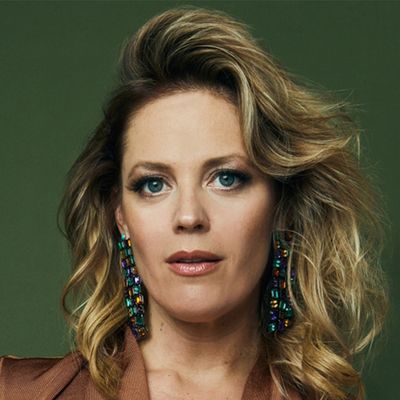
In 2008, Broadway finally went green. Since then, the Broadway Green Alliance has worked tirelessly to educate, motivate, and inspire the entire theater community and its patrons to implement environmentally friendlier practices on Broadway and beyond. Join Broadway Green Alliance Founder and Co-Chair Susan Sampliner, Director Molly Braverman, and former “Green Captain” (and recent Tony Award nominee!) Elizabeth Stanley as they discuss how BGA is making Broadway—and theater in general—better for the planet.
Looking for ways to give back?
Check out BGA and its greener initiatives discussed in this episode:
Connect with Broadway Green Alliance:
- Facebook: @BroadwayGreenAlliance
- Twitter: @BroadwayGreen
- Instagram: @BroadwayGreenAlliance
Connect with Elizabeth Stanley:
- Instagram: @el.stans
Connect with Jagged Little Pill:
- Website: JaggedLittlePill.com
- Facebook: @jaggedmusical
- Instagram: @jaggedlittlepill
- Twitter: @jaggedmusical
Connect with The Broadway Gives Back Podcast:
- Facebook: @broadwaygivesbackpodcast
- Instagram: @broadwaygivesbackpodcast
- Twitter: @broadwaygives
Hosted & Executive Produced by Jan Svendsen and co-produced & edited by Jim Lochner.
A proud member of the Broadway Podcast Network.
Special thanks to Dori Berinstein, Alan Seales, Brittany Bigelow, Katie Rosin, and Yo Nikolova from BPN; Julian Hills from The Bulldog Agency; Eric Becker and Broderick Street Music; the Charity Network; and Glenn Weiss!
Transcript
This transcript was automatically generated and might contain errors.
[0:05] Jan Svendsen: Welcome to the Broadway Gives Back Podcast.
[0:07] Jan Svendsen: I'm your host, Jan Svendsen.
[0:10] Jan Svendsen: This podcast spotlights Broadway actors, shows, and organizations in their pursuit of social impact and philanthropy.
[0:17] Jan Svendsen: Join us as some of the brightest lights on Broadway share their stories about their favorite charities and how they got involved and the people on the causes who benefited from these philanthropic efforts.
[0:33] Jan Svendsen: On this episode of the Broadway Gives Back Podcast, I'm thrilled to welcome three extraordinary women who are at the heart of Turning Broadway Green.
[0:42] Jan Svendsen: For over 10 years, the Broadway Green Alliance has educated, motivated, and inspired the entire theater community and its patrons to implement environmentally friendly practices on Broadway and beyond.
[0:55] Jan Svendsen: I'm so excited to welcome Broadway Green Alliance founder, co-chair, and my friend, Susan Sampliner, Director Molly Braverman, and former Green Captain and recent Tony Award nominee, Elizabeth Stanley, today to discuss how Broadway Green Alliance is making Broadway better for the planet, not just in New York, but all around the world.
[1:17] Jan Svendsen: So, Susan, Molly, Elizabeth, welcome to the Broadway Gives Back Podcast.
[1:23] Susan Sampliner: Thank you so much for having us.
[1:26] Susan Sampliner: This is a very this topic is very near and dear to my heart, so I'm really excited to be talking to the three of you about this.
[1:32] Jan Svendsen: Let's start with you, Susan. Can you share with everybody how Broadway Green Alliance started?
[1:37] Jan Svendsen: And before you do, full disclosure, I just want to say that in my former position at the Broadway League, I was part of the producing team that helped launch the press event that started Broadway Green Alliance.
[1:50] Jan Svendsen: And I can't even remember how many years ago was that.
[1:52] Jan Svendsen: Um, but tell us about the history.
[1:55] Susan Sampliner: The history is that in 2006, David Stone asked the companies of Wicked to he had seen an inconvenient truth, the Al Gore film, and he asked the four companies of Wicked to start thinking about what we could do to be greener.
[2:12] Susan Sampliner: And so for 18 months, we all worked together to try to think what things we could do and talked with each other.
[2:19] Susan Sampliner: And the idea was after 18 months, we would have a town hall at the Gershwin and share it with the community and find out if we were doing this alone or if other people were already doing it or wanting to join us.
[2:30] Susan Sampliner: And we had that town hall in June of 2008.
[2:35] Susan Sampliner: We were attended by 250 people from the entire theater community crew people, actors, theater owners, unions, all kinds of people.
[2:44] Susan Sampliner: And it turned out that not only were we doing this work, but a lot of people were doing this work, but they weren't telling anybody, they weren't sharing what they were doing.
[2:54] Susan Sampliner: Everybody was in their own bubble.
[2:55] Susan Sampliner: And so out of that, we decided to form a committee that was done by the Broadway League.
[3:01] Susan Sampliner: And at that point it was called Broadway Goes Green, and we started with a committee there, and we were an ad hoc committee of the Broadway League, which we thought was gonna mean that we'd be together for four or five months, and now it's been 12 years.
[3:15] Susan Sampliner: Um committees that were dealing with all aspects of the theater with pre production and design, with production, with the venues, with education and outreach, touring, and communications.
[3:29] Susan Sampliner: And we kind of set up these different committees and got involved in all the shows and all the theaters, and over the years, we then started expanding to around the country.
[3:38] Jan Svendsen: I want to come back to some of the things that you've done, but before we do that, um, Elizabeth, I want to pivot to you for a second.
[3:43] Jan Svendsen: So, first of all, I mean, congratulations on your Tony nomination for Jagged Little Pill and 15 nominations for Jagged Little Pill.
[3:50] Jan Svendsen: That is so exciting.
[3:53] Elizabeth Stanley: Thank you.
[3:53] Elizabeth Stanley: So, how do you how are you feeling?
[3:55] Elizabeth Stanley: Oh my goodness.
[3:56] Elizabeth Stanley: It must be a little odd too, just the fact that we can't do some of the normal traditional things that we do to celebrate the Tonies and celebrate that nomination.
[4:03] Elizabeth Stanley: It is odd, but I will say it's so nice.
[4:05] Elizabeth Stanley: You know, there's so much going on in the world right now that's um difficult and hard.
[4:09] Elizabeth Stanley: And so it's been a really lovely to have something to celebrate in and you know, a spot of joy.
[4:15] Elizabeth Stanley: And such a great gift that you know, every person that was associated with my show that could have been nominated was that rarely happens.
[4:23] Elizabeth Stanley: You know, oftentimes you go to the theater and you're like, Oh, I'm sorry you got overlooked, or you know, it's a it's always bittersweet.
[4:29] Elizabeth Stanley: So it was it was such a joyful day, uh something I'll never ever forget for the rest of my life.
[4:35] Jan Svendsen: Well, hopefully we'll be celebrating you for the entire next year, and who knows what'll happen with the Tony Awards.
[4:41] Jan Svendsen: But when it happens, we're we're really excited.
[4:43] Jan Svendsen: But we could have a really long nomination process, let's put it that way.
[4:47] Elizabeth Stanley: Yes.
[4:48] Jan Svendsen: Yeah, let's talk about you being a green captain.
[4:50] Jan Svendsen: What is a green captain? What is a green captain do?
[4:53] Jan Svendsen: And talk a little bit about your involvement with um the Broadway Green Alliance.
[4:56] Elizabeth Stanley: Well, the green captain is sort of the person that is the you know official liaison representative with the BGA, and they're the person that's making announcements to the casting crew saying, Hey, this is what's going on, this is how we're gonna get green, this is how we can stay active in this.
[5:13] Elizabeth Stanley: Um, and I will say, to these ladies' credit, like it's it's quite popular.
[5:19] Elizabeth Stanley: Um, you know, I was really willing to do it with Jagged Little Pill, but Laurel Harris is our green captain, and she was like, No, no, I really want to do it.
[5:27] Elizabeth Stanley: Um, so you know, it's kind of great that people are so enthused to take part.
[5:32] Elizabeth Stanley: There are a number of things.
[5:33] Elizabeth Stanley: I think you know, in a new show, you're constantly getting new pages.
[5:37] Elizabeth Stanley: So, like the number of like just clean sheets of paper that have barely been used that you know are essentially trash that you know, to know that okay, at least that's getting recycled, I feel like is such a like, oh, feels so good.
[5:51] Elizabeth Stanley: Um, and the same thing, like binders, we go through tons of binders in this industry, and to know that those can be exchanged and reused.
[5:59] Elizabeth Stanley: Um, and just making sure that every theater is set up with like recycling that's easily accessible and that the light bulbs in the dressing room um are good for the environment.
[6:10] Elizabeth Stanley: Um, and then just different kinds of uh, you know, drives like, hey, everybody you can bring in your electronics today, those kind of things that you know, in a New York City apartment, I feel like you're like, what do I do with this?
[6:21] Elizabeth Stanley: I know I shouldn't put it in the trash, but uh I really want to get rid of it.
[6:24] Elizabeth Stanley: And so it's it's so nice that like that's all organized, this organization.
[6:28] Elizabeth Stanley: You can just like okay, I can give it here.
[6:31] Elizabeth Stanley: Um, so there are tons of things.
[6:33] Elizabeth Stanley: So, you know, it's it's funny, Susan uh brought up an inconvenient truth, um, which David Stone had seen, and I also remember being very influenced by that, and also the press conference that launched BGA talked about these small little things that everybody can do that make a great impact.
[6:49] Elizabeth Stanley: And I because I remember at the time feeling so overwhelmed, like, how do I I can't just change my life overnight?
[6:55] Elizabeth Stanley: So I started doing small things.
[6:56] Elizabeth Stanley: I remember after that press conference, I changed light bulbs and I started unplugging devices that weren't being used.
[7:02] Elizabeth Stanley: I mean, eventually I bought um, you know, a Prius and and eventually I upgraded to a Tesla.
[7:08] Elizabeth Stanley: So I mean, these were things that you know became really important.
[7:10] Jan Svendsen: But tell me, Elizabeth, like, what do you do in your personal life that you know, little things that that make a difference?
[7:17] Jan Svendsen: And maybe that'll help motivate people because I know that feeling of like I can't just suddenly be green.
[7:22] Jan Svendsen: Like, how do you how do you eventually start to evolve into greenness?
[7:27] Elizabeth Stanley: Well, I feel lucky that I grew up, my mother was very into this.
[7:30] Elizabeth Stanley: Like she's she's from a farm in Iowa and I grew up in a very frugal life.
[7:34] Elizabeth Stanley: So I think a lot of it comes from that.
[7:35] Elizabeth Stanley: But uh, so I grew up, you know, volunteering at recycling centers and and being really diligent about it.
[7:41] Elizabeth Stanley: But composting is also another thing that I think is like not so hard to do if you have a little bit of freezer space and you can just throw your food scraps in there.
[7:49] Elizabeth Stanley: And like simple things, I like I reuse my Ziploc bags, it kind of makes my fiance crazy, but I'm like, this is perfectly good Ziploc, you know, we can reuse it.
[7:58] Elizabeth Stanley: What else I do?
[7:58] Elizabeth Stanley: I also like have tons of plants, which I think is like great, keeps your keeps your air kind of clean and good.
[8:05] Elizabeth Stanley: Um and and bags, you know, I really try and be always have a reusable bag on me.
[8:12] Elizabeth Stanley: Um, because plastic bags are just, you know, they hurt my soul.
[8:16] Susan Sampliner: One of the principles of the Broadway Green Alliance is that nobody is totally green.
[8:22] Susan Sampliner: We can only try to be greener.
[8:24] Susan Sampliner: And the way to get there is making lots of small actions every day.
[8:28] Susan Sampliner: So we just wanted everybody to know that that it is nobody expects people to change their lives a hundred percent or to go from zero to sixty in no time.
[8:38] Susan Sampliner: It's about looking at the things you're doing every day and saying, what change can I make to be a little bit greener?
[8:44] Susan Sampliner: What can I do to reuse something instead of buying something new?
[8:48] Susan Sampliner: Do I really need to buy a new version of that or can I buy a used version of that?
[8:53] Susan Sampliner: Is it rather than throwing something away? Can I give it to someone or some organization?
[8:58] Susan Sampliner: So those are the kind of changes we suggest that people start with.
[9:03] Susan Sampliner: And as you start doing in this in your life, you'll find there are so many more that you hadn't started thinking about.
[9:09] Susan Sampliner: So it's like looking at your life with a slightly green lens of what can I do to be a little bit greener today and do something I didn't do yesterday.
[9:19] Jan Svendsen: That's what I love about BGA is that you guys make suggestions and you don't sort of guilt people into feeling overwhelmed or anything.
[9:27] Jan Svendsen: So I've I've really appreciated the approach because it's really helped me personally.
[9:32] Jan Svendsen: Molly, how did you get involved with BGA?
[9:35] Jan Svendsen: And you know, I want to also ask you as a second part to that question is now that we're living in this crazy COVID time, what what have you had to do to pivot?
[9:44] Jan Svendsen: And how are you, how are you sort of managing?
[9:47] Molly Braverman: I first came to the BGA as a volunteer, as a green captain, like Elizabeth.
[9:52] Molly Braverman: So I was a green captain on the Wicked tour out when I was a stage manager with them.
[9:57] Molly Braverman: And I spent three years working with the BGA as exclusively as a volunteer.
[10:02] Molly Braverman: And what I loved about it, what I was drawn to, was the BGA's action-oriented work, just like we're talking about finding those small things or those larger things that I could do.
[10:13] Molly Braverman: I was empowered as a stage manager, uh, both on my show and on tour.
[10:17] Molly Braverman: And in addition, while I was on tour, I was gathering data and information about the different venues we went to, about different ways we could recycle and reuse on tour.
[10:28] Molly Braverman: And so that I felt great about helping accelerating the greening of our industry as a whole.
[10:34] Molly Braverman: So that's how I first came to the BGA.
[10:37] Molly Braverman: Uh was certainly through Susan and Wicked, and now I am so honored to be here in the position of director.
[10:45] Molly Braverman: And you make a great point that I wasn't the director of the BGA for six months until uh COVID came along and changed things and changed a lot of our plans.
[10:53] Molly Braverman: But I'm so proud of our staff and our steering committee for so quickly pivoting us into meeting the needs of our membership.
[11:01] Molly Braverman: And it was a unique time because you know, most of our membership are theater makers in addition to theater lovers.
[11:08] Molly Braverman: And so we suddenly were left in this position of having to meet people virtually, meet people outside of the theaters.
[11:15] Molly Braverman: We're used to going to the theaters and doing the work there.
[11:17] Molly Braverman: And so we seized the opportunity to um to do what we called skilling up.
[11:22] Molly Braverman: So we launched our green quarantine series, which are free virtual learning sessions about a huge variety of topics.
[11:31] Elizabeth Stanley: What was beautiful is when we weren't in the hustle and bustle of an eight-show week and put-ins and tech. It was an opportunity for us to come together as a group and really dig into some of these topics like sustainable stage management or composting or other areas that we could start to really focus on so that we can then implement them when we get back into the theaters.
[11:54] Jan Svendsen: Elizabeth, you know, this podcast, it's relatively new, and I've talked to different people and we talk about sort of generically, you know, the idea of giving back or being of service or being a philanthropist. There's so many different words, having social impact, being socially responsible. How do you personally relate to the concept of any of those terms that describe this for you? And tell us a little bit about your upbringing or what's brought you to the place where you are a person who does give back and who does volunteer and give of themselves for others.
[12:30] Elizabeth Stanley: Well, I grew up in a very small town in Illinois. It was just a part of my upbringing that people were just involved in the community, so that felt very natural to me. I grew up volunteering at the recycling semi with my mom once a month, you know, like people would come. So that was definitely always just a part of my life. We were church-going, and that was an easy place for there to be a lot of acts of service that were done through that. I think the arts are also intertwined with a lot of people who are empathetic and giving and perhaps have time rather than money sometimes as an artist. That's been really wonderful. I've been able to be a volunteer teaching artist with A Step over the years, and I went to India with them and did some teaching for about a month several years ago.
I've also done some work with them in the city with incarcerated and unjustly involved youth. That's been super rewarding for you as a person, of course. As a music theater artist, we're often asked to donate our vocal talents to different causes and perform as entertainment for any number of worthy causes, which is always quite fun. I feel lucky that I've gotten to be able to use my voice in that way, literally. It just seems to be a part of, I mean, I think especially if people are feeling that way during this time, right? It's a responsibility, but I think one that people feel quite honored to be able to use to give back with it. I certainly feel that way. It's been lucky that that's an option.
[14:20] Jan Svendsen: It's interesting that people that I've spoken to, there have been differing opinions, but I think there's a theme, which is many people have learned their giving philosophy from their moms or from their families. They sort of live what they learned when they were younger. Other people have also talked a lot about the idea that you don't have to have a giant checkbook. You can be of service by giving of yourself time, energy, as Luis Miranda called it, sweat equity, passion, and all that. I think those are themes that I'm seeing in all the different conversations that we're having. It makes it much more accessible to be an everyday philanthropist, to use a coined phrase.
[15:02] Elizabeth Stanley: Yeah, I love that. If you have a good year, I think as an artist, you're so grateful that you had a good year that it makes me want to share it a little bit, you know? It seems like it might be the reverse that you're like, I gotta hold on to this while I have it. But I found it's the opposite, and I've sort of taken the lead of people older than me that oftentimes, you know, like a Broadway opening is like this abundance of gifts, and it's really fun, but it's a lot. I've seen a number of people write a card and make a donation to an organization, and I've started doing that the last couple of shows, and that feels like a nice way to be able to give back a little bit too. It's a moment of celebration, and you want to give, but how can you make the most impact with what you're giving and what that means too?
[15:48] Jan Svendsen: Speaking of giving and time, Susan, you started Wicked rehearsals, what, 18 years ago, which is amazing. I can't believe it. You combined your full-time, you know, day job or night job, I guess it is, running Wicked and the company there, with starting the Broadway Green Alliance. How did you even have the time to do all this? Speaking of time and energy and sweat equity.
[16:13] Susan Sampliner: It's actually a really good question. Originally, David had asked me to help run this. This was his idea, and he said, "You're gonna run it." I knew nothing about green. First of all, it was a huge education, but I'm a manager, and I was used to setting up crews to do various tasks, and this became my kind of day job at the same time. I did that for three years, where I was probably spending 20 to 30 hours a week on the BGA plus my 40 to 60 on the show. It was a lot. It was finally the point that we added a director when I went to David and said, "I can't do this anymore. I can't be doing two full-time jobs." That's when he went to Broadway Cares, and we became a fiscal program of Broadway Cares, which gave us just enough money to hire a staff person.
That changed my life, just having at least one person on staff who could be paid to do this and carry this forward and coordinate. Eventually, we got to the point where we now have two staff people, and we can do a whole lot more with two. It was difficult in the beginning to try to balance it. Luckily, because David had asked me to do this, he was pretty understanding when I had to say, "I can't do Wicked right now. I have this BGA thing to do." Since he had asked me to do it, he couldn't really say, "No, you have to do this first." That actually made it a little bit easier.
[17:48] Jan Svendsen: I'm sure your wife was happy to have you hire Molly and a director on board too.
[17:48] Susan Sampliner: Oh yeah. Molly is our fourth director. We've had several people over the years, but Molly's the first one who came to us having been a volunteer, having been a green captain. When she said she was willing to do this, my world opened up. It was just like, "Oh thank God." Because that's what I had always hoped for, was a former green captain, but somebody who had been a manager, like a stage manager or a company manager to run this organization. When she agreed to do it, it was just the answer to my prayers.
[18:22] Jan Svendsen: Well, Molly, the answer to Susan's prayers. Let me ask you, tell us about your vision for the Broadway Green Alliance. What are the goals? What's the mission for you going forward? I know obviously now is a funky time, but if you think more of like the five-year plan, what do you want to accomplish?
[18:42] Molly Braverman: Something I'll just note quickly. What's beautiful about this time is that our mission aligned perfectly with what needs to be done. I love, Elizabeth, how you spoke earlier about what theater people bring to the table. I sometimes get asked the question, "That's great that you guys are out there doing this, but I was trained in stage management. I'm not an environmental scientist. Shouldn't we be leaving this to them?" Theater people have so much to bring to the table. No matter what your position is, or if you're a theater fan and lover, we have such a unique set of skills. We are fantastic at building community. Certainly right now, we've learned through the crisis, the many crises we're going through.
Community is essential to moving us forward. We are great at building resilience. We engender empathy through our work. All of these are important tools in the fight to mitigate the damage of the climate crisis. Another favorite tool that I love is theater people applaud. We support each other. When someone's out there, when any show makes a change, when one person makes that small change that we've been talking about, or a huge change, you know, when Wicked moves to rechargeable batteries or work backstage at Hamilton, and there are no plastic cups there. We applaud and we support each other and we lift each other up. We're not the green police; we're not going around yelling at people. We lift and support.
That's something so special that we as artists bring to the table. In addition to our amplifying effect, you know, when Elizabeth takes a picture backstage with her reusable water bottle, she's not only eliminating the single-use plastic in her life, she's inspiring all the fans of Jagged Little Pill, all of her castmates, all of the patrons to do the same thing. We can use our storytelling and our platform to really make a huge difference. That's what I see for us, you know, is we are building a hopeful campaign toward mitigating the damage of the climate crisis and healing our planet. We believe very much in a climate-positive movement, which is that in addition to lessening our own carbon footprint, we also have to help heal our planet by removing what's called legacy carbon from the air.
So much carbon dioxide and greenhouse gases have been emitted that just stopping our own use is not enough. One vision we have is that we, as the Broadway Green Alliance, as theater makers, are going to really champion a climate-positive movement and work toward healing. We also have to address the interconnected crises that are facing us right now. We have the horrible economic damage of COVID-19 that our industry is feeling. We have a long overdue reckoning with systemic racism, and we have our climate crisis, and those are intersectional. Right now, going forward, we have this unique opportunity to redefine our priorities in order to build a theater industry and a planet that supports social and environmental well-being.
[22:03] Jan Svendsen: Well, Susan, I now understand why you're so excited to have Molly on board. Wow. Well said. For anyone listening to this podcast, this will be a dead giveaway of when we recorded it, but it is the day after the inauguration of Joe Biden, yay, and our new president. We're also happy. Let's talk about that specifically in terms of climate change and the environment. Obviously, one of the first things he did yesterday was get us back into the Paris Accords. I know that Broadway, over the last decade, has become more and more involved with Washington, DC and with politics on a local and even national level. Can you talk a little bit about the impact the Biden administration will have on BGA?
[22:48] Susan Sampliner: Well, one of the big things is that who he uh appointed as his climate advisor is Gina McCarthy. Gina has just been, she used to be the head of the APA, but she's just been the director of the NRDC. And NRDC was our original advisor and has been our basically they've kept us online and made sure that we're representing green issues as properly as possible, kind of dealing with what Molly said about saying we're not environmental scientists, you know, we're theater people, but they help us keep on track. And the fact that he's put her in that office is a tremendous help to us because we have a direct contact to her, and I think that we can be of use to her as she starts rolling out things. But I am so encouraged.
I was on a call with the League of Conservation voters the other day, and Gina and her assistant, whose name is Ali, who's amazing, the plans they have in mind are so exciting. And the thing that they said that gave me the most enthusiasm was that not only is their department on board, but all of his other appointees to all the other department heads are all climate conscience and environmentally friendly. It's not a territorial thing of them fighting for attention, but his plan is to make all of the departments work together to achieve his six goals. And that to me is extremely exciting and a big change from the last administration, that's for sure.
[24:20] Jan Svendsen: That's awesome. Elizabeth, as you know, you've done, you know, obviously a large number of Broadway shows. And do you find that your colleagues and your castmates and the crew are open to supporting, you know, your vision and the vision of the BGA with regard to um making these small changes in in how things are done? And do you find that the younger people are like maybe more enthusiastic than some of the older people or how like what are some trends that you see, or what are some observations you have?
[24:47] Elizabeth Stanley: I find that people are very keen. People want to do something, they want to feel like they're making a positive difference. Um I think that's true globally. I think sometimes it's just hard, right? Or you don't know how to do it, um, or you're not sure, is it really making a difference? Like those are the kinds of things I think we have to combat. Um the biggest challenge I would say is that you know, we find ourselves in a lot of different spaces. And so sometimes you're at the mercy of the people that take your trash out in your rehearsal space and then in your theater space, and you know, and so feeling like again, like kind of back to what you're saying, Susan. Like, are we all in this together?
Because it's you know, it can't just be each individual, it really has to be like everyone from every different department going, I see this is a good thing to do. But no, I don't find it hard to get people involved. Um, and find out, you know, it's it's more people are like, oh, I said I didn't want a plastic silverware with this delivery, like you know, it's more of that, you know. I think people um are are frustrated when it when not everyone is on the same page.
[25:49] Elizabeth Stanley: One of the things I'm encouraged about, Jim, is that we now have um a college green captain program. So we have kids that we're training in theater programs throughout the country. We've got 130 schools now involved, and so um young people are coming to the Broadway community. Some of them have double majors in theater and sustainability, which is unbelievable because that did not exist when we started, but also they're coming in with a mindset of wanting to do green things and because they've watched it happen in their schools, so that's a big change. That was not part of this program when we started, and I'm extremely encouraged by seeing that energy come into the theater community now.
[26:32] Jan Svendsen: Yeah, that's great. So Elizabeth, how do you do you stay in contact with you know your your your jagged little pill family or during this time? And I know you guys have done some specials on both on you know streamers and uh on television. But um, you know, how do you how do you what's your day like? What's what's going on? Like, you know, as far as what you're doing now.
[26:54] Elizabeth Stanley: We are connected. We're also fractured, just as is the nature of this time, you know, everyone's pretty isolated. Um, and I think the longer it goes on, you know, the harder it is to be like checking in on the group text. But um but yeah, of course we have a you know, we do have a group text thread with the cast and um and people will share things that are you know, like, hey, everybody, everyone should sign up to do this, or you know, put your name on this, or if you're interested, I'm gonna go to this rally, or you know, it just is as life is unfolding, or you know, oh I just had a baby, or you know, people's lives are people's lives are going on as right for all I think everyone is experiencing that.
I don't mean to say that artists aren't struggling. There are plenty of artists who are having an incredibly painful and difficult time during this, but I think there are also a lot of artists who are really resilient, who are sort of scrappy by nature and are making it work, you know, are are they are not sitting alone crying and scraping their coins together. They're um they're doing things, they're making things, they're connecting with people, they're you know, lots of people are also doing a lot of TV episodic work right now that maybe you're not always getting sent out for, or you're not always available for. So I think you know, people are finding ways to earn money and and to stay creative. And um, I've been really moved by that to witness that uh during this time for sure.
[28:15] Jan Svendsen: So, Molly and Susan, any, you know, coping on the day-to-day basis right now of you know, sort of not, you know. I mean, obviously you're working on BGA stuff, but what's going on with like shows and stuff? Are you do people stay connected? Like, is the Wicked family connected and and how are things going?
[28:33] Molly Braverman: The Wicked family is extremely connected, which is nice. We do company meetings, I'd say every two months. Um, and uh and but we talk to each other in between, which is nice, and there are things going on. But there's also a group that formed on Wicked, which I'm really proud of called the Change for Good group, and that came together after George Floyd. Um, and they were just like, we need to make some noise here. You know, and Wicked has always been involved in a lot of causes, but the systemic racism was not one of our causes, and it was time to have that conversation. So it came about because of that, but it's a group of the actors, and I'm so proud of them. I mean, there are other people involved too.
There's some crew people involved, but they've done it, they did a voting video, which was really moving and really well done. And they did a lot of the get out the vote activity they were so involved with. And so the company, the the do gooders in the company, the philanthropists, the social activists are very connected with each other, and I'm really proud of the work they're doing during this time.
[29:35] Susan Sampliner: One of the reasons I wanted to do this podcast is be for that very reason the Broadway community has always been so about giving and um and of being of service and getting involved. So it seemed like this is the best thing to talk about because it's part of our you know what we do. So I'm gonna give it to you, all three of you, um, to have a last word and leave us with some hope and inspiration. Um, we know that Broadway cares, and I mean Broadway cares and Broadway cares, both meetings. Um but Broadway does care. And uh just you know, if leave us with some last, you know, words or hope or inspiration about the next foreseeable future.
[30:14] Susan Sampliner: I think I would say that Broadway will be back and it's gonna come back different than it was, and I think that's a good thing. I think we're gonna come back more inclusively and more socially conscious and more of a community who's looking to connect with each other even more than we did before, and that gives me a tremendous amount of hope. And I just know from a marketing point of view, we hear from the fans that they can't wait to come back. So that gives me a tremendous amount of hope because that was our fear too is are people gonna be willing to come back into a theater? And the fans are telling us, yes, we will, and that gives me tremendous hope.
[30:53] Molly Braverman: I share Susan's hope of of coming back better. You know, we we all talk about how there's no return to normal, normal didn't work. Um, and so I'm deeply inspired by our community's engagement in hard thinking and planning during this time, and I realize I haven't mentioned yet, but uh we actually convened a task force of over 20 industry leaders over the summer to talk about how do we reopen more sustainably, and it was an inspiring conversation, and from it uh came a free toolkit that is available to everyone in the community on our website in terms of how to reopen greener. And you know, there we cannot go back, we don't have time to go back. You know, the climate crisis is here, it's now, and I'm again deeply hopeful and inspired by those who have come forward. Our membership has grown by over 25% during the shutdown. People are ready to take action. And it's it's our members and our community that gives me hope for what's next.
[31:53] Elizabeth Stanley: You guys make me feel so hopeful. Elizabeth, any any final words? Both of you ladies, the work you're doing is so so wonderful. And thank you. You know, as someone who's a small part of it, it's like so fabulous to feel like we have this kind of leadership within the community.
[32:10] Elizabeth Stanley: Yes, I absolutely agree with what both of you said. I think we we will be back and it will be better. And I think it will be that much sweeter, too, to be sharing that. You know, it's such a special thing to share a live performance with a live audience. It's like I think we always knew that, but I think during this time, there's no denying that that is like something that you don't get in any other way. Um, you can't just get that by watching TV or even having a live thing happening on a screen. Um, and and so I think we all will cherish that that much more as well. Um, if anybody has any questions or feels like they want more education or information about Broadway Green Alliance on the episode page for Broadway Gives Back. We'll post all the links. And I just want to thank all three of you for the inspiration, for your hard work, and for your honesty and um and everything that you do. Thanks for being part of the Broadway gives back podcast.
[33:05] Elizabeth Stanley: Our pleasure.
[33:06] Susan Sampliner: Thanks for having us.
[33:07] Molly Braverman: Yes, thank you.
[33:09] Jan Svendsen: Thanks for listening to this episode of Broadway Gives Back. Broadway Gives Back is part of the Broadway Podcast Network, produced by Dori Berinstein and Alan Seales with Brittany Bigelow, and music by Eric Becker at Broaderick Street Music. Special thanks to my producing partner, writer, and friend, Jim Lochner, and to Katie and Yo at BPN, Julian Hills from the Bulldog Agency, the Charity Network, and to my fiance, Glenn Weiss, who is always my consultant. If you like what you hear, don't forget to subscribe and rate this podcast wherever you stream your podcasts. You can also follow Broadway Gives Back on Facebook and Instagram at Broadway GivesBack Podcast and on Twitter at Broadway Gives. To learn more, visit BPN.fm slash Broadway Givesback.
© Broadway Podcast Network, All Rights Reserved