

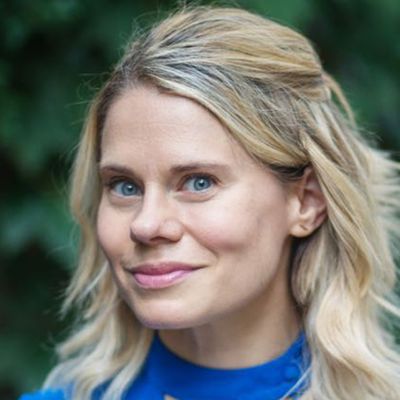
When To Kill a Mockingbird opened on Broadway, all eyes were on Celia Keenan-Bolger and Gideon Glick. Their immortal performances as Scout and Dill scored a Tony Award for Celia and a Tony nomination for Gideon... Read More
From the show: Broadway Gives Back
Guests

Featured Shows
About
When To Kill a Mockingbird opened on Broadway, all eyes were on Celia Keenan-Bolger and Gideon Glick. Their immortal performances as Scout and Dill scored a Tony Award for Celia and a Tony nomination for Gideon. But when Broadway shut down last March, these fast friends did what so many in the theater industry did—turned their sights to helping others. Join us for an impassioned discussion on feeding pandemic frontline workers, the future of Broadway, and much more.
Looking for ways to give back?
Check out these worthy organizations discussed in this episode:
Figure out your role for doing good, developed by Deepa Iyer, SolidarityIs and Building Movement Project:
Connect with Celia Keenan-Bolger:
Connect with Gideon Glick:
Connect with The Broadway Gives Back Podcast:
- Facebook: @broadwaygivesbackpodcast
- Instagram: @broadwaygivesbackpodcast
- Twitter: @broadwaygives
Hosted & Executive Produced by Jan Svendsen and co-produced & edited by Jim Lochner.
A proud member of the Broadway Podcast Network.
Special thanks to Dori Berinstein, Alan Seales, Brittany Bigelow, Katie Rosin, and Yo Nikolova from BPN; Julian Hills from The Bulldog Agency; Eric Becker and Broderick Street Music; the Charity Network; and Glenn Weiss!
Transcript
This transcript was automatically generated and might contain errors.
[0:05] Jan Svendsen: Welcome to the Broadway Gives Back Podcast.
[0:07] Jan Svendsen: I'm your host, Jan Svendsen.
[0:10] Jan Svendsen: This podcast spotlights Broadway actors, shows, and organizations in their pursuit of social impact and philanthropy.
[0:17] Jan Svendsen: Join us as some of the brightest lights on Broadway share their stories about their favorite charities and how they got involved and the people and the causes who benefited from these philanthropic efforts.
[0:33] Jan Svendsen: When Broadway shut down last March, former To Kill a Mockingbird cast members Celia Keenan-Bolger and Gideon Glick did what so many others in the theater industry did.
[0:43] Jan Svendsen: They turned their sights to helping others.
[0:45] Jan Svendsen: From feeding pandemic frontline workers to rocking the vote, these fast friends turned a dire situation into a quest for good.
[0:53] Jan Svendsen: And I couldn't be happier than to have them here today.
[0:53] Jan Svendsen: Celia and Gideon, welcome to the Broadway Gives Back Podcast.
[1:00] Celia Keenan-Bolger: Hello, thanks for having us.
[1:03] Jan Svendsen: Actually, Celia, I have to say that it was Gavin Creel who said, "Oh, you have to have Celia on your podcast" after he was on. She does so many good things. But let's talk about To Kill a Mockingbird, because that is just one of my favorite stories and plays and movies of all time. Um, so what was it like, first of all, just bringing that classic to life? Um, and you know, what were you both doing on that day in March, you know, when our world fell apart? Um, and just sort of take us back 11 months in time, almost a year ago.
[1:42] Celia Keenan-Bolger: It's so hard to, um, when you talk about time right now, it's like it's really hard to place yourself in where you were and what you were doing because time has taken on its own, um, uh, strange, strange, circuitous, and I feel like time has kind of expanded and accelerated at the same time. Um, so it's funny when you mentioned To Kill a Mockingbird because it feels like maybe a decade ago.
[2:09] Gideon Glick: I had that same thought, Celia. I mean, just that we weren't doing the show when everything shut down. So I think that in some ways created some space to sort of engage with the community in a different way. Um, just as far as, you know, being a part of that production, I think something that felt so moving and different from other experiences that I had had on Broadway was that I felt like not only was it one of the most artistically fulfilling things to make and then to do, but that it also felt like the story that was being told that, you know, so many of us grew up with, that the revisiting of that story felt sort of paramount, and that the adaptation and the way that we decided to pull certain themes out and the way that, um, I think Aaron Sorkin tried to make it a play for 2020 or 2019, um, just felt really moving to me.
[3:27] Celia Keenan-Bolger: And that, um, I think I sort of imagined in my life that I would get to do theater that also had a conscience or had, you know, some sort of statement. But I never really imagined that I would get to do it on Broadway, that it was like something that I would get to do, you know, off-off-Broadway or, you know, in regional theater where that kind of work has, I think, sometimes more of a place.
[3:50] Gideon Glick: Well, Bart Sher's a good friend of mine too, so I saw it multiple times, and it was just, you know, it was just incredible. And it kind of gave—I have tears in my eyes just thinking about theater right now and missing it so much. But, um, speaking of tears, um, so Gideon, you've witnessed this pandemic from a very personal side. Um, your husband Perry is on the front lines of this whole thing. What's this been like for you?
[4:19] Gideon Glick: Well, that's, um, that's kind of a good way in. So essentially, and to go back to what your question was before, I was doing Little Shop of Horrors at the time when everything shut down, so it was actually my last week of performances. So I was finishing another run strangely right after Mockingbird, and you know, at the Westside Theater, it's a very small, um, kind of dingy theater, and all the men share one dressing room and all the women share another dressing room. So you're really on top of each other, and my husband, who is not only a very smart doctor but he's also, um, a bit neurotic, and he was following—and he's Jewish too, so he's like really neurotic.
[5:07] Gideon Glick: I can relate. And so he was following everything that was going on kind of before everybody else, um, let's say plebeians, uh, were attuned to what was going on. And so I started bringing the anxiety into the theater quite early, and everyone kind of looked at me like I was insane. And I felt kind of crazy, but I was kind of a Cassandra where I was like all of a sudden bringing in sanitizer and I was kind of having my distancing myself from my dresser a little bit, being like, you know, I think I'm gonna take care of my stuff as much as possible. I'm gonna—anything that goes into my mouth, I will touch. Please, please. I thank you, but I'm gonna take that on. And then really fast it started to shift, and then everybody started kind of hooking in, and then everything accelerated, and then we were shut down.
[5:58] Gideon Glick: And it was, um, it was shocking and not shocking at the same time. And what was very strange was that the last show, which there were some of us kind of had a feeling it was gonna be the last show because we had heard already about Moulin Rouge shutting down and the infection going on there. Um, the audience was—it felt like we were performing at the Fall of Rome. Like there was this sense of electricity that I'd never experienced before, or after. I mean, well, obviously not after, because nobody's done the theater, but I'd never experienced anything like that. It was this sense that this was it, even though we didn't really know.
[6:40] Gideon Glick: Um, so that was like the beginning, obviously, with Perry. And then what brings us into Broadway Feeds Bellevue, um, you know, in the beginning it was very scary. We didn't know what was going on in terms of infection, how it got transmitted and so forth. Perry and I were—we separated physically for a little bit in the beginning. I got very lucky that there was somebody in our building who, um, sconda domains. So I took over his apartment. Um, and so we were separated and very scared. And Celia, who is the most wonderful friend in the world, um, was saying, "Hey, what's going on? How are you guys doing?" Because also Perry had sort of become part of our, like, the fabric of our time at To Kill a Mockingbird. Like there, you know, you have these times in between, you know, the two-show days, and Perry would come and we would all sit on the floor and eat Westville and talk about, you know, how hard it is to do eight shows a week.
[7:46] Celia Keenan-Bolger: And Perry would say, "Yeah, I think tonight I'm gonna go see blah, blah, blah, blah, blah." Like he had—he's like an amazing theater-goer. And so he just became a part of our lives during that show.
[7:59] Celia Keenan-Bolger: And in fact, Gideon and Perry were getting married like six weeks after we closed.
[8:05] Gideon Glick: No, maybe a little more than that.
[8:07] Celia Keenan-Bolger: Two weeks.
[8:07] Gideon Glick: So basically, sorry guys, two weeks. Yeah, so Mockingbird ended, then I did Little Shop for two weeks, and then on the last day of Little Shop, we got married.
[8:15] Celia Keenan-Bolger: Oh my god.
[8:16] Gideon Glick: Yeah.
[8:17] Celia Keenan-Bolger: Their wedding was—it was like a really special wedding. And I think as all of this began, I just remember listening to some podcast about, um, about Italy, um, and what was happening to the healthcare workers in Italy. And it started to feel like it was pretty clear that this was not something that was just going to stay, um, across the ocean. And talking about the sort of overwhelm of hospitals and the overwhelm of healthcare workers, I, of course, the only doctor that I know is, um, is Perry. And not only do I know him, but I care deeply about his husband and I had come to care about him too. And so I just felt like, oh my God, if this is indeed happening, what's gonna happen to my friends and how, like, what do we do to even support healthcare workers like while this is going on?
[9:19] Celia Keenan-Bolger: And I think maybe sometimes trauma, um, reignites past trauma in our lives. And, um, when I was just out of college, my mom died and my—and was very sick during the time that we were in college, when I was in college, and there was like a community theater that my brother and sister and I had performed in, and they set up this whole meal train for my dad who had two kids at home, and they would just bring like pans of lasagna over and had this whole setup where they were taking care of our family by bringing them food. And I guess for whatever reason, I like flashed on what that experience was and how helpful that was to my dad, who I think was feeling very overwhelmed taking care of somebody who was very sick. And I just—I think I texted you, Gideon, and I was like, "What can we do? What should we do? Should we set up a meal train for Perry?" And we were like, "Is that a thing? Like, how does that happen?"
[10:28] Celia Keenan-Bolger: Um, and we did a little bit of research and found out that there is in fact, like now a whole website called Meal Train that's dedicated to setting up, like, you know, getting either meals delivered through restaurants or through, you know, people just cooking at home. Um, and we brought in our friend Victoria Myers, who I think had the bandwidth to sort of navigate that website, which both of us were sort of like, "I can't take that on." And she was able to say, like, "This is what we would do." And we decided sort of early, we were like, "Well, nobody's gonna cook, so how can we make it so that we could get restaurants to deliver to these hospital workers?"
[11:11] Celia Keenan-Bolger: And that was when Perry—you tagged him from here. So we asked Perry if that was something he'd be interested in because he works at Sloan Kettering, which is a cancer hospital, and most of his patients were because they were already immunocompromised, they had actually, uh, incubated themselves pretty early. So there wasn't, uh, an onslaught of COVID patients at Sloan. But obviously, we have lots of friends who are hospital workers through Perry's, um, through academia and just his, you know, his friend group is more, um, our are—it consists more of doctors. And we had one who was manning the ICUs at Bellevue, and that was really bad, especially in the beginning. And so he said, "Why don't you reach out to Gabriella, our friend Gabriella at Bellevue?"
And so we did, and she said, "Yes." And it was not even a hesitation. She said, "This would be amazing. We don't really have the bandwidth to feed ourselves. We are working overtime, nonstop, basically going home to sleep and coming back to the hospital, and it would be incredible to be fed."
[12:19] Celia Keenan-Bolger: So that's how we ended up at Bellevue. And then when we started to do the meal train, we realized, yes, it's too hard to have people make food for a day or, you know, for a designated day. And it's also too difficult to, um, basically we realized we needed to main—main it?
[12:43] Gideon Glick: I don't think that's—um, mainstream it.
[12:46] Celia Keenan-Bolger: Yeah. Mainstream it. So we—that's when we decided, okay, why don't we—people can symbolically donate a meal, which will be a form of money. We could say this much can buy this meal, this much can buy dessert, this much can buy drinks, and so people would donate, and then we would—we basically use the funds to bring in restaurants, local restaurants that were also now being struck at that moment and not having a way to make money, and we brought them in.
[13:19] Celia Keenan-Bolger: So we then essentially got a—in the beginning, we—it was like three. By the end, I think we got like eight or ten. Um, it all, you know, it all took a life of its own, especially as it kept going, and we basically created relationships with the restaurants and started feeding them, uh, the workers at Bellevue. And then it grew and grew. At first it was just the people manning the ICUs, but by the end, I think we had like—I was trying to look for the Google Doc that had it all because it's been a while, but we had like eight different departments, and we were doing about 500 meals a day by the end.
[13:57] Celia Keenan-Bolger: Um, I'll say it's interesting because it obviously it was about helping others, but in a way it helped us too. For we were so helpless at that moment, we didn't know how to help, and we were just sitting there on our couches doing nothing. And so it was a way for us to kind of use our, um, anxiety or our helplessness to do good. And you saw the community also desperately wanting to help as well, which is how we raised so much money.
[14:31] Gideon Glick: Yeah, I feel like it is such a microcosm of my experience inside of the Broadway community, which is that it is one of the most generous groups of people that I've ever been a part of, both in terms of energy and in terms of dollars, and that all the community needs is a place to show up.
[14:52] Celia Keenan-Bolger: And so initially, you know, I think I sent an email to like 15 friends who I considered somewhat fancy in the business. And I was like, if we could have your names attached as already supporting us, it might encourage a couple of other people to get involved. And I think we set our um our goal at like $10,000, which seemed pretty intense considering that everybody had just lost their job. And we were like, does that seem like too much, does that seem you know, but we figured out how many meals we could cover with $10,000. And I think just from that initial email, we raised over $10,000. So we were like, oh, well, maybe as we open it up to the public, we'll say like, could we raise $20,000? And we ended up raising over $150,000.
And I think that that is just such a testament to like if you put out the call and if you say, this is where we need your energy, like it is astounding to me that the community always shows up. And that there, there's this idea that actors are like totally self-absorbed and narcissistic. And you know, while that may be true, it's not my overwhelming experience with them. Whatever you want to say about it, they're also like unbelievably generous and activated when called, you know, into the fold to say, we need your help with this. So it just also felt like at a time when our community was so splintered and when we had been basically taken away. I mean, I don't think we, I know we didn't know then how long it was going to be that we weren't working, but it felt like this way to come together while we weren't performing, that I also like, especially looking back on it, I find, you know, really moving.
[16:39] Jan Svendsen: I think it is really moving. And I think you also both of you hit on two things that are so at the essence of what some of the conversations that I've been having with this podcast, and that is the reason I wanted this to be Broadway Gives Back is because Broadway really does give back. Broadway is such a caring community, and there are so many incredible stories like yours of Broadway people caring and giving back and being of service. And the other thing, you know, that you hit on is so true, and that is, you know, people feel good when they give. And that sometimes people don't realize how good it's gonna feel to give. And so, in a way, being, you know, philanthropic or altruistic or whatever is actually very selfish because it makes you feel really good too. And um, I think a lot of people have tapped onto that idea as well. Um, both of these guys are nodding their heads more on topic with the thing. So thank you.
[17:33] Celia Keenan-Bolger: I remember hearing somebody say they were like the antidote to anxiety is action, that you know, it's especially when you have a lot of time on your hands and you're just fretting and doomscrolling. The only way to sort of calm that is to do something. And I think for a lot of people, the doing feels very overwhelming. That it feels like there is so much to be done. And there are a lot of ways that people, you know, I think about that. They I remember I think the Broadway Advocacy Coalition had um, it was like the social justice ecosystem, and it had all of these different titles of where you could fit in organizing for change. And I think it's like one of the most helpful graphics that I've ever seen because I I think no matter who you are, you can find yourself in that graphic. I can well, I'll send you the link. You can put it in your show notes.
[18:30] Jan Svendsen: I love to see well, yeah, we'll do that. It really um, because I think there are people who are like, you know, I I would never knock on somebody's door, I would never call somebody on behalf of a candidate. Um, but I would love to give money. And there are people who are like, I have no money. I um, but I have some energy. I don't want to knock on someone's door or call somebody, but I could reach out to five people who I know might be interested in. So you can find all of these different ways that you can do something. And I think when you're feeling overwhelmed and know that you should be engaging, it's so helpful. It's been so helpful to me to have someone say, like, here is a place where you can show up, and that that takes so much off of your own plate, and then you're just like, oh, okay. Well, then that makes everything so much easier.
[19:22] Celia Keenan-Bolger: And I think, you know, that was that felt so clear in the Broadway Feeds Bellevue of this all. Especially. I mean, I remember, Gideon, you got an email from one of the restaurants.
[19:34] Gideon Glick: Yeah.
[19:35] Celia Keenan-Bolger: After like that. What did it say?
[19:37] Gideon Glick: It was basically just like we would have shut down without you guys. I mean, you essentially kept us open. Um, and which was horribly moving. Like it's still, it's still terribly moving. But you know, it was interesting how Broadway Feeds Bellevue ended up being it saved everybody. It saved us, it saved um, it saved the Bellevue workers, and it saved the local community. And um, it was funny in the beginning, we were all very nervous about a asking people for money, reaching out to restaurants. I mean, I was calling these restaurants, just blank calling them, being like, hi, we're actors. Like, we want to how do we do this? And I was so nervous, but everybody was so down and so eager to make it all work because it was um because you know, it was going so many different places.
It wasn't it it it was cyclical in a way, and where the money was going, who it was feeding, who it was helping, and it was all organic and and it and it organically got bigger and bigger, and it wasn't there were times where it was stressful just because well, a uh dealing with money is always stressful. I mean, you should see all those spreadsheets we have. It's wild.
[21:00] Celia Keenan-Bolger: Somebody who, you know, can barely like count to five.
[21:04] Gideon Glick: Um and here you're manning like 200 oh clue. We can raise almost two hundred thousand dollars by the end. All you have to do is show up, and it really does work itself out. And it um that was the big learning experience for me because it seemed so daunting and and scary. And and as Celia touched on, like the idea of even asking people for money at this moment. And what we also realized was a lot of what we raised too was just people giving five dollars, ten dollars. I mean, it it that the little bit goes a long way. I mean, it it it's a you hear that saying all the time, but this was proof of it, and that was really really inspiring.
[21:44] Jan Svendsen: That's really true. Hey Celia, you had said I read an interview in Backstage, and you had said something like actors can save the world. So I say hear hear, but what did you mean by that?
[21:57] Celia Keenan-Bolger: Oh my gosh, I feel that it's like gonna make me cry. Um I feel that I feel that particularly coming out of what we are going through right now, both um politically in our country and the sort of division of what we're experiencing. I think um, I think when I said it, I probably was referring to the way an audience member feels when they experience a story or a character that um for whatever reason deeply affects them. And I think what I'm what I'm realizing about what we do is that the sort of repair that I think is required for our country right now is not possible through social media um or journalism or even amazing politicians, that the repair is it feels to me like the only way forward is repair through arts and culture.
You can't change people's minds or tell them what to think, but you can show characters struggling against insurmountable odds, and it will have a different kind of effect on them. And I think that kind of change right now feels so profound and so important that I feel just really strongly that however we start the recovery process of what we've all just gone through, not just politically, but the isolation of these past 10 months, almost 11 months that we need, we need um belonging and a sense of um of community and how hard this was for everyone. Because I think sometimes when I look at people who have different beliefs than I do, it's so easy to be reductive in my thinking about their ignorance or about their information or about the kind of people that they are.
And I think it's so much more complex than that. But that nuance, how do you how do you get that nuance across in just, you know, I think you can do it, you know, around a dinner table, but even that, you know, my I don't know that I have like uh the blood pressure to to engage in those conversations. And I think that that actors are so empathetic and that that so much of our job is trying to understand people who don't behave in the way that we do, that we are uniquely attuned to trying to both understand and represent with dignity people with whom we don't identify. And that feels like a really important gift right now, and it feels like a really important um message to be able to get out to the world and to our country.
[25:10] Jan Svendsen: Okay, I just want to say now I'm crying and I am literally if I could put my arms through this podcast through this broadcast, I'm putting my arms around you and hugging you. Thank you. That was just you put that so eloquently, and um it was beautiful.
[25:23] Celia Keenan-Bolger: I've had a lot of time to think about it.
[25:28] Gideon Glick: Yeah.
[25:29] Jan Svendsen: Some of us have been binge watching, you know, like ridiculous TV shows, and some of us have been thinking, what can I tell you?
[25:36] Celia Keenan-Bolger: Um there are no wrong answers.
[25:38] Jan Svendsen: There are no wrong answers. Hey, Gideon, so you are from my understanding, you you number one, you're gay, number two, you're partially deaf. Is that true?
[25:47] Gideon Glick: Yeah, I'm deaf in my right ear.
[25:50] Jan Svendsen: So obviously you faced a totally different set of challenges just in your upbringing, um and with becoming an actor. And I just wondered if um if any of that informs sort of where you're at today and and and particularly what we're going through, um, since you faced some challenges and and if you could explain a little bit about how that how that it has been for you.
[26:12] Gideon Glick: Well, it's interesting. I mean, I think you know, I think we all face adversity in one way or another. I don't think I mean, yeah, I w I was born with one ear. It was constructed in the first grade. Um, I came out very early. Um, those that that's a big part of my story. But I think everybody has that. Um, granted, the ear is a very um singular thing, it's not that common, but uh other people have other things. And I think there was this strange equalizer. And equalizer is a is maybe not the right word, but during this moment, we realized, oh my god, we're all suffering deeply, deeply. And we're all suffering in the same ways and in different ways. And I think that was the weird equalizer is the is um the understanding of the suffering, not necessarily the suffering, but the understanding that we were all suffering.
And I think that was a that was a big moment of this year for me and for everyone around me. Obviously, you have your wonderful friends. I have Celia Keenan-Bolger that I get to talk to, and it is a light, but but nobody was nobody's out of the um of the tunnel. Everyone's in the tunnel together. And that was just um a moving and um kind of I think life-changing experience. It still is. I mean, we're still in it.
[27:43] Celia Keenan-Bolger: Right.
[27:43] Gideon Glick: I also think I haven't thought about it, I or that I have thought about it more in retrospect, and it particularly as the ways that members of our community have not necessarily felt represented, and that I think performers with disabilities are like very, very high on that list. And the experience of watching Gideon navigate a rehearsal room and blocking and things where he's just like, guys, you gotta be on the other side of me because I can't hear out of the side of my ear. Like I need things and his ease and and also not apologizing um for for who he was I think I completely took for granted as we were doing the show and looking back on it I'm like that is whether or not however much it costs you Gideon it's still a it's an amount of energy that I was not expending in the rehearsal process to try to um to navigate it so that I wasn't being you know so that you weren't being a problem but also saying like this is a reality of my if you get me you get my one ear.
So that's how this is gonna go. You don't really have one ear but one ear um and that I just think it's it's interesting for me to reflect on now and I hope going forward to have more of a sensitivity to what that might be like for people who are in a rehearsal room who are not able bodied or come or who don't identify as able bodied.
[29:12] Gideon Glick: No at the same time my one ear is my norm. So yes you could see it as something that there's adversity but I but I don't know anything else. So as a result that is my baseline and so I don't see myself as oh I gotta do this because you're doing that I just see myself as well this is what I gotta do and because that's me. And in a weird way there's a strange blessing to it.
[29:37] Celia Keenan-Bolger: I mean I think a lot of people would say that about anything that makes them strange or unique is that it gives them a different perspective and it gives them, you know, a point of view. And I think there are people that can see it as a blessing and I'm, I am, don't get me wrong, there are times especially when I'm doing a musical where I want to like scream and I'm like, God I wish I could hear out of both of my ears. But I think it also gives me something that is mine and I feel lucky at the same time about it. What's the expression that if everybody took their challenges or their issues or whatever and they put them all in the pot in the center of the room, everybody would go back and pick the ones that they already have instead of taking everybody else's, you know?
Right? But yeah, I understand that you two are both such eloquent and intelligent in this conversation and just in life and the roles that you pick and what you do and I just wonder, you know, also with your advocacy and your giving, did you grow up in families where this was sort of what you did or did you see it modeled?
[30:50] Jan Svendsen: Sully, I know you mentioned you have a son, so do you model sort of philanthropy for your son and do you involve him in some of the philanthropic things or social activism types of things that you are involved in?
[31:05] Celia Keenan-Bolger: I mean I certainly try to. I think it was such a huge part of my own childhood and I think sometimes when people are like, it's so amazing, like how are you, how have you been so engaged for so long? And I think the gift of growing up in the family that I grew up in is that it was a non-negotiable. Like it was so much a part of the fabric of our family that it's not something that I have to go sort of outside of myself to pursue, that it just is a part of me. And if that is something that I can give to my son, I will feel really good about that. I think it makes it, I remember reading an article where there were four women who were very deeply entrenched in their advocacy for different reasons.
And the one through line that they all had was that they had politically active mothers. And I was like, someday I'm gonna write a paper about that or some kind of essay because I think that really all of the people that I know who have it sort of in their bones had parents for whom it was a really important part of their family. So certainly, I mean, I think it's interesting. Sometimes my son is like, everything feels like a lesson. And I'm like, well, what do you think being a mother is? But I think you can go too far. So I am aware of just trying, I think the modeling is the best thing that you can do.
[32:31] Jan Svendsen: Right.
[32:31] Celia Keenan-Bolger: But you know, I do think probably we have a lot of conversations that he's like, I don't know what you're talking about and I'm bored. But you know, not everything is a teachable moment, but I think you're right. I think that in lots of the people that have spoken to, it's definitely been that was modeled, it was part of their upbringing. But then there were certain people where it wasn't at all, and because it wasn't, it almost flipped them to be more philanthropic. So I think it can come from different stimuli. But for me also it came from modeling from my mom for sure. What about you, Gideon?
[33:05] Gideon Glick: Yeah, that's interesting. You know, I came from a very academic family, and so I think the talk at the dinner table was not necessarily about philanthropy, but it was about scrutiny, not necessarily negative scrutiny, but scrutiny of the media, scrutiny of the times we live in, scrutiny, you know, finding patterns, pattern recognition was a very big thing especially for my mother. But I think with that scrutiny, I learned about, okay, well I scrutinize myself and I say, okay, well what will make me a better person? Why, how do we only get one shot at this? And so like, what I don't want to waste my time here, and so what can I do that I can look back and say, oh, I made at least a positive impact?
Because I've always believed in the Boy Scout rule, which is you know, leave the campsite better than you found it. And so what, how can we do that? And I think that comes from the searching aspect that both of my parents possess, and it's unrelenting. I think that also it makes me think about how we could never have made Broadway Feeds Bellevue with just one of us. That it was that understanding what you have to offer and where you can sort of take where your energy can be used is so crucial I think to organizing and getting work done. And that because the three of us had very different skills, we were able to like sort of play the long game where I think if it hadn't reached out to one another, we wouldn't have been able to do what we did.
And that it's so, for me, I mean it feels like just an extension of being a member of the theater community, but I love collaboration and I love the feeling that like if I don't have the understanding or bandwidth for this thing, there probably is somebody else who does. And I think as we pursue what is important to us, finding people who both, you know, in the Venn diagram have a good big overlap, but also have a huge space that we don't have is so helpful.
[35:21] Jan Svendsen: People listening to this podcast, well, I hope there are people listening to this podcast, but let's start there. You know, I feel like one of the some of the feedback I get is how can people be everyday philanthropists? And I've been asking, you know, all my guests that question. You know, if you were able to, well, you are, you're able to talk to people right now. So how would you advise people to become more, there's so many different words for it, whether it's social activism or social responsibility or philanthropy or charity, being of service. What would you say to people if they were asking your advice?
[35:57] Gideon Glick: I would say don't be afraid of the little things. I think the little things go a long way. I think people get destabilized by the idea of, oh, I have to make a big impact or it's not worth it. But I mean, you know, going up to the Biden, going up to the election, I was texting every day for a month, but it was little. It was, I was doing it while I was watching television. I mean, I was, you know, I was text banking and it was easy and small. And I felt I made a difference. I felt I made an impact. And so, and I, you know, you donate, you can donate $10 to a campaign, $10 to a social cause, and you can also lend your voice to something by just speaking out. Even at your dinner table, you are being an activist. That is philanthropy. So I would say just don't be overwhelmed by your impact because your tiny impact is very impactful.
[36:55] Celia Keenan-Bolger: I really agree with that. I feel like I think it changed a lot. I feel like the Boy Scout leave the campsite better than you found it never felt more profound to me than when I had a son where I was like, oh, you gotta like really get to work. But the personal is political, and that knowing the name of Hassan who has our hot dog cart on the corner of our block gives my son a window into Muslim culture and his family back in Egypt. And then we are able to have a more nuanced conversation about the world at large. And all that took, and I would never have asked this man his name before my son was born. I wouldn't even know if I would have recognized there's a hot dog cart on the block. But suddenly again trying to model and be like, you know, these are the people that make our neighborhood work.
Our mailman has a name, our doormen have families and lives of their own. And I think sometimes, you know, obviously we're, I think to the degree that we can, we're going to engage with the issues that are important to us, and we will donate to the organizations that we feel like support our beliefs. But that when even that feels too overwhelming, as it sometimes does, that like knowing the name of the guy who works in your bodega is political. That I think that that action actually makes us all New Yorkers, it makes us part of a community. I mean, I think about when all of the ICE detentions were going on, and that suddenly people were starting to talk about, you know, I have these family members where there have been raids.
And it's like if you don't have, because I don't know a lot of immigrant, I don't have a lot, I'm, I don't have a lot of interface with immigrant communities, it's like, well then who are the people in your everyday life that are sometimes invisible, who are certainly before I had a child just didn't have great meaning in my life. But that all of those people can activate something both empathetically but also just in our knowledge of how other people move through the world. And I think that that is really important going forward in how we feel about the place where we live and what we invest in it.
[39:21] Jan Svendsen: So interesting because also as actors, you know, you are trained to be present and be in the moment and be aware, and in a way that's what you're sort of, you're talking about here is being aware of the hot dog vendor on the corner or the bodega owner, right? And seeing them and seeing them in a different way. I think that's really important. There's one last question that I've been thinking about a lot and I was thinking about if I could wave a magic wand, what kind of change would I want to see when Broadway reopens? And I don't really have my own answer quite yet, but I just wondered if you guys had any thoughts about it.
[40:02] Celia Keenan-Bolger: I have a feeling my answer will be a compilation of all my guests' answers.
[40:08] Gideon Glick: 80 minute long production only starting at 7 p.m.
[40:16] Celia Keenan-Bolger: I mean, I would say obviously with the, you know, the racial reckoning that this with the Black Lives Matter movement, I would hope that when we come back, there's more equality. I mean, I've never once auditioned for a Black casting director, which I just think is insane. It's insane. I think we can work harder to make that happen. And it can't be about virtue signaling, and it can't be about, you know, getting your numbers in. It has to be about a real desire for that. It has to be about the desire to tell another story, not the idea that we will tell that story because we have to, or because again, we're hitting a checking off a box. And I think that is the mentality that I would hope when we come back that that's part of building up the community again.
[41:20] Gideon Glick: I feel like similarly, if I could wave the magic wand, it would help the white community of theater makers sit in their discomfort with the change that needs to occur because they think white comfort has trumped, I mean it continues to always take priority. And this includes this guy right here, that I when I think about the change that is about to, that's that I think is required for equity, it's not gonna be that enjoyable for me. And so I have to figure out how to build systems that can support me through that discomfort. And I just, I hope that when it comes up, instead of throwing up our hands and being like, this is crazy, can't we just go back to the way it was? That we will be strong enough and that we will have the belief that I have always had in our community that I'm realizing is like sort of rotted at the foundation that I believed it was this place that had a space for everyone and that was inclusive and loving, and that everybody's experience inside of it made them feel more whole and more like themselves, only to find out that that is in fact the opposite for many members of our community, and to figure out how to not only create the space so that they have more of the experience that I've had all this time, but also to create the space for me to feel like this is very hard, and also I can get through this.
[42:50] Jan Svendsen: I'm gonna leave it at this because that was beautifully put. And I am so grateful that the two of you took the time to chat with me this morning. And I feel like I'm gonna move on from this day and think a lot about what you both have said, and I'm really appreciative of your time and your intellect, as I said, and your thoughts. Thank you so much for being part of the Broadway Gives Back Podcast.
[43:17] Celia Keenan-Bolger: Oh, thank you for making a podcast where we can show up like this. I think it's so amazing.
[43:23] Jan Svendsen: Thanks for listening to this episode of Broadway Gives Back. Broadway Gives Back is part of the Broadway Podcast Network, produced by Dori Berinstein and Alan Seales with Brittany Bigelow, and music by Eric Becker at Broader Street Music. Special thanks to my producing partner, writer, and friend, Jim Lochner, and to Katie and Yo at BPN. Julian Hills from the Bulldog Agency, the Charity Network, and to my fiancé, Glenn Weiss, who is always my consultant. If you like what you hear, don't forget to subscribe and rate this podcast wherever you stream your podcasts. You can also follow Broadway Gives Back on Facebook and Instagram at Broadway Gives Back Podcast and on Twitter at Broadway Gives. To learn more, visit bpn.fm slash Broadway Gives Back.
© Broadway Podcast Network, All Rights Reserved