

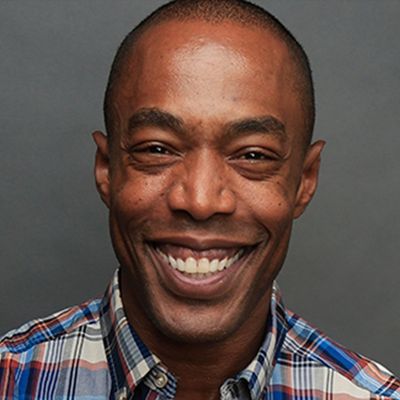
For over 25 years, Michael McElroy has used his voice to spark positive change. From Broadway to Carnegie Hall, The Kennedy Center, and more, Michael is the Founder, Musical Director, and Arranger for Broadway Inspirational Voices, a multi-racial GRAMMY-nominated gospel choir composed of Broadway performers that provides hope, inspires, and transforms at-risk youth through music and the arts... Read More
From the show: Broadway Gives Back
Guests
Featured Shows
About
For over 25 years, Michael McElroy has used his voice to spark positive change. From Broadway to Carnegie Hall, The Kennedy Center, and more, Michael is the Founder, Musical Director, and Arranger for Broadway Inspirational Voices, a multi-racial GRAMMY-nominated gospel choir composed of Broadway performers that provides hope, inspires, and transforms at-risk youth through music and the arts. Join us for a thought-provoking discussion on the power of music, Broadway’s racial reckoning, and more.
Looking for ways to give back?
Check out these worthy organizations discussed in this episode:
- Broadway Inspirational Voices
- “You Will Be Found” video
- Ronald McDonald House New York
- Broadway Cares/Equity Fights AIDS
- Covenant House
- Black Theatre United
- Deaf West Theatre
- Roundabout Theatre Company
Connect with Michael:
- Instagram: @michaelmichaeltheartist
Connect with Broadway Inspirational Voice:
- Website: broadwayinspirationalvoices.org
- Facebook: @bivoices
- Twitter: @bivoices
- Instagram: @bivoices
Connect with The Broadway Gives Back Podcast:
- Facebook: @broadwaygivesbackpodcast
- Instagram: @broadwaygivesbackpodcast
- Twitter: @broadwaygives
Hosted & Executive Produced by Jan Svendsen and co-produced & edited by Jim Lochner.
A proud member of the Broadway Podcast Network.
Special thanks to Dori Berinstein, Alan Seales, Brittany Bigelow, Katie Rosin, and Yo Nikolova from BPN; Julian Hills from The Bulldog Agency; Eric Becker and Broderick Street Music; the Charity Network; and Glenn Weiss!
Transcript
This transcript was automatically generated and might contain errors.
[0:05] Jan Svendsen: Welcome to the Broadway Gives Back Podcast.
[0:07] Jan Svendsen: I'm your host, Jan Svendsen.
[0:10] Jan Svendsen: This podcast spotlights Broadway actors, shows, and organizations in their pursuit of social impact and philanthropy.
[0:17] Jan Svendsen: Join us as some of the brightest lights on Broadway share their stories about their favorite charities and how they got involved and the people and the causes who benefited from these philanthropic efforts.
[0:33] Jan Svendsen: From success on Broadway to Carnegie Hall, the Kennedy Center, and more.
[0:38] Jan Svendsen: And with a Tony nomination for Big River and a Tony Honor for Excellence in the theater, Michael McElroy has used his voice to spark positive change.
[0:48] Jan Svendsen: As the founder, music director, and arranger for Broadway Inspirational Voices, a multiracial Grammy-nominated gospel choir comprised of Broadway performers.
[0:59] Jan Svendsen: Michael works tirelessly to provide hope and to inspire and transform at-risk youth through music and the arts.
[1:07] Jan Svendsen: I'm so thrilled to have him here today.
[1:09] Jan Svendsen: Michael, welcome to the Broadway Gives Back Podcast.
[1:12] Michael McElroy: Thank you so much. Glad to be here.
[1:14] Jan Svendsen: You know, we've never met, but we have a lot of mutual connections.
[1:14] Jan Svendsen: First of all, you're a Carnegie Mellon University alumni.
[1:21] Michael McElroy: Yes.
[1:22] Jan Svendsen: I am not, but I am very close with the theater department there with all the folks there because they were sponsors of the Tony Awards.
[1:32] Jan Svendsen: We have lots of mutual friends, Norm Lewis, Judith Light, Blake Ross.
[1:36] Jan Svendsen: So I'm especially happy to have this opportunity to talk to you because you have been someone I've long admired.
[1:41] Michael McElroy: Oh, thank you very much. It's um very humbling. I appreciate that.
[1:45] Jan Svendsen: So let's start with. Well, how are you? It's been quite a year. Are you okay?
[1:50] Michael McElroy: It's interesting. Yeah, you don't know how to answer that question anymore, do you? Uh you know, it's such a complicated question. Um, I'm I'm doing okay. You know, it changes from moment to moment, but um, you know, I I feel blessed, I feel um inspired to do the work I do. I feel exhausted, um, but um committed to what I love to do, which is uh transforming the world through art through being an artist and my work and my service. So, you know, it's not an easy time to do it in, but it is the absolute most important thing to be doing right now for me.
[2:30] Jan Svendsen: I couldn't agree more. So I grew up a nice Jewish girl going to temple here in Los Angeles. Um, but Broadway Inspirational Voices speaks to me and moves me in ways that are just way beyond religion. So I um I believe you grew up in a religious household. And did you sing in choir when you were young? I mean, I do believe that your background obviously you've created something with Broadway Inspirational Voices that is way bigger than religion. It's almost like the music is the religion. So can you talk a little bit about that and about your background?
[3:03] Michael McElroy: Sure. I grew up, my stepfather was a minister, my grandfather was a minister. My grandfather actually started the church that I grew up in. Um and uh my grandmother, uh, who was we call her the first lady of the church. She taught herself to play the piano and uh she played for the choirs of the church. And then when my mom was born, she started playing, and by like three, she was already a child prodigy playing. Um so she grew up playing in church, and then my brother, my sister, my uncle, we all grew up playing in church. And um, so we had these huge choirs, like we had the senior citizens' choir, and then we had the adult choir, then we had the young adult choir, then we had the children's choir, each with like 50 to 60 members.
And I grew up around that music, but also I grew up with a love of music in my house. My mom loved musical theater. My uncle was a musical director, but he also was a classical musician. My mom grew up playing classical music as well. So I was surrounded by music and also with the important uh values of service and giving back, um, giving back to your community. My grandmother was incredibly involved in politics. She ran the um uh Congressman Lewis Stokes uh executive, she was his executive director of uh his caucus in Cleveland for 30 years. Um so I grew up being forced to go sing at rallies and luncheons and banquets and surrounded by politicians, and uh so I grew up in this huge kind of melting pot of art and politics and service.
Um then I also went to school. I moved when I was in fourth grade, we moved to Shaker Heights. So I went from living in Cleveland to moving in Shaker, which is a suburb of Cleveland, and all of a sudden the group of people I was around shifted from being in an all-black environment to a predominantly white environment. So I grew up in two different spaces that actually became kind of the bedrock of my artistic values and mission in terms of what I do. Um, so in school, I had these great choirs that we sang in. I was in all three choirs, had a great theater department, and then on Sundays, I'd be at church. So I had these two kind of loves of musical theater, choral music, and gospel music. So I just grew up around everything and everybody and was never raised to think I was less than anybody else, and never raised to believe that someone was not welcome in my home or in any space that I was in a church or anything.
So creating Broadway Inspirational Voices, and part of its mission, and right at the foundation is this idea of a diverse group of people singing this music that's based in the Christian church. It was never about the religious part of it. It was about the power of the music and having this diverse group of people sing it, to let people know that it was available to everyone and that everybody would be welcome to be in that space and receive it in their way.
[6:20] Jan Svendsen: Well, that's certainly what it feels like, and it feels is really the key word there. So it's 25 years that you've been. So take us back to that moment or that you know idea you had in like 1994, I guess it would be if you do the math. Um, and how you put this together. I I believe it was regarding the AIDS epidemic, right? Isn't that what you started with?
[6:40] Michael McElroy: Yeah, I, you know, growing up in Shaker, uh, I was pretty sheltered, and then I went to Carnegie Mellon for uh musical theater, but in Pittsburgh, but still pretty sheltered. And then I moved to New York in 1990, got my first job right away. I was in New York Shakespeare's Festival's uh Shakespeare in the Park in Richard III with Denzel Washington. And then I went on tour for six months, and then got my first Broadway show, which was Miss Saigon. I went in like probably about a year after they opened, almost a year. And that's when I came face to face with the AIDS epidemic. And you know, having a castmate who was vibrant and healthy one minute, and the next minute on an oxygen tank. And you know, theater folks, if we can do nothing else, we know how to rally around and to support our friends and family, our community.
And we will come together. And at that time, we were all doing cabarets and trying to raise money for Broadway Cares and Equity Fight AIDS. And I did that for two years. And then the third year, I thought, I want to do something different. Let me get some friends together and do something centered around gospel music. And that's how it started. We were reeling at that time. You know, raising money doesn't touch the loss, the pain, the grief. It gives you something to do, but it doesn't touch that. And for me, I wanted to create something that was around gospel music that would touch that, that would reach in and be some kind of healing salve for that sorrow, that grief that we all were feeling at that time, that helplessness.
And so doing it and centering it around gospel music was because I knew that the power of this music was greater than the dogma on which it's based, the religious dogma, right? And um, and it was, I didn't know what was going to happen. And the amount of love and healing and joy and tears of this diverse audience, because everyone felt welcome because they could see themselves on that stage. So many of us are taught that if we are a certain way, there's no space for us in certain places. And this was a space that said, we don't, no matter who you are, what you think, feel, believe, your identity, not only will you see it reflected back on you from the stage, but that you're welcome here. And you can experience this in any way you want. And in offering up that space, it gave people the ability to heal in a certain way, heal those old wounds. And that healing has continued for 25 years. It's really amazing.
[9:19] Jan Svendsen: And that concept of if you see it, I guess you can be it. Is that how? So the choir is such an amazing organization, and it really has become a mainstay of Broadway. Um, one of the things that I love the most is the outreach programs that you've done with um children and families. Can you talk about some of the experiences that are most meaningful to you in that regard?
[9:41] Michael McElroy: We are going into, I think it'll be 10 years this year, of uh collaboration outreach program we have at Ronald McDonald House, New York. And um, it started because uh they had just put in new kitchens in the house, and they wanted someone to come and do a little ceremony where they blessed the kitchens. And through a mutual friend, they asked if we would come and just sing a song. So we did. We sang a song as they for the little their kitchen blessing. And then a year later, we wanted to start this outreach program. We reached out and they said yes. So what we did was we we and we continue to do, we partner Broadway composers, up and coming composers with a child who is in the house, living in the house battling pediatric cancer.
And it's either the child that is actually battling the uh pediatric cancer or a sibling, because what we expanded the program because sometimes the siblings need a little attention because so much attention is focused on the child that is is in this incredible battle. Um so we we between the staff there and our group, we match them, and then before quarantine, they would get together at the house and hang out and talk. And you know, it's kind of weird, and the parents are there and they're trying to get the child to talk, and some are more talkative than others. And then the composer goes away and writes a song based on what they learned about the child in that conversation, and then our choir members come in, they learn the music, and then we put on a concert for the entire house, every family that's living in the house.
Um, and we honor each of those children in this song, and then they get like a little plaque with their lyrics on it and a little gift, and you know, so over the years, um, some of those children have not made it, some of them have, but their families have this testament to that life, and it's always from a perspective of joy and being a child and what they love, the things they love to do, um, and never dealing with you know the sickness or things that they're battling, but really about what it means to be a kid.
[11:53] Jan Svendsen: That's so nice. Um, I have three daughters, and one of my daughters is severely disabled. And it's so interesting that you brought up the siblings because my other two daughters, um, while they're amazing to their sister, it's been quite a journey for them, and it's been quite difficult. And there was even a book written called What About Me? About siblings of um kids who have uh medical or are disabled in any way. And I always think that that was a group that hasn't been um acknowledged in some ways, and it's so beautiful that you actually do that and that they feel that love and attention and support as well.
[12:27] Michael McElroy: Yeah, we actually did one a couple of years ago, and we actually did it in our gala where we there were two older brothers. And this is the youngest brother that was there for treatment, staying in the house. But the two older brothers were such, they just loved their little brother so much, and they were all so close that we decided to do the song about the two older brothers that are like two years apart. And it was, and they're just, it was such a joy to watch them light up as their story came to life. So it is important that you pay attention to or give those moments for the siblings who understand but still need that love and attention and that focus that spotlight on them every once in a while.
[13:05] Jan Svendsen: Yeah. You know, this past June you released that gorgeous virtual rendition of You Will Be Found from Dear Evan Hansen.
[13:12] Michael McElroy: Um, it was so beautiful, and I feel like so many people could feel the healing vibes in that. Um, and it was it was just it was done so beautifully.
[13:22] Jan Svendsen: What were you trying to say with that video at that time?
[13:25] Michael McElroy: Well, actually, um that was the we another one of our partnerships is with uh Covenant House. And uh before the pandemic and quarantine, we were only working with and have been working with, I think five years with Covenant House New York, which is home for um homeless and uh trafficked youth. Um and they have their gala at uh Jazzy Lincoln Center every year in April or May. And we shut down in March, and it's like, what are we gonna do? So they figured out a way to change and pivot and go virtual for the gala. And we always perform at the gala. Not only do we perform, but our outreach program where we partner with residents and our teaching artists to create music together. There's also performances that happen.
So we were trying to figure out what are we going to do in this virtual space. We could pivot and make the um relationships between the teaching artists and the residents. We can go virtual or make these videos. And since we're doing it, let's just go national. So we started working with different covenant houses around the country for that part. But what would the choir do? And we decided on you will be found because of the meaning of the song, um, what it says, what it stands for. Um, that it doesn't deny that things are hard. It doesn't say that, you know, there aren't going to be rough times, but it is that moment of knowing that someone will be there for you. And that's what BIV tries to do with everything we do in terms of our outreach, in terms of our concerts, is be there in a way that touches people, connects with people through the power of music.
[15:12] Jan Svendsen: And in a way, that's kind of how you answered the first question I asked you about how are you doing these days?
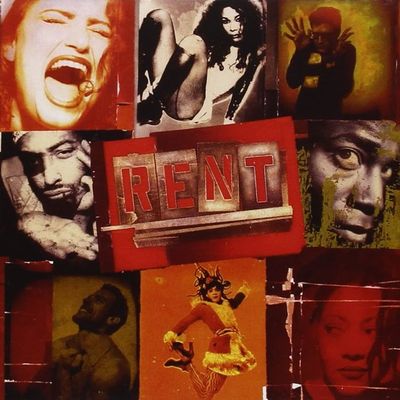
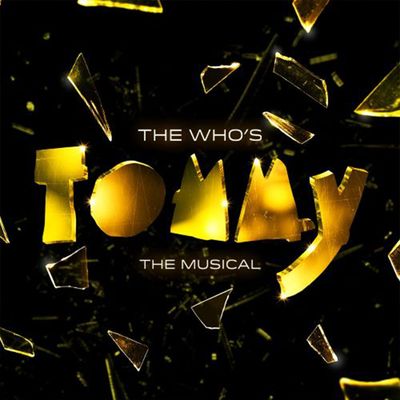
[15:17] Michael McElroy: Yeah. Um, where you acknowledge the, you know, the shit that's going on, but you also um, you know, look for the healing. Um, so just a little segue from the music. Um, you are also an amazing actor. So you've appeared in Rent, the Wild Party, Tommy's The Who, or The Who's Tommy, Miss Lagon, as you said. Um, your incredible Tony nominated performances, Big Jim in Deaf West Theater Production of Big River, that from Roundabout, which was so amazing. One of my favorite um performances ever. Um, and you said the acting bug came from you know your your youth and you were sort of exposed to it. Um so talk a little bit about the acting versus the music.
[16:01] Michael McElroy: Well, like I said, I had uh an uncle who would come and stay with us every summer and do local theater. He would musical direct, and he always would take me. I mean, now looking back on it, why this 21-year-old would want to have this eight-year-old kid, but he recognized something in me and wanted me and knew I loved it so much. So he would take me to rehearsals, he would take me to performances. And um, when I would go to see theater, that was the only time I was absolutely still, you know, because I just loved being transported into the world of what was happening on the stage. And I think I saw my first show was the National Tour of Porgy and Bess. And when you talk about seeing it and being it, that was I think the first time I made a conscious decision.
Oh, I could do that because I saw people on stage who looked like me doing it. But I still didn't know what I wanted to do professionally or where I wanted to go, if I wanted to do music or singing or some combination of both. But I grew up, like I said, in Shaker with a fantastic music program and a fantastic theater program. So when it came time to look at schools, that's when I had to make that choice. And that's when I chose Carnegie Mellon and decided to go the acting musical theater route as opposed to music or singing. And um, but I grew up around theater. I mean, we saw every national tour that came through town. A lot of those people are my friends now. I saw Leslie Uggams play Maria in West Side Story.
I saw um Lilius White play Dorothy in the Whiz. Um, I saw Jeff Calhoun in Best Little Whorehouse goes to Texas. I mean, I every show that came through town, so I just loved it. But I didn't make a decision to do it or to pursue it until I actually had to choose where I was going to go to school. And that's when it became okay, this is what I'm gonna do.
[17:51] Jan Svendsen: So Carnegie Mellon, you received the 2020 Alumni Achievement Award from CMU. And we talked before about the Tony Honor and Excellence. So for you, what are these, what do the awards mean?
[18:06] Michael McElroy: It's I know it's an awkward question, but I feel like you would have a very philosophical answer to this.
[18:12] Jan Svendsen: Really?
[18:12] Michael McElroy: Okay. Well, you know, the Tony Honor came at a time that I was in a really difficult personal place. Um so I was in a real emotional turmoil. It was just one of those times, you know, you go through phases sometimes where it's a combination of things happening in your life that just take you to the bottom. And it's only through the love of friends and understanding that this is a what my friend calls a valley of preparation. You know, your life cannot be filled with just mountaintop moments, or you wouldn't value the mountaintops. Um, and so it was a really dark place that I was navigating my way through. Um, and in the middle of it, I get this call saying, you know, you all just VIV, uh, we want to let you know that you've just received the 2019 Tony honor for excellence in theater.
And I just started bawling. And then I couldn't, and it was like on a like a Thursday, and they weren't gonna announce it until a Wednesday. And so I had to keep my trap shut for like five days, you know, before I could tell anybody. But it it validated the work I had been doing for 25 years. And you know, you can't look to awards to validate you in terms of who you are as an artist in person. You can't look outside yourself for those things, but it felt good to have the work that I had been doing acknowledged in that way, right? Um, and especially in that moment, I needed that moment for something, someone to say, you have been on the right path. What you do has really mattered, and we want to take the time to acknowledge that, right? So it's an incredibly emotional thing or uh moment because it kind of let me know that I was what I was doing, I needed it to matter in that moment.
[20:10] Michael McElroy: Um, and then the alumni achievement award. My days at CNU were not easy ones.
[20:15] Jan Svendsen: Oh, why?
[20:18] Michael McElroy: Why? Oh, you know, I I've been to therapy, so I've I've moved past it. But you know, conservative trade conservatory training programs at that time were very different than they are now. You know, musical theater, artistic training programs were different, and so at that time, the training which I received was excellent and really set me up for success and that absolute confidence of how to go into a room, how to get a job, and how to do my work. I will never take that away from Carnegie Mountain. That was amazing. But the emotional part of it, coming right out of high school into that kind of intensity and being told that parts of you are not welcomed in the space or in the work. And if those parts were in the work, then that could be cause for you not to be here.
Um, was messaged a great deal. So there's kind of this fracture that you kind of go through at that time because you're just coming out of high school, so you are for the first time on your own, right? Stepping into your identity outside of your parents' house, and trying to figure out who you are as an independent person and all of that. And at that same time, I'm being told in the place that I love that I want to give of my everything I have that I'm passionate about, that every part of you isn't welcome here. And so it was a really challenging time for me because I was dealing with my own demons around religion and and all of that stuff. And so I ended up having a really bad first year, and then they I almost ended up getting cut, and then I said no, I I fought to stay, and so I ended up having to repeat my first year.
So I was there five years. Um, but it taught me on the positive side, I get like I said, the training, but also on the other side, it taught me that I had to prove it to myself and work for myself, while also carrying those wounds of you're not good enough. And it's interesting that you mentioned Big River because Big River happened, I think, in 2003, and that was the first time I actually did not believe that I was gonna get fired from a job.
[22:32] Jan Svendsen: Wow.
[22:33] Michael McElroy: Because I just knew they were gonna figure out that I was no good and fire me. I mean, I carried that, but on the other side of it, I went, okay, well, if they're gonna fire me, I'm gonna work my hardest. So I it never stopped me from working, but I always carried that damage, and it took a long time for me to kind of put that devil on my shoulder to sleep, right? Um, so the best and the worst of those experiences. So getting that alumni achievement award. It was significant in a very meaningful way.
[23:04] Jan Svendsen: Yeah. You know, this I have to bring this up because I, you know, Broadway has come under long overdue scrutiny for the systemic racism in our industry. Um, and I I really do want to have a conversation about it. Um, and I just wondered, you know, did you experience that um throughout your career on Broadway? And what are your feelings on Broadway regarding racism and what are your hopes for the future? I know it's a really big question.
[23:33] Michael McElroy: Light there. Okay, we're doing light theater. Um, so and and I I'm not even sure I feel qualified to be asking that question, but I I, you know, I want to, I want to understand and I want to be a better ally too.
[23:45] Jan Svendsen: Yeah.
[23:45] Michael McElroy: I think we have to ask those questions. I think there's parts to it. I'm not just gonna just to talk to that. I think there's nothing wrong with asking the questions. I think what we also have to do in allyship is also do our own work. So there, you know, my friend wrote this song during last year called uh Google is free. And it's this this idea that we can go and find research and then come to the table with questions based on the work we've done. So that's something we can all start to do to inform ourselves. We they called it cultural competency to really start to understand other people's lived experiences. Um in this moment of what we saw over this past year, I think there's been this kind of false narrative that the theater community has kind of positioned itself in a certain way as this all-accepting, all-inclusive, very liberal, very open-minded space.
We're all a welcome and aren't we doing, you know, and kind of pat itself on the back. And then what happened when all of the things went down over the last year with the pandemic and the senseless murders of you know George Floyd and all those things that happened, all of a sudden there was a spotlight on the theater community in a way that went, oh, we haven't been as inclusive. We haven't been as diverse. We haven't been as equitable, right? We haven't been as accessible. We haven't created communities where people felt that they belonged. And because we had bought that false narrative for so long, no one had the tools to address it. So what happens when we deal with race and identity and gender, all these really complex, complicated and complex questions and thoughts is we retreat, right?
So when this happened, I was amazed at how long it took for theater companies and and and theater institutions to come out with a statement. Right? Because nobody knows what to do or what to say, then they say nothing, right? So what I have, what I will say is I'm very proud of the organizations that have come up out of this moment and the work that is being done. There are 19 of us, and we have been working since I was trying to say May, really helping to build a structure so that we can be an integral part of this, the transformation of our industry and our country.
[26:10] Jan Svendsen: So, what does that mean, helping to build a structure? So, what do you like? What are some specific things that you are doing, or what are your what are your goals or your strategies?
[26:17] Michael McElroy: Um, one is in working in partnership with uh producers and theater um uh or uh theater owners and um working with uh directors and choreographers to really help them to understand structures that they can put in place you know for example um for our directors and choreographers there's no like school that you go to to make your way up that ladder right a lot of the times directors choreographers musical directors will have assistants who are people they know or people who are connected or people who reflect back what they are right so if you're not a if you're a person of color how do you get in that those doors how do you you know you may have you may be a dancer that is now looking to make that transition to choreographer how do you get there right so we've been you know in this incredible think take and partnering with and in conversations that are up and coming uh the some more that are coming up in the next couple months around how do we build pipelines there are talented people out there who just don't have a way in so if we can build structures that support initiatives that say here are the things that we're going to be accountable for and here's the the checklist and here are the accountability structures then it takes out of the equation people's personal biases or beliefs because that you can never change we people have their belief systems we can support them in learning new language and being aware of them but that's very hard to change those biases but what we can do is put structures in place to combat that right um to look at these offices where the decisions are made and say how are we bringing in apprentices who pay positions because most of these internships and mentorships are free are are are don't have any salary, so that automatically cuts out people from some marginalized and underserved populations.
[28:16] Michael McElroy: So really looking at those structures and accountability structures and partnering with saying, okay, where are the diversity officers in these organizations who can help you help your organization to grow so that even if there are, you know, BIPOC folks coming in, they're not coming into spaces that are going to traumatize them because you haven't done the work to welcome them.
[28:38] Michael McElroy: I believe that the artistic world has so much to offer and so many possibilities when there are diverse voices in the room. And we have to start to look at diversity not as something that we have to do or that we are, you know, made to do, but as something that holds incredible potential for innovation, right? Um, all different people with different ideas and different lived experiences in the space can create theater, songs, films, things that we haven't even thought of, right? But so far, that has only been for a privileged few, right? Um, so as much as I want to see a change in what theater is done and what plays are produced and what shows are being put on, I want to make sure that there's diversity in the rooms where those decisions aren't being made.
[29:33] Jan Svendsen: Amen.
[29:34] Michael McElroy: Amen.
[29:35] Jan Svendsen: Yeah. Um, you know, I started this podcast to help inspire everyday people to be of service, to be philanthropic, to be socially responsible. Um, you are one of the most inspirational people that I have heard in a long time. And I just, you know, what would you say to inspire people that would inspire their giving, whether it's giving of themselves or giving of money or, you know, learning something new, um, inspire us.
[30:05] Michael McElroy: Once again, oh, sure. No, no pressure. Well, I grew up, like I said, I grew up in church, and some of the values and tenets of that service was a big one. But also there was this whole idea of tithing, giving back. Um, so for me, growing up in a Christian and a Baptist church, the idea of giving 10% of what you make, um, that idea of giving back financially. Um, we used to have this thing, giving of your time, uh, time, tithes, and talent, right? Um, everybody is born with gifts that someone no one else has. We're all unique beings. And figuring out what that thing is that gets you up every morning and being, uh, finding a way to give it, knowing what it is and give it is is a service. It's a way of making this world better.
Um, and I feel like there's so much, there's so much darkness that we are being shown all the time. Like I always laugh with my friends about when did the news become bad news, right? No one ever talks about the good things that people are doing, right? Everything we see and hear is meant to fracture us, separate, divide us. And so that can be disheartening at times. But there's a lot of good going on in this world. We're just not being told that it's happening, right? Um, because if people can keep us afraid, they can keep us separated because they recognize that together our power is limitless, right? That when we come together, when we unite, as we have united over major, you know, things that have happened in our country, like September 11th, when we've like the AIDS epidemic in the Broadway community.
When we've come together, we've shown what our power is, right? And so I think my responsibility as a human being on this earth, and I think everybody's opportunity on this earth and responsibility is to know what it is that wakes you up in the morning, the thing that you must do, and then doing it to its fullest capability, knowing that there will be ups and downs and giving of it, giving it to people. I just could not imagine a world where kindness doesn't exist.
[32:20] Michael McElroy: Generosity of spirit does not exist. I grew up around people who modeled that for me. You know, my mom, I was talking at another event last week, and my father died when I was four years old. My mom was a widow before she was 30 with two young boys. Six months later, my grandfather died of cancer. So literally within a year's time, and then my uncle disappeared. So all the men were gone. And I watched these three women model bravery, strength, hard work, service, generosity of spirit, kindness, discipline. Oh, a lot of discipline, right? Um, I grew up with these role models, these incredibly strong women who taught me how to be a human being, to follow my dreams, and to make sure that I am always kind and that I give it back.
Right. And I think that's why in my work as a teacher, as a professor, it's about mentorship. It's about passing it on, it's about creating work as an artist that in some way makes the world better, that makes us look at ourselves in a certain way, um, that invites people into conversation, that shines a light on the dysfunction in order to lead us to a path of healing. That's the thing that gets me up in the morning. And I don't know how we can expect or want this world to be the thing that we dream of it for ourselves and for our children in the next generations if we're not feeding into it, if we're not giving back, if we're not donating, if we're not serving through our time, through, you know, those all those things are important to combat what we are constantly being fed, which is darkness and negativity.
[34:11] Jan Svendsen: I couldn't agree more. So I've been asking this question to my guests lately, and um obviously this Broadway shutdown has been very difficult for so many people. But if you could wave your magic wand and um make the changes that you'd like to see when Broadway reopens its doors after COVID, what would you want it to look like? I mean, you've kind of articulated a lot of it right now, but yeah.
[34:36] Michael McElroy: I would like um more diversity in our offices, in our casting offices, in our producing offices, in our general management offices. Um, I would like clear pipelines and pathways to BIPOC young artists to have a way in and be financially supported to do that work to learn the craft and skills of those specific fields. I would like there to be more diversity in the stories that are being told and who's getting to tell those stories. I don't think we should ever do another show where we have an all-white creative team. I mean, that's an easy ask, and just that's something we can be accountable for. That diversity, that richness of diversity will just add to what is possible on that piece. So that's just a no-brainer.
We can start there, right? Um, I would like us to have more business relationships with our communities of color, and that all our vendors should not reflect back on us who we are. Um, I would like more stories to be told that are written by um LGBTQ BIPOC artists. I would like there to be a think tank and a support system for those artists so that they can be mentored and thrive. Um, I would like there to be a real honoring of the history of black artists in America. When I do the research that I do now in my teaching, all of the American music is black music. It really is, you know, and so when you look at the um spirituals and the music of the enslaved, that is the foundation for country, um, classic blues, country blues, ragtime, jazz, blues, bebop, rock and roll, pop, R&B, gospel.
All of it comes from that foundation. And we need to start knowing our history and honoring that history. One of the examples I use all the time when I talk about collaboration is looking at music by, you know, like Porgy and Bess, where you have the Gershwins taking these melodies and musical art forms from the Yiddish, you know, culture and forming them with this black music of that time and creating this piece of work that is still done. There is never a year that goes by that Porgy and Bess is not done somewhere in the world, right? That's what's possible when you bring together cultures, right? Um, hearing, you know, people like Harold Arlen, who was majorly influenced by living, his father was a cantor, and but he lived downstairs from a black family, and so he was always up there listening to their music and hanging out.
And so he was influenced by that music when he brought it through his cultural lens, right? That those things are possible. Um, but we have to stop being so doggone afraid and buying the crap that, uh, that that's fear-based. That if this person gets it, that's gonna take something away from you, right? We're buying that crap, and we need to put that crap away and step into a space of bravery and say, I want for the betterment of humanity, for the betterment of my art, I want that. So I want to be in the room with diverse voices. I'm not gonna be afraid of that.
[38:12] Jan Svendsen: I feel like we should transcribe your um, your comments here, and that should just be the blueprint that we send to whoever is gonna be uh, helping open the doors for Broadway, because um, I don't think you could have anyone could have stated it better. So thank you so much, Michael. I really appreciate you being here today.
[38:27] Michael McElroy: It's my pleasure. I'm glad thank you so much for having me, Jan.
[38:29] Jan Svendsen: Thanks for listening to this episode of Broadway Gives Back. Broadway Gives Back is part of the Broadway Podcast Network, produced by Dori Berinstein and Alan Seales with Brittany Bigelow, and music by Eric Becker at Broderick Street Music. Special thanks to my producing partner, writer, and friend, Jim Lochner, and to Katie and Yo at BPN, Julian Hills from the Bulldog Agency, the Charity Network, and to my fiancé, Glenn Weiss, who is always my consultant. If you like what you hear, don't forget to subscribe and rate this podcast wherever you stream your podcasts. You can also follow Broadway Gives Back on Facebook and Instagram at Broadway Gives Back Podcast and on Twitter at Broadway Gives. To learn more, visit bpn.fm slash Broadway Gives Back.
© Broadway Podcast Network, All Rights Reserved