

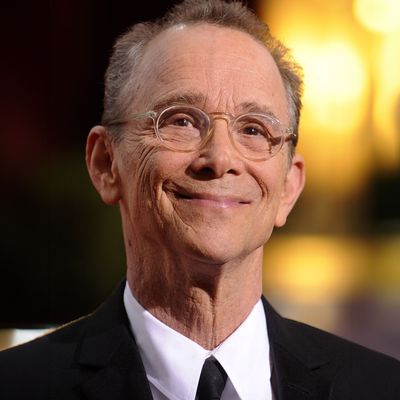
Willkommen, bienvenue, welcome back to the Broadway Gives Back Podcast Season 2! Joel Grey is best known for his immortal portrayal of the Emcee in CABARET, which won him the Tony and an Academy Award... Read More
From the show: Broadway Gives Back
Guests
Featured Shows


About
Willkommen, bienvenue, welcome back to the Broadway Gives Back Podcast Season 2! Joel Grey is best known for his immortal portrayal of the Emcee in CABARET, which won him the Tony and an Academy Award. But Joel has had a distinguished career for nearly 70 years—GEORGE M!, CHICAGO, WICKED, ANYTHING GOES, and so many more. He co-directed the Tony Award-winning revival of THE NORMAL HEART and recently directed the Drama Desk-winning off-Broadway revival of FIDDLER ON THE ROOF, performed in Yiddish. An acclaimed photographer and author, Joel is also a passionate advocate for a number of important causes. Join Joel as he looks back on his remarkable career, coming out at the ripe young age of 82, welcoming audiences back after 9/11, and more.
Watch the 9/11 “I Love New York” Commercial:
Connect with Joel:
- Instagram: @joelgnyc
Connect with The Broadway Gives Back Podcast:
- Facebook: @broadwaygivesbackpodcast
- Instagram: @broadwaygivesbackpodcast
- Twitter: @broadwaygives
Hosted & Executive Produced by Jan Svendsen and co-produced & edited by Jim Lochner.
A proud member of the Broadway Podcast Network.
Special thanks to Dori Berinstein, Alan Seales, and Kimberlee Garris from BPN; Julian Hills from The Bulldog Agency; and Eric Becker from Broderick Street Music.
Transcript
This transcript was automatically generated and might contain errors.
[0:05] Jan Svendsen: Welcome to the Broadway Gives Back Podcast.
[0:07] Jan Svendsen: I'm your host, Jan Svendsen.
[0:10] Jan Svendsen: This podcast spotlights Broadway actors, shows, and organizations in their pursuit of social impact and philanthropy.
[0:17] Jan Svendsen: Join us as some of the brightest lights on Broadway share their stories about their favorite charities and how they got involved and the people and causes who benefited from these philanthropic efforts.
[0:34] Jan Svendsen: Welcome to the Broadway Gives Back Podcast, Season 2.
[0:37] Jan Svendsen: I'm so excited to welcome a special guest today to kick off the new season.
[0:42] Jan Svendsen: Joel Grey is best known for his immortal portrayal of the Emcee in Cabaret, which won him the Tony and an Academy Award.
[0:51] Jan Svendsen: But Joel's had a distinguished career for over 70 years, from tap dancing in George M and the nearly invisible Amos Hart in Chicago, to the Wizard of Oz and Wicked, Moonface Martin in ANYTHING GOES, and many more.
[1:06] Jan Svendsen: He co-directed the Tony Award-winning revival of The Normal Heart, and he recently directed the remarkable Off-Broadway revival of Fiddler on the Roof, performed in Yiddish, which won the Drama Desk for Best Revival of a Musical.
[1:21] Jan Svendsen: He is an acclaimed photographer and author, as well as being a passionate advocate for a number of very important causes, and I'm so thrilled to have him here today.
[1:30] Jan Svendsen: Joel, willkommen, bienvenue, welcome to the Broadway Gives Back Podcast.
[1:36] Joel Grey: Thank you for inviting me.
[1:38] Jan Svendsen: You know, you're my opening act, so to speak, for this second season, and I was very specific. I wanted to launch this podcast after taking a summer hiatus, but I wanted to launch it around the 20th anniversary of 9/11. And I wanted you as a guest to talk about the work we did making that commercial after 9/11 to help bring back Broadway and the spirit of New York after those terrorist attacks. And I just I wanted to talk about your memories of that day. And I guess maybe we could start with the day before we did the video shoot. Um, we all got together to record the music.
[2:13] Jan Svendsen: And I remember you standing in the front row. You were standing with B.B. and Stokes, and you were keeping time to the music and singing and smiling, and you were doing these little fist bumps with your hands to keep time with the beat. And you filled me with so much hope during a time where there was so much despair. And I just wondered what were your memories of that day.
[2:34] Joel Grey: I too was caught up in the excitement of music and artistry and community coming together to make a difference, to speak up and to be able to shout out, "It's up to you, New York, New York."
[3:01] Jan Svendsen: Exactly. So it was those iconic "New York, New York" words in that song. And I remember the day we actually shot the video, um, all the casts walked in costume from their theaters to the Booth Theater where we had a little briefing meeting, and then Jerry Mitchell taught some choreography to everybody. Um, and then we walked into Times Square, and you were again in the front row, and you were standing next to Betty Buckley and I think Katie Huffman, right?
[3:29] Joel Grey: Yes, sounds right.
[3:31] Jan Svendsen: Yeah. And I remember we were doing the choreography and we had to start and stop a few times, but we ran through it several times, and there were fire trucks coming down Broadway, going downtown to Ground Zero. And I remember every time a fire truck would come by, everybody would stop and we would all sort of clap and pray and send some good wishes to all the firefighters. Um, what memories do you have of the actual video shoot and being in Times Square that day?
[4:03] Joel Grey: The idea that we are a community, and that we're all suffering and all fearful and all hopeful at the same time, and seeing people that I hadn't seen in a long time. And, uh, people I loved for years, you know, close, close friends and actors, and people just kept filtering in, and before you knew it, it was giant and inspiring, and we needed inspiration, and it was up to us to pass that on.
[4:53] Jan Svendsen: That was the job that day.
[4:57] Joel Grey: It was, it really was. Um, thinking about that day, it reminds me a little bit of—it's very relevant right now—it reminds me of what's going on where Broadway is returning. Um, Broadway's back after 18 months of a shutdown due to COVID. And I wanted to ask you how have you been doing the last 18 months and what have you been doing?
[5:20] Joel Grey: Taking photographs.
[5:22] Jan Svendsen: A new book coming out soon, I'm guessing, huh?
[5:24] Joel Grey: Well, uh, maybe I would guess that could be. But, uh, you know, it was—I was home. I was in my space taking care of the health safety rules, and, uh, wondering about them all the time.
[5:46] Joel Grey: How serious is this? What are we supposed to be doing? And, uh, unfortunately no real answers came. And today I feel there's still so much confusion and, um, fear of the unknown, and yet we're here summoning up all our strengths, trying to reopen Broadway and, uh, have it be successful and not, uh, frightening or dark, and it's a risk, and I think everybody knows that, but there's something about the theater community that just makes you so proud to be a part of it, knowing that despite the risks we all want to live and live in the theater and live in our totality, but it's very tricky, I think.
[6:59] Jan Svendsen: It is tricky, and I keep thinking about the concept of science, and I guess science is ever-changing, and as we get more data, the news changes and the guidelines change, and I think we all are just trying to be flexible flyers and react and keep as safe as possible and trust each other, which is the hard part sometimes. But it's very exciting, and I'm looking forward to being back in that theater and feeling connected to people and wearing a mask.
[7:38] Jan Svendsen: Um, not too personal, don't worry. Uh, you know, you're almost 90 years young, and um, I feel like we could learn so much from you and your amazing experiences. So if you had to use three adjectives, Joel, to describe yourself, what would you choose?
[7:57] Joel Grey: Love, excitement, and dreaming.
[8:01] Jan Svendsen: Great, and I would say adorable too. Um, what do you most give a damn about?
[8:08] Joel Grey: People, my family, my children, my wonderful friends, my fellow actors, humanity, the best of humanity.
[8:24] Joel Grey: I still have a dream about that.
[8:27] Jan Svendsen: That's great. Speaking of dreams, is there a dream that you've yet to achieve that you'd still like to work on?
[8:35] Joel Grey: Hmm.
[8:42] Joel Grey: No.
[8:43] Joel Grey: Uh, forgive me.
[8:45] Jan Svendsen: Stokes?
[8:46] Joel Grey: Forgive me.
[8:48] Joel Grey: Everybody, forgive me. That's not a role I ever thought I would play. Speaking of dreaming, and you've done so many amazing things, but can you name one of the things that you're most proud of and why?
[9:03] Joel Grey: I think it would have to be something between Fiddler and The Normal Heart, both about difficulty and tragedy and hopefulness.
[9:19] Joel Grey: They're both so loaded with those elements and hopefulness in, uh, times of difficulty.
[9:34] Jan Svendsen: Okay, now I have tears in my eyes, so I think I need a hug, but I'm gonna give you a virtual one. Um, let's pivot a little bit and let's talk about your amazing stage career too. And, uh, have to start with Cabaret. You won a Tony, um, you won the Oscar, a Golden Globe, a BAFTA, um, you got to work with Bob Fosse, and I think you're one of nine people who've ever won a Tony and an Oscar for the same role.
[10:02] Jan Svendsen: Um, but I read somewhere, and I don't know if this is true, that you weren't necessarily Bob Fosse's first choice for the film. Is that true?
[10:09] Joel Grey: How about last choice?
[10:13] Jan Svendsen: What's the story?
[10:16] Joel Grey: I well, I mean, I had great respect for Bob, and I think he made a magnificent movie. And I've known him for many, many years, but I think he had a notion that he wanted to recreate the Emcee.
[10:37] Joel Grey: And I I don't know whether that included his participation and maybe playing it himself in his dreams, or just, you know, bad choosing and, uh, bad thinking. I don't know what I had no idea. It was just so bizarre, and everybody said no to him, to Bob Fosse. They said no, and that was a tough thing for him to swallow.
[11:15] Joel Grey: And we never talked about it. No, and never heard anything, and you know, those things sneak out. But I'm I am grateful for the film. I'm grateful for his guidance and his talent, and, uh, I'm glad he was, uh, overruled.
[11:38] Jan Svendsen: You've worked with so many people from Kander and Ebb and Hal Prince, Jerry Herman, Stephen Schwartz, George C. Wolfe, Larry Kramer, so many people. Can you talk a little bit about some of the collaborations that have meant the most to you?
[11:52] Joel Grey: Well, they're all interesting and different and the same, and it's about finding a common idea about the piece and the character that you, uh, collaborate, and that collaboration sometimes is challenging, sometimes it's easy.
[12:24] Jan Svendsen: Um, but it's never the same. And it really is all about collaboration. Um I was thinking, you know, you're such a collaborator and you've worked with so many people, and then you have the other side of you, which is your photography work. Um, your photos, I believe you have photos in a permanent collection at the Whitney Museum, and you've had five books of photography in print. And I wondered if you could talk a little bit about the photography and what it means to you as an artist.
[12:53] Joel Grey: Well, it's something that I've always done, along with being an actor, just for my own pleasure and my own, you know, development as a human. I've always loved photography. I did it early in my life while I was uh a youngster.
[13:18] Jan Svendsen: Hey, I was a youngster.
[13:22] Joel Grey: You still you're still acting like a youngster to me. Your spirit is amazing. Um came out publicly at I guess it was in 2015 at the age of 82, speaking of being a youngster. And I wondered what prompted you at age 82 to come out, and how has that changed your life and why did you why did you do that at that point in time?
[13:46] Joel Grey: It seemed like a small way to contribute to a wholeness in the society, and um, and to not be separate and not to uh be limited by that separation. And for me, sexuality was always something mysterious and really complicated. It never was black or white. And I just I thought it was good for the country, good for humanity to acknowledge certain possibilities. And it had nothing to do with how much I love my family and my wife and my world, but if it was going to be in our society a negative, uh a punishment, and I could say something that would mitigate that, I decided that it was time to do that. And it was not a big deal. And I was I'm not the different a different person. Yeah, I look forward to the day. I hope we're here where we don't have to come out anymore where it just is what it is, right?
[15:12] Jan Svendsen: It looks like it that could be down the line. Um you're also you're also a passionate uh advocate for a number of causes over these years and causes and organizations that are particularly important to you. And I wonder if you could talk a little bit about some of the philanthropic work that you've done or some of the causes that you care most about.
[15:32] Joel Grey: Well, there's nothing original. I mean, um we're talking about human rights and um loving each other and making the world uh or being part of a more loving place that we can create or encourage by our own love. So there's a lot of words for this philanthropy, social impact, charity, cause, social responsibility, being of service, purpose, what but whatever you call it.
[16:08] Jan Svendsen: I wondered you're saying what it means for you in your life is really about this transference or sharing of love. And there's a lot of people listening to this podcast, and I think they would want your advice on how to do that. How can people become everyday philanthropists and share that love?
[16:28] Joel Grey: Think about the beginnings and being nurtured or not being nurtured, and the damning aspects of not and the beautiful gift of being nurtured, and how those two things are somehow headed against each other and um working and striving to be on the side of the angels.
[17:03] Jan Svendsen: We were talking a little bit before the recording of this podcast about how tough things are in the world, and things are just every day you wake up and there's more bad news. So it's about having that sense of hope you were saying, and continuing to be hopeful.
[17:23] Joel Grey: I think it's something that my parents gave me, oddly enough. Um my father more so he was uh a very advanced human being, and my mother was like a child in our family, and uh he took care of her in many ways the way he did my younger brother and myself.
[17:52] Jan Svendsen: She just didn't have a solid loving background that gave her that. Um, let's talk a little bit more about your growing up years and your family. Um, you know, as you were saying, family is so defining in who people are with what they do get, but also sometimes in what they don't get. Um, and a lot of people um become philanthropists or uh push for social change because of their backgrounds, um, being raised one way or another because they didn't get enough and they want to make sure everybody gets, or because they did get it and they want to make sure that everybody gets it. I just wondered if you could talk a little bit more about your background.
[18:36] Joel Grey: Well, I was born in a difficult time in the 30s, uh, where I think a lot of people were fearful for their lives in Cleveland, Ohio. My mother came from a family of five daughters. She was the second oldest, and uh my grandfather was a fruiterer. He went down to the Cleveland uh place where everybody went at four o'clock or three o'clock or two o'clock in the morning, and it was a hard life. And my grandmother had five daughters. Oh my god. And making it all work was extremely difficult. And there wasn't enough time to give to everyone. And if you didn't have, how can you give? So, you know, those are the things that that sort of uh shaped my mother's family.
[19:46] Joel Grey: And then my father's family was about art. They all played musicians, they played orchestra in the orchestra, they sang, one was a ballet dancer, and my father was the breadwinner who at 16 played the clarinet beautifully, and so he was this prize, and um I think my mother sensed that, and it was a way to move forward as people want to do, and to run away from that very difficult, dark place where uh I think everybody was worried about existing, and my grandpa worked just like a dog, and everybody you know sees that and feels that, and um art somehow helped in my father's house, everybody had some love for that art and communication and music, and so it was a very different vibe, and I learned very different things from my parents, and both good. Some bad, but a lot of good.
[21:19] Jan Svendsen: That's the difference, I think, is the balance of good and bad as to whether or not you go forward. Why am I telling you all this?
[21:34] Joel Grey: I don't know, because I'm asking you questions, and you are a wise 89-year-old man who's telling us some good advice.
[21:41] Jan Svendsen: Um, but you're right. I think that you know there is good and bad as we were talking about, and I love your spirit of hopefulness, and I love that the arts have provided so much um so much reward for you and your life. And um, and I do think that that's really good advice for people listening that you know the arts heal and the arts you know teach as well, and the arts can make you feel um feel good. And during these times, sometimes we're gonna need we need to feel good, um, and we need to feel connected.
[22:14] Joel Grey: Today, we need to feel good today.
[22:18] Jan Svendsen: Exactly. I think that's a really good note to take a pause here and stop. We need to feel good today, and uh Joel Grey, you are making us feel good today. Thank you so much for being on this podcast, and um, I'll be thinking of you throughout this opening of Broadway because uh I felt like you were part of the opening of Broadway 20 years ago, and and here we are doing it again. So believe in the dream, right?
[22:43] Joel Grey: Believe in the dream, yes. Thanks for inviting me.
[22:50] Jan Svendsen: Thank you for being part of this. I really appreciate it. It's just been an honor to talk to you. See you soon.
[22:56] Jan Svendsen: Thanks for listening to this episode of the Broadway Gives Back Podcast. Broadway Gives Back is part of the Broadway Podcast Network. Special thanks to my producing partner, writer, editor, and friend Jim Lochner. And thank you to everyone at BPN, including Dori Berinstein, Alan Seales, and Kimberlee Garris. I'd also like to thank Julian Hills from the Bulldog Agency and Eric Becker from Broderick Street Music. If you like what you hear, don't forget to subscribe and rate this podcast wherever you stream your podcasts. You can also follow Broadway Gives Back on Facebook and Instagram at Broadway Gives Back Podcast and on Twitter at Broadway Gives. To learn more, visit BPN.fm slash Broadway Gives Back. Thanks so much.
© Broadway Podcast Network, All Rights Reserved