

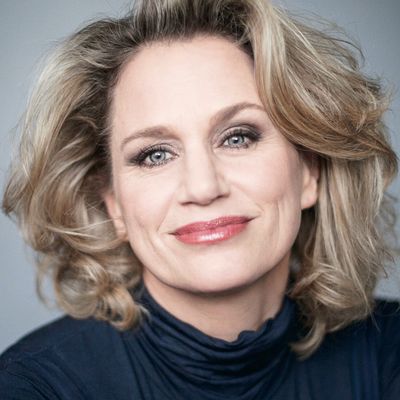
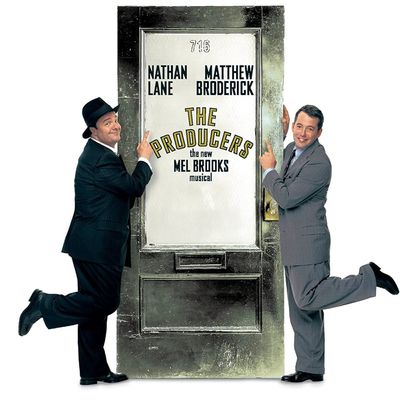
Cady Huffman is best known for her bodacious, Tony-winning role as Ulla in the hit musical THE PRODUCERS. She’s an actress, singer, dancer, producer, and director, and a familiar face in film and on television... Read More
From the show: Broadway Gives Back
Guests
Featured Shows
About
Cady Huffman is best known for her bodacious, Tony-winning role as Ulla in the hit musical THE PRODUCERS. She’s an actress, singer, dancer, producer, and director, and a familiar face in film and on television. She’s also a passionate advocate for a number of causes, including arts education, AIDS awareness, breast cancer research, women’s heart health, and animal rights. Join Cady as she discusses the joys of creating Ulla, her philanthropic work, and the burden of making audiences laugh after 9/11.
Watch the 9/11 “I Love New York” Commercial:
Connect with Cady:
- Facebook: @imcady
- Twitter: @CadyHuffman
- Instagram: @CadyHuffman
- Cady Huffman & Mary Ann McSweeney at Birdland: “It Was a Very Good Year”
Connect with The Broadway Gives Back Podcast:
- Facebook: @broadwaygivesbackpodcast
- Instagram: @broadwaygivesbackpodcast
- Twitter: @broadwaygives
Hosted & Executive Produced by Jan Svendsen and co-produced & edited by Jim Lochner.
A proud member of the Broadway Podcast Network.
Special thanks to Dori Berinstein, Alan Seales, and Kimberlee Garris from BPN; Julian Hills from The Bulldog Agency; and Eric Becker from Broderick Street Music.
Transcript
This transcript was automatically generated and might contain errors.
[0:05] Jan Svendsen: Welcome to the Broadway Gives Back Podcast.
[0:07] Jan Svendsen: I'm your host, Jan Svendsen.
[0:10] Jan Svendsen: This podcast spotlights Broadway actors, shows, and organizations in their pursuit of social impact and philanthropy.
[0:17] Jan Svendsen: Join us as some of the brightest lights on Broadway share their stories about their favorite charities and how they got involved and the people on the causes who benefited from these philanthropic efforts.
[0:34] Jan Svendsen: My guest this week is best known for her bodacious role as Ulla in the hit musical The Producers.
[0:40] Jan Svendsen: Cady Huffman is a Tony Award-winning actress, singer, dancer, producer, and director.
[0:46] Jan Svendsen: And she's a familiar face in film and on television.
[0:49] Jan Svendsen: She recently returned to Daytime Television with a recurring role on Days of Our Lives.
[0:54] Jan Svendsen: Cady is also a passionate advocate for a number of causes, including arts education, AIDS awareness, breast cancer research, women's heart health, and animal rights.
[1:05] Jan Svendsen: I'm so thrilled to have her here today.
[1:07] Jan Svendsen: Cady, welcome to the Broadway Gives Back Podcast.
[1:10] Cady Huffman: Oh, thank you so much, Jan. I'm thrilled to be here.
[1:13] Jan Svendsen: Well, you know, I really wanted to have you as my guest today, especially as I launched the second season of this podcast around the anniversary of 9/11. And I think of you a lot because you were there the day that we all created the commercial to help bring Broadway back and the spirit of New York back after the terrorist attacks of 9/11.
[1:33] Jan Svendsen: You were at that time starring in the mega hit, The Producers, and you were sort of front and center in the making of that commercial. So I wanted to talk about your memories of that time. And let's first talk about The Producers just in general. I mean, it was such a huge hit. And you and Matthew and Nathan and the whole cast, I mean, you guys were just front and center on the Broadway stage and everything going on on Broadway.
[2:02] Jan Svendsen: So when the terrorist attacks happened, The Producers kind of became this show that everybody looked to. It was obviously a shocking time. And a time where we all kind of wondered, how do you do a comedy during this time? A comedy that has a song called Springtime for Hitler. And my brother's a journalist, and he called me and he said, Cady, how are you gonna make people laugh? Because we went back to work. It happened on Tuesday, and we went back to work on Thursday.
[2:43] Cady Huffman: Um, and it just occurred to me, it's like I can't wait to hear people laugh. And yeah, we were this crazy hit, you know, just all the stars lined up, and for some reason we hit it and just, you know, we're absolutely that huge hit on Broadway. So when pretty much all of Manhattan shut down, you know, none of us knew what to do and how it was gonna happen. And I hope that the show was pretty successful at anchoring Midtown and Broadway because, you know, nobody was coming on and off the island at that point.
[3:26] Cady Huffman: So what happened was we had this audience that no longer could get to us. So New Yorkers started coming and lining up around the block. And yeah, our theater was full. Our theater was full, and I know that others weren't. So I think we felt, I mean, I know I felt a certain responsibility in welcoming people to our show, and hopefully, if they couldn't get a ticket to our show, they went and saw another show. But it really was the first time where I said, Oh, I, you know, it's not just a silly job. This job can help people forget for two or three hours, help people heal with laughter.
[4:19] Cady Huffman: You know, there's so many studies and so much proof that the arts help that whatever it is that the genius of Mel Brooks taps into with his own experience. There are people who really respond to it. And even though it was a big old comedy, there's a lot of heart to it. He has a, you know, he, this is a man who fought in World War II. This is not an experience that was completely foreign to Mel Brooks, and I think even though, you know, obviously Springtime for Hitler, but even though we don't know it specifically, I think there's sort of a feeling like, oh my gosh, this is a time, this is how we can heal from this crazy event that we're good that's gonna take forever to process because I might, it's been 20 years and I still, we still talk about it. I still see that second plane flying into a second tower, you know, it's still so front and center.
[5:21] Cady Huffman: Uh, I hope I answered your question somewhere in there. Uh, but it was intense because the cast, we were getting a lot of requests for interviews and stuff too, which was very like, oh dang, what are we gonna say? Uh, and we all we got together, held hands, looked at each other, and of course, Nathan and Matthew were great leaders and just said, you know, let's do this. We've come this far with each other, let's do this. We did it, and at the end of the show, there was a curtain speech, and the entire audience sang God Bless America, which we did for I think a month or so, or a couple of weeks at least, and it just was, you know, extremely healing, powerful, full, extraordinary. I, it was, you know, much I'm very tempted to use curse words to when describing the events that I won't.
[6:13] Jan Svendsen: Do you remember because I was there um the night that Thursday night, um September 13th when you came back, and it turned into like a big press event. But Rock O'Landisman gave a speech before the show began. And I don't know if the cast backstage could hear it, but I was standing at the back of the house, and I'm gonna butcher it, but um, he basically said how difficult it must be for all of us in the audience to come together at this time and even try to laugh, and how difficult it must be for the cast and for the crew to be there as well, and that there was this incredible connection that all these strangers are in the dark, exchanging all this energy, connecting, but it was a very cathartic healing thing, and that always stayed with me.
[7:01] Jan Svendsen: And I thought about that um for a long time because I think that was exactly what happened that night. It was magic that night.
[7:07] Cady Huffman: Wow, yeah.
[7:08] Cady Huffman: Yeah, you're kind of freaking me out that you were there. You know, it's like, oh, that's right, there were people in that audience, and they were having an experience. You know, wow, thank you for telling me that because I didn't know.
[7:22] Jan Svendsen: Well, it was interesting too because I was working at the Broadway League at the time, and on um the day before, so September 12th, the mayor's office called the Broadway League and said, You need to get Broadway back up and running. And um a coup many different things happened, you know. So we um I wrote a marketing plan because that's what I knew how to do. But um, you know, there were people working with all the unions, and you know, the idea was okay by tomorrow night, which would be Thursday, we're back up and running, and you guys really became the poster child on how to do that. And you're right. I remember I remember the American flags and the lobbies, and I remember singing the national anthem or God Bless America at all the shows. It was very impactful and very moving.
[8:05] Cady Huffman: Yeah, I mean, you know, Jesus. New York City is, you know, as far as I'm concerned, the center of the world, and the hurricane recently and other things that have happened over the years, you know, the pandemic. Uh it's just full of passionate, strong people. Like you don't really go to New York City if you're not someone who's gonna really get up every day and try, you know. And when you saw how much generosity was filling up the island, uh, you know, we all helped each other. We all just helped each other. We did.
[8:47] Cady Huffman: Um, you know, one of the other things that we that came out of that trying to bring Broadway back and bring New York City back was we created a commercial and um all the shows um participated, everybody in costume. People got in their costumes at their theaters and um and then came down to Times Square and you were there front and center. But the day before that, we actually shot uh we actually recorded the music. Do you remember the music recording session?
[9:18] Cady Huffman: Right. Um, what do you do you have any memories specifically of that? Because it was the first time everybody saw everybody else.
[9:25] Cady Huffman: Yeah, and once again, you know, the Broadway community, the only time you get to see each other is at a bar after the show, but also at the Tony Awards, like you don't get to see each other's shows, you don't get to see each other in costume. So it's really amazing when you get to come together and uh share that kind of um powerful moment as well as uh exceptional, I don't know. It's I it's so hard to describe with words, but yeah, I remember just the love, the tears, the like it you sort of held your breath through that whole time, and you sort of, you know, you didn't want to make a wrong move. You didn't want to you only wanted to help and coming together and hugging each other and seeing each other and seeing uh how this incredible community does come together so often.
[10:25] Cady Huffman: I mean, it wasn't an unusual thing that we were um recording something, shooting something for a cause. That wasn't the unusual part. Uh, but it was unusual to have all of us there at once, and it was unusual circumstances. I, you know, you just have my like I if this was if you could see my face, like my brain is going like crazy. Like I keep on seeing these images in my head and feeling in my heart what was going on at the time. So I'm doing my my best to get the words out. But um, you know it's such a privilege to God just to spend time with those people who are as passionate uh about theater as they are about helping.
[11:13] Jan Svendsen: Yeah, and that was that's really what that commercial was all about. Um, and I do I do remember you know you were in the front row and I think it was Matthew and Nathan and Joel Gray was next to you on the other side.
[11:25] Cady Huffman: Yeah.
[11:26] Cady Huffman: Um, and I remember during the music recording Joel was there and he was sort of doing these little fist bumps keeping time to the beat.
[11:33] Cady Huffman: Well I'll tell you I don't know if you know this but Joel Gray and I had sex on television.
[11:38] Jan Svendsen: Uh, I don't know that.
[11:40] Cady Huffman: When was that and what was that?
[11:42] Cady Huffman: That was uh Law and Order uh criminal intent and I didn't even know there was a sex scene and I show up for work and they like hold up a bra and panties I'm like oh what's that for the sex scene and I come in and there's Joel and his tidy whiteies and we're just sort of naked all day in bed like humping and you know this whole thing. So I mean to this day that was like close to 20 years ago. It's you know we're still married to this day. It creates an intimacy that that's unexpected.
[12:17] Cady Huffman: And Segway, that's so interesting that you and Joel were standing next to each other as we were shooting that 9/11 commercial.
[12:23] Jan Svendsen: Yeah. When we were shooting the video in the middle of Times Square, I don't know if you remember this or not, but the fire trucks would come down Broadway heading downtown. Do you remember that at all?
[12:34] Cady Huffman: I just had such a strong memory of the fire trucks, and everybody st we all stopped shooting and we were all cheering.
[12:41] Jan Svendsen: Yeah, exactly.
[12:42] Cady Huffman: Yeah.
[12:42] Jan Svendsen: Exactly.
[12:43] Cady Huffman: Yeah.
[12:44] Jan Svendsen: Wow.
[12:44] Cady Huffman: Jeez.
[12:45] Cady Huffman: You're bringing it back. You're bringing it all back. Really, what struck me that I continue to really be uh to remember about that day is Jerry Mitchell.
[12:56] Cady Huffman: Because he took all of us and cheered us through that whole thing. You know, he did that choreography that was simple but effective, but it was his extraordinary energy that lifted all of us to do that. It was I I was I had I knew Jerry as a performer. You know, I had done the Will Rogers Follies with him. But boy, he just got up in front of everybody and lifted us all up so that we could basically do, you know, the ninth show of the week. You know, we were all still performing eight a week, and he just came in and lifted us all. It was I learned a lot about a lot of people that day, you know, just a lot about how to be generous. And um, yeah, anyway, Jerry's what sort of stands out for me. As a someone who's involved in in helping to make that, it was probably something I will never forget in my entire life.
But looking back at it after 20 years, it's also just um it's so incredible. And um, and that feeling of that day was it was so incredible. Again, it was that feeling of connecting and and it was a f uh a time of healing, I guess, you know, and and hopefully I think that that commercial and the Broadway community in general helped a lot of people heal from that. I hope so. And thank you. I mean, thank you for you know being part of the uh enthusiasm and and energy that made that happen. Because yeah, the mayor at that time was saying people need to come back. You know, people need to come back and we we we got behind him and we did, you know, it was extraordinary. But speaking of coming back, um it's actually very relevant to now because Broadway's coming back um after 18 months of a shutdown due to COVID. And um maybe before we we go into other parts of the conversation, I'd you know, how have you been the last 18 months, Katie, and and what's you know, what's been going on for you.
[14:55] Cady Huffman: Gee. Uh, you know, I have struggled right along with everybody. It's um I I've been extremely fortunate as well. I've I've done a couple of jobs. Uh I have done what I needed to do, um, as far as health care and uh, you know, getting unemployment when I could and and uh you know, a lot of stuff has happened over these eight month eighteen months and I am as affected as anyone. I have unfortunately uh lost people and we you know we all lost Nick in the beginning and I didn't I didn't even know Nick. I'd met him and there was something so powerful about having somebody from my Broadway community die from this thing. It i it brought back a lot of very painful experiences from the AIDS pep epidemic because I was a a teenager when my first friend died of that.
And it just sort of brought back a lot of those memories. Uh and I did my best to live by myself in a quiet apartment for the first nine months. And I actually ended up buying a house in Connecticut because I was like, I need to be able to go outside and not mask up. And so, you know, my life has utterly been turned upside down. Um, and I am doing my best. Like daily phone calls and Zoom meetings to uh for sanity's sake. Um, and you know, trying to keep up, try to keep up any sense of normalcy when you have no idea what the future is bringing is a challenge, as we know, as we've we're certainly finding out. Um yeah, uh I have a now have a cousin who lives with me who who lost his job after 35 years.
You know, it's and thank God. If I hadn't bought this house, he wouldn't be living with me, and I wouldn't have sort of this family environment that I have. Uh because I, you know, our friends are s suffering, I'm suffering. I am I tend to be a very positive, upbeat person, and it's the first time I really understood the winter blues. Uh, you know, I never felt that before, so I've I've gone down sort of uh uh an experiential thing of uh uh I d sadness that I could be prior to the pandemic, I could just make myself busy and not have to think about with not being busy, it's okay we're gonna go withtrospective I'm gonna learn more about myself who the heck am I and and uh try to heal myself with the help of friends yeah I mean that's really all I can say about it is dang uh and I have I have friends around the world who are worse off in countries where they've literally never left their homes where there's no vacc vaccine yet right uh so anyway yeah it's been all that for me too and even when I talk to my therapist she's like yep it's that's for the therapist too the therapists are going through it and you know it's all that stuff you said a minute ago that you've taken some of this time to like get your no to get to know yourself better and I think that's really interesting I've um I think that's some there's a lot of there's a lot of good that's come out of all this bad too.
[18:38] Cady Huffman: Um but I want to give our listeners a chance to get to know you better. Um so can I ask you a couple sort of rapid fire quick questions?
[18:47] Cady Huffman: Okay let's see how it goes.
[18:48] Cady Huffman: Okay let's see how it goes. Um especially now that you've had all this time to think about it. Um if you had to choose only three adjectives to describe yourself what would you choose?
[19:00] Cady Huffman: Smart funny uh compassionate what do you most give a damn about kindness what dream have you yet to achieve?
[19:15] Cady Huffman: Um, I'm a director, and I really, really, really want to um direct Broadway.
[19:21] Cady Huffman: Hmm.
[19:22] Cady Huffman: Direct on Broadway. Name one of the things that you're most proud of in your life.
[19:29] Cady Huffman: Um most proud of. Well, my stick to itiveness. I've been in this business a very long time. And anyone who's uh living as an artist knows you have the good times and the bad times. So I have uh been very resilient over the years, and whether or not I'm being dragged down by myself or anyone else, I I search for the good and I search for the way out. I can see the light.
[20:01] Cady Huffman: And what are you most grateful for today?
[20:04] Cady Huffman: My cats.
[20:06] Cady Huffman: Tell us about your cats.
[20:07] Cady Huffman: I gotta tell you, I mean, I it sounds like a joke, but it's not, because particularly during those nine months when I was alone with my cats, I had to wake up every morning. I had to feed those cats, I had to scoop their poop. And I just thank them. Like I would literally just say thank you for allowing me in your life, because not having anything to care for would have it seems to would have been impossible. So I yes, it sounds silly, but my cats are at the top of that list. Their names are Jet Lee and Dickie Rorschach. And Jet Lee is 15 as of yesterday. Dickie just turned two, so I'd gotten Dickie right before the pandemic. So he thinks I'm home 247, you know. Anytime he leaves, he's very confused.
[20:57] Cady Huffman: Pandemic cat, yes. That's that's spoiled. Um, wow. Well, good for them. Good for you. You've had an amazing stage career. I mean, you starred in Bob Fossey's Big Deal and Will Rogers Follies, as you mentioned, and Chicago, so many more. But I guess, you know, for me, like Ulla and the producers will always be this role that you know would defines you. And and um, and that's probably not fair, but that's how it is in my head anyway. But I just wondered what did that role mean to you.
[21:26] Cady Huffman: Yeah, I love Ula. And I think Ula is a very strong woman and a very talented woman. And um, you know, it's uh there's a lot of story there. Like there's a lot of story as to why I got the role and eventually it all happened. It it it starts well before I even knew that that show was ever a possibility. But um I didn't have to audition for it. I did a reading of it, uh, a couple of readings, and after it, Mel Brooke said, Kid, when it goes, you're in. So it was developing a uh fleshing out a character like Ula is the type of challenge that I love, you know, that she is obviously particularly, you know, when I put on the wig and pushed my boobs up and wore the dresses and the lips and the lash and a half, you know, it's creates quite a an impact.
The her look was like, you know, it was one of those moments which is not me, but it, you know, she is visually not just very sexy, she's obviously a sight gag too. So, you know, the boys' faces are right at my chest. There's a lot of uh, you know, opportunity for humor simply because I'm tall and shapely. But what it comes right down to it, she is she's written the song she's auditioning with. She does bring magic into the office. She has to touch one key on that piano, an entire arpeggio plays. You know, she's magical, she's smart, she's talented, even though she's hired uh to be a secretary, she shows up in springtime for Hitler and singing her and dancing her ass off. Um, and she falls in love, like she really falls in love with Leo, which is uh one of the things I really try to um I try to tell, you know, like at a lot of young women writing, DMing me on social media, they're playing the role.
It's that she you don't have to play sexy with Ula. You're hired because you are sexy. The best thing to do is to make her as real as possible. Um the funny, the lines are already funny, she is already sexy, and her biggest challenge is that she's speaking a language that's not her first language, so she's struggling to understand, struggling to be understood. Uh, but dang, she picks up on pig Latin. She's like, you know, that's a powerful woman. And I've had some people who will call themselves feminists, uh, really put her down. And I'm like, you know what? If you can't support a woman who likes to have sex every day at 11, then you're not getting the whole feminist thing. Because you know, that is not a shame, she's not ashamed of her sexuality, and that's a very American thing to be ashamed of our bodies, of our sexuality and all that.
It's like if you go to Sweden, man, all those girls look like that, and you know, it's a much more uh, you know, that's one reason why it works to play a Swede. It's just it's not an environment of shame. Um, but anyway, uh I love her. I loved creating her, I loved finding the humor in uh the few lines, and just the beauty of getting to fall in love every night and create uh an environment where you you the audience is so happy, and the audience is exhausted at the end because they've had such a beautiful time. Will I ever experience that again? I don't know. You know, I I experience a similar feeling when I do direct and I give the show to my actors, and they do it with so much beauty, and you know, they're just they're giving of themselves.
That sort of gives me a similar feeling that I can have uh that that reminds me of doing that show. But dang, every single time I'm in a Broadway show or any show, and I walk through that stage door, I know how privileged I am. I mean, that's incredible. You know, the air changes, I change.
[25:54] Cady Huffman: The orchestra comes in, you know, the stage door man is so happy to be there and say hi to everybody. And you know, it's a very special environment. And to be Ulla, I mean, come on, that's freaking crazy. I forget all the time, you know, and someone's introducing me and she went, blah, blah, blah. I'm like, well, it's good to hear a good intro every once in a while because I don't have always remember. It was pretty special. Um, as I mentioned during our the intro, um, you've also been a passionate advocate for a number of causes over the years. Arts education and AIDS and breast cancer, women's health, animal rights, probably for cats. What causes and organizations are most important to you and why?
[26:46] Cady Huffman: Well, all the all that you have mentioned, I mean, certainly AIDS awareness, because that was uh, you know, I I was a dancer in, you know, on Broadway in 1985. And it started, I had my first national tour in 1983, and in 1984, my first friend died when we had all the misinformation, all the fear surrounding it, and nobody helping, and watching a community that was uh often shut down, not allowed in, watching that community create their own reality, demand research. And so I am more than thrilled to talk to young people, particularly to tell my own experience of that time. I'm I'm so grateful, you know, my friends were dying. Now our friends are living with AIDS, which is a huge step forward.
Uh, but you know, there's a lot of misconceptions. It's like it's like this pandemic. Like, you don't want this virus, you don't want it. And if there had been a vaccine for, you know, I'm getting a little political, but a little bit of vaccine back there for AIDS, you know, we'd be taking that vaccine. You know, I had my own scares. Like you we just didn't know how you got it. So certainly AIDS awareness continues to be uh up there. Anything with women's health, you know, it's just uh whether or not my morality lines up with anybody else's morality, it's you know, women have most doctors and scientists over the years, not anymore, have been men. And our health has been secondary, you know. We need smaller instruments, we need to know that uh our heart health is very different than men's heart health.
That when we're having a heart attack, it's not a numb left arm, it's a backache, an indigestion. You know, we have different symptoms, we have different bodies, and then we have all that mystery of our reproductive system. That's it, none of it is simple. So anything about keeping women educated, and again, there's so much shame about our bodies, you know, helping women to know that they can ask questions of their doctors and that there's not a uh caste system where the doctor knows everything. Um, you know, I want women to know that to be empowered to know, ask questions, ask a lot of questions. Don't allow uh doctors or anyone else to make you feel like it's a stupid question. There are no stupid questions.
Um, so more and more. I mean, geez, you think that there's you know, three steps forward, then you get such a huge step back sometimes, it's heartbreaking. But I am all in for anything uh women's health, and then of course, the arts and schools is huge to me because that's I didn't grow up rich. I did I grew up uh in a very chaotic home with a father who was sometimes uh homeless, and I am I was saved by my classes and by shows, and I understand the power of the healing power of the arts, and as I see pro you know, when I was in school in the 60s and 70s, it's there was an orchestra, there was a choir, there were plays at the elementary school level. You know, I played the baritone horn starting in third grade because it existed, and now for some reason all those programs are disappearing.
So when there is an opportunity to encourage the participation, particularly by children in the arts, it's not just that it's fun to do, it's that when you learn music, you're learning math. And when you are enjoying something like the arts, painting a picture, dance, whatever it is, you want to go to school. Like it just empowers a child with more confidence. It's like we see with the what they're doing with sports and empowering young girls, it's the same thing. Confidence, learn getting the mind, you know, algebra. Who the hell cares about algebra until you see how many cats it takes to do it, you know? It's like make it mean something to me, you know. Um, if I can only you know count an eights as a dancer, like what does it mean to me?
All those things come together, so yeah. Um, yeah, yes, and any and I've also seen incredible progress made with people who've had severe trauma in doing um uh sort of drama therapy, so I have uh definitely advocated for that. I don't know, it's like I just want everybody to to know the joy that I've had and I've experienced over my life.
[31:52] Jan Svendsen: We've talked a lot about um in this podcast about how when you're giving, you're also getting so much. And it sounds like you know, you've had that same experience, and um, and that's really powerful because it really is a two-way, you know, it's a dialogue, right?
[32:06] Cady Huffman: You know, yeah. I mean, it for me, maybe it's just I'm curious and I'm an actor, and but to see other people's experience, to hear an experience that's completely different from mine. Because, you know, of course, we we approach everything through the lens of our own experiences, and the more I can open myself up to the experiences of others, uh, you know, it opens up my world, and I have certainly had extreme, but yeah, um, I'm I'm a fortunate person. I'll say that. I'm a very fortunate person. There's just nothing like it, right, Jan? I mean, when you see children singing and dancing just with abandon and not having it, just like there's something that feeds this human spirit because life is going to be hard.
Things are gonna, you know, enter your path that you did not see coming. And hopefully the arts will help have moments of joy, moments of you know, connection with people. And when you do serve others, you get to connect with people that you probably wouldn't if you don't.
[33:29] Jan Svendsen: That's such a good point. I was gonna ask you, um, there's a lot of people listening, and hopefully if they're listening to this podcast, they're also, you know, want to be everyday philanthropists and they want to learn more about how to give and how to be of service. And um, I just wondered if you like what advice you would give. But I think what you just said was so relevant too. Like it's a way for you to connect um if you're of service to others, right?
[33:53] Cady Huffman: Yeah, and I mean that's been a really hard thing during this pandemic, right? Because like volunteering sort of went away because it was dangerous, and I'm in a new community. Well, what am I going to do? And it's for me, it starts, you know, I do have like daily phone calls with people, and there is service to just getting on a Zoom call to uh, you know, ex to share what's been going on. That is service, showing up as a service. Now I have new neighbors, and it's like, well, just introducing myself to my neighbors and saying if there's ever anything you need, you just never know where that's going to lead. You know, there's a pantry down the block from me. Well, how do I get cans of food to that pantry?
Even if I just have a couple of cans, to understand that a couple of cans given to a food pantry, someone's gonna eat that food. Someone's gonna have a meal that day. You know, it's uh and I, you know, as I said, I didn't grow up with a lot of money, and sometimes uh, you know, eating was like, oh, I guess that's not happening today. You know, I guess lunch isn't happening today. So anytime I can uh if discover what what it is in my town that the people who are struggling need. I'm I'm all in. So yeah, it's asking around, it's calling around, knowing what sort of speaks to me, which is all the things we talked about, including uh neighborhood hunger, neighborhood needs. Um yeah, it starts locally, you know, everything starts locally. Theater starts locally, everything starts locally. Just um be open to it.
[35:39] Jan Svendsen: It sounds like I mean your nature is to be a person, um, a giving person. But um, where did you where do you think do you have to learn philanthropy? Do you have to learn to be kind? Um, I mean, part of it is genetic, obviously, but how did you learn to become philanthropic? I guess is my question to you.
[35:57] Cady Huffman: Yeah, I hear you, man. Yeah, I mean, I certainly didn't learn hate. That was thank God. You know, my mom and my grandmother who I grew up with, they never taught me hate, which is I see that's not everyone's experience. But my mom is very active with uh, I mean, now she's 89 years old, and she's talking about becoming a docent at the natural history museum. Oh my god, I love it. Yeah, she's just looking back, it's like, where did I get this? Why did I think that this is what I needed to do? And it's fully my mom. You know, she she brought us to environments where people were different than we were, whether it was with handicaps or the color of their skin or whatever it was. She just was kind of fearless in entering into um environments different from our own.
Um, and she continues, you know, she just continues. So I I can't say that it's something I've had to. I guess it's just something I learned early on. And um I do I do feel a little bit strange if I'm not at least seeking out some opportunity to help.
[37:16] Jan Svendsen: Yeah. Well, at the top of this um recording, you said that kindness was so important, and you are absolutely such a kind person, and it it's coming through the uh the recording waves, and uh I hope so. It's been such an honor to talk to you, and I really appreciate you coming on the podcast and uh and for us to reconnect after 20 years.
[37:37] Cady Huffman: Yes, thank you so much. What a beautiful idea for a podcast. Thank you so much for introducing this community and and how generous they are to the world.
[37:47] Jan Svendsen: Well, thank you for being on today.
[37:49] Cady Huffman: Thanks.
[37:49] Jan Svendsen: Thanks for listening to this episode of the Broadway Gives Back Podcast. Broadway Gives Back is part of the Broadway Podcast Network. Special thanks to my producing partner, writer, editor, and friend Jim Lochner. And thank you to everyone at BPN, including Dori Berinstein, Alan Seales, and Kimberlee Garris. I'd also like to thank Julian Hills from the Bulldog Agency and Eric Becker from Broderick Street Music. If you like what you hear, don't forget to subscribe and rate this podcast wherever you stream your podcasts. You can also follow Broadway Gives Back on Facebook and Instagram at Broadway Gives Back Podcast and on Twitter at Broadway Gives. To learn more, visit BPN.fm slash Broadway Gives Back. Thanks so much.
© Broadway Podcast Network, All Rights Reserved