

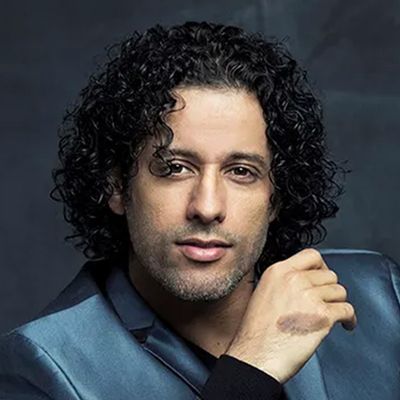
Luis Salgado got his Broadway debut as a performer and Assistant Choreographer on IN THE HEIGHTS and has since gone on to perform in many shows, including WOMEN ON THE VERGE OF A NERVOUS BREAKDOWN, ROCKY, and ON YOUR FEET... Read More
From the show: Broadway Gives Back
Guests
Featured Shows

About
Luis Salgado got his Broadway debut as a performer and Assistant Choreographer on IN THE HEIGHTS and has since gone on to perform in many shows, including WOMEN ON THE VERGE OF A NERVOUS BREAKDOWN, ROCKY, and ON YOUR FEET. As a director, choreographer, performer, and teacher, Luis is passionately dedicated to his Latin roots. His company, Salgado Productions, is committed to telling original stories of Latin America and making “Art With A Purpose”. Luis’s love for social work led him to the development of R.Evolución Latina, a nonprofit that provides artistic empowerment to underprivileged youths in New York City through free workshops, classes, and seminars. Join Luis as he discusses the challenges of the Latinx community on Broadway and making a difference.
Learn more about about the worthy causes discussed in this episodes and how you can donate and/or help:
Connect with Luis:
- LuisSalgado.com
- SalgadoProductions.com
- Twitter: @LSalgadoART
- Instagram: @lsalgadoart
Connect with The Broadway Gives Back Podcast:
- Facebook: @broadwaygivesbackpodcast
- Instagram: @broadwaygivesbackpodcast
- Twitter: @broadwaygives
Hosted & Executive Produced by Jan Svendsen and co-produced & edited by Jim Lochner.
A proud member of the Broadway Podcast Network.
Special thanks to Dori Berinstein, Alan Seales, and Kimberlee Garris from BPN; Julian Hills from The Bulldog Agency; and Eric Becker from Broderick Street Music.
Transcript
This transcript was automatically generated and might contain errors.
[0:05] Jan Svendsen: Welcome to the Broadway Gives Back Podcast.
[0:07] Jan Svendsen: I'm your host, Jan Svendsen.
[0:10] Jan Svendsen: This podcast spotlights Broadway actors, shows, and organizations in their pursuit of social impact and philanthropy.
[0:17] Jan Svendsen: Join us as some of the brightest lights on Broadway share their stories about their favorite charities and how they got involved and the people on the causes who benefited from these philanthropic efforts.
[0:34] Jan Svendsen: My guest this week is a Latin superstar on stage and off.
[0:38] Jan Svendsen: Luis Salgado got his Broadway debut as a performer and assistant choreographer on In the Heights and has since gone on to perform in many shows, including Women on the Verge of a NERVOUS BREAKDOWN, Rocky, and On Your Feet.
[0:52] Jan Svendsen: As a director, a choreographer, a performer, and a teacher, Luis is passionately dedicated to his Latin roots.
[0:59] Jan Svendsen: His company, Salgado Productions, is committed to telling original stories of Latin America and making art with a purpose.
[1:07] Jan Svendsen: Luis's love for social work led him to the development of R.Evolución Latina, a not-for-profit that provides artistic empowerment to underprivileged youth in New York City through free workshops, classes, and seminars.
[1:20] Jan Svendsen: He is passionate, energetic, and a giving human being, and I'm so thrilled to have him here today.
[1:26] Jan Svendsen: Luis, welcome to the Broadway Gives Back Podcast.
[1:29] Luis Salgado: Hola. Thank you so much for having me. It's such a pleasure to see you again and to be a part of this.
[1:35] Jan Svendsen: It's so great to see you too. So Luis, you and I go way back, and you're a dear friend, and I want everyone to know you. So I was wondering if we could start with a few personal questions, like I could do them like a rapido style, and you just style.
[1:50] Luis Salgado: Yeah, okay. Love it.
[1:52] Jan Svendsen: Alright, let's do this. Uh, what do you like better? Sunrise or sunset?
[1:55] Luis Salgado: Both, but sunrise.
[1:57] Luis Salgado: Sunrise, sunrise, sunrise, sunrise.
[2:03] Jan Svendsen: Sorry.
[2:04] Luis Salgado: Oh, don't bother, don't apologize for that.
[2:07] Jan Svendsen: If you were an animal, what animal would you be?
[2:09] Luis Salgado: A whale.
[2:10] Jan Svendsen: What's the sound a whale makes?
[2:17] Jan Svendsen: So Luis, I have a time machine, and I can transport you anywhere in the world to any time in history.
[2:22] Luis Salgado: Oof. Where would you go?
[2:24] Luis Salgado: Oh my god, this is very hard. Everybody's gonna attack me for being religious. Um, the time of Jesus Christ.
[2:30] Luis Salgado: Then we can sing the song lyrics to Jesus Christ Superstar here.
[2:33] Jan Svendsen: Yeah, we could.
[2:34] Luis Salgado: Jesus Christ superstar.
[2:37] Luis Salgado: No, but it really is I I I know you didn't ask me to embellish in any of this now, but it it's such an intriguing character to me as a human, not as a saying, not as a some a holy thing, but as a human. Like if if there was such a character, I want to be around him. I want to I want to know what it is to sacrifice yourself fully for some other people.
[2:59] Jan Svendsen: I I'm a nice Jewish girl, but I'm fascinated by the character of Jesus Christ as well.
[3:04] Jan Svendsen: And Jesus Christ Superstar.
[3:06] Jan Svendsen: I know the every word to every lyric in the cast album.
[3:09] Luis Salgado: Yeah, we can talk more about that later.
[3:11] Jan Svendsen: Okay. Um describe yourself in three words.
[3:15] Luis Salgado: Okay, so I think on a good day, hardworking, passionate, and uh a dreamer, and on bad days, lazy, um, insecure, and overly human.
[3:29] Jan Svendsen: Oh.
[3:31] Luis Salgado: What do you most give a damn about in the world?
[3:34] Luis Salgado: Um making a difference.
[3:37] Jan Svendsen: And what dream have you yet to achieve that you aspire to?
[3:41] Luis Salgado: Directing and choreographing my own Brave show.
[3:44] Jan Svendsen: Name you're so there's so many things you could be proud of, but name one of the things you're most proud of.
[3:49] Luis Salgado: My son.
[3:51] Jan Svendsen: And his name.
[3:52] Luis Salgado: His name is Angel Hikari.
[3:54] Luis Salgado: Hikari means light in Japanese.
[3:57] Luis Salgado: So that means angel of light. And I think back to the whole Jesus complex conversation before, and like the thing I want the most, right? To make a difference. I think that there's a clue for you. An angel of light.
[4:10] Jan Svendsen: What are you most grateful for today?
[4:12] Luis Salgado: My son. Um I'm grateful for family. I think, you know, not to go back to the broken record of what we have come from, but it's important not to forget that we just lived a very hard year where family was really, really, really a savior, at least to me.
[4:32] Luis Salgado: Um having him in my life definitely was a beautiful thing. Um next to my wife and everything that we just went through, and and being able to go back to Puerto Rico and see and share with my family, my mom, my dad, my aunt, my uncle, um, and have him around and see people exist around him, that was a gift, a a true gift that if it was just me and my wife, it would have the experience would have not been the same.
[4:59] Luis Salgado: And the lenses that I got to meet my family again with would have been very different.
[5:05] Jan Svendsen: And for those of you who have never seen this little boy, he is a chip off the old block. He is gonna be like his daddy, I think, and proof be a performer. He's an amazing dancer already.
[5:14] Luis Salgado: He is, thank you so much. I I he's a spoiled dancer because Sergio Trujillo will come in this very living room that I am in that you get to see, although our audience doesn't get to see at the moment, and he showed him original choreography of Jerome Robbins West Side Story here in the living room.
[5:33] Luis Salgado: And so my son wanted to recreate it. My son was like, no, sit down and watch my version. He's an artist.
[5:51] Luis Salgado: And I'm so happy and excited that this program is continuing and doing such important work. And this past weekend, you directed and choreographed the Viva Broadway When We See Ourselves concert in Times Square.
[6:04] Jan Svendsen: And the concert helps celebrate the contributions of Latino and Hispanic Broadway. From your sort of artistic creative perspective, what did you want the concert to say to people?
[6:13] Luis Salgado: Well, let me let me backtrack two steps and first say, thank you for having started Viva Broadway for having created such an incredible board and letting me be a part of that at such a young age.
[6:26] Luis Salgado: At that time, you know, I was what, 27 years old, and next to people like Luis Miranda himself, who was already an advisor to so many incredible politicians and whatnot. So to be a part of that in every form as a representation, as an artist on Broadway, who is of Latinx reality descendancy, and you know, and also as a board member who gets to bring up an opinion, I will forever be grateful to you for having such an initiative where the times weren't necessarily embracing of those initiatives.
[6:58] Luis Salgado: I think you you have always been a pioneer in many ways, and you did it with grace and with friendship. You know, you did it with heart. You you I never walked into one of those meetings and felt like I was there to serve you or anybody. I felt that you really deeply cared about representing our community and what we were accomplishing, and still to this day it lives because of your efforts.
[7:22] Luis Salgado: So I wanna, I think it's it's important to make that pause and say thank you, because uh you know, everything you've did um for Broadway and for the Broadway League and for Viva Broadway matters, and you see the kind of social um situations that we've been living, not only in the last year and a half, but we've been living in the last decade.
[7:42] Luis Salgado: And I feel like you've always been um uh a helping hand that is honest and that is human and that cares about making a difference. So I want to start by saying thank you for that. Everything that you did has has given us the opportunity to trust that it's been enough and that now we stand on shoulders and we stand on shoulders and we stand on shoulders.
[8:01] Luis Salgado: And it's it's been such an amazing collaboration, and all of the original board members were just it was those meetings were so incredible, you know. And the conversations, and I learned so much just listening.
[8:13] Jan Svendsen: Me too, me too, me too.
[8:14] Luis Salgado: And on and of what's needed, right? So then you asked me about the show.
[8:20] Luis Salgado: You know, the the second step back I have to give is last year during COVID time. Um, we were able to do Viva Broadway hear our voices, and that was directed by Sergio Trujillo, and I was able to be a co-choreographer for for the production and his associate director and learn a lot about what this kind of environment needed to be.
[8:43] Luis Salgado: And so Ruthie um was working at that time in Playbill, and she was one of the producers, and she was incredible, just like you, someone very detailed and really wanting to do the right thing. And so all of that prepared me for this year.
[8:57] Luis Salgado: So this year, Eric Uyoa and myself and Jaime Lozano came together as a team to create uh viva Broadway when we see ourselves and so we had already talked about hear our voices like we need you to hear us we're here and we have something to say so this year what is the extension of that it's like okay our voices are already being heard what do we do now and it's I think about celebrating the importance the necessity and the value of being represented on the stages this is not something limited of the Latino community the AAPI community the the African American the black community um it each and every the Jewish community every single community benefits from seeing a direct self-reflection of their stories and their truth on the Broadway stage the question then remains to be asked is what kind of stories are we telling and of course we want a escapism I have nothing against it you know we want to go to the theater we want to have a good time we want to laugh and we want to forget everything that has happened in in our world whenever that time is but also theater is about empowering and uplifting and inspiring and guiding us forward and theater has such a big role in in where we go and again I talked earlier in my introduction about my son and you know I want my son to know that he belongs I want my son to know that he's worth it and that his you know heritage as a Latino and an American like I asked him now what are you are you from New York are you from Puerto Rico is like I am Nuevo Riqueño Daddy.
[10:31] Luis Salgado: Like he doesn't even say New Rican he's like, I am nuevo rigue. Like he has his own way of describing himself as someone that really values that he was born in New York, but that he has parents that love Puerto Rico and and I I want to make sure that there are stories for people like him, that there are stories for the Hindu community, that there are stories for you know the Chinese community, the Korean community, and that there are stories to be told that we all get to learn from.
[10:59] Luis Salgado: And so I think that that is really the theme of our show when we see ourselves, when we are able to find a common denominator in a story that we feel identify with, and that that helps us buy more tickets.
[11:13] Luis Salgado: So from the commercial perspective, if I can see myself in Usnabi or in Nina, or you know, in Kevin Rosario, I want to then go and see myself identify also in Mufasa in Lion King, right? Or in Glinda, or in whatever character I have I hear I now have permission to multiply the impact of that thing I was once uh identified with.
[11:36] Jan Svendsen: Am I making sense with this?
[11:38] Luis Salgado: Totally. And you know, one of the things I remember from our conversations back in, you know, I guess when we were first doing the the board, we did some research and we found out that among the Latinx community, the favorite show.
[11:53] Luis Salgado: We did a poll, and the favorite show of at that time, so this was you know in 2008, was Fiddler on the Roof.
[12:01] Jan Svendsen: Correct.
[12:01] Luis Salgado: And I found that so interesting because you know, I I was thinking, oh, it would be, you know, something like West Side Story, and I was stuck in my own stereotype. But of course, when you think about it, it's about family and tradition, and it made so much sense.
[12:14] Jan Svendsen: So I think that's where this idea of you know just crossing all boundaries and exposing people to everything makes so much sense.
[12:22] Luis Salgado: And it is the birthing place of In the Heights, right? It's the papa's the mamas, tradition. You know, you got Camila, you get Kevin, you get Carnaval del Barrio. And so it is it is totally hand in hand, and it was Lynn's inspiration for the very same reason.
[12:38] Luis Salgado: Um I think we we will be surprised to understand as we get to see more stories, more diverse stories on the Broadway field, that those stories will be more and more universal because every single culture has something to offer to another culture, and all we gotta do is embrace further rather than just one way.
[12:57] Jan Svendsen: So, Luis, um what do you hope Broadway's reopening will offer the Latin and Hispanic actors and theater professionals as it reopens now?
[13:07] Luis Salgado: It's a hard question because I feel like I play kind of every field. You know what I mean? Like as a performer, I have a desire, as a creator, I have a desire, but also as a producer, I understand that it's not about us only. You know, there's so many voices to be heard. So when you narrow it down specifically to the Latino perspective, a lot of things happen in my head. I guess the first thing I can say is that we are able to be seen as humans first, so that we don't have to play the token Latin card only. And through that we get more opportunities. I think that that would be my first sort of reply. What does that mean? Might be a next question, right? Like, what does that mean? Um, I think that that means that I want to be able to tell stories, of course, that we are identified, but not be limited to them.
I want to be able to direct a show that feels like In the Heights, and I get to make a hot number like Carnaval del Barrio, of course. But I also want to be able to do a Ragtime revival, or I want to be able to be in the room when a Matilda conversation is happening, and I get to bring my concept of Matilda and say, well, what happens if the librarian is a Mexican immigrant? And the first book that Matilda receives is not from the teacher in school, but it's actually from this Mexican immigrant. And so Matilda ultimately is a story of an immigrant in her own home. Like I bring that perspective to the table, right? And so I want to be able to share that perspective to the caliber and storytelling of a show like Matilda.
Um, or you know, and I can keep going on those examples. I think what I really want as I say this out loud is that the diversity of how Broadway is being made is not limited to us on the stage or creating the stories, but also to the producing field. I think that is very, very important that there are people with the know-how of producing and with the funds to produce that are of Latinx descent and other minorities, quote unquote minorities, um, reality, so that more voices with the money can be fighting for the stories that should be told.
[15:31] Jan Svendsen: I totally agree. I think that who decides what stories get to be told is where the power, if you will, kind of lies. And um, and that is a place where I do think that um, you know, whether it's the Latinx community or the black community or the Asian community, they're not well represented in the pre-producing side, right? So that's an area for growth.
[15:55] Luis Salgado: Yeah, and it's interesting because I've tried my wife and I have taken some of the producing workshops, and of course, we invested in shows like Peter on the Star Catcher and Godspell when Ken Davenport did the wonderful community experiment that I know some people liked it, some people hated it. You know, like the whole thing, I'm aware of those things, but what I don't find is the kind of mentorship in producing that I find have found in like directing and choreographing. You know, I go through the spectrum in directors, choreographers. I have people like Jerry Mitchell is like one of the greatest advocates for me growing. Like bless that man. Like he calls me weekly, like checks on how am I doing creatively, where do I want to go?
Like before that phone call that I had before you and I got on this interview, it's a production that Jerry recommended me for to direct choreograph it. You know, so that type of mentorship that opens the door to learning, to making mistakes, to having someone to talk to about it. The same with Sergio Trujillo now from uh very much a Latin father, right? Like my artistic father is him, and like what he brings from his background coming from Colombia and accomplishing what he has accomplished is the best life injection of inspiration I could ever have. He's like it for me. And then there's the other, you know, someone that's completely opposite to me, but in culture, but like we are so alike in art form, Andy Blankenbuehler, right?
Like he he's a poet of the arts. He doesn't just make choreography, he makes poetry. And so, like, I want to, I strive to be that in my artistic, you know, uh approach. And so that kind of mentorship, I feel so I will use the word privilege to have because I managed to do, you know, Broadway shows and get around these humans that are incredible artists and learn from them and now they're my friends, and I can make a phone call and be like, hey, I have a doubt with this show. Like, what do you think I should do here? I don't have that with the producers. And I and I have met with great producers, right? Like Ken Davenport in the younger generation, um, Jill Furman, you know, Kevin McCollum, uh uh Jeffrey Seller.
These are people that I feel as close to as I do to Sergio or Jerry in many ways, but not as accessible in how to learn from them, you know, and I don't want to be knocking on a door feeling like I'm asking for a favor. I want to belong in the room, I want to be able to be equal in the experience. Like I have something to teach because of where I come from, because of the other markets that I run with R.Evolución Latina as a nonprofit or Salgado Productions or having produced many shows in Colombia, Peru, Argentina, you know, like I have something to offer to another lens in the table, but I also know that there's a know-how and a specialty to the Broadway market that someone like Jill Furman can offer my life.
And I would love to be able to be included in those tables more often, if anything, like as a listener, you know, and be able to bring that back to the way that um me and my peers will eventually be creating theater.
[19:06] Jan Svendsen: And I I think that I don't know, am I making sense, Jen?
[19:08] Luis Salgado: Like totally, and you know what? Hopefully, they'll be listening to this podcast and maybe they'll call you next week.
[19:14] Jan Svendsen: I can give you my number.
[19:16] Luis Salgado: I know your number. Um, you know, it's so funny. I don't know if you can hear this, but Glenn is in the other room on a Zoom with Sergio right now.
[19:22] Jan Svendsen: Oh, that's so cool.
[19:23] Luis Salgado: Are they talking about the Tonys?
[19:25] Jan Svendsen: Nice, nice. Well, Glenn is like another example, right? Like, what kind of like mastermind he is coming into the Tony Awards and like then into the Oscars and being able to honor, you know, the film field and the theater field and be on a phone with someone like Sergio and understand the things we need to accomplish to move forward with grace. And so that is the conversation that I think I'm talking about in the producers and the writers and the creatives, like having the know-how and the scope to be able to understand all the worlds and then be able to call the camera chat that's needed.
[20:02] Jan Svendsen: Um, I feel like your career is, I mean, you've done so much already, but God, I can just see in 20 years from now, um, I just see you on a stage collecting lots of awards, speaking of award shows, and um, I will be so proud and say I knew him when.
[20:18] Luis Salgado: Thank you for that. Thank you for that. You know, aside from that part of it, like there's this other side of you that is what touches me so much. And you know, when we used to do Kids Night on Broadway, you were the first person to volunteer to run workshops for the kids, and you have your own arts education programs, and you are so motivating and inspiring when you are working with these kids. I've seen it, I have videos of it still. Um, and I just um I wanted to know like what motivates you to do that.
[20:48] Luis Salgado: I come from it, you know. I I the imposter syndrome issue is real because I still ask myself, how did I get here? You know, when when somebody else interviews, often they're go back all the way to the beginning, and you have to repeat the same and the same and the same, which is I come from Puerto Rico, I started in this public school, you know, I got my my green jeans dirty as I learned to do the split because we didn't really have a dance studio. And I'm grateful that the conversation today can go forward into why do I do what I do today? It's because I come from there. That's my reality. And so the only thing that I know, and I say the imposter syndrome, because sometimes you still enter a space and you're like, How did I get here?
And there's there's that thing, Eric Uyola for Viva Broadway this weekend wrote a um a line for himself that was like, My grandparents looked down so that I didn't have to. And I'm still in the place where I still look down, and I like bow and like my my the respect and the values that my parents gave me and my teachers gave me are so ingrained in me that even now I was in Sonoma, California directing choreographing a show that I was put into a beautiful mansion in a swimming pool, and I did not dare use the swimming pool. And my associate choreographer was like, Luis, it's your pool. Can I please get in the pool? You don't even have to be with me. I want to be in the pool. And it's like, it's not my pool, I'm here as a guest.
And so there's that that bridge of respect that I need to still break, but I also am grateful for because it's the thing that reminds me where I come from. So when you someone like you asks and says, Can we open doors for kids? I'm gonna always say yes, because that's where I come from. And hopefully, I'm still bowing my head down so that those kids don't have to, so that my son doesn't have to. So that so that, yeah, so that that associate choreographer of mine that I just mentioned actually proves herself to be right, that I don't have to be overly um apologetic about existing. You know, I exist and it's okay to take space, and I want those kids to know that, and I can teach them that because I come from there.
[23:05] Jan Svendsen: Yeah, your positivity, your energy and the love in the room when you are with these kids, it's palpable, it's so authentic. And um, you know, this idea of producing art with a purpose and nurturing and having this collaborative, you know, sort of spirit guiding everything, it's it's real. And a lot of people talk the talk, but man, you dance the dance, you know?
[23:33] Luis Salgado: Thank you. Thank you. That those words mean everything to me because we are in a time where I have already, already in this quote unquote comeback, it's been three months that I we've been back and having real meetings and looking at the future. And people come to me and say, Hey, can we do this? We want to be inclusive, we want to be diverse, blah, blah, blah. But they're they I mean, I have already not done three projects because it's only on paper. And you can't check a box, checking a box, and I'm not here to check anybody's boxes, I'm here to live by that as a mission. And again, I'm not saying that theater is not entertainment, it's entertainment. I want people to come in and have a good time and clap and laugh and get out of their seats because they're on their feet of excitement.
That's the ultimate goal. But but why are we doing it and how are we getting there? It's not just frosting in the cake, right? It's because the cake itself is good. And it's only good if we're asking enough times why are we doing it? Why are we saying yes to putting the money on this particular project and not on the other? Why are we saying yes to this music change? Why are we saying yes to this choreographical step? Why are we saying yes to this line? You know, and it has to be deep-rooted in the purpose. We want, we we we are responsible. We're responsible for the work and the art we put out there.
[24:52] Jan Svendsen: Can you give me some examples of, um, of exactly what you're talking about, whether it's working with some of the kids, or whether it's some of the projects that you've done, um, with your production company, where you're saying yes, and then you're doing what you want to do and making that contribution?
[25:11] Luis Salgado: Well, the kids is the first example. R.Evolución Latina, we've been with R.Evolución Latina now for 14 years. When I started the organization, one of the most important things to me was that we weren't waiting for a grant, right? Part of the problem with um some nonprofit organizations is that they are trying to make a business model, but it's a nonprofit. So, in first place, you're here to fill a gap that exists within the world. If you're not doing it because you are fully committed to that gap and how you contribute to filling that gap, then you're doing it to like get bypass the tax exemptions situations that it so that already is the example. I don't really have to say anything else, right? Like if you're sitting down and just waiting to try to figure it out through the entire year how to like break through the taxes and get money that you haven't worked for, then you're not really doing the nonprofit work.
[26:02] Luis Salgado: I think that the nonprofit work is that we're here to get our hands dirty. There's people in the community that needs clean water, or there's people in the community that needs access to the arts, there's people in the community that needs a place to sleep, whatever your mission is, you got to fulfill that mission regardless. And as you're doing that, you happen to stumble upon a team that helps you find the grants to do that, or the private donors that helped you do that, or all the political steps that you then do to create the right boards that expand the way you do that. But if you're there to fulfill that mission, that's all you gotta do, fulfill that mission. And so I have believed from the very beginning that R.Evolución Latina dies every single year because we've done our part.
And here we are 14 years later, supported by Browic Care Certified States, supported by humans like Sergio Trujillo, supported by individual donors like the Heron Goldman Foundation, or things like this that allows us to prolong what we do every summer with our children's summer camp or what we do every beginning of the year with our adult training, or how we expand through Latin America and we give access to experiences and arts and growth in humanity. And so that is the mission. And again, I do I need the money? Of course I do need the money, but am I limited to the money I get? No, because I'm about the service we provide. So that's I think. Tell me if you if that sounds like the kind of example you're looking for, but that's what comes to mind.
[27:32] Jan Svendsen: Yeah, I always ask my guests on this podcast if you were gonna give your fans or the listeners any advice, what would the advice be about you know doing good, about being of service? And in a way, what you're saying is just do it, like just do it. You don't have to make a plan, you don't have to have the money lined up, you don't have everything teed up, just do something, right?
[27:52] Luis Salgado: But you know, I think it was I don't know what book it was. I don't know if it's on the one thing or one of the Tony Robbins books. Like I recently was listening to one of these books through the COVID era that I needed as much optimism as possible. And you know, they're talking about this young leaders who are about to go, it was a test, and they were about to go into giving a speech on service, but between the time they left the classroom and the direction that they were put in, like the route to get to the place of the event. They the test people put a couple of people needing things, like someone begging or you know, someone that didn't have a home to sleep. And the question was who of these people that are about to go to speak on behalf of this idea, who are there are actually going to stop and take action and sacrifice being late to their speech for doing good. And it's the results were like bizarre because no one even paid attention to the people in need. And so, what's the point? What's the point?
[29:00] Luis Salgado: It's the Tom Viola, he often says this story, and I've said it a lot with R.Evolución Latina too, but I'm gonna credit him today on this one because I think he is a leader that serves with all of his heart. It's a story of the starfish. You know, there are all thousands of starfish by the shore, and this little girl is picking them up, trying to save them, throwing them to the water. And so this adult walks in and says, What are you doing? And she says, I'm trying to save the starfishes. And he says, Yeah, but you'll never be able to save them all. And she so turns down, gets one and throws another one, and she says, It made a difference to that one. I've heard him tell that story. It's an amazing story, and it's so true.
And I think a lot of people have felt um it's interesting, like a lot of the guests have said that they are strategic and they have these plans, and then other people are just like, No, I just I just try to do something, even the small things mean so much, right?
[29:54] Jan Svendsen: Yeah.
[29:55] Luis Salgado: I think being strategic is important. And something that my background lacked, you know, I didn't know any better than to take action. That was my formation. As I pass 10 years of the organization, I realized that in order for me to achieve further growth, I needed to be more strategic. So I understand and I respect that. But what comes first, the chicken or the egg? That's the question I'm asking. And when I see people just being strategic for strategic sake, it feels like checking boxes as well. There's people that literally sit down and plot for five years before they sign up for profit where they can get the money from. So they're not about the mission, they're about the money. And I want to support those who are my calling in life.
It's to make a difference in this way. And I don't know how I'm gonna do it, but I'm gonna get there. I want to help those people, and I want to find alliances with donors and funders and supporters that say, I want to put the money where the heart and the work and the mission is. And I can I would love in the future, you know, to be able to be like as a board member or as an advisor, someone that can connect young Luis Salgado from when I was 24, and that they don't have the experience, but they have the heart, and I want to provide them with the tools and the mentorship to have the strategic without sacrificing their mission and their heart and their action taking.
[31:22] Jan Svendsen: That makes total sense. I mean, they go hand in hand, but you can't paralyze yourself waiting.
[31:26] Luis Salgado: Yeah, and you also cannot expect the Luis Salgado to try to know all those things that the Luis Mirandas knew. That's why there's a Luis Miranda, right? And the fact that Luis can sit for five minutes at a table and look at your plan and say you're missing this and this and this. We'll take action is valuable. But you need those Luis Mirandas to be able to willingly sit down for five minutes and say, I'm gonna help you with it, right? Because otherwise we are expected to know it all. And no man is an island, no woman is an island. We can only stay true to our path. And yes, we want to learn and we want to grow and learn every other tool, but the time I'm spending trying to know the 10 things I need to know, it's 10 years that I could have helped a thousand more people.
[32:11] Jan Svendsen: I totally see it. You know, can you give an example of just a memory you have of helping some child, you know, or one of the kids that are in one of your programs? Is there is there a story you can tell about that that like touched you?
[32:26] Luis Salgado: There's a few, but I think the most relevant one in my life today. It's Mariana Herrera. She's a girl that I met when she was nine years old in Colombia. I went there to teach a workshop. She waited 89 people before her to sing a song. She cried the moment that she sang the first note, and she vanished with insecurity and fear. And that was awesome in a way, because the next day she came and she wanted to do it better. And then the next year she came back and she wanted to do it better. That little girl is now turning 18. R.Evolución Latina and Salgado Productions have given her multiple scholarships. She ended up coming to New York like four or five years back to back. She performed in my Ract Time productions, she performed in my Shakespeare productions, she performed in my Matilda productions, she assisted me for a cruise ship production, you know, and she, when COVID happened, she became my adopted daughter and got stuck living here with my wife, my son, and myself for basically seven months.
And that's the kind of mentorship that you don't even read in novels. You know, that's the kind of like difference you're making for one person's life that now she's running her own school, and her mom texts us every week and says, Oh my God, she's just like Luis Salgado. You know, and I wasn't trying to make a Luis Salgado at all, but like I am proud that she took everything that we offered and now is giving it back to other people and that her mission in life goes beyond being a star, which she is and can definitely be even on the broadest stages. But that little girl is a leader for her community, inspiring younger generations and she's only 17 years old. And so that is like maybe the ultimate experience I can tell you.
[34:11] Jan Svendsen: That is amazing. I wonder, you know, when you're working with the kids, and I've seen this, you know, especially like on Kids Night on Broadway, some of them are talented and have potential to, you know, to be on stage, for example, but others don't. But yet the art is still so important to those kids as well. And how do you deal with those kids?
[34:29] Luis Salgado: I think that's what we miss also. We miss our mark in understanding the value of art for our humanity, our self-confidence, our contributions in the society around us, in the communities we serve and we live and coexist with. And that's something that we don't talk enough. I think we talk about stardom and fame and result and product, but we don't really give the weight that it deserves to know that standing in front of people and singing a song and being nerve-wracked about it and then overcoming that actually makes me a better social human, you know, because I now don't have these insecurities. I mean, when you embrace the art within yourself, you are embracing the humanity within yourself.
Each and every single one of us has art in our hearts, has art in our tools. Everyone that I don't know that we, you know, a single family that doesn't say, 'Oh, I used to sing, or I used to like do poetry in school, or I used to dance in my living room.' What takes the value away from that art? And if you embellish and embrace that art, how does it make you a better human being? And so that is what I focus the most in this program. The end result, like the GME Awards, for example, are a great example of the end result. You're looking at people that tomorrow can join Broadway. I was just blessed to be part of the, you know, selecting committee, the judges of the Jimmy Awards this year. And one of our kids who won just got hired for Dear Evan Hansen, happens to be a Latino kid from Queens.
So I'm really proud of him and excited for everything that he has in his future. But I'm more excited about this one girl that was number 26 in the list, and no one paid attention to the truth she put in her performance. And here I was for the very first time in this room, next to Tara Rubin and Bernard Telsey and everybody that's in this incredible room, which again I'm bowing my head and feeling like, 'What am I doing here? How did I get to this place?' But at that moment I said, 'Excuse me, I am so sorry. It's the first time I'm in this room, but I have to say this. Are we missing the point of what this program should be about? The GME Awards, are we only looking for the next Broadway star?
Or are we seeing the caliber of human performance this girl put in in her song just now? And are we gonna listen to that? And are we aware of the kind of message we're sending if we give her an opportunity? Don't we want truth on our stages rather than just a wrestle basle component?' And so everybody opened their eyes and we started a conversation about this girl. She ended up number six in our list. And so, you know, it makes a difference to stand up for humans like this because art is not only about and resolving product.
[37:14] Jan Svendsen: You know, that's a perfect way to end this podcast because it just shows how you add so much value in every way in all of the different hats that you wear. And I just thank you for sharing your art and your heart with all of us.
[37:30] Luis Salgado: Thank you for the opportunity to have this conversation with you in such a human way. And to be able to see you again, to know that we're walking our paths together in different routes, but ultimately hopefully getting to the same water fountain at the end of the day, you know that we want art and our communities to continue to be uplifted and to shine and to be able to share light everywhere we go.
[37:56] Jan Svendsen: Sharing the light. Love you.
[37:57] Luis Salgado: Well, thank you.
[37:59] Jan Svendsen: I love you too. Thanks for listening to this episode of the Broadway Gives Back Podcast.
[38:04] Jan Svendsen: Broadway Gives Back is part of the Broadway Podcast Network. Special thanks to my producing partner, writer, editor, and friend Jim Lochner. And thank you to everyone at BPN, including Dori Berinstein, Alan Seales, and Kimberlee Garris. I'd also like to thank Julian Hills from the Bulldog Agency and Eric Becker from Broderick Street Music. If you like what you hear, don't forget to subscribe and rate this podcast wherever you stream your podcasts. You can also follow Broadway Gives Back on Facebook and Instagram at Broadway Gives Back Podcast and on Twitter at Broadway Gives. To learn more, visit BPN.fm slash Broadway Gives Back. Thanks so much.
© Broadway Podcast Network, All Rights Reserved