

David Ambroz is a national poverty and child welfare expert and advocate. After growing up homeless and then in foster care, he graduated from Vassar College and later from UCLA School of Law (J.D.), and was recognized by President Obama as an American Champion of Change... Read More
From the show: Broadway Gives Back
Featured Shows

About
David Ambroz is a national poverty and child welfare expert and advocate. After growing up homeless and then in foster care, he graduated from Vassar College and later from UCLA School of Law (J.D.), and was recognized by President Obama as an American Champion of Change. Join David as he shares his powerful story of growing up homeless on the streets of New York City and discusses the next steps in the fight against poverty.
Learn more about about the worthy causes discussed in this episodes and how you can donate and/or help:
Connect with David:
- Website: DavidAmbroz.com
- Twitter: @daveambroz
- Instagram: @hkdambroz
- A Place Called Home memoir
Connect with The Broadway Gives Back Podcast:
- Facebook: @broadwaygivesbackpodcast
- Instagram: @broadwaygivesbackpodcast
- Twitter: @broadwaygives
Hosted & Executive Produced by Jan Svendsen and co-produced & edited by Jim Lochner.
A proud member of the Broadway Podcast Network.
Special thanks to Dori Berinstein, Alan Seales, and Kimberlee Garris from BPN; Julian Hills from The Bulldog Agency; and Eric Becker from Broderick Street Music. Social Media Manager for Broadway Gives Back: Olivia Cull.
Transcript
This transcript was automatically generated and might contain errors.
[0:05] Jan Svendsen: Welcome to the Broadway Gives Back Podcast.
[0:07] Jan Svendsen: I'm your host, Jan Svendsen.
[0:10] Jan Svendsen: This podcast spotlights Broadway actors, shows, and organizations in their pursuit of social impact and philanthropy.
[0:17] Jan Svendsen: Join us as some of the brightest lights on Broadway share their stories about their favorite charities and how they got involved and the people and the causes who benefited from these philanthropic efforts.
[0:32] Jan Svendsen: While David Ambroz may not be a household Broadway name, he loves Broadway and he's worked in the entertainment industry for years, heading up social responsibility for Disney television.
[0:43] Jan Svendsen: David is a national poverty and child welfare expert and advocate.
[0:47] Jan Svendsen: He was recognized by President Obama as an American Champion of Change.
[0:52] Jan Svendsen: And he currently serves as the head of community engagement for Amazon.
[0:56] Jan Svendsen: After growing up homeless and then in foster care, he graduated from Vassar and later from UCLA School of Law.
[1:03] Jan Svendsen: He's just written a memoir, A Place Called Home, about growing up homeless in New York for 11 years and his subsequent years in foster care, offering a window into what so many kids living in poverty experience every day.
[1:18] Jan Svendsen: David is a close friend of mine, and I'm so happy to have him as a guest on Broadway Gives Back.
[1:23] Jan Svendsen: Welcome, David.
[1:25] David Ambroz: Good morning, thank you.
[1:26] Jan Svendsen: It's so good to have you.
[1:27] Jan Svendsen: And I know it's been a whirlwind for you lately with your new book just being released.
[1:31] Jan Svendsen: How the heck are you?
[1:34] David Ambroz: Uh, I'm good. It's so interesting to open up your diary, Dear Diary that no one was ever supposed to read in the dark corners of your mind and experiences and publish it.
[1:44] David Ambroz: So it's been a remarkable couple of weeks where I've just shared all aspects of my life with um with the world.
[1:52] David Ambroz: And I hope it brings something better into the world.
[1:55] Jan Svendsen: Well, I normally start this podcast with an icebreaker round of some rapid-fire questions, but I'm not going to do that today with you.
[2:02] Jan Svendsen: Um instead, I want to read a quote from Hillary Clinton.
[2:06] Jan Svendsen: So, quote, it's impossible to read A Place Called Home and not want to redouble your efforts to fight the systems of poverty that have plagued America for far too long.
[2:16] Jan Svendsen: In this book, David shares his deeply personal story and issues a rousing call to make a more humane and compassionate nation.
[2:25] Jan Svendsen: End quote. The reviews for your book, David, have been raves and they've garnered so much media attention.
[2:32] Jan Svendsen: I want you to know that I'm listening to the book as an audiobook, which you narrate.
[2:37] Jan Svendsen: And I've been completely captivated by the writing and the story.
[2:41] Jan Svendsen: And then all of a sudden, I'm gonna start crying.
[2:44] Jan Svendsen: I'm walking through Central Park listening to the book, and it just hits me.
[2:48] Jan Svendsen: This is my friend, this is your life.
[2:50] Jan Svendsen: And I just started sobbing.
[2:53] Jan Svendsen: And I just wondered if you could share some of your story with our listeners today.
[2:59] David Ambroz: Absolutely. And thank you for being vulnerable.
[3:03] David Ambroz: Um, you know, it began 40 plus years ago.
[3:05] David Ambroz: My family is one of the ones we pass on the street.
[3:08] David Ambroz: We lived at Grand Central, we lived in the park, we lived at the Port Authority, and we lived nowhere.
[3:14] David Ambroz: I was born into homelessness and stayed there for 11 years in New York City.
[3:18] David Ambroz: Um, my mom is mentally ill. She's still so, and I have a brother and a sister slightly older than me.
[3:25] David Ambroz: And the four of us just went from place to place looking for home and suffering through violence and abuse and just a perpetual state of hunger and fear.
[3:25] David Ambroz: Around 11, 12, we went into foster care, which I was very excited about at first.
[3:41] David Ambroz: I worked very hard to get us out of my mom's custody because of the violence and neglect.
[3:47] David Ambroz: But foster care became, you know, I thought I'd reached the bottom of Dante's Inferno, but there's a basement.
[3:53] David Ambroz: And I dove deep.
[3:55] David Ambroz: Um, I was put into a group home, a delinquency facility for queer kids.
[4:00] David Ambroz: Um, we were segregated from normal kids.
[4:03] David Ambroz: And all the other kids in the facility were normal or or straight or presented as such.
[4:09] David Ambroz: And I was the only gay kid in there.
[4:11] David Ambroz: And because I couldn't be in a normal foster home, I was placed there and it was violent.
[4:16] David Ambroz: Immediately I was assaulted, and it began um six years with one exception of just endless foster homes that abused me in different ways.
[4:25] David Ambroz: Uh, I had one great foster mom, Holly, who uh raised her hand as not a foster mom.
[4:30] David Ambroz: She just was out in the world and saw me, and she stepped up and did her best to get me and ultimately did.
[4:36] David Ambroz: Short story long, I left foster care at 17.
[4:39] David Ambroz: I decided to get the hell out of Dodge and committed fraud on a grant for an exchange program and got the grant.
[4:47] David Ambroz: And I went abroad to Spain to study biochemistry, La Biochemica and Earth Sciences.
[4:53] David Ambroz: And I began my career.
[4:54] David Ambroz: I went to Vassar and then UCLA School of Law to study entertainment law and public interest law.
[5:00] David Ambroz: So it's been uh quite a life.
[5:03] David Ambroz: I think of it as like Forrest Gump meets hillbillyology, crashes into precious, if those mean anything to your listeners.
[5:09] David Ambroz: Um, but I live a great life and I'm very, very happy.
[5:13] Jan Svendsen: You know, when we first met, I would never have known this about you.
[5:16] Jan Svendsen: And I knew that you were an advocate for foster care, and you started and are very involved in a lot of organizations about poverty and just an advocate for um for kids and for kids' welfare.
[5:30] Jan Svendsen: But I never knew the depth of like what you had gone through.
[5:34] Jan Svendsen: And it's just it's remarkable that you are where you are.
[5:37] Jan Svendsen: You know, for many of the guests that I have, I ask them the question about their upbringing and their childhood and how that has influenced their path to becoming an activist or a philanthropist.
[5:48] Jan Svendsen: And most people say, oh, well, I saw, you know, socially responsible behavior modeled for me.
[5:54] Jan Svendsen: And so that's what I grew up with, and that's why I give back.
[5:58] Jan Svendsen: I mean, your situation is so different.
[6:01] Jan Svendsen: Can you talk a little bit about sort of the what motivated you?
[6:05] Jan Svendsen: I mean, you could have you could have fallen apart, but you didn't.
[6:08] David Ambroz: I mean, I think there's a couple of different facts.
[6:11] David Ambroz: I mean, one, we have to design a system that lifts all people out of poverty.
[6:15] David Ambroz: My family is very messy. I'm a very messy person.
[6:18] David Ambroz: All humans are very messy.
[6:20] David Ambroz: And the unique circumstances that got me to talk to you today on this fabulous podcast are not going to lift up whole peoples.
[6:28] David Ambroz: The reality is 8.6 million kids live in abject poverty.
[6:31] David Ambroz: 8.6 million in this country.
[6:34] David Ambroz: More than 50% of American schools are Title I, which means the kids are hungry when they go home.
[6:39] David Ambroz: So we have to do big things.
[6:41] David Ambroz: What motivated me on a day-to-day basis as a child was the need to survive.
[6:47] David Ambroz: The places we were were not safe.
[6:50] David Ambroz: And my mom was not safe, and we were hungry.
[6:53] David Ambroz: So the immediate needs that we had led me to really focus on what could get my family through the next minute.
[7:00] David Ambroz: And the question I'd always ask is like, is this world gonna hurt me?
[7:03] David Ambroz: And it wasn't an if, it was a when and how bad.
[7:06] David Ambroz: And then what would I do?
[7:08] David Ambroz: And then foster care, very similarly, it was um, I always felt like there was something at the end of all this.
[7:15] David Ambroz: And I just had to keep my eyes on that.
[7:18] David Ambroz: And I withdrew into myself deeply to protect uh the core of who I am from all the violence of these people that I experienced in foster care.
[7:28] David Ambroz: I think part of it is certainly that um I had a brother and sister.
[7:31] David Ambroz: I consider them my bookends, they kept me upright, and vice versa.
[7:35] David Ambroz: Um, my mom, despite everything, inculcated a deep value in education, even though I never went to school, pretty much for 12 years.
[7:44] David Ambroz: Um, she would say things like, You're gonna be a Supreme Court judge.
[7:48] David Ambroz: And it was really meaningful to me.
[7:50] David Ambroz: And then kind of strangely, New York City was my other parent.
[7:54] David Ambroz: So a lot of folks Broadway, you know, know this city.
[7:58] David Ambroz: I grew up in the city at a very different time.
[8:01] David Ambroz: And um, I would walk through the city and just be a pane of glass away from a meal.
[8:06] David Ambroz: I would see people eat at restaurants or go into a theater.
[8:10] David Ambroz: And we were just on the street, and I always thought, gosh, I don't want the situation that I'm in.
[8:14] David Ambroz: How do I get out of this and over to that?
[8:17] David Ambroz: And it's not about the accumulation of wealth, it was about more than survival.
[8:22] David Ambroz: Could I get to that place?
[8:23] Jan Svendsen: David, your book, your story is so heartbreaking, and especially for someone who is your friend and who knows you, but you know, it's also very hopeful and it's very inspirational.
[8:36] Jan Svendsen: And I and that's how you are, you know, you are um such a go-getter, and you are always, you know, pushing people to do their best.
[8:45] Jan Svendsen: And it seems like that also was instilled in you very young.
[8:49] Jan Svendsen: And yeah, you know, as you said, your mom had mental health issues, but there were clearly some values that she, you know, she gave you that pushed you in that way and that gave you that hope and that inspiration.
[8:59] David Ambroz: Yeah, my mom suffers from a uh really profound mental health issue, mental illness.
[9:07] David Ambroz: And I think in our country, mental health is still kind of the scarlet A.
[9:11] David Ambroz: There's a lot of shame associated with it.
[9:13] David Ambroz: And I think we're starting to deal with that.
[9:15] David Ambroz: But my mom has been trapped in a prison for 80 years.
[9:18] David Ambroz: I profoundly love my mom.
[9:19] David Ambroz: And I have many times over forgiven my mom for behavior that she couldn't control.
[9:25] David Ambroz: What I think I try and do in the book, and thank you for saying so, is to remind folks my mom's behavior or the foster parents that hurt me is not the worst of it.
[9:25] David Ambroz: The worst of it is the benign neglect from the general public.
[9:38] David Ambroz: We haven't used the word child poverty in a presidential debate since 1999.
[9:43] David Ambroz: There are 424,000 foster kids, eight million plus kids living in poverty.
[9:48] David Ambroz: And all we do is talk about coal miners, which is important, but there's a couple thousand of them.
[9:54] David Ambroz: We have to center kids.
[9:55] David Ambroz: And so what I try and do with my story is to inspire people to believe, first of all, that it's our problem and our opportunity.
[10:03] David Ambroz: These are our children.
[10:04] David Ambroz: And we have the opportunity to lift them up, um, especially foster kids who are legitimately everyone who's listening who is in America.
[10:13] David Ambroz: These are your kids.
[10:14] David Ambroz: And we could stop the cycle of violence if we only cared enough to pay attention and to start to take some action.
[10:20] David Ambroz: The other thing is there's some weird thing that has gone on in my life where Americans have stopped believing we can do big things together.
[10:26] David Ambroz: And I don't understand that, and I don't believe in it.
[10:29] David Ambroz: My life is a manifestation of the impossible.
[10:31] David Ambroz: And yet here I sit.
[10:33] David Ambroz: My mom has three children with graduate degrees.
[10:36] David Ambroz: Thank you, foster care.
[10:37] David Ambroz: Thank you, America.
[10:38] David Ambroz: Now let's do better and more.
[10:40] David Ambroz: And I want people to realize that politics and policy is the sandbox with which in we play with each other.
[10:50] David Ambroz: And we have to do better and curate it better.
[10:50] David Ambroz: Voting every four years does not make this a republic.
[10:55] David Ambroz: It doesn't make you an active citizen.
[10:56] David Ambroz: It is the reason we have 8.4 million, 8.6 million children in poverty.
[11:01] David Ambroz: We have to be more sophisticated consumers of politics, just like we are with TikTok and Instagram and all the other things we've learned how to do.
[11:09] David Ambroz: I probably know lyrics to almost every Broadway show from last season.
[11:13] David Ambroz: And I think we can figure things out.
[11:15] David Ambroz: We have an amazing capacity as people when we care and love music to tell these stories and share stories.
[11:22] David Ambroz: So I wanted to share my story in the only way I knew to hopefully kind of encourage people to believe in each other, to believe in these kids and families and to do something.
[11:31] David Ambroz: And if you're not sure what to do, go to my website.
[11:34] David Ambroz: Uh and there's stuff there that helps you figure that out.
[11:37] Jan Svendsen: How can we specifically help with regard to poverty and homelessness, mental illness, food insecurity, foster care, and the issues that you and your family faced?
[11:47] David Ambroz: So first is what I just said, which is please believe that we have the power as a country, as a people, to do these things.
[11:55] David Ambroz: The other realization is people are messy.
[11:58] David Ambroz: I think everyone on this podcast, everyone listening to this pod knows their own messiness in their own life and their family's life.
[12:04] David Ambroz: So to expect people in poverty to be less messy and better, quote unquote behaved is absurd.
[12:10] David Ambroz: What I think of when I think of poverty programs is like a person drowning off the side of my boat.
[12:15] David Ambroz: And I am the country, and I reach into the water and I pull the person out of the water and they take a deep breath.
[12:22] David Ambroz: And then I let them go.
[12:24] David Ambroz: And they fall back into the water.
[12:26] David Ambroz: And then another program comes along and lifts them out of the water for a hot second.
[12:30] David Ambroz: How can a person who doesn't have an address apply for benefits?
[12:34] David Ambroz: How?
[12:35] David Ambroz: Right.
[12:36] David Ambroz: How can a person who's mentally ill fill out paperwork for four different agencies?
[12:41] David Ambroz: We can do better.
[12:42] David Ambroz: We can do better.
[12:43] David Ambroz: We have to lift up these people.
[12:44] David Ambroz: And how do we do that?
[12:46] David Ambroz: Number one, believe we can.
[12:47] David Ambroz: Number two, start asking questions.
[12:49] David Ambroz: A lot of meetings since COVID are digital, your public meetings.
[12:53] David Ambroz: Log in, submit a comment.
[12:55] David Ambroz: The other thing I would say is there's a ladder of engagement I'm offering people.
[12:59] David Ambroz: You don't have to save every person you walk past in distress.
[13:02] David Ambroz: In fact, maybe you shouldn't.
[13:04] David Ambroz: We all have lives.
[13:05] David Ambroz: However, can you start at the lowest level?
[13:08] David Ambroz: Can you care?
[13:08] David Ambroz: And how can care manifest?
[13:10] David Ambroz: I'm running a campaign right now called Donate Your Small Talk.
[13:14] David Ambroz: So donate your small talk is very media, it's very Hollywood or Broadway.
[13:18] David Ambroz: And the idea is when you get in the elevator, now we're back, or you get on a Zoom and you're like, how was your weekend?
[13:24] David Ambroz: How are the kids?
[13:25] David Ambroz: No one actually cares the answer to that question.
[13:27] David Ambroz: It's kind of filler.
[13:29] David Ambroz: What if instead we start talking about something that matters, like children and foster care, for instance?
[13:34] David Ambroz: So for I get an elevator, I'll say something like, Hey, did you know Steve Jobs was adopted out of foster care?
[13:34] David Ambroz: Hey, did you know Coco Chanel was a foster kid or Babe Ruth or Willie Nelson?
[13:47] David Ambroz: And it doesn't have to be specific to celebrity, but look up some fun facts and start talking about kids.
[13:53] David Ambroz: And that is the lowest level.
[13:55] David Ambroz: We can start to care.
[13:57] David Ambroz: We can start to talk about a people that are invisible right in front of us.
[14:02] Jan Svendsen: It's so true.
[14:05] Jan Svendsen: I like the idea of the small talk and just making it sort of not normalizing it, but just talking about it, right?
[14:11] David Ambroz: Absolutely.
[14:16] Jan Svendsen: And, you know, on this, you gave such an example.
[14:19] Jan Svendsen: Like you were one of those kids on the street that we pass, and many people look away, they avert their eyes, right?
[14:26] Jan Svendsen: Some people will, you know, offer a bagel or you know, some change or whatever.
[14:30] Jan Svendsen: You know, what do you think people should do?
[14:33] Jan Svendsen: Or what do you think would be helpful?
[14:35] Jan Svendsen: Not should do, but what would be helpful to that child or to that family in that moment?
[14:41] David Ambroz: Well, I kind of jokingly say that Hamilton was America's first foster kid, right?
[14:45] Jan Svendsen: Right.
[14:46] David Ambroz: Uh grew up with relatives. That's kinship foster care.
[14:49] Jan Svendsen: Yeah.
[14:49] David Ambroz: Um, what should people do?
[14:52] Jan Svendsen: First of all, great question.
[14:53] David Ambroz: And you should ask yourself that question.
[14:55] Jan Svendsen: I have the right answer, then I have the David answer.
[14:58] David Ambroz: So the right answer is support politics and policy and politicians and nonprofits that are doing whole systems work.
[15:06] David Ambroz: You have Covenant House. You have so many great charities in New York and across the country that are doing this work.
[15:12] David Ambroz: Ask questions of your electeds. When you walk by someone on the street, it's really challenging. It feels like you just don't even want to look, or when they're begging at the side of your car.
[15:21] David Ambroz: I know the right answer is not to give to individuals, but to give to charities that are doing this work.
[15:26] David Ambroz: I can't not give to kids. I can't. And, you know, that's my own, my own stuff.
[15:33] David Ambroz: But I remember when a dollar would determine my whole day if I ate or my family ate or we had a place to go.
[15:40] David Ambroz: So I can't walk by. But the right answer is still part of the answer, which is to support great people, great organizations doing really thoughtful work to lift people out.
[15:50] David Ambroz: If you don't know how to find them, ask. But I think we all know how to use the internet. Find those organizations and help them find the candidates that are talking about these kids and support them.
[16:02] David Ambroz: And for me, I will never pass a child and not give.
[16:07] Jan Svendsen: Wow.
[16:09] Jan Svendsen: I just want to thank you for sharing this your story. And I just everybody should read this book. It's so amazing.
[16:16] Jan Svendsen: Um I want to pivot for a second and talk a little bit about your career, your time.
[16:23] Jan Svendsen: I mean, you you grew up in this, you know, sort of so challenging environment. You turned yourself around, you got a law degree.
[16:31] Jan Svendsen: Um, I think part of the reason you got a law degree was so that you could actually understand the laws that govern the issues that you went through.
[16:40] Jan Svendsen: But then you took your degree and you sort of twisted it into like entertainment and social responsibility.
[16:46] Jan Svendsen: And so I want to talk about your time at Disney because that's where we met.
[16:50] Jan Svendsen: Um, and I I, you know, you were head of corporate um social responsibility.
[16:54] Jan Svendsen: So I wondered if you could talk a little bit about that time and what some of your most memorable uh work was and maybe some of the work that you look back on and think, oh, that was really important.
[17:04] David Ambroz: Well, the moment I met you, highlight of career and here we are a decade later.
[17:10] David Ambroz: Um I got to Disney, it was a realization that no one had a better answer than I did to what it meant for a company like Walt Disney Television to give back.
[17:23] David Ambroz: At the time, it was rubber chicken dinners and cellophane rap DVDs sent to the silent auctions.
[17:29] David Ambroz: And I looked at us and I thought, you know, our superpower is storytelling. We should be using our superpower, not this other thing.
[17:37] David Ambroz: And so I began to work with the current and development executives. I began to work with producers and directors to start to look at issues of representation and what we could include that were kind of hidden right in front of us.
[17:51] David Ambroz: So we were worked really hard to increase and encourage storytelling around issues like, for example, religion or people with disabilities.
[17:59] David Ambroz: Almost no one on television at the time had a visible disability. Yet something like 30% of Americans have a visible disability.
[18:07] David Ambroz: We've made a whole people of every race and ethnicity and gender invisible. How is that possible?
[18:13] David Ambroz: I don't think it's ill intent. But what we began to realize that is if you use your superpower thoughtfully, you could really, really change values in our society.
[18:23] David Ambroz: And that's what's so powerful about every type of storytelling, musicals, Broadway, plays, radio. It has the power to shape cultures and values.
[18:32] David Ambroz: And I really began to try and do that with our content.
[18:36] David Ambroz: I didn't wag my finger at an incredible exec producer, but we began to meet with them and be like, hey, did you know?
[18:43] David Ambroz: Have you ever heard of Gina Davis Media Institute? Have you heard what they're doing around the portrayal of women and girls?
[18:48] David Ambroz: Do you want to look at our guidelines? Because maybe you could work harder to blah.
[18:52] David Ambroz: And it worked because these are people that care too.
[18:55] David Ambroz: And the moment you started pointing them towards the right way, it was a stampede.
[18:59] David Ambroz: It takes ongoing work like that.
[19:01] David Ambroz: And in particular around foster care and child welfare, I really worked hard, much like Glad, if folks are familiar with GLAD, to focus on the portrayal of biological families, foster families, foster kids, orphans, because so often it's such a two-dimensional portrayal where the biological family is horrible, the social workers a disaster, and the kids, once you adopt them, will murder you.
[19:25] David Ambroz: I think we can do better because stories create that value and that expectation.
[19:30] David Ambroz: So I worked for 12 years now, 10, 12 years to change the way that Hollywood and other places portray foster care and adoption and the whole community.
[19:38] David Ambroz: Disney, I'm very proud of the almost decade plus that I served there in doing this groundbreaking work, which continues after me and has been duplicated by other major entertainment companies because so many people in Hollywood and Broadway, I imagine it's the same, kind of circulate amongst the different companies.
[19:55] David Ambroz: And they've taken what we've started and brought it with them.
[19:58] David Ambroz: And I'm really, really proud of that legacy.
[20:01] David Ambroz: And I decided to go with CSR as opposed to like a litigator because corporate social responsibility.
[20:29] David Ambroz: And I thought, gosh, I could work at a bank, I could work at a law firm, I could do all these things.
[20:34] David Ambroz: Or I could be at the biggest engine of positive change potential in the world, which is media and entertainment.
[20:41] David Ambroz: And so that's where I focus my energy for the first decade plus of my career.
[20:46] Jan Svendsen: And now you're at Amazon and you're working in community engagement projects.
[20:51] Jan Svendsen: So just and actually, we had lunch not too long ago, and you were telling me about because it was new.
[20:56] Jan Svendsen: So how's it going? And like what kind of projects are you working on?
[20:59] Jan Svendsen: And what is that actually what does that actually mean? And how does that sort of help make the world a better place?
[21:05] David Ambroz: Sometimes I do, I do feel like Forrest Comp. Like I am, I went from one amazing company to another amazing company that I feel like is inventing the future.
[21:13] David Ambroz: And as I mentioned, when I thought about earlier in my career where to where to go to best use my passion, I've thought the same thing in this second part of my career.
[21:23] David Ambroz: I'm not old. I'm I'm early old.
[21:25] David Ambroz: And I wanted to be with, yeah.
[21:28] David Ambroz: Well, I wanted to work with a company that was inventing the future.
[21:32] David Ambroz: And I wanted to learn a new skill set.
[21:34] David Ambroz: And I have had about a year of working within this operation.
[21:39] David Ambroz: And much like the Walt Disney Company, I just a complete embrace of my rather unusual approach and passion to do to try things, to do things.
[21:49] David Ambroz: And it has been amazing.
[21:51] David Ambroz: I brought some of the same ideas in terms of populations to serve.
[21:55] David Ambroz: And a lot of work is already being done.
[21:58] David Ambroz: But I continue to be very much myself inside this amazing giant company in doing the work.
[22:03] David Ambroz: And I found nothing but support from from the people I work with.
[22:06] David Ambroz: In fact, um, they could not be more supportive of of my memoir.
[22:10] David Ambroz: They're they're hosting parties for me coast to coast and have put me on blast on their on all their feeds.
[22:17] David Ambroz: I'm I'm so proud to work at this company, and they have also just fully embraced uh this memoir and who I am and why I I think I exist and survived my life.
[22:28] Jan Svendsen: That's so nice to hear.
[22:30] Jan Svendsen: Well, as this is a Broadway-related podcast, I wanted to ask you a few theater related questions.
[22:35] David Ambroz: Please.
[22:36] Jan Svendsen: I was trying to remember, we went and saw what show was it we saw right before the pandemic.
[22:41] David Ambroz: Do you remember?
[22:42] David Ambroz: I saw, I think I talked to you right before I saw Inheritance.
[22:45] Jan Svendsen: Right, but we saw a show together.
[22:47] Jan Svendsen: I'm trying to remember what showed.
[22:48] David Ambroz: Oh my gosh.
[22:48] David Ambroz: Was it Moulin Rouge, maybe?
[22:50] Jan Svendsen: Co yes.
[22:51] David Ambroz: It was.
[22:52] David Ambroz: I loved it.
[22:52] David Ambroz: Yeah.
[22:52] David Ambroz: I thought this, I thought I was on the stage.
[22:54] David Ambroz: Everything was out on top of me and I loved it.
[22:56] David Ambroz: I was like, oh my God, it's amazing.
[22:59] Jan Svendsen: So what would be your favorite or most memorable or one of your favorite or most memorable sort of Broadway shows or moments?
[23:09] David Ambroz: Well, so I'll tell you two.
[23:10] David Ambroz: But the first one is when I was in foster care, I was in a very uh bad situation in some of my homes.
[23:16] David Ambroz: And one was particularly bad.
[23:18] David Ambroz: And uh they were they were aggressively trying to fix my um sexual orientation and it was really painful.
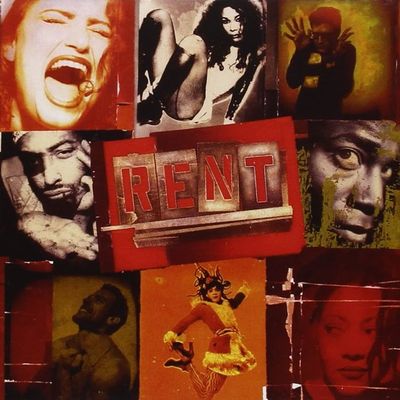
[23:28] David Ambroz: And I heard about the show called Rent.
[23:33] David Ambroz: And it was I don't even remember what year it was, but I think it came out in 96.
[23:37] David Ambroz: And I stole away and took a Greyhound or Peter Pan, if you're familiar in the in the Northeast.
[23:45] David Ambroz: I took a Greyhound equivalent bus to Boston.
[23:49] David Ambroz: And I structured my whole day so I could go see this musical.
[23:54] David Ambroz: And I walked out gobsmacked.
[23:57] David Ambroz: Um, you know, I grew up in New York City in the 80s, where we were in shelters where a lot of men were dying, and they were covered in lesions and abandoned.
[24:07] David Ambroz: And that was my upbringing.
[24:09] David Ambroz: And to go from that to see this beautiful musical portrayal of love and and just great music, it really um breathed life into me at a key moment of my life.
[24:21] David Ambroz: And I would say most recently, Hamilton, to be perfectly honest, I feel not to sound egotistical, but I feel kindred with an individual who literally wrote my way out from my college essay to what I try to do with this book, but to live a life of purpose and dream big and trying to achieve things.
[24:40] David Ambroz: And a lot of my friends kind of make fun of me. They say I got no chill.
[24:42] David Ambroz: So I feel such a kindred um spirit with someone who wanted to change the world.
[24:49] David Ambroz: A Todd Ham.
[24:50] Jan Svendsen: That's you too.
[24:54] David Ambroz: Shall I sing?
[24:55] David Ambroz: Is that the end of this podcast?
[24:56] Jan Svendsen: I don't know.
[24:57] David Ambroz: I'll spare everybody.
[25:01] Jan Svendsen: But I do, I do want to know like what advice would you give people listening as to how they could become what I like to call sort of everyday philanthropists or everyday activists.
[25:11] David Ambroz: You know, it's overwhelming. And different guests have given lots of different kinds of advice.
[25:15] David Ambroz: And I just wondered, you know, your perspective is so different.
[25:18] David Ambroz: And I wondered what kind of advice you would give people.
[25:21] David Ambroz: I think it it's really, you know, you come to a fork in the road, everyone always says, and I think that's bull.
[25:25] David Ambroz: I think you come to a fork in the road and then you decide to carve your third path.
[25:28] David Ambroz: That's the one that's for you.
[25:30] David Ambroz: And that's what you should do.
[25:32] David Ambroz: I think people need to find their way forward into an issue that that brings them joy and fulfillment.
[25:38] David Ambroz: I also encourage people to realize that giving back can advance not just your your heart quotient, but your career, the connections you make with authentically engaging with the cause, the people you meet are really going to be some of your best advocates in all aspects of your life.
[25:53] David Ambroz: So it's the good thing to do and it's the good thing to do in so many ways.
[25:58] David Ambroz: And the best way to engage is not to focus on the issue that you have no interest in, but in my opinion, is to jump in where you can and then to look at the resources you have and make a decision.
[26:08] David Ambroz: I have friends in my life as as you do that are incredibly powerful.
[26:12] David Ambroz: And all they want to do, as I do locally, is I actually volunteer at a shelter before COVID.
[26:18] David Ambroz: And once a year I go in with friends and I clean the kitchen.
[26:20] David Ambroz: I don't interact with the kids and families that live there, but I do a deep scrub of the kitchen.
[26:24] David Ambroz: And I'm there with friends.
[26:25] David Ambroz: We listen to music.
[26:26] David Ambroz: I'm usually Madonna or Broadway musicals.
[26:30] David Ambroz: Um that's what I do.
[26:32] David Ambroz: But I also serve on the planning, I served on the planning commission for 10 years and I was appointed by the mayor.
[26:38] David Ambroz: Find where your passion is in a general area and do that.
[26:42] David Ambroz: And then decide really do I want to use my skills as a professional?
[26:45] David Ambroz: Like if you're in the communications, do I want to help a nonprofit redo the communications?
[26:45] David Ambroz: Do I want to help them fundraise?
[26:51] David Ambroz: Nonprofits eat what they raise.
[26:53] David Ambroz: So we can't collectively all be like, oh gosh, another rubber chicken dinner.
[26:57] David Ambroz: We got to go to the rubber chicken dinner because the Covenant House needs our love.
[27:01] David Ambroz: So find out if you want to work within a cause, find out the best way you want to be there, either with your skill set or just your humanity.
[27:08] David Ambroz: And then also push yourself.
[27:10] David Ambroz: I can't tell you when I was coming up as a gay professional how hard it was to find a mentor that would just want to mentor me and guide me and make introductions and bring me on, uh, bring me to events.
[27:22] David Ambroz: Push yourself a little bit beyond your comfort and and get into that space if you think, if you think you can.
[27:29] David Ambroz: The other reality is all of us are limits have limits.
[27:31] David Ambroz: Respect those, but push them.
[27:33] David Ambroz: Um so I think there's many different ways forward.
[27:35] David Ambroz: I, of course, think all of you listeners should be involved in child welfare and foster care.
[27:40] David Ambroz: Um, so I think you should go to my website, which will be on the link, but and and get involved there.
[27:45] David Ambroz: At the very least, everyone listening can start donating their small talk immediately.
[27:49] David Ambroz: Look up some fun, interesting facts.
[27:51] David Ambroz: If you don't know any, ask me, ask her, and we'll tell you some.
[27:55] David Ambroz: But immediately we should start talking about kids and families because they need us to.
[27:59] Jan Svendsen: That is a perfect way to end this podcast. Thank you so much for being here.
[28:03] David Ambroz: Thank you for sharing your story.
[28:05] Jan Svendsen: Thank you for doing all the work that you do.
[28:07] Jan Svendsen: And I love you, David Ambroz.
[28:09] David Ambroz: It's a mutual love affair.
[28:11] David Ambroz: And thank you for the platform and for sharing my story with your listeners.
[28:15] David Ambroz: It's something you didn't have to do, and it's a beautiful gift.
[28:18] Jan Svendsen: Oh, I had to do it. I felt it inside.
[28:21] Jan Svendsen: I had to do it.
[28:22] Jan Svendsen: It's such a beautiful story.
[28:24] David Ambroz: Thank you.
[28:25] Jan Svendsen: Thanks for listening to this episode of the Broadway Gives Back Podcast.
[28:29] Jan Svendsen: Broadway Gives Back is part of the Broadway Podcast Network.
[28:32] Jan Svendsen: Special thanks to my producing partner, writer, editor, and friend Jim Lochner.
[28:38] Jan Svendsen: And thank you to everyone at BPN, including Dori Berinstein, Alan Seales, and Kimberlee Garris.
[28:44] Jan Svendsen: I'd also like to thank Julian Hills from the Bulldog Agency and Eric Becker from Broderick Street Music.
[28:50] Jan Svendsen: If you like what you hear, don't forget to subscribe and rate this podcast wherever you stream your podcasts.
[28:56] Jan Svendsen: You can also follow Broadway Gives Back on Facebook and Instagram at Broadway GivesBack Podcast and on Twitter at Broadway Gives.
[29:05] Jan Svendsen: To learn more, visit BPN.fm slash Broadway Gives Back.
[29:12] Jan Svendsen: Thanks so much.
© Broadway Podcast Network, All Rights Reserved