

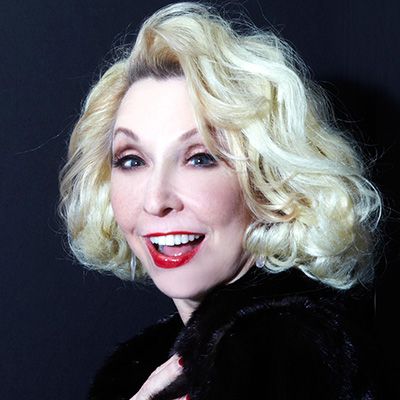
Actress and comedienne Julie Halston is one of the funniest women on Broadway and off. She has starred in TOOTSIE, YOU CAN’T TAKE IT WITH YOU, ANYTHING GOES, HAIRSPRAY, and GYPSY. She has also appeared in the television reboots of SEX AND THE CITY and GOSSIP GIRL... Read More
From the show: Broadway Gives Back
Guests
Featured Shows

About
Actress and comedienne Julie Halston is one of the funniest women on Broadway and off. She has starred in TOOTSIE, YOU CAN’T TAKE IT WITH YOU, ANYTHING GOES, HAIRSPRAY, and GYPSY. She has also appeared in the television reboots of SEX AND THE CITY and GOSSIP GIRL. Julie is also a staunch advocate for people living with pulmonary fibrosis, receiving the 2020 Isabelle Stevenson Tony Award for her charitable work for the Pulmonary Fibrosis Foundation (PFF). Halston is a Board member of the PFF and has dedicated herself to raising funds and awareness for PFF for more than a decade. Join Julie as she relates her very personal pulmonary fibrosis story and the joys of giving back.
Learn more about about the worthy causes discussed in this episodes and how you can donate and/or help:
Connect with Julie:
- Facebook: @JulieHalston
- Twitter: @JulieHalston
- Instagram: @ActressJulieHalston
- Rolling Calls, A New Audio Comedy
Connect with The Broadway Gives Back Podcast:
- Facebook: @broadwaygivesbackpodcast
- Instagram: @broadwaygivesbackpodcast
- Twitter: @broadwaygives
Hosted & Executive Produced by Jan Svendsen and co-produced & edited by Jim Lochner.
A proud member of the Broadway Podcast Network.
Special thanks to Dori Berinstein, Alan Seales, and Kimberlee Garris from BPN; Julian Hills from The Bulldog Agency; and Eric Becker from Broderick Street Music. Social Media Manager for Broadway Gives Back: Olivia Cull.
Transcript
This transcript was automatically generated and might contain errors.
[0:05] Jan Svendsen: Welcome to the Broadway Gives Back Podcast.
[0:07] Jan Svendsen: I'm your host, Jan Svendsen.
[0:10] Jan Svendsen: This podcast spotlights Broadway actors, shows, and organizations in their pursuit of social impact and philanthropy.
[0:17] Jan Svendsen: Join us as some of the brightest lights on Broadway share their stories about their favorite charities and how they got involved, and the people and causes who benefited from these philanthropic efforts.
[0:33] Jan Svendsen: Actress and comedian Julie Halston is an incredibly talented human and a dynamic advocate for people living with pulmonary fibrosis.
[0:42] Jan Svendsen: She received the 2020 Special Tony Award in recognition of her charitable work and advocacy.
[0:48] Jan Svendsen: Julie's recent credits include Tootsie, You Can't Take It With You, ANYTHING GOES, Hairspray, Gypsy, and the Sex and the City reboot.
[0:57] Jan Svendsen: Julie's also starring in the new audio comedy, Rolling Calls.
[1:01] Jan Svendsen: Everyone loves Julie, her energy, her talent, her comedy, her humanity.
[1:06] Jan Svendsen: I know that I do, and I'm so happy to welcome her here today to the Broadway Gives Back Podcast.
[1:11] Jan Svendsen: Hi, Julie.
[1:13] Julie Halston: Jan!
[1:14] Julie Halston: I'm so happy after our technical wildness.
[1:17] Julie Halston: We're together, we're here, we're doing it.
[1:20] Jan Svendsen: Yes, for everybody listening, we had some major tech issues getting this together.
[1:24] Jan Svendsen: Here we are.
[1:25] Jan Svendsen: So anyway, thank you so much for joining today.
[1:28] Julie Halston: Of course.
[1:29] Julie Halston: I thought maybe we would start with a little bit of sort of rapid-fire questions.
[1:33] Julie Halston: So it's a little warm-up, a vocal warm-up, you can call it.
[1:37] Julie Halston: I'm gonna ask a question, just shoot out the first thing that comes to your mind, okay?
[1:41] Julie Halston: Okay.
[1:42] Jan Svendsen: Great.
[1:42] Jan Svendsen: What are three words that you think describe you?
[1:46] Julie Halston: Enthusiastic, judgmental, glamorous.
[1:52] Jan Svendsen: Oh, very.
[1:56] Jan Svendsen: If we knew that a meteor was gonna hit our planet and you could prepare your last meal or order it, what would you want to eat?
[2:05] Julie Halston: Oh, it would be something Italian.
[2:07] Julie Halston: It would involve copious amounts of wine and maybe a bolognese.
[2:14] Julie Halston: Bolognese, yeah, yeah, yeah.
[2:16] Julie Halston: Salad, you know, a whole thing.
[2:18] Jan Svendsen: Yeah.
[2:18] Julie Halston: A whole thing.
[2:19] Julie Halston: But it'll be Italian.
[2:21] Jan Svendsen: Dessert.
[2:22] Julie Halston: I'm not a tiramisu person.
[2:25] Julie Halston: Uh, maybe I'd go French with the chocolate mousse.
[2:29] Jan Svendsen: Okay.
[2:30] Julie Halston: Okay.
[2:30] Julie Halston: Yeah.
[2:31] Julie Halston: Italian for the main course and French for dessert.
[2:33] Jan Svendsen: Yeah, yeah, exactly.
[2:35] Jan Svendsen: Um, if you could be a part of any fictional family, whether it be on Broadway or television or film, what family would you want to be a member of?
[2:44] Julie Halston: Oh my goodness, that's a very good question.
[2:48] Julie Halston: Well, actually, I do feel very much a part of the Broadway family, so I don't really, you know what I mean?
[2:54] Julie Halston: That's not a fiction.
[2:55] Julie Halston: That's actually very real.
[2:57] Julie Halston: And that was always my dream to be part of the Broadway family.
[3:02] Julie Halston: And that is my favorite family in the whole world.
[3:05] Julie Halston: Um, other than my own family, but uh, it really is my favorite family.
[3:12] Julie Halston: Um, so if there was a fictional family, well, you know, I actually watched uh one of those uh updated, not updated, but PBS had, you know, I think it was with Mare Winningham of the Little Women uh kind of reboot kind of thing.
[3:31] Julie Halston: And I thought that was actually quite well done.
[3:34] Julie Halston: And I liked all those gals.
[3:38] Julie Halston: I thought that might be kind of fun.
[3:40] Julie Halston: Although I do think in real life, they would have torn each other to shreds.
[3:47] Julie Halston: Do you know what I mean?
[3:48] Julie Halston: There was some family.
[3:50] Julie Halston: Wait, so it's Amy and Jo.
[3:53] Julie Halston: I forget the other sisters' names, but we'll make five sisters, and the last sister will be Julie.
[3:57] Jan Svendsen: Is that what you're thinking?
[3:58] Julie Halston: Beth.
[3:58] Julie Halston: Beth's.
[3:59] Julie Halston: Beth was one of them.
[4:00] Jan Svendsen: Right.
[4:01] Julie Halston: And uh, yeah, and the last sister might be Julie.
[4:04] Julie Halston: And of course, she would be the most successful.
[4:11] Jan Svendsen: Hey, Julie, where's your happy place?
[4:13] Julie Halston: Uh, well, in a theater on a set.
[4:17] Julie Halston: I, I, and um quite frankly, I love my bed, to be honest.
[4:23] Julie Halston: Um, I mean, if we're gonna really talk turkey, I love my bed for a lot of reasons, and I love it when I'm not alone in that bed.
[4:31] Julie Halston: That's a whole other podcast, isn't it?
[4:34] Jan Svendsen: That's another podcast.
[4:36] Julie Halston: Yeah, that is a different podcast, but we'll see.
[4:39] Julie Halston: Yeah, that, that, that's another, yes.
[4:41] Julie Halston: Talk about Broadway gives back.
[4:43] Julie Halston: Um, but, but uh, I like that, but I also do a lot of work in my bed.
[4:49] Julie Halston: I write my one-woman show in my bed, I watch television, I watch, I do, I multitask in my bed, and uh, I also have the cats, I have two cats.
[5:02] Jan Svendsen: Do you ever sleep in your bed?
[5:03] Julie Halston: I do sleep in the bed, I do, I sleep in it.
[5:06] Julie Halston: I have two cats as well, Daisy and Buster, and they're always on my bed as well, so it's really kind of a fabulous relax, pet the cats, drink some tea, work, watch something for another broadcast.
[5:24] Julie Halston: Do you know what I mean?
[5:25] Julie Halston: Um, so but that's my favorite place.
[5:28] Julie Halston: That's my happy place, is my bed.
[5:30] Jan Svendsen: I love that.
[5:31] Jan Svendsen: I have not had that answered yet from anybody, so thank you for that.
[5:37] Jan Svendsen: I have so much more I want to say, but I'm gonna continue here.
[5:40] Julie Halston: Okay.
[5:42] Jan Svendsen: Um, what is your most used emoji when you're texting people?
[5:47] Julie Halston: Oh, I don't love the emojis, but I usually do use a heart.
[5:52] Julie Halston: So lately, because of politics, I've been using a blue heart.
[5:56] Julie Halston: But um, but yeah, a heart, a heart.
[5:59] Julie Halston: And a kiss.
[6:00] Julie Halston: Oh, I like the kiss too.
[6:01] Julie Halston: I like the big red kiss.
[6:03] Julie Halston: So those are the two that I use the most.
[6:06] Jan Svendsen: Did you, I just read recently that you can't use thumbs up anymore because that's offensive to Gen Z.
[6:12] Julie Halston: Did you see that article?
[6:14] Jan Svendsen: Uh, no, so now I've stopped using thumbs up because I, this is a whole nother discussion.
[6:20] Julie Halston: I know it's another podcast.
[6:22] Julie Halston: That's another podcast.
[6:23] Julie Halston: I didn't realize that, but uh, okay, no more thumbs up.
[6:27] Julie Halston: And I also heard, I also heard, and I understand, you can't use the word blind spot anymore.
[6:36] Jan Svendsen: Okay.
[6:38] Julie Halston: Yeah, you can't use blind spot.
[6:41] Julie Halston: So when you're driving, you can't say, oh my god, I gotta figure out what to do with the blind spot.
[6:47] Julie Halston: So what you do, I think, is you just say, I can't see.
[6:47] Julie Halston: I can't see.
[6:54] Julie Halston: So turn around and find out if there's a truck behind me.
[6:58] Julie Halston: I mean, so yeah, language.
[7:01] Jan Svendsen: Okay.
[7:02] Jan Svendsen: Okay, we'll go back to the blue heart.
[7:04] Jan Svendsen: I like that.
[7:05] Jan Svendsen: Yeah, yes.
[7:06] Jan Svendsen: So getting serious for a second, what do you most give a damn about these days?
[7:11] Julie Halston: I mean, there's so much to give a damn about, but like what's on the top of your give a damn list?
[7:17] Julie Halston: Other than my recent Botox, um, and that is on my high priority list.
[7:25] Julie Halston: Um, I really care about finding a cure for pulmonary fibrosis.
[7:31] Julie Halston: I am, it's really, really, really a big mission in my life.
[7:36] Julie Halston: Here are my two passions, Jan: the theater and a cure for pulmonary fibrosis.
[7:43] Julie Halston: The theater is also in trouble.
[7:46] Julie Halston: We're, we're, this is a really serious situation here.
[7:50] Julie Halston: We've got, you know, a theater industry that is still not quite back.
[7:56] Julie Halston: It's still struggling.
[7:59] Julie Halston: And, you know, I've heard people say this like, oh, do we really need theater?
[8:04] Julie Halston: We all live stream now anyway.
[8:06] Julie Halston: What, why do we have to go to the theater, whatever?
[8:10] Julie Halston: I'm sorry, I'm sorry.
[8:12] Julie Halston: We still need live events, we still need live theater.
[8:17] Julie Halston: There's nothing like it.
[8:19] Julie Halston: I just went to see Take Me Out again.
[8:23] Julie Halston: Uh, and Richard Greenberg's glorious masterpiece.
[8:29] Julie Halston: And let me tell you, everyone in that theater, the minute that show started, we were energized, we were emotional, we were, you know, thousands of people together, experiencing something together.
[8:50] Julie Halston: I always talk about that, that connection in the theater.
[8:53] Julie Halston: And I'll just share with you.
[8:54] Julie Halston: Last night I saw Leopoldstadt.
[8:57] Julie Halston: And I, I was, I honestly this morning I wasn't sure I was going to make this podcast because I was crying for hours, like just sobbing.
[9:06] Julie Halston: It's very much the story of my family, so it hit home very close.
[9:10] Julie Halston: But that feeling in that theater was so unbelievable.
[9:13] Julie Halston: Um, but I woke up this morning with a headache and swollen eyes, and I thought I'm never gonna be able to do this.
[9:19] Julie Halston: But um, a little ice and a little medication helped.
[9:23] Julie Halston: Um, but it was so, it was such a healthy cry.
[9:27] Julie Halston: You know what I mean?
[9:28] Julie Halston: It was such a communal healthy cry, and only things like theater can give that to you.
[9:32] Julie Halston: And well, this is the other thing, Jan.
[9:36] Julie Halston: Look what's happening in the world.
[9:39] Julie Halston: The hate, the anti-Semitism, the anti-LGBTQ.
[9:47] Julie Halston: Look at what is going on.
[9:48] Julie Halston: Anti-woman.
[9:50] Julie Halston: The theater is where you take your ideas to the public, and you can do it in a meaningful way.
[9:58] Julie Halston: It's not a sound bite.
[10:01] Julie Halston: It's a play and a musical, but that's where real ideas get discussed in a real way.
[10:11] Julie Halston: That's very important.
[10:12] Julie Halston: This is a real discourse.
[10:15] Julie Halston: And I think, you know, we're so used to now a sound bite or, you know, a quick little quote and blah blah blah blah, and then that defines something.
[10:25] Julie Halston: No, let's have a real discussion.
[10:28] Julie Halston: And that's where the theater can really do something in a beautiful, meaningful way.
[10:35] Julie Halston: And we have to not only save it, we have to keep it going.
[10:39] Julie Halston: Plus, my other passion is New York City.
[10:43] Julie Halston: You know, I, it's been my dream to live in New York City.
[10:45] Julie Halston: I grew up on Long Island.
[10:46] Julie Halston: I had a wonderful childhood.
[10:48] Julie Halston: I loved Long Island.
[10:49] Julie Halston: I, you know, I was one of, I had a core bear.
[10:51] Julie Halston: I was roaming around Long Island, having a blast.
[10:56] Julie Halston: By the time I was nine years old, though, I knew I gotta live in New York City, and I meant, and that meant Manhattan.
[11:02] Julie Halston: Manhattan was the dream, and I love it.
[11:06] Julie Halston: And I love that I bought a place in Manhattan and I own it and it's mine and it blah blah blah.
[11:13] Julie Halston: The theater and Manhattan are intertwined.
[11:13] Jan Svendsen: When you were a girl at two, when you were out on Long Island, did your parents take you to the city to come to see shows?
[11:23] Julie Halston: Yes, my mother dragged her three little girls all over the place.
[11:27] Julie Halston: We went to the Frick, we went to the Guggenheim, we went to the theater.
[11:33] Julie Halston: Um, she loved to dance.
[11:35] Julie Halston: My mother was a very good dancer.
[11:36] Julie Halston: She wasn't a trained dancer or anything, but, and she loved the theater.
[11:40] Julie Halston: And one of the I don't want to cry, but when I did get that Tony, you know, my mom had already passed, and it meant so much for me to hold that Tony and sort of think about my mom and my late husband, because those were the two biggest supporters of my life, and they supported my career so strongly, and they weren't here, but they are here.
[12:14] Jan Svendsen: Do you know what I mean?
[12:15] Julie Halston: So I do, I do.
[12:17] Jan Svendsen: I know what you mean on so many levels.
[12:19] Julie Halston: Yes, yes. I want to get into some of the stuff that you've just mentioned. Um, you know, you're one of the busiest actresses around. You do so much work um on Broadway and on television and your advocacy work. So let's start with that, because I feel like your advocacy on behalf of the Pulmonary Fibrosis Foundation is so important. And it is a story about you and your late husband who suffered from pulmonary fibrosis, and it's very personal for you. So would you mind sharing that story with us?
[12:50] Julie Halston: Of course. Um, my late husband was Ralph Howard, and a lot of people in New York knew Ralph Howard because he was the anchor man for 1010 wins for many, many years. And uh, and then uh he actually worked for Howard Stern for eight years doing the news, which was all Howard all the time, which was great, and he loved Howard and he loved working with Howard. Um, but he was one of the most recognized voices in New York City. You know, I'm Ralph Howard. Uh, and people still come up to me on the street and say, you don't, you might not know me, but I grew up with your late husband's voice all my life, and it really meant a lot to me, and it still does. And um day, uh Ralph uh he always thought he had asthma, and he would just take asthma medicines.
And but one day he was coming out of the subway uh from the studio, and we were gonna meet for dinner, and uh I was at home, and uh he he could not, he could barely walk up the stairs of the subway. This is a man who was leaping around New York, you know, just everywhere, and he was totally fit, and he thought he was having a heart attack, and he literally knew that our GP was right around the block, so he just brought himself to the office, and uh they took him in right away, and they were listening to his lungs and his heart and everything, and they heard the crackling sound of pulmonary fibrosis, and uh they called me in, and they said we're gonna send him to a specialist right down the hall.
The specialist took a listen, did x-rays. Uh, he said, Look, we really need to do like an MRI or a CAT scan to see PF. But I can tell you from listening, I think I know what it is. Anyway, we did all these things, and it was PF, pulmonary fibrosis. And what that means is that the lungs are drying up. And uh, we didn't, we never even heard of it, Jan. We didn't know what it was. And I said, Well, what is it? And how do we keep how do we, you know, deal with it? He said, Well, it's a fatal disease. You have about a year. Oh, it was the longest walk home we ever did, and it was around the block from where we live. We could barely speak. The worst was telling Ralph's children. Uh, but the pulmonologist said one good thing, and he said, Look, I am a teacher at New York Presbyterian, and I know those guys up there, and I'm gonna call them, and I'm gonna see if we can get Ralph on the lung transplant list, because that will extend his life.
So that's what happened. But it was such a journey, Jan. It was a long journey. That's when Ralph did get the lung. And here's the here's where life is a miracle. Ralph got his lung on our 18th wedding anniversary. Wow. And he got the gift of life, and he lived an extra eight years. And we traveled all over the world, and he walked Lindsay, his youngest, down the aisle, and he saw the birth of some great grandchildren. And uh he's he was the one who said, Julie, we have to we have to help other people. We gotta we gotta do something. And Michael Kushwara, who was the drama critic for the Associated Press, as Ralph was being, you knew him, he was such a doll. He and Ralph were good friends. As Ralph was getting diagnosed with PF, Michael passed away from P. It was such a confluence of these weird strange things, and that's when we said, well, we have to honor Mike, we have to learn more about this.
And Ralph said, we got to raise money, we got to get involved. And they told us about the pulmonary fibrosis foundation, and they got involved with us, and we got involved with them, and now it was a small family foundation, and Jan, in the last 12 years, it's a national organization now. And we've really, it's grown exponentially. There were a few care centers in the United States that would handle PF patients. There are now over 70 care centers that are handling and understand pulmonary fibrosis. So, and they give their patients and caregivers the right amount of care or information. Uh get them to the right doctors. Many more people are doing lung transplants now. It's been really heartening to see how we've grown.
The budget was small, now it's much larger. And after the Tony Awards, dare I say, you know, you think you think, oh, well, what does Broadway have to do with pulmonary fibrosis, whatever? There are many people in the United States who understand, you know, this disease because it's in their family, and they also love Broadway. And do you know? We did a lot of publicity after I got the Isabel Stevenson Award. 33 million people heard about. And we got a lot of big donations, a lot. So a lot of people. A lot of people get to the right doctors and the right care, and also to help caregivers because it's very hard on the caregivers. You know, this is not a cold, this is a life-threatening illness that you know can be managed much better these days. So anyway, I'm very hopeful. I'm very hopeful for a cure, uh, in my lifetime. In my lifetime.
[19:29] Jan Svendsen: So well, it's so it's so important. You know, I wonder talking about the special Tony. I was in the audience that night.
[19:36] Julie Halston: Oh with a mask on, because that was, you know, 2020, right?
[19:40] Jan Svendsen: Yes, yes. I was 2021 in September. Um, and I heard your speech, it was beautiful. Um, but can you tell us a little bit about like what that, you know, what that feeling was like receiving that honor and how did you hear about it?
[19:53] Julie Halston: Well, it's quite a little bit of a story, I must say. Um they tricked me. It was a little bit of a trick. I um very friendly with Sue Frost, who's actually on our advisory board for the Pulmonary Fibrosis Foundation. I love Sue Frost. We love Sue, you know, she's the best. Sue Frost uh said called me one day and said, Oh, hey, Julie. Um, uh, we're trying to put together a committee of people to talk about the reopening of Broadway when COVID gets more manageable or whatever. And I know you like to be involved with lots of different things. And um uh I also wanted uh to invite someone from the Broadway league to talk to us about this. And I said, uh, okay, okay, I'll I'll be on that committee, whatever.
She said, Oh, good, let's have a couple phone conversation at four o'clock on Thursday. I said, Great. So we all get on our, you know, we did a merged call. You know how that goes. I said, Oh, hey guys, Broadway League, Sue Frost, you know, what's going on? What what do you need from me? They said, Oh, you you're not on any committee. I said, What? What's happening? And they said, Oh, that was just a ruse to get you to this. I said, Well, what Sue, what's happening? She said, We're giving you the Tony Award. We're giving you the Isabel Stevenson Award. And Jan, for one split second, I thought, this is the cruelest joke in the world. Like, is Sue like, how could she do this to me? And I said, Sue, what?
And she said, we're giving you the Isabel Stevenson Award. And they have a nice little speech. They said, We feel you're so deserving, and but the committee decided on it, and there were 31 people involved, and I got so choked up. I said, Look, I have to get off this phone call. And I said, I have to go and sit down in my living room right now. And I just sat down and I cried. I cried for like 15 or 20 minutes. And they said, Oh, they said to me now, you can't make any announcements because it's going to be in a press release. And they said, But we would like to know of all the outlets, because they're all gonna want to know about it. What outlet would you like to get first dips? And I said, Well, it's gotta be Associated Press because of Michael Kushwar.
Yeah. And that was the first, they broke the story. I was allowed to tell my manager and my agent, and Jan, I'm surprised you didn't hear the screaming. There was so much screaming. I Michelle Cotrell and Bill Butler and Gary Gersh, and we were all on the phone, and we were just screaming, screaming. My neighbors must have thought I was being hacked to death. But we were screaming with joy, and it was just fantastic. And um, oh my gosh, when I told the PF, you know, the foundation, it was just, it was wonderful.
[23:22] Julie Halston: So I listen, Broadway is, you know, the theater. My mission are two things, you know, the theater and pulmonary fibrosis foundation. I was able to bring them together. I want to keep that going. I want to keep that going. I want to keep Broadway belts going. That's why I do it every year. The Broadway community is the most generous, most talented. They're the most generous, most talented people on planet Earth. I mean, not that I don't love film directors and lighting designers in the cinema or whatever, but can we just talk about Broadway performers? They're the most talented people on planet Earth. I'm gonna go talented and caring, and that's why this podcast is called Broadway Gives Back.
Yeah, and they're the most incredible community. So generous, so caring, they get it. You don't have to ask twice. You don't have to ask twice. It's fantastic. They're amazing. It's the community I dreamed about when I was nine. I love being a part of it. It's so great. And I just um I always think about how do people become sort of caring, giving back, philanthropic people. And the Broadway community certainly has, you know, everyone in the community is like that. But I was thinking about that for the people listening, you know, that aren't necessarily they're Broadway fans, but maybe they're not directly in the community. And I was thinking about what motivates somebody to be a philanthropist.
Um, in your case, it was a very personal you know, it was a very personal thing. Um, you know, someone that you love was touched by something, and so you knew you had to act and make a difference, right?
[25:17] Jan Svendsen: Right. And other people have shared with me, and for my for me personally, I think it's about it's like a DNA thing. Like my mother was very philanthropic and very she was a big social activist. So I think I it was modeled for me. Yes. But I wondered, you know, I can't, you know, how do you think people should get involved in things that that give back?
[25:36] Julie Halston: Well, another one of my heroes is Tom Viola. Uh and Tom, of course, as everyone knows, is uh is the director of Broadway Care Equity Fights Aids, um, and has been uh leading that for many, many, many, many years now. Tom and I were both in acting class together.
[25:54] Jan Svendsen: Really?
[25:59] Julie Halston: Oh, yeah, we were in acting class together at the T Schreiber studio. But clearly, the AIDS crisis created so much activism for so many, particularly in our industry, and Tom was one of them. However, you know, it's one thing to get involved in the beginning, but Tom has remained a stalwart. I really do believe this as well. I got involved with the Pulmonary Fibrosis Foundation because it was very personal. We lost our friend Michael, my late husband was uh, but what keeps me in it is the joy and that I see when people uh are helped enormously. And I Tom and I talk about these things a lot. Uh and Tom was very helpful to me when I got involved with doing charity work. He gave me a lot of good advice, and he still does.
Um, but Tom has seen the goodness that he has spread. And I think that's what keeps everyone going. When, you know, whenever I'm really down about something, oh, this is gonna sound so Pollyanna. And and people are gonna say, she's she can be a bitch. How could she sound so Pollyannaish? But whenever I am really down about something, and I get down, you know, whatever it is, I always remember, oh, you know what you really need to do? You need to do service for someone else today. I know it sounds Pollyanna-ish, you don't want to hear it, but not to me, it sounds exactly right. The minute you do service for someone else, you're gonna feel better. You really it it works, and that's what what happens.
And you know, I think Tom has seen that. I have seen it, and it's the way I want to guide the rest of my life as well. Um the minute you're unsure of something, the minute you're a little down, the minute you're envious or this or that. Yeah, you could wallow in that for a little while and then do some service. You're gonna feel better.
[28:23] Jan Svendsen: This is why you got the Isabelle Stevenson Award for that very spirit.
[28:28] Julie Halston: Yeah, and Tom's a good friend, and he's been on this podcast too. So and so now, Tom, we are sending love to you too, if you're listening. You know, Julie, you talked a lot about um, you know, doing the TV stuff and doing the Broadway and and and look, again, nothing disparaging at all about Hollywood because I live half my life in Hollywood too. Um, but I just wondered from a professional point of view, um, you know, you you've done both. And what is like what's what are the pros and cons like of doing TV versus doing you know theater?
[29:01] Julie Halston: Well, I love TV as well, and uh or a film, and first of all, TV pays a lot of money. That's a that's a big pro. That's a big pro. Um, and you know, uh doing a character like Bitzi Bon Muffling not only is you know, you make money and and but it's on a show with great people there and talk about, I mean, generous, fantastic, wonderful people. Um, and and and to create a character that lives on and on and on, you know, that's it, it's a big pro. And I would love to continue doing more and more of that. Uh the the problem, I think that I it's not a problem. The reason I want to continue to do both is because you do not have that electric moment with an audience. It's great when you have a terrific crew, you know, and like for example, uh, I've done a number of episodes of GOSSIP GIRL and and just like that, and the crews and the casts are just so great and they're so wonderful, and I have so much fun.
But you know, you do it over, you do it over. You stand around a lot, and there's a lot of that. The thing that's so lovely about doing theater is it's it's you do it straight through. You have that incredible, unique experience of going from A to Z with the joy of doing it in front of all these people, and you're all experiencing it together. It's a very different sensibility. I love doing both. I'd love to be um a series regular on a hot, fantastic show, as well as keep doing theater, as well as keep doing my one woman show at Birdland, as well as working for the pulmonary fibrosis foundation. What does it mean? It means I might get five hours of sleep, but I don't care. I want to do it all.
[31:16] Jan Svendsen: You'll be in your bed for those hours.
[31:18] Julie Halston: Exactly. I want to do it all. I and I I've been doing it all, and I think that I there's no reason why not. You know, look, I don't have children. I had five stepchildren. They're all grown. I adore them. They now have children. I love seeing, I have 11 grandchildren. I know.
[31:40] Jan Svendsen: That's your cue to say.
[31:43] Julie Halston: You can't possibly, you don't look it.
[31:45] Jan Svendsen: You don't look like a grandmother.
[31:47] Julie Halston: You took my line. You took my line. But I and I adore them. I absolutely love it. And they love coming to New York and staying with me. Um I love the whole thing. I love my rich life. You know, you have to work hard for a rich life, but I love it. And I want to continue it as long as possible.
[32:11] Jan Svendsen: Well, I don't doubt that you will be continuing it for as long as possible. And um, you know, speaking of continuing things and doing something different, you're also in um Rolling Calls, which is an audio comedy slash dramedy or what explain, tell us about it.
[32:27] Julie Halston: I know that one of my really close friends is also in that Luis Miranda with you.
[32:30] Jan Svendsen: Oh, oh no, oh, wait, can we just have a little divergent Luis Miranda?
[32:36] Julie Halston: My crush from the 1980s.
[32:38] Jan Svendsen: No, no, no. Everyone talks about everyone talks about his son.
[32:42] Julie Halston: I'm like, forget the son. How about Luis Miranda? Sexy, sexy man.
[32:50] Jan Svendsen: Oh no, I had I had such a crush on him when he worked for like the Ed Koch administration.
[32:56] Julie Halston: Uh-huh.
[32:57] Jan Svendsen: I had a crush on him. Crazy.
[32:59] Julie Halston: I know. No, he's I'm I'm mad for him.
[33:03] Jan Svendsen: Um I'm just gonna say right now, Luce, don't be jealous. It's okay.
[33:07] Julie Halston: We're all just friends.
[33:09] Jan Svendsen: That's his wife.
[33:09] Julie Halston: Yeah, you yeah, no, of course, of course. You're the cutest couple ever.
[33:14] Julie Halston: No, it's the cutest family. They're fantastic. They're amazing. Um rolling calls, Steve Rosen, Gordon Greenberg, um, wrote this very funny series, and I play Dinah, Dinah Le Bain, Dinah Levine. Well, she calls herself Dinah Levine, I believe. And um, she's a talent agent, kind of a bad one. Um, and I'm married to Richard Kind, who's who's a dentist, but who has issues, let's put it that way. Uh Dinah is the kind of character I love. She's out there, she's crazy, she can be nuts. Basically has a heart of gold. Do you know what I mean? She wants to see people succeed, but she's in a terrible business. She's an agent, you know. She's cutthroat, it's cutthroat. It's a very funny series, and you don't have to know anything about the theater, really, or show business to enjoy the characters.
That's what I really love about good writing. You don't really, I mean, it helps to know inside scoops and inside things about show business, but really it's about, you know, this kid who's trying to make a living for himself in New York City, you know, he's trying to do the right thing. Well, there's a million kids right now, you know, another hundred people getting off of the bus and the plane and the this and the, and they're trying to make something happen for themselves.
[35:03] Julie Halston: So they don't, you don't even need to be involved with show business. But if you are, it's even funnier, I would think. You get all the inside jokes, yeah. All the inside jokes. But again, you don't need to, they're outrageous characters. And uh, oh, they're all great. Everyone's talented, everyone's terrific and funny and heartfelt. And, you know, Steve Rosen, oh my lord, one of the funniest human beings on planet Earth. We did Confederacy of Dunces with Nick Offerman up at the uh Huntington Theater in Boston a number of years ago. Uh I had so much fun with Arnie Burton and Steve Rose, and I'm telling you, it was one of the most glorious times of my life uh in Boston. And my two best friends live in Boston.
So I I'd love to go up there again and I wish Confederacy of Dunces made it to Broadway. It just there were many different issues and problems, but it's a great idea for a Broadway show. And Nick Offerman was fantastic. I love his book. The book come on, it's one of the classics.
[36:18] Jan Svendsen: Yeah.
[36:18] Julie Halston: Um, so when you're doing an audio, um, you know, comedy or drama. So is it like is it like old time radio where like you're where are you recording it in your home? Are you going to studio? Like, how does it even work? And are you are the are you all together or are you recording individually? How does it how does it work?
[36:34] Julie Halston: Well, it's both actually. We uh again, we still had to, you know, follow protocols, COVID protocols. We were in a studio, uh, Richard Kind and I were together for our scenes. Seeing his face would probably like just motivate me to like totally be in it, right? Because his face is so please. I mean, I love Richard, but you know, I want to kill him. Uh that's how I feel about Richard Carn. I love you and I want to kill you. So uh it was great that we were together, but there were other people in different locations. So we were all coming in from different studios and whatnot. Gordon was a great director, and he would say, you know, I think she's a little softer in this moment, or I think she should really go crazy in this moment.
He'd give nice directions, and then I would do like say three sometimes. And he'd say, 'Oh, I like that second one a lot. Let's put that in. Um, it was a very nice process though. Um, and it was a lot of fun. Yes, it was like doing a radio, but we were able, like you're saying with your podcast, we could edit, you know, so the best take was gonna was gonna have right.
[37:52] Jan Svendsen: Yeah, so in a way, it's like you get the best of both because you've got the energy in the room with you and Richard, and then you've got the opportunity to fix things in post if you need to, or exactly, exactly.
[38:02] Julie Halston: Yeah, yeah. Richard was on this podcast, and you know, I said to him, 'So you know, let's talk about philanthropy.' He goes, 'I don't know anything about that.' I said, 'Why are you? Why are you here? ' He goes, 'I don't know. People ask me to play golf for charity, and I do it.' That's my that's my philanthropy. So he's so honest. I love him, though. He's he's such he's a great, he's a lovable curmudgeon, you know.
[38:24] Jan Svendsen: Absolutely, absolutely.
[38:25] Julie Halston: No, he's it's and and he is hilarious. He is hilarious.
[38:29] Jan Svendsen: So, yeah, yeah. Well, anyway, so everybody has to go um listen to rolling calls. I'm gonna do that. I have that's gonna be one of my things I do when I walk around the city here. Jan, I just I just I was listening to it, and I gotta tell you, because you know, there's that moment where you go, uh, did it really come out all right? You know, didn't is it really good? You know, you do it and you say, okay, I did it. I got friends, I blah, blah, blah. I got the check cleared. It's good. It's really funny. It's really good. So I would urge people to listen to it. Going back to giving back and doing good in the world. I just wondered, you know, I always ask people, what advice would you give your fans about getting involved in causes?
And, you know, some people have answered this question very like strategically. Some have been more emotional about it. Um, but a lot of people, you know, to your point earlier, you know, it feels so good to give, right? But a lot of people don't know how to get started, or they'll write a check and you know, there's so many causes, there's so many things to support. It's overwhelming.
[39:36] Julie Halston: Yeah. What advice would you give people?
[39:38] Julie Halston: Well, it's also very hard because particularly for people who are in, say, for example, in the theater world, all right, or or in show business or whatever. This is a very brutal business, as we know, Jan. This is a tough business. Just just trying to get jobs can be an all-consuming preoccupation. And I understand that. And it's very difficult. You say to yourself, oh, I'd like to do a lot of things, but you know, I've got to get an audition ready. I've got I, and then I I it's it's a tough, it's not like you go to the office every day and get a steady paycheck. It's very tough. Artists have a tough road, but artists see things sometimes in a different way than the rest of the world. Uh, and they might have some empathy for outliers or you know, people that other people might not even see.
Artists, it's important to get in touch with your artistic self. And when you do, even as you're struggling and trying to make it and whatnot, I think it's important to really ask yourself a lot of times what really means something to me. What is it that really means something to me? Now, for me, obviously it became about a very personal situation. But maybe, maybe you don't have a friend or a loved one who's ill or whatever. But think about what is it that really means something to me? Is it a political situation? Is it a per is it the prison system? Is it a disease? Is it children? Is it elderly? Is it something? Is it my faith? Is it, you know, uh uh what whatever? Think you just have to think about what means so much to me?
Artists will answer that question. They know, they know. And think about getting involved. You don't have to get involved all in right away. Little baby steps are always good, you know. Baby steps are steps. So, yeah, you might write the check, but then the next time you might say, you know what? It really, it really upsets me that there are children in this country that that aren't getting meals. You know, there's a there's a community center right near me, and they have a food bank. I'm gonna ask about. I'm gonna just ask about it. That's the first step. You go, you ask about the food, maybe you'll give food. Then maybe on a holiday, you'll actually give out some food. You know, I'm just saying these are the steps.
You just take these baby steps, and you'll find, oh, you'll meet people for one. Oh, oh, I'm meeting new people. Oh, they get together every Thursday, and they collect, they collect food from all the restaurants. And they they like the city harvest or whatever. Whatever, say that was your thing. You'll say, hey, you know what? On Thursday, I'm gonna do that. So that's what I'm just saying. You can start small, but start. It will change your life. It will change your life. I it helps your art because you meet new people, you have different experiences, you get outside of yourself. You know, it's so easy, particularly for actors. You know, they they can go down a rabbit hole very quickly. Why didn't I get this? Why? How did she get that? You know, whatever. When you get outside yourself, it helps. And it helps you be a better performer. I I'm convinced of that. Completely.
[43:50] Jan Svendsen: Yeah, and I think for people who aren't performers, it helps you to be a better person, right? It just and it and everybody has a creative side to some degree.
[43:58] Julie Halston: Of course.
[43:59] Jan Svendsen: My creative side be as strong as yours, Julie. But you know, I tapping into that makes me a more well-rounded, healthier person, right?
[44:12] Julie Halston: Your hair is stunning.
[44:13] Jan Svendsen: Oh, thank you.
[44:15] Julie Halston: Yes, of course.
[44:15] Julie Halston: Yes. Yes. You're so sweet. But I wondered any last words for everybody listening on anything we've talked about.
[44:16] Jan Svendsen: With very good hair, by the way.
[44:24] Julie Halston: The last words I would just say is there is that expression, it's better to give than to get. And and I would modify that. I would say it's not necessarily better to give than to get. What m what I would say is when you give, you do get. When you give, you do get. It's very hard right now. And it's hard for everyone. Know that goodness still exists. Empathy still exists. Creativity still exists. Theater still exists. I think we're in for some battles. I think we're in for some struggles. Struggle is not giving up. You know. As as John Lewis would say, let's get into some good trouble. Let's get into some good trouble.
[45:26] Jan Svendsen: Well, I think you get into a lot of good trouble, Julie. Thank you so much. And I'm gonna go to mic drop on that one. Thank you.
[45:35] Jan Svendsen: Thanks for listening to this episode of the Broadway Gives Back Podcast. Broadway Gives Back is part of the Broadway Podcast Network. Special thanks to my producing partner, writer, editor, and friend Jim Lochner. And thank you to everyone at BPN, including Dori Berinstein, Alan Seales, and Kimberlee Garris. I'd also like to thank Julian Hills from the Bulldog Agency and Eric Becker from Broderick Street Music. If you like what you hear, don't forget to subscribe and rate this podcast wherever you stream your podcasts. You can also follow Broadway Gives Back on Facebook and Instagram at Broadway GivesBack Podcast and on Twitter at Broadway Gives. To learn more, visit VPN.fm slash Broadway GivesBack. Thanks so much.
© Broadway Podcast Network, All Rights Reserved