

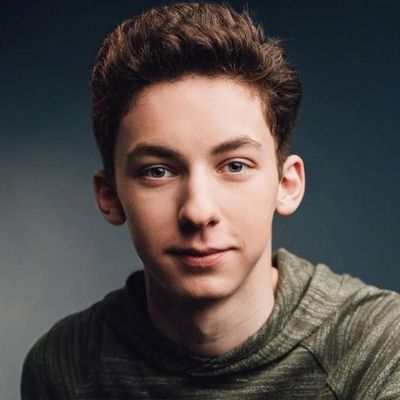
Our special guest today is Andrew Barth Feldman who won the 2018 National High School Musical Theatre Award, and went on to make his Broadway debut as the title character in the Tony Award-winning musical Dear Evan Hansen as a junior in high school... Read More
From the show: Broadway Gives Back
Guests
Featured Shows
About
Our special guest today is Andrew Barth Feldman who won the 2018 National High School Musical Theatre Award, and went on to make his Broadway debut as the title character in the Tony Award-winning musical Dear Evan Hansen as a junior in high school. Since then, he has starred in High School Musical: The Musical: The Series, Ratatouille: The TikTok Musical, and various other television shows and films, and he has won an Emmy Award for hosting the 2020 Roger Rees Awards. He works as a performer, writer, creator, and an advocate.
This episode is part of our Earth Month series, called The United Nations Global Goals, where we talk about tackling the world’s “to do” list to make our planet a better place. I’m joined by my passionate co-host, Tony Nominee Anika Larsen. We decided to work together on this series during Earth Month and bring in guests to talk about the ways in which we all can make small changes for the greater good, with a focus on the Broadway community and theatre fans.
Learn more about about the worthy causes discussed in this episode and how you can donate and/or help:
Connect with Andrew:
- Website: andrewbfeldman.com
- Instagram: @andrewbfeldman_
- Twitter: @andrewbfeldman
- YouTube: @andrewbarthfeldman6353
Connect with The Broadway Gives Back Podcast:
- Facebook: @broadwaygivesbackpodcast
- Instagram: @broadwaygivesbackpodcast
- Twitter: @broadwaygives
Hosted & Executive Produced by Jan Svendsen.
A proud member of the Broadway Podcast Network.
Special thanks to Dori Berinstein, Alan Seales, and Kimberlee Garris from BPN; Julian Hills from The Bulldog Agency; and Eric Becker from Broderick Street Music.
Transcript
This transcript was automatically generated and might contain errors.
[0:05] Jan Svendsen: Welcome to the Broadway Gives Back Podcast.
[0:07] Jan Svendsen: I'm your host, Jan Svendsen.
[0:10] Jan Svendsen: This podcast spotlights Broadway actors, shows, and organizations in their pursuit of social impact and philanthropy.
[0:17] Jan Svendsen: Join us as some of the brightest lights on Broadway share their stories about their favorite charities and how they got involved and the people and the causes who benefited from these philanthropic efforts.
[0:33] Jan Svendsen: Broadway Gives Back is launching a new series called The United Nations Global Goals, where we talk about tackling the world's to-do list to make our planet a better place.
[0:43] Jan Svendsen: I'm joined by my passionate co-host and friend Anika Larsen, who was a guest on this podcast last year and introduced me to the Global Goals.
[0:51] Jan Svendsen: Anika is an amazing actor, a Tony Award nominee, and an activist.
[0:56] Jan Svendsen: We decided to work together on this series and bring in guests to talk about ways in which we can all make small changes for the greater good.
[1:04] Jan Svendsen: Hi, Anika.
[1:05] Anika Larsen: Hi Jan.
[1:06] Anika Larsen: Good to be here again.
[1:08] Jan Svendsen: I'm so glad you're back.
[1:09] Jan Svendsen: Our special guest today is Andrew Barth Feldman, who won the 2018 National High School Musical Theater Award and went on to make his Broadway debut as the title character in the Tony Award-winning musical, Dear Evan Hansen, as a junior in high school.
[1:25] Jan Svendsen: Since then, he's starred in High School Musical: The Musical: The Series, Ratatouille: The TikTok Musical, and various other podcasts, television shows, and films.
[1:36] Jan Svendsen: And he won an Emmy Award for hosting the 2020 Roger Rees Awards.
[1:41] Jan Svendsen: He works as a performer, a writer, a creator, and an advocate.
[1:45] Jan Svendsen: Welcome to the Broadway Gives Back Podcast, Andrew.
[1:48] Andrew Barth Feldman: Thank you so much for having me.
[1:50] Andrew Barth Feldman: I'm so happy to be here.
[1:51] Andrew Barth Feldman: Hey, everybody.
[1:52] Anika Larsen: Hello.
[1:53] Andrew Barth Feldman: It's um unbelievable all the things you've done.
[1:55] Jan Svendsen: Can I tell you a fun story?
[1:57] Jan Svendsen: Which is that I met Andrew in I think 2018.
[2:02] Andrew Barth Feldman: Yeah.
[2:02] Jan Svendsen: Um, and we were doing the very first reading of Almost Famous Together.
[2:07] Jan Svendsen: He was the first William Miller.
[2:09] Jan Svendsen: Um, and he turned to me on the first day of the reading as everybody was learning their music, and he was 16.
[2:15] Andrew Barth Feldman: Were you 16 then?
[2:16] Andrew Barth Feldman: I was 16.
[2:17] Jan Svendsen: Very sweet-faced young 16-year-old, yes.
[2:20] Jan Svendsen: And he turned to me and he said, This is my first job as an actor.
[2:25] Jan Svendsen: I was like, oh my gosh.
[2:27] Jan Svendsen: I was like, I didn't quite know what he meant.
[2:29] Jan Svendsen: I meant like, and then so I just I'm I remember spending so much time like reassuring him that he'd be great and fine, and that he, you know, that he belonged here among all of these professionals.
[2:38] Jan Svendsen: And then I didn't realize like he'd won the Jimmies and he was so savvy, and there was no reason for him to be intimidated in the room.
[2:44] Jan Svendsen: But he was the loveliest human.
[2:46] Jan Svendsen: He was you were so uh crazy talented.
[2:51] Jan Svendsen: Um honestly, you had no right to be so talented and so poised at 16.
[2:55] Andrew Barth Feldman: I was not that talented or poised at 16.
[2:58] Andrew Barth Feldman: I was a late bloomer.
[2:59] Jan Svendsen: You dude.
[3:00] Andrew Barth Feldman: Early bloomer.
[3:02] Jan Svendsen: Oh man, you were so no, you were so so kind to me during that week.
[3:05] Andrew Barth Feldman: And I it's so funny that like since then I've done obviously, like all of us, like a pretty good amount of like 29 hours and things like that.
[3:13] Andrew Barth Feldman: But I that was the first truly like my first time in that room with people like you who I just respected so much and admired for so long.
[3:20] Andrew Barth Feldman: And I was I I knew in my like I knew that Evan was coming up.
[3:25] Andrew Barth Feldman: I it like I was already hired for that, but it hadn't started yet.
[3:28] Jan Svendsen: Oh, I didn't know you knew that.
[3:29] Andrew Barth Feldman: I did, but I couldn't tell anybody.
[3:31] Andrew Barth Feldman: Like they were like throw like sending, like they weren't blackmailing me, but it felt like it.
[3:36] Andrew Barth Feldman: Like they were like, you can't tell anybody.
[3:38] Andrew Barth Feldman: And um and so it was just that, but that was like my chance to get kind of my like feet wet in this world.
[3:45] Andrew Barth Feldman: And and still I've I have so many friends from that, like you and and Drew Gayling and Soleya I talked to.
[3:51] Andrew Barth Feldman: Like I like all those people are just wonderful.
[3:53] Andrew Barth Feldman: And the show was so wonderful, and you were so wonderful in it.
[3:56] Jan Svendsen: Oh my goodness.
[3:57] Andrew Barth Feldman: Oh, thanks.
[3:58] Jan Svendsen: I didn't realize that you guys had a history of mother and son.
[4:01] Andrew Barth Feldman: I know, I know.
[4:03] Andrew Barth Feldman: He was my first my first fake son.
[4:05] Jan Svendsen: Oh yes.
[4:07] Andrew Barth Feldman: I I don't know if I told you this.
[4:09] Andrew Barth Feldman: I probably I didn't get the chance to tell you this, but I I've it it affects me every day to this day.
[4:14] Andrew Barth Feldman: Is when I saw you in the show, I was leaving and I was like saying hi to you and Casey and everybody.
[4:19] Andrew Barth Feldman: And um I was leaving, and Barbara, who was the incredible house manager who was so kind.
[4:24] Andrew Barth Feldman: Uh as I was walking out, she was like, I heard that you were our first William Miller.
[4:29] Andrew Barth Feldman: And I was like, Oh yeah, I did a reading of it like four years ago, and she said, Welcome to the show.
[4:33] Andrew Barth Feldman: And she handed me an Almost Famous pen, like an Almost Famous branded pen.
[4:38] Jan Svendsen: That's Heidi, yes, Heidi.
[4:42] Jan Svendsen: Best house manager ever.
[4:43] Andrew Barth Feldman: Yes, yes.
[4:44] Andrew Barth Feldman: Oh, that's oh my goodness.
[4:45] Andrew Barth Feldman: That's very, yes, that's very Heidi.
[4:47] Andrew Barth Feldman: She takes very good care of it.
[4:48] Andrew Barth Feldman: It was so sweet, and I use that pen every day.
[4:51] Andrew Barth Feldman: And now I use that pen every day.
[4:52] Andrew Barth Feldman: I'm thankful to have a free pen.
[4:54] Andrew Barth Feldman: It was very sweet.
[4:55] Jan Svendsen: Amazing.
[4:57] Jan Svendsen: You have done a lot in your short career so far, and it's I mean, gosh, I just can't even imagine.
[5:03] Jan Svendsen: I wanna ha I want to have you back on the podcast in like five years from now, and like it's gonna be mind-blowing to see how much more you're gonna do.
[5:10] Jan Svendsen: A lot of our listeners um know you, but they don't really know you.
[5:14] Jan Svendsen: So we thought we'd play a little icebreaker game with you, because not everybody knows you as well as your mom.
[5:19] Jan Svendsen: So how about if we is it cool if we ask you a few questions?
[5:24] Andrew Barth Feldman: Please, yeah, please.
[5:25] Jan Svendsen: Just answer with the first thing that comes to your mind.
[5:28] Andrew Barth Feldman: Okay.
[5:28] Jan Svendsen: Okay, let's do it.
[5:29] Jan Svendsen: All right.
[5:30] Jan Svendsen: Um if you were a car, what car would you be?
[5:35] Andrew Barth Feldman: I have no idea.
[5:36] Andrew Barth Feldman: I'd be like a I'd be like a children's toy car, I think.
[5:40] Andrew Barth Feldman: Like I would be like a like price.
[5:43] Andrew Barth Feldman: Like so I I think that's about right, like a baby trading car.
[5:49] Jan Svendsen: Such a good answer.
[5:50] Anika Larsen: It is such a what is your word?
[5:56] Andrew Barth Feldman: Uh um, oh, what is my word?
[6:00] Andrew Barth Feldman: I think it's probably joy.
[6:03] Andrew Barth Feldman: I I think that's probably that feels right.
[6:06] Andrew Barth Feldman: I'll go with that.
[6:07] Jan Svendsen: What is your cell phone wallpaper right now?
[6:11] Andrew Barth Feldman: It's uh my my lock screen is my my partner Helen holding an electric fly swatter that her dad had gotten and looking very uh suspicious of flies.
[6:22] Jan Svendsen: I I really like that wallpaper.
[6:24] Andrew Barth Feldman: I think my home screen is uh I believe, yeah, it's a beach in uh Vietnam.
[6:28] Andrew Barth Feldman: I I shot something in Vietnam earlier this year, and and it was so gorgeous.
[6:34] Jan Svendsen: Very cool.
[6:35] Anika Larsen: Wow, that's awesome.
[6:37] Anika Larsen: Um if you could be on any reality show, which one would you choose?
[6:42] Andrew Barth Feldman: Oh wow.
[6:45] Andrew Barth Feldman: Um the circle.
[6:47] Andrew Barth Feldman: The circle.
[6:48] Andrew Barth Feldman: I would be on the circle.
[6:49] Andrew Barth Feldman: I think I'd be really good at the circle.
[6:50] Andrew Barth Feldman: I don't know if you have heard of this.
[6:52] Anika Larsen: It's like people are in their own apartments.
[6:54] Andrew Barth Feldman: I don't even know what it is.
[6:55] Andrew Barth Feldman: You're like alone in your own apartment.
[6:57] Andrew Barth Feldman: It's so great.
[6:58] Andrew Barth Feldman: You're alone in your own apartment, and you're messaging with people like only via this like social media platform, and then like ranking them, and it's like basically like social media, the reality show, but you get to see everybody in their individual apartments, and so it's so it's like this fascinating social experiment to see how obsession and miscommunication happens on social media from every angle, but also it's really fun and people like catfish and pretend to be other people and stuff like that.
[7:23] Anika Larsen: I cannot recommend the circle enough.
[7:25] Andrew Barth Feldman: I love the circle.
[7:26] Anika Larsen: Oh, it sounds terrifying.
[7:28] Andrew Barth Feldman: I know I'm not on social media.
[7:31] Anika Larsen: Yes, me neither.
[7:35] Andrew Barth Feldman: Exactly.
[7:36] Andrew Barth Feldman: Like exactly.
[7:36] Andrew Barth Feldman: I think the circle and Dear Evan Hansen are one thing, actually.
[7:39] Jan Svendsen: Yeah.
[7:41] Anika Larsen: Okay, I have a question.
[7:43] Andrew Barth Feldman: Yeah.
[7:43] Anika Larsen: Would you rather meet your back-in-time ancestors, or would you rather travel to the future and meet your descendants?
[7:51] Andrew Barth Feldman: Whoa, damn.
[7:53] Andrew Barth Feldman: Uh decent.
[7:54] Andrew Barth Feldman: Probably my probably my ancestors.
[7:57] Andrew Barth Feldman: I think I've I think I know enough about like I can't I think very much about like parenting and what I want to leave behind.
[8:04] Andrew Barth Feldman: And so like I don't think I want to see it before I like choose it, because then I'm like, how do I avoid that or how do I make that happen?
[8:11] Andrew Barth Feldman: You know, future stuff.
[8:12] Anika Larsen: But meeting my ancestors would be really cool to see like how we've uh how our how thinking has evolved over the years and also what we're what we're missing now.
[8:20] Andrew Barth Feldman: I think that's what I would like to do.
[8:23] Jan Svendsen: What is the strangest habit you have?
[8:26] Andrew Barth Feldman: There is kind of constantly, I've I've realized more as of late than anything else, there is constantly music playing in my head.
[8:34] Andrew Barth Feldman: And somebody will say something and I'll I'll start uh singing a song and then I'll be singing it for like an hour, and then I'm like, why am I where did this come from?
[8:44] Andrew Barth Feldman: And lately I've been able to trace it back to the source and be like, oh, somebody said something to me an hour ago that was this operative word from this song.
[8:52] Andrew Barth Feldman: Um, that's what comes to mind.
[8:54] Andrew Barth Feldman: I'm being very, I think it and I feel like this ties into so much of the conversation we're going to have.
[8:58] Andrew Barth Feldman: As of late, I've been like very conscious of my habits and things like that, and trying to uh uh control them to some extent, I guess.
[9:08] Jan Svendsen: Okay, a musical habit.
[9:15] Jan Svendsen: Um if you could switch lives with anybody for one day, who would it be?
[9:21] Andrew Barth Feldman: Whoa.
[9:23] Andrew Barth Feldman: Um I don't think it would be with the intent of like enjoying somebody else's life.
[9:29] Andrew Barth Feldman: I really enjoy my life, like I don't I don't think it would be trying to have like a better one for a day.
[9:35] Andrew Barth Feldman: I think it would be to learn something, like somebody whose experience is really different from my own, um, wanting to like truly live a day in their shoes and like carry that with me.
[9:44] Andrew Barth Feldman: That that's probably what I would do.
[9:46] Andrew Barth Feldman: Some somebody who is significantly more marginalized than myself, I would imagine.
[9:51] Anika Larsen: Oh, you're lovely.
[9:53] Anika Larsen: I feel the same way, actually.
[9:56] Anika Larsen: Um, that was such a thoughtful answer, and I'm gonna ask you a very non-thoughtful question.
[10:01] Anika Larsen: Please have a breakfast this morning.
[10:03] Andrew Barth Feldman: This morning.
[10:04] Andrew Barth Feldman: Nice segue.
[10:06] Andrew Barth Feldman: This morning I had a uh a BLT on an everything bagel with mayo.
[10:11] Andrew Barth Feldman: I went to jelly on the corner.
[10:15] Andrew Barth Feldman: It's so good.
[10:16] Andrew Barth Feldman: It was delicious.
[10:17] Andrew Barth Feldman: I tried making myself breakfast for the first time this week ever.
[10:21] Andrew Barth Feldman: I've cooked before, I'm not very good at it, but I was like, I this is something I really want to do in my own apartment.
[10:27] Andrew Barth Feldman: And it was a disaster to the point that I like felt a little sick for like an hour after it did not have.
[10:34] Jan Svendsen: But we're gonna keep track of the corner deli.
[10:36] Andrew Barth Feldman: Yeah, yeah, yeah.
[10:37] Jan Svendsen: Okay.
[10:38] Jan Svendsen: Yeah.
[10:39] Jan Svendsen: Um, all right.
[10:40] Jan Svendsen: So this is a little bit of a segue question, but if you had one million dollars that you could donate to one single charity or cause, who would you donate that money to?
[10:51] Andrew Barth Feldman: That is so hard.
[10:53] Andrew Barth Feldman: Uh there are so many because there's kind of two answers to that question.
[10:57] Andrew Barth Feldman: There are the causes that I feel like I'm most passionate about in my life, and then there are the causes that are most urgent.
[11:02] Andrew Barth Feldman: And I feel like the costs that we're talking about today are are some of the most urgent, but probably not lacking in a million dollars.
[11:10] Andrew Barth Feldman: So I feel like it would be it would be something that that needs more money, maybe maybe uh something for like a an unhoused community, like uh a specific community, um, as opposed to like a huge charity to give a million dollars to to a smaller charity could totally change the course of its life as a charity.
[11:29] Andrew Barth Feldman: So I feel like something something like that that could really really affect specific people.
[11:33] Jan Svendsen: And by the way, that's a perfect segue because part of the global goals, there are 17 goals, but one of them actually does talk about the unhoused, and so that's a really good segue.
[11:43] Jan Svendsen: Maybe not the goal we're gonna talk about today, but it is one of the goals, and they all are work really synergistically.
[11:48] Jan Svendsen: So let's get into the global goals.
[11:50] Anika Larsen: Let's do it.
[11:51] Anika Larsen: Nika, why don't you why why don't you take us there?
[11:53] Anika Larsen: Yeah, so the global goals, just for anyone who to has no idea, they are there's 17 goals that the UN came up with um several years ago.
[12:02] Anika Larsen: All 193 nations signed off on them, and it's it is it's the world's to-do list.
[12:06] Anika Larsen: It's the idea that um you can't have a greener world without a fairer world, that all of our problems are intersectional and interdependent, and so you can't um it isn't sustainable if we're polluting and damaging our planet, but it's also not sustainable if people can't prosper if they don't have access to education or clean water or good work or homes or food.
[12:26] Anika Larsen: Um, and so um they're a really lovely way to some sort of lovely framework for figuring out how you want to act, how you want to help.
[12:35] Anika Larsen: Um, because each one has targets.
[12:37] Anika Larsen: The goals are all for 2030.
[12:38] Anika Larsen: We've got to get these done by 2030, but it's a really beautiful way for like whatever you feel particularly passionate about.
[12:44] Anika Larsen: One of the global goals contains that.
[12:46] Anika Larsen: And um, they have ideas for how everybody can help individuals, businesses, schools.
[12:51] Anika Larsen: Um, so global goals.org, it's a lovely, lovely, uh, just a lovely, it's an elegant way to think about it.
[12:57] Anika Larsen: And it really helps me go from feeling helpless and hopeless to helpful and hopeful.
[13:01] Anika Larsen: And it's my jumping off point, and I'm thinking about all of this stuff, which is why we're doing this.
[13:05] Anika Larsen: And why we're also doing coinciding with this, we're doing the vlog, which also Andrew is gonna be on.
[13:10] Anika Larsen: And we're gonna be talking on the vlog and today a little bit about global goal number three, which is the goal of global goal number three is to ensure healthy lives and promote well-being for all at all ages, which is awesome.
[13:26] Andrew Barth Feldman: Absolutely.
[13:27] Andrew Barth Feldman: And so that means a lot.
[13:28] Andrew Barth Feldman: Like it means access to health care, it means access to health insurance and medicine and vaccines, and but it also means access to healthy food and exercise and clean air.
[13:37] Andrew Barth Feldman: It means, I mean, it folds in so many, so many things, but it also really is something that I think is there's open lots more discussion about these days, thank goodness, is about mental health.
[13:47] Anika Larsen: Um, and I know that's something that you've talked openly about, is is your your struggles with OCD and anxiety.
[13:53] Andrew Barth Feldman: Do you want to talk a little bit about that?
[13:55] Andrew Barth Feldman: I would love nothing more than to talk a little bit about that.
[13:57] Andrew Barth Feldman: Yeah.
[13:58] Andrew Barth Feldman: I was, I I kind of my whole life have have struggled with uh yeah, OCD.
[14:03] Andrew Barth Feldman: Pretty, pretty mild case comparative to what what most people deal with.
[14:07] Andrew Barth Feldman: Uh my my OCD might be described as uh pure OCD, which it is a kind of a misnomer.
[14:13] Andrew Barth Feldman: It it means that uh they they it used to be like, oh, you just obsess, you don't have any compulsions.
[14:19] Andrew Barth Feldman: That's actually not really true.
[14:20] Andrew Barth Feldman: Um the compulsions are just also mental.
[14:23] Andrew Barth Feldman: So it's like a lot of rumination, um, a lot of uh uh trying to solve for X pretty compulsively.
[14:31] Andrew Barth Feldman: And I was doing this for for a lot of my life, uh a sort of a discomfort with uncertainty.
[14:38] Andrew Barth Feldman: Um and I uh started going to therapy for the first time when I was 17.
[14:44] Andrew Barth Feldman: I was in Dear Evan Hansen uh for a long time.
[14:47] Andrew Barth Feldman: And going into the show Dear Evan Hansen, which talks so much about these illnesses, um I felt very seen by it.
[14:54] Andrew Barth Feldman: I felt like I related to it, but I also was like, but I don't have a diagnosis, so you know I'm just kind of playing a part, and I'm just a regular, you know, teenager that is anxious sometimes. Uh but then going to therapy, uh, thank goodness my incredible therapist was like, I think you have OCD. And I was like, okay, finally. Now I can kind of be off to the races and in figuring this out. And it's been a pretty remarkable journey over the last few years to read and learn about my OCD and think about my OCD and how I can use it for good and also not let it kind of define me and take up so much of my life. And it's been pretty amazing, but that would have never happened if I didn't have that accessibility to that care and the kind of means to pursue that sort of self-actualization, and the fact that that is not equitable in any way. I'm in a very fortunate position that I can pursue that is very saddening. It's really sad.
[16:07] Anika Larsen: Yeah. How do you, I'm curious how you think that it has served you in good ways, because I think that that's really interesting that it is a two-sided coin. But a lot of people with OCD like you are so successful.
[16:21] Andrew Barth Feldman: Yeah, yeah. You do need a little bit of it for a certain level of success. And so many of the things that you talked about at the top of the episode, Jan, and introducing the art direct products of my OCD. I'm very creative. I am very productive. I like I have been called like consumerism's favorite son. I am just constantly making things. Um, and it's really my favorite thing to do. But I also had to in the last few years learn how to set boundaries for those things, because otherwise I'd be working on something till four in the morning. I mean, throughout the pandemic, I was just constantly, constantly working on something. And thank goodness, because that resulted in all these amazing things we got to do, like Broadway Jackbox and Broadway Who Done It, which have proven so fruitful, and I'm so thankful for those outlets.
Um, but now I'm learning how to do both. That kind of like creative engine is still constantly revving and like the hamster's on the wheel in my chest. Um, but I also know when to stop, and I'm learning, I guess, when to stop and how much of it to do and how much of it to kind of give my attention to. Uh so it can be hugely productive, but with boundaries. Boundaries are really, really necessary. But all that said, it is who I am, you know, it's not just something I have. Like if there is any metric of who we are, it's our brains and our hearts. And that's a really, really, really big part of everything that I do in my relationships, in my day to day. And I love it. But I definitely wouldn't be loving it if I didn't have that access to that care.
[18:07] Anika Larsen: Can you talk a little bit about just Evan Hansen and you and sort of how the two worked together and how the two were really separate because there's just there's so much overlap here. And I just feel like they must have fed each other in some ways, those two you and the character.
[18:27] Andrew Barth Feldman: Yeah absolutely. I think what was really special about and as I've gotten older I've really come to appreciate this. What was really special about me in that role at that time was that I was this kid who had no idea what was going on with him playing this kid who had no idea what was going on with him. You know, not that there isn't merit to somebody older with a bit more perspective playing that role, of course there is, there's no right or wrong answer because you can remember what it was like to be at that age and see it from above, but I really couldn't and I was not separated from him at all but I thought I was. You know, I thought like I'm not as anxious as this guy, but no I was him and Evan didn't think he was as anxious as he very visibly was.
So I think that lack of awareness of what was going on with me is what made that time so special and also for me as a person so informative. Um to be learning that I had OCD, that I had a social anxiety disorder, while playing that role, I had been spending months building an empathy for people who have those disorders and those diseases. So to come into that diagnosis immediately with that empathy built in was something I am very, very thankful for. And yeah, there was definitely what became a very healthy symbiosis between me and Evan. And that show, I mean, again, going back to this global goal and just the whole idea of mental health, it's so important and it was so timely.
[20:16] Jan Svendsen: You know, when I personally think about the question that I asked you, if you had a million dollars, you know, what one single cause would you donate to? In my head, I felt like my answer would have been some smaller mental health type of org, because I feel like mental health influences and informs so many other things, like you know, the unhoused and homeless and bullying and LGBTQ rights, and you know, there's just so many issues, and I feel like if you can address the mental health, you can also then like there's a ripple effect that other things get better too for everybody.
[20:56] Andrew Barth Feldman: Yeah, and it's so new. The scientific and psychological conversation with this language, it's really new. It's a conversation we've been having for obviously ever in spirituality and art. Um and I think that people from those communities might have a kind of resistance to having this more psychological conversation, but I do think it's exactly the same conversation. We just have new tools to talk about it. And I think a show like Dear Evan Hansen really walks that line beautifully of talking about it in a way that is literal, and we are talking about the psychological side of it, but like where we, I don't know if I'm remembering correctly, I can't remember whether the word anxiety is ever actually used in that show. His diagnosis is never specifically stated, and that was always very deliberate.
[21:45] Anika Larsen: It's not, yeah.
[21:46] Andrew Barth Feldman: Um it's about, I think with now that we have these new tools, what is necessary is yes, psychological literature, yes, medication, and help like therapy and all those things, but art is a very, very crucial way of understanding it in our hearts, and that was what was so special about that show. It was really the first time that a piece of art spoke to it in that way.
[22:13] Anika Larsen: That's really interesting to think about it. Um yeah, I mean, I think I was at a conference and one of the speakers was talking about anxiety and depression, and they said, can everybody here, if you know anybody or if you yourself suffer from anxiety and depression, stand up. Every single solitary person stood up, of course. And obviously, there's varying degrees, and some people their anxiety and depression is debilitating, and you know, for others it's managed easier, but you know, it's and since the pandemic, I mean, it's even, you know, it's on steroids.
[22:48] Andrew Barth Feldman: Oh my god, yeah.
[22:50] Anika Larsen: So I feel like it's just so important to talk about this. And um, you know, when we talk about the global goals, one of the things that I have done is I mean, it's such a big thing, and I've helped sort of kind of rein it in and say, okay, what can we as the Broadway community do? What can we in the arts do? And what can we individually do? So um because that's all we any of us can do, right? Is act locally in the ways that we can. But we are lucky as Broadway people that Broadway gets attention, and so um really trying to keep it focused on what we're doing in the theater community as a model for what anybody can be doing anywhere, um, the efforts that are happening here. And there really are organizations in our community that are addressing every one of the goals.
Um, and so but we want you to talk about um one organization in our community that's doing they're doing so much, but one thing that they really really help the entertainment community with is health and well-being, and that of course is the entertainment community fund, which we most of us probably know as the actors fund.
[23:56] Andrew Barth Feldman: Yes, but it's now called the entertainment community fund because everybody just wanted to make real clear that it's not just for actors, it's for anyone who is able to make their living in the entertainment community and it's taking care of us. Um, but they do an enormous amount to help with people's well-being in the entertainment community. Would you share with folks um what they do?
[24:16] Andrew Barth Feldman: Absolutely, yeah. They, what was kind of amazing was just as a kind of microcosm of what they do. I mean, during the pandemic, they were sharing millions upon millions upon millions of dollars with entertainment people in the entertainment community who were out of work, and that was before they were even called the entertainment community fund. But yeah, they help everybody in our community, front of house ushers to dressers, to the actors on stage, to the band, and provide them with healthcare, mental health care that is actually for real accessible, which is sort of unheard of in our community and most I would say. And it's not just here, it's all over America. They are working their butts off to provide care to everybody in our community, specifically people for HIV, people with HIV, and financial assistance, and they're just remarkable.
And I've gotten to do a ton of work with them through our show Broadway Jackbox that we did during the pandemic, and get a really close look at how hard they work. And I actually got to go to the, I don't remember what anniversary it was, but it was basically like the unveiling of the renaming of the entertainment community fund. It was outside Juniors and Cheesecake. But no, they're remarkable. And in talking about this as not just something small, but this health care, this mental health care, it will help our planet. Um, they are really a huge player in doing that.
[25:57] Anika Larsen: Yeah, absolutely. I know a lot of people who've been able to get therapy counseling through the actors fund through the entertainment community fund who wouldn't have otherwise. Not to mention housing, like yeah, I know housing and housing for seniors. They have homes literally for seniors, people who used to work in the entertainment community and can't intercontainment community, and now need to live somewhere.
[26:19] Andrew Barth Feldman: Yeah, no, it's really unbelievable the sort of reach that they have. Um, and one of the really huge things that I think is so valuable is the number of friends who I've had. It's so scary the issue of health insurance. When everybody basically in this industry is a freelancer, so everybody's always looking for work, trying to piece together work, but never inconsistent work to try and keep your health insurance through your union or however you're trying to keep it, it's really difficult. And then particularly with COVID when everything stopped. Um, but just the, I mean, I remember having just a particularly one friend of mine who called me just crying and she said, no, they're happy tears. I didn't know what to do.
It's so hard. And it just not for anybody in the industry, but anybody in America to try and navigate our healthcare system, our health insurance system. And how she had just didn't know where to go, how to what to do. Um, and she called up, and someone very lovely and very knowledgeable walked her through it step by step. There is somebody waiting. I was gonna say all day every day, but like probably normal office hours, but waiting to help anybody in this industry if they can't figure out how what to do with their health insurance with just kindness and love. And that's huge.
[27:27] Anika Larsen: Yep. It is huge. They were um Joe Benacasa, who's the president and CEO. Um, he was on this podcast with Brian Stokes Mitchell. And Stokes told me that because um I worked in the entertainment community, um, when I got old, I could live in one of their homes. So I was I felt very relieved to know that I could be taken care of in my old age.
[27:46] Andrew Barth Feldman: Yeah. Merkey room now. It's pretty small. You know, it's exclusively a kindness and a goodness, and everybody who works there is so passionate about what they do. I mean, it's a real special thing, and it's pretty amazing to see the Broadway community kind of pay that back with the actors' fund performances and we're always or entertainment community fund performances they are now. I suppose I still have to get used to it.
[28:16] Anika Larsen: Right. Well, explain to people because people who aren't in the theater community don't necessarily know what that is. Explain what one of those performances is.
[28:23] Andrew Barth Feldman: Yeah, yeah. The uh every year, or maybe more than that, I don't know, I guess. I think it's usually like once a year.
[28:31] Anika Larsen: Yeah, I think so too.
[28:32] Andrew Barth Feldman: Um, Broadway shows will do one performance that is an entirely entertainment community fund benefit. And like we get invited.
[28:41] Anika Larsen: Like a ninth performance, yeah.
[28:43] Andrew Barth Feldman: Because we usually do eight shows a week, but they will add on the cast, the crew, everybody adds on an extra performance, the musicians, everybody to their work week. Sorry, keep going.
[28:52] Anika Larsen: No, yeah, yeah.
[28:54] Andrew Barth Feldman: And we get to do a big speech and raise a bunch of money. And what was really special about our performance of Dear Evan Hansen, that was for the entertainment community fund to talk about accessibility. We had ASL interpreters for the first and only time that I that ever happened, at least during my run, these incredible ASL interpreters for just that performance, standing in front of the stage and performing the show alongside us. I mean, it's really, really amazing, all the just the little things that add up to something very special. And I'm so thankful to have been a part of so many things that support them, like Gratitui, which raised I think over well over like two million dollars or something for the entertainment community fund, which is pretty unbelievable.
[29:40] Anika Larsen: Wow, yeah.
[29:41] Andrew Barth Feldman: Ratatouille, the TikTok. Good for you. I get recognized for Ratatouille more than literally anything else I've ever done.
[29:49] Anika Larsen: That's so great. All the time to talk to me about Ratatouille. Well, actually, you know what relevant to that. So, so I mean, social media, as you were saying, and we're talking about, you know, it's obviously very beneficial and it helps, you know, spread the word and generate awareness and do all this good stuff. But then, especially with mental health, it also has a downside. And I mean, obviously, Dear Evan Hansen, you know, talked about that too. Um, what's you know, you're you're young. Like, what's your what's your take on just the whole social media thing? Like how uh how involved, how active are you, and what's your consumption?
[30:25] Andrew Barth Feldman: I am uh I am ridiculously inactive, actually. I I was very active for a long time, especially during the pandemic, and it was a lifeline for sure. Um, like all of this, much like everything I'm talking about, all of the incredible stuff we got today would not have happened were it not for social media, and I still use it to to uh promote causes I care about and promote um the the projects I'm working on, but it's uh it's really hard. I don't keep it on my phone anymore. Um it's really really I I am afraid to talk about parenting again. I'm afraid to bring children into a world where we're not yet talking about social media the way we talk about cigarettes. Um it's it's an addiction, but it doesn't, you know, screw up your lungs, it really, really screws up your brain and it scares me. It scares me a lot.
[31:16] Anika Larsen: Wow, and I I that is such a great analogy. Yeah, cigarettes that it's like only in the hands of grown-ups who are choosing to do this thing, but really should teenagers even have access to it is no, yeah, that's a good point. Sorry, keep going.
[31:32] Andrew Barth Feldman: No, yeah, yeah, yeah. It's it's it's it's pretty scary to me. Um, that said, of course, like something like Ratatouille, the fact that that can come out of social media of of this intensely kind of creative thing, these people reaching out for each other, um, that's when it's really something very beautiful, and that we get to share uh awareness about causes like this. Um, so it's obviously not all bad. I I think the the kind of burden it lays on the the companies that are making it. I mean, you you hear stories of nobody who has made one of these platforms lets their kids use it. Um nobody.
[32:12] Anika Larsen: Wow.
[32:13] Andrew Barth Feldman: So it's uh it's uh m created to to be unhealthy and and reel you in and and make you addicted. I wish it wasn't, and I wish we could still have the good. And I know that there are platforms that exist that way, but they're not as addictive, so people don't use them as much. So it's it's a very, very complicated thing that I hope in all of our lifetimes we we have a bit more awareness of.
[32:39] Anika Larsen: Yeah, and back to your story of I mean boundaries, you know. Um there are some there are some hacks, like on you know, on your phone now, you can like you know, program it so that an hour before you're gonna go to bed, it just it stops everything.
[32:52] Andrew Barth Feldman: Yeah.
[32:54] Anika Larsen: I've I've started doing that. I think that's really helpful too.
[32:57] Andrew Barth Feldman: I was doing that for a while. I had I had turned all notifications off and I had limited my like screen time uh for those apps to like a minute a day. Uh, but it was still I was still getting sucked in. And even now when I when I download it to to because I have to for some kind of work, because uh as you know, performers and creators, it's a huge part of what we do. It it just is. Um, every time I download it for just a couple days because I'm posting, I'm sucked in again. I am I am scrolling and I catch myself 30 minutes later and I'm like, what am I doing right now?
[33:28] Anika Larsen: The crazy thing is when you go to a restaurant and you see like two people having dinner and they're just they're scrolling and not even talking to each other. And I blows my mind.
[33:35] Andrew Barth Feldman: Yeah, or when I would entrance from and you've had if you have an entrance from a from a Broadway audience and you're walking after intermission and you're walking down the aisle and you can see all of the people who are scrolling through Instagram or something.
[33:50] Anika Larsen: Oh, did you have that experience on almost?
[33:53] Andrew Barth Feldman: Oh, I sure did. I was yeah, oh yeah.
[33:56] Anika Larsen: But the the fun thing was they didn't the audience didn't know it, but they were my students in the scene. I was going to teach a lecture my class. So I actually got to speak to them as their teacher and character. So I got to yell at them. Um, but not like you know, not rogue style, like Anika, the actor yelling, but like as as my character yelling, so I got away with it, and nobody ever got mad. But it was it was it was crazy. Just the times where I just had to give up. I couldn't tell everybody to put their phones away. I didn't say phone because it was 1973, but I would just say, put that away, please. Um jump and then everybody around them would laugh smugly.
[34:30] Andrew Barth Feldman: That's awesome. Wow.
[34:33] Anika Larsen: Yeah. No, by the time I was walking down the aisle, Van Hughes had been singing for two full verses. So there just was no excuse that you didn't have your phone away. So just distracting to the people on the stage. The people around you can see the light. It's so yeah, whatever. Don't get me statted.
[34:48] Andrew Barth Feldman: I grew up with it so much. Like my I think I had my first iPhone when I was nine years old, but it was because I begged.
[34:55] Anika Larsen: Um, you're a digital native, you know.
[34:59] Andrew Barth Feldman: Yeah, oh yeah. We I'm I'm kind of the first, really the first generation that was like born with it in our hands. Like I remember my iPod shuffle. I remember my stroller, like listening to like Michael Jackson music on my iPod shuffle in the scroller. Like I I so I I don't know what how it it's maybe that's maybe that's where your habit came from, your music habit that you were talking about earlier.
[35:22] Anika Larsen: Yeah, maybe, maybe totally possible, entirely possible. But um, yeah, I think it's still just as addictive for people who weren't born with it, who it came later. It's like I mean, you're still I I don't know. I I can't make heads or tails of it except that I I just I don't really like it. I just hate the feeling of like not being present, you know.
[35:43] Andrew Barth Feldman: Like you can't you can multitask and everybody does it, but like when you're doing that, you're not fully in the moment, and that's what I'm saying. I think that's something that that Dear Evan Hansen articulated really, really well. Is you never see a character on their phone, you see them like sucked in totally to the world, and uh commu feeling like you're having a real conversation with somebody despite the miscommunications that you're sort of shortly having, and I that's what it feels like. It doesn't feel like I'm on my phone. That would require a presence that it is taking me away from that I'm like feeling the phone in my hand and like knowing that it's a screen and also having an awareness of the world around me.
No, I'm in that world, I'm having a conversation with this person, I'm imagining it in my mind's eye, like this is my whole universe. And then it there's this blinking light in your brain uh from then on of comparing yourself. What will people think about this on the internet if I post it later? Uh, did I get more likes on my thing? You know, whether we want to or not, we're monkeys, like that is a number, a point system ascribed to to value our life and our morals and our the things we do every day. We get points. Of course, it's gonna matter to us.
[36:56] Anika Larsen: Gosh, I really didn't um I've spent quite a bit of time thinking about global goal number three and good health and well-being. And I I really hadn't ever put two and two together of how much social media and the addiction of it folds into certainly nowadays, good health and well-being. It's such a huge part of it.
[37:15] Andrew Barth Feldman: Yeah.
[37:16] Anika Larsen: And I feel like so much of health and well-being gets addressed because there's so many, you know, news outlets that cover, you know, you should exercise or you should eat right, or eat this, or don't eat this, or whatever. But like on the mental health, I think it's just starting to get more in the zeitgeist, and that's a really good thing. And people are starting to talk about it. So that is a good thing.
[37:37] Anika Larsen: Umrew, I have a question, I have a question for you. So you're you're young. Um, what do you are you Gen Z? Is that what you are?
[37:43] Andrew Barth Feldman: I'm Gen Z, that's right. Proud, proud of it.
[37:46] Anika Larsen: Yeah, yeah. Gen Z and proud of it. Um, but I was gonna ask you, like, you are so um, you're so philanthropic, and you're such an activist for somebody so young too. And I wondered, is this something like where did you how did you become this way? Is this something that your family or your community was part of? And how did you become such a good guy?
[38:09] Andrew Barth Feldman: Oh, thank you. Yeah, I'm I think here's why I'm such a good guy. Um, no, I I'm my I have a I have an older brother um who's autistic, he has really high support needs, and uh he lives at home with with my aunt and my family, and he's the greatest. But he uh there is really not a lot of help out there for for folks like him, and um it's it's pretty difficult for him to to really live a full life. And so when I was 12, my bar mitzvah was coming up, and I I had to do a mitzvah project. But of course, I wasn't gonna like I I wanted to use it as an excuse to do something related to theater. I didn't want to like pick up trash on the side of the road or something. So I sort of uh staged this uh cabaret with my friends, and we and we raised money for uh autism awareness and and uh an autism organization.
And uh from then on, I think I realized that these two uh things can be one thing. We can use the thing we're passionate about in our life. Uh and this isn't just people in theater, this is anyone who's passionate about anything. You can use it uh and wield it as a as a source for good. And uh I was pretty I I felt very rewarded by that experience, thank goodness, and we ended up doing a show every year after that. Um then the pandemic rolled around and it was very still very much the same thing. I had all these things that I was very passionate about, and it didn't make sense to not uh do them for good. There was there was really no reason if there's an opportunity to to do something that will really benefit people in a substantial way, uh, there's no reason not to, especially because the thing we do is so high on the hierarchy of needs, you know, like we obviously we need art, you know, for our souls, we do, but it is not food.
It is not uh it is spiritual, we we do need it, but if we can get down there a little bit more with the thing we do in providing people resources that need it, uh that is when the the marriage of art and philanthropy is is working at its finest, I think.
[40:26] Anika Larsen: I'm gonna ask you just talked about finding the thing you're passionate about. Um, and if you were giving advice to your fans, um, how would you how would you talk to them about getting involved with things? Would you say it's a more strategic decision, or is it something you feel? You know, passion obviously seems more like something you feel, but there are a lot of people that are very strategic in how they um how they give back too.
[40:53] Andrew Barth Feldman: Absolutely. I think it's it's gotta be uh a reflection of your personal values in terms of but besides even what uh causes you're supporting, it's what what is the goal of your day-to-day. If it's to do kind of the most good possible at all times, um, and that is your number one value, then you should like travel the world and help build homes and things like that. And I think that that's amazing, and that's something very strategic. If it's to look good while doing it, uh, okay, then yeah, definitely post about it on social media and be very strategic about that. If your goal on your day-to-day is to follow these passions of yours, um, which is I I would say has been mine for for probably my whole life, then you should pursue that, and there are ways to do good while doing that, uh, and and you shouldn't miss out on those opportunities. So I think I think following defining very clearly as soon as possible your values uh in every area of your life and how you can marry those together. I hope that made any sense at all.
[42:02] Anika Larsen: No, it totally did. And I'm sure, yeah, you know, people have core values, and those probably don't change that much through the course of their life, but to some degree, I think your your values are what your interests are. They do they're dynamic, right? They're they aren't changing, and sometimes they mean more to you at certain points in your life and less at others. So it's probably something you have to reevaluate all the time, right?
[42:22] Andrew Barth Feldman: Absolutely. And hopefully that's a value too is being open to that reevaluation and being open to learning new information to uh to to change that your values may very well change, and you may have been wrong about your values for your entire life. And that's a really, really scary, scary thought. Um to kind of look back and see how much potential wrong you may have done or how far down the wrong path you've gone. But uh that's gotta be that kind of you have to be open to to that, uh to having made mistakes. And hopefully that's that's that's a big value of mine, at least is that all we really are and all we can really define ourselves by is our potential for change, I think.
[43:04] Anika Larsen: You're an extraordinary human being.
[43:06] Andrew Barth Feldman: I was just gonna say that.
[43:08] Anika Larsen: I was gonna sound like an old lady. What a smart kid. What a great kid.
[43:13] Andrew Barth Feldman: Yeah, that's very kind. I really appreciate that. I'm happy to be here talking to you both.
[43:19] Anika Larsen: Well, any last words, Anika or Andrew?
[43:22] Andrew Barth Feldman: Oh man. Uh be kind today, if you can to yourself and to others.
[43:30] Anika Larsen: I think that's a perfect last word. So with love and kindness, I say thank you so much for being part of the Broadway Gives Back Podcast. And Anika, thank you for co-hosting with me. And of course um, we'll see you on stage.
[43:47] Jan Svendsen: Thanks for listening to this episode of the Broadway Gives Back Podcast. If you like what you hear, please subscribe and rate Broadway Gives Back wherever you stream your podcasts. You can also follow me on Facebook at Jan FriedlanderWeiss and on Instagram at JanForGood. Broadway Gives Back is part of the Broadway Podcast Network, produced by Dori Berinstein, Alan Seales, Kimberlee Garris, along with their team of amazing collaborators and wonderful humans. To learn more about this podcast and other Broadway podcasts, visit bpn.fm slash Broadway GivesBack.
© Broadway Podcast Network, All Rights Reserved