

Lamar Richardson is a 3 Time Tony Award-nominated producer and award-winning actor. You may have seen him in Ma Rainey's Black Bottom, Blue Bloods, New Amsterdam, or Weird City, and heard of his co-producing work on shows including Merrily We Roll Along and The Wiz... Read More
From the show: Broadway Gives Back
Featured Shows


About
Lamar Richardson is a 3 Time Tony Award-nominated producer and award-winning actor. You may have seen him in Ma Rainey's Black Bottom, Blue Bloods, New Amsterdam, or Weird City, and heard of his co-producing work on shows including Merrily We Roll Along and The Wiz. Listen to Season 5, Episode 4 of the Broadway Gives Back Podcast to learn about Lamar's passion for diversifying the investor pool on Broadway and bringing new playwrights and voices of all ages to the stage.
Current mentor https://www.c5la.org/
Former Big Brother https://www.bbbs.org/
Former next Gen perspectives participant https://www.generationcitizen.org/
Connect with Lamar Richardson:
- Facebook: @lamarrichardson13
- Instagram: @lamarrichardson_
- Twitter: @Lamar_Alphonso
Connect with The Broadway Gives Back Podcast:
- Facebook: @broadwaygivesbackpodcast
- Instagram: @broadwaygivesbackpodcast
- Twitter: @broadwaygives
Hosted & Executive Produced by Jan Svendsen
A proud member of the Broadway Podcast Network.
Special thanks to Dori Berinstein, Alan Seales, and Kimberlee Garris from BPN; Julian Hills from The Bulldog Agency; and Eric Becker from Broderick Street Music.
Transcript
This transcript was automatically generated and might contain errors.
[0:05] Jan Svendsen: Welcome to the Broadway Gives Back Podcast.
[0:07] Jan Svendsen: I'm your host, Jan Svendsen.
[0:10] Jan Svendsen: This podcast spotlights Broadway actors, shows, and organizations in their pursuit of social impact and philanthropy.
[0:17] Jan Svendsen: Join us as some of the brightest lights on Broadway share their stories about their favorite charities and how they got involved and the people on the causes who benefited from these philanthropic efforts.
[0:32] Jan Svendsen: Lamar Richardson is a three-time Tony Award-nominated producer and an award-winning actor.
[0:38] Jan Svendsen: You may have seen Lamar in Ma Rainey's Black Bottom or on Blue Bloods, New Amsterdam, or Weird City.
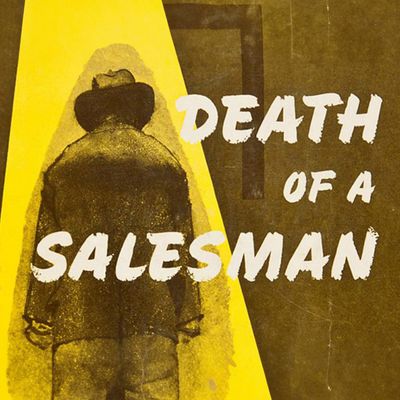
[0:45] Jan Svendsen: But Lamar's heart is on Broadway these days as a co-producer of shows like Death of a Salesman, Merrily We Roll Along, The Wiz, and Appropriate.
[0:55] Jan Svendsen: He is passionate about diversifying the investors' pool on Broadway and bringing new playwrights and new voices to the stage.
[1:02] Jan Svendsen: He is also a mentor and active in the C5 Youth Foundation, developing the leaders of tomorrow.
[1:09] Jan Svendsen: Lamar, welcome to the Broadway Gives Back Podcast.
[1:12] Lamar Richardson: Hi, Jan. Thank you. It's a pleasure to be here.
[1:14] Jan Svendsen: It's so nice to have you here. We were just talking about this. We met at the Black Theater United Gala and we hit it off.
[1:21] Lamar Richardson: Yes.
[1:21] Jan Svendsen: And then you were so generous to invite us to the Wiz opening night, which was so much fun. And I'm so impressed with your acting chops, but I'm even more impressed by your dedication to supporting DEI initiatives in the theater world and beyond.
[1:36] Lamar Richardson: Yes, absolutely.
[1:37] Jan Svendsen: So thank you for being here.
[1:46] Lamar Richardson: Yes.
[1:47] Jan Svendsen: Um, so I'm gonna ask you a question, and I'm just gonna ask for one-word responses.
[1:52] Lamar Richardson: So yeah, I know, right?
[1:55] Jan Svendsen: Um, so if you've listened to any of my other podcasts, it's a little different. I like to change it up. Okay, so you ready?
[2:01] Lamar Richardson: Ready.
[2:02] Jan Svendsen: Okay. What would you say is your current job title?
[2:06] Lamar Richardson: Multihyphenate.
[2:07] Jan Svendsen: What is your favorite word?
[2:09] Lamar Richardson: Generosity.
[2:10] Jan Svendsen: What is a word that you hate hearing?
[2:13] Lamar Richardson: Negativity.
[2:14] Jan Svendsen: Who was your hero?
[2:15] Lamar Richardson: My mother.
[2:17] Jan Svendsen: What was your favorite subject in school?
[2:20] Lamar Richardson: Math.
[2:22] Jan Svendsen: Not me. Um, describe your style in one word.
[2:26] Lamar Richardson: Eclectic.
[2:27] Jan Svendsen: What item is worth spending more money on?
[2:30] Lamar Richardson: Shoes.
[2:32] Jan Svendsen: If you could be part of any fictional family, which family would it be?
[2:37] Lamar Richardson: Winslow.
[2:38] Jan Svendsen: What is your hidden talent?
[2:40] Lamar Richardson: Mentorship.
[2:41] Jan Svendsen: What do you most give a damn about today?
[2:45] Lamar Richardson: Inclusion.
[2:46] Jan Svendsen: And what are you most grateful for today?
[2:49] Lamar Richardson: Life experience.
[2:50] Jan Svendsen: We'll hyphenate that so that it's one word. What do you think is humanity's most redeeming quality?
[2:59] Lamar Richardson: Love.
[2:59] Jan Svendsen: Oh, thank you. That was great. Thank you for answering those. That was fun. And I love your answers, and this is why I wanted you on my podcast.
[3:02] Lamar Richardson: Thank you.
[3:10] Jan Svendsen: All right. So we have to start a little bit here at the beginning, or somewhere in the middle, I guess, but you're an actor who turned into a producer. So can you just talk about your journey and how that came to be?
[3:21] Lamar Richardson: Yeah, so my career started. I went to Columbia for undergrad, and then upon graduation, I started working and training with Susan Batson, who's a renowned acting coach here in New York. While working there, I participated in a screenplay reading and was so fortunate to work alongside Miss Felicia Rashad, who then offered me the role of a lifetime to star as Sylvester in Ma Rainey's Black Bottom at the Mark Taper Forum in LA. That was eight years ago.
[3:52] Lamar Richardson: Which by the way, I saw at the Mark Taper Forum in LA.
[3:56] Jan Svendsen: But I didn't know you at the time.
[3:57] Lamar Richardson: You didn't know me at the time, but here we are. And that kind of launched my career, and I always credit her with opening the door for me to walk through. Um, and then I spent around a decade of, you know, being an actor, auditioning, doing parts on TV, film, off, off, off, off, off Broadway theater. And post-pandemic, I decided that I needed to broaden my scope and my reach given my training, my education, and my background. I realized that I could do more in the industry in addition to acting. And so I went back to school and did a fellowship, the Front Row Fellowship at Columbia University, and decided to get into producing to help bring my talents to the behind-the-scenes and offstage world. And here we are today.
[4:43] Jan Svendsen: Here we are today. On this podcast, we haven't really talked to a lot of producers about like the actual job of producing. So can you just explain to listeners sort of this producer hierarchy, the idea of a general partner, a producer, an investor, a co-producer?
[4:58] Lamar Richardson: Yeah. Right. So a lead producer, also known as a general partner, is the main producer responsible for one obtaining the rights to a property, whether it's a musical or a play. And then they one go out and build it. They staff it in terms of all the different departments. They hire the lighting team, the costume team, makeup, the other general partners, the company management. They build the entire production. And they are ultimately on the hook for getting it to Broadway. They solicit the help of co-producers like myself, historically, who help to fund the projects. So we all go out to investors, or you can fund it yourself as well, and you help to be a sounding board for that lead producer. You can go to production meetings to help with notes or ideas for creative, but it's ultimately in the responsibility realm of the lead producer.
[5:51] Lamar Richardson: Investors, in my opinion, are the lifeblood of Broadway. Without them, there is no Broadway because their generosity and their philanthropic heart is what is funding these productions. So we go out to pitch these shows to find the funding for it. And it's a collective effort to get it to that opening night that we all love so dearly. And that was so special for The Wiz. I think the idea of diversifying the investor pool is something that you focus on. And I think it's really interesting. A lot of people in this podcast have talked about having Broadway become a more equitable space. And by diversifying that investor pool, it allows more of the power to be in the hands of people to decide on which stories get told and staged.
[6:39] Jan Svendsen: Correct. And how much influence, like would you say an investor has?
[6:46] Lamar Richardson: I mean, obviously they're going to put their money in shows that they really believe in, right? So if there's a show that speaks to them, that's where they're going to invest their money.
[6:54] Jan Svendsen: Right. Do most investors, like, for example, you, do you invest in many shows? Is your goal eventually to become a lead producer?
[7:02] Lamar Richardson: Yeah. So, you know, I'm actually in talks now.
[7:06] Jan Svendsen: Of course.
[7:06] Lamar Richardson: For several years.
[7:07] Jan Svendsen: Of course, you are.
[7:09] Lamar Richardson: You know, as a multiple-time co-producer at this point, I'm now being sought after for lead producing opportunities. And I'm entertaining, for me, it's all about joining teams who have the same vision and goal for me. You know, it's about it being a collective effort for the greater good of whatever the project is. It's not about ego, it's not about anything else than doing the work. So when I make my lead producing debut, I want to make sure that I'm adding value creatively from the top down. And it's not just about finding money.
[7:44] Jan Svendsen: I know that you will. And professional development in jobs that we, a lot of people have when I started as marketing in Broadway, I never knew when I was in seventh grade that you could have a job marketing Broadway, she knows, right? But if I had known that, that would have been really nice. So I think this idea of diversification and adding more equity for people behind the scenes is really important, especially for people of color and for women. Can you talk a little bit about that?
[8:33] Lamar Richardson: Yeah, I think it's so important to your earlier point about the power dynamics. Producers literally are the ones to bring something from start to finish. And when you don't have producers from all walks of life bringing those stories forth, it's a very limited lens in terms of what actually goes the distance. And for me, it's all about having a global perspective, right? You know, I'm a first-generation American. My parents moved to New Jersey in 1988. I'm the first to be born here. You know, I'm from a Caribbean American background. My perspective is different than someone whose lineage is truly African American or Asian American or Latin American. You know, we all have validity in what we bring to the table.
And I think as a producer, it is your job to make sure all departments across the board have that representation present. So that at a table, when we're building a show and you're talking about costumes from a specific period for a specific race or gender, you have that insight there, as opposed to it being a homogenous team trying their best with goodwill.
[9:45] Jan Svendsen: Right, right. Now I think that's so important. And I think just pivoting a little bit to this idea of empowering people to become producers, I want to talk a little bit about philanthropy and giving back. The first question I have for you is, did you grow up in a family where charity and giving back was sort of part of the norm of your family? Um, or was it something that you learned later in life? How did you come upon being such a good person who gives back?
[10:16] Lamar Richardson: My family, so you know, I've come from a family of immigrants, so it was always about being service forward.
[10:22] Jan Svendsen: Yeah, wait, sorry. Hold on, don't we all really?
[10:25] Lamar Richardson: Right. Literally, yes, literally, quite literally, and I'm also first generation American, so I get it. You know, so it started for me at a young age, even from, you know, being in church, you know, volunteering at the lemonade stand or at the bake sale and just always offering up your time to be the Sunday school speaker or the one to help to be an usher. It was always about lending my time and my heart to being generous, right? And you know, I always grew up watching my mother, you know, gather up clothes to go donate to the Salvation Army or to the Kidney Foundation or these local charities in North Carolina, where we were frequently volunteering and just supporting with either dollars, donations, or our time.
And that was never lost on me as I went through my life. And when I went to high school, I went to the North Carolina School of Science and Mathematics, which was a specialized boarding high school in Durham, North Carolina. And I was a big brother at the time, a part of Big Brothers, Big Sisters America. And even that back then, it was always about finding people who look like me, youth who came from disenfranchised backgrounds and being a beacon of hope or a beacon of possibility to show that, hey, I'm coming from the same means that you are, and I found a way to make it through, and you can too. And I think that as I've gone through my life, I've always tried to remember that, even as I'm involved with C5 LA now, or when the Drama League reaches out to me to come to the producer's dinner to talk to the young directors. It's just all about paying it forward and giving back to me, and that's something that's very important to me.
[11:55] Jan Svendsen: I'm still having trouble reconciling the math with the like director and the arts side of you. It's like two different both of your sides of your brain are like firing, right?
[12:06] Lamar Richardson: Yeah.
[12:08] Jan Svendsen: Um, anyway, back to philanthropy for a second. Um, what, well, we talked, you just mentioned a few of the causes that are really important to you. And I think, um, I'd love to hear more about Generation Citizen, which is empowering youth, um, and civics and democracy. Can you just tell us a little bit about that?
[12:27] Lamar Richardson: Yeah, so when I was at Columbia, you know, basically I was a part of this virtual round table. And we would meet monthly to discuss the election. And again, it was about having the entire spectrum represented Republican, Democrat, independent, and just really being able to just come together and talk about what issues are important to us and which candidates are speaking to or ignoring those issues. And I think that is just so valuable because you're just constantly always having the conversations, which then open up awareness. And I think so much that goes wrong in the world is because we're not listening to each other or being willing to be uncomfortable. And when you open yourself up to being challenged and being faced with a perspective that is not your own, I think that there's just so much value in that.
And even as an actor, I've always lead with that mentality because you're always looking to understand the unknown. And even as I do my philanthropic work, I'm always looking at mission statements and vision statements and really checking the track record of an organization to see if it's really they're really putting their money where their mouth is.
[13:33] Lamar Richardson: Yeah, and even as a producer, you know, people, there's such a pool of producers coming from with differing value orientations, right? So it's about understanding all of that.
[13:42] Jan Svendsen: Um, yeah, wow, today I'm not sure that conversation about political candidates would be possible. But gosh, one can always hope.
[13:53] Lamar Richardson: Oh my gosh. Yeah, right.
[13:54] Jan Svendsen: And then there's your C5 Youth Foundation. And I, this one particularly speaks to me. Um, it's about leadership opportunities for high potential teens in under-resourced communities. So it's a little bit what you were referring to earlier. Just can you give us a few examples, if it's not too personal, about, you know, some of the interactions and some of the people that you've supported as part of that organization.
[14:16] Lamar Richardson: Yeah, absolutely. So, you know, funny story about C5 LA, you know, one of my old classmates reached out to me about it because there was a young person who was interested in the arts, but they didn't have a mentor to pair them with. And what I find really moving about this particular partnership between the two of us is that they are currently going through a transition as they are on a journey into becoming transgender. So it's been really enriching for me to be seen as a beacon of support as they navigate that, given the family dynamics that they have and the work dynamics and being seen as someone that they feel comfortable with, talking about their frustrations and emotions as they go through that journey.
And it's just been so enriching because, you know, my mother always told me, you never know the impact you'll leave in someone's life, right? And I love Maya Angelou's quote about being a rainbow in someone's cloud. And for me, we meet monthly, and every time we have the conversation where they say, I'm just so appreciative for this time, and I hope that we can stay in contact after this year term. That just means the world to me because it shows that my time and my generosity, my compassion is having an impact on someone else's life at this integral part of their 25-year-old journey.
[15:37] Lamar Richardson: Yeah, and that they're seen and that they're acknowledged.
[15:40] Jan Svendsen: Yeah, right.
[15:41] Lamar Richardson: And then as far as Big Brothers, I mean, that organization, so every we all know that one. But that's also about being a mentor and a role model, right? And I'll never forget, you know, it's funny because my little brother at the time, his dad was in the military and he was in a very unfortunate situation at home with his mother, where ultimately she ended our partnership because she took him out of the program. And to this day I always think about and wonder whatever happened to him because you know, he had a disability and he was just the sweetest little guy. And you know, it just always makes me so emotional because you know you just want the best for them, right? And you just hope that they're able to see that there's still possibility for them, no matter what they're going through, what circumstances they come from.
So I just think that those kinds of organizations are so important because the youth are the future of tomorrow. And even in my work as an actor and a producer, it's so important to me to constantly be visible and to talk about this because if I can do it, I literally firmly believe that someone else coming after me can. And I'm not just saying that to say that I really believe it. And it's important to be someone who is speaking that life and that positivity and that hope into someone so that they can feel empowered to do it.
[17:00] Jan Svendsen: I feel it.
[17:02] Lamar Richardson: Yeah, I know, I feel it just from what you said.
[17:04] Jan Svendsen: I feel it. Um, who was your did you have somebody that was modeled for you that like that you looked up to or a mentor? Like what inspired you?
[17:15] Lamar Richardson: I think I always had teachers along the way who saw me for who I was. And I go back to kindergarten. I had a teacher, Miss Ruprecht. You know, I was always I was always a character, you know, I'll why am I not surprised? Always just putting on a show or you know, just just holding court in the classroom. And some other teachers used to try to, you know, make that a negative thing in parent teacher conferences with my parents, but she always just made room and space for me, right? And as I went through my education, there was her, there was Dr. Tamar Avenari in high school. You know, we thought I was gonna be a math teacher at the time, but she was so passionate and supportive of me. She even came to see The Wiz recently in North Carolina and we stayed in touch.
And I just always think about those beacons along the way of teachers who made room for me. And I think that that was just always so powerful and potent for me as I looked back. I always felt like I had the opportunity to try anything and fail and not be judged for it. And I want to do that for other people. So whenever someone reaches out to me and says, Hey, I'm interested in producing, could I could we have a general information? I take the call. Or I have this kid who I'm working with now who wants to get into company management. I am not a company manager, but that doesn't stop me from meeting with him and trying to find people for him to talk to.
[18:42] Jan Svendsen: Right, right, connecting the dots.
[18:45] Lamar Richardson: Yeah. Well, Leslie Odom Jr., what is it? He says failing up, right? Isn't that right?
[18:49] Jan Svendsen: Yeah.
[18:50] Lamar Richardson: Yeah. The Broadway industry's gone through or is going through an interesting time ever since you know George Floyd's murder. There have been a lot of organizations like Black Theater United, where we met the gallant trying to make Broadway a more equitable industry and community. And I wondered, you know, what would your vision be for a more equitable theater industry?
[19:14] Lamar Richardson: I think I have to start from the top down. I think that we all know that for Broadway in particular, there are currently three theater owners, three major theater owners, right? Who control all of the 41 houses on Broadway, and that there are certain legacy lead producers who, whenever a house becomes available, they can pick up the phone and get that slot, right? And have the money in and have that. I think it needs to be a place now where there's a concerted effort each season when there's room to look at the list of burgeoning producers who have the time and the bandwidth to fill that spot, but they have to be given the opportunity. And I think because Broadway is a business as it is, it's commercial.
There's so much focus on capitalization, the return, the return, profit potential that sometimes some shows that you would think would do well don't. So how is that slot any different than giving it to somebody who's completely new, who's hungry, who's resourceful, and who has the time and the effort to do the same thing. And I think there has to be a collective effort from the theater industry as a whole to say, okay, here comes Tommy Jones, who's fresh out of his master's program, who has this play that he's so passionate about. He's raised five million dollars for it, and it's starring some young, amazing talent from theater. Let's take a chance on him. Let's do him a limited run at this theater and see what happens.
I think that is what needs to happen because as the generations become younger, our ideas become different. We all have a different lens that we see things through. And that in default opens up the door for other new things to become possible.
[19:14] Jan Svendsen: Amen.
[19:14] Lamar Richardson: Yeah.
[19:14] Jan Svendsen: Top down. I think that's important. And you know, I think that there are so many DEI initiatives right now in the Broadway space, but I don't think a lot of people talk a lot about that top-down idea.
[21:14] Lamar Richardson: Yeah, you're right. And at the end of the day, we it's a commercial business and it's about risk and return on investment. And people tend to go with, you know, who they know and what they know. And so you're basically saying just take more risks.
[21:28] Jan Svendsen: Yeah.
[21:29] Lamar Richardson: And it's funny because the business in itself is a risk. It's totally a risk. It's like gambling. What is it? One in 10 shows recoup, right? So give two of those 10 to somebody new and see what happens.
[21:43] Jan Svendsen: Yeah.
[21:44] Lamar Richardson: Yeah, you know.
[21:44] Jan Svendsen: Yeah, we'll go to Vegas together and see what happens.
[21:48] Lamar Richardson: I like to think, I believe, that the people listening to this podcast, they give a damn. They give a shit about the world and they want to be philanthropic in some way, or they want to be an activist. And I wondered what advice would you give people on becoming a philanthropist or an activist? And I use those are sort of lofty words, but even just you know being charitable or giving back.
[22:11] Lamar Richardson: No, no, this is this is so important. As a producer, someone who's literally actively raises money and who's sitting, I'm sitting on a show right now that I believe in so much that I think is so important, but it's so hard to raise money for, right?
[22:25] Jan Svendsen: Okay, wait, wait, wait. Sorry, one second. Everybody, listen to that. If you want to invest in a really amazing show, you're gonna hit up Lamar after you listen to this podcast. Go.
[22:33] Lamar Richardson: Okay, sorry. Thank you, Jan. But I think it's that. I think so much of it is the lack of access to capital, right? Money is the equalizer in this business. So if you're a philanthropist and you want to be an activist with your dollars, you find the young burgeoning producers like myself, or the many others alongside me who have access to tons of ideas that can change the world, literally. I mean, the global perspective is so important. And we all often talk in rooms amongst ourselves about how difficult it is to get a show made, right? Or to get someone to want to take a chance on you. So that you feel this burden of responsibility that everything you do has to be a success out the gate, where even the most successful producers don't have that same track record.
[23:20] Jan Svendsen: Right.
[23:21] Lamar Richardson: You know, so I think they're healthy. It's about seeking out, you know, all like you mentioned earlier, there are so many DEI initiatives from many organizations that, or you see, like fellowships. Look up who got the fellowship for 2024, 2023. Find that person, take them out for coffee. I bet you they have a wealth of resources and connections and ideas that need funding that you could be a life changer for.
[23:45] Lamar Richardson: And I want to go back to something. I was working for an ad agency. I had different accounts. I had American Express as one account, but I also had Kraft General Foods. So I was basically selling sugared cereal to kids, and I couldn't sleep at night. It was literally awful. And I worked with great people, but the concept of doing that was awful. And when I was given the opportunity to run marketing for the Broadway League and the Tonies, it was like, you know, this amazing gift because theater is so important. And it's so important. I mean, we know for a fact that when people, especially kids, go to theater as part of their sort of cultural diet as part of their health and wellness, you know, and upbringing, they have better outcomes. They, you know, they do a hundred points better on their SATs if they've gone to theater a few times a year growing up. They have a much higher likelihood of finishing college.
[24:39] Jan Svendsen: Yeah.
[24:39] Lamar Richardson: So there's all these like, you know, real life facts that theater is good for you.
[24:46] Jan Svendsen: Yeah.
[24:46] Lamar Richardson: So I feel like when you're funding theater, you're also being philanthropic because you're especially changing outcomes in kids and making this possibility for them to be more successful. You're also, you know, people are more thoughtful. Like you said, there's so many different things on Broadway. You're understanding different points of view and you're feeling and emoting, and you're, you know, in this dark room with other strangers, exchanging, you know, energy and opening up your mind and having dialogue. I feel like, in a way, funding Broadway is also very philanthropic to your point.
[25:19] Jan Svendsen: Right?
[25:20] Lamar Richardson: Yes, in itself. I mean, you know, my first show was Death of a Salesman, you know, with the first Black Lowman family. You know, I you know how many colleagues and peers I had who went to see that show who said, I never liked that play, or I never understood it. But seeing this production changed my life, or changed or deeply affected me, or made me realize something about myself that I never knew before. That is important. That is why inclusion matters. Everybody wants to be seen, whether you're black, white, gay, straight, old, young, everybody wants to be seen and wants to be heard. And as a producer, as you pick things to bring to the stage, remember, theater turns the mirror on society.
As everyone comes, we all want to be seen and feel like we are represented. So I think that doing this work in itself is philanthropic because of that. And like to your point, a young five-year-old coming to see a show where they see themselves, who knows what that'll mean for them 20 years later.
[26:22] Jan Svendsen: I love what you just said. Thank you.
[26:26] Lamar Richardson: Um last words before we part here. Um you could say anything to the people listening. What would you, you know, what would you want to say?
[26:34] Lamar Richardson: I just want to say one, thank you, Jan, for this amazing opportunity in this wonderful podcast. I love it. I've listened to many of your episodes. And two, to all the patrons and lovers of the arts, theater is important. Theater changes lives, it transforms, it heals. It is literally an essential part of our curriculum in society. And no matter what legislation says or schools that are cutting funding, your money matters. Your passion and love for this matters, and to keep showing up for it. Keep being a patron for it, keep buying tickets for it, keep investing in it because it's something that it's here to stay and it deserves the recognition that it's had historically.
[27:18] Jan Svendsen: Well, that's a perfect place to end. Thank you so much for being part of this podcast.
[27:23] Lamar Richardson: And thank you so much for being a new friend. I really appreciate you.
[27:26] Jan Svendsen: And likewise. Um, we'll say so long for now.
[27:29] Lamar Richardson: So long.
[27:30] Jan Svendsen: Thanks for listening to this episode of the Broadway Gives Back Podcast. If you like what you hear, please subscribe and rate Broadway Gives Back wherever you stream your podcasts.
[27:42] Jan Svendsen: You can also follow me on Facebook at Jan Friedlander Weiss and on Instagram at Jan for Good. Broadway Gives Back is part of the Broadway Podcast Network, produced by Dori Berinstein, Alan Seales, Kimberlee Garris, along with your team of amazing collaborators and wonderful humans. To learn more about this podcast and other Broadway podcasts, visit BPN.fm slash Broadway Gives Back.
© Broadway Podcast Network, All Rights Reserved