

My guest on this Pride Encore edition of Broadway Nation is author Maya Cantu who joins me to discuss her book, Greasepaint Puritan — Boston to 42nd Street in the Queer Backstage Novels of Bradford Ropes... Read More
From the show: BROADWAY NATION
Featured Shows
About
My guest on this Pride Encore edition of Broadway Nation is author Maya Cantu who joins me to discuss her book, Greasepaint Puritan — Boston to 42nd Street in the Queer Backstage Novels of Bradford Ropes.
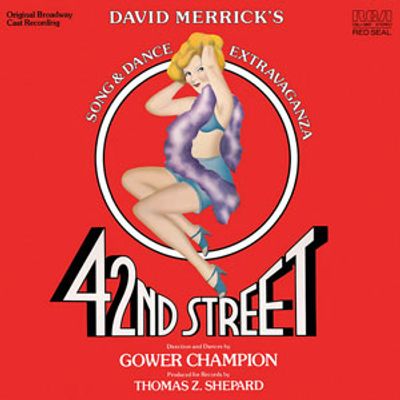
In this book Maya reclaims the life and work of Bradford Ropes, the author of the naughty, bawdy, gaudy, sporty, and very gay novel, 42nd Street, on which both the classic film and stage adaptation are based.
That’s just the first of his three long-forgotten novels that include Stage Mother and Go Into Your Dance, all of which were inspired by Rope’s own experiences as a performer, and all three of which give us a chance to go backstage on Broadway during the 1920s and experience the lives of gay men in show business. As you will hear Maya Cantu has done a miraculous job of uncovering all of this
Cantu is a dramaturg and interdisciplinary scholar who teaches on the Drama Faculty of Bennington College. She is also the author of American Cinderella on the Broadway Musical Stage: Imagining the Working Gril from “Irene” to “Gypsy”.
Become a PATRON of Broadway Nation!
I want to thank our Broadway Nation Patron Club members, such as our newest member Cheryl Hodges-Selden whose generous support helps to make it possible for me to bring this podcast to you each week. If you would like to support the creation of Broadway Nation, here is the information about how you too can become a patron.
For just $7.00 a month, you will receive exclusive access to never-before-heard, unedited versions of many of the discussions that I have with my guests — in fact I often record nearly twice as much conversation as ends up in the edited versions. You will also have access to additional in-depth conversations with my frequent co-host Albert Evans that have not been featured on the podcast.
All patrons receive special “on-air” shout-outs and acknowledgment of your vital support of this podcast. And if you are very enthusiastic about Broadway Nation there are additional PATRON levels that come with even more benefits.
If you would like to support the work of Broadway Nation and receive these exclusive member benefits, please just click on this link:
https://broadwaynationpodcast.supercast.tech/
Thank you in advance for your support!
Transcript
This transcript was automatically generated and might contain errors.
[0:33] David Armstrong: Welcome to another episode of Broadway Nation, the podcast that tells the remarkable story of the Broadway musical and the immigrant Jewish, queer and black artist who invented it.
[0:44] David Armstrong: My guest today is author Maya Cantu, who joins me to discuss her new book, which is titled Grease Paint Puritan, Boston to 42nd Street in the Queer Backstage Novels of Bradford Ropes.
[0:57] David Armstrong: Grease Paint Puritan reclaims the life and work of Bradford Ropes, who's the author of the naughty, bawdy, gaudy, sporty and very gay novel, 42nd Street, on which the classic film and stage adaptation are based.
[1:11] David Armstrong: And that was just the first of his three long forgotten novels that were inspired by Ropes's own experiences as a performer that now allow us to go backstage on Broadway and experience the lives of gay men in show business in the 1920s.
[1:26] David Armstrong: And as you will hear, Maya Cantu has done a miraculous job of uncovering all of this. Cantu is a dramaturge and an interdisciplinary scholar who teaches on the drama faculty at Bennington College.
[1:39] David Armstrong: And she's also the author of the book American Cinderella on the Broadway Stage, Imagining the Working Girl from Irene to Gypsy.
[1:47] David Armstrong: As always, I want to thank all of our patron club members for their generous support, with a special shout out today to our newest member, Cheryl Hodges-Seldon.
[1:57] David Armstrong: And if you would like to help support the creation of this podcast, please stay tuned to the end of the episode where there'll be more information about how you too can become a patron.
[2:06] David Armstrong: Now, here we go. Welcome, Maya Cantu, to Broadway Nation.
[2:11] Maya Cantu: Thank you so much, David. It's a pleasure to be here. Thank you so much for having me.
[2:25] David Armstrong: Oh, I'm excited. As you know, we've been in contact for, I guess, a couple of years now.
[2:30] Maya Cantu: I think so.
[2:31] David Armstrong: Yeah. Anticipating that you were working on this book.
[2:37] Maya Cantu: About novels.
[2:38] David Armstrong: About novels, exactly. I was highly interested in reading and now have had a chance to read it. I have been thrilled to have that opportunity.
[2:46] Maya Cantu: Thank you.
[2:47] David Armstrong: Let's start right at the beginning. This is a book about someone who most people will have never heard of.
[2:53] David Armstrong: And if they do know the name Bradford Ropes, they know it just as sort of a footnote, literally, in the playbill to the musical 42nd Street or to the movie 42nd Street.
[3:03] David Armstrong: In all of its entities, 42nd Street is based on a novel by Bradford Ropes.
[3:08] David Armstrong: This is really almost like starting with your final chapter and then we can jump back to sort of go in order.
[3:13] David Armstrong: But you say at the end of the book that its creator, meaning 42nd Street's original creator, should not be forgotten.
[3:21] Maya Cantu: Yeah, he absolutely should not be forgotten. And it's a great place to start because he has been a footnote for so long.
[3:28] Maya Cantu: And yet 42nd Street has been such a central kind of musical text, both through the Busby Berkeley film and the glorious choreography of Berkeley and the equally wonderful 1980 stage version that's been revived so many times.
[3:40] Maya Cantu: So I think if you know either of those, you know the work of Bradford Ropes.
[3:43] Maya Cantu: And yet the novel has been out of print for so long and so little has been known about the life of Bradford Ropes.
[3:50] Maya Cantu: The project really began with my love for the film and the stage version and my being very intrigued by this based on the novel by Bradford Ropes.
[3:58] Maya Cantu: What is this novel? How can I access it? I really want to read this.
[4:02] Maya Cantu: So finally, when I was writing my dissertation, you know, over a decade ago, I got a chance to get a copy of the original 42nd Street, which was very hard to get at the time being so long out of print.
[4:13] Maya Cantu: It's been back in print since 2021.
[4:15] Maya Cantu: But through the goodness of, you know, my school library, I was able to get a copy and read it.
[4:19] Maya Cantu: And I became immediately kind of dazzled by Ropes's writing and his style as a chronicler of kind of 20s Broadway.
[4:26] Maya Cantu: So that's how it began. But yeah, for so long, he has been a footnote.
[4:30] Maya Cantu: And I hope my book, you know, goes from the footnote to quite a bit more in terms of what we know about Bradford Ropes.
[4:36] David Armstrong: In your book, you talk about Michael Stewart and Mark Bramble, who were the book writers for the Broadway version of 42nd Street in the 1980s.
[4:44] David Armstrong: It took them six months to get their hands on a copy of the novel when they were starting to embark on writing the stage version.
[4:50] David Armstrong: What happened to that novel with the movie being so much a center of American culture in many ways?
[4:57] David Armstrong: Why did this novel fall out of print and out of fashion?
[5:00] Maya Cantu: Yeah, it's really been out of print since 1932, maybe 33.
[5:05] Maya Cantu: Very hard to get, as you mentioned, it took Stewart and Bramble six months to locate even a copy of the novel and then six months to find the heirs to Bradford Ropes.
[5:14] Maya Cantu: So they went on an additional search just to get the rights, which they ultimately did.
[5:18] Maya Cantu: So a year for that. So it has not been easy in any way to locate this novel for a long time or to learn the story of Bradford Ropes.
[5:26] Maya Cantu: I think when it was published first by Alfred H. King and then reissued with the movie by Grosset and Dunlap, the novel was well-reviewed at the time.
[5:34] Maya Cantu: But it was pretty much immediately eclipsed by the smash success of the 1933 Warner Brothers film, which in many ways revived the movie musical.
[5:42] Maya Cantu: After, you know, the movie musical had been boxed off as poison for a couple of years, really started off a new glorious wave of movie musicals and became so iconic and so central in the culture.
[5:52] Maya Cantu: So in a way, Bradford Ropes, this is his claim to fame that he created these kind of indelible characters.
[5:57] Maya Cantu: But the success of the movie pretty much overshadowed the novel right away.
[6:01] Maya Cantu: And he started kind of slipping into that footnote, although that's not quite fair, because he did write other backstage novels after 42nd Street pretty much right away.
[6:09] Maya Cantu: Stage Mother, which is really a wonderful book. It's also very hard to get a copy of.
[6:14] Maya Cantu: And then Go Into Your Dance from 1934.
[6:16] Maya Cantu: And collectively, I talk about these novels as Ropes's backstage trilogy.
[6:21] Maya Cantu: And they collectively give us such a vivid and colorful and at times really gritty picture of backstage life on Broadway.
[6:28] Maya Cantu: In the 20s, 42nd Street is actually set in 1927 rather than the Great Depression.
[6:32] Maya Cantu: So he went on to write some wonderful novels after 42nd Street, but those also pretty much became out of print pretty quickly.
[6:39] Maya Cantu: And then I don't know if there was much desire, you know, later in the 20th century to put them back into print because Ropes had pretty much fallen into obscurity as a novelist.
[6:48] Maya Cantu: He did continue to have a very successful career as a screenwriter in Hollywood.
[6:52] Maya Cantu: Successful in the sense that he was constantly in demand and he worked at Republic, but he was also kind of freelancing out to MGM and other studios.
[6:59] Maya Cantu: He worked steadily, but by that point, 42nd Street became about Busby Berkeley and by 1980, the stage musical as well.
[7:06] David Armstrong: The centerpiece of your book is looking at these three backstage novels.
[7:10] David Armstrong: I think any theater fan will find this fascinating because they provide this view of Broadway in the 1920s that we just don't see anywhere else.
[7:21] David Armstrong: Certainly, we don't see it in the movie of 42nd Street, which uses a lot of his themes, but leaves out so much of what the novels are about.
[7:30] David Armstrong: And just so people know, both 42nd Street and Go Into Your Dance have been reissued just in the past couple of years.
[7:36] David Armstrong: So you have an opportunity to read those, which I've had a chance to do over the last couple of years.
[7:41] David Armstrong: So that was very helpful, although you give us great synopsis of each of the novels in your book to help us understand, number one, what they were about.
[7:51] David Armstrong: Number two, how they relate to the life of Bradford Ropes and how they relate to what I think is a real sense of what the reality of Broadway in the 1920s was like.
[8:01] Maya Cantu: Yeah, absolutely. So one thing about these novels, one, it was my editor's idea to provide a kind of synopsis because we know 42nd Street, but we don't necessarily know Ropes' 42nd Street.
[8:11] Maya Cantu: Unless, you know, the last couple of years you have had a chance to go back and read the novel, as some of us have.
[8:16] Maya Cantu: But you will be introduced to new characters that were dropped immediately from the film and kind of a spectrum of queer characters that Warner Brothers cut.
[8:25] Maya Cantu: If you've read the novel, you know, for instance, that Julian Marsh and Billy Lawler are lovers.
[8:29] Maya Cantu: And then there are other gay characters, such as a wonderful character, an unabashed chorus boy named Jack Winslow, who has a kind of small part in the novel in terms of how much time he gets.
[8:38] Maya Cantu: But it's a really memorable character in the way he's kind of living his life as a gay man backstage, very authentically.
[8:45] Maya Cantu: And, you know, we have Pat Denning as well, who's kind of implied to maybe be a little bit of a gigolo in the film.
[8:50] Maya Cantu: But in the novel, he absolutely is. So he's having an affair with both Dorothy Brock and another character who was cut from the film, Amy Lee.
[8:57] Maya Cantu: But it's also implied that he's pretty happily bisexual as well.
[9:00] Maya Cantu: So all of that was cut in the 1933 film because there's a lot of stuff in the novel that I think was considered too spicy, even for the Hollywood pre-code.
[9:08] Maya Cantu: You know, I give a little bit of a synopsis of Ropes' 42nd Street, but also Stage Mother, which, again, I really love.
[9:13] Maya Cantu: But it's so hard to find. It's completely out of print.
[9:16] Maya Cantu: Then Go Into Your Dance, which is back in print and is loosely based on the rise of George White of the George White scandals.
[9:21] Maya Cantu: And they are really remarkably vivid pictures of life backstage on 20s Broadway because Bradford Ropes was there.
[9:27] Maya Cantu: I talk about how he was a dancer on Broadway and vaudeville and nightclubs.
[9:32] Maya Cantu: He went to the West End. He went to Paris and he danced under a stage name of Billy Bradford.
[9:36] Maya Cantu: So all of his experiences he really put in these books.
[9:39] Maya Cantu: So the more I unlocked as I went on this kind of detective search to uncover his life, the more I found these novels are so intensely biographical.
[9:47] Maya Cantu: So hopefully I could kind of show how the life affects the work and the work maybe makes use of his life experiences.
[9:53] David Armstrong: They're so intertwined. You show that beautifully that we get a sense of how he's drawing on that for these novels.
[10:00] David Armstrong: And just to be clear, Bradford Ropes was a gay man.
[10:03] David Armstrong: He is part of this world of the gay chorus boy, although he's really more of a featured dancer, I guess, right from the beginning.
[10:11] David Armstrong: He is in this world, this protected world of homosexual men on Broadway during this period.
[10:18] David Armstrong: And that is very hard to locate in any way when you're doing historical research, which I think was part of what makes these novels so valuable.
[10:27] Maya Cantu: Yeah, they're remarkable in the candor with which through fiction he's not writing autobiography by any means, but the candor with which he is addressing his life and his experiences as a gay man working on Broadway.
[10:38] Maya Cantu: And in this, I think you've talked about this in previous podcast episodes as well, David, as part of this kind of extended network and community of gay men working on Broadway.
[10:47] Maya Cantu: And within that community, there was a certain amount of protection and freedom, but there was a lot of homophobia in the industry.
[10:53] Maya Cantu: And in all three of the backstage novels, not just 42nd Street, but also Stage Mother and Go Into Your Dance, Ropes really quite bluntly discusses the homophobia that he and some of the chorus boys, and, you know, the chorus boy was considered in the popular culture of the day that most of them were gay.
[11:09] Maya Cantu: You know, I think Ropes would probably confirm that.
[11:12] Maya Cantu: He started his career in vaudeville, actually dancing with a female impersonator named Alan Mann.
[11:16] Maya Cantu: So that was really fascinating. But the candor and the honesty with which he's discussing his experiences as a gay man throughout the backstage trilogy, I think you're right that it's very hard to find that in the archives.
[11:27] David Armstrong: Yeah, it's not talked about except in these sort of fictional ways.
[11:31] David Armstrong: Most of the time, there's little hints of it places. But if there's some wonderful memoir of it, it hasn't been discovered yet.
[11:38] Maya Cantu: It's in somebody's drawer or something.
[11:40] David Armstrong: Well, I'm sure that is somewhere.
[11:43] Maya Cantu: Exactly. But as you say, I do believe that we can look at the male dancer on Broadway, the chorus boy of Broadway as a gay profession throughout its history, which I think is kind of fascinating.
[11:56] Maya Cantu: And I'd love to have somebody, maybe it'll be me at some point, but I'd love to have somebody take that on as a topic and sort of tell the history of that.
[12:04] David Armstrong: It would be great. Let's talk about, though, the history of Bradford Ropes.
[12:07] David Armstrong: It's a fascinating story. He comes not from the world of Broadway.
[12:11] David Armstrong: He comes from, in many ways, the opposite of that.
[12:14] David Armstrong: How does he go from this Puritan, as you use? And I think it's an interesting word. We don't use that word too much today.
[12:20] David Armstrong: And yet it's such a strong aspect of American history and American culture and what that means.
[12:26] David Armstrong: How does he come from that Puritan world to Broadway?
[12:29] Maya Cantu: Well, he was literally a Puritan in the sense of his family descent.
[12:34] Maya Cantu: But you're so right to go to Broadway and write these incredibly bawdy and candid novels.
[12:39] Maya Cantu: After having grown up in what I call proper Boston, it's a really stark dichotomy.
[12:43] Maya Cantu: So he was descended on both sides of his family from Mayflower pilgrims.
[12:48] Maya Cantu: You know, I'm sure you can find others here and there, but it's a pretty stark contrast.
[12:52] Maya Cantu: So he's raised in Boston, in a kind of suburb of Boston, Quincy, Massachusetts, in the early 20th century.
[12:59] Maya Cantu: And he has a fascinating mother, Alice Gertrude Williams Ropes.
[13:02] Maya Cantu: And she is the Massachusetts president of the Women's Christian Temperance Union and the regent of the local Daughters of the American Revolution.
[13:11] Maya Cantu: And it's a very kind of staunch Puritan background that he's from.
[13:15] Maya Cantu: I've uncovered a really fascinating family history that, again, is kind of the polar opposite of the Broadway world that he later entered.
[13:38] Maya Cantu: Proper Bostonian background on the proximity of the Boston Brahmins and that kind of society. It wouldn't have been expected for him to necessarily go into vaudeville. And the first thing he does is he lands a contract on the Keith Circuit in vaudeville, dancing in support of Alan Mann, the female impersonator I mentioned. So right away he goes into this very, very different world. And it's fascinating to think about why he would have done that. I think certainly going into vaudeville and into theater. And he was considered a great dancer, actually. There's a lot of reviews I found. He really was admired for his dancing. So he had this talent as a dancer. But also, I imagine vaudeville might have offered him a little more freedom to live his life as a gay man authentically.
And as you say, going from the world of Boston to this world of not only vaudeville, but gay vaudeville because of the first job that he has, which he later sort of drops from his biography, I think. Yes, absolutely. That was fascinating. So his second, as far as I could tell, his second major kind of vaudeville booking was with Gus Edwards. He was considered the supreme discoverer of child talent, some of whom later became very famous. I think Eddie Cantor, Eleanor Powell. So Ropes goes into the Gus Edwards troupe. I think at 18, he's not a kid anymore, but he's in this world where he's looking at stage mothers and stage children. And a lot of that goes into his novel Stage Mother. But you're absolutely right.
He drops the appearance with Alan Mann performing with a drag star. He drops that from the official record and doesn't really mention it much. And for people who may not be familiar with Gus Edwards, I've always assumed that Uncle Jocko in Gypsy is sort of like a B version of Gus Edwards.
[15:02] David Armstrong: I think you're absolutely right. Yeah, I think that's just right. A B version. Or a C version. Definitely. And it's fascinating to, you know, wonder, did Ropes cross paths with Gypsy Rose Lee and June Havoc and Mama Rose, because this circuit of kind of youth reviews and child stars. And most people on the vaudeville circuit in those days would cross paths at some point. And from the very beginning, because he's with Alan Mann, he's on the Keith Orpheum circuit, which is as high as you can go, plays the Palace almost immediately. Yeah, it's quite remarkable, you know, and he's very attuned to kind of the nuances of vaudeville in terms of, are you playing the big time or the small time? Are you doing the two a day or four shows a day?
And it's very interesting, you know, he came from the outskirts of Boston Brahmin Society, which is kind of famous for a kind of caste system. And I talk about how he almost seems to be applying that to his understanding of vaudeville as being very kind of stratified in its different levels. So that's fascinating. But yeah, he starts right away in the big time with Alan Mann, and they immediately get booked into the Palace. So right away, he's playing big time vaudeville. He's playing the most kind of fabled theater. And from there, he's pretty successful as a vaudevillian. In 19, I think 1926, he decides, though, to team up with a young woman from Seattle, named Marion Hamilton, and form a dance team.
And they actually find their greatest success in Europe. He gets cast in the Cochrane Review of 1926. And then he goes on to Paris, and he performs Marie Chevalier, maybe gets even more successful when he goes to England and to the continent, once he teams up with Marion Hamilton.
[17:08] Maya Cantu: He must have been good, because clearly, he is at the top level of show business on two continents, right from the beginning. And I thought that was quite remarkable. As you said, he's in the Cochrane Review of 1926, which is as high as you can go on the London stage at that time. I mean, that's the most famous. He's the Ziegfeld of London, basically. Well, that's absolutely right. And Cochrane was famous for his kind of equivalent of the Ziegfeld girls, the young ladies. And he was really kind of the top musical theater producer. So he's kind of at the top of his game, performing in the Cochrane Review of some pretty big stars, Douglas Bing, who was also known for his drag performances as well.
So he kind of continues to perform kind of in the drag world as well. He was considered to be a really excellent dancer. It's hard to know without being there, but the reviews are consistently pretty amazed. He was known for his high kicks. And I have a picture in the book of him teamed with Marion Hamilton, where he is kicking so high. And he was known as an acrobatic dancer, which I don't know how much of that we see on Broadway stages today. But he was known for these high kicks, for this very agile dancing. It was based on kind of ballroom dancing, but he was doing flips and twists and high kicks. And it was very, very acrobatic. It's what's called an adagio act.
[18:56] Maya Cantu: Also known as adagio dancing, right? A lot of people don't know what that is anymore. But when I was a kid, I went to dancing school when I was a kid, and there were other students who did an adagio act. And basically, it's a ballroom routine that involves all kinds of throws and spin lifts and spectacular acrobatic elements incorporated into ballroom. Well, that's what he did, this adagio dance with his partner, Marion Hamilton. And the quotes I found about him, I think one critic called him an elastic, double-jointed man. He was known for being very flexible. One thing I found is he was so successful in Europe that he was playing before royalty, especially when he and Hamilton were dancing.
They got booked on nightclubs on the French Riviera for a spell in 1926 and 1927. And reviews talking about multiple reviews, so I think this actually happened, playing before the Prince of Wales and the King and Queen of Belgium. Also, James Agate, the great British theater critic who reviewed Cochrane's review, talked about kind of the amazing acrobatic dances of Billy Bradford. He really was, I think, considered to be a very talented dancer. Tell us a little bit about his partner. She came from Seattle or from the Northwest. Do we know how they met?
[19:58] David Armstrong: I don't know exactly how they met, just that around 1926, they team up and they pretty much start right away in Europe. And this is after he's played with Gus Edwards in vaudeville. Oh, and he also has a stint dancing at the Silver Slipper nightclub in New York and kind of coming up against gangster culture of the Jazz Age as well. After that and after the work of Gus Edwards, at some point he meets Marianne Hamilton and they team up together. I did look up her story as well. She had been in vaudeville in the Pacific Northwest from a young age. She was known for singing and dancing, but also playing harps. She was a harpist as well. She was apparently a Titian-haired beauty. And we get, you know, quite a bit of Marianne Hamilton in the novels.
I think most specifically when Ted Howard forms a partnership with Nora Wayne in Go Into Your Dance, that seems to be kind of based on the partnership with Marianne Hamilton. But also fascinatingly, I know you've read the original 42nd Street, there's an inscription or a dedication to Mary. And I can only imagine that's probably Mary and Hamilton. They'd spent two or three years together, 26 to 28 as a team. Even though the act broke up, he felt quite a bit of affection for her enough to have dedicated the novel. She ultimately, like so many women of the day, left the stage for marriage. And she marries a very rich man, right?
[20:30] Maya Cantu: Yeah, she does marry a young man from a kind of Philadelphia car manufacturing dynasty or something like that. She marries, I guess you could say, into wealth. Seems like she loved the man as well, David Ludlum. But she does, like so many women in show business in the 20s, decide to kind of, I've had enough of this. Maybe marriage is going to be a little less work and more secure. And the act breaks up. And that had to be a shock to Bradford Rope's system, to his view of what was going to happen in his life. And they've created this incredibly vital partnership. And they had just gotten to Broadway. Isn't that true?
[21:06] David Armstrong: Yes. Yes, that's absolutely right. As a team, they appeared in two Broadway shows. The first was a review. George Kelly, if you know the show off and some of the plays of George Kelly, he also wrote a review called A La Carte, which was kind of a dance-based review. It was a kind of an intimate review that was more about the comedy sketches and the dancing than any kind of lavish spectacle. But he and Hamilton were teamed in A La Carte, an intimate review. And then he gets cast in a show by George M. Cohan.
[21:39] Maya Cantu: So he not only books a big Broadway show, but it's by one of the most iconic performers and writers of early 20th century Broadway. And it's Billie, which is a kind of Cinderella musical. During the run of Billie, Mary and Hamilton decides that maybe she's sick of the stage or wants to kind of retire for married life. She's replaced. But you're right. I think it probably did throw Bradford Ropes for something of a loop. You know, he'd been in this partnership for over two years and really been very acclaimed and well-established as a dance partnership. And all of a sudden, she's gone. You know, he stays in vaudeville. By now, we're kind of, I think it's the era of the jazz singer has come out, you know, the talkies.
So vaudeville is starting this decline. But he does team up with an act, with Dorothy Van Alst, a former Ziegfeld girl. And Alan Mann actually comes back, who has now changed his name to A-L-L-E-N Mann and is no longer performing as a female impersonator. So he gets back with Alan Mann and they form a vaudeville act. But I found one quote that said, because they took turns playing piano and one reviewer was like, Billie Bradford should stick to his piano for as a dancer. He is a total failure, which makes me think maybe he was kind of thrown for a loop without Marion. I remember that comment in the book, and I thought that's so odd because we've only heard about what a fantastic dancer he is up to that point.
[23:33] Maya Cantu: So yeah, something was weird. But it also struck me that he has maintained this relationship with Alan Mann and they come back together. They come back together. At least as working partners, it's interesting to know what their personal relationship was. Yes, yes. And do you think out of this disruption in his life that the idea of writing the novel? He had written a lot as a student.
[24:05] David Armstrong: Yeah. In high school and even in grade school, you had an opportunity to find some of that stuff and quote from it and read it. But it seems like that all got put on the back burner during his performing career until now. So what do you think turns him into a writer?
[24:10] Maya Cantu: Yes, well, I think you're right. He'd always been a writer. And I found some great quotes, pretty hyperbolic, that by the time he was seven, he'd read the complete works of Shakespeare. OK, maybe not the complete works, but we can imagine he was a very precocious young man who loved to read, who loved Shakespeare. From a young age, he was writing. And I found quite a bit of his high school writings and short stories and poems. So from a young age, he's living out this kind of dual identity as a dancer and as a writer. But I think you're right. He puts that on the back burner. So by the time he's lost the partnership with Marian Hamilton, he's also slipped from big time vaudeville, playing the palace, which he had already done on a number of occasions, into what was known as small time vaudeville.
So he's now playing the low circuit, which was still, you know, valuable employment for a vaudevillian. But maybe it wasn't quite the luster of the big time Keith circuit that he played when he was just starting out. His circumstances have slipped a little bit. Vaudeville is in decline in the late 20s, early 30s. And at some point he gets the idea to absorb his experiences and his observations of backstage life into 42nd Street, the novel. And apparently it underwent a number of revisions. But I think in that kind of industrial shift that vaudeville is undergoing, he gets the idea to go back to his writing and to write 42nd Street. And he pretty much sells it right away to Daryl Zanuck at Warner Brothers. It was bought in galleys. And they immediately kind of sensed the time maybe was right for a comeback of the movie musical after those years of box office poison.
[25:38] David Armstrong: So is he writing with the idea that I'm going to sell this to the movies? I'm assuming he's just writing a show business novel for its own sake, I guess.
[25:43] Maya Cantu: It's a great question. And I don't know if I have a 100% answer to that in terms of what he was envisioning, because I, you know, don't have necessarily the personal correspondence to let me know. But I do have some thoughts on that. I think he really kind of wanted to get his experiences out there to document. There's an almost kind of documentary realism to the novel. So to really kind of share these experiences and observations of his life, both in vaudeville and what you would call production, right? A musical comedy. But I think he had an eye to the movies as well. You know, it's interesting, the understudy going on for the star, we think of that so iconically with 42nd Street. And I think 42nd Street really codified the backstage musical in many ways.
But in 1929, there was a talkie musical called On With the Show where the understudy replaces the star. So that was already out there. It reads as if it's inspired or influenced by some of those early talkie movie musicals. So I think he might have had an eye or a sense that this could be appealing to Hollywood. I don't know if it was necessarily his foremost consideration. Again, I think the desire to document to tell his story to like share these experiences and these observations of backstage life was probably number one. But I think he was probably pretty shrewd about its cinematic prospects. And he did find a literary agent who I talk about a woman named Grace Morse, who had been an actress, she'd also kind of run away from a proper Bostonian upbringing. And she became his literary agent and she sells it to Hollywood and to Daryl Zanuck. So I think it's a mix, if I had to speculate.
[27:32] David Armstrong: Hi, this is David Armstrong, and if you're enjoying this episode, I strongly suspect that you will want to read my new book, Broadway Nation, How Immigrant Jewish, Queer, and Black Artist Invented the Broadway Musical. On sale now wherever books are sold, and I'm very happy to report that the early reviews have been terrific. The esteemed author Jeffrey Bloch says that Broadway Nation is a fascinating, comprehensive, and timely gem of a book that more than lives up to its promise of delivering no less than five books in one. Kudos to David Armstrong. And Tony Award-winning lyricist David Zippel says that David Armstrong's insightful history of the evolution of the Broadway musical and its creators is captivating and comprehensive as well as indispensable.
The book is, of course, available on Amazon, but I recommend that you go to the publisher's website, bloomsbury.com, where you will currently receive a 10% discount. Again, like the podcast that inspired it, the book is titled Broadway Nation, How Immigrant Jewish, Queer, and Black Artist Invented the Broadway Musical. Now back to the show.
[28:44] David Armstrong: So he writes this novel while he's still working in vaudeville. Yeah, he apparently writes the novel during kind of spare moments or the little free time he has while trooping on the low circuit and kind of absorbing the backstage life and characters into the novel. And then he rewrites it a couple of times, and apparently in one of those rewrites, he starts to realize, oh, this does have cinematic possibilities as well. And I think that's part of the vitality and the immediacy of A 42nd Street, the novel, is that he's literally writing it while he's still in the kind of decline, but still very much in the excitement of his vaudeville career. Oh, and I think you can feel that, too, because the grease paint is in the air of the novel so much, and literally it's there.
He's writing it between his three shows a day on the vaudeville circuit, which are four shows a day, four shows a day, exactly, which is kind of interesting. And right after he was on Broadway. Yes, yes. Right after he was in a Cohen show. Yeah, two shows on Broadway. Yes. So he's had this experience and he's been part of that world.
[29:42] David Armstrong: Let's actually talk about 42nd Street now and about the novel and ultimately what makes it different from what we know from the movie and the play. But even before we get to the differences, how would you describe the novel of 42nd Street? In many ways, you know, if you've seen the film, you know, a lot of the foundational elements are there. You have Julian Marsh producing Pretty Lady with two backing producers, Friedman and Green. You have Dorothy Brock as the leading lady of Pretty Lady. You have Peggy Sawyer. Although a major difference here, and this is where we're kind of getting into the biographical aspect, is in the 1980s stage version, she's famously from Allentown. And we have Julian trying to convince her not to go back to Allentown.
In the 1933 screenplay, she's from Sioux City, Iowa. But in the 1932 novel, she is a minister's daughter from Paris, Maine. So she's a little bit of a grease paint puritan herself. So Peggy is characterized quite differently in the novel. And we might think of Ruby Keeler being so kind of naive and doe-eyed as adorable as she is. It depends on whether or not you find Ruby Keeler endearing. I do. She's characterized quite differently by Ropes. She's shrewd. She's witty. She knows her way around a wisecrack as so many of the characters do in Bradford Ropes's world. She's quite a different Peggy than we get in the later versions as well. She's not a naive. And she doesn't want to necessarily go back to Maine for, you know, Ropes talks about the bucolic husband and babies that she isn't necessarily seeking. And neither is Peggy so much in the film version. But there is a kind of self-awareness and even a kind of dry wit we get to the Peggy in the novel that we lose in the film version.
[31:11] David Armstrong: The novel is set in 1927 as well, which is another kind of key difference from the film where Julian Marsh is putting on Pretty Lady, got declining health. We don't exactly know what the illness is, but that he needs Pretty Lady to be a hit because he's in debt from the Wall Street crash, right? So it's very much an iconic musical of the Great Depression. But somehow tonally, you get a sense of the desperation and the survival instincts of the Great Depression just in terms of the tone of Ropes's novel. But it's actually set in 1927. So that's another key difference.
[31:37] David Armstrong: Well, it's interesting because Ropes is writing it during the Depression, but about what is really the high point of Broadway in 1927, that is interesting that the tone of the Depression sort of pervades it, even though it's not literally in the story. Yeah. And it's interesting to think, you know, he sets it in the height of Jazz Age Broadway. And, you know, there's so many shows opening any given night. And Broadway is just really creative in a commercial high. But even then, Ropes has these insights into that. It's always been hard to be in show business. There's always been scarcity. There's always been competition. There's always been only so many roles and so many actors. So even in the height of the Jazz Age and this really exciting time in Broadway, he's still saying it's hard.
[32:23] David Armstrong: Well, and he certainly shows us the challenges of this world and the dirt of this world. We can get into that later, how these are part of a group of backstage novels that are sort of trying to show warts and all what show business is really like, which is not exactly where the movie or the stage version of the show go. This is a much grittier view of the world. It's very gritty. Yeah, absolutely. And I think you're right. He wrote three really fabulous backstage novels, 42nd Street, Stage Mother and Go Into Your Dance, that, as you say, kind of show the senior sides of show business, the warts and all the dirt. But it's part of a larger group of kind of backstage narratives, backstage novels that are being published at the time and some before 42nd Street.
So I write about novels like J.P. McAvoy's Showgirl, which later got adapted into a Ziegfeld musical. Then it becomes a quite dark and gritty musical, Showgirl in Hollywood, as well. So I talk about J.P. McAvoy and his quite gritty view of show business and backstage. Beth Brown's Applause, which gets adapted by Ruben Mamoulian into a quite dark and expressionist backstage musical with Helen Morgan. So these novels kind of preceded 42nd Street, and I think Ropes was quite influenced by these other writers. But there is this period in the 20s and into the 30s where writers are kind of inspired by backstage life and not necessarily just the excitement and glamour of putting on a show, although that's certainly part of it.
Ropes really loved show business. He loved the footlights and the grease paint and the applause and all of the excitement as well. But I think he has a different view of there is a grittier, seamier side that he's intrigued by as well, that aspect of the dirt.
[34:00] David Armstrong: And he wants to give us the full view, which includes an unbelievable number of gay characters in a novel from the way people would ordinarily think about a novel from the 1920s. Talk about who are these characters that Ropes put at the center of this novel?
[34:10] Maya Cantu: Well, I think at the center of the novel, although he really gets not so much time in terms of how much you see this character, but a character like Jack Winslow, who's a gay, quite campy chorus boy who says at one point, I'm a great, big, gorgeous camp, and I just don't care who knows it. So Jack Winslow, I think, is an important character, although he's only really there for a few pages. And he is kind of living an authentic life as a gay man, as a chorus boy in this kind of larger community of gay men who might work as dancers or chorus boys. So I think Ropes really gives Jack a great deal of vitality, and I think he's kind of key to understanding some of the themes in the novel. But there's also Billy Lawler, right, who is in a relationship with Julian Marsh, and their relationship is kind of an open secret.
But Billy's a different type of character. He's maybe more assimilating to the straight world than a character like Jack Winslow, because he's ambitious. He wants to play leading men. And he's in a relationship, a very clearly characterized relationship with Julian, and they get all kinds of like, you know, kind of slurs thrown at them behind their back. Julian is called Madam Marsh. There's some pretty kind of ugly language thrown at Billy as well, but they're in this, I think, quite loving relationship that's an open secret in the company, although Billy is more kind of assimilated to the straight world.
[35:26] David Armstrong: One of the differences between the novel and the movie, or the stage version, is the novel seems to be influenced a lot by Grand Hotel, which was a big novel of this period.
[35:32] Maya Cantu: So right, David, and actually reviewers of the novel compared it directly to Vicki Baum's Grand Hotel, and that it is about a really an ensemble, a collective of characters. And some of the more astute reviewers of the book actually guessed that when this goes to Hollywood, they're going to make it all about Peggy and, you know, really play up the Cinderella narrative, which of course they do. But Ropes's approach is, you know, you can almost say the protagonist of 42nd Street is Pretty Lady, and of Julian Marsh is kind of the personification of Pretty Lady. But it's kind of about the show as a metaphor for the backstage world, and this kind of a system, and Ropes kind of uses the metaphor of a kind of machine.
But he's much more interested, I think, in the collective and this group, this large range of characters, from Peggy as the chorus girl who becomes a star, and her replacement of Dorothy Brock, who's also pictured quite differently in the novel as well. And the chorus, the chorus girls, the chorus boys, the music directors, the stage managers, really we get a broad view of the creative team of Pretty Lady. We also have some characters who were cut from the film, such as Danny Moran, a vaudeville comic who is making kind of the jump to production, to legitimate musical comedy after being a vaudevillian, and he's not in the film. And he has a kind of conflict with his wife Daisy, who he's been in partnership with in vaudeville.
Danny gets cast in the show as kind of the lead comic, but Daisy does not. So that causes a kind of rift in their relationship, as you can imagine. He's showing the Pretty Lady company in so many different aspects of work and their professions, and the many different people and kinds of labor that are going into putting on a show. And it was, yeah, it was compared to Grand Hotel in the sense of the show is really the protagonist.
[37:12] David Armstrong: When you mentioned labor, too, because a lot of these novels are blue-collar novels, which show business is, is a blue-collar profession, which gets sort of, for lack of a better word, whitewashed when we go to Hollywood or when they become movies. We stop talking about the hard work of show business. These novels are very much about the, again, back to dirt, but the grit and the grime and the sweat of show business.
[38:04] Maya Cantu: Absolutely. So here I draw from the great kind of film theorist Rick Altman, who talks about the Hollywood backstage musical as a kind of white-collar form in that we see labor, but, you know, kind of curtains just part. The show kind of just opens, it appears as kind of magic. We do see all of the different kinds of labor in the Hollywood film musical as well, but there is a level of, as you said, grit and sweat and just all of the really hard work that goes into the various facets of putting on a show that Ropes and other backstage novelists really show, I think, in a kind of different way. So it does become a kind of blue-collar form. And the ensemble of Broadway musicals, at least from the first half of the 20th century, at least, and probably beyond that, was made up of teenagers who maybe went to the eighth grade, or if they went to high school, then needed to get a job. And this was a job for relatively uneducated, they had to have the talent somehow, but it was a blue-collar job in a way, which I find interesting.
[39:35] Maya Cantu: You know, I don't want to generalize too much about where people were coming from when they go into show business, but you're certainly right that, you know, for many performers, chorus members, whoever, you know, maybe they're going into show business from a pretty young age. Actually, Dorothy Brock in the novel is implied to have been kind of a young, or if not a child performer, in like kind of a Gus Edwards-style review. So that's interesting, too. Ropes himself, he hadn't gone to college. He was going to go to Bowdoin College in Maine, but went into Vaudeville instead. But he'd gone to the Thayer Academy in Braintree, Massachusetts, and he'd gone to prep school. And he did, I think, have this education or this fluency with his education that he seems to kind of call upon, set him apart in show business.
And he really draws upon this in the character of Peggy Sawyer, who is kind of, again, from a Puritan background and doesn't necessarily fit in with the more working class and chorus members that she's interacting with. Ropes, you know, really creates a really interesting sort of social portrait of what life is like in show business. Many performers are coming from working class or from immigrant backgrounds. And Ropes is coming as a Mayflower descendant, who maybe doesn't necessarily, maybe comes in with a bit of a Tony Boston accent and doesn't quite fit in this world. And I talk about this as a kind of topsy-turvy world where the Puritan plays the pariah. So, you know, maybe he'd be more kind of considered something of an elite in other spheres of work, but he doesn't quite fit in as a Puritan in show business. And that's kind of a really interesting tension in his novel, 42nd Street.
[40:01] David Armstrong: Which may be why he was so good at writing about it, because he was seeing it a little bit from the outsider point of view.
[41:25] Maya Cantu: The relationship between Billy Lawler and Julian Marsh seems to be kind of evoking that which was an open secret in their circles, down to some of the details that Ropes uses where both Hassard Short and Julian Marsh are actually English and come from these English backgrounds. I think Julian Marsh had been an actor as well, so there's a lot of details in there that really clearly suggest Hassard Short. Also, the kind of stagecraft he does is very artistic, kind of minimalistic new stagecraft. I think it's connecting him to Hassard Short or maybe even a little bit to a showman like John Murray Anderson. I think you've commented on Julian Mitchell, another great choreographer of the day. So he's kind of blending all of these different influences into these characters, but he does consistently the character of Ted Howard in Go Into Your Dance, who is a vaudeville hoofer who then becomes a producer of Broadway reviews.
Walter Winchell basically said this in one column; it's George White. So he's taking these real, which is quite daring because these people are around at the time when Ropes is kind of teasingly putting these very famous, sometimes directors and producers, sometimes performers into these Romana Clay sort of portraits in his novel. So I think it's quite a daring thing for him to have done.
[42:30] Maya Cantu: I just want to dive into that relationship one more time about Julian Marsh and Billy Lawler. As you say, this is an open secret within the world of the novel, within the world of the theater as presented by Bradford Ropes. Everybody knows that they are a couple, and as you say, there's a lot of gossip, and gossip drives these novels to a great extent. Yes, about the two of them, about how Billy Lawler got this job as being the young star of the show, which is similar to the ideas of showbiz at that time about how women might get their jobs and about how what women had to do to sometimes get jobs. Yeah, and I found that really fascinating to see how those narratives are tied together and those mythologies are sort of tied together, but played out in this case through this gay relationship.
[43:18] Maya Cantu: Yeah, absolutely. And there is, I think, a strong parallel between how Ropes is kind of characterizing the treatment of women in show business, whether or not there is a certain reality of backstage prostitution that Ropes is actually quite candid—like surprisingly candid about—or just the kind of rumors, the kind of shaming of women who are, you know, working within this very sex and patriarchal system. The myth of the, you know, gold digging chorus girl and the sugar daddy, all of that really plays a big role in the novels, and he shows how women have to navigate this world where they're commoditized for their beauty and sex appeal, but also, you know, maybe getting harassed off stage or backstage.
And when you juxtapose that with Billy Lawler and the rumors swirling about him as maybe the kept man or maybe he got his position as juvenile lead and pretty lady because of this relationship, there are rumors about Billy that are kind of paralleled with the kind of rumors swirling around about the women in the Pretty Lady company. So there is this discourse of prostitution in the novel that I think is pretty candid and pretty striking for the time. It's still there in the 1933 Warner Brothers as well, but it's not quite as, you know, maybe gritty as in the novel. But yeah, and then there's the reality of Julian and Billy's relationship as much as these homophobic rumors are swirling about them or maybe that, you know, Billy is using Julian for whatever career advancement, but that there is a real affection between Julian Marsh and Billy Lawler in the middle of all these scurrilous rumors.
[44:54] Maya Cantu: The ambiguity of that I find really interesting because is Billy Lawler—does he have this position only because he's using Julian Marsh, or is he actually just a very smart guy who also has a loving relationship with Julian Marsh and the two things go together? Which is the same question you ask about women in this situation during this period. Where is the line between ambition and where does that ambition cross the line? It's all really ambiguous, as you say. We see that with Billy and Julian. We see that with Dorothy Brock in the Warner Brothers film. She's got Abner Dillon, who's played by Guy Kibbe, and that relationship is seen as pretty transactional, and she's also in her relationship with Pat Denning.
And there's a question of, you know, I don't think we have much of a question about why Dorothy might be with Abner Dillon, but in the novel, he's actually a man named Richard Endicott, a kind of Boston Brahmin, and he's putting up the funding for Pretty Lady because of the sexual relationship he has with Brock, and he pretty much expects her to be faithful to him. And there is this question about, yeah, the limits of women's ambition and their options, and their options because it's absolutely even more so less about ambition than about options. If you are a young woman, you know, whether you're a chorus girl or an established leading lady and you want to work, it's ambiguous, I think, with the relationship of Billy and Julian.
[46:04] Maya Cantu: Right, and as you're saying, I think, David, it is about women's ambition, and this is a world where women are trying to make it in show business in a very tough industry, a very sexist at times industry, but it's also about limited options. The questions are about what options or lack thereof that a woman in Peggy Sawyer's position or Dorothy Brock's positions might have and the kind of lack of power. And Ropes really does kind of, I think, comment on that in a way that's quite sympathetic to a character like Peggy or like Dorothy Brock. The other thing that interests me is Billy Lawler as the best friend of Peggy Sawyer and as the linchpin in her getting her opportunity, which is interesting because in a way it makes him very sympathetic, and yet he's hard-nosed about it as well.
[46:35] Maya Cantu: Yeah, and that's again that ambiguity of like why is Billy helping Peggy, who in the novel is not considered that great a dancer; she can barely do a good time step and needs help from the more proficient dancers in the company, whereas we think of Ruby Keillor, who we should believe is a great dancer, and that's different. Yeah, in the novel, Billy Lawler is something of a fairy godfather figure to Peggy, and he does want to help her out of kind of a mix of sympathy and friendship, but also a little bit of maybe self-interest as well. And Ropes's world characters tend to be driven as much by self-interest and thinking about career advancement as by genuine affection and altruism. It's a quite cynical world, but yeah, one reason that Billy does want to help Peggy is this company, this Pretty Lady company.
There's a lot of homophobic rumors, as you talked about, swirling around about his relationship with Julian Marsh, and in the Pretty Lady company, Billy considers Peggy is really the only member of the company who's kind, who's respectful, who really resists all of the slander, and they become friends. By the time that Dorothy injures herself, and I think she gets a sprain back in the novel rather than the famous broken ankle, he wants to advocate for Peggy as the chorus girl who's most worthy of getting the call to replace Brock, and it's because of that friendship and because Billy really appreciates Peggy's taking a stand against the homophobia in the company that he ultimately goes up to Marsh and convinces Marsh to try out Peggy. It's quite different than in the film. And in a way, she's rewarded throughout the story for her open-mindedness, for her lack of homophobia.
[48:10] Maya Cantu: Yeah, absolutely, less because she's a great dancer than because she's like the one person who's been decent. And she sort of pushes back when other people are being homophobic about Billy or even other characters. Absolutely. Even when Billy's being homophobic about some of the chorus boys, she is the one who pushes back against it, which I find interesting. That is a fascinating subtlety of the novel. So we might think of, you know, Billy becoming more open-minded and tolerant to other gay men in the company because of his experiences and what he's dealing with in terms of all of that gossip and slander. But yeah, he says things about Jack Winslow, who I've talked about, you know, the kind of more unabashed gay chorus boy who would have been known in 20s slang—this is the pansy craze—as a fairy.
Billy says some pretty mean things about Jack. He calls him a dirty little failure, and he tells Peggy to stay away from people like that and, you know, stick with me. And he proposes a kind of lavender romance with her, actually, which is fascinating. He says some things about Jack that I think do reflect a kind of internalized homophobia maybe that Billy has processed. And Peggy defends Jack again and again; Peggy kind of speaks up against this climate of homophobia in the Pretty Lady Company, and as a result, she's rewarded. She gets to go on for Brock and become the star of Pretty Lady. It's very different from the later versions. And in some ways, she's the least likely person to have that attitude of where she comes from.
[49:30] Maya Cantu: Yes, and that's another wonderful irony. You would think because she's a minister's daughter from Maine, and Ropes's mother’s family was from Maine, it wasn't just Boston. You would think that because she's maybe a more, you know, Puritan background that she'd be more close-minded, but it turns out, as you're saying, that she's the most open-minded member of the company. I wonder how Ropes might have been putting a little bit of himself in Peggy as well as in Billy and in Jack Winslow. And I think it's not an autobiography, so I don't think any one character is Bradford Ropes, but I think he's kind of navigating and negotiating his relationships to being from this Puritan family, this Massachusetts Puritan family.
His relationships to how he's navigating show business as a gay man. Is he going to choose a route like Jack Winslow of being more just authentic and just camp or just more flamboyant, or is he going to choose a route more like Billy Lawler, which is to kind of opt toward more of a concealment when playing up to straight show business? One, there's a sense that the flamboyant chorus boy has no choice but to be stuck in the chorus for the rest of their life because they're too flamboyant, they're too gay.
[50:53] Maya Cantu: Right. As opposed to Billy Lawler, who can perform heterosexuality both on stage and in public life, which he proposes with the lavender marriage.
[51:03] Maya Cantu: Yeah, absolutely. Billy can pass straight in a way that I don't think Jack Winslow can, and Ropes really sets them off as foils that way. Jack Winslow, no matter how hard he tried, maybe is going to read as flamboyant and gay, but Billy can kind of perform his sexuality in a different way. And it's fascinating that Ropes himself, he never married, and I think he did live as authentically as he could in the climate he lived in. However, this is fascinating; there are items in gossip columns in the 1930s that talk about an engagement and talk about him canoodling with Queenie Smith, who had been a 20s Broadway star in shows like the Gershwin's Tiptoes. And I found some evidence she seems to have been part of a lesbian circle in Hollywood as well, and it was really fascinating to find this kind of queer social circle centered at a place called the Club Valley in Hollywood in the 30s. But later, he seems to have kind of maybe gotten into his own possible lavender romances in a way that he kind of anticipates in the novel.
[52:49] Maya Cantu: Well, it's interesting. I wonder if he proposed that to Marianne at some point. You wonder. As many dance couples did in those days, many of them would get married, especially vaudevillians or dance teams because they were so linked; their relationship was their acts to a great extent. And this is where your imagination can go really wild as a writer, and I've wondered, like, you know, who knows how she felt? You know, they were a very dashing couple, and it's easy to think, oh, maybe she might have developed feelings for him at some point, who knows? But yeah, certainly they could have had the option to, you know, present themselves as a romantic couple, and probably audiences read that into their dance act.
And I have some pictures of them in the book posing together, and their bodies and their poses are in such harmony. But, you know, there's a lot that's kind of just in the shadows of the archives, including what kind of feelings they had for each other or that Marianne might have had for Bradford more so.
[53:15] Maya Cantu: So let's continue where you were taking us a moment ago to Hollywood because the novel becomes successful, but the main thing that it accomplishes most for Ropes is being sold to the movies, becoming the biggest movie musical to date and revitalizing the world of movie musicals.
[53:39] David Armstrong: Please join Maya and I next week for more on Grease Paint Puritan: Boston to 42nd Street in the Queer Backstage Novels of Bradford Ropes. See you then.
[54:02] David Armstrong: Now here's the information about how you too can become a patron of Broadway Nation. A donation of just $7 a month will not only keep Broadway Nation rolling along, it will also provide you with exclusive access to the complete unedited versions of many of the interviews that you hear on this podcast, and all patrons will receive special shout-outs and acknowledgments of your vital support for Broadway Nation. To join, simply go to broadwaynationpodcast.supercast.tech, that's broadwaynationpodcast.supercast.tech, or click the link in the show notes to this episode. Broadway Nation is written and produced by me, David Armstrong. Special thanks to Pals Mox for his help with editing this episode and to the entire team at the Broadway Podcast Network.
© Broadway Podcast Network, All Rights Reserved