

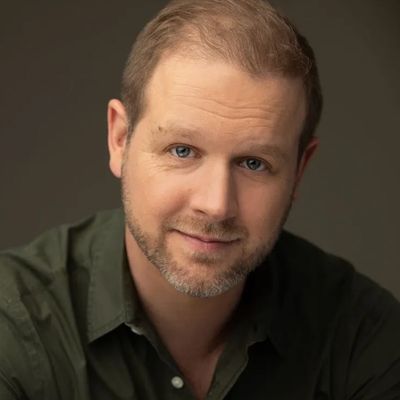
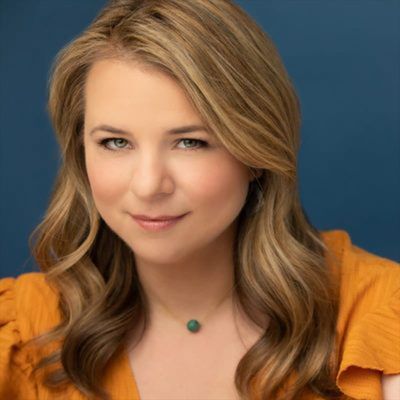
This is the second part of this Encore Episode from 2021 featuring a conversation with Irene Sankoff & David Hein — the dynamic writing team and married couple that created the international smash hit musical Come From Away which recently topped American Theatre magazine's list of the most produced plays in America in 2025/26... Read More
From the show: BROADWAY NATION
Guests
Featured Shows
About
This is the second part of this Encore Episode from 2021 featuring a conversation with Irene Sankoff & David Hein — the dynamic writing team and married couple that created the international smash hit musical Come From Away which recently topped American Theatre magazine's list of the most produced plays in America in 2025/26.
On the previous episode Irene and David related how they got hooked on musicals, and how they went from their first show based on a true story — My Mother’s Lesbian Jewish Wiccan Wedding — to deciding to create a musical based on the real life events that happened in the small town of Gander, Newfoundland in the days following 9/11. They also described what it was like to attend the 10th Anniversary of the events in Gander and then begin to transform the stories they heard there into a musical during an early workshop production at The Canadian Music Theatre Project at Sheridan College. We also explored the classic Broadway shows that influenced and inspired the writing of their book, music, and lyrics for Come From Away.
If you missed part one you may want to go back and catch up on that episode before you listen to this one.
Today we look at the extensive development process that CFA went through on its journey to Broadway — including a workshop in Seattle, a series of productions at the La Jolla Playhouse, The Seattle Rep, Ford’s Theater in DC. and the Royal Alexandra Theatre in Toronto, as well as a thrilling concert presentation in Gander where it all began.
Back in 2015, I served as the Executive Producer and Artistic Director of The 5th Avenue Theatre in Seattle and, as such, I had the great pleasure of co-producing that original Seattle workshop of Come From Away. This was the first time that the show’s Tony award winning director Christopher Ashley and choreographer, Kelly Devine began to work on the show — and it was great fun to recall that exciting experience with Irene and David.
Come From Away is the fifth musical to originate in Canada and eventually open on Broadway.
The first was 1974’s Rockabye Hamlet with book, music and lyrics by Cliff Jones. This rock musical adaptation of Shakespeare was originally titled Kronborg 1582 and was well received, first as a radio series on the CBC, and then at the Charlottetown Theatre Festival and on tour in Canada, before being retitled and opening on Broadway with Gower Champion as the director. It became a legendary flop and closed after 7 performances.
Next, in 1980 came the intimate and engaging Billy Bishop Goes To War written by John McLachlan Gray the show featured one actor to playing18 different roles to tell the story of real life Canadian fighter pilot Billy Bishop during the first World War. This show nearly doubled the run of Rockabye Hamlet closing after 12 performances. However, over the next ten years Billy Bishop Goes To War received scores of productions at theaters all across North America.
The Story Of My Life, with music and lyrics by Neil Bartram and book by Brian Hill, opened on Broadway in 2009. Unfortunately, it had an even shorter run than either of the previous two Canadian shows.
However, one year earlier, a group of Canadian writers finally scored a significant hit with The Drowsy Chaperone – book by Bob Martin and Don McKellar, and music and lyrics by Lisa Lambert & Greg Morrison. This delightful show opened on Broadway in 2008, received Tony Awards for Best Book and Best Original Score, and ran for 674 performances.
There have been a few other Canadian writers that found success on Broadway – Galt McDermott being the most famous of them – but that was with shows that originated in the US.
Transcript
This transcript was automatically generated and might contain errors.
[0:00] David Armstrong: Hi, this is David Armstrong, and this is the second part of my conversation with the authors of COME FROM AWAY, Irene Sankoff and David Hein, who wrote the book, music, and lyrics for what this year is the most produced play in America. That's right, American Theatre Magazine recently released its list of the top 10 most produced plays of the 2025-26 theater season, and heading up that list is the musical COME FROM AWAY. Their list is made up of the 10 most produced plays at professional theaters, most of which are members of the League of Regional Theaters. In any event, I thought this was a great opportunity to re-release this episode from 2021. If you missed the first episode in this series, you may want to catch up with that before embarking on this one.
Here we go. Welcome to another episode of Broadway Nation, the podcast that tells the remarkable story of how immigrants, Jews, queers, African-Americans, and other outcasts invented the Broadway musical, and how they changed America in the process. I'm David Armstrong, and I call this episode Listening to the Audience, the Making of COME FROM AWAY, Part 2. This episode is the conclusion of my recent conversation with Irene Sankoff and David Hein, the dynamic writing team and married couple that created the international smash hit musical COME FROM AWAY. Five productions of COME FROM AWAY have recently reopened around the world, including on Broadway in Toronto, London, Sydney, and on tour across America, and a new Dutch production has just opened as well.
And in addition, a live filmed version of the show is streaming on Apple TV+. On the previous episode, Irene and David related how they got hooked on musicals, and how they went from their first show based on a true story, My Mother's Lesbian Jewish Wiccan Wedding, to deciding to create a musical based on the real-life events that happened in the small town of Gander, Newfoundland, in the days following 9/11. They also described what it was like to attend the 10th anniversary of the events in Gander, and then begin to transform the stories they heard there into a musical during an early workshop production at the Canadian Music Theatre Project at Sheridan College. We also explored the classic Broadway shows that influenced and inspired the writing of their book, music, and lyrics for COME FROM AWAY.
If you missed part one, you may want to go back and catch up on that episode before listening to this one. Today, we look at the extensive development process that COME FROM AWAY went through on its journey to Broadway, including a workshop in Seattle, a series of productions at the La Jolla Playhouse, the Seattle Rep, Ford's Theatre in Washington, D.C., and the Royal Alexandra Theatre in Toronto, as well as two thrilling concert presentations in Gander, where it all began. Back in 2015, I served as the executive producer and artistic director of the Fifth Avenue Theatre in Seattle, and as such, I had the great pleasure of co-producing that original Seattle workshop of COME FROM AWAY. This was the first time the show's Tony Award-winning director, Christopher Ashley, and choreographer Kelly Devine began to work on the show, and it was an absolute pleasure to reminisce about that exciting experience with Irene and David. So, what happened in that workshop in Seattle? What did you learn?
[3:19] Irene Sankoff: This was a co-production between the Fifth Avenue Theatre and the Seattle Rep. It was the first time we had staged anything, or sorry, we had staged it at Sheridan, but it was the first time we'd staged it with Chris and Kelly. We weren't really sure if it was, like, cute to see a bunch of students do this. We didn't know if it would work. I mean, going back how earnest it is again, like, we weren't sure if it would work with each appropriate actors. From a staging perspective, they picked a section in the middle, which was the 28-hour section. It was the switching from plane to plane to plane. And staged it very simply with chairs. We had an extraordinary cast. Seattle has amazing actors out there.
[4:10] David Hein: A lot of things happened out there from a writing perspective. Lost the intermission, just kept it going?
[4:31] Irene Sankoff: Yeah, we lost the intermission because our producers came up to us and they said, I think this should just go straight through because this is an experience that we're bringing people along for. And no one in Gander got to stop and check out for a second and say, do you want to leave? Do you want to keep going? It was something that you had to go from the beginning to the end. There were some songs at the very end that we cut. I remember we cut Washington. We worked really hard.
[4:52] David Hein: Yeah, to keep it in. My God, Chris Ashley's a patient man. We had a beautiful song at the end for Claude to sing about an experience where he and a number of Newfoundlanders were brought to Washington to receive a community resilience award. It's a beautiful story that he told, and the song should eventually get onto a Cut From Away album in some way. And to hear Jewel Hatch sing it would be amazing, but it wasn't right for it. So the show got tighter, but also we saw the staging. And with Ian Eisendrath, who was introduced through Kenny and through Fifth Avenue, who had worked as a music supervisor out there, we explored the music more.
[5:31] Irene Sankoff: David is referring to the wonderfully talented Ian Eisendrath, who at that time was our resident music supervisor at the Fifth Avenue Theatre. And in that position, he was instrumental, no pun intended, in guiding all of the musical aspects of all of our productions, including the world premiere of A Christmas Story, which he also later supervised and conducted on Broadway. His contributions during this workshop would lead him to become the Olivier award-winning music supervisor, arranger, and conductor of the Broadway, Toronto, and North American touring companies of Come From Away, as well as for the Broadway musical and Netflix film Diana. We threw every piece of music that I'd ever listened to from Newfoundland at him, and he digested it all and turned it into something amazing.
I remember we were exploring what the band makeup should be, and there was a timpani at that workshop, which was absolutely not right for the show. You could hear it the minute it was playing. Beautifully done. Beautifully played, but it allowed us to be like, nope, that's not right. It really started the ball rolling on what the show was. It was an amazing time just to be in that room and see, was it two weeks? Yeah. To just see the show go from not having found its form yet to finding so much of its form in that period was really amazing. And so proud of all the work you did on that as a team, the growth that happened there.
[6:49] David Hein: And that's really what separates the people who succeed from the people who don't succeed, is being able to see what's happening and then make the changes that need to happen and kill the babies that need to be killed along the way. Because we've developed dozens and dozens of musicals, and the ones that didn't succeed were the ones where the authors just couldn't go where the show wanted to go. People equally talented, maybe some people more talented, just can't do it. They can't get the show to the end. They get stuck along the way. Sometimes I take authors and I would say, come with me and we're going to sit down way on the side and don't watch the stage. You've seen the show a million times.
Now watch the audience. And they would do this and you could see when they get bored. Smart people, whether they do it literally like that or just through osmosis experience what the audience is experiencing, you figure it out. I remember doing that at La Jolla. They've got these weird side things that you could literally lean over the audience and we just watched the audience the entire time and it was thrilling and terrifying. But so instructive because theater only works when the audience is engaged.
[7:49] Irene Sankoff: Exactly. There's no in-between. There's no art hanging on a wall that either you like or you don't like. The art doesn't change to get people to like it. And it's not about liking, it's about being engaged by it. We were talking to some composers and classical music is supposed to be birthed from one person's head and it is perfect and pristine. There's interpretation of how you play it, but it's very slight and you're trying to represent the maestro's vision of this piece. And theater is absolutely not that at all. You think it is because of Sondheim, you think it is because of the greats who we've grown up with, but you forget that they went through that entire watching the audience and getting a note from a producer that changed something, hearing something from an actor. Changing the ending, Chorus Line, again, changing the ending. She didn't get the part.
[8:37] Irene Sankoff: Yes. She's like, she has to get it. She has to get the part. She did everything right. What Irene is referring to here is that when the original off-Broadway run of A Chorus Line first began performances at the public theater, the character of Cassie, played by Donna McKechnie, the dancer whose Hollywood ambitions hadn't panned out and now is back seeking another chance to dance in the chorus, did not get selected at the end of the show. Michael Bennett and several of the authors felt that this was the most realistic outcome, that in the world of show business, this is what would really happen. But following the second preview, actress Marsha Mason, who had been in the audience that night, strongly advocated that the ending had to change, that everyone was entitled to a second chance.
And according to co-author James Kirkwood, she grabbed Michael Bennett by the throat and said, you simply cannot do that. It might be more truthful, but you just can't kill off people's hope. You've got to give her the job. And from the third preview on, Cassie was hired to be in the show. And it changed the entire path of that show.
[8:46] David Hein: Who was it that said that? It was Marsha Mason.
[9:40] David Hein: Yeah, it's so interesting listening to the audience. What was the hardest nut to crack in the writing of the show? What drove you the most crazy or took the longest time to figure out?
[9:46] Irene Sankoff: I think costume party. Just trying to, again, go back to what Diane specifically, real Diane, had been telling us about how it felt to be there and have this opportunity to live a life that she didn't know she could live, even for a brief moment, or what she thought would be a brief moment. Changing into another woman's donated set of clothes. Looking different, feeling kind of different too. I can't quite explain. But when I woke, when David wasn't on that plane, it's like I changed into somebody else but who. And it's somehow like we're at a costume party. And for a second, you are not yourself. And you look around and blink your eyes and barely even recognize the person in the mirror who's turned into someone else.
At the same time, balancing that with the fear and the uncertainty. And yet there were people who were really taking this as a moment of rebirth for people who had lost people or who hadn't heard from people that obviously was not what was happening for them. And just try to balance all of that and stay true to what people had told us. Holding to the truth of the moment, especially in that song, was really tough.
[11:24] Irene Sankoff: And it's somehow like we're stuck here at a messed up costume party. And there's nothing here familiar, far away from those you care for, on an isolated island in between there and here. That process went all the way through to Ford's Theatre, working on that song. I remember doing it in Toronto too. That's when Bev got cut. I remember rehearsing in the National Ballet Studios in Toronto. So it wasn't until then that we really finally turned into what it was. But there were so many pieces about it. Chris continually wanted to look for conflict, which was hard in a piece that when we had researched, you know, when we said, so was there any conflict, the Newfoundlanders were like, no, it all worked out great.
Or they'd be like, you know, oh, you know, there are fights at the bar, but it's the same guys who always fight at the bar. It was really challenging to dig in and find those things. A lot of that came from becoming even more family with the people who we had interviewed. Beverly Bass shared some of her diary entries, which included a man who was strip searched and suspected at the very end, who inspired the Character Ballet along with a number of other interviews. We finally were able to interview Hannah. We had only interviewed Beulah before. And so meeting Hannah and her entire family, having our daughter run around with Kevin, Kevin O'Rourke, his grandson, was an amazing experience. And we really felt like we were given permission to write from her perspective for I Am Here.
[14:16] David Hein: And then in the middle of our Seattle run at Seattle Rep, Caesars, who plays Kevin Jay, got an email from Kevin Jay. And he was like, I think you're playing me in a musical. And Caesars said, yes. We introduced him to the show and what we were doing. And he also fell in love with it and became part of the process. So it got richer and richer and richer. And at the same time, we were trying to pare it down and down and down and get it to be the tightest it possibly could be. All I know is you are there. You are there. And I am here.
[15:21] David Armstrong: Don't go away. Broadway Nation will be back right after this short break. The winds start to pick up. 50 mile an hour winds. We have been here too long. We're still on the ground. There's a hurricane coming. And I'm thinking we're running out of time. We have to leave. We have to leave now.
[15:55] Irene Sankoff: In Come From Away, all of the characters narrate the story. They break the so-called fourth wall and directly address the audience. They are both inside and outside the story all at the same time. In addition to this podcast, I teach a course at the University of Washington about the history of the Broadway musical. And one thing that struck me as I was lecturing last quarter is that only a very small handful of the hundreds of musicals from the golden age of Broadway use this technique or include narration of any kind. But beginning with the Fantastics off-Broadway in 1960, and then bursting forth on Broadway with Hair in 1968, individual narrators and group narration became one of the hallmarks of what I call the modern era of Broadway.
From Jesus Christ Superstar, Evita and Pippin, to Sweeney Todd, Ragtime, Into the Woods and Rent, and dozens and dozens more continuing right up to today with Hamilton, Six, and Come From Away. And I wanted to know if that had been part of Irene and David's concept from the very beginning.
[17:02] Irene Sankoff: Yeah, I remember we were on a research trip. I guess it was just after we'd gone to Newfoundland and I went and saw Peter and the Starcatcher and David saw Once. And I remember looking at... We were dividing our money because we were like, you go see one musical, I'll see the other one. Well, it wasn't a musical though.
[17:20] David Hein: Yeah, it was shows. We'll meet in the middle and tell each other about it. And we met after the shows and we were like, oh my God, you have to go see that. And literally we went to see the other one the opposite day. Peter and the Starcatcher had a big influence on it, just talking to the audience and then going into a scene. And the group storytelling of that. It felt like that was the key to unlock it, which we found similar to Chorus Line, group storytelling, where you're all telling the same story from different perspectives. Felt like not only how Newfoundlanders get through their winters is by gathering together and singing songs and telling stories, but also it was our experience in Newfoundland. Everyone was telling us their stories of this one event. And it's the event which is the antagonist. And everyone in the show is a protagonist. It's what unlocked the show for us.
[18:00] David Armstrong: Now talk us through the mind boggling moment that had to be to open on Broadway to have the show become a hit for two writers from Canada. There's not a giant tradition of Canadian Broadway writers. I can only name one other team as far as I know.
[18:16] Irene Sankoff: I think we're the fifth Canadian musical on Broadway.
[18:19] David Hein: I think we're the sixth. I can't remember.
[18:21] Irene Sankoff: But certainly on the shoulders of Drowsy Chaperone and Story of My Life, Rockabye Hamlet, Billy Bishop.
[18:27] David Hein: There's another one.
[18:28] Irene Sankoff: I know. I feel like I'm missing one. Anyway.
[18:30] David Hein: I'll do a little research. I'll fill it in.
[18:32] Irene Sankoff: Thank you. So here's what I found out. Come From Away is indeed the fifth musical to originate in Canada and eventually open on Broadway. The first was 1974's Rockabye Hamlet with book, music, and lyrics by Cliff Jones. This rock musical adaptation of Shakespeare was originally titled Kronborg 1582 and was well received first as a radio series on the CBC and then at the Charlottetown Theatre Festival and on tour in Canada. This success led to a Broadway production with a new title and Gower Champion as its director. Rockabye Hamlet closed after only seven performances and became one of Broadway's legendary flop shows. Next in 1980 came the intimate and engaging Billy Bishop Goes to War. Written by John MacLachlan Gray, this show featured one actor playing 18 different roles to tell the story of real-life Canadian fighter pilot Billy Bishop during the First World War.
This show nearly doubled the run of Rockabye Hamlet, closing after 12 performances. However, over the next 10 years or so, Billy Bishop Goes to War received scores of productions at theaters all across North America. The Story of My Life with music and lyrics by Neil Bartram and book by Brian Hill opened on Broadway in 2009. Unfortunately, it had an even shorter run than either of the previous two Canadian shows. However, the previous year, a group of Canadian writers finally scored a significant hit with The Drowsy Chaperone, book by Bob Martin and Don McKellar, and music and lyrics by Lisa Lambert and Greg Morrison. This delightful show opened on Broadway in 2008 and received Tony Awards for Best Book and Best Original Score and ran for 674 performances.
[20:49] David Hein: I saw the lineup and she was like, I haven't seen this since Jersey Boys. Seattle Rep, I remember at Breaking Records and DC at Breaking Records. We'd be remiss if we didn't mention the fact that our producers thought that it was important that we brought the show to Gander. So we did two benefit concerts there with all the proceeds going back. It's an incredible, expensive endeavor to bring an entire Broadway show to Gander. It's really far. And you have to take a really small plane, which I don't like to do, but we did it. And it was amazing for the actors. It was amazing to feel the entire town because the entire town came out, cheered for the show and said, you got it right. For that original cast to have that lived experience of being there and experiencing all those people and having their own come from away experience, obviously informed the show.
The show got so much richer and it was rich to begin with, but to see it after that was really amazing. The show just took a giant leap forward, I thought, in terms of its impact. And then bringing it to Toronto where it was originally developed and it's a Canadian story being celebrated where we had grown up watching musicals was amazing. And then Broadway was amazing. We were very nervous up until opening night and opening night went beautifully. And then like three days later, Justin Trudeau came and brought 160 Delicates and Ivanka Trump to the show, which was mind boggling. Immediately we went into the Tonys and we got to celebrate Chris and I met Mark Hamill on the red carpet, which is clearly the highlight of everything.
I'm a huge geek. And then it just kept going. The Toronto production, the national tour, having it open on the West End where we never imagined the show could translate and have it win the Olivier was amazing. It was amazing. Yeah.
[22:32] Irene Sankoff: How many companies are around the world right now or will be very soon?
[22:36] David Hein: Well, there's five official companies that come from away. Australia is just reopening. Toronto is just reopening. The national tour has gone out, Broadway's back, London's back. And then on top of that, there's a lot of licenses are going out.
[22:48] David Armstrong: Welcome back to Broadway Nation. Today, we continue our conversation with Irene Sankoff and David Hein, the dynamic writing team behind the musical Come From Away.
[27:22] Irene Sankoff: There's not enough old people falling in love in their lives.
[27:25] David Hein: I think in many ways the show safely lets you explore why the world is the way it is right now.
[27:32] Irene Sankoff: In a moment when the world really changed, it tells young Muslim kids why their parents might be afraid or why the security at an airport is the way it is.
[27:41] David Hein: It's a way to start those conversations, and there's something about it that I think resonates with people of all ages.
[27:46] Irene Sankoff: So I know you have to go, but can you give us a hint of what you're working on? What's next?
[27:51] David Hein: We have so many irons in the fire.
[27:53] Irene Sankoff: So many we can't really talk about, but we're working on TV movies for Disney and Netflix.
[27:59] David Hein: We're working on a TV show for Warner Brothers.
[28:01] Irene Sankoff: We have new musical ideas, which we are kicking around constantly and are slowly turning into baby musicals.
[28:08] David Hein: Yeah, we're quite busy. And during the pandemic, we did an ad for Canada.
[28:12] Irene Sankoff: It's wonderful how Come From Away has given us a lot of opportunities that we never would have had before.
[28:17] David Hein: It's a lot of new stuff that will hopefully eventually come out.
[28:19] Irene Sankoff: Fantastic. Can't wait to see what it is.
[28:21] David Armstrong: Irene and David, thank you so much for being our guests today.
[28:25] Irene Sankoff: Wonderful to talk to you and wonderful to reconnect.
[28:28] David Hein: I can't wait to go back to a theater and see Come From Away again.
[28:32] Irene Sankoff: I don't know how many times I've seen it so far, but it will be wonderful to experience it live in the very near future, I hope.
[28:38] David Hein: Thanks for telling the story and thanks for being part of the history of it.
[28:41] Irene Sankoff: It was fun to actually talk about that workshop.
[28:43] David Hein: There's been a lot now, right?
[28:45] Irene Sankoff: And so it's fun to go into that and be like, oh, it was actually a really pivotal moment.
[28:48] David Hein: And so we appreciated the support.
[28:50] Irene Sankoff: Thank you.
[28:51] David Hein: Thanks so much.
[28:52] Irene Sankoff: Take care.
[28:53] David Armstrong: As always, I am fascinated by connecting the dots along the timeline of the Broadway musical and exploring how each era's new theatrical innovations inspired the next generation of book writers, composers, and lyricists, and how they then passed on their discoveries to the following generation.
[29:10] David Armstrong: One of the most important advances was the development of extended musical sequences, which were hinted at in the finales of the musicals of the 1920s and 30s, but for the most part were invented by Rodgers and Hammerstein with the bench scene in Carousel, a sequence that Stephen Sondheim calls the singular most important moment in the evolution of contemporary musicals.
[29:33] David Armstrong: My colleague Albert Evans provides a brilliant analysis of that revolutionary creation in episode 13 of Broadway Nation, how the bench scene changed Broadway.
[29:43] David Armstrong: Sondheim, along with nearly every other musical theater dramatist, expanded on the techniques they learned from Rodgers and Hammerstein and developed the kind of extended musical sequences that have become, to my mind, one of the strongest elements and most engaging attributes of the Broadway musical.
[29:59] David Armstrong: Think of "A Weekend in the Country" from A Little Night Music, or "Hello 12, Hello 13, Hello Love" from A Chorus Line, or the opening sequence of Ragtime and many sections of Wicked, just to name a few.
[30:11] David Armstrong: With Come From Away, Irene and David have taken this concept even further.
[30:15] David Armstrong: Come From Away is basically one giant nonstop musical sequence that encompasses the entire show, from the first note to the finale.
[30:24] David Armstrong: It is truly a breathtaking achievement.
[30:27] David Armstrong: And once again, we can connect the dots in the ongoing continuum of the Broadway musical, from Carousel to Come From Away, each team of creators inspired, whether they know it or not, by the geniuses and the shows that came before them.
[30:41] David Armstrong: One, two, one, two, three, four.
[30:44] David Armstrong: Welcome to the friends who have come from away.
[30:47] David Armstrong: Welcome to the locals who have always said they'd stay.
[30:50] David Armstrong: If you're coming from Toledo or you're coming from Taipei, because we come from everywhere, we are from away.
[30:56] David Armstrong: Welcome to the Rock and Islander, Rock and Islander.
[31:00] David Armstrong: Broadway Nation is written and produced by me, David Armstrong.
[31:03] David Armstrong: For more on Come From Away, I invite you to listen to one of the most popular episodes of Broadway Nation, episode 34, which is titled Community, Major Themes of the Broadway Musical Part Three.
[31:15] David Armstrong: Special thanks to Pals Mox for his assistance with editing this episode, to KVSH 101.9, the voice of beautiful Vashon Island, Washington, and to the entire team at the Broadway Podcast Network.
[31:27] David Armstrong: With all the new security, kids aren't even allowed up into the cockpit anymore.
[31:31] David Armstrong: Of course, on my retirement flight, I brought my whole family into the cockpit.
[31:35] David Armstrong: On our way back to Gander.
[31:37] David Armstrong: I came back with the scholarship money we raised, now worth over a million dollars.
[31:42] David Armstrong: I bring out the Irish whiskey and we have ourselves a toast.
[31:45] David Armstrong: Nick and I just couldn't make the long-distance relationship work.
[31:49] David Armstrong: So I moved to Texas, and then I proposed.
[31:51] David Armstrong: And we honeymooned in Newfoundland.
[31:54] David Armstrong: My new secretary's name is Robin.
[31:56] David Armstrong: What's up?
[31:58] David Armstrong: Every year on September 11th, I close my office and give each employee $100 to go and do random good deeds for strangers.
[32:05] David Armstrong: It's my way of remembering what happened.
[32:08] David Armstrong: Viola and I still keep in touch.
[32:10] David Armstrong: She even came to visit me in New York.
[32:13] David Armstrong: And I'll still phone her if I hear a really stupid joke.
[32:16] David Armstrong: Viola, why are Newfoundlanders terrible at knock-knock jokes?
[32:19] David Armstrong: I don't know, Hannah.
[32:21] David Armstrong: Well, try it. I'll be a Newfoundlander.
[32:23] David Armstrong: Knock-knock.
[32:24] David Armstrong: Come on in. The door's open.
[32:26] David Armstrong: The donation we are most honored by just arrived today.
[32:29] David Armstrong: It's about four meters long and 1,200 kilograms.
[32:32] David Armstrong: Newfoundland is the only place outside the United States where we share the steel from the World Trade Center.
[32:38] David Armstrong: On the northeast tip of North America, on an island called Newfoundland, there's an airport.
[32:44] David Armstrong: And next to it is a town called Gander.
[32:47] David Armstrong: Tonight, we honor what was lost.
[32:50] David Armstrong: But we also commemorate what we found.
[32:54] David Armstrong: You are here at the start of a moment on the edge of the world where the river meets the sea.
[33:07] David Armstrong: Here on the edge of the Atlantic, on an island in between.
[33:11] David Armstrong: I am an islander.
[33:20] David Armstrong: I am an islander.
[33:23] David Armstrong: I am an islander.
[33:26] David Armstrong: I am an islander.
[33:29] David Armstrong: I am an islander.
[33:32] David Armstrong: I am an islander.
[33:35] David Armstrong: Welcome to the park.
[33:36] David Armstrong: Welcome to the trees.
[33:37] David Armstrong: A kiss and a cud and whatever's in between.
[33:40] David Armstrong: To the ones who've left, you're never truly gone.
[33:43] David Armstrong: A candle's in the window and the candle's always on.
[33:46] David Armstrong: To the coves and the caves and the people from the plains.
[33:48] David Armstrong: Five days, 19 animals, and 7,000 strains.
[33:52] David Armstrong: When the sun is setting and it's darker than before, if you're open for a harbor, then you'll find an open door.
[33:57] David Armstrong: In the wonder from the water, drink whatever's in the way.
[34:00] David Armstrong: To the ones who have come from away, we say, welcome to the...
[34:03] David Armstrong: Welcome to the...
[34:04] David Armstrong: Welcome to the...
[34:05] David Armstrong: Welcome to the...
[34:06] David Armstrong: Welcome to the...
[34:07] David Armstrong: Welcome to the rock.
© Broadway Podcast Network, All Rights Reserved