

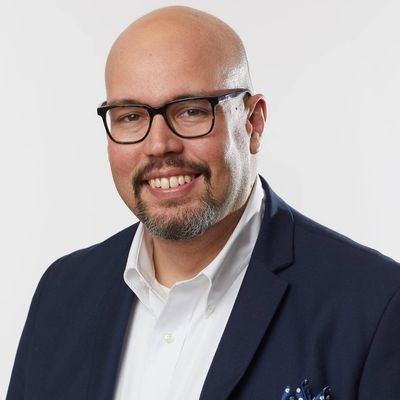
On this episode my guest is Rob Schneider, who returns to the podcast to talk about his new book, Queer Musicals — Boy Meets Boy to Jagged Little Pill. Robert W. Schneider is a historian, director, producer, author, educator, and podcast host, and the Artistic Director of the J2 Spotlight Musical Theater Company in New York... Read More
From the show: BROADWAY NATION
Guests
Featured Shows
About
On this episode my guest is Rob Schneider, who returns to the podcast to talk about his new book, Queer Musicals — Boy Meets Boy to Jagged Little Pill.
Robert W. Schneider is a historian, director, producer, author, educator, and podcast host, and the Artistic Director of the J2 Spotlight Musical Theater Company in New York. And since working as an original programming producer at 54 Below, Rob has directed and produced over 100 concerts for the venue. His first book, 50 Key Stage Musicals, was published in 2022.
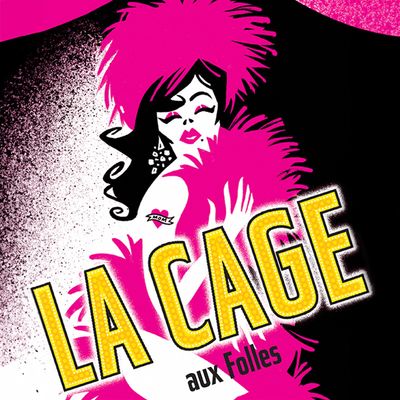
On this first episode in this series, we discuss the musicals Boy Meets Boy, La Cage aux Folles, and The Knife.
Become A PATRON of Broadway Nation!
This episode is made possible in part through the generous support of our Patron Club Members.
If you are a fan of Broadway Nation, I invite you to become a PATRON! For as little as $7.00 a month, you can receive exclusive access to never-before-heard, unedited versions of many of the discussions that I have with my guests — in fact, I often record nearly twice as much conversation as ends up in the edited versions. You will also have access to additional, in-depth conversations with my frequent co-host, Albert Evans, that have not been featured on the podcast. And all patrons receive special “on-air” shout-outs and acknowledgement of your vital support of this podcast.
And if you are very enthusiastic about Broadway Nation, there are additional PATRON levels that come with even more benefits.
If you would like to support the work of Broadway Nation and receive these exclusive member benefits, please click on this link:
https://broadwaynationpodcast.supercast.tech/
Thank you in advance for your support!
Transcript
This transcript was automatically generated and might contain errors.
[0:00] David Armstrong: Welcome to another episode of Broadway Nation, the podcast that tells the remarkable story of how immigrant Jewish, queer and black artists invented the Broadway musical and how they changed America in the process. I'm David Armstrong, and today my guest is Rob Schneider, who returns to the podcast to talk about his new book, Queer Musicals — Boy Meets Boy to Jagged Little Pill. Rob W. Schneider is a historian, director, producer, author, educator, and podcast host, and the artistic director of the J2 Spotlight Musical Theatre Company in New York. And since working as an original programming producer at 54 Below, Robert has directed and produced over 100 concerts for the venue. His first book, 50 Key Stage Musicals, was published in 2022.
Broadway Nation is made possible in part through the generous support of our patron club members, such as Barbara Weschler. If you enjoy this podcast, your support will be greatly appreciated, and there'll be information at the end of the episode about how you, too, can become a patron. Here we go. Rob Schneider, welcome to Broadway Nation. It's wonderful to have you here today to talk about your new book, Queer Musicals — Boy Meets Boy to Jagged Little Pill.
[1:27] Rob Schneider: David, thanks so much for having me. And first of all, congratulations on your amazing book, Broadway Nation.
[1:33] David Armstrong: Thank you so much. I really appreciate that, and I think it's fantastic that we have these two books coming out almost simultaneously, which overlap in many, many ways.
[1:41] Rob Schneider: I love that. And, you know, having read your book, I hope that anyone who buys mine buys a copy of yours, because it is chock full of amazing information. It's so good.
[1:50] David Armstrong: And of course, vice versa, I agree. And I also think they complement each other because they're not about the exact same subject matter or from the same approach.
[1:59] Rob Schneider: Correct.
[2:00] David Armstrong: Even though many of the shows and many of the people that are talked about in there will be in both books, our way into them is very, very different in many ways.
[2:08] Rob Schneider: Yeah, I think they're both really fantastic resources, and I'm really excited to see how future generations use these things. It's important, and I can't think, David, of another book that does what yours does so well and so brilliantly. I hope that our books will lay side-by-side on theater geeks' shelves everywhere.
[2:25] David Armstrong: Absolutely. And I've seen them side-by-side in bookstores, so that's exciting to see as well.
[2:31] Rob Schneider: I could not be in better company.
[2:32] David Armstrong: I completely agree. So let's talk about Queer Musicals. This is part of a series of books. We share the same publisher.
[2:38] Rob Schneider: We do.
[2:40] David Armstrong: Methuen Drama, which is an imprint of Bloomsbury Publishing, and the same editor, Dom O'Hanlon.
[2:46] Rob Schneider: The great Dom O'Hanlon, the best.
[2:48] David Armstrong: Absolutely. Talk about this series for us. This is Essential Musicals is the name of the series.
[2:54] Rob Schneider: Yeah, so the series, like you said, is called Essential Musicals, and it was created by Methuen specifically to allow college students who are doing a lot of research on musical theater a place where they can find more contemporary, valid academic sources. A lot of these kids want to write on shows that were 20 years ago, but there's really not a lot of scholarship about these shows from 20 years ago beyond a Wikipedia article, which most of the time is incorrect. So this series is trying to give them a legitimate source for referencing. So there's a book on my book, which is on queer musicals. There's a book on Pulitzer Prize winning musicals. There's a book on musicals that were written by women. I mean, it really runs the gamut. And it's exciting because like in my book, we have 10 musicals that we cover. Five were before the 2000s and five were after the 2000s. So it's nice and equally divided for the kids, which is good.
[3:43] David Armstrong: And the editor of this series is Kristen Stoltz Presley. Tell us just a little bit about that and how you came together with her to do this book.
[3:51] Rob Schneider: Oh, you know, listen, I got so lucky. I always feel bad for my friends that are writers because I know how hard they work to like write and craft something. And like they've knocked down agent stores. They sent me an email and they were like, would you be interested in doing this? So I feel bad. But that's how I got connected with it. She, I think, had listened to my podcast. I have two podcasts. One is called Behind the Curtain, Broadway's Living Legends, which we interview people who had been in the industry 30 plus years. That was on for six years. So I think she discovered me that way. And then through another podcast I do called Broadway Bound, which is a docuseries about musicals that were supposed to come to Broadway but never did. I think she was like, this guy seems like the right person for this job. And hopefully after reading the book, people will agree with her. Otherwise, I'm going to be really embarrassed and I owe her an apology.
[4:33] David Armstrong: I'm pretty sure that's already come to pass. People think you're the right person for the book. And she's known as Dr. Broadway.
[4:36] Rob Schneider: She's Dr. Broadway. I should have said that. Yeah, she's Dr. Broadway. And she really is. She's got a Ph.D. and knows all things Broadway. She's based out of Georgia, I believe.
[4:46] David Armstrong: I believe she's down in Georgia. She's a fantastic writer in her own right. And in fact, The Essential Series launched with three books, queer musicals, and then the other two are hers, you know, by the whole series, if you can. And she also has a terrific podcast.
[5:02] Rob Schneider: She does indeed. She's joined the club with all the rest of us, I guess.
[5:08] David Armstrong: Exactly, exactly. Everyone now needs a microphone. I think that's it, you know.
[5:12] Rob Schneider: Exactly. What do they used to say about the future? Everyone will have a podcast as part of their 15 minutes of fame.
[5:16] David Armstrong: I agree. I think the government owes us like instead of stimulus checks just to send everybody a podcast kit so we can all have our podcasts.
[5:21] Rob Schneider: Hilarious. So the concept behind this book, talk just a little bit about that. What were the instructions you were given in terms of what this book needed to be?
[5:30] Rob Schneider: They gave us such latitude, which was so nice. They said it has to cover 10 musicals, 10 musicals that you feel are queer musicals. And so then I was like, well, what exactly does that mean, a queer musical? I remember I told my dad, he's a detective from Brooklyn, and I said, I'm writing a book on queer musicals. He goes, aren't they all queer? Yes, in a way. So I was like, well, what musicals move the needle in terms of some sort of queer representation? So for me, what I was able to like whittle it down to were first like the first Broadway musical to feature a queer couple, the first musical to deal with transgender characters. So for me, that was sort of the litmus test. It had to have been the first in a big, successful way.
The other thing which was kind of nice was the essential series doesn't repeat shows. Rent is being covered in the Pulitzer Prize book, so I can't do Rent or Strange Luke is also in the Pulitzer Prize. I can't do that. So a lot of the biggies were automatically taken off the plate, which was actually kind of nice because then it allowed me to explore some shows like The Knife from 1987, which was the first musical to deal with a transgender character. I don't think I would have had that latitude and luxury had I had to include Rent and Strange Luke.
[6:44] David Armstrong: Exactly. I doubt The Knife would have made the cut.
[6:44] Rob Schneider: I love it. I thought nobody remembered The Knife. And then I went to go see Smash when I was on Broadway for a couple of months and they made a joke about The Knife in it and nobody laughed except me. And I was like, oh, this is a niche show. I've forgotten that. I saw The Knife.
[6:59] David Armstrong: Oh, did you really? I saw every single one of the shows, the original productions that are in your book except for Boy Meets Boy.
[7:04] Rob Schneider: Oh, my gosh. So that was fun. It was a trip down memory lane for me in a lot of ways. Out of the ones that you did see, so you saw nine out of the ten, which were your favorites to see?
[7:15] Rob Schneider: To see? That's an interesting question. I hadn't thought about that. Falsettos, definitely one of my favorites, one of my favorite shows of all time. The original production, I liked much more than the revival. We can maybe do a sidebar about my opinions about these things.
[7:30] David Armstrong: Oh, I would love that. We'll do that for the patron page. Let it all hang out.
[7:35] Rob Schneider: Yeah, exactly. Falsettos, absolutely. I actually love Jagged Little Pill, which I did not expect to love. I went into that theater thinking, I'm going to hate this. There was probably only two of those songs I'd ever heard before, before I walked into the theater. I know I'm very unusual and odd in that regard, because, of course, these are giant famous songs that everyone younger than me knows. But I love the show and I thought it had succeeded in having a fantastic book. I mean, I was completely engaged by it and the way they wove the songs into it. So I love that. Of course, Fun Home and Kinky Boots were all shows I loved. And La Cage a Faux, I love more in hindsight than I did at the time, I think, although I was wowed by it in some respects.
You talk about this in your book about how there was a certain attitude among younger gay theater people at the time that it wasn't quite... It wasn't enough. They said, well, why can't we be like the straight couples in musicals? And I tell this to my students now. They're so shocked. But like the lead characters never kissed each other in the show. They never really touched each other, except at the end when they put their arms around each other and walked into the sunset. But it was almost like brothers. You know, it had a very, you know, familial feeling to it. And then that two actors obviously were straight as everybody was back then or was in the closet. I have the same conversation with my students. It's like, well, what do you expect? That's the world at the time. You can't go back in time and change the world the way it was.
[9:00] Rob Schneider: No. And I say the same thing. I was like, there was nobody that was out in 1983. There was nobody that was out. I mean, maybe privately, like in the industry, people knew, of course, in the industry, everybody knew, but they always knew in the industry. But that didn't translate to the public.
[9:15] David Armstrong: Absolutely not. That's actually one of the things that was like important for me with the book was I wanted to make sure that as these generations progress, they understand that, from my point of view, our straight allies did a lot to help move the needle. So instead of like yelling or chastising Gene Barry and George Hearn for taking it away from a straight. How brave they were to be in the show to begin with. These guys could have lost their careers over this thing or the Weissler's with falsettos. You know, there's a straight married couple that did everything possible to get this show about a gay family dealing with AIDS on Broadway. They didn't have to do that. They could have done another revival of Grease. You know what I mean? I think it's important that we also remember we had a lot of allies and we shouldn't chastise them.
[9:51] Rob Schneider: I completely agree with that. I'll be happy to come in and talk to your students and I'll have you in to talk to my students, right? Because often they need to hear something from somebody else before they buy it.
[10:01] David Armstrong: Ain't that the truth? So I'd love to talk through each of these shows. But before we do that, the first section of your book is sort of a history of the visibility of LGBT people in the media for basically the last hundred years. I assume you felt it was important to sort of set the scene of the context for these musicals.
[10:19] Rob Schneider: Absolutely. Because like, you know, and we were just talking about this, but, you know, we get so much I don't want to say pushback, but the students are so thank God, first of all, thank God that the students think that this is normal, that like, you know, oh, there's always shows about gay people and gay people were everywhere and people were openly out. And thank God they don't know the other world. But I wanted to remind them, like, why these shows were important. You might go, well, Lakaja, you go, well, they don't kiss, they don't touch. It's not really a big deal. Yeah. But then look at how like gayness was treated at that particular time. So it was important. I walk everybody through the different historical movements from like a lot of times when we got represented in media, it was you were a serial killer or you were a pedophile or you were a victim or you were a creep.
So, yeah. So I thought it was important to give a lot of historical context to understand. And then the next section, you talk about the selection process, narrowing that down to 10 shows. Obviously, some of it was done for you because you couldn't do the repeats. But then I assume it had to be a difficult process sometimes.
[11:27] Rob Schneider: Which show am I going to choose? Was there anything that was really hard to leave out of the list? Yeah, there were two shows that I really wanted to include and I just couldn't. One was a show by Al Carmine's called The Faggot, and that was in the early 70s. It was very artistically fulfilling, but it wasn't a big commercial success. The demographic to see that show was pretty much the queer community. For me, it was between that and Boy Meets Boy. I was like, well, Boy Meets Boy to me is more important because it got the straight community to come in and take a look at it. So that was important for me. The other one was a musical at the...
[11:59] Robert W. Schneider: A few years ago, I called Southern Comfort, which was about a transgender individual that was dying and putting their life in order. Unfortunately, there just wasn't enough material for me to work with on it because I wanted each chapter to feel equitable in their length so that no show got preferred over the other. And there was just not a lot there for me to deal with. So unfortunately, that one had to go away. But I think in the book, I also do in the intro, honorable mentions, shows that had some sort of queerness with them and they should be acknowledged. And I think both those shows are in that intro. But yeah, so at least they're mentioned. They're there. They got honorably mentioned. And you sort of said this a couple of minutes ago as well, that quality and influence were not the driving factors in choosing these shows.
[12:41] David Armstrong: No.
[12:41] Robert W. Schneider: The Knife, quality-wise, is a horrible show. So I'm so sorry to anyone who's a fan of The Knife. I can attest to that having been there. It was worse than bad. It was boring. And how you could have this subject matter be boring was mind-blowing to sit there and Mandy Patinkin playing, as we would say now, the first trans character in a musical. And you just didn't care for a second about any of it.
[13:07] David Armstrong: OK, good. I'm happy that you said that, David. Because I never saw the show. I read it and I listened to a bootleg of the score. It's like, this is atrocious. But to me, it's important because it's first. It's the first musical to put a transgender character front and center. Whether it was good or bad, that doesn't matter. That doesn't matter to me.
[13:26] Robert W. Schneider: To the point of this book. Yeah. And full disclosure, in this book, there's maybe a handful of shows that I actually really, really like as an audience member. And then there's a handful that I'm like, it's not for me, but it moves the needle. Like I said, it moves the needle.
[13:39] David Armstrong: So you're pointing out the historical importance of it within the subject matter. And who knows? Somebody might have seen The Knife and loved it. And that's great. I'm just not one of those people.
[13:47] Robert W. Schneider: It's hard for me to imagine that. And there weren't many of us who saw it.
[13:50] David Armstrong: Yeah, it had a tiny run at the public theater. It should have succeeded. Like you said, Mandy Patinkin, David Hare, who is hot as could at that time, was the librettist and lyricist, was at the public. All of this should have worked. And what I will applaud them on, even though I don't think the show is very good, they did treat the transgender story with sympathy and empathy. And it wasn't laughed at, you know, which was kind of if you did have a transgender thing in media at that time, it was usually as a punchline. They get credit for that. So by all means, they should be acknowledged.
[14:19] Robert W. Schneider: Absolutely. Although I did note one thing you wrote is that David Hare stated that he didn't like musicals.
[14:23] David Armstrong: Then don't write one.
[14:27] Robert W. Schneider: Then don't write one. If you don't like it, no one's forcing you.
[14:30] David Armstrong: Exactly. And over and over, we encountered these people who come into it saying, well, I don't really like musicals, but I'm going to prove to you what they should be. And they always fail in my regard.
[14:42] Robert W. Schneider: Yeah. So maybe you don't do that. If you don't like it, don't do it. I don't like exercise. I don't do it. See, it's just that easy. It's that easy.
[14:52] David Armstrong: All right. So let's talk through these 10 queer musicals. And the first one is a show that most people won't know very well at all. It's called Boy Meets Boy.
[15:18] Robert W. Schneider: Boy Meets Boy came out in the 1970s, and it was during the nostalgia craze in the early 70s on Broadway. So that was, you know, No, No, Nanette and Grease and all that fun stuff. Bill Solly, who was the writer of the show, had this idea of what if we did a nostalgic musical, a 1930s screwball comedy, you know, think bringing a baby, think Palm Beach Story. And he's like, but we'll do it with gay characters. And what was really cool about it was gayness in the show is normal. Gayness in the show is accepted. So nobody ever goes, they're gay or two men are going to marry. It's never that. It shows you a world in which queerness is just as accepted as being heterosexual. So it's an alternate reality, an alternate reality. And the show ended up being a huge success with not only gay audiences, but straight audiences as well. And so it then started to prove to producers, oh, wait a minute, maybe there is an audience for this type of show.
[16:35] David Armstrong: And so this is what makes me sad about Boy Meets Boy. And so we kind of talk about in the chapter is the show was such a hit. They were going to tour it. But when they went to go to tour it, the producer and the writers got into a contractual dispute, had an argument with each other, and they decided, well, we're not going to tour it. Show's over. Imagine you're a queer kid in L.A., in Dallas, in the suburbs of Oklahoma, and you think to yourself, I'm the only person that feels this way. And then you see a show where you're represented on that stage or you're a family member and you go, I got a queer nephew. I'm not really happy with them. But then I see the show and go, oh, well, queer people are just like straight people.
This show had the power to change people's lives and perspectives. And because of a contractual dispute that never materialized to me, that was like the biggest tragedy of Boy Meets Boy, which is I think it could have done a lot more good had these two individuals gotten over whatever their contract dispute was. It's always heartbreaking to see when shows just fall apart because of feuds among the creators, stupid, stupid fighting about money that isn't there to begin with.
[17:36] Robert W. Schneider: Well, that's the other thing. It was a money dispute. And I'm like, there's no money here. Like and I understand I'm not, you know, for both sides, the writers and the producers, I get that. But I was like, I think for a show like this, I really wish they would have been like, hey, listen, this could do a lot of good. So let's put our differences aside and let's get this story out to people. Also, it didn't preach. It wasn't political. It just showed queerness as a normal daily part of life.
[18:01] David Armstrong: But what about our sacrifices? I still might ruin your life.
[18:07] Robert W. Schneider: Oh, look, kiddo, we'll make a bargain. I promise not to give up my career if you promise not to give up me. I promise. And so do I. We'll both be very selfish and very happy.
[18:16] David Armstrong: Is that the secret to a happy marriage?
[18:23] Robert W. Schneider: Of course. It's the only way to live happily ever after. Tell me, please, does anybody love you? Do you have a special love affair?
[18:40] David Armstrong: Someone who worries about you, who's always true and tender to and waits for you somewhere.
[18:58] Robert W. Schneider: So please say, does anybody love you? For if by some lucky chance the answer is no, and you haven't anyone to love you, then do you mind if I do? Because I love you so.
[19:36] David Armstrong: No victims, no pity.
[19:49] Robert W. Schneider: Right. Which will then sort of work against the show later when there's talk about reviving it or bringing it back. I swear I saw a revival of the show. I remember it vividly. I remember the set.
[19:55] David Armstrong: Was the revival Off-Broadway in the 80s or the 90s?
[20:01] Robert W. Schneider: Yes. Yes. There were a couple of small Off-Broadway revivals, more like on like showcase contract codes, you know, they weren't like off off.
[20:06] David Armstrong: Yeah. Yeah. They weren't commercial productions. This year's the show's 50th anniversary. And I was hoping that somebody would do something to celebrate and nobody's done anything yet. But yeah, you're right. There were a few little Off-Broadway revivals.
[20:17] Robert W. Schneider: Yeah. It was in London a few years ago and it seemed to go well. And just talk a little bit about what happened because there was no controversy in the story of the show. It became sort of less appealing to producers and audiences, perhaps.
[20:32] David Armstrong: They wanted something militant. They wanted like an I am what I am, where a character walks down stage and says, I'm queer. And if you can't stand that, get it. You know, they want that. I think a lot of producers now, and I know you're not one of these producers, so you're obviously excluded from this, feel like they have to hit you over the head with a message as opposed to just trusting that the audience will get it. And I think Boy Meets Boy doesn't hit you over the head. And I think that's confusing. They want a big flashing sign that says, look at us. We're enlightened. We're accepting. We're progressive. And Boy Meets Boy.
[21:02] Robert W. Schneider: Yeah. Whereas the conflict of that show inherent in the show is just in the fact that you're going to tell the story without any conflict.
[21:12] David Armstrong: Exactly. And so and they want something more. You know, if a producer could wave a magic wand on that show, I'm sure they would try to include a character that was homophobic. A religious zealot of some sort that they could knock down. You don't need that. The fact that Boy Meets Boy is like, hey, this could be a normal world. That's kind of the best thing you could possibly do. So I really like the show in that regard. I remember very little about it. I can picture the set and I can picture the people. And the one thing that sticks in my mind was that delightful double entendre in the title song. Boy meets boy. Boy loses boy. Boy gets boy in the end.
[21:48] Robert W. Schneider: It's fantastic. And you know, it's great about the show. That's the only time in the show where it ever does like a little wink about the sexuality. And it's, I think, like the last lyric of the show. I'm a huge believer that you get more flies with honey than you do with vinegar. And a show like this that was just out to entertain, I think people would have left enlightened. It makes me sad that audiences didn't get to see that across the country.
[22:10] David Armstrong: So a show that audiences did get to see across the country and for many years on Broadway is so talk a little bit about that. That's the second show you tackle.
[22:19] Robert W. Schneider: Don't go away. Rob and I will be back with more Broadway Nation right after this quick break.
[22:27] David Armstrong: Hi, this is David Armstrong. And if you're enjoying this episode, I strongly suspect that you will want to read my new book, Broadway Nation, How Immigrant Jewish, Queer and Black Artist Invented the Broadway Musical on sale now wherever books are sold. And I'm very happy to report that the early reviews have been terrific. The esteemed author Jeffrey Block says that Broadway Nation is a fascinating, comprehensive and timely gem of a book that more than lives up to its promise of delivering no less than five books in one. Kudos to David Armstrong. And Tony Award winning lyricist David Zippel says that David Armstrong's insightful history of the evolution of the Broadway musical and its creators is captivating and comprehensive as well as indispensable.
The book is, of course, available on Amazon, but I recommend that you go to the publisher's website, bloomsbury.com, where you will currently receive a 10% discount. Again, like the podcast that inspired it, the book is titled Broadway Nation, How Immigrant Jewish, Queer and Black Artist Invented the Broadway Musical. Now, back to the show.
[23:51] Robert W. Schneider: Yeah, so La Cage, as you know, was the first musical to have a gay love story front and center in it. It was Jerry
[23:58] Robert W. Schneider: Herman's big comeback, Arthur Lawrence directed it, a new young guy named Harvey Feierstein had written the book for it, and it was based on a very popular film at the time. So people had a lot of high hopes for it, and all those high hopes paid off. It was lavish, it was extravagant, it had brilliant performances in it, but even though it was two guys, it still felt like a you-can't-take-it, it felt like a Kaufman and Hart play. And it's the old trope, it's an eccentric family meets a conservative family, except the eccentricity is that it's two men. But beyond that, there's really not a lot of queerness in the show, if that makes sense. And so that's something that, like you were saying, audiences at that time that were queer were like, wait a minute, wait a minute, why are they not kissing?
Why are they not this? Why are they not having more political speeches? But then an older audience that was homophobic was relaxing, you know what I mean, and was thinking about gayness in a different way. So it's kind of like, you got to pick or choose your battles. And back then, it was a very scary time for two reasons. One, queerness was being looked at as something that was still bad, but then you had the AIDS crisis on top of it. So now it wasn't just an emotional sickness from people's point of view, it was a physical sickness as well. So this show had a lot of stuff going against it, but I think they handled it quite beautifully. And the number of people, do you know Leroy Reams?
[25:12] David Armstrong: Very well.
[25:13] Robert W. Schneider: I love Leroy. Leroy played Alban on tour, and he always has this beautiful story that one day he went back to the theater, he had a letter waiting for him at the stage door, it was a letter from an audience member who said, you know, Dear Mr. Reams, our son is gay. We haven't spoken to him in three years. Last night we saw your performance and we went home and we called him. That's what that show does. Honestly, if it was political and it was hectoring, it would have run for two nights at most and shut down. So sometimes you have to make those compromises.
[25:40] David Armstrong: And your book is dedicated to Leroy.
[25:41] Robert W. Schneider: It is dedicated to Leroy Reams, who was out before it was in, because Leroy, first of all, he played the first openly gay character in a musical when he did Applause. But in his personal life, you know, he and his partner were together for 50 plus years. They went everywhere together. And Leroy never walked away from what his sexuality was. And I don't know how that, you know, helped or hindered his career because he had an amazing career. But to me, that's brave. That was just brave at that time to be like, yep, this is who I am. Love it. So, yeah, I did dedicate it to him.
[26:12] Robert W. Schneider: I've known Leroy since I was 16 years old. We're both from Cincinnati and we have a lot of contacts and we both had the same mentor years apart. He's a bit older than I am, but an incredible gentleman named Paul F. Rutledge, who ran the University of Cincinnati Theater Department, was our mentors about 20 years apart. We have a lot in common.
[26:30] David Armstrong: That's incredible.
[26:31] Robert W. Schneider: And went to the same dancing school again 20 years apart. So that was.
[26:35] David Armstrong: Did you really?
[26:36] Robert W. Schneider: Yeah. Yeah. In fact, I went to school with all his nieces and nephews.
[26:40] David Armstrong: Oh, my God.
[26:40] Robert W. Schneider: So I heard about Leroy all the time during my childhood.
[26:44] David Armstrong: Of course.
[26:44] Robert W. Schneider: That's when he was on Broadway in Applause. I remember hearing them talk about it. They had gone to New York to see it, not the nieces and nephews, but the aunts. He's the absolute best. And so I'm thank you for acknowledging that you read that little dedication because.
[26:57] David Armstrong: Oh, of course.
[26:57] Robert W. Schneider: I have to give him a copy of the book. I have to take him out for lunch. I've been trying to meet up with him. He's very busy. He's like in his late 80s or something, and he's still he runs around like crazy.
[27:06] David Armstrong: He's amazing. One thing I was thinking about La Cage and my attitude toward it at the time, my sort of circle of people. And I think the issues you brought up were part of it. But for us, it was really more it felt old fashioned in its staging. It felt old fashioned in its conception. I remember the set was lavish, but pretty clunky.
[27:19] Robert W. Schneider: Yeah. Oh, yeah.
[27:26] David Armstrong: It didn't move the way I think we thought a show should move at that particular point. And even both Arthur Lawrence, we didn't think was a very good director. And the choreographer, Scott Salmon, who had been a Vegas guy, I think, was impressive. It was exciting, but it just wasn't. I think also we knew that Tommy Tune had been attached to it, to a different version of it, but had been involved in it at some point. And it just seemed a little of a bit of a letdown of what it could have been. But now I have a very different perspective. And I write about it in my book as being, you know, really important piece of Broadway theater at the moment and the effect it had on audiences you just talked about. And then with two revivals on Broadway, both of them winning Best Revival of a Musical, it has had an ongoing impact.
[28:16] Robert W. Schneider: I agree with what you're saying, because I remember I went down to Lincoln Center to watch the original production. I found the direction, honestly, to be embarrassing. You know, I felt the direction was so bad, the jokes wouldn't land. And the set, like you said, was very, very clunky. The performances were fine. But I think that was probably also done intentionally, because you're right, it is at the time when you're seeing these mega musicals, you've got Sondheim prints, so you you're not expecting to be in a time machine at a 50s Golden Age show. And that's what it was. And maybe that was done intentionally to, you know, help pacify the audience. But, you know, you win some, you lose some. What you lost in queer people going, we don't feel represented. You want a lot of allies.
[28:54] David Armstrong: Absolutely.
[28:55] Robert W. Schneider: You know, so you win some, you lose some.
[28:57] David Armstrong: That brings us to The Knife.
[28:59] Robert W. Schneider: Most people will not know the show or remember it at all. Just talk about what is The Knife? The Knife was a musical, more like an opera than anything, that was written by David Hare, who was a famous British playwright at the time. And Joe Papp, who ran the public theater, loved David Hare and said to him, hey, listen, what do you want to do next? And David said, well, I have an idea. I want to do a musical. But like you said, he didn't like musicals, but he wanted to do one anyway. And he said, I want to do one about what happens when somebody changes their gender identity. And so he came up with this show called The Knife, which starred Mandy Patinkin as like a blue collar British chef. He was a chef at a hotel.
He was married to a woman. He had kids. He had no homosexual inclinations whatsoever. Now, this is where it gets a little wonky. And this is where I think today people thought they would go, I don't think this is how it happens, is he goes into a hotel room by accident and there's a woman there and she's fully naked. She just got out of the shower and they stare at each other. And she says, that's so interesting. He says, what? She goes, hundreds of men have looked at me naked and never once have I seen a man look at me the way a woman would look at me. And Mandy Patinkin goes, oh, well, maybe I'm a woman. And then he launches into his gender reassignment surgery and all that stuff. It's not a good show.
It's just not a good show. I don't know what else to say. It was not well received. Like you had mentioned, you had seen it. So, you know, the score wasn't good. The lyrics weren't good. The book wasn't good. And also, you know, I don't think that's how somebody becomes transgender. I don't think they look at, you know, a naked woman and go, oh, I want that. That's where its problems lie. But the critics, oh, my God, they went after this show. They went after this show with a passion. The number of jokes about what Mandy Patinkin looked like in drag, how stupid transgenderism is, you know, this is, you know, this is a psychological disease. You know, it just it to me, that was really important to cover in the book because it was how the critic like what you said, which I thought was so wonderful, was you like it was a boring show.
That's a valid criticism. That's just that's valid. But the other crap that they wanted to mention, you know, the jokes about what he looked like and transgender that. But I wanted people to see that's what they were dealing with at the time. And to this day, David, in 20, 25, to this day, we've not had a Broadway musical where a transgender character is the lead of that musical. They've been on the periphery a little bit, but we've never had one front and center. And this is what, almost 40 years later, you know, if something successful, everybody copies it. You know, look at all the hip hop musicals that came out after Hamilton dealing with, you know, history, transgender, they go the knife, remember, you know, so it's we're on a delay. And I think the knife actually had a big part in that.
[31:26] David Armstrong: I think you're right. It was interesting to hear Mandy Patinkin, you quote him talking about how he thought the score was the most beautiful score he'd ever heard or sung. I don't remember anything about the music. Do you see what he's talking about? Or did that not connect for you at all?
[31:40] Robert W. Schneider: No, no, I'm so sorry. Like I said, I read the script. I listened to a bootleg of it and I was like, this is just not good. It just wasn't it was it was just all over the place. There was nothing cohesive about it. So I don't know what he was attracted to at that time in the score. And he was a giant star at that moment. He could have done anything he wanted to do. This guy just had sung Evita and he had just sung Sunday in the Park with George. So I'm a little confused as to why The Knife is the show where he's like, this is the most beautiful score I've ever heard. Maybe the story was the most beautiful. Who knows?
[32:14] David Armstrong: And you're right. That was the other big thing, which was he was at the height of his powers on Broadway. He was the go to leading man on Broadway. Plus, I think he was filming Princess Bride. It was about to do Prince. I mean, he had his pick of whatever he wanted to do. And the fact that he said, I want to tell a story about a transgender person. It's great. Nowadays, people would go, how dare he? You need allies to push the needle.
[32:36] Robert W. Schneider: Totally. Although I do think one of the problems with that show, and you just sort of pinpointed it when you talked about that scene, is that it felt like a straight man's idea of what this experience might be. It didn't feel like it had any authenticity to it at the time.
[32:46] David Armstrong: No. And in not a world that I understood in any way, shape or form. So we were looking to help you understand what this would feel like, be like for somebody who was going through this process. And that didn't happen.
[33:03] Robert W. Schneider: No, you're right. And that simplifies it. You know, it just makes it feel like it happens by chance. You know, you happen to see a naked body and you go, oh, I want to be that body. I'm not transgender, but I'm pretty sure that's not how it happens. I would actually be curious to see a musical today like The Knife that had more depth to it. It would be very interesting. And unfortunately for your listeners, there's no published script. There's no commercial recording of it. However, if anybody wants to DM me or email me, I'll be more than happy to share so you can also experience the pleasures of The Knife.
[33:32] David Armstrong: Well, you might. I'm sure some people will take you up on that just from a curiosity standpoint.
[33:37] Robert W. Schneider: To complete us, you want to know what it is. Yes. Interesting. So then we get to falsettos, and that's where we'll pick up the conversation on the next episode of Broadway Nation when Robert W. Schneider returns to tell us more about his new book, Queer Musicals, Boy Meets Boy to Jagged Little Pill. If you love this podcast and want to delve even deeper into the world of Broadway musicals, I invite you to become a patron of Broadway Nation. For as little as $7 a month, you can receive exclusive access to never-before-heard, unedited versions of many of the interviews featured on this podcast. I often record twice as much conversation as ends up in the edited public episodes. And you also have the exclusive opportunity to hear additional in-depth conversations with my frequent co-host, Albert Evans.
And all patrons will receive special on-air shoutouts and acknowledgments of your vital support. To join, simply go to broadwaynationpodcast.supercast.tech. That's all one word, broadwaynationpodcast.supercast.tech. Or simply click the link in the show notes to this episode. Broadway Nation is written and produced by me, David Armstrong. Special thanks to Pals Mox for his help with editing this episode, and to the entire team at the Broadway Podcast Network.
© Broadway Podcast Network, All Rights Reserved