

My guest today on Broadway Nation is the Tony Award-winning composer, lyricist, arranger, and music producer, MARC SHAIMAN, who has found spectacular success in nearly every aspect of the entertainment industry, including film, television, and theater, but is probably best known to fans of this podcast as the composer and co-lyricist of the Broadway smash hit musical HAIRSPRAY... Read More
From the show: BROADWAY NATION
Guests
Featured Shows
About
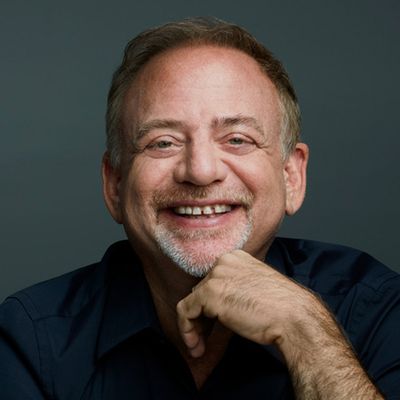
My guest today on Broadway Nation is the Tony Award-winning composer, lyricist, arranger, and music producer, MARC SHAIMAN, who has found spectacular success in nearly every aspect of the entertainment industry, including film, television, and theater, but is probably best known to fans of this podcast as the composer and co-lyricist of the Broadway smash hit musical HAIRSPRAY.
Marc joins us today to tell us about his star-studded new book, NEVER MIND THE HAPPY, which recently became a New York Times bestseller.
In this candid, hilarious, and at times quite moving memoir, Shaiman looks back over five decades of his amazing career. I found this to be a delightful conversation filled with behind-the-scenes stories and impromptu musical punctuations that I suspect you will not soon forget!
Become A PATRON of Broadway Nation!
This episode is made possible in part by the generous support of our Patron Club Members, including our newest patron, Arnold Hirshon.
If you are a fan of Broadway Nation, I invite you to become a PATRON! For as little as $7.00 a month, you can receive exclusive access to never-before-heard, unedited versions of many of the discussions that I have with my guests — in fact, I often record nearly twice as much conversation as ends up in the edited versions. You will also have access to additional, in-depth conversations with my frequent co-host, Albert Evans, that have not been featured on the podcast. And all patrons receive special “on-air” shout-outs and acknowledgement of your vital support of this podcast.
And if you are very enthusiastic about Broadway Nation, there are additional PATRON levels that come with even more benefits.
If you would like to support the work of Broadway Nation and receive these exclusive member benefits, please click on this link:
https://broadwaynationpodcast.supercast.tech/
Thank you in advance for your support!
Transcript
This transcript was automatically generated and might contain errors.
[0:00] David Armstrong: Welcome to another episode of Broadway Nation, the podcast that takes you deep inside the remarkable history of the Broadway musical with a special emphasis on the immigrant Jewish, queer, and black artists who invented it. I'm David Armstrong, and my guest today is the Tony Award-winning composer, lyricist, arranger, and music producer Marc Shaiman. Marc has found spectacular success in nearly every aspect of the entertainment industry, including film, television, and theater, but is probably best known to fans of this podcast as the composer and co-lyricist of the Broadway smash hit musical HAIRSPRAY. Marc joins us today to tell us about his new book, NEVERMIND THE HAPPY, which recently became a New York Times bestseller.
In this candid, hilarious, and at times quite moving memoir, he looks back over five decades of his amazing career. I found this to be a delightful conversation filled with behind-the-scenes stories and impromptu musical punctuations that I suspect you will not soon forget. Before we begin, I have to send my heartfelt thanks to the generous patrons of Broadway Nation, whose crucial support helps to make this podcast possible, including our newest patron, Arnold Hirschan. If you would like to help support the work of Broadway Nation, there'll be information at the end of the episode about how you, too, can become a patron. Now, here we go. Marc Shaiman, it is such a pleasure to have you today as a guest on Broadway Nation to talk about your new book, NEVERMIND THE HAPPY. Tell us about this title. Where did this title come from?
[1:47] Marc Shaiman: Oh, it was the day that my mother defined Judaism, when my sister called her one New Year's Day and said, Ma, I want to be the first to wish you a happy and healthy New Year. And my mother said, NEVERMIND THE HAPPY. So I've been striving all my life to try to find the happy, but that kind of feeling is in my blood, obviously. I've always had a battle to try to not immediately wait for the other shoe to drop and what bad thing is going to happen.
[2:17] David Armstrong: Well, and of course, you've had an amazing career. You've had five amazing careers in many ways because you've been involved in so many different aspects of the entertainment industry, most notably film scoring and Broadway. But it doesn't stop there. It goes way beyond that to many other things. So I imagine the tension to have had all that success. And of course, nobody has success without failures that come along or setbacks that come along. What I was really engaged by in your book was your candidness, number one, and your ability to go back and forth between those, not only just emotions, but as your career veers back and forth, mostly with success. But you're very candid about the setbacks and the challenges as well.
[3:03] Marc Shaiman: Well, yeah, I have to be. I mean, I did set out to write an honest book. I didn't want to, like, you know, any other people, a few people and a few experiences. I couldn't help but talk about what the other person or people were like as we were working on it. But, you know, for the most part, I'm talking about how things happened to me and how they made me feel. You know, I talk in the book about plots and zets. These are both Yiddish words. A plot is when you're I'm sort of mixing my Yiddish metaphors because a plot is something you feel when something wonderful happens. Oh, I'm plotting from joy. Zets is something that happens to you, you know, a punch in the gut. And I go back and forth between all those.
And I've been having them as we all do. It's not just me and it's not just showbiz. It's just life. In show business, though, you have this big effing spotlight on you. So it's really nice when it's a big, happy success. But when you have something that isn't working out and then see everyone has to write about it in the newspaper or now, you know, everyone writing about it online, it's like, oh, man, you know, sometimes you just wish you could crawl in a hole for a little while and, you know, brush yourself off and start again. But man, it's just all out there. It's it's much tougher. My skin has gotten thinner over the years, not thicker. You would think from all the slings and arrows and such that you just get a thicker skin. But I got thinner.
[4:33] David Armstrong: As I said, there's so many aspects to your career because the show is called Broadway Nation. I think today we'll focus mostly on the Broadway aspects of that. But of course, Broadway, Broadway.
[4:45] Marc Shaiman: Sure. Yeah, exactly. But of course, all the other things will tie in there as well, because everything you did was very theatrical in its own way.
[4:54] Marc Shaiman: Yeah, I was lucky enough to even my television jobs and my movie jobs almost always had some kind of theatricality to them, some musical theater sensibility to it. I mean, on Saturday Night Live, the recurring character, characters I got to work with were called the Sweeney Sisters, not known much these days because of the music rights. They don't rerun those as much and they can't be on the Internet as much. There's one which was luckily our peak moment, the Christmas Bell Medley somehow manages to remain online. You know, so that was very musical theater. I mean, right down to clang, clang, clang went the trolley being the Sweeney Sisters theme song for whatever reason we don't know. And then when I started working in Los Angeles doing Billy Crystal's Oscar medleys, along with Billy and his comedy writers at the Oscars, that was, you know, seven minutes or so of pure musical theater-y kind of writing, writing funny lyrics to existing songs, which I had grown up on Mad Magazine, where there were always these parodies and it was always sung to the tune of, like the Barbra Streisand one. What was it called? On a Clear Day You Can See a Funny Girl Singing Hello Dolly Forever. I remember it very, very well. Yes.
[6:06] Marc Shaiman: Me too. I bought the, actually it was a gift. My agent bought me as a gift that cover, the actual artwork for the cover. And then Sister Act and The First Wives Club and The Addams Family. On The Addams Family was like the second movie I got. Scott Rudin, the producer, said, oh, I've hired Comden and Green to write, there's a song in the middle of the movie, the Mamushka. So I'm going to send you to New York to work with Comden and Green. I couldn't believe it. And when I finally did go to New York to work with them, because when Harry Met Sally soundtrack had blown up, I was suddenly on the road with Harry Connick Jr. and we played Broadway. So we were at the Lunt-Fontaine Theater, and then I would take a cab up to Comden and Green's house, or Betty Comden's apartment, and got to play the very piano that Leonard Bernstein and Jules Stein.
I was so intimidated just putting my hands on that piano. But somehow we wrote them Mamushka. And they even, they said, have you written anything else for the movie yet? And it turns out I had written melodies because there's the scene in the movie where this song took place as a party. And for the prerecords for the dancing at the party, Scott Rudin said, write the melodies now. So we have them. And I ended up writing like all the melodies I ended up using for the whole score for that party scene, like I wrote for Morticia. It went, uh...
[7:37] Marc Shaiman: So Comden and Green said, play that again. So I played it again. And the next day they sang for me, looking like something that rose from the grave. How can I help but to kiss ya? Morticia. Great Comden and Green turning a word on its head a little to make the rhyme, but in a great way, the same way like Yip Harburg did in like millions of like Finian's Rainbow, or Wizard of Oz, how he would create his own slang. I mean, so I'm getting it right with Comden and Green. Can you imagine my head just exploding? All these dreams just coming true. Then the First Wives Club, that ends with a musical number that grows into a fantasy. The band is playing, the orchestra is playing, there are more girls singing, and yet everyone bought it.
It was just this moment that was just like a musical because it's like their emotion was so big at that moment that it had to become a musical number with it ending with them dancing into the sunrise, you know? And then once again, Scott Rudin, he gave me Sister Act, he gave me First Wives Club, Adam's Family, and then the piece de resistance when he called to say, you know, I bought the rights to do a South Park movie even before the TV show came on. And they're doing a movie and they want it to be a musical. And would you be interested in being like the... Meanwhile, how old was I at this point? Like 32 or I don't know what I was, but suddenly I was the learned old man that would help the professor to help Trey Parker realize his vision of a musical.
I mean, and Trey Parker needs no help from anyone to do anything. He's pure genius. The overused word genius really applies to Trey Parker. He can write music, lyrics, sing it, play a million characters direct, and amazingly, being that way, is extremely collaborative. So he would say, I wrote most of the song, you know, see what you want to add to it. Or in the script, his ideas for the musical opening number were just kind of they didn't they didn't rhyme and they didn't have exact form. They were just ideas. And he was perfectly open to me. That was like the first thing I did in the movie was take what he did and try to give it a bit more form and structure. And then we would work together.
And it was just a dream. But then there were other songs that he totally wrote. Most of them. I mean, I feel bad. I always say I was just Igor to his Dr. Frankenstein. And, you know, sometimes through interviews, it would make it sound like I wrote more than I wrote. I arranged and orchestrated. I did whatever I had to do to make his vision. So on the if I'm allowed to say, uncle fucker, I should ask the question before I say it. So like on that song, you said it now. Yeah. I wanted to I redid a couple of lines so that there were perfect rhymes because Trey is one of the modern people who they're not concerned about perfect rhymes as long as it sounds, you know. But he was like, no, Mark, don't touch that one. I like it just the way I wrote it. But I did have the idea of because the characters singing it are obsessed with farting. Can I say fart? So I had the idea of.
[10:49] Marc Shaiman: Calling the South Park sound effect library, and I said send over every fart sound effect you have, and I sat with it. It was just at the beginning of digital stuff on the computer, and I had them all up on my computer listening to, and I cut them all up to create a tap dance break, so it was like Moses Supposes from Singing in the Rain. The greatest gig ever, and then that led to, well, as you, I don't, I guess you made me know that the South Park movie came out just when Margot Lyon, our great friend, the late great Margot Lyon, had bought the rights to do a musical of Hairspray for Broadway, and the South Park movie came along just as she was asking people who do you think should write the score to this, and luckily everyone kept saying get Marc Shaiman, get Marc Shaiman, he just did South Park. It's this very similar sensibility, John Waters and Matt and Trey.
[11:49] Marc Shaiman: Let's jump back to the very beginning now and talk about how you fell in love with Broadway to begin with, exactly. A little gookart music is great there, we're going back in time, a flashback. Well, I fell in love with the Mary Poppins soundtrack, so that was, I was four years old when that movie came out. I listened to that record endlessly. A man has dreams of walking with giants, but then speaking of that song, even as a four-year-old, my sense of melancholy was so strong that my favorite cut on that record is the one that goes, it's when the father is realizing what's gone wrong, and he's, you know, a man has dreams of walking with giants. Those chords, it's just my little four, five-year-old heart and soul was like, oh poor Mr. Banks, and how wonderful that Bert teaches them this lesson of like, you know, time will race by, you've got to be with your kids now. I just want to cry even just thinking of the beauty of that song and the orchestrations by Irwin Costell.
[12:58] Marc Shaiman: So not only was I listening to the Sherman Brothers for the songwriting lessons, but Irwin Costell's gorgeous arrangements and orchestrations, which he then went on to do The Sound of Music, more lessons of orchestrations. And you know that opening of, you know, you know, so a friend of mine brought me, I think around seventh grade, she said they're doing The Sound of Music in this summer theater workshop. There were two women in my township who recognized that for whatever reason the schools in my town didn't put on musicals, which is very odd. So they both had theatrical backgrounds, and they created the Scotch Plains Family Summer Theater Musical Workshop, and the day I went, it was auditions for The Sound of Music, and I raised my hand and said can I audition to play piano because no one knew how I played piano except for my family, my aunts and uncles or cousins that would come over.
[13:53] Marc Shaiman: And so Judy Cole, the director, she said there's the piano kid, go play. And I went and played, and I don't remember what I played, but I was on an upright piano that was up against the stage, so everyone was behind me in the auditorium, and I distinctly remember when I turned around and everyone was just quiet, staring at me like some science experiment, you know, like I was like a freak of nature. I was like this little Mozart of show business. I'm not saying I was Mozart, I'm just saying when it had to do with musical theater kind of playing and show business, I just had it in me. And that moment of attention of everyone agog at me, it still implanted in my mind, in my brain's memory, that picture and the feeling it gave me. And from that point on, schoolwork went out the window, and I started doing community theater.
[14:53] Marc Shaiman: Judy Cole, the director, brought me to the Clark Players of Plainfield, exit 135 if you're from Jersey. We did Funny Girl. She brought me to be the new piano player at Funny Girl, and the cast looked at her like, Judy, have you lost your mind? She said, Marc, go to the piano. And I sight-read the overture to Funny Girl, which I couldn't do right now if you paid me. My chops are down, but as a 13-year-old, I had it in me, and I could play it. And then everyone was like, oh, okay. And then she brought me around to other community theaters, and then I discovered new friends, and I did a million shows in the space of three years. I did almost every classic musical from the golden age of Broadway and learned everything I've ever learned from those experiences.
[15:39] David Armstrong: You describe it in your book as sort of like graduate school.
[15:44] Marc Shaiman: Yeah, because, you know, like I would go to the Westfield New Jersey music store, and you would get, you know, it would go, you know, the music sheet you buy in a music store, it's simple enough for, you know, a young person to play or anyone to play. When you get the piano conductor score for a cabaret, and it's got, you know, what the clarinets are doing or, you know, what the flutes are doing or the trombones, and it's all right there in front of you, you put on the cast album, and you can hear, oh, that's what's happening. Oh, that chord, by moving that one note in the chord, you've created this alternate version of that chord. And I just learned everything from that, and I learned how to collaborate with casts and directors and learned the joy of being with other musical theater freaks and just having the best time of my life and making lifelong friends. I'm still all friends with my friends I did community theater with.
[16:40] Marc Shaiman: So I didn't go to college, I didn't go to music school, I just had your basic piano lessons, but those piano conductor scores and those rehearsals, I learned everything. And at the same time, you're also entranced by pop music and playing along to pop albums. Talk a little bit about that because eventually these two threads will come together in your career, obviously.
[17:02] Marc Shaiman: Well, I went from listening to nothing but the Mary Poppins albums from four to whenever. Basically, when I hit puberty, Bette Midler and puberty happened at the same time in my life, and Bette Midler's first two records came out, and I was giving them as a gift for helping my music teacher with the junior high school talent show because Boogie Woogie Bugle Boy had just come on the radio, and he knew I was obsessed with the harmony. And I used to cut gym class to go to the auditorium and grab the girls and say, here, sing these notes, you know, oh, what does that sound like? Oh, why don't we do this? I mean, I was at harmony. I still am obsessed. There's nothing like being in a room full of people singing harmony.
[18:34] Marc Shaiman: And so then Bette Midler, and so I listened to those arrangements by Barry Manilow. He was a brilliant musical director, arranger, and learned so much from that. And what he also did with Bette Midler was take a song like Leader of the Pack or Chapel of Love, girl group songs, and blowing them up into, you know, theatrical joyful three-act plays in the same way that Peter Matz, brilliant arranger, worked with Barbra Streisand. And I also started listening to Barbra Streisand albums. Could you tell I was gay? So I'm going from Bette Midler to Barbra Streisand albums, but also listening to those arrangements or then Nelson Riddle for Frank Sinatra. That came a little later in life, but these great arrangers who create, they like in just the intro, it's like a movie. They've set the scene of where that singer is.
[19:14] Marc Shaiman: So I became a Bette Midler fanatic.
[19:32] ♪ Musical number: "One for My Baby (and One More for the Road)" — performed by Marc Shaiman ♪
[20:09] David Armstrong: Don't go away. Marc and I will be back with more Broadway Nation right after this quick break.
[20:16] David Armstrong: Hi, this is David Armstrong, and if you're enjoying this episode, I strongly suspect that you'll want to read my new book, Broadway Nation: How Immigrant, Jewish, Queer, and Black Artists Invented the Broadway Musical, which is on sale now wherever books are sold. And I'm happy to report that the reviews have been terrific. Noted author and theater historian Peter Felicia of Broadway Radio writes that there's so much information here that Broadway Nation could almost be called a textbook, but it's much too fun to be described as such. So let's just say it's a textbook example of how to write about musicals and how to do it right. And author and Princeton professor Stacy Wolf says that David Armstrong's Broadway Nation is a lively, engaging, and fascinating journey through the vibrant history of the Broadway Musical.
Whether you're a historian, a theater maker, or a passionate fan, Broadway Nation is an important and impossible to put down tribute to the diverse voices behind the Great White Way. And finally, Tony Award-winning lyricist David Zippel says David Armstrong's insightful history of the evolution of the Broadway Musical and its creators is captivating and comprehensive, as well as indispensable. Of course, you can find it on Amazon, or better yet, have it ordered by your local bookshop.
[21:39] David Armstrong: But if you go to the publisher's website, bloomsbury.com, you can order it at 10% off the full price of either the hardcover or the paperback. Again, like the podcast that inspired it, the book is titled BROADWAY NATION, HOW IMMIGRANT JEWISH QUEER AND BLACK ARTIST INVENTED THE BROADWAY MUSICAL. Now, back to the show. So just briefly tell us then how you amazingly early in your career end up playing the piano for Bette Midler.
[22:04] Marc Shaiman: It's a long story. If you read my book, buy my book, you'll get it all. But by chance, because my life has been nothing but never-ending fairy tales, I went to New York with a friend when I was 16 years old. I had already left high school. I got my high school equivalency diploma. We ran into some other friends from New Jersey. We stepped into the place where we happened to run into them on the corner of Grove and Sheridan Square, which ended up being Marie's Crisis Piano Bar. Once again, to make a long story short, I went to the piano and before the afternoon was over, I'd been hired by the guy sweeping behind the bar to play at Marie's Crisis. He didn't know I was 16. And next door, he went and grabbed this comedy review that wanted a funnier piano player than they had.
And the director of that was Scott Whitman. So in that one day in July of 1976, my life changed for the better. And I started staying with Scott and his two friends up on 79th Street. He lived across the hall from one of Bette Midler's backup singers. So people say to me like, oh, how can I have happened for me? What happened to you? I was like, well, you got to go to New York with your friend from New Jersey, run into other friends in New Jersey, want to catch up with them, step into Marie's Crisis, play the piano, the bartender's there. He introduced you to Scott, who lives across the hall from your idol's backup singer. And so I became the Harlettes. That's Bette Midler's backup singers. I became their musical director because of my proximity to living across the hall from Ula Hedwig, then was called out to L.A. to teach Bette Midler's band the Harlettes material.
She said, girls, come back on the road. I'll let you open the show. And I just made a very long story short. But at 17, I got to play for Bette Midler and she was like, stick around, I could use you. And my flight home to New York was canceled. And not only did I start playing for Bette Midler, but because she's a frugal gal, instead of putting me in a hotel, she put me in her guest room at her house. And not even like the guest house in the backyard, no, the room next to her bedroom, like brother and sister. And that is our relationship to this day, 49 years and change. We still very much have a brother, older sister relationship, right down to the bickering and the infights and the grudges and all of it. So this absolute dream came true right away. I hadn't even turned 18 yet.
[24:32] David Armstrong: That's truly an amazing story. And you write about it very captivatingly in the book. Another theater story I want to touch on before we get to Hairspray, which, of course, I want to make the focus of this, is how you killed Stephen Sondheim.
[24:46] Marc Shaiman: Well, I thought I had for a moment. That one, David, I'm going to insist that we let the readers read because I write it, you know, unfortunately, the New York Post printed like two lines from it. And it was so unseemly. It's I mean, you know, I have to admit it's in the book. I can't be a hypocrite. But the way that they wrote about it, they were like raccoons rummaging through the garbage, every single thing in my book that could be sensationalized. They wrote this article. So I vowed I'm not going to make the Stephen Sondheim story into my party trick and read the book. I write about him with all the respect that we all have. I mean, he's a god. The story is more about leave it to me to instead of having these wonderful stories when Stephen Sondheim died and people were like printing the emails or the letters and how he was so supportive of so many people, encouraging them, even if it was tough love.
He was just so unbelievable how he mentored people. And my experience, leave it to me. It was basically a farce. Don't you love farce? And he did say to me the morning I called him after our experience, he said, Mark, wait till I'm dead to tell the story. And I really did. I kept the secret, the best kept secret I've ever kept. I didn't tell anybody this story until after he had died. And it humanizes him. You know, we think of him in such as we should. I mean, it was, you know, this God walked the earth. But my story does show that he is human, just like the rest. You know, it's like that song. What if God was one of us? You know, and so my story is my what if God was one of us kind of stories.
So if you want to hear the story, you have to buy the book. And I recommend it because it's a really great story also by the audio book, because I do tell the story in my own way. You know, with the book and the audio book, I'm about to make a video that we're going to put online this week where I sing that people need and choose that. You've got to get to you. It's best to buy to don't don't buy one or the other. In the book, you get the pictures and you can read it at your own pace and you get the audio book. You get me and you get like 20 great singers because I wrote in the book a lot of lyrics. I quote lyrics from our songs, never thinking about, oh my God, what am I going to do in the audio book?
And, you know, my singing voice, I say it's like a Jewish cry for help. So I get away with singing this and that. But I knew I needed to call in the troops and I have the most loyal, wonderful friends. And so there are so many wonderful singers on the audio book. So you really get them both. It only costs a little, little bit more. It's not that much.
[27:34] David Armstrong: So Margo Lion is homesick, watching the movie of Hairspray and decides that that is going to be the musical she wants to produce for Broadway, which is if you know Margo Lion is, of course, you knew her very well. It seems so unlikely that she would choose that property. But something about it spoke to her. How did it then come to you?
[27:58] Marc Shaiman: Strangely enough, it was the second time it came to me. During my film career and doing all these movies with Scott Rudin, Scott Rudin took Paul Rudnick and me to Joe Allen's and asked if we would be interested in writing a musical of Hairspray. And of course we were, but nothing came of it. He just never brought it up again. I don't remember. Maybe he didn't get the rights. So can you believe it came around twice? Same thing happened on Charlie and the Chocolate Factory, as a matter of fact, but I digress. That Margo Lion after South Park, when the South Park movie came out, it came out and thank God it finally put my name back into the Broadway community because the Broadway community loved that movie so much.
Stephen Sondheim wrote Trey Parker a fan letter. Margo Lion called me out of the blue. And I swear to you, I think I really was sitting on the other side of the room of my music studio that I had in L.A. because I had hit such a rut that I was often some days just sitting on the other side of the room, just staring over at the piano and all the film music equipment. I just feel like I know I got to go over there. But I was in such a rut. I was scoring so many movies one after another. And although I had a lot of great opportunities, especially through Rob Reiner of writing for a lot of different genres, eventually I kept getting handed the same kind of movie and I just was bored with it and I didn't have anything new to add.
And I wanted to be writing musicals. And Scott was in our house that was next door to my recording studio without any creative outlet. He had come to L.A. with me. We were a couple. And I had really ripped him away from his theatrical community that he had been creative with. So when Margo called and said, would you write a musical of Hairspray? And she said, who would you want to write lyrics? I said, me, me and my partner Scott. I'll only do it if it's me and Scott. And so she said, well, I don't know you as a lyricist. I was like, but if you had gone to see South Park, it said additional music and lyrics. And if you looked at the end of the Oscar scroll at the credits at the end, it would have said medley lyrics by.
But no one ever seems to see the lyric credits. So she said, would you write some songs on spec? I was like, yeah, sure. So I ran across the hall, not the hall. I ran across the lawn. I think I floated across the lawn and said, Scott, I just got an offer to write a Broadway musical of Hairspray. And that's where we'll pick up the conversation on the next episode of Broadway Nation, when Mark Shaman returns with more stories from his new book, Never Mind the Happy.
[30:22] ♪ Musical number: "Blame Canada" — performed by Marc Shaiman ♪
[30:49] David Armstrong: If you love this podcast and would like to delve even deeper into the world of Broadway musicals, then I invite you to become a patron of Broadway Nation. For as little as $7 a month, you can receive access to a treasure trove of exclusive features, including new, specially produced episodes that are available only to patrons. And this includes a five-part series on the Broadway musicals that received the Pulitzer Prize for Drama. And all patrons receive shout-outs and acknowledgments in recognition of your vital support. To join, go to broadwaynationpodcast.supercast.tech. That's all one word, broadwaynationpodcast.supercast.tech, or simply click the link in the show notes to this episode. Broadway Nation is written and produced by me, David Armstrong. Special thanks to Pals Mox for his help with editing this episode, and to the entire team at the Broadway Podcast Network.
© Broadway Podcast Network, All Rights Reserved