

This week’s episode is a little different because it’s two podcasts in one! It’s a collab between David Armstrong’s Broadway Nation and Dirty Moderate With Adam Epstein... Read More
From the show: BROADWAY NATION
Featured Shows
About
This week’s episode is a little different because it’s two podcasts in one! It’s a collab between David Armstrong’s Broadway Nation and Dirty Moderate With Adam Epstein.
My podcast is all about the history of the Broadway Musical, and Adam’s is all about current American politics – today we combine forces to discuss the many connections and intersections between the Broadway Musical and American politics.
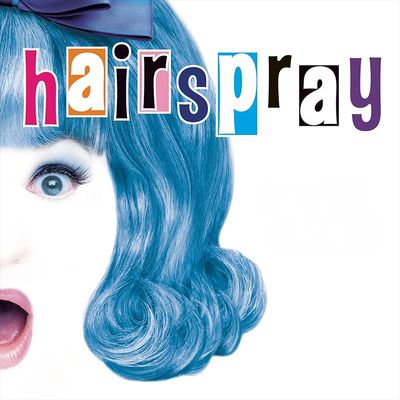
Twenty years ago Adam and I had the tremendous good fortune to both be involved in the creation of the Tony Award winning “Best Musical” HAIRSPRAY. Adam was part of that show’s original New York producing team, and I was the Producing Artistic Director of Seattle’s 5th Avenue Theatre where the show received its World Premiere prior to Broadway. We use that joyous, delightful, and very political show to kick off our conversation.
Most people probably don't think of musicals as being particularly political. But Adam and I both believe that over their 125+ year history, Broadway musicals have more often than not been overwhelmingly political, and have usually – overtly or subliminally – strongly advocated for democratic, humanist values and ideals that many people would label as being “progressive” or “liberal”.
Adam and I have both taught courses on the history of the musical using the “American studies” concept that you can't separate US politics from its history, culture, and literature. And, we both have used the history of the musical to explore such topics as: what it means to be American, what it means to be othered, and how and why the “American experiment” has included, marginalized or excluded certain people and groups? Interestingly, many of those otherwise marginalized groups were included in the invention of the Broadway musical and contributed to not only moving the form forward, but also to instilling in it these progressive and humanist values.
During the first half of our conversation we discuss in detail the inspiration, early development, pre-Broadway tryout, and triumphant Broadway opening of Hairspray, as well as it’s political messages and ongoing impact and legacy. After the break we expand our discussion to the inherent pollical messages of other hit shows including Oklahoma, Guys & Dolls, Les Miserable, HAIR, Cabaret and Annie!
If you would prefer not hear discussions or opinions about America’s current political situation – this is not the show for you!
However, I think most people will be fascinated to discover that many of their favorite musicals contain hidden-in-plain-sight political messages and advocacy that I believe truly has “changed America in the process”.
Adam Epstein BIO:
After receiving 46 Tony nominations and 12 Tony Awards, Adam Epstein took his last bow as a celebrated Broadway producer to focus on Act II; Political provocateur.
Spending time getting his MA in American Studies at Brown, guest lecturing at Harvard, bringing his sexy, gay Centrist perspective to Trish Regan’s FOX News program as a regular, and writing the hell out of the American political shit show for international outlets, Adam grew his core beliefs from observant, lifelong Democrat to the politically homeless host of Dirty Moderate with Adam Epstein, an extremely not extreme political podcast.
Adam wanted a gaslight-free zone where a vibrant exchange of ideas could flow freely without falsehoods. A haven for rigorous analysis and lively debate, where people could gather and fearlessly agree to disagree. So he created it.
Transcript
This transcript was automatically generated and might contain errors.
[0:06] David Armstrong: So we're gonna do something different today. This is usually the Broadway Nation podcast, but today it's two podcasts. It's also Broadway Nation and Dirty Moderate. And I'm thrilled to be joined today with not a guest but a co-host, Adam Epstein.
[0:21] Adam Epstein: Hello. David, thank you for having me. Hi, Broadway Nation folks. I am Adam Epstein, and I am the host of a podcast called Dirty Moderate with Adam Epstein, which is a political podcast. But David has brought me here. David, you gotta tell them why I'm here. Why is this politico sitting next to you?
[0:36] David Armstrong: Well, we're gonna talk today about the collision of Broadway musicals and politics. Probably most people don't think of Broadway musicals as being particularly political. But I think that we view Broadway musicals over its 125-year history as more often than not, most shows have been overwhelmingly political in many, many ways, and have often either overtly or subliminally advocated for what I would describe as democratic humanist values and ideals that some people might even view as progressive or liberal, but it's more about social issues than it is about political issues in that regard.
[1:14] Adam Epstein: I completely agree. And like you, David, I've taught a few classes on what I call the musical theater as American studies. My undergraduate work is in political philosophy, although as a theater kid always everyone should also know that David and I were lucky people to be part of the creation that was Hairspray the musical, which of course we're gonna talk about. I'm one of the original producers, and David's theater is too, Fifth Avenue Theater, where he was for—you're still there, right?
[1:36] David Armstrong: No, no, I stepped down three years ago, but I'm the emeritus artistic director. So my heart will always be there to a certain extent.
[1:43] Adam Epstein: Yeah, not to digress too much, but I was gonna say that the American Studies idea that you can't separate politics, history, culture, literature from anything in the United States. And in specific terms, when you're looking at culture, obviously, people have done lots of research on film and TV, but theater is less used as a kind of site to contest the ideas. What it means to be an American, what it means to be othered, how does this American experiment include or not include people? And what have those groups that have historically been marginalized? What have those groups done to not just move the form forward, but to sort of make sure that a kind of progressive, for lack of a better word, message gets realized and exposed, right?
[2:23] David Armstrong: Absolutely. And that's where we come into so much alignment because I teach a course at the University of Washington, which I bet you could just pick up and teach, or vice versa, because that course is called The Broadway Musical, How Immigrants, Jews, Queers, African Americans, and Other Outcasts Invented America's signature art form. And that's what this Broadway Nation podcast is about as well. What brings us together today is, as you said, our connection through the world premiere of Hairspray, which you were one of the lead producers on. And I had the great pleasure of being the producing artistic director at that time at the Fifth Avenue Theater in Seattle, where the show had its world premiere.
So both of us had the opportunity to see that show from the very beginning, from its earliest stages through to opening night on Broadway and beyond, which I will never forget. It was one of the most thrilling experiences of my life to be part of it and to see all that happen. I'll be doing several episodes about that because this summer marks the 20th anniversary of Hairspray.
[3:23] Adam Epstein: Yeah. This month, June, it opened at the Fifth Avenue Theater, and then it opened on Broadway in August. It's amazing, David. And I know you were there. I don't remember specifically where you were at the moment, but obviously Hairspray with the musical was Brainchild, the late great Marco Lyon, whose idea it was and who mentored me into the producer I became and partnered with me to start the development of it back in '99. And we sat there at that first preview, which I believe was May 30th, 2002. Good Morning Baltimore didn't even have an overture yet. Remember, it just went boom, boom, boom, before the little, you know.
[3:57] ♪ Musical number: "Good Morning Baltimore" — performed by the cast of Hairspray ♪
[4:25] Adam Epstein: You just felt the entire audience consumed and subsumed by the magic of it from start to finish. And I remember, and Margot was habitually nervous and always worried about the shoe dropping or many shoes dropping. And she said, "Oh, this is special." I said, "Marco, this thing's a hit." We had been watching it grow in readings and seeing people's reactions, which of course readings aren't always reliable because it gets so insular. But that audience in Seattle, and just as the three weeks went on, it was astonishing. And by opening night, it was clear. Variety, I think, wrote Hairspray is a big new shiny hit, and it's headed for Broadway. I remember us at four in the morning reading the reviews online, and was it Misha Baronson at the Seattle Times? She had a great line that, you know, of course it went to New York and that press court gets priority. But Misha called it a bye-bye birdie for the age of irony. I thought that was really smart.
[5:16] David Armstrong: Well, she's this very smart lady. I want to tell your listeners that because I know these are people who love and study and adore theater in a kind of context that it exists. So yeah. I too remember that first preview. I always describe it to people. I say they screamed after the opening number and then they screamed after every number afterwards. Every number in the show got this kind of reaction that you just don't hear. And then they just wouldn't leave the theater at the end. And of course, the next night was when 300 of the Seattle Men's Chorus were there. Of course, Harvey had performed with them a few years earlier. And I'll never forget. That's like something you see in a movie that you don't believe actually happens. The curtain call, which hadn't fully been staged yet, as I remember, the audience went nuts, and the cast finished their curtain call and they left the stage, and the audience would not leave the theater.
[6:03] Adam Epstein: I was gonna say I remember the like the endless standing ovation, the endless applause. Like we were frozen in time watching this alchemy, right? It was like this beautiful alchemy. And then Harvey, this is the part that seems like a movie. Harvey had to come back to the stage in his bathrobe. He'd already been to his dressing room and gotten out of the hospital.
[6:20] David Armstrong: Right, right, right, right.
[6:21] Adam Epstein: That's how long they applauded. Oh, I'll never forget it. But you know, let's jump on that point because here was the gay men's course in Seattle. The largest gay chorus in the country still today.
[6:29] David Armstrong: Well, I didn't know that.
[6:30] Adam Epstein: But I think that was also an amazing moment for the stuff you and I do as you look at what Hairspray the musical meant in so many ways, because it is that rare thing, and lovers of musicals know this. It's so hard to do, David, as you know, you did it for years, and so did I. And if you can stumble upon that perfect synchronicity of a big, let's say, in this case, joyous, effervescent, delightful. But a perfect book musical in so many ways.
[6:58] David Armstrong: Absolutely, right?
[6:58] Adam Epstein: That had satire and social messaging, but it was done with such a smile that you left feeling so good, and you left feeling hopeful by dint of the show, and almost kind of subliminally, by dint of the show's amazing message. That gay man's chorus is sitting there watching a John Waters musical, which, you know, John always said this. He was the Pope of trash. You know, he was the sort of independent rogue who wasn't accepted in the mainstream. And here he was seeing one of his babies. Really, you could tell it was going to reach critical mass. And what that meant for Hairspray is so much more than just about racial equality. It really is about loving yourself, self-acceptance, self-realization.
It's very serious in that way. And I think that watching that was an emotional moment for people because they said this show, of course, no show is one thing. No show is just gay or Jewish or black or any of those things. But it was all those things. And it was profound. I think that's where what you and I have been fortunate to do when we talk about the social political history of musicals, is so interesting because we can take those moments and go, what does it mean? Of course, it means it's a commercial moment and a joyous moment and a proud moment for your theater. And it's adorable that Harvey's in his robe. But think about that. It's just 2002. Hairspray was both of its time and ahead of its time, I always say.
And it deals with so many issues, as you said, with issues of sizism, all kinds of body issues. I make my students analyze what the themes are of the musicals. And when it comes to Hairspray, where we arrive at usually is that everyone's beautiful. That's the message of Hairspray. Everyone is beautiful, no matter who they are, no matter what they're like, everyone is beautiful and deserves to be seen that way.
[8:35] Adam Epstein: It's so true.
[8:35] David Armstrong: Which is a political statement.
[8:37] Adam Epstein: Yeah. And you know what? Hairspray, and this is a big deal, of course, for the LGBTQ community, that Edna's per John Waters' instructions has to be played by a man because he did not want it to be a joke on fat women. It's not about having a fat woman in your mind. It was just to have a man be a mom. When the movie comes out in 1988, the original movie. But then the musical, you know, for purposes of this discussion. Look at the expansive view of gender inversion or gender bending in the way in which that role was played without comment. Edna loves Wilbur. Timeless to Me was a love song.
[10:09] ♪ Musical number: "Timeless to Me" — performed by the cast of Hairspray ♪
[11:23] Adam Epstein: In every production of Hairspray since then, in every high school in America, a boy plays Edna.
[11:28] David Armstrong: I know.
[11:28] Adam Epstein: And that's pretty revolutionary as well, in the best kind of way, just because it breaks down all the barriers. So amazing that all those students can do that. Remember how, like, they used to have a Sunday New York Times piece, the Sunday before your opening on a Thursday or whatever it was. They'd have an essay relating to something. Written by someone else called John Waters wrote it for us. And the headline was finally the Fat Girls Before the Footlights. And he then went into exactly what you're saying is how this musical has a lot to say about gender being incredibly fluid. It has so much to say, obviously, about the hard-fought and continuing battle of race and racial equality. And finally, like you said, everyone's beautiful.
The idea of self-acceptance, but the genius of Hairspray, the musical, and David, you know this from being an aficionado and a historian, is what makes Hairspray easy to take in is that a girl, Baltimore girl, big girl, does two things. She wants to eat some breakfast and change the world. She integrates the Corny Collins dance show, which was basically like the Clark's American Dance Fan, but it was based on the Buddy Dean show, which was real in Baltimore. All the cities then, Cleveland, Philly, and they all had their versions of American bandstanding. So she integrated that and she won the heart of the hunk in that kind of Cinderella-ish way. It's very difficult not to root for the show, but as an audience member, and all the messages come baked in perfectly, I think, alchemized, you know, as an audience member, you're just like, wow.
[12:49] David Armstrong: You gotta root for Tom Meehan, the late Tom Meehan, who was one of our book writers. I used to do a lot of dinners with him in Seattle when I was out there for all those weeks. And I just would like to just absorb his information. He would say, you gotta have a strong central character you love. Tevya, Dolly, Annie, Tracy, the King. I mean, if you go through the most successful musicals, it is more than just a hero or heroine per se. It's the idea that you have to feel that you can get behind this person and you want to see them through, even if you already know what's gonna happen.
[13:17] Adam Epstein: It's so true. In other shows I've worked on, which were considerably less successful than Hairspray. We had that challenge, you know, that do we care enough about these people? And are the songs elevating their trajectories enough for us to want to see it pay off? You know, there is something to that in the form. So obviously we're biased, but I think Hairspray does that in terms of the American musical comedy in the past 25 years. Name me one show, right? I really could say this. Name me one show that you think, and if I sound braggadocious, I don't mean to, but did it better. Not saying there aren't great ones. I mean, take Hamilton now and Spring Awakening. I'm not talking about that. I'm talking about the American musical in the realm of Annie, Bye Bye Birdie, and you know, the great classics.
I don't know. Because Hairspray also, unlike the producers in Book of Mormon, both shows I love, it is not let's send everything up. It's actually real. They believe every word they're saying, and there isn't that weird distance. They're not going like, aren't we funny? We're making a musical, which the other musicals did expertly, but this was a celebration of beauty and of heart and of humanity.
[14:14] Adam Epstein: It's satiric, but it's not ironic in any way, shape, or form, which is what is such a revelation about it. It actually has the same heart that Annie has.
[14:23] David Armstrong: Another great show.
[14:24] Adam Epstein: Of course, anti-racism is really a lot of what Hairspray is about. That culminates in a big song that, as you and I know, people were worried about, especially Margot Lion, our leader in the whole thing, was very worried about whether the tone of the show, Hairspray, could contain that very serious, what we know now is an amazing song. There was a lot of contention between the writers who insisted it was going to work, and Margot and some of the other producers who were very skeptical, and they reached an agreement that they would perform it at the first preview and see how it went.
[15:00] David Armstrong: I don't know where you were, but I was sitting with her too, so maybe we were on the other side of her.
[15:05] Adam Epstein: Probably.
[15:05] David Armstrong: Because she just was certain it wasn't going to work and it was going to bring the show down. Not that she didn't think it was a great song, she just didn't think it was going to work in the show. She was so certain about it. She actually had been advocating to get it out of the show prior to that. And she would be the first one to tell the story if she was still with us. I've heard her tell this story many times.
[15:24] Adam Epstein: Oh, yeah. As I said, they screamed after every number, and then we got to that, and the place went really quiet. And Mary Bond Davis, who was sensational, launches into that song. And it builds and it builds and it builds. And as I remember it, when she finished, there was like this moment where nothing happened. It was just silence. And I think everybody was like, did they like it? Did they not like it? What's gonna happen? And then it had the biggest reaction thus far of the night. Went crazy. And Margot turned to us, I assume, and said, now we'll never get it out of the show.
[16:29] David Armstrong: She definitely said you were there.
[16:32] Adam Epstein: Yes, and you definitely were there. She didn't say that to me, but I remember seeing the response. And that's an interesting thing in musicals. And obviously, anyone who's listening to this podcast, if you haven't seen Hairspray, you were banished from society. But if you think about it, you have the Motormouth Maybelle character, right? Famously played by Ruth Brown in the original movie, but Mary Bond Davis in our production, the original Broadway production. In the show, it's written that she is so much like the grounding of it. You know, she has been through that door many times. She said, she said, get ready for a never-ending creative ugly or stupid or whatever it is. And she is this font of wisdom.
And I think it has so much heart. Jack O'Brien, the director would always say, those Motormouth scenes are everything. They are the glue of the message, not just the civil rights messages, the message of what the show is getting after. It was interesting because I know where I've been, which is always a showstopper. Felt, I think, to Margot and some people like, are we just rolling out this sort of belty African American woman? Mark Shaman wrote in the Martin Short musical later on, Fame Becomes Me, a big black lady stops the show. Admittedly, it might feel a little cheap on the surface and a little bit manipulative, but with Hairspray, it worked sensationally because it was such a moment where the show, which has such fantastic, I guess velocity, you would call it, right? Takes a breather and listens to the elder states person, in this case, Motormouth Maybelle, who really has something to say.
[17:18] ♪ Musical number: "I Know Where I've Been" — performed by Mary Bond Davis ♪
[18:59] Adam Epstein: I also think that that number in the musical theater crafting world, not everything dramaturgically has to make perfect sense. I remember Jack Virtell had told Jack O'Brien at the end of "You Can't Stop the Beat," and this relates to "I Know Where I've Been" too. That why is Harvey coming out of the can? It's really Tracy. And Jack goes, yeah, but the audience wants Harvey at that moment. Harvey coming out has more of a theatrical impact and effect. So you override, you know what I mean? You don't have to connect every dot. It's not a science project. That doesn't mean you want to be incoherent dramatically. "I Know Where I've Been," on top of all the messaging and all that, it is important to have a ballad that stops the show.
It's formulaic, but it's formulaic in the best sense. I thought it did the two things. It satisfied the appetite for that moment that the show needs and had so much to say and was totally, totally central and essential to the story. And the contrast that Margot was worried about actually ended up working for it because it was so different than anything else that happened in the show. In a review, you want to have one serious song three quarters of the way through that grounds the rest of the show. And that functioned in this show, which was not a review, but still functioned in the programming of it in that same way.
[20:18] Adam Epstein: My favorite show, Le Miz. You know, you just need the Harlequin, but you need the clown, you need the something. It's an inversion of that idea. So that's structurally a real, I think, a key ingredient of a musical.
[20:39] David Armstrong: Don't go away. Adam and I will be right back with more politics and musicals right after this quick break.
[21:03] David Armstrong: Let's talk about some of these other political shows. Probably the most overtly political shows. Hamilton would be the first show on everybody's lips, of course, because it's still so very much with us. The biggest show of the 21st century, certainly. And then other shows that have politicians in them. Which will be very interesting to see how that goes with an all-female cast, a non-male identified cast, let's say that. And of course, there's Of Thee I Sing, Evita is another one where you have politicians on the stage and is a very political show. Les Miz, speaking of Les Miz, it's about the student revolutions, you know, not the French revolution. The student revolutions, you know, post-Napoleon.
[21:43] Adam Epstein: Yeah, and it's about law and order. It's about the conflict between how closely do we hew to the letter of the law to the idea of crime and punishment. Glad they haven't made a musical out of that one.
[21:54] David Armstrong: Yeah.
[21:55] Adam Epstein: The Raskolnikov ballad would be something to hear, right?
[21:58] David Armstrong: Exactly.
[21:59] Adam Epstein: But that's very much at the heart. The sort of human rights story and social justice. It's literally about social justice.
[22:06] David Armstrong: Totally.
[22:07] Adam Epstein: What is it about musicals that you think make them, unlike film to a certain extent, more inclined to be political? I can name 50 Broadway musicals, if so can you, where the politics can clearly be identified even if the audience doesn't perceive them immediately.
[22:21] David Armstrong: It's a very good question. Well, I think that the and this is my thesis that I teach in my class. I hope it answers your question. It's something I've thought about for a long time. Because I always thought politically when I was in the theater and now I'm doing politics. I think that you have to look at the musical in different periods, right? Or different tranches. And I'm not gonna go back to Black Crook. I don't know about that. I'm not even gonna go to Shuffle Along and let's say start from Oklahoma, although I include Showboat in this too. Ultimately, the American musical, it's one of the only things America, not only things, but like jazz, it's inherently American. The musical, I think, made a case for American exceptionalism as we know it.
The idea that we live in a unique experiment, and that despite all the challenges that the country faces and that human nature faces, we are optimistic. We're cockeyed optimists, something's coming, something good. It's all of that, up through, I would argue, like the late 60s, early 70s. Of course, listen, Fiddler's got serious subject matter, Cabaret. I mean, I want to be clear to listeners, it's difficult to make a generalization. Hairspray is in that vein too, in a later era, you know, and the musical can do politics so well because it's such a unique art form. There's no other art form that can message to the point that it can no longer speak. It has to sing. Because all the world somehow gets, I don't know if I want to say resolved, but it's kind of worked on through song and dance.
And that's also what makes it unique. But continue my thesis by the time of Company, which is back on Broadway now in a revival directed by Marion Elliott. We just lost Stephen Sondheim in November. Vietnam, post-civil rights, Watergate, you know, America started to get a lot more cynical about its institutions, about its people, its politicians, its values. And I think Sondheim telegraphed that in the 70s. You start to see the musical get, I guess for lack of a better word, more serious. People who prefer an older type of musical complain that it doesn't have the same hope. I think the musical then goes through a change and then comes back home in a weird sort of way with the producer's hairspray, Mormon, most of the 21st century, not so much Hamilton, but you know what I mean.
You can start going through the list and say there's a return to, and you saw it, whether it was Hairspray or Book of Mormon or all the musical comedies, Steven Avenue Q. You know, people would say, Oh, you feel like you're walking on air again when you leave a musical. Just like your grandparents. I think Ben Brantley said that about one of them. And it's kind of like, yeah, because the musical had gotten between the British pop opera and Sondheim pretty self-serious and on its sleeve. And stop dancing for a while, which was part of that same thing. And to give Margot Lyon, who we've been talking about, who we both love so much, one of the reasons she wanted to do Hairspray. She wanted to bring dance back.
Broadway hadn't danced, and that was part of her impetus. So you're absolutely right. The musical art form allows, like I said, us to work out our stuff in song and dance, and it elevates it. Plus, unlike film, film is literal. So film is like if a building blows up, you watch the building clock. I don't mean that film has no metaphor, but you can do things obviously in a film that the stage is entirely left to metaphor. So I think within the realm of that imagination that creators of the theater have to do, that's what also makes it unique, because you have to conjure something up without literally saying to an audience, you're in a restaurant that is a waiter. You know what I mean? It has to be you know a reverie or an alternate universe or its own self-contained joyous world.
[25:46] David Armstrong: One of the things musicals can do, as you just said, in terms of America's stuff, is dramatize this conflict between conservative and liberal values.
[25:55] Adam Epstein: Right.
[25:56] David Armstrong: Or libertarian and communitarian values might be even a better way to say it. But Oklahoma, I think, is one of those shows that is entirely about that. And yet most people don't get it because we no longer really understand what the conflict is between the farmers and the cowmen. But the show has a thesis statement right at the top of the second act. The farmer and the cowman must be friends.
[26:17] ♪ Musical number: "The Farmer and the Cowman" — performed by the cast of Oklahoma! ♪
[26:54] David Armstrong: What that is telling us is that you know, the range wars were a real serious thing. That people in the 1940s understood what that was about. That's a big politics issue that is still with us today. It's a rural versus city issue, which is probably the heart of our political conflict right now. Conflict between people who live in urban areas and people who live in rural areas and the values that go with that. And Oklahoma represents that. What I find fascinating about it, and I think this is a major theme of the Broadway musical, is that healthy, strong, effective communities are vital to living. The musicals advocate for that, and they also tell us that we probably have to give up something to achieve it. We have to compromise to achieve it, which is a message I feel like we could all use right now in terms of how are we gonna come together? How are the cowboys and the farmers going to be friends? We're going to have to meet in the middle.
[27:52] Adam Epstein: Well, I mean, David, you know, that's the raison d'être, the mantra of what Dirty Moderate is. I'm a political independent before your viewers' gasp. I'm not out there equally voting Democratic and Republican, but unlike other people, I think if there is someone in the state or local level who's a Republican that is not a lying Trump supporter, it's something I would consider. I've been voting Democratic because I used to be officially a Democrat for so long because I haven't felt there's been much of an alternative. And to your point, that's sad because the farmer and the cowman need to be friends. And whether we like it or not, that is going to have to be our biggest challenge in this populist moment.
[28:31] Adam Epstein: Musicals are also very populist, meaning of the people. But I was going to say that the farmer and Cowman is also ingenious because look at this. Oklahoma's in 1943. It is at the height of World War II. It's a massive hit when it opens at the St. James in March of '43. America is at war. This is the height of American exceptionalism. We've gone there to make sure Hitler doesn't conquer the world and stop Imperial Japan, too, of course. And it was probably the most noble war that's been fought that I can think of, insofar as wars are noble, that is. But what I'm trying to say is this was a rah-rah moment for America. But in the show, they are depicting this conflict. You know, it's not just who's going to take Lori to the box social.
There's a lot going on. Oklahoma has recently become a state. It's impending statehood, having been Native American territory, which was a big problem because America had promised many of the tribes in the 1860s, 1870s that they would have their own land. And then we abrogated that treaty for like a hundred years. So that was part of it. But the farmer Cowman is that urban rural divide. And it also tells you how in American history, and this is stuff that I talk about in my podcast, but also just love, it fascinates, that we have always had divisions in a country this large. I mean, we weren't always 320 million people. But we've always been many countries in one. This isn't new. It just isn't new.
If you study American political history, there were famously, you know, Thaddeus Stevens, I think it was, was beaten with a cane on the center floor. They used to roughhouse Jefferson and Adams were vicious to each other. I mean, newspapers, forget Fox News, every local newspaper had a partisan bent. And the city versus country mouse type of motif was always there. You know, you city slickers, you don't understand us, and the beginning of banking and all that. That's what Gabe Jackson has ride. What I'm trying to say is that we've always been trying to bridge the divide. And I think musicals are very successful, at least trying to create a world. This is the exceptionalist thesis a little bit, where we can kind of unite to the extent uniting as possible, disparate parts, differences, ideological and otherwise, and we can kind of make those come together.
But it does tell a story about who we are. Who we are, we are at a breaking point in our society, but it's not as if we've never been torn. I mean, 700,000 plus soldiers were killed in a civil war here. So we got to be in perspective. That doesn't mean we shouldn't be working to bridge these divides, which is what I do, because we got to fight like hell for democracy because it's all in the line.
[30:49] David Armstrong: Yeah, and the metaphor of these shows, I think subliminally allows us to experience it, to go there to see the possibilities of that. Have these shows had a positive effect on America? It's hard to prove a negative, but how much worse would we be off if we didn't have these shows is the way you'd have to look at that, because obviously we have a tremendous amount of divide in the country. But I think the shows have made it better. But I thought about this today, David, and I don't know that Seattle's a good example or LA or you know, blue cities or whatever. But we send tours out and they play the capacity crowds in quote unquote red states with arguably liberal or left-wing messages, because I think that's where they unite.
I think people go and say, even if people are just treating as escapism, which many people are, they're working jobs, they're stressed, they're kids. You know, the last thing they're going there to do is be a sociologist. You know what I mean? Or to think about it maybe in the way we are. But somehow, when Hairspray's first round back in the day, we first started going to those smaller cities, there wasn't a seat to be had in Utah and Montana and all those places, they were happy because they aren't necessarily politicizing everything. It's just that we're in a climate that does. Do you know what I mean? They go and they go, Yeah, of course I agree with that. I like it. But you'd look at the state, look at the voting patterns that go, but you voted.
But you know, in every red state, there are a lot of blue voters. So when you say the red state, you know, you can't just like eliminate a swath of people who are not putting pieces of shit in power. Excuse my language. You know, they're not sitting there trying to destroy democracy. There are people who put honorable Republicans in, but also people who voted against Mitch McConnell and against Jim Jordan and against all these folks who are in what I think is the Trump cult that are trapped in, I say trapped. They live in Kentucky and they live in Idaho and they live in, well, they live in rural Washington. And in most of those places, you have the same urban rural divide happening. We have it here in Washington State. West of the mountains is where all the people are, and east of the mountains is where all the farms are, and they're constantly fighting with one another.
[32:46] Adam Epstein: If we believe in subliminal marketing, then I think we have to believe in the subliminal messages of musical theater also. Both of them are effective, and both of them have had an impact on people. You know, you can't dismiss one and say the other one is real. No, I was saying that in one of my earlier little answers here today. I mean, when a young kid goes to see Hairspray, then it's Pride Month, right? And they could be wrestling with their gender identity or their sexuality or both or whatever, and they see Hairspray, you know, for two and a half hours, you don't want that world to end. That's a world you want to live in. And that subliminally may help them find themselves and discover how to be themselves.
It may help them announce who they are and be accepted. You know, I saw something on the news recently of this kind of ex-urban Oklahoma City town. I don't know the name of it. And the kid had put a pride flag up. I think it might have been a story from last year, but they were reshowing it. But you put a pride flag up. And the whole neighborhood cheered them on. There was like one guy that made a homophobic comment in the neighborhood all said, Hey, man, you know, get out of here. We're proud of this kid. And so change does happen. It is subliminal. It is often very slow, but it has a way of creeping in. And then now we have the forces of reaction trying to fight back against it. But that's the natural reaction, right? You move something forward and something resists. I mean, that's kind of science. You know, every action has a reaction.
[34:00] David Armstrong: Absolutely. Another show that I think the metaphor is fascinating because it's a musical comedy that most people would not think of as being political is Guys and Dolls. Oh, yes. And yet, what is the conflict in Guys and Dolls? It's between the religious right and the most liberal libertine people of all time, just like in Oklahoma, it ends in a marriage, like comedies are supposed to. It ends in a marriage with a woman from the religious right as far as right as you can go in that world, the Salvation Army, and an inveterate gambler who represents big city values being married. Right. That's right. And the weddings in Oklahoma, everybody in Oklahoma is a cow man marrying a farm woman. Every single couple in that show does that same thing.
And that's as I often say to my students, that's not a mistake. That's on purpose. The writers did that on purpose, whether they knew what they were doing or it was in the back of their mind, but they have made this marriage to tell you what the show's about.
[35:00] Adam Epstein: That's a great point about Guys and Dolls. Of course, I knew it, but until you said it, I'm like, I'm learning. I'm your student here. What I think is so important about what you just said that I love, and I think this is amazing, is that the writers did do it on purpose. Why? Because you can't live in your own silo, in your own sphere, in your own little bubble, as far too many people do. You know, I don't. I'm out there talking to everybody, but people are living in their bubble. And what I mean by that is the proverbial libertine Confederate gambler doesn't want to talk to the Salvation Army ambassador because it's, oh my God, those are my values, and we drink and party and we're liberal and they're uptight and they're Christian and all the stuff.
But in real life, you know, you see it in culture, and musical does it so well. People do come together from different backgrounds. And the idea of them coming together and overcoming their differences. Yeah, it's a happy ending, but you know, it's also fundamental to America. One of the things that's really depressing to me is the group of people or idea that America now is the worst country that ever exists on the face of the earth. You know, it's the greatest oppressor. It just isn't true. It isn't true. I ask you to read the history of the Portuguese and Spanish empires, go back and read about the Ming dynasty. It just isn't true. Do we have our problems? Yeah. Do we have a different promise we are meant to keep?
Yeah, but we're working at it. You know, we're 245, 250 years old. My point in saying this is that we as American people, and maybe it's mythology, but I see it acted out in life, and it's being depicted here in Guys and Dolls in a lot of places. You overcome it. You know, you do marry someone you never thought you were like, because ultimately you're both Americans, but you're both people. And this sounds kind of Pollyannish, but it's true. And I think that's what the American musical is saying. The farmer and the cowman can come together. Everything doesn't have to be a fault line. And I just miss the idea. Yeah, I'm proud to be an American. I'm not gonna let bigots and racists and fear mongers and xenophobes take that flag away from me.
You shouldn't either, meaning anybody listening. That's our flag. That's not their flag. I'm not saying you have to go out in your pickup truck and wave a flag, but I'm saying just because MAGA decided to soil the meaning of that flag, doesn't mean the flag doesn't have good meaning. It doesn't mean that there are, as Lincoln said, better angels among us.
[37:04] Adam Epstein: That's interesting because I did a production of Hair at the Fifth Avenue Theater. Actually, that same year that Hairspray premiered. It was one of my favorite shows I've ever done. We actually did it twice because it was so successful. But there was a moment where a big flag came in and they sing that song about the flag, and we had put a peace symbol and stuff on it. And then for the finale, we actually brought the flag back in again. It was a big full stage flag. I remember someone complaining to me coming and saying, I don't think you should have that flag on the stage. It represents everything that's bad about America. And I said, why can't the left claim the flag as representing all the good things that are about America? You've made that decision yourself to see the flag that way.
[37:42] David Armstrong: That's very interesting that you bring that up. Yeah, I mean, I'm sure that you were channeling those thoughts exactly because you're right. Who's the arbiter of what that represents? That's the whole point is the ideals that we all collectively, I if we don't hold we should. They are not owned by a Democrat or Republican. They're not owned by the Trump right or the right, and they're not owned by the left. They're owned by everybody.
[38:01] Adam Epstein: That's a great point. And I'm glad that you stuck to your guns. Well, and of course, Hair, like so many of these shows, is a show that has very sharp critiques about America, about our political system, about the way we screw things up all the time. And yet it ends with a song called Let the Sunshine and sort of a desperate plea. But it's not really a joyous song at the end of Hair. It's like, how long are we going to keep doing this? What are we gonna see the light? But that's a very American, very positive statement, which is why I thought the flag should come soon after it.
[38:32] David Armstrong: You're right. It's two things I say on my podcast, that's a both things are true. You know, I'm politically homeless because I'm trying to figure out how to put all these threads together. Maybe I'll never figure it out. But in a sense that you can hold competing ideas. You know, they say the sign of a first class intellect is holding two different ideas in your head at once, and that does not seem to be working very well in our country right now. But I was gonna say that I think that both things are true. You can be proud of the flag and know that we're working toward it, and you can also be an enduring and hopefully insightful but relentless critic of America to do better. You can do both those things.
I don't like that they're put in separate camps. James Baldwin famously said, I love America so much, I will perpetually criticize her because I want her to be better. Frederick Douglass was a patriot. He said the Constitution was everything, and that slave owners soiled it. Martin Luther King did the same thing. They believed in the American creed, but yes, they were great critics and great conscientious objectors to the injustice that's also here.
[39:30] Adam Epstein: Before we end, let's talk about Annie. I love Annie. I do too. It was one of the first shows I saw when I moved to New York. I remember going and getting standing room to see that show and applauding so hard, I had a watch on that flew off my hand. And did you see Dorothy Lyden? I saw the original cast. Yeah, it was right after it opened. And I never saw that watch again. I could never find it. I searched the theater, but I didn't care. I loved the show that much it was worth it. But what's fascinating about Annie is how political it is. I described the story as being how little Orphan Annie convinces Roosevelt to bring in the New Deal. She's the generator for the New Deal happening. And her action is to turn the arch conservative Daddy Warbucks into somebody who supports depressing.
[40:18] Adam Epstein: The carols are steeled, the stores aren't filled. And windows are minus their dressing. The children don't grin, the Santa's are thin. And I've heard a terrible rumor. No good will, no cheer, but we'll get a new deal for Christmas this year. That's the main story of Annie.
[40:43] David Armstrong: It's so true, and Annie, of course, unfortunately, in many productions, sort of curdles into caricature and gets overplayed because it is such a great score, and you can't beat it. But when you think about Annie, is there any smarter or scathing or God, more incisive political commentary than Hooverville? I mean, that song is brilliant.
[41:01] Adam Epstein: Exactly. We'd like to thank you, Herbert Hoover. Is political satire at its best. Today we're living in a shanty. Today we're surrounding for a meal. Today I'm stealing coal for my who knew I could steal. I used to wither in the tropics. I spent my summers at the store. I used to throw away the papers. We don't get anymore. We'd like to thank the purpose who's showing us the way. We'd like to thank you for. The closing party's war too. In this new home, yes, we're returning. At its best, to a great tune, people in a shanty town saying, you know, we've had enough. And then Annie, right, our lovable protagonist again, being the impetus for great change, great villains. Miss Hannigan is just perfection.
She's sort of something out of like Dickens, but then she's also pure showbiz. You know, what are they doing in Easy Street? Even though they're looking to steal, it's like an American dream number. They have stars in their eyes for not being down and out, for actually making it. It's amazing. Move them feet to easy street. That's where we're gonna be. That's the aspiration in the American musical. It's the grifter side of the American dream where you think you can get there, you can cut the corners.
[42:42] Adam Epstein: Absolutely. And not worry about the damage that you might do. Absolutely. We have a big history of con artists in this country. Unfortunately, we've just lived through one. But I also think, too, it's that American urge that do or die need for success. That's sort of ingrained in us. That's built into us. And I want to quote I love the line in Carousel. I think it's the most American line ever written in the musical. I don't know if I've told you this, but you put it in your class. Billy Bigelow. How does his soliloquy end? I'll go out and make it, steal it or take it, or die. Because if he's not gonna be able to be successful, he's nothing in America. That's such an amazing line. I'll go out and make it.
Steal it or take it. Because there's no way I can be left behind. I think that left behind, sadly, also has turned sour for people. And I think that's a lot of that anger, that populist anger, that feeling of, you know, national betrayal led helped lead to Trump. It's not justification, but I think it informs their disillusionment.
[43:37] David Armstrong: I agree. That is an amazing moment. Of course, he kills himself right afterwards.
[43:41] Adam Epstein: Yes, he does. Because he can't achieve it.
[43:44] David Armstrong: Right. That's to me. He has a complete reversal of fortune after that, and he's got nowhere to go.
[43:49] Adam Epstein: Yeah, nowhere to go. And that's exactly right. Any other musicals that you find particularly political or you want to bring out the politics of?
[43:57] David Armstrong: I think more than ever, we're in that moment. I mean, this is not the oncoming of the Third Reich. But I think Cabaret and Isherwood's Berlin stories. When I teach Cabaret, I have them read some of the Berlin stories because you're watching the insidiousness of authoritarianism, the way that it creeps in little by little to destroy a society that has lost its cohesiveness and turns to a madman, a strongman, a totalitarian in Hitler's case. And I think Cabaret does an amazing job, you know, by the time it's in the second act and Sally's at the party, I think, and by that point Ernst has the armband. You know, he's in it. Hitler's biggest supporters were university students. So, you know, when I see an America, and nothing is the same.
History rhymes, Mark Twain apparently said, not repeats. When I see mob thinking, and again, the right has been in power, but the left we have a Stalin and communism too. It can happen. When I see mob thinking, I always worry about how fervent people's beliefs that don't want to change their mind, they're like frothing at the mouth, like wolves at the door. Always terrifies me. Because little by little they come to accept erosions of their freedom, and then those erosions lead to complete and total annihilation of people's, well, in Hitler's case, annihilation of Jews and a lot of people, but also elimination, I should say, of democracy. I think Cabaret is more salient now than ever. It's always been timeless.
I know there's been a brilliant production with Eddie Redmayne over in London that I hope comes here. But I think people need to see because one of our two major political parties is aiding and abetting authoritarianism. It is creeping in. And it's probably the case they're gonna win back Congress, certainly the House in November, because of just where we're at. Not Biden's fault, not the Democrats' fault, but some of the worst people get in power. And they'll do and say what they need to do to be in power. It doesn't make it any less nefarious, but it makes it real menacing. And of course, the message or the action that we see in Cabaret is people just ignoring it and justifying it and pretending it's not so bad.
[45:54] Adam Epstein: Right. How many people have said to you through the Trump years, well, you know, I don't like him. I think he's gross and I think he's horrible, whatever, but I like his policies. Okay. Well, number one, you can't separate those two things. And what are the policies? And I can't name any. What did he do? I mean, other than like he put kids in cages, he cut taxes, his tariffs are a disaster, pulling out of the TPP. I mean, I don't want to get too in the weeds here, but like so many bad policy decisions were made, and they go, but I like his policies. What policies? I think they are attracted to his strongman aura. I do. People want that sometimes. And another musical where you see that exact same phenomenon happen is probably the most popular musical of all time, The Sound of Music, where Max and Elsa just say, I don't really like him, but maybe it'll work out.
Maybe it'll be good for the country. And people say, well, maybe he won't be a madman. And by the way, that's an important distinction in contemporary politics because people always say, oh, you know, you're romanticizing the old Republican Party to me or others. I said, I'm not romanticizing anything. I'm a realist in politics. I am telling you that the party of Dwight Eisenhower, Ulysses S. Grant, Teddy Roosevelt, Abe Lincoln, and I'm no Reagan fan, but Reagan, that is not the party that's there now. So you can say what you want. And yes, there was a roadmap or a runway, you might say a glide path toward that through Trump, but it just isn't the same thing. If John McCain had been elected president as much as I voted for Obama, we would have been okay. A second Trump term for President DeSantis, we won't be okay. There's a huge difference.
[47:18] David Armstrong: So I want people to know that I'm not saying go out and become a Republican, but you should become a dirty moderate. And you should listen to my Dirty Moderate podcast.
[47:25] Adam Epstein: I have everybody on. I do listen to it. I enjoy it very much. I'm not quite as far in the moderate camp as you are, especially when it comes to corporate issues and money and those kinds of things. I have some challenges there in the way that's affected society. The whole downsizing corporate mentality of nothing is important except for profit. I always like to say there's nothing worse than crony capitalism because it ruins the idea of the free market. And by the way, I am always for smart and sane capitalism. That's how I describe myself. But the problem isn't capitalism, the problem is the way people corrupt it and decide to not give a hoot about anybody but themselves. And that's not what it's supposed to be.
Because there is a rising tide that lifts all boats in what the free market can do, but not when it's fully rigged against people being able to be in that boat. And I think that there was also a time, or at least there are examples of sort of mission-driven capitalism or holistic capitalism, where yes, you want to profit, but you also want to keep everybody employed, where it was about the community of the corporation, not just the shareholders part of the corporation.
[48:33] David Armstrong: Of course, it's so true. You have to care about the community, but also nothing is on its own in the way people analyze economics or the way capitalism works. The government and the free market always have a part to do, a dance going on, right? So government subsidies help give Elon Musk what he wanted. They fund big agribusiness, they fund corporate welfare. They bailed out Detroit. You know, the auto bailout was a huge success. They would have gone under. You know, we bailed out the banks. There's a lot of dispute on how we should have done it, but the government did it. Government bailed people out, gave a major lifeline during COVID to a lot of people because it was a catastrophe. There's always a government presence.
I love the idea that a public and a private partnership can be done, but because I'm market-driven, and I don't want to sound too idealistic, I just wish sometimes the Democrats could consider a free market approach and not reflexively legislate everything through government. Because that doesn't always work. The road to hell can be paved with good intentions. But am I for the social safety net? Of course. Am I pragmatic about policies? Yeah, like I loved Joe Biden's COVID relief bill and I love the bipartisan infrastructure bill. I thought those were two great things, and I was really proud that we accomplished in this country, you know. Bill back better bill, not so much, you know. I think it needs work, and there's elements of it I like, but just to give you an idea.
So I just wish people could think about it. And if government can do it, if government saves someone's life, by all means it should do it. Do you know what I mean? But if it doesn't, and there are more innovative ways that will in the long run work better, save money, but help people. I wish that balance could be struck a little more. Again, it's this all or nothing thinking that it has to be all one way. It's why we get into these problems. Why we don't have national health care doesn't make any sense to me. It would be good for business. And I'm for that. I lived in England. Not only does it work, businesses don't have to provide health insurance.
[50:13] Adam Epstein: I was interacting with some people the other day about Broadway ticket prices and discussing why they're as high as they are. I said, Well, you have to reduce cost if you're going to reduce ticket prices because they're not giant margins. The big hit shows make lots of money, and every other show struggles. That's the reality of it. But if the producers didn't have to pay for health insurance, the budgets would drop substantially because it's all labor. All labor.
[50:38] David Armstrong: I know. And that's what people don't understand, too. Theater producing taught me about good business leadership. You know, I was always a very accessible, nice actor-friendly producer. Because why? I wasn't just interested in the capital. I was interested in the human capital and what we could do. And if they were happy, the show was better and the business was better. Not just cynically, it just was a better way to work and to engage people and listen, make decisions that not everyone's gonna agree with every decision. But when you don't come off as so adversarial about everything, that sets a tone. And I don't think it's weak or socialistic or idealistic to say producers, young producers out there.
It should teach you about balance between making money and quality of life for the people who work for you. I think that that taught me a lot. And David, that's your mantra too. You know, you're very humanistic, you care about people, you took care of your people, and that matters, and you had a successful theater as a result of it. I think one of the reasons you learned that in that business is because your product is your people.
[51:34] Adam Epstein: Yeah. The only thing you have is the show on the stage. And the show on the stage is a hundred people showing up every night to do that job.
[51:42] David Armstrong: That's right. In every capacity. Right. How do you merge theater and politics now in your life? There have been major forces in your life. Theater will never go away. Describe where you are now and how those things work together.
[51:54] Adam Epstein: Well, what's very interesting, I'll tell you, this is how I see it working together. I was a kid performer and I always did on-camera stuff, and I always wanted my own voice. And I loved being a producer in certain ways, because you're creating and you're a boss, but it's not about you. It's about the show. So I think one thing I'm able to do with having a voice now is be me. You know, I'm now the talent. I get to be that guy, and I don't mean it egotistically, it's just I'm much more fulfilled because I think that's where I'm strongest. I think that's where I'm best used. I'm taking a lot of the skills I used as a producer. I don't have to deal with the hassles I don't want to deal with. That's not what I want to do with my life.
I'm more creative. So I think I'm exercising the creative aspects, which I think have been kind of stunted, I guess, or I guess put in their place, rightfully so, while I was a producer. So now I can explore me and what I have to say. And I don't know. Maybe I'll do something else in the theater. I don't think I'll be an actor, but maybe I would do something else that isn't producing.
[52:45] David Armstrong: I don't know. That's so interesting because I think I'm in somewhat the same place. I now still produce, I produce a show. For both of us, we're now the stars of our show. And by the way, I have an actual team of two great producers on Dirty Moderate that are wonderful that do such an amazing job, and I always shout out to them. But yeah, you're the star on the star, and it's on us, and it's our voice. I avoided being the talent for 40 years, so it's interesting. You're doing it. You're a real voice. Broadway Nation's amazing. I'm so glad to be on here. Doing a joint podcast, a simulcast, I guess we call it. Thank you so much. This has been delightful. We could go on for hours, I know.
[53:17] Adam Epstein: I know. Well, have me back and I'll have you on, vice versa. But I love that Broadway Nation and Dirty Moderate have partnered up. Of course, just to talk to you, David. You just are a Broadway baby in every way. But Hairspray turns 20, something that forever changed both of our lives, and we'll spend the summer commemorating, right?
[53:33] David Armstrong: Absolutely. I'm excited about the summer. There's one memory after another gonna be rolling in.
[53:38] Adam Epstein: Yeah, fantastic. Well, thanks again, David. It was great to talk.
[53:41] David Armstrong: Thank you, Adam. Good to talk to you.
[53:44] David Armstrong: Our celebration of 20 years of Hairspray will continue here on Broadway Nation as the summer rolls on, including episodes with Hairspray's Tony Award-winning songwriters, Mark Shaman and Scott Whitman. Hairspray's original choreographer, Jerry Mitchell, and much, much more.
[54:05] Adam Epstein: You can try to stop the seasons, girl, but you know you never will.
[54:11] David Armstrong: And you can try to stop my dancing feet, but I just cannot stand still.
[54:16] Adam Epstein: Because the world keeps speeding round and round, and the hops keep in time to the speed up south.
[54:22] David Armstrong: I would clock till I heard the drum that I thumb my way.
[54:39] David Armstrong: Broadway Nation is written and produced by me, David Armstrong. Special thanks to Pal's Mox for his help with editing this episode. To KVSH 101.9, the voice of beautiful Vashon Island, Washington, and to the entire team at the Broadway Podcast Network.
[55:00] Adam Epstein: Oh, oh, oh, you can't stop today.
[55:09] David Armstrong: And it's never coming back.
[55:12] Adam Epstein: Cause tomorrow can't be brand new day.
[55:14] David Armstrong: And it does no white cross back.
[55:18] Adam Epstein: The world keeps me proud and round.
[55:20] David Armstrong: And my heart can tell to the speed of sound.
[55:23] Adam Epstein: I would love till I heard the trump and I'll find my way.
[55:31] David Armstrong: I made a woman like to shake it on a Saturday night.
[55:34] Adam Epstein: And so I'm gonna shake and shimmy with all of my mind today.
[56:03] David Armstrong: Yes, you can.
[56:05] Adam Epstein: Yes, you can.
© Broadway Podcast Network, All Rights Reserved