

This is the second half of my conversation with Thomas Hischak whose new book is titled The Abbott Touch — Pal Joey, Damn Yankees and the Theatre of George Abbott. If you missed part one, you may want to catch up with the previous episode before listening to this one... Read More
From the show: BROADWAY NATION
Featured Shows
About
This is the second half of my conversation with Thomas Hischak whose new book is titled The Abbott Touch — Pal Joey, Damn Yankees and the Theatre of George Abbott.
If you missed part one, you may want to catch up with the previous episode before listening to this one.
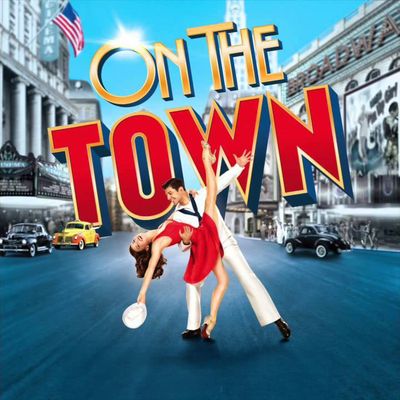
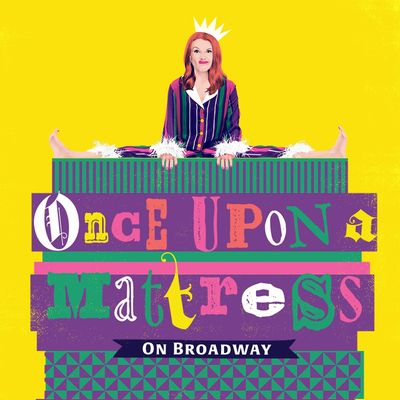
George Abbott was a major force in the American Theater for more than 80 years. As an actor, director, playwright, and producer — and often several of those at the same time — he played a significant role in the creation of well over 100 Broadway plays and musicals including Jumbo, The Boys From Syracuse, On The Town, Where’s Charlie, Call Me Madam, The Pajama Game, Once Upon A Mattress and Fiorello to name only a few.
Thomas Hischak is the author of more than 30 books about Broadway, Hollywood and popular music including Musical Misfires — three decades of Broadway Musical heartbreak, The Mikado to Matilda — British Musicals on the New York Stage, and the Tin Pan Alley Encyclopedia.
At the end of our previous episode Thomas Hischak and I were just beginning a discussion of the remarkable list of Broadway greatest writers, directors and choreographers who were all in essence trained and mentored by Mr. Abbott including Rodgers & Hart, Comden, Green & Bernstein, Adler & Ross, Bock & Harnick, Kander & Ebb, Jerome Robbins and most especially, Harold Prince.
We also explore his reputation as a "show doctor." We will never now how many shows he advised and "fixed" on their way to Broadway.
Become A PATRON of Broadway Nation!
This episode is made possible in part through the generous support of Patron Club members Kelly Allen, Roger Klorese, and Neil Hoyt. If you too would like to support the work of Broadway Nation I will have information at the end of this podcast about how you too can join the club.
If you are a fan ofBroadway Nation, I invite you to become a PATRON!
For a just $7.00 a month you can receive exclusive access to never-before-heard, unedited versions of many of the discussion that I have with my guests — in fact I often record nearly twice as much conversation as ends up in the edited versions. And you will also have access to additional in-depth conversations with my frequent co-host Albert Evans that have not been featured on the podcast. And all patrons receive special “on-air” shout-outs and acknowledgement of your vital support of this podcast.
And If you are very enthusiastic about Broadway Nation there are additional PATRON levels that come with even more benefits.
If you would like to support the work of Broadway Nation and receive these exclusive member benefits, please just click on this link:
https://broadwaynationpodcast.supercast.tech/
Thank you in advance for your support!
Transcript
This transcript was automatically generated and might contain errors.
[0:04] David Armstrong: Welcome to another episode of Broadway Nation, the podcast that tells the remarkable story of how immigrants, Jews, queers, African Americans, and dynamic women invented the Broadway musical and how they changed America in the process.
[0:19] David Armstrong: I'm David Armstrong, and this is the second half of my conversation with author Thomas Hischak, whose remarkable new book is titled The Abbott Touch: Pal Joey, Damn Yankees, and The Theatre of George Abbott.
[0:32] David Armstrong: If you missed our previous episode, you may want to catch up with that before listening to this one.
[0:37] David Armstrong: George Abbott was a major force in the American theater for more than 80 years.
[0:41] David Armstrong: As an actor, director, playwright, and producer, and often several of those at the same time, he played a significant role in the creation of well over 100 Broadway plays and musicals, including Jumbo, The Boys from Syracuse, On the Town, Where's Charlie, Call Me Madam, The Pajama Game, Once Upon a Mattress, and Fiorello, to name only a very few.
[1:05] David Armstrong: Thomas Hischak is the author of more than 30 books about Broadway, Hollywood, and popular music, including Musical Misfires, Three Decades of Broadway Musical Heartbreak, The Makado to Matilda, British Musicals on the New York Stage, and The Tin Pan Alley Encyclopedia.
[1:22] David Armstrong: This episode is made possible in part through the generous support of Broadway Nation Patron Club members Kelly Allen, Roger Clarice, and Neil Hoyt.
[1:32] David Armstrong: If you would like to help support the work of Broadway Nation, I'll have information at the end of the podcast about how you too can join the club.
[1:32] David Armstrong: At the end of the previous episode, Thomas and I were just beginning a discussion of that extraordinary list of Broadway's greatest writers, directors, and choreographers who were all in essence trained and mentored by Mr. Abbott.
[1:53] David Armstrong: And that's where we pick up our conversation today.
[1:56] Thomas Hischak: All these people were like students in his classroom, you know, and they all became giants in the business.
[2:04] Thomas Hischak: And there he is, still teaching school sometimes.
[2:07] Thomas Hischak: Let's talk about those students because one of the hallmarks of George Abbott is that he almost always wanted to work with young, new emerging people.
[2:17] Thomas Hischak: He gave everybody a start.
[2:19] Thomas Hischak: Let's talk about the writers first.
[2:20] Thomas Hischak: What are the writers that George Abbott mentors and gives their first breaks to?
[2:25] Thomas Hischak: You look at some teams and you say, who directed their first shows?
[2:28] Thomas Hischak: You know, so Adler and Ross, he directs Pajama Gang, their first show.
[2:32] Thomas Hischak: Candor and Ebb, he directs Floor of the Red Men as their first show.
[2:36] Thomas Hischak: Not a huge hit, but he's doing Shelton Harnick and Bach, Jerry Bach, with uh what's their first one?
[2:42] Thomas Hischak: Fiorello.
[2:43] Thomas Hischak: Fiorello.
[2:43] Thomas Hischak: Yeah, there they are.
[2:44] Thomas Hischak: Even going back to On the Town.
[2:46] Thomas Hischak: I was gonna say, going backwards, yeah.
[2:48] Thomas Hischak: Then you got Leonard Bernstein, you know, starting off in his theater crew with Condo Maggreen and Jerome Robbins slowly kind of getting his foot in the door as a choreographer.
[2:58] Thomas Hischak: They all worked under him.
[3:00] Thomas Hischak: It was just amazing.
[3:01] Thomas Hischak: You can imagine by the 80s to say, oh yeah, I worked, yeah, George Abbott gave me my start 40 years ago.
[3:08] Thomas Hischak: And he's still there.
[3:10] Thomas Hischak: I think the most important of all the people he worked with was Harold Prince.
[3:15] Thomas Hischak: Prince was his assistant, and Prince stuck with him right to the end.
[3:19] Thomas Hischak: He was one of the few people who was encouraging him, you know, keep doing these shows that nobody wanted to see off off Broadway.
[3:25] Thomas Hischak: Prince learned a lot about directing from him.
[3:27] Thomas Hischak: Prince would turn out to be such an innovative director, and I don't think he would have been without George Abbott.
[3:34] Thomas Hischak: I tried to go through all the great composers.
[3:37] Thomas Hischak: Everyone worked with him at one point, even if only once.
[3:40] Thomas Hischak: Like Rogers and Hammerstein.
[3:42] Thomas Hischak: He worked with them on one of their not successful shows, me and Juliet.
[3:45] Thomas Hischak: Or Cole Porter on one of his lesser famous shows.
[3:48] Thomas Hischak: And of course, Rogers and Hart, and going back way back when.
[3:52] Thomas Hischak: He did many Rogers and Hart shows, didn't he?
[3:55] Thomas Hischak: At least four or five.
[3:56] Thomas Hischak: Yeah.
[3:57] Thomas Hischak: But even Urban Berlin, they crossed paths at one time, you know.
[4:00] Thomas Hischak: If you're gonna play six degrees of George Abbott, you only need two degrees, and you'll be everybody will be connected because he did work with everybody.
[4:10] Thomas Hischak: He talked about Jerome Robbins, the choreographer, the list of choreographers is amazing.
[4:14] Thomas Hischak: Starting with Balanchine.
[4:16] Thomas Hischak: But literally every choreographer of important Broadway choreographers works with George Abbott in the beginning.
[4:22] Thomas Hischak: But he had rocky relationships with choreographers, didn't he?
[4:25] Thomas Hischak: Choreographers caused the problem because they were directors of the musical part of the show.
[4:31] Thomas Hischak: And it was very hard for him to say, okay, that's your part of the show.
[4:35] Thomas Hischak: I won't have anything to do with it.
[4:37] Thomas Hischak: He respected the good choreographers.
[4:39] Thomas Hischak: He loved Balanchine, you know.
[4:40] Thomas Hischak: But when he had a weaker choreographer, this guy is slowing down my show.
[4:44] Thomas Hischak: Or this guy, you know, he didn't I yeah, he had more problems with choreographers than anyone else.
[4:50] Thomas Hischak: There were a few times where the book writers, you know, there were arguments.
[4:54] Thomas Hischak: A few actors, but very few that he had personality conflicts with.
[4:58] Thomas Hischak: Some actors who didn't think they were gonna like working with him.
[5:01] Thomas Hischak: Once they did, they loved it and they did great stuff.
[5:04] Thomas Hischak: But choreographers, especially as they got more powerful, you have to remember that in the old school, the choreographer worked with the dance chorus.
[5:14] Thomas Hischak: They weren't even on stage when you did the book scenes.
[5:18] Thomas Hischak: So the director is directing actors and some singers, and in the other room, the choreographer is working with his people, the dancing chorus, and then we bring them in and we sandwich them in the show.
[5:29] Thomas Hischak: He didn't like that.
[5:30] Thomas Hischak: Unless they were on the same page.
[5:31] Thomas Hischak: He and Jerome Robbins had a lot of arguments because Jerome Robbins was strong-willed and was brilliant, but brilliant didn't always mean right.
[5:39] Thomas Hischak: You know, he didn't care about the you know you're not gonna get your Tony award if you cut this number.
[5:43] Thomas Hischak: No, he was about the show, you know.
[5:45] Thomas Hischak: Right.
[5:45] Thomas Hischak: And he cut his own scripts, he cut his songs, you know, he was brutal when it came to trimming and doing what you had to do to make a show work.
[5:55] Thomas Hischak: And he was just as likely to cut his own stuff and say up that whole scene, I don't like the way I staged it, it's slowing things down.
[6:01] Thomas Hischak: Let's just get rid of it, you know.
[6:03] Thomas Hischak: Playing on his sly trombone in a certain monotone.
[6:14] Thomas Hischak: He was known as Mr. Monotony.
[6:20] Thomas Hischak: One famous example of this was Jerome Robbins' staging of the song and dance Mr. Monotony, which was first cut from Miss Liberty directed by Moss Hart in 1950 and then cut again from Call Me Madam directed by George Abbott in 1952.
[6:35] Thomas Hischak: Jerome Robbins had the final word however because the number finally made its Broadway debut in 1989 in the show Jerome Robbins Broadway.
[6:50] Thomas Hischak: Only one preferred to stay she would come around and say have you got any monotony today?
[7:05] Thomas Hischak: One of the things he was most famous for was being a show doctor.
[7:09] Thomas Hischak: Yes.
[7:09] Thomas Hischak: We have no idea how many shows he worked on because he was the go-to guy for that for at least 30, 40 years.
[7:17] Thomas Hischak: If you're in trouble, you go.
[7:19] Thomas Hischak: He can put his finger on it sometimes.
[7:21] Thomas Hischak: Sometimes that actually actually come in and take over and write later.
[7:24] Thomas Hischak: He says, It was too late.
[7:25] Thomas Hischak: There's a point where it's just you can't save it.
[7:28] Thomas Hischak: But the other times he did turn shows around.
[7:31] Thomas Hischak: He got such a reputation that everybody thought he fixed all these shows, some of which he never saw.
[7:38] Thomas Hischak: And sometimes just him showing up, looking at the show and saying, Hmm, yeah, pretty good.
[7:44] Thomas Hischak: You know, was enough.
[7:45] Thomas Hischak: That's all he wanted.
[7:47] Thomas Hischak: I tell the story about uh West story.
[7:49] Thomas Hischak: West Side Story is in Washington trying out.
[7:52] Thomas Hischak: I believe it's Washington.
[7:54] Thomas Hischak: This is a pretty new and innovative show, and they're not quite sure.
[7:57] Thomas Hischak: Harold Prince, the producer, co-producer, and Jerome Robbins there, and is like, you know, I just don't know how this gonna go over.
[8:03] Thomas Hischak: Let's call the old master down.
[8:05] Thomas Hischak: He takes the train down begrudgingly, goes, asks for a nice dinner ahead of time, goes and watches the entire show, and just kind of nods, and then after show, he doesn't say a thing.
[8:18] Thomas Hischak: And he says, Well, I'm gonna get back to my train, and they take him to the taxi, and he didn't say one word.
[8:24] Thomas Hischak: Gets in the taxi, and then he rolls the window down and said, Another show fixed.
[8:30] Thomas Hischak: Yeah.
[8:31] Thomas Hischak: He came, you saw, and he proved or whatever.
[8:35] Thomas Hischak: He did have a sense of humor.
[8:37] Thomas Hischak: He wasn't the warmest and jovial type person, but when he wanted to say something, and yeah, when poor Steven Sondheim, young guy.
[8:46] Thomas Hischak: There he is with his first Broadway musical that he's a composer for him.
[8:50] Thomas Hischak: Uh they're looking at the back, standing on the back.
[8:52] Thomas Hischak: Pell Prince is producing it, I believe.
[8:54] Thomas Hischak: And there's Sondheim and Larry Gebhart, and it's not working.
[8:58] Thomas Hischak: It's terrible.
[8:59] Thomas Hischak: George Abbott says, I don't know what to do.
[9:01] Thomas Hischak: Somebody called George Abbott.
[9:04] Thomas Hischak: The only solution.
[9:05] Thomas Hischak: Well, and of course, who they called was Jerome Robbins.
[9:08] Thomas Hischak: And yes, he changed the opening number.
[9:11] Thomas Hischak: He told Sondheim it was all wrong.
[9:13] Thomas Hischak: He staged the opening number, but he didn't do too much else.
[9:17] Thomas Hischak: The Chase scene, I think he worked on, yeah.
[9:19] Thomas Hischak: But the director was George Abbott.
[9:20] Thomas Hischak: He wasn't a choreographer, but he was the director.
[9:23] Thomas Hischak: The young guy who wasn't so young anymore came in and saved an Abbott show.
[9:27] Thomas Hischak: That was kind of a turning point.
[9:29] Thomas Hischak: It's like, oh, when somebody has to save an Abbott show, wow, because he was the one who always came in and saved other people's shows.
[9:36] Thomas Hischak: But I make the argument in the book that most of it was there.
[9:39] Thomas Hischak: You know, it wasn't like Jerome Robbins came in and turned something that was awful into, but he was so right about the opening number that everything fell into place.
[9:48] Thomas Hischak: What he put his finger on is that the opening number wasn't telling you what the rest of the show is going to be.
[9:52] Thomas Hischak: So once you told the audience what it was going to be, then the rest of the show came to life.
[9:56] Thomas Hischak: Abbott's part of the show came to life.
[9:59] Thomas Hischak: It's that thing where uh one little song or maybe one little bit will affect everything that comes after it, or something that's in the way that's wrong and it's not working, and what you needed to fix it was so small you think how could that matter?
[10:14] Thomas Hischak: But it did matter.
[10:15] Thomas Hischak: Sometimes it was the actor delivering a line the wrong way, it was the punchline for the scene, it was that.
[10:20] Thomas Hischak: So then we went into the next scene, and it just didn't work because that punchline didn't work.
[10:25] Thomas Hischak: It's as delicate as that.
[10:27] Thomas Hischak: Not an Abbott show, but a good example of that is the song from My Fair Lady on the Street We were Live was dying.
[10:34] Thomas Hischak: Audiences were yawning and everything, and the poor learner in the group, they couldn't figure out what's wrong.
[10:40] Thomas Hischak: This is a great song. So they found out and they asked audience members, he said, Yeah, who was that guy? The guy came out and started singing the song, and we wanted to get back to the show. They didn't know who he was because they couldn't remember that he had been act one. Once they added a few lines to say who he was, everybody said, Oh, I remember him. And he loved the song. That show biz. It's that delicate sometimes. This is a drama of ancient Greece. It is a story of mistaken identity. If it's good enough for Shakespeare, it's good enough for us. There'll be an execution. It serves him right the longest execution. There's going to be a killing. It serves him right. Hurrah. Haroo. What did he do?
He came from Syracuse. No, no, no. Yes, yes, yes. So him plead for what? The use of the man from Ferracuse. In terms of musicals, which is what he's most famous for today. What are those shows? Most of them he wrote the books for as well. Usually co-wrote in the case of like Pajama Game, Damn Yankees. He would work with the original author, Fiorello. He worked with other writers and stuff. But as we said, he wrote them in such a way that he saw exactly how they're gonna look on stage. Then he went into rehearsal and he did that. There's only a few always some Syracuse. It was just Abbott and Shakespeare. There was no other co-author, all right. And the other good example of where's Charlie? It's Abbott and the original play, Charlie Zant.
There's no other writers involved. And I'm forgetting, but there's probably a few others. We can say, okay, he's the only author. Everything we hear and see is his, unless he's adapted it from something else. I think there's some of the best scripts. I really do. Yeah. I think that Boys from Syracuse and Where's Charlie can still be played because the books are pretty good. They have wonderful songs. I think Damn Yankees has got a lot of plot problems and script problems, but it just plays so beautifully. Abbott did not mind when Jack O'Brien was directing that revival of Damn Yankees. He was listed as a consultant. I don't know if he did anything on that. I tried to get Jack O'Brien to talk to him, and I couldn't get through to him to say that he do anything.
Because they made some script changes, they changed some scenes around. We know he approved. It would have been a big deal if he didn't approve. And he was there. He was in the audience. He saw it. Yeah, I think he was at rehearsals too, maybe not many. And I know that O'Brien sent some of the changes to him, you know, mailed it to him and said, I'm thinking this rewriting this scene here. So he must have approved of it. But I think it's a better script, you know, the one they ended up with. How do you put your finger on exactly what he wrote and what made it work? It's hard to say. Sometimes the co-author was just there because they wrote the original book and then they tried to write the libretto, and it was horrible.
So the producer said, Would you, besides directing it, would you fix up the book? We don't know how much of that happened. When even on Pal Joey, you tell us that John O'Hara disappears from rehearsal, right? He didn't know anything about theater, and I don't think he, you know, he thought it was a good idea. It was his idea, I think, but he wasn't involved. And if you look at the Pell Joey stories, there's no dialogue, it's all narration by Joey. He had to do a hell of a lot on that one. I would say that's one of the stronger habits. Libretto's libretos because I know what he started with, and I saw what he came up with. And I'd say that's a writer. Contrary to some way people might view him today, he's writing some tough shows.
I mean, in terms of the material is not squeaky clean and is not middle of the road in any way. You figure by the 50s, late 50s and 60s, you know, he's the old man, and he's literally the old man, and he's out of date and he doesn't know anything. And he'll turn around and do a show like the Anna Christie version of Anna Christie. New girl in town. This is not 1930s musical comedy. This is serious stuff. See my rosy cheeks, my sunny disposition. You can see I grew up fine as silk. You put me on the farm, far away from harm. All kids need to grow up nice is milk. On the farm, on the farm, far away from any harm. Country butter eggs by the dozens, getting grabbed by all my cousins on the farm, on the farm.
Pretty birds, pretty brooks, like you see in picture books in the barn with Uncle Jake. If you squeal, you get the rake on the farm. On the farm, Uncle Sven was kind of a preacher. Would have made a swell school teacher. Studied all the natural habits of the horses, cows, and rabbits. I was teacher's pet. I learned some things I'll never forget on the farm on the farm. Any girl is safe from harm might have grown up in the city, never knowing it's so pretty on the farm, on the farm, with those lecherous, treacherous cousins on the farm. And he didn't shy away from it. Fiorello is not your traditional 1930s musical comedy. So yeah, but just to do Pell Joey back in 1940, was daring as hell. You know, all those critics who said, Oh, this is really good, but my goodness, it's muddy.
I mean, do we need this? And he didn't seem to be worried about it. And that was 1940. Some other shows like that. Some he toned down. I think Florida the Red Menace was supposed to be a lot more biting about communism in America. It ended up being a musical comedy. Maybe that's all it was good for. I don't know. But in some ways, that's a political issue, probably too. Is it he was fairly conservative in his politics, at least later in life. Yeah, he wasn't a politically active, but his sentiments were pretty traditional, pretty conservative, yeah. And in that one, even pajama game, he wasn't gonna get deep into labor management unions and stuff, because he probably would have been the more conservative view of it.
That musical, very carefully, but I think it's pretty clever, just skims atop of the issues without really getting bogged down. It's it's a musical comedy. I'm thinking him directing something like Brooklyn, a tree grows in Brooklyn. Again, a very serious musical about an alcoholic and his family, and he has a bunch of those, you know. It's like, well, I thought he was the old man who only did all kinds of shows. No, he was doing shows that were pretty nervy. I think he would have done more in the 60s when things got really interesting, but he was not in favor. He had those hits at the beginning. He did forum, he did uh once on a mattress, he had a couple comedies that ran a long time. But by 66 and Cabaret is opening, you know, and Harold Prince's breaking new ground, nobody was going to him with those scripts.
I was struck by your line in the book where you said in 1968, not only did George Abbott not have a hit that year, nobody had a hit that year. Yes. For a man who used to having sometimes three, maybe even four shows running simultaneously, that was something else. I think we have to explain too that a lot of the bad theater he did, plays and musicals were because he could not not work. He had to be working on something, and he would rather be given a dreadful play and try to make it work than not do it than just stay home. Because he was a workaholic and he had to work, it meant he accepted jobs that nobody should have accepted, especially somebody of his stature. And people knew this. Producer doesn't have very good material.
All the good directors have turned him down, but George Abbott wants to, you know, he wants to work and he will do it. And that explains some of those horrible things in the 60s and 70s that his name was attached to. The critics were pretty good. They were like, even George Abbott can't save this. It's a compliment as each show fell down and whatnot. Even though the second half of the book, although you don't approach what you tell as chronologically necessarily, you uh you've arranged it in an interesting way. But still, the last third of the book, I'll say, is almost all failures. Really, yeah. Unlike some other books, I didn't walk away depressed about it because it did feel like he just kept going.
He just could brush it off and go back to work. I didn't see these late, not so great musicals and plays, but in many cases, the producers, you know, he wasn't getting top producers either. They didn't have the money to let a show run and catch on. And there were a couple there in the old system, George Abbott's name and some good reviews and a little hood spa. They, you know, they could have got a modest run out of that, but they'd close in a week. It was like, well, the reviews are bad and we don't have an advance and whatnot. I'm speaking speculatively, but I think like the musical called Music Is, which had music by Adler from Damn Yankees, and was based on Shakespeare's Twelfth Night. I've only heard a few of the songs.
They never did a recording of it. I looked at the reviews carefully. That should have had a chance. And it just didn't. The producer just didn't have the money. But it was a gorgeous production, wonderful performances, some pretty good music, as I could tell. And even Clive Barnes, I think uh said that was be about when he was still reviewing. He said students should look at this play as an example of how to adapt Shakespeare for the musical stage. He was that impressed by the script. So they weren't all bad, but the circumstances were they didn't really get a good fair chance. And I've heard some of the songs from the off-Broadway, off off Broadway shows that he did. And there's quality stuff there, there's no question.
But the odds were way against that sort of thing. So what was the Abbott Touch? Don't go away. Thomas and I will be back with more Broadway Nation right after this quick break. So what was the Abbott Touch? I was so impressed because it seems like you read the scripts to every show he ever was associated with, or you could get your hands on.
[21:21] Thomas Hischak: All the musicals, the libretto are somewhere. The plays, some of them are really far and few between. And one of the things I loved about that was that for most of them you have at least a short quote of dialogue from many of these plays and many of the musicals as well, which was just fantastic to see your synopsis and then get a little taste of what the dialogue was.
[21:42] David Armstrong: Yeah, how do you judge a play by the plot?
[21:45] Thomas Hischak: I try to find pieces of dialogue. Sometimes the pieces I picked were just showing that it wasn't that strong, but generally I tried to show in a good light. When it comes to the end of the book, and I had I put together a bunch of quotes of what different people thought, you know, the Abbott Touch was. I think the one who came closest to expressing it would be Hal Prince. And very few people were more close than Hal Prince, because you know, he was like his father figure, you know, or later his grandfather figure. And Hal Prince was brilliant and he knew what to take, and he had a pretty good idea of what made Abbott's work. And I have several quotes by Prince, because luckily Prince did write an autobiography where he talks a lot about Abbott.
And I think the thing that struck me about what Prince said is when you're working on an Abbott show, because you produced several of them, that this guy knows what he's doing. That the Abbott Touch was maybe it was an illusion, but it was like, don't worry, George Abbott's in charge. You're gonna be alright. It's not working, he'll fix it. He'll find out if it could be fixed, he will fix it. He will get the performance that you thought we're not gonna get a good performance. Like, no, he will get it. It was a sign of trust and satisfaction to say, okay, George is here, or Mr. Abbott, I guess you they thought George, but they never said it. Mr. Abbott in charge, I think we're gonna make this work as best it could.
[23:09] David Armstrong: That's from the other point of view. When they asked George Abbott, he just said, yeah, I make them say their final syllables or consonants. But I think that was it. There was an efficiency, and I liked one quote when William Goldman wrote that wonderful book about the season. It happened to be that season George Abbott was directing The Education of Hyman Kaplan. I think I got that right. And he watched rehearsals and everything, and this was not a hit, although it had charm. And he said, you watch that show and you never were lost. You're never like, what is that for? Or why is that happening? Everything was clear, everything made sense. He thought that was the Abbott Touch. That what you saw on stage was so well thought out that you could enter into it and not worry about where is this going, that sort of thing.
It strikes me that both what he said and what Prince said carried over to the audience as well. Their experience of the Abbott Touch is that they were in safe hands too. From curtain up, from lights up on the show for the first note of the overture, they felt like, oh, he's gonna take care of us. Yep. Trust and a confidence. And if he wrote it, co-wrote it, and directed it, you knew it was gonna be a safe bet, even though it might not be a hit. You were gonna be in the right hands.
[24:23] Thomas Hischak: Yeah, that sort of thing. And of course, he had the opportunity to do it a hundred and seventeen times. Nobody gets to do that today. And especially new emerging directors or choreographers or anybody. I will say this about Rodgers and Hart. They got to write five or six shows that probably weren't so good, that had hit songs in them, but they were good enough to get by in those days. And they got to learn on the job. And that is something that is gone. The learn on the job we don't get to do anymore except once. You don't have the opportunity to fail frequently. Right. But you know, if you worked on three musicals a year, just think what you're learning and what you're gaining. Maybe only one of those three ran, but you're growing and you're in the business where now it's you put all your dice in one shot and that's it.
The idea that it takes, you know, eight years for a show to get to Broadway now, you know, from wherever it starts, they were cranking them out. Rodgers and Hart, Cole Porter, they had at least two a year, you know, at least. And that's a world where you can work a lot and you don't dwell on, oh, that one didn't work because you're already in rehearsal for the next one. That was very, very common that he had a show and it opened, but by the time it opened, he was already working on the other one. It's going out of town, maybe already. So there was that hustle and bustle of doing, and everybody was more concerned about doing it rather than thinking about it, contemplating where their career is going, that sort of thing.
[25:49] David Armstrong: I know it's an unusual story in terms of Wonderful Town, but they write that score in what, three months?
[25:54] Thomas Hischak: Very quickly. I forgot the what the reason was.
[25:57] David Armstrong: Oh, they lost the rights.
[26:00] Thomas Hischak: Yes, the score was horrible. They got Bernstein to come in. Bernstein by that time was, you know, such a famous conductor and everything, and for him to come back and get together with his old pals, Comden and Green, and to put that thing together, yeah. But that ended up being one of his least favorite experiences, Abbott's, but it wasn't Comden and Green and Bernstein, it was the book writers, the ones who had written the original play, and there was a lot of antagonism there. And he said it was the worst experience. He was businesslike, but he didn't like to have drama tension. He didn't like that. He liked the calm of a well-organized rehearsal. You know, he loved rehearsals much more than, you know, the final tryouts and performances.
He didn't care about those so much. He loved rehearsing. And if the rehearsal situation was just ugly, like it was in Wonderful Town, even though the show was a hit and it was wonderful, he just couldn't look back on it very favorably because it was a bad experience.
[26:59] David Armstrong: In this non-biography, of course, you still have to deal with his personality and his persona. What were the things about Abbott as a person and as a man and as an employer that struck you?
[27:11] Thomas Hischak: The paradox of the man is what intrigued me because he was so filled with contrast. Some people thought of him as a father figure, he protected them, he cared about them, but he wasn't warm or friendly, and other people said he was just a brutal person who said, this is what I want, and you don't get it. This is what I'm going to do, and you're out, and this is what I say, and your opinion, I'll listen to it, but I'm not gonna go by it. He did both. I think even those that loved him and had great affection for him had times where they wrestled at what he did. He was an odd guy, he was very self-centered in some ways, and then he would do something totally generous, something that just surprised everybody. He was aloof, that's why he was always called Mr. Abbott. Nobody dared call him anything else. Few people did, but basically, he's Mr. Abbott. He's unreachable, he's a little bit mysterious, you might say. People are afraid of him.
[28:12] David Armstrong: Yeah.
[28:13] Thomas Hischak: Fear, yeah, downright fear. What's he gonna say? What's he gonna do? Is he gonna say this to me? I'll be shattered if he does this, as opposed to another director. So the man was complicated. And when you read his autobiography, which is his point of view, you realize he was filled with all kinds of contrasts in himself, all kinds of battles going on, a terrible childhood, awful parents, awful father. He had baggage with him, to say the least. I think early on, he decided what he was going to be person-wise, personality-wise. And he played that part for 80 years. It was a part, it was a mystique that he put on, where in reality he just liked to play golf and other normal things, but in the theater, he was the mysterious, godlike figure that I don't know how I can approach him.
Other people said, oh, he was so approachable. So who's to say? It's so interesting because you talk about that early in the book that he takes on this character, the farm boy who's sort of a Hellion at some point.
[29:14] David Armstrong: Yeah, he's a juvenile delinquent.
[29:17] Thomas Hischak: And sort of overnight, it seems like he decides that's not what I want to be anymore.
[29:24] David Armstrong: That's right.
[29:24] Thomas Hischak: It's almost like he practically said, I don't like that scene. Let's rewrite it, and that's what I'll play for the rest of my life. Now you have to remember, throughout his life, he never talked about his childhood. He never talked about the past. He didn't even like to talk about old shows that he had done. He was always worried about the next show. That's why it was so surprising to me when the autobiography came out in 1963. And he's revealing, you know, he's a bedwetter, you know. He's still talking about very personal things. His first wife, who he loved. But for him to admit in an autobiography, his wife dies, and he is so upset, and then the next day he realizes I'm totally free because he got engaged when he was only a teenager.
That's the first in my life. I'm free. And I feel so guilty, but I'm so happy. Who would admit that? Except your shrink. And he put it in the book. I think that the book shows you there was a lot more going on beside the Mr. Abbott mystique that most people saw.
[30:20] David Armstrong: Fascinating. Thomas Hischak, thank you so much for joining us today on Broadway Nation to talk about the Abbott Touch. It's been a pleasure.
[30:27] Thomas Hischak: Oh, it's been a pleasure for me too. Thank you.
[30:30] ♪ Musical number: "I Could Write a Book" — performed by Thomas Hischak ♪
[30:48] David Armstrong: Here's the information about how you can become a patron of Broadway Nation. A donation of just seven dollars a month will not only keep Broadway Nation rolling along, it will also provide you with exclusive access to the complete unedited versions of many of the interviews that you hear on this podcast. And all patrons will receive special on-air shout-outs and acknowledgments of your vital support for this podcast. To join, simply go to Broadway Nation Podcast.tech. That's Broadway Nation Podcast dot S-U-P-E-R-C-A-S-T dot tech, or click the link in the show notes to this episode. Thank you in advance for your very generous support. Broadway Nation is written and produced by me, David Armstrong. Special thanks to Pal's Mox for his help with editing this episode and to the entire team at the Broadway Podcast Network.
© Broadway Podcast Network, All Rights Reserved