

This is the second part of my conversation with author Ben Francis regarding his very compelling new book: Careful the Spell You Cast — How Stephen Sondheim Extended the Range of the American Musical... Read More
From the show: BROADWAY NATION
Featured Shows


About
This is the second part of my conversation with author Ben Francis regarding his very compelling new book:
Careful the Spell You Cast — How Stephen Sondheim Extended the Range of the American Musical.
This week Ben and I focus on three of Sondheim's key collaborators — Harold Prince, Burt Shevelove, and James Goldman.
If you missed last weeks episode you may want to catch up with that one before listening to this.
Sondheim is without a doubt one of the most studied, examined, and analyzed Broadway creators of all time. In fact, we have done quite a bit of that right here on Broadway Nation. However, as you will hear, Ben Francis contends that in spite of all of that investigation, Sondheim continues to be very misunderstood. He is often labeled as being cynical and pessimistic, but Francis instead argues that Sondheim firmly belongs to the “Broadway aspirational tradition” — a tradition that celebrates dreams of a better life — and he suggests that Sondheim’s shows are to a great extent are a continuation of the work of his mentor Oscar Hammerstein II.
Ben Francis’ other works include contributions to the Oxford Handbook Of Sondheim Studies, the Oxford Handbook of British Musicals, and the Oxford Handbook of Shakespeare and Music, as well as Christopher Hampton: Dramatic Ironist
Become A PATRON of Broadway Nation!
This episode is made possible in part by the generous support of our Producer Level Patrons:
Paula and Steve Reynolds.
If you would like to help support the work of Broadway Nation I will information at the end of the podcast about how you too can become a Patron.
If you are a fan ofBroadway Nation, I invite you too to become a PATRON!
For a just $7.00 a month you will receive exclusive access to never-before-heard, unedited versions of many of the discussions that I have with my guests — in fact I often record nearly twice as much conversation as ends up in the edited versions. You will also have access to additional in-depth conversations with my frequent co-host Albert Evans that have not been featured on the podcast.
All patrons receive special “on-air” shout-outs and acknowledgement of your vital support of this podcast. And if you are very enthusiastic about Broadway Nation there are additional PATRON levels that come with even more benefits.
If you would like to support the work of Broadway Nation and receive these exclusive member benefits, please just click on this link:
https://broadwaynationpodcast.supercast.tech/
Thank you in advance for your support!
Transcript
This transcript was automatically generated and might contain errors.
[0:04] David Armstrong: Welcome to another episode of Broadway Nation, the podcast that tells the remarkable story of how immigrants, Jews, queers, African Americans, and other outcasts invented the Broadway musical and how they changed America in the process.
[0:20] David Armstrong: I'm David Armstrong, and this is the second part of my conversation with Ben Francis in regard to his very compelling new book entitled Careful the Spell You Cast, How Stephen Sondheim Extended the Range of the Broadway Musical. If you missed part one, you may want to catch up with that episode before listening to this one.
[0:40] David Armstrong: As always, this episode is made possible in part through the generous support of our Broadway Nation patron club members, including producer-level patrons Steve and Paula Reynolds. If you would like to help support the work of this podcast, I'll have information at the end of the episode about how you too can become a patron. Here we go.
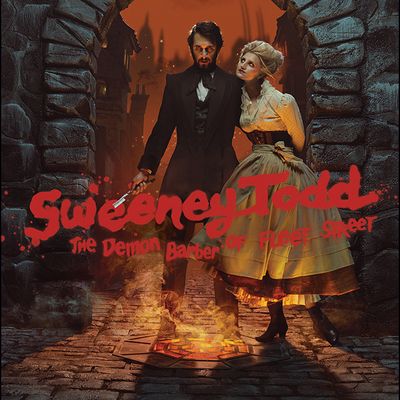
[1:01] David Armstrong: So we were talking about Sweeney Todd, which leads us to the next chapter, which is about Hal Prince, who of course is the only person who's not a writer in your group of collaborators. Talk a little bit about that. Why is he rate a chapter, even though everybody else is a principal creator, and some people would say the director is an interpretive artist, but that probably is not true in Hal Prince's case.
[1:23] Ben Francis: I don't think it was.
[1:45] Ben Francis: No, Shakespeare was just a smart theatre man. Play the guts, not the fancy verse. Like he was just a rootin' tootin' old boy, you know, shooting up the Malamut saloon. Abbott was somebody who thought, you light it, you make it clear, you stage it. You don't fanny around with interpretation or, you know, sort of motivation. You put it on. You can learn a lot from people like that because they have technical know-how, but Prince learnt from that, but also wanted to do something that connected back to the world, cabaret.
[2:11] Ben Francis: And Candor and Ebb said that he had a lot to do with the way cabaret was structured. So you actually had the Kit Kat Club and Sally Bowles's sort of private life sort of balanced. So it became more abstract. The term that got used, actually, Prince and Sondheim both got fed up with was concept musical. You started with a metaphor, like you know, you've got the collapse theatre and follies, you've got this sort of blank stage with backdrops of New York for company. You've got something that steps back from just a sort of representational view, but is more abstract, is more clearly about the idea behind the show.
[2:43] Ben Francis: Were the ideas more important than the story itself? Yes, in a way. Or I mean the idea sort of is the story. I mean, he was influenced by Meyerhold, much more than by Brecht. Both Sondheim and Prince weren't very keen on Brecht. Prince said, well, you know, Brecht fills the stage with white lights. I like shadows. Brecht was about sort of telling you what was wrong with the world, whereas Prince he wanted to suggest things.
[3:04] Ben Francis: Again, he said the metaphor is there. I mean, like he had this huge factory for Sweeney Todd. And Sondheim said that affected how I wrote the songs. The whole thing was about the industrial age and how people get ground down. That kind of grinding rhythm, I think, affected the way that Sondheim wrote the songs. That was it. I mean, the thing was that they often worked together. It wasn't that Sondheim would turn up with a script and Prince would put it on. They would discuss things.
[3:26] Ben Francis: I mean, it was Prince's idea to actually do company. And Sondheim was going, Oh, oh well, I'm not sure. Well, I'll think about it. It was actually is quite often the case, is that the Sondheim himself might be unsure about something. It was Goldman who suggested doing vollies. And then he'd be sort of persuaded into it.
[3:42] ⚠ About 4 minutes of audio could not be automatically transcribed.
[7:28] ♪ Musical number ♪
[8:17] Ben Francis: Again, I think both Prince and Sondheim responded to that. It was Prince who managed to put that in theatrical terms, and that's why Prince was never happy with his own work for Merrily, because he never really came up with an overarching metaphor. I mean, he had this kind of white bleachered set, which perhaps you could get away with now, but you know, people thought 1981, you know, I'm paying 40 dollars for a seat, and I see a blank stage. What the hell is going on? You know? Why want my money's worth, you know. I saw that production, I saw the final performance of Merrily, and I think in hindsight, we probably would have accepted that, except it was clear that he didn't have a vision. It was clear that why are we doing the show in this way?
Was not. I wouldn't have articulated it at the time. The whole show was enervating. It just felt like until the last 20 minutes. Opening doors, the show suddenly took off. And part of that was the cast was finally the right age to be playing the characters. But it also was just somehow there was some abulance about that part of the show. And I think it's really more of a sense of purpose that was clear than that was not clear for the previous two hours of the show.
[9:24] David Armstrong: I really like that show. I think it works now.
[9:27] Ben Francis: I agree with you. It's a bit heavy-handed. It does rather labor the point. But again, because so many people missing it first time. They kept telling you sort of this man is selling out. This man is selling out. We get it, we get it. People didn't at first. They thought, well, who cares about him?
[9:39] David Armstrong: You're exactly right. That was not clear that we were supposed to focus on that in that original production. And I don't know whether it's because everything was so amorphous, it's hard even to remember exactly what the show was, but I remember the feelings that I had sitting there just being sort of like, oh my god, why is the show not any good? It's all my heroes doing it, and yet it's not working. Let's continue through our list. This is fun. Chevlov, Burt Chevlov.
[10:03] ♪ Musical number ♪
[10:27] Ben Francis: Burt Shevelove, a name that is probably less talked about, although certainly was a significant figure in many things, but especially in Broadway musicals. What's the defining aspects of their collaboration?
[10:46] David Armstrong: Well, I call the chapter nothing that's grim. I mean, that was it. Shevelove was the comedy writer, wrote for Red Buttons and directed some shows, Art Carney. I mean, Larry Gelbart, they collaborated on the book for A Funny Thing. I mean, that was it. I mean, A Funny Thing, it's a nostalgic show for vaudeville and also for burlesque. I mean, it's quite a clean kind of burlesque. It's not a strip. The women kind of come on and do a bump and grind, but they don't actually sort of strip. It's a family-friendly burlesque. It's saucy.
[11:14] Ben Francis: It's a body, yes.
[11:14] David Armstrong: Yeah. I mean, there's never really been an American equivalent of the carry-on movies. That's kind of as close as it gets, I think.
[11:20] Ben Francis: Yeah.
[11:21] David Armstrong: And that's what it was. And also The Frogs, which is a bit later.
[11:24] Ben Francis: Which is the show that he and Shevelove did from the play by Aristophanes. They're both have classical antecedents, but neither of them are particularly serious. I mean, The Frogs, its message ironically, is kind of anti-didactic, is saying you can't lecture an audience, you have to make them feel things.
[11:40] David Armstrong: Which I'd go along with generally.
[11:42] Ben Francis: But also, A Funny Thing, it's actually that it's celebrating tattiness. I mean, there's a sort of little throwaway gag in Comedy Tonight, hundreds of actors out of sight. It's a show that can work in a community center. You're making a joke about how it's not a great sort of Hollywood spectacular. It's a Hollywood spectacular, but you can't actually see it because we can't afford it. I think that's it. I mean, Shevelove did a revised version of No, No, Nanette, which is a big hit in the 70s. He was a professional comedy writer, sort of slick and funny, not somebody who had any particular interest in sort of analyzing why the world was what it was. But clearly obsessed with early forms of theatre.
So in some ways, I sort of look at A Funny Thing Happened on the Way to the Forum as something that's showing us you don't need anything to have an effective show. Theater at its essence is a bare stage. I mean, a way it sort of ties into, it's maybe stretching it, but ties into Peter Brook in a way, that sense of let's go back to the basics here.
[12:35] David Armstrong: Yeah, I think it's almost like taking the Mickey out of spectacle. I mean, Follies is a kind of ironic spectacle. It's like the spectacle has collapsed. Whereas here, if she plays Medea later this week, it's like sort of, you know, and please come and see and tell all your friends. It's rather desperate touring company, one step ahead of the sheriff, just to try to get people to come in and see their shows. And it's about acting and how actors who live tenuous lives trying to raise a smile.
[13:01] Ben Francis: Yeah, it's so interesting because it's nostalgic for the vaudeville era of their parents or their youth of Shevelove and Sondheim. I guess they were both born in the 20s, probably.
[13:11] Ben Francis: So it's this distant memory of what came before them, but it's really a distant memory of a thousand years ago as well, of two thousand years ago.
[13:18] ♪ Musical number: "Something for Everyone" — performed by Ben Francis ♪
[13:34] Ben Francis: Nothing with kings, nothing with crowns. Bring on the lovers, liars, and clowns. Called situations, new complications. Nothing potent disoboli. Tragedy tomorrow, comedy tonight.
[14:09] David Armstrong: Let's talk about the Goldman Sondheim collaborations.
[14:13] Ben Francis: Goldman was rather a better known writer, actually, than some of the others. Um, because he'd had a hit on Broadway with Lion in Winter.
[14:19] David Armstrong: A giant hit.
[14:20] Ben Francis: I mean a big hit play and movie. Okay, well, right in the book, I realized look at Lion and Winter, Nicholas and Alexandra, and Robin and Marion. They're all by him and screenplays by him, and they either end on departure or death of the romantic couple.
[14:22] Ben Francis: Nicholas and Alexandra and Robert and Marion, they all die. That's what happens in Evening Primrose. And in Lion and Winter, they go, they just say goodbye, having not reconciled to each other or anyone at all. And in Follies, I mean they've kind of reconciled, so it's a bit more upbeat, but they're going and they're not gonna come back.
[14:54] Ben Francis: Goldman rather seemed to like the legendary past. I know you also wrote a play about Tolstoy, Tolstoy's last days. This sort of the sunset, the end of things. And that's what appealed to him. The sort of melancholy, and also this sense that whatever you do in the world, it probably won't work. But you do it anyway to kind of assert yourself. Kind of assert some kind of human dignity, even in the face of hopelessness.
[15:16] Ben Francis: That ties into the Ziegfeld girls in a way, why he's attracted to that subject matter, this faded past. I like the way that you know that it doesn't mock the girls. They come on with their old sashes from the years and they're singing beautiful girls. And it's not mocking them, they're remembering their past. It doesn't belittle them for what they were.
[15:34] Ben Francis: One thing's influenced it was that Elliot Elephasson, I probably mispronounced that, picture of Gloria Swanson standing in a collapsed theatre, and that idea of, you know, the dream is over. And yet also, you know, daylight is coming. But even in that picture, which I think sometimes people miss when they analyze it, is that she looks fabulous. And we admire again her moxie to be standing there and defying the fact that the theater has fallen down.
[15:59] David Armstrong: Well, that's it, yes. I mean, she's like she's saying, I'm still here.
[16:01] Ben Francis: Exactly. That is I'm still here in a nutshell. Good times, bum times. I've seen them all, and my dear. I'm still here. Sometimes, sometimes just pretzels of beer. But I'm here. I've stuffed the dailies in my shoes. Strummed you galales. Sung the blues. Seen all my dreams disappear. But I'm here.
[16:39] Ben Francis: There is a sense of, you know, whatever life throws at you, we can go on. You know, you can survive. I mean, I'm still here as you know. I mean, she was a drunk, bit on pills and accused of being a communist, which of course could have completely ruined her career. It ruined a lot of careers.
[16:53] David Armstrong: That's it. It's just that determination to carry on is so important. I think again that is all through Sondheim's work. You were talking earlier about dreams. She sings, seen all your dreams disappear, but I'm here.
[17:04] Ben Francis: That's right, yeah. And we're celebrating her. Saturn is celebrating her. It's a triumphant song. Well, again, yeah, it's ambivalent, but yes, she isn't defeated. In fact, none of them are really, except well, possibly Sally. And again, that's ambivalent. She realizes there's no Ben for her. I mean, you can play it that she's just completely destroyed. Uh, which I think Emilda Staunton did when it was at the National. But you can also play it that she's actually got somewhere.
[17:27] Ben Francis: I mean, even Ben, who is such a phony, but he's had the kind of comparative dignity of a breakdown, and he admits he needs Phyllis. And that's it. You think she's leaving because she sang, should I leave you? You know, guess. And then she doesn't. She actually realizes that there's some humanity there.
[17:41] Ben Francis: I think that's the thing with Goldman. There's a sense that the time has gone by, or that somehow looking back at the past is somehow preferable to the present, even though you've probably been defeated. And I think with Polly's, there is a sense that a lot of things have gone wrong with all the songs, or with a lot of them, I mean, with Broadway Baby. Again, I mean, that's somebody who just has this dream of being a star and it hasn't happened.
[18:04] Ben Francis: That's less sort of because the song that the characters sang is not them talking about their life, it's not a book song. There's still a sense that someday maybe all my dreams will be repaid. And no, they're not. And you're not going to be a star. It's because you know, Broadway wasn't really interested in old women, generally. Except for a couple of them who could walk down staircases, but you know, generally. And the entertainment wasn't interested in old people, especially not old women.
[18:27] Ben Francis: And I think Sondheim and Goldman give them their dignity. They say, Well, you know, these people have lived, notice them. You talk a lot about in various chapters, the Love Land sequence. What strikes me with that is Sondheim and Goldman give these four characters a chance to see themselves in the mirror, basically, to look in the mirror and of course a mirror's a metaphor in there.
[18:46] Ben Francis: The only reason to have characters see themselves is to have some kind of realization that comes from it. This sort of epiphany, another thing that occurs in many of these shows. So I actually would disagree with Amelda Starton, although it was a fantastic performance, that somehow once she's seen herself in Love Land, she has to change. She has to move on. She has to be able to at least somehow be different than what she was when she walked in the door and not just defeated.
[19:12] David Armstrong: But it's interesting that ambivalence is part of what appeals to Sondheim to not tie it up with a bow.
[19:19] Ben Francis: Yeah, I mean, I think if I was directing it, I would make it that she had at least sort of realize what she's been doing. I mean, she's put poor Buddy through hell, you know, for 30 years, and she's starting to realize that. And that, you know, just being horrible to the people around you, but having a dream that you keep to yourself is not good enough. You can't treat people that way. And being sensitive and kind inside is no good if you're horrible outside.
[19:42] Ben Francis: I'm making it sound very didactic then it's not. But you know, that is the kind of the undercurrent. I mean, I think that's true of so many creators of shows, is they don't start with a point they want to prove, they start with a character, but just the sort of the way they feel about life comes through naturally. And that epiphany moment, that breakdown moment, as you mentioned, is again a recurring theme.
[20:02] Ben Francis: And I think Sanham has even said early on that he wanted to have somebody have a nervous breakdown on stage. That was one of his goals. And then he does that in show after show after show.
[20:11] David Armstrong: Oh, yeah, plenty of them, that's it, yeah.
[20:13] Ben Francis: Because they can't hold it together. I mean, Rose's turn, of course, is the first one. And again, she does confront a rather sort of ugly truth that she did it for her. She didn't do it for Louise. And she then at least has some sense of self-awareness after that. She is going to be different afterwards. We're not exactly sure how she's going to be different, but she's not going to be the same.
[20:33] Ben Francis: We don't know whether her and Louise will ever really get along, but at least I think they have kind of passed the point where they're just gonna be at each other's throats all the time. And I think she is gonna go open that school for kids. I always feel like that at the end of Gypsy that Louise tells her, You always been good with kids. The last image is that light going out in her face that sort of she wants something and she hasn't got it. And that is really, you know, it's quite painful.
[20:54] David Armstrong: You know, that image was in those revivals that Lawrence did, but I don't think that was the last image in the original production. I think they walked off arm in arm, more like they do in the movie.
[21:05] Ben Francis: All right, yeah. Yeah, well, probably, I mean, seeing it was 1959, you'd be hard pushed. I think that was an innovation that they came up with in that Time Daily production where she lingers on the stage. And again, I question that. It was very effective. Time Daily did it brilliantly. But what's the point of watching this whole story if she doesn't move on at the end of it?
[21:26] David Armstrong: And move on is obviously something that Sondheim is interested in.
[21:30] Ben Francis: She could move on and still want to, you know, I think uh if only. But I mean, that's it. It's ambivalent. There are all these things you can play different ways.
[21:38] David Armstrong: Absolutely.
[21:40] Ben Francis: On the next episode of Broadway Nation, Ben Francis and I will continue our conversation about his new book, Careful the Spell You Cast, How Stephen Sondheim Extended the Range of the Broadway Musical.
[21:53] ♪ Musical number: "I'm Still Here" — performed by Ben Francis ♪
[22:20] Ben Francis: In the depression, was I depressed. Nowhere near. I'm at a big fancier. And I'm here. Here's the information about how you can become a patron of Broadway Nation. A donation of just $7 a month will not only keep Broadway Nation rolling along, it will also provide you with exclusive access to the complete unedited versions of many of the interviews that you hear on this podcast.
[22:53] Ben Francis: And all patrons will receive special on-air shout-outs and acknowledgments of your vital support for this podcast. To join, simply go to Broadway Nation Podcast. That's Broadway Nation Podcast. Or click the link in the show notes to this episode.
[23:16] Ben Francis: I've gotten through Herbert and Jay and Girl Hover Me. That was one on a half. When you put through Herbert and Jay and Girl Hoover, anything else is a laugh.
[23:31] David Armstrong: Broadway Nation is written and produced by me, David Armstrong. Special thanks to Pals Mox for his help with editing this episode and to the entire team at the Broadway Podcast Network.
[23:42] ♪ Musical number: "But I'm Here" — performed by Ben Francis ♪
[24:20] Ben Francis: So I'm here Black Sable one day. Next day it goes into hock. But I'm here. Top filling Monday, Tuesday, you're touring can stop. But I'm here. First your another slow eye plan. Then someone's mother. Then your camp. Then you care. From career to career. I'm almost through my memoirs. And I'm here.
[25:04] Ben Francis: I've got me through Haley. How about you lose it? Oh, what a free word. Or better yet, say lady. I thought you were losing. Whatever I've heard. Your time, sometimes I've seen them all in my dear. I'm still here. Flash velvet sometimes. Sometimes just Ruxles and beer. But I'm here. I run the game at A2Z. Great tails and gallets. A lobby. I got through all of Austria. Hello here.
© Broadway Podcast Network, All Rights Reserved